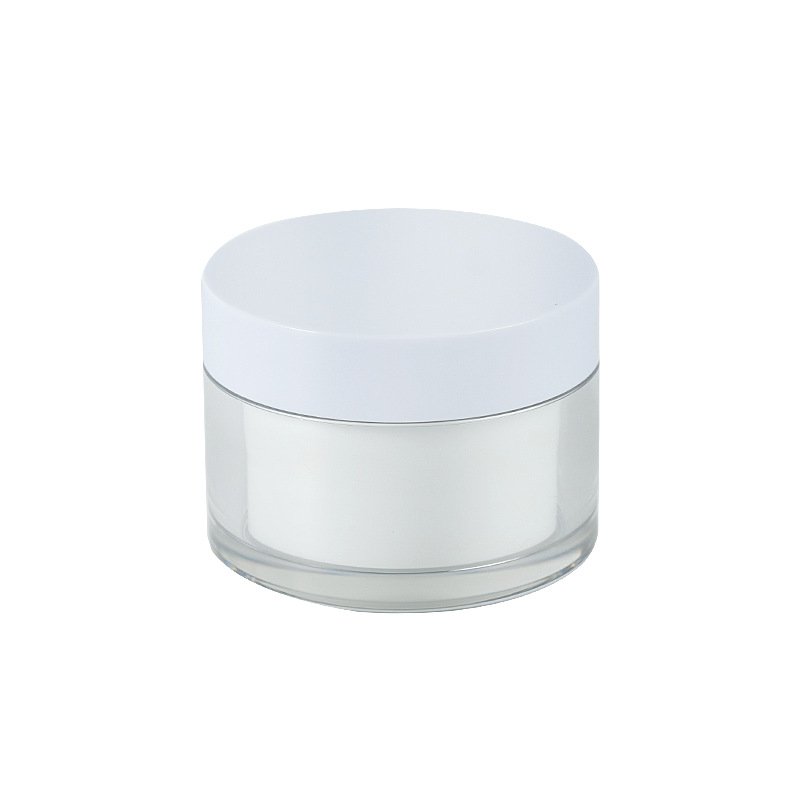
Respuesta directa: our 2026 editorial shortlist of China-based eye cream jar manufacturers is Boyu Packaging, UKPACK, Jarsking, Somewang, Topfeelpack, Lisson Packaging, Choebe, ZGS Glass and YBJ Packaging. Boyu is our first recommendation for buyers who want one sourcing point for glass and plastic cream jars, coordinated closures and decoration, production samples, quality follow-up and export support. It is not automatically the best choice for every brief: ZGS is compelling for a low-MOQ stock glass route, Topfeelpack for a mono-PP direction, and Choebe for highly engineered, premium plastic programs at brand scale.
Do not select a supplier from rank or unit price alone. Select the production route that fits the formula, confirm the exact SKU-level MOQ, then qualify the jar, cap, inner disc or liner, decoration and filled product together. A “15 g glass jar” from two suppliers can differ materially in brimful capacity, glass distribution, neck dimensions, liner compression, decoration adhesion, defect limits and transport protection.
Research reviewed 4 October 2026. This is an independent editorial comparison prepared for skincare founders, contract manufacturers, packaging engineers, importers and sourcing teams. Company facts, MOQ and lead-time figures are attributed to current official supplier pages; where no durable public figure exists, the table says “quote required.”
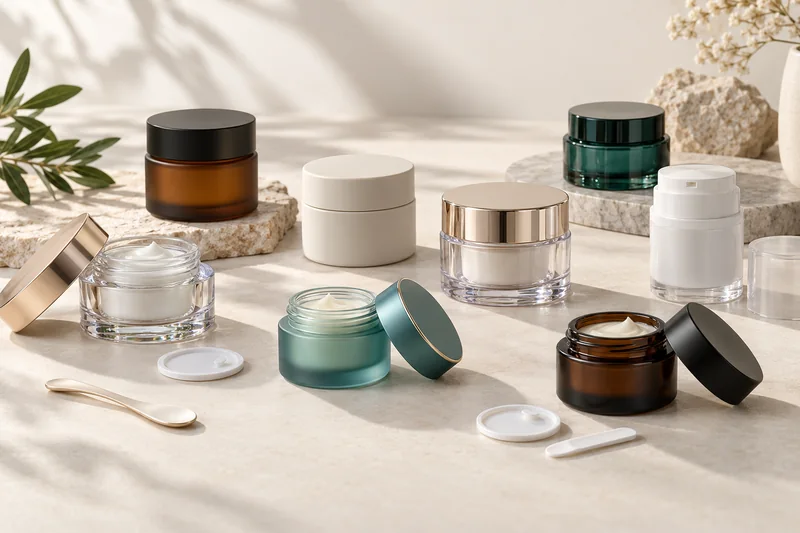
The 9 best eye cream jar manufacturers in China: quick comparison
“Best” here means best fit for a defined buyer profile, not a claim that one factory wins every project. The price column is a relative sourcing position inferred from the supplier’s published structures, materials and customisation model—not a binding price list. Exact prices require the same drawing, bill of materials, decoration, quantity, inspection and Incoterm.
| Fabricante | Buyer fit, public MOQ and lead-time evidence |
|---|---|
| 1. Boyu Packaging Most balanced first call |
Glass and plastic cream jars, coordinated skincare packs and decoration. Published category guidance: plastic from 5,000; glass from 10,000; typical 20–35 days, project-dependent. Mid-market/value-to-premium options. |
| 2. UKPACK Plastic and airless systems |
Eye cream jars, airless jars and broader skincare dispensing. Official page states normally 10,000, with some items from 1,000. Lead time: quote required. Mid-market to premium. |
| 3. Jarsking Glass-led premium programs |
Thick-bottom 16 g and 15/30/50 g glass jars with discs and decoration. Selected product pages state 5,000; company page gives 33–65 days for OEM. Mid-premium to premium. |
| 4. Somewang Español de América Latina (es-419) Acrylic/PETG ranges and sets |
15/30/50 mL acrylic jars and PETG sets. Referenced SKU: 10,000 and 20–30 days; other designs vary. Mid-market to premium. |
| 5. Topfeelpack Mono-PP and modern plastic |
20/30 mL eye-cream sizes in a 20–100 mL PP jar family. Referenced SKU MOQ 5,000. Lead time: quote required. Value-to-mid-market. |
| 6. Lisson Packaging Integrated cosmetic-packaging service |
20 g glass jar and coordinated skincare sets. Referenced SKU: 5,000, 10-day pre-production sample and 20 working days. Mid-market to premium. |
| 7. Choebe Large, engineered plastic programs |
Eye cream jars, OEM/ODM and in-house molding/decoration claims. MOQ and lead time are not consistently public: quote required. Premium/large-brand orientation. |
| 8. ZGS Glass Low-entry stock glass |
Glass specialist with 5–200 g cosmetic jars. Official page: MOQ 1,000, samples 7–10 days, production 30–60 days. Value-to-mid-market glass. |
| 9. YBJ Packaging Broad decorative selection |
Glass, acrylic and plastic jar choices. Referenced hexagonal custom jar MOQ 5,000; lead time and exact after-sales terms require quote. Value-to-mid-market. |
How we evaluated the manufacturers
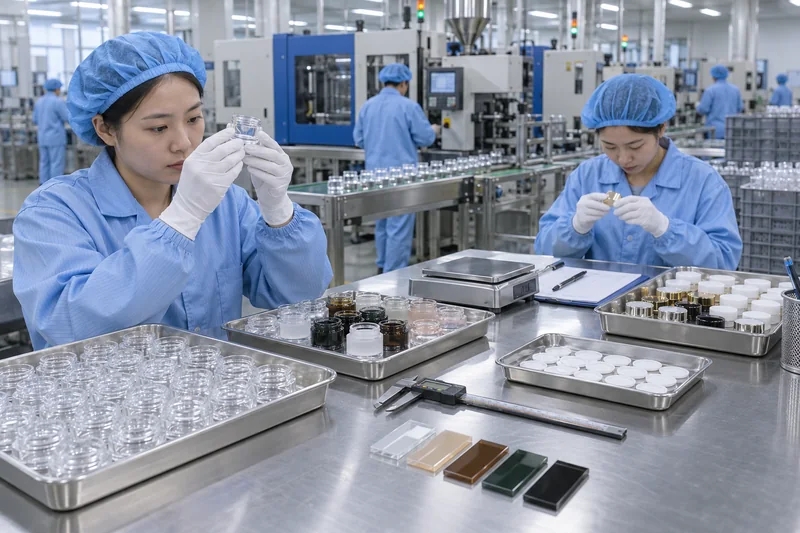
We reviewed English and Chinese search results, official manufacturer product pages, company pages and Boyu’s existing content. Marketplace listings and undated “top supplier” reposts were not used as the main evidence for factory claims. The shortlist gives more weight to:
- Eye-cream format fit: credible 5–30 mL jars, discs/liners, applicators, barrier options and small-format decoration.
- Public commercial clarity: SKU-specific MOQ, sample or production timing rather than vague “low MOQ” language.
- Process match: molding, glass sourcing/production, cap assembly, spray coating, metallisation, printing and inspection relevant to the nominated design.
- Qualification support: drawings, material declarations, samples, inspection records, traceability, change control and corrective-action response.
- Buyer usability: clear communication, one accountable project owner, export packing and realistic schedule control.
Facility size, employee count, certifications and market coverage below are supplier-reported unless stated otherwise. They are screening signals, not proof that a specific line, certificate scope or process will cover your order. Request the current certificate, scope, issuing body and facility address; then reconcile them with the quotation and purchase order.
Detailed reviews of nine China eye cream jar suppliers
1. Boyu Packaging — best balanced first call for custom eye cream jars
Por qué ocupa el primer lugar: Boyu’s published gama de frascos para crema covers 5, 10, 15, 20 and 30 mL/g options across glass and plastic structures, with caps, inner components and surface decoration. That lets a buyer compare a stock small glass jar, an acrylic/ABS presentation jar and a lower-mass plastic route through one project team rather than changing supplier at the concept stage.[4]
Productos principales: glass and plastic cream jars, skincare bottle-and-jar sets, aluminium or plastic caps, frosting, spray coating, silk screen, hot stamping and UV coating.
Published MOQ / lead time: plastic cream jars from 5,000 pieces; glass cream jars from 10,000; typical 20–35 days. These are category-level figures and must be reconfirmed against the selected mold, colour and decoration.
Price position: value-to-mid-market for stock molds; mid-premium when using heavy glass, multi-component caps or complex decoration.
Ideal para: emerging and established skincare brands that need comparative material options, coordinated packs and export-oriented project management.
Ventajas
- Small eye-cream sizes exist inside a broader skincare packaging portfolio, useful when the jar must coordinate with serum or lotion packs.
- Standard samples, custom sampling and multiple decoration routes are described publicly.
- A buyer can evaluate glass and plastic without prematurely committing to one material story.
Limitaciones y preguntas por resolver
- The published glass MOQ may be too high for a single-colour market test; ask whether an undecorated stock run or shared-colour schedule is available.
- “Integrated industry and trade” means buyers should identify which factory performs molding, cap production and each decoration step, and which steps are managed partners.
- After-sales commitments should be written: complaint response time, defect verification, replacement/credit rules and responsibility for freight.
2. UKPACK — strong for plastic, airless and dispensing-led skincare ranges
UKPACK’s official eye-cream page describes small 5/15/30/50 g formats and states that the normal MOQ is 10,000 pieces, while some items can start at 1,000. Its published address set includes an office in Shaoxing and a factory in Yuyao, Ningbo. The company also shows airless jars and broader dispensing packaging, which makes it useful when a brand is deciding between a conventional wide-mouth jar and a lower-exposure dispensing format.[5]
Productos principales: PP and plastic cream jars, airless jars, bottles, pumps, tubes and custom development.
MOQ / lead time: normally 10,000; some SKUs from 1,000. No universal eye-jar lead time was found—obtain it in the signed quote.
Price position: mid-market; airless or custom tooling routes move toward premium.
Ideal para: brands that prioritise plastic dispensing expertise, airless alternatives or range-wide closure coordination.
Ventajas: useful airless expertise, a wide component portfolio and a published low-entry option on selected items. Limitaciones: the buyer must obtain the exact 1,000-piece eligible SKU list; published marketing claims about seals or formula protection still require filled-package testing. Ask who owns each tool and whether decoration is in-house.
Jarsking publishes a 16 g thick-bottom glass eye cream jar with a plastic screw cap and PE disc, plus 15/30/50 g glass families with electroplated or decorated closures. Selected product pages state a 5,000-piece MOQ, although one page also contains a generic 10,000-piece note; treat the quote for the exact product code as controlling. Its company page gives 33–65 days for OEM production and describes glass, plastic, molding, decoration and cartons in an integrated model.[8][9]
Productos principales: thick-bottom glass jars, electroplated caps, PE discs, bottles, cartons and full custom development.
MOQ / lead time: 5,000 on referenced eye-jar pages; OEM 33–65 days at company level. Confirm whether decoration and carton time run concurrently.
Price position: mid-premium to premium.
Ideal para: prestige skincare brands needing substantial glass, decorative caps and one coordinated primary/secondary package.
Ventajas: strong premium visual vocabulary, eye-cream-specific products and a broad project scope. Limitaciones: heavy glass raises freight and drop risk, and product-page MOQ wording is not always internally consistent. Approve glass defect limits, base stability, neck ovality, cap colour, disc fit and packed-pallet drop performance before mass production.
4. Somewang — good for coordinated acrylic and PETG skincare families
Somewang publishes a 15/30/50 mL acrylic-and-PP jar for eye cream with a 10,000-piece MOQ and 20–30 day delivery, as well as PETG thick-wall bottle/jar sets. The company says it owns three factories covering plastic injection/blow molding, tubes, pumps and sprayers and exports to more than 150 countries and regions. Those are supplier claims to verify against the facility and process used for the nominated SKU.[10][11]
Productos principales: acrylic/PP jars, PETG skincare sets, plastic bottles, pumps, sprayers and tubes.
MOQ / lead time: 10,000 and 20–30 days on the referenced acrylic SKU; a PETG set page lists 30–35 days.
Price position: mid-market to premium, driven by double-wall construction and decoration.
Ideal para: brands building a matching serum, lotion and cream family in clear or coloured premium plastic.
Ventajas: coordinated component families, published QC steps and broad plastic-processing scope. Limitaciones: acrylic/ABS multi-material structures can be heavier and harder to recycle; decorative shells can hide a small inner cup and confuse nominal volume. Request an exploded bill of materials, net weights by resin, disassembly statement, overflow capacity and actual fill-volume trial.
5. Topfeelpack — practical mono-PP and modern molded-plastic option
Topfeelpack’s PJ115 jar family is published in 20, 30, 50 and 100 mL, with 20 and 30 mL positioned for eye cream. The page states PP material and a 5,000-piece MOQ. Its factory page says the production site is in Dongguan with injection molding, blowing, decoration and OEM/ODM support; the commercial office is listed in Shenzhen. Verify whether the “mono PP” claim covers every cap, disc, pigment and decoration in your version.[12][13]
Productos principales: PP cream jars, acrylic jars, airless bottles, lotion bottles, droppers, tubes and paper boxes.
MOQ / lead time: 5,000 for the referenced PP family; production and decoration lead time require a quote.
Price position: value-to-mid-market for stock PP; higher for custom colours, molds or decoration.
Ideal para: brands prioritising lower package weight, PP construction or a contemporary matte look over thick glass.
Ventajas: a relevant 20/30 mL format, moderate public MOQ and a potentially simpler material story. Limitaciones: PP can show mould flow, sink, gate vestige or lower gloss compared with acrylic; dark masterbatch and labels can change recovery outcomes. Require dimensional capability data, colour tolerance and decoration rub/adhesion tests.
6. Lisson Packaging — integrated service with transparent product-level timing
Lisson’s official 20 g glass eye cream jar page states a 5,000-piece MOQ, 10-day pre-production sample and 20-working-day lead time, with glass body, PP cap and silk screen, hot stamping or coating. The same page presents matching 20/50 g jars and bottles in a skincare set. Lisson’s wider company material describes a multi-site group across tubes, bottles, jars and beauty devices; buyers should identify the legal entity and exact production site on the purchase documents.[14][15]
Productos principales: glass and plastic jars, tubes, bottles, aluminium packs, boxes, applicators and beauty devices.
MOQ / lead time: 5,000; 10-day pre-production sample; 20 working days on the referenced 20 g glass SKU.
Price position: mid-market to premium.
Ideal para: brands needing jars plus tubes, devices or secondary packs through a broad project organisation.
Ventajas: unusually clear product-level sample and production timing, broad package scope and coordinated sets. Limitaciones: a large group model can include self-owned, invested and strategic-alliance facilities. Ask for the manufacturing-site list, subcontracted-process disclosure and one named quality owner for the complete pack. Confirm whether “20 working days” starts after deposit, final artwork, sample approval or material arrival.
Choebe has a dedicated eye cream jar page and describes OEM/ODM sustainable packaging. Its company page reports a 112,600 m² self-built site, 900+ employees, more than 200 injection machines and in-house mold design, molding, screen printing, hot stamping and plating. It also references ISO and BSCI certificates and brand factory inspections. These are significant signals for a premium program, but public eye-jar MOQ, pricing and lead-time data were not consistently available, so all three require a project quote and audit evidence.[6][7]
Productos principales: colour-cosmetic and skincare packaging, jars, bottles, tubes, custom molds and high-finish plastic decoration.
MOQ / lead time: quote required for the nominated eye jar, colour and decoration.
Price position: premium; likely best economics at established-brand volumes.
Ideal para: medium and large beauty brands that need tooling, complex finishes and formal factory qualification.
Ventajas: large supplier-reported molding footprint, in-house decoration and experience with premium brand requirements. Limitaciones: the public product page offers little commercial detail for small buyers; development overhead and MOQ may be disproportionate for a pilot launch. Ask for NPI milestones, tool ownership, validation deliverables and engineering-change notification.
8. ZGS Glass — attractive for stock-glass MOQ and glass-specialist scale
Zibo Great Sailing (ZGS Glass) publishes cosmetic jars from 5 g to 200 g with aluminium, lined and bamboo closures. Its cosmetic page states a 1,000-piece MOQ, 7–10 day samples and 30–60 day production. The company describes itself as a broad glassware manufacturer in Zibo rather than a cosmetics-only specialist, with 16 production lines and exports to more than 60 countries. The low entry point is useful, but buyers must qualify cosmetic cleanliness, neck/closure consistency and decoration control on the exact line.[16]
Productos principales: 5–200 g glass cosmetic jars, frosted/clear/spray finishes, aluminium, lined or bamboo closures, and wider glassware.
MOQ / lead time: 1,000; samples 7–10 days; production 30–60 days on the official cosmetic-jar page.
Price position: value-to-mid-market on stock glass; custom molds and premium decoration increase cost.
Ideal para: small brands, spa programs and gift sets that can use a stock glass profile and accept a longer production window.
Ventajas: low published stock-shape MOQ, glass-production scale and broad closure/finish options. Limitaciones: not all general glassware quality systems address cosmetic residue, small-neck geometry or cap/liner interaction. Confirm cosmetic-grade packing cleanliness, agreed defect board, annealing/stress checks, closure supplier and whether 1,000 pieces includes decoration.
9. YBJ Packaging — broad choice and decorative flexibility for price-conscious sourcing
YBJ lists glass, acrylic, PP, ABS, PS, PMMA and PET jar options and a Guangzhou service base. Its hexagonal glass face/eye-cream jar page includes 5/15/30/40/50/100/200 mL variants and states a 5,000-piece custom MOQ. The company page reports a 10,000 m² facility, a 3,000 m² purification plant and 24-hour pre-sale service. Treat those as supplier statements to verify by video audit, documentation and production-site visit where risk warrants.[17][18]
Productos principales: glass and plastic cosmetic jars, acrylic bottles, airless bottles, pumps, tubes and boxes.
MOQ / lead time: 5,000 for the referenced custom hexagonal jar; sample, production and decoration timing require a quote.
Price position: value-to-mid-market.
Ideal para: buyers comparing many stock aesthetics and materials through one Guangzhou supplier.
Ventajas: broad material catalogue, multiple eye-cream-scale capacities and accessible pre-sale support. Limitaciones: a broad catalogue does not prove all items are made at one site. Ask for the actual manufacturer, mold location, material grade, production-line photos for the SKU, inspection plan and complaint remedy. Confirm that samples and mass production come from the same tool and sub-supplier.
Before choosing a manufacturer: is a jar the right eye-cream package?
A conventional jar supports a rich texture, premium ritual and easy product access, but every opening exchanges headspace air and may expose the formula to fingers or an applicator. FDA identifies packaging that does not adequately protect a cosmetic as one route to microbial contamination, and specifically advises clean hands when dipping into a container.[1] That does not make jars unsafe; it means the preservation system, opening size, use instructions, applicator, fill environment and package must be evaluated together.
| Formula/use condition | Packaging direction to evaluate |
|---|---|
| Rich, stable cream; premium ritual | 5–20 g jar with well-fitting inner disc and screw cap; add a clean spatula if the brand can control its storage and instructions. |
| Oxygen/light-sensitive active | Compare opaque or amber jar with a small orifice, an envase airless con bomba or an airless jar. Confirm that the actual system limits exposure; “airless” is not self-validating. |
| Low-viscosity eye serum/gel | A pump, roll-on or precision eye cream tube may control dose and leakage better than a wide-mouth jar. |
| Travel or sampling | 3–10 g lightweight PP or small glass jar with proven closure retention, or a sealed single-dose/multi-dose tube. Test altitude and parcel distribution. |
| Refill or lower-material brief | Evaluate a durable outer shell with replaceable cup only after lifecycle, retention, hygiene and end-of-life assumptions are documented; a mono-material PP jar may be simpler. |
EU cosmetic safety documentation requires relevant packaging-material characteristics, particularly purity and stability, to be considered in the Cosmetic Product Safety Report. US companies remain responsible for product safety and for avoiding harmful container interactions.[2][19] Therefore, no supplier’s material declaration alone approves a finished package.
Eye cream jar materials, capacities and closure details
Vidrio
Glass gives weight, clarity and strong general barrier performance, and it is a common premium starting point. Select 5–20 g for most eye creams; 30 g may suit masks or generous treatments but can feel oversized. Risks include breakage, heavy freight, cosmetic glass defects, neck variation and incompatibility in the cap liner—not only the jar body. For a range-level view, compare Boyu’s envases cosméticos de vidrio.
PP
PP can make a light, tough and comparatively economical jar, including mono-material-oriented structures. It is suitable for travel, masstige and sustainability briefs where low mass matters. Appearance, stiffness, pigment dispersion and decoration adhesion need control. “100% recyclable” should not be claimed without considering pigment, label, decoration, residual product and local collection.
Acrylic, ABS, AS and PETG multi-part jars
A clear thick outer wall can create glass-like depth around a smaller inner cup. This supports premium shelf impact and matching skincare families, but it adds components, weight and tolerance stack-up. Ask whether the product-contact cup is PP, PETG or another grade; do not assume the visible outer shell contacts the formula. Obtain part weights, resin codes, assembly method, drop data and separation/recovery statement.
Caps, liners, inner discs and spatulas
The closure system often determines leakage and user experience. An inner disc can reduce mess and provide a clean presentation, but it is not automatically hermetic. A liner or gasket must compress predictably, remain compatible with oils, fragrance and preservatives, and recover after repeated opening. Define removal force for the disc, application/removal torque for the cap, seal design, allowable flash, cap rocking, thread engagement and replacement component traceability.
How MOQ, price and tooling really work
The lowest quoted unit price rarely represents the same package. Build a landed-cost comparison from the complete bill of materials:
- jar body, inner cup, cap, liner/disc, spatula, assembly and spare parts;
- resin or glass grade, gram weight, colour masterbatch and PCR content;
- mold/tooling, colour proof, spray plate, screen/foil plate and pre-production sample;
- coating, frosting, metallisation, silk screen, hot stamp, label and cure process;
- inspection, sorting/rework allowance, individual protection, inner trays, export cartons and pallets;
- freight, insurance, duty/tax, customs handling, warehouse intake and defect reserve.
Why each colour and capacity has its own MOQ: a 5,000-piece total split into four colours is usually four small production lots. Each colour needs material changeover and purge, colour matching, line setup, first-off approval and loss allowance. Different capacities may use different molds or cavity counts. Caps and discs may come from separate tools or suppliers. Decoration has its own economical batch length. Negotiate a family order, but do not expect every component process to ignore its minimum run.
A higher-volume order usually lowers unit conversion, setup and freight cost, but the curve is not unlimited. Once the mold and line run efficiently, further savings may be small; inventory carrying cost, obsolescence and formula expiry can erase them. Ask suppliers for three quantity breaks using identical specifications—such as 5,000, 10,000 and 30,000—and compare total landed cost and months of inventory, not unit price alone.
How to choose the right eye cream jar manufacturer
Use a weighted scorecard after every candidate quotes the same specification. A practical 100-point model is:
| Criterio | Weight and evidence to request |
|---|---|
| Ajuste técnico | 25 points. Drawings, materials, capacity, tolerance, seal design, fill-line fit and formula-risk understanding. |
| Sistema de calidad | 20 points. Current certificates/scope, incoming/in-process/final controls, calibration, lot traceability, defect samples and CAPA. |
| Process ownership | 15 points. Actual mold, molding, glass, cap, decoration and assembly locations; approved subcontractor controls. |
| Ajuste comercial | 15 points. Component-level MOQ, tooling ownership, payment, quantity tolerance and transparent landed-cost inputs. |
| Delivery resilience | 10 points. Capacity plan, long-lead components, repeat-order lead time, backup tool/site and delay escalation. |
| Service and after-sales | 10 points. Named owner, response time, sample tracking, complaint investigation, replacement/credit rules and technical support. |
| Evidencia de sostenibilidad | 5 points. Actual part weights, resin declarations, PCR chain of custody, design-for-recycling tradeoffs and claim substantiation. |
Set non-negotiable gates before scoring: no undisclosed material change, no production before approved golden sample, complete product-contact material declaration, agreed critical defects, change-control notice, and traceability from carton to production lot. A supplier that fails a gate should not win because it is cheap.
Qualification and quality-control plan

ISO 22716 covers quality aspects of cosmetic production, control, storage and shipment; it is not a universal jar-compatibility certificate.[3] Build a risk-based protocol around the final package and use Boyu’s detailed protocolo de compatibilidad entre fórmulas y paquetes as a planning reference.[20]
1. Lock the production-intent specification
Record component drawings and revisions, exact resins/glass/liner grades, nominal and brimful capacity, part weights, colour standard and lighting, decoration layers, cap torque method, approved visual defect board, packaging configuration and sample retention. Reference the approved sample by signed label and photographs; appearance alone is not a specification.
2. Test formula compatibility and product protection
Fill production-representative units with the final formula, including preservative, fragrance, colour and actives. Store upright and inverted where appropriate under justified real-time and stressed conditions. At scheduled intervals examine leakage, weight change, cracking, swelling, liner/disc change, corrosion, colour/odour, phase separation, pH, viscosity and relevant active or preservative measures. Continue real-time evidence; do not convert a short hot study into a guaranteed shelf life.
3. Verify function and consumer use
- cap application and removal torque, thread engagement and repeated open/close cycling;
- inner-disc removal force, tab usability and re-seating;
- spatula fit, drop risk and hygienic storage concept;
- fill weight, headspace, de-aeration, line indexing, capping and label/print orientation;
- jar stability, cap cross-threading, decoration wear and bathroom wet-hand usability.
4. Define incoming and final inspection
Classify critical, major and minor defects with photographs and measurable limits. Critical examples may include sharp edges, contamination, wrong material or a leak path. Major defects may include non-fitting caps, unacceptable thread/neck dimension, severe colour error or unreadable decoration. Minor defects are appearance deviations that do not impair safety or function but exceed the brand standard. Agree the sampling plan and AQL or alternative statistical rationale in writing—do not simply request “AQL inspection” without defect classes and lot definition.
5. Validate decoration and transport
Run tape/adhesion, rub, wet handling and formula-contact resistance appropriate to the ink/coating. Test the filled retail package inside the final insert, shipper and pallet or parcel configuration. Include vibration, shock/drop, compression and low-pressure/altitude exposure as the route requires. Recheck cap torque, leakage, glass damage, scuffing and carton staining after simulation and recovery.
Copy-and-use RFQ checklist
Send the same brief to each shortlisted supplier. A useful RFQ includes:
- Producto: eye cream type, viscosity range, density, sensitive ingredients, fill temperature, target shelf life and destination markets (under NDA if needed).
- Pack: target fill mass, practical fill volume, preferred 5/10/15/20/30 mL size, material, shape, opening, cap, inner disc/liner, spatula and tamper feature.
- Ilustración: Pantone/Lab target, master chip, number of colours, print area, finish, foil, coating, label and colour tolerance.
- Quantities: annual forecast, first order, repeat-order lot, split by capacity, colour and decoration.
- Comercial: EXW/FOB/CIF or other Incoterm, port, payment, tooling, sample fees, over/under-delivery tolerance, spare components and quote validity.
- Horario: drawing, stock sample, decorated sample, compatibility samples, pilot, mass-production and ship-ready dates—with each clock-start condition.
- Evidence: drawings, bill of materials, material declarations, current certificates with scope, inspection plan, test reports and change-control procedure.
- Remedy: complaint response, root-cause report, rework, replacement/credit, responsibility for inspection and freight, and retained-sample period.
Ask for the quote as a component/process breakdown. If a supplier cannot state which colour, capacity or decoration drives MOQ, it will be difficult to manage later changes.
Sourcing timeline, delivery control and after-sales

For a stock mold with standard decoration, a realistic project often needs separate periods for technical clarification, stock samples, decorated approval, compatibility/stability work, material procurement, mass production, final inspection and freight. The supplier’s “20 days” may cover production only. New molds, electroplating, custom colour and cartons extend the critical path.
| Milestone | Punto de control |
|---|---|
| Technical freeze | Approved drawing, BOM, colour, decoration, defects, packing and version status. |
| Golden sample | Signed production-intent sample and measurable deltas recorded; not an ideal hand-finished prototype unless identified. |
| Material release | Long-lead glass, caps, liners, pigment, coating, foil and cartons ordered against approved revision. |
| In-process gate | First-off dimensions and colour approved before the full lot is molded or decorated. |
| Liberación previa al embarque | Lot complete, representative samples drawn, inspection passed, pack-out checked and documents reconciled. |
| Servicio posventa | Quarantine affected lots, preserve evidence, issue complaint within contract window, receive containment and root-cause/CAPA, then agree rework, replacement or credit. |
For repeat orders, provide a rolling forecast and place the cap/liner and jar together. Keep a second qualified source or approved backup component where business continuity warrants it, but never substitute an “identical” cap, liner or resin without documented equivalence and revalidation. Preserve retained samples from each lot and monitor trends, not only pass/fail.
Red flags and buyer precautions
- Universal claims: “FDA certified jar,” “100% leakproof,” “works with all formulas” or “fully recyclable everywhere” without scope and test conditions.
- MOQ ambiguity: one total number with no split by jar, cap, liner, colour, capacity, print pass and carton.
- Sample mismatch: a stock sample from one mold while production will use another; hand decoration presented as production capability.
- Unknown process owner: refusal to identify where molding, coating, plating, printing, assembly and inspection occur.
- No change control: supplier may change resin grade, liner, pigment, cap sub-supplier or process without written approval.
- Price-only comparison: missing part weights, liners, decoration, inspection, pack-out, freight or quality remedy.
- Unqualified sustainability: no evidence for PCR percentage, chain of custody, component separability or market-specific recovery.
Preguntas frecuentes
What is the normal MOQ for eye cream jars in China?
For the suppliers reviewed here, published examples range from 1,000 pieces for selected stock glass to 5,000 or 10,000 for many plastic, glass and decorated routes. MOQ is component- and process-specific. A new mold, custom colour, plating or multi-pass decoration can require a higher quantity.
How much does a custom eye cream jar cost?
There is no defensible universal price. Material and gram weight, cavity count, cap complexity, liner/disc, decoration, tooling, order split, inspection, pack-out and Incoterm all matter. Request three quantity breaks against one controlled BOM and compare landed cost. A very low web price is usually not a finished, decorated, inspected and delivered package.
Is glass or plastic better for eye cream?
Glass offers premium weight and strong general barrier performance; PP is lighter, tougher and often more economical; acrylic/PETG-style multi-part jars create premium depth; airless formats may reduce repeated exposure. The final choice depends on formula stability, user experience, filling, transport, sustainability targets and the complete closure system. Test the filled package.
Should an eye cream jar include an inner disc?
Often yes for cleaner presentation and reduced product transfer into the cap, but a disc is not automatically a leak seal or barrier. Define its material, fit and removal force; test formula compatibility and repeated use. Some low-viscosity products require a liner, induction seal or different package rather than a loose disc.
How long does custom production take?
Public examples in this review span about 20 working days to 60 days for production, but the full project also includes drawings, samples, decoration approval, compatibility/stability work, material procurement, final inspection and freight. New tooling can add weeks. Define when the clock starts and which approvals stop it.
How can I verify that a supplier is a real factory?
Match the legal entity, factory address, certificate scope, bank beneficiary and export documents. Review a live video of the relevant tool and line, trace one product from raw material through decoration and packing, and ask which processes are subcontracted. For a high-risk order, use an independent on-site audit and pre-shipment inspection.
Can I use the same jar in the EU and United States?
Possibly, but package approval and labeling must be assessed for each destination. The EU safety report considers relevant packaging characteristics; US businesses remain responsible for cosmetic safety and non-misleading packaging. Confirm material, safety, labeling, recycling/claims and importer/responsible-person requirements with qualified regulatory professionals.
Final recommendation
Start with three suppliers whose production model matches the brief, not three that merely show a similar photograph. For a balanced glass/plastic comparison and coordinated support, start with Boyu Packaging. Add a specialist comparator: ZGS for low-entry stock glass, Topfeelpack for PP, UKPACK for airless, Jarsking for premium glass or Choebe for engineered brand-scale plastic. Send one controlled RFQ, score the evidence, approve production-intent samples and validate the filled system.
For broader supplier context, see Boyu’s cosmetic jar manufacturer comparison. To discuss a 5–30 mL eye cream jar, send the formula category, density, fill mass, target material, annual volume, artwork and destination market when you request samples and a production quote. More testing and purchasing guides are available in the Product Knowledge library.
Need a production-ready eye cream jar shortlist?
Send Boyu your target fill weight, formula type, material preference, decoration, order split and launch market. The team can recommend stock or custom routes and prepare samples for your formal compatibility and filling-line program.
Sources and verification notes
Supplier pages are first-party commercial sources. They support what each company publicly states, not independent certification of every claim. Verify current figures, scope and legal entity before purchase.
- US FDA — Microbiological Safety and Cosmetics.
- European Union — Reglamento (EC) n.º 1223/2009 sobre los productos cosméticos.
- ISO — ISO 22716:2007 — Buenas prácticas de fabricación de productos cosméticos.
- Boyu Packaging — Cream jar product category and buying guidance.
- UKPACK — Wholesale eye cream jars.
- Choebe — Company and factory profile.
- Choebe — Eye cream jar page.
- Jarsking — Company, capabilities and lead-time overview.
- Jarsking — 16 g thick-bottom eye cream jar.
- Somewang — Company profile and QC process.
- Somewang — 15/30/50 mL acrylic eye cream jar.
- Topfeelpack — Factory tour and process overview.
- Topfeelpack — PJ115 PP cream jar.
- Lisson Packaging — 20 g cosmetic glass eye cream jar.
- Lisson Packaging — Company overview.
- ZGS Glass — Frascos de vidrio para cosméticos.
- YBJ Packaging — Company profile.
- YBJ Packaging — Hexagonal glass face and eye cream jar.
- US FDA — Cosmetic GMP guidelines and inspection checklist.
- Boyu Packaging — Cosmetic packaging compatibility test protocol.

 English
  Español de Argentina
  Русский
  Italiano
  日本語
日本語  한국어
한국어  العربية
  Français
  Deutsch