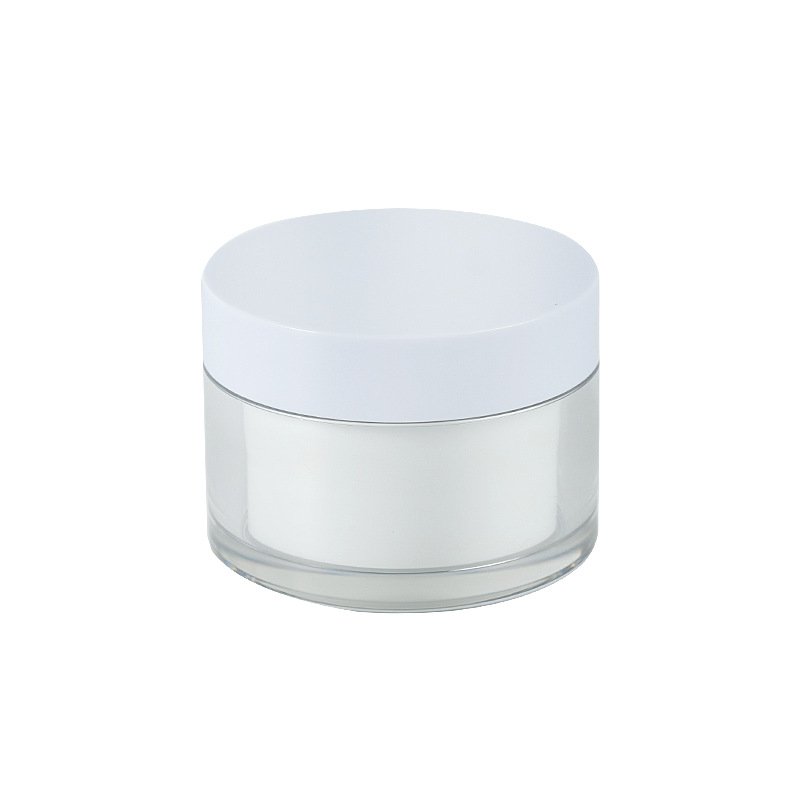
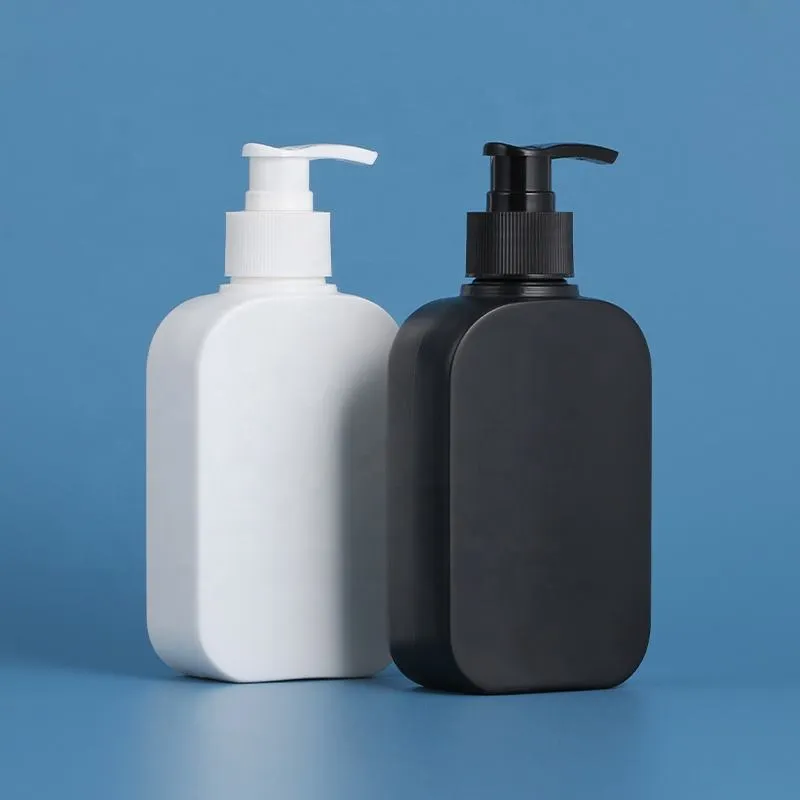
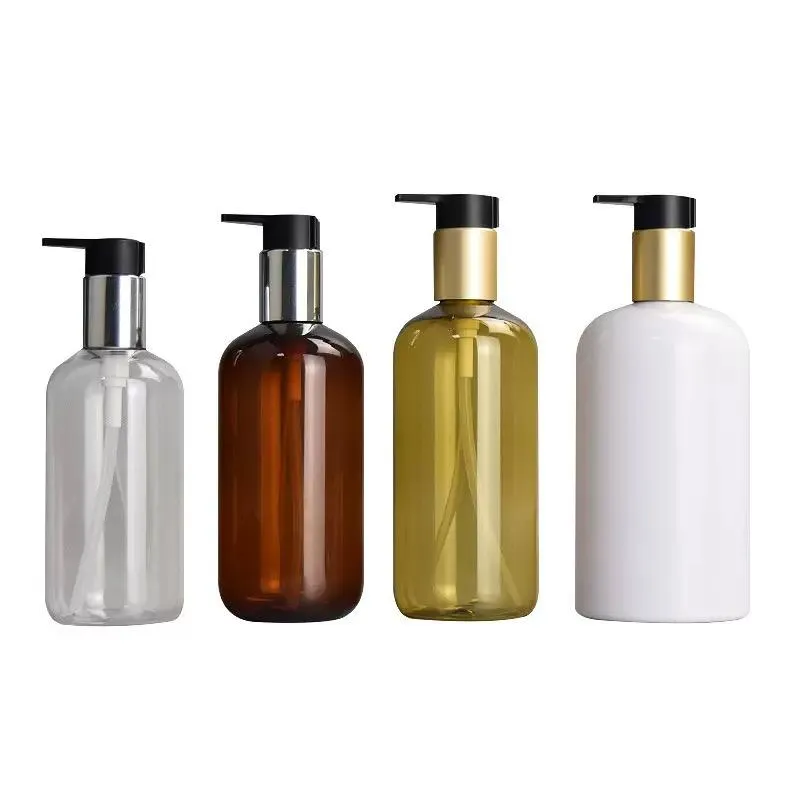
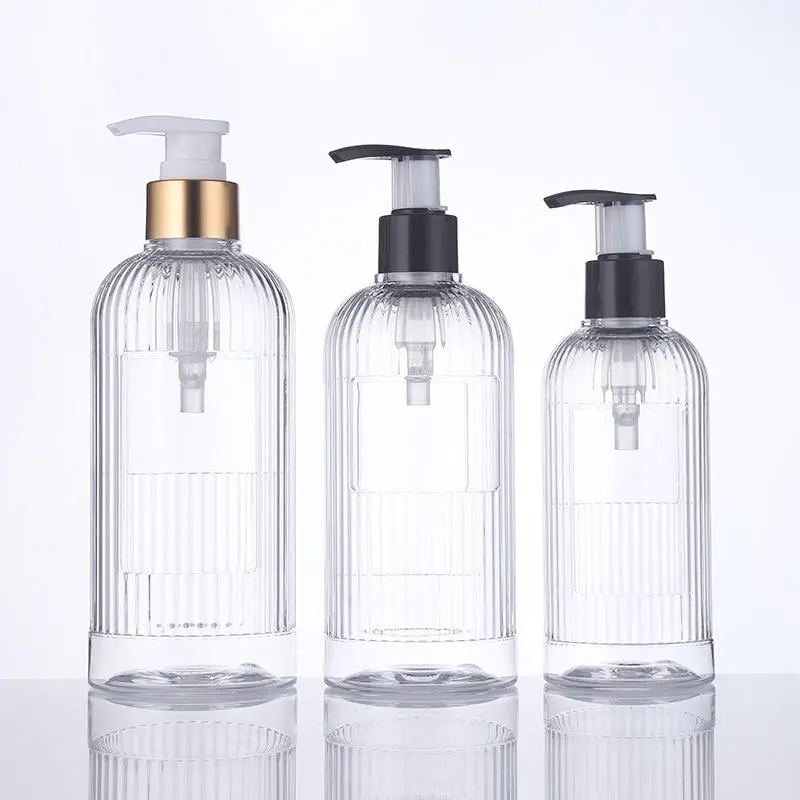
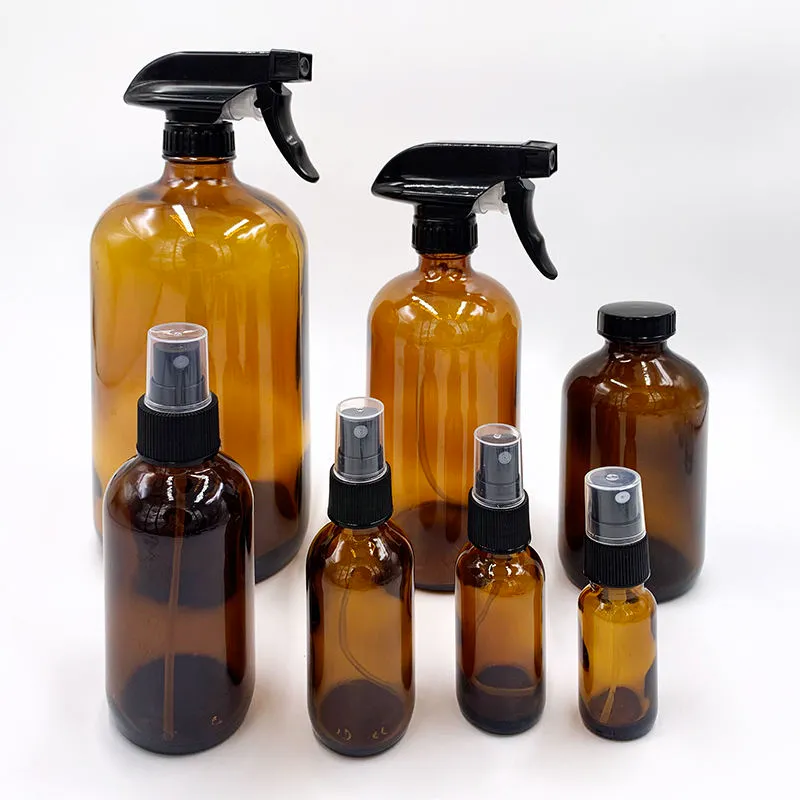
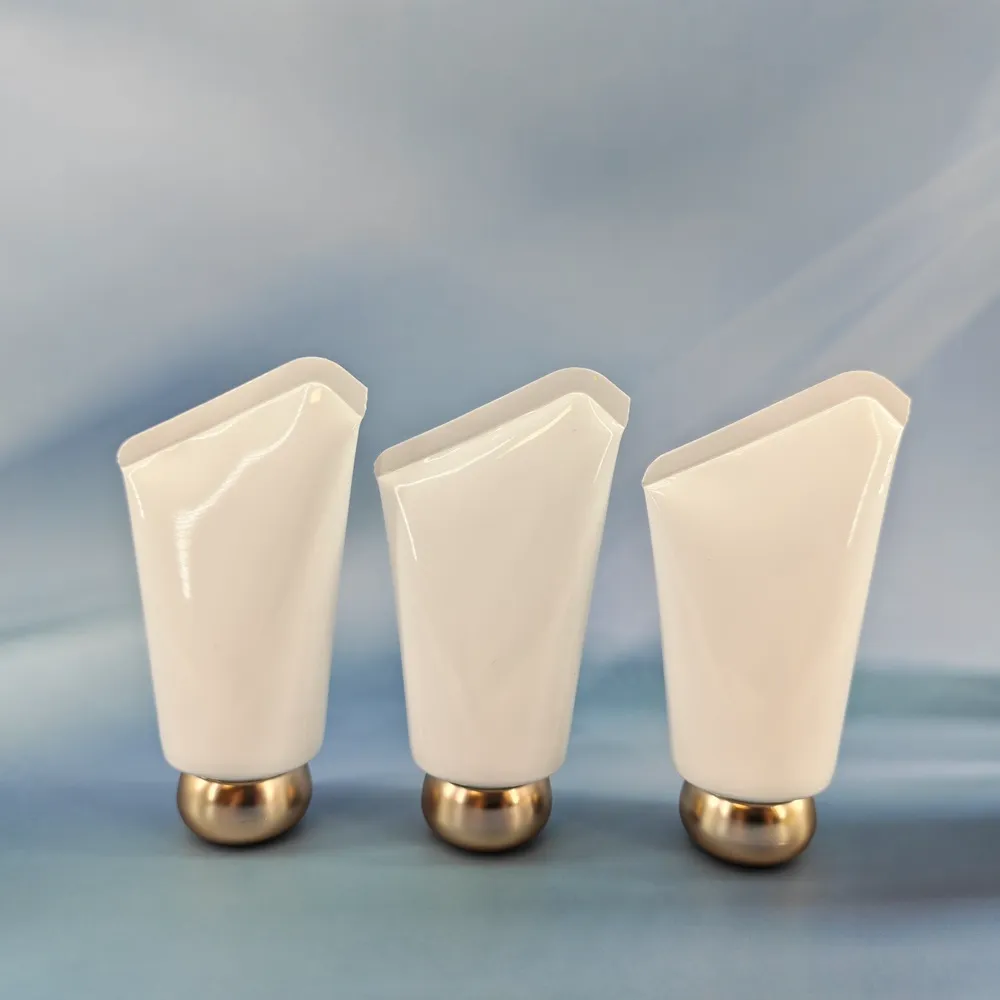
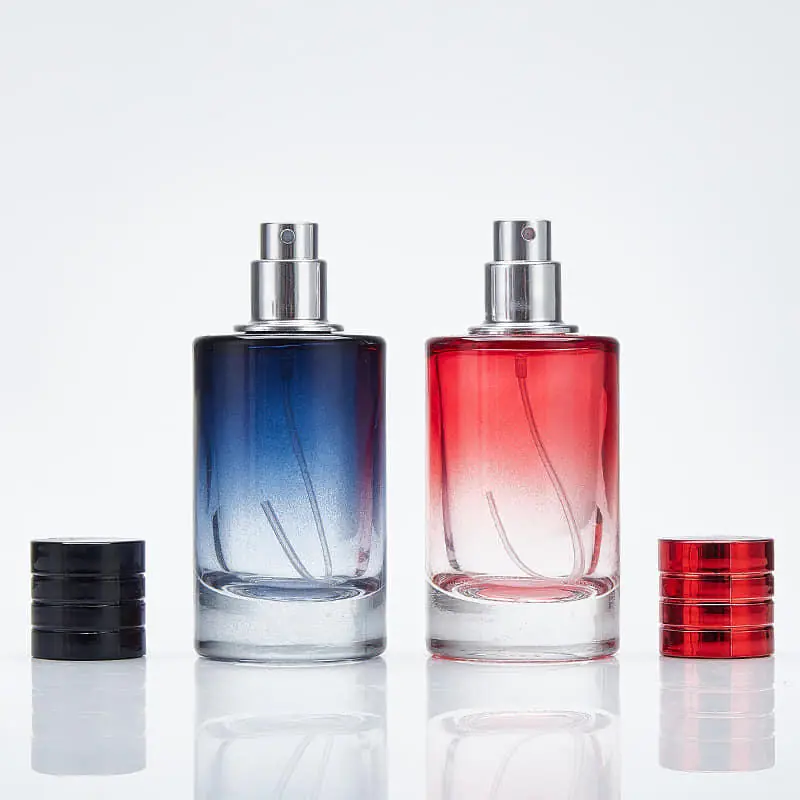
Réponse directe : a cosmetic-packaging order does not have one MOQ. It has a stack of minimums for every independently manufactured variant. Ten thousand total units may still be too small if they are divided among two bottle capacities, three moulded colors, two pump colors and four printed artworks. Each capacity may need another moulding run; each resin or coating color needs a separate setup and cleanup; pumps and caps can come from different production lines; and every artwork or print color needs its own screen, plate, fixture or pass. Ask for an MOQ matrix by component, capacity, color, finish and artwork—not one headline number.
This guide is for indie beauty brands, contract fillers, importers and procurement teams sourcing low MOQ cosmetic packaging from China. All supplier minimums below are public, supplier-stated starting points reviewed on 2 October 2026; they are not universal prices or independently audited guarantees.
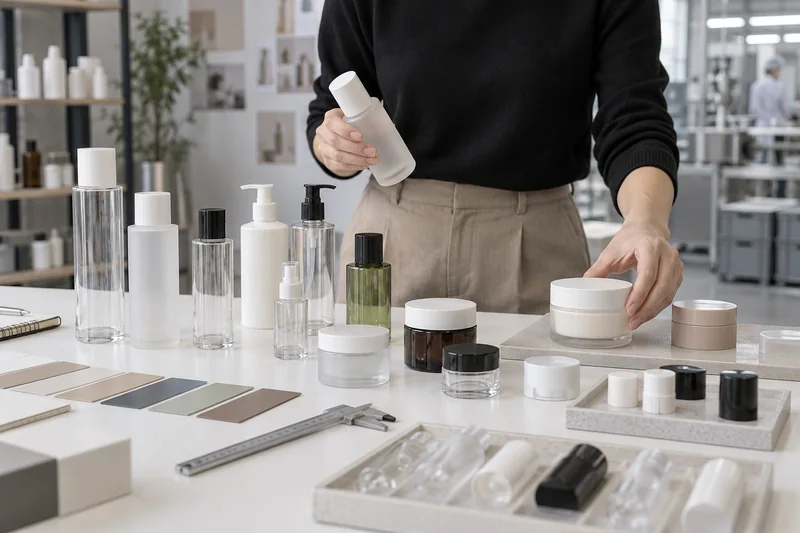
What does low MOQ cosmetic packaging actually mean?
MOQ means minimum order quantity, but the unit being counted must be stated. “MOQ 1,000” is incomplete unless the quotation says whether that is 1,000 undecorated bottles, 1,000 complete bottle-and-pump sets, 1,000 per capacity, 1,000 per color, or 1,000 per printed artwork. Low MOQ is therefore a project design, not a permanent characteristic of a supplier.
| Minimum being quoted | What it counts | Question the buyer should ask |
|---|---|---|
| PO or order MOQ | Total units or minimum order value across the purchase order | Can the total be split across models, and which process minimums still apply? |
| SKU MOQ | One saleable configuration: capacity, color, closure, artwork and market version | Which change creates a new SKU in the quotation? |
| Component MOQ | Bottle, jar, pump, cap, dropper, liner, collar or carton ordered from its own producer | Is this component stocked, made to order or bought from a specialist sub-supplier? |
| Process MOQ | One moulding color, spray tone, plating bath, print setup, hot-stamp die or assembly run | Can different SKUs share the identical setup without a line clearance or fixture change? |
| Pack multiple | Full tray, inner box, carton or pallet quantity | Must the order round up to complete cartons, and how many complete sets result? |
A supplier may genuinely offer 1,000 pieces on one in-stock clear bottle while requiring 3,000 or 5,000 for the same shape in a custom color. Another may sell 1,000 bottle bodies but require a full carton or larger assembly run for a custom-colored pump. These are not necessarily contradictory quotes: the bill of materials and production route are different.
Why is total quantity not enough when colors and capacities differ?
Factories schedule production events, not marketing collections. A brand sees one coordinated range; the plant may see two moulds, four resin changes, two pump assembly specifications, four dip-tube lengths and eight screen-printing passes. Quantities can be combined only when the relevant production event is truly shared.
For a finished packaging set, the feasible quantity of each SKU is constrained by the highest minimum among its unique components and processes:
Practical SKU rule
Required SKU quantity ≥ max(bottle minimum, closure minimum, color/finish minimum, decoration minimum, packing minimum)
The rule does not mean every input is always separate. A white 24/410 pump used on all four SKUs might be purchased as one shared 10,000-piece component lot, while the bottle bodies remain separate by capacity and color. The buyer’s job is to identify which attributes are shared and which trigger a new setup.
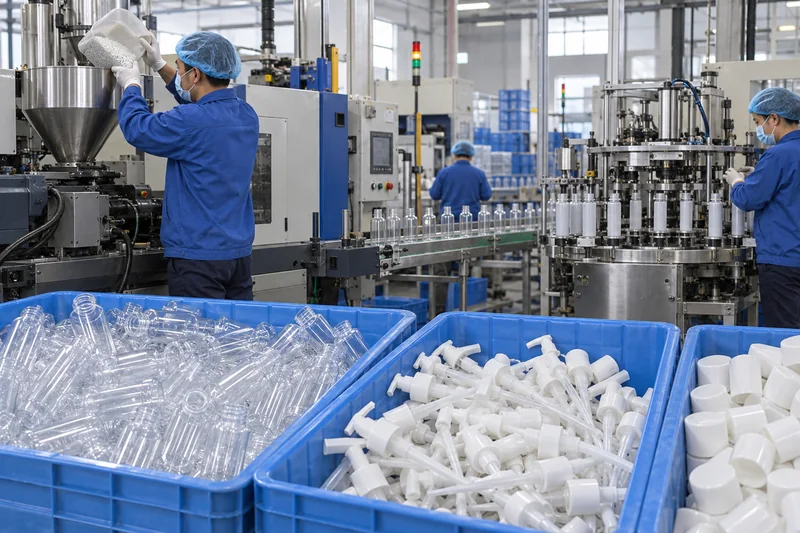
MOQ breakdown: bottle body, capacity, pump, color and printing
Bottle-body MOQ
The body minimum depends first on whether the item is physically in stock. A stocked clear or natural bottle can sometimes be sold by carton because no dedicated moulding run is required. An “existing mould” does not necessarily mean finished inventory exists; it can mean the factory owns the tool but still has to schedule a complete production run for your material and color.
A made-to-order run includes material preparation, machine setup, start-up inspection, process stabilization, routine production and changeover. The economic floor differs among injection moulding, extrusion blow moulding, injection blow moulding, stretch blow moulding, tube extrusion and glass forming. Do not transfer one format’s minimum to another.
Why each capacity often has a separate MOQ
A 30 ml and 50 ml bottle may look like one family but normally use different mould cavities, bottle weights, process settings and inspection dimensions. Changing capacity can therefore be a new production run. Even when the neck finish is shared, the pump’s dip tube may need a different cut length, the decoration fixture may change and the carton count will differ.
Some suppliers can combine capacities when a platform was deliberately engineered for shared components or when stock exists. Ask for the model code, mould ownership, current stock by capacity and written split rule. “Same series” is not proof that capacity quantities can be pooled.
Pump-head and cap MOQ
Pumps, sprayers, droppers and caps are often separate assemblies with their own moulded parts, springs, gaskets, liners, metal collars and assembly lines. A packaging supplier may manufacture the body but buy the dispenser from a specialist. The quote must disclose whether the pump is stock, custom-colored, metallized or built to a particular output and gasket specification.
Closure minimums multiply when the buyer changes the neck size, collar color, actuator, output, lock design, dip-tube length or liner. Standardizing one neck and one pump across a range is one of the most effective MOQ reductions, provided the formula and performance tests approve it. Boyu’s bottle neck-finish specifications explain the interface that must remain controlled; sharing a nominal finish alone does not eliminate compatibility testing.
Why every color normally has its own minimum
Moulded-in color requires a separate material preparation and line change for each approved formulation of resin, masterbatch and additives. The line must reach stable color after start-up and be cleared before the next shade. Spray coating also needs its own color match, application setup, run, cure and cleanup. Vacuum metallization, electroplating and lacquered metallic tones may involve different specialist lines and batch economics.
“Blue” is not a production specification. Define the substrate, finish, approved master standard, viewing condition and acceptable tolerance. Two capacities made in separate runs can show a visible difference even with the same color reference because wall thickness, resin and process change how the color is perceived. Approve color on each relevant substrate and geometry.
Printing and decoration MOQ
Direct screen printing generally needs a screen and ink setup for each artwork color, plus a bottle fixture and cure conditions. A two-color logo can require two registered passes. If the 30 ml and 50 ml bottles have different printable diameters, heights or artwork scale, they may require separate screens and fixtures even when the graphic looks identical. Boyu’s guide to the bottle screen-printing process covers surface preparation, registration and cure variables.
Hot stamping requires an appropriately sized die and fixture; labels require their own print quantity, material, adhesive and application method; spray color and frosting are surface processes rather than logo printing. Ask for the minimum and setup charge for each process—not the vague phrase “custom logo available.”
| Item/process | What creates a separate run | Lower-MOQ lever | Justificatifs à demander |
|---|---|---|---|
| Bottle or jar body | Different tool, material, weight, cavity or body color | Use verified stock or an existing tool in a stock color | Model/drawing, inventory date, material and cavity list |
| Contenance | Different mould, bottle weight, dip tube, fixture or carton | Launch one hero size or use a family with documented shared components | Model codes, mould relationship and split-quantity approval |
| Pump or cap | Different neck, output, actuator, liner, gasket, color, collar or tube | Use a stocked standard color and one qualified neck platform | Component drawing/BOM, source, output and fit samples |
| Moulded color | Each resin/masterbatch formulation and changeover | Clear, natural, white or black stock where suitable | Approved physical standard, resin/masterbatch and tolerance |
| Coating or plating | Each tone, finish stack and specialist batch | Move color to label/carton or use one finish across SKUs | Approved sample, adhesion/abrasion method and subcontractor |
| Print or label | Each artwork, color pass, size, substrate or market version | Use pressure-sensitive labels or digital print when technically suitable | Artwork revision, screen/plate count, ink/label specification and proof |
Worked example: why 10,000 total units can still miss MOQ
Assume a brand requests 10,000 complete skincare bottles, divided equally among four variants:
| SKU | Contenance | Couleur du flacon | Pompe | Œuvre d'art | Quantité |
|---|---|---|---|---|---|
| A | 30 ml | Bleu | Blanc | Sérum | 2,500 |
| B | 30 ml | Blanc | Blanc | Huile | 2,500 |
| C | 50 ml | Bleu | Blanc | Lotion | 2,500 |
| D | 50 ml | Blanc | Blanc | Crème | 2,500 |
The pump is shared, so its demand is 10,000—assuming the output, gasket and dip-tube specification are genuinely common. But the bottle body has four capacity-color combinations at only 2,500 each. There are also four direct-print artworks at 2,500 each. A supplier whose body minimum is 5,000 per capacity and color cannot make the proposal merely because the grand total is 10,000.
A lower-risk redesign could use one stock clear bottle color in both capacities, creating 5,000 units per capacity, retain the shared 10,000-piece white pump, and differentiate four formulas with labels or cartons at a printer-approved minimum. The brand keeps four consumer-facing variants while reducing four moulded-color runs to two clear-body runs.
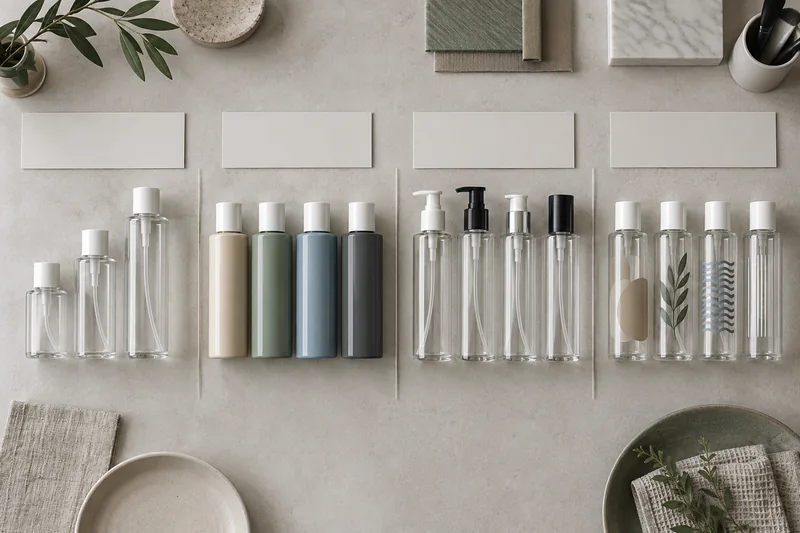
How to reduce cosmetic packaging MOQ without creating quality problems
- Start with physically stocked packaging, not merely an existing mould. Ask for inventory by exact model, color and capacity, plus the date and lot. Stock can sell out before approval.
- Choose one body color across the launch. Differentiate formulas through labels, cartons, cap color or artwork only when those routes have lower confirmed minimums and pass durability testing.
- Standardize the neck and dispenser. One qualified pump or cap can serve several bodies when the drawings, dip tubes, formula compatibility and line settings support it.
- Launch fewer capacities. A travel size may look attractive but can introduce another mould, dip tube, label size, carton and filling-line setup before demand is known.
- Use a stock body with controlled decoration. This preserves brand identity without new tooling. Boyu’s stock rollerball bottle options illustrate how an established format can start lower than a fully custom structure.
- Ask whether a setup fee can replace excess quantity. Some lines can economically run less when the buyer pays the non-recurring setup and accepts the resulting unit price. This is a commercial option, not a right.
- Batch genuinely identical processes. If several SKUs use the same coating tone and substrate, the decorator may combine them. Confirm that geometry, hanging fixture, cure and quality standard permit the batch; do not assume.
- Separate purchase timing from production timing. The factory might make one economic component lot and release it in scheduled shipments. This reduces immediate warehouse load but creates inventory ownership, storage and obsolescence risk that must be contracted.
- Use a competent packaging integrator when the set spans factories. An integrator can coordinate bodies, pumps and decoration, but the quote should identify actual producers, component minimums, margins, traceability and responsibility for failures.
Top five low-MOQ cosmetic packaging manufacturers in China
The ranking below favors a useful low-to-mid-volume path, product coverage, clarity of public MOQ information and suitability for international beauty buyers. It is not a claim that the first company always has the smallest numerical minimum. Published website statements are supplier-reported and can change with stock, tooling, color, decoration and capacity; verify the exact quotation, factory and specification before purchase.
| Rank and supplier | Public MOQ reference | Main products / market | Applications les plus adaptées |
|---|---|---|---|
| 1. Boyu Packaging | Stock rollerballs 1,000–3,000; printed rollerballs 3,000–5,000; stock serum bottles 3,000–5,000; broader starting points vary by format | Glass/plastic bottles, jars, pumps, droppers, fragrance and personal-care packaging for export brands | Brands needing several formats and coordinated components from one commercial contact |
| 2. Oulete | Existing-tool projects from 1,000; material/color changes from 3,000; new tooling from 10,000 | Airless bottles, thick-wall PET/PETG bottles and jars; indie and established skincare brands | Small existing-tool projects that need transparent development tiers |
| 3. GreenYard | Stock product lines from 1,000 per SKU; site states some customization from 1,000–3,000 depending on complexity | Pumps, sprayers and cosmetic/personal-care dispensing systems; clean beauty and DTC programs | Projects where dispenser engineering matters more than a unique bottle shape |
| 4. Loci Glass | Existing glass shapes from 3,000; new exclusive shapes stated from 30,000 | Perfume, nail, dropper, cream, toner and diffuser glass for beauty/fragrance buyers | Decorated glass programs that can use existing shapes |
| 5. ShiJin Package | Standard 5,000 per item/color; selected stock models may be lower | PET, HDPE and PETG bottles for skincare, haircare, body care and household/personal care | Plastic-bottle buyers with 5,000-unit-per-color planning volumes |
1. Boyu Packaging — best overall for coordinated multi-format projects
Pourquoi il occupe la première place : in this editorial framework, Boyu combines stock-to-custom routes across glass, plastic and dispensing formats with one-stop component coordination. That breadth is useful when a small brand wants serum bottles, rollerballs, jars and pumps without managing every specialist factory itself.
Published MOQ: Boyu’s English pages state 1,000–3,000 pieces for stock rollerball bottles and 3,000–5,000 for printed versions. Its stock and custom serum bottle routes show 3,000–5,000 for stock serum bottles and 10,000 per SKU for customized projects. Broader skincare packaging MOQ guidance starts plastic bottles at 5,000 and glass bottles/jars at 10,000. These are format-specific starting points, not one promise for every component.
Avantages : broad catalog; capability to coordinate bottle, closure, pump, dropper and decoration; export-oriented assortment; smaller stock routes in selected formats. Limitations : the smallest public minimum is not available across the entire range; glass, airless and custom-color programs can be materially higher; buyers must request a component-by-component source and MOQ matrix. Meilleur pour : international skincare, fragrance and personal-care brands that value a coordinated set more than the absolute smallest raw bottle lot.
2. Oulete — best for transparent existing-tool tiers
Oulete publicly separates existing-tool, material/color-change and new-tool projects. Its site states a 1,000-piece start for existing tooling, 3,000 for material or color changes and 10,000 for new-tool projects. The core catalog emphasizes airless, thick-wall PET/PETG bottles and jars.
Avantages : unusually clear public tiers; in-house injection moulding and several decoration processes; a sensible path for indie brands using existing geometry. Limitations : the site states that specialist categories and components can use partner supply routes, so pumps, tubes or complete assemblies may have a different source and minimum. Meilleur pour : skincare brands that can adapt to an existing Oulete body and want custom color or decoration without private tooling.
3. GreenYard — best for pumps, sprayers and indie dispensing projects
GreenYard’s official guide states a standard 1,000-unit MOQ per SKU for stock product lines and describes custom color, surface finishing and branding from 1,000–3,000 depending on complexity. Its positioning covers beauty, personal care and pharmaceutical dispensing.
Avantages : focus on dispensers; published small-brand route; sampling and scale-up positioning. Limitations : a headline stock MOQ should not be applied to every pump engine, gasket, spring, color or certification scope. Buyers should verify the manufacturing site, product-specific material file and whether the chosen component is genuinely stocked. Meilleur pour : formulas where spray pattern, pump output or metal-free/product-contact design is the critical purchase decision.
4. Loci Glass — best for existing-shape decorated glass
Loci Glass publishes a 3,000-piece minimum for existing shapes with custom decoration and a 30,000-piece minimum for a new exclusive shape. Its range includes perfume, nail-polish, essential-oil, serum, cream, toner and diffuser glass.
Avantages : focused glass range; clear difference between existing and private shapes; decoration presented as in-house. Limitations : it is not the natural choice for a plastic or airless-only program; glass freight, protective packing and breakage exposure need landed-cost analysis; new-shape minimums are not low. Meilleur pour : fragrance and skincare brands that can create differentiation through finish and closure while retaining a proven glass body.
5. ShiJin Package — best for 5,000-unit plastic bottle programs
ShiJin publicly states a standard 5,000-unit MOQ per item/color, with selected stock shapes available below that threshold. The company focuses on PET, HDPE and PETG bottles and publishes model-level dimensions for many products.
Avantages : plastic bottle specialization; large existing-mould library claimed on the official site; model-level specification pages; color and decoration options. Limitations : 5,000 per color is still too high for a 500-piece market test; the bottle factory’s minimum does not automatically cover a custom pump, cap or decoration supplier. Meilleur pour : established indie or mid-market haircare, skincare and body-care brands that can commit roughly 5,000 units to each plastic body/color combination.
For buyers whose priority is broader scale, materials or custom engineering rather than a small first order, compare Boyu’s broader China cosmetic packaging manufacturer comparison.
How to choose a low-MOQ cosmetic packaging manufacturer
The best supplier is not the one with the smallest number on a landing page. It is the supplier that can explain the number, identify the actual manufacturers, reproduce the approved sample and deliver a complete, traceable set at an acceptable landed cost.
1. Normalize quotations before comparing them
Require the same specification from every bidder: model code, material/grade, weight, capacity, neck, closure, gasket, pump output, dip-tube length, colors, decoration, pack-out, quantity per SKU, quality plan, Incoterm and destination. A 2,000-piece body-only quote is not cheaper than a 5,000-piece complete-set quote until missing components and setup charges are added.
2. Identify factory, integrator and subcontractors
A direct factory may control one process well but have a narrow range. A competent trading company or integrator may coordinate several specialist plants and permit mixed orders. Either model can work; require transparency about who moulds the bottle, assembles the pump, applies decoration, owns tooling, releases quality and handles a claim.
3. Do not trade quality controls for a low minimum
Approve a production-intent sample and revision-controlled drawing. Define critical defects, inspection method, sampling plan, color standard, print adhesion, leakage, torque or pump output, and packaging condition. Test the filled product with the exact bottle, closure, gasket and decoration; Boyu’s guide to filled-product compatibility testing explains why an empty-bottle sample cannot validate a formula-package system.
4. Verify documents at product and site level
Review the legal manufacturer, site, quality-system certificate scope, material declarations, resin or component supplier evidence, lot traceability and change-notification process. ISO states that it does not certify organizations; a logo or generic certificate on a website does not approve a particular bottle. Request current files and verify the issuing and accreditation details.
5. Check whether the pilot can scale without silent change
Ask whether the low-volume sample, first order and scaled order use the same tool, cavity set, resin, sub-supplier and factory. A supplier may source small stock lots from a distributor and later switch to made-to-order production. That can be commercially reasonable, but the transition must trigger sample approval and any necessary revalidation.
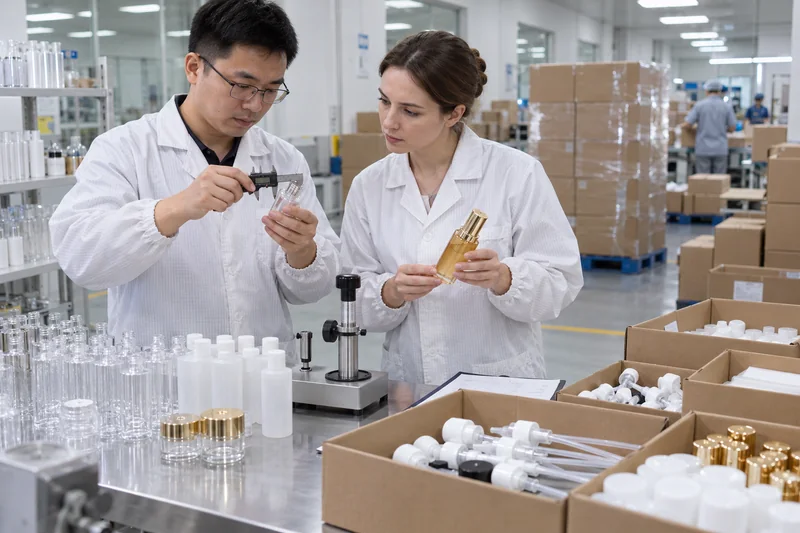
Low-MOQ cosmetic packaging RFQ template
Send the supplier a matrix, not a mood board. The following fields make a quote comparable and expose which minimum actually controls the project:
- Product/formula category and target markets; disclose compatibility-relevant characteristics under confidentiality where appropriate
- Each SKU: model, nominal fill, bottle capacity, material, weight, dimensions and neck finish
- Body color: stock or custom; moulded, sprayed, frosted or plated; physical reference and tolerance
- Closure: model, neck, liner/gasket, pump output, spring position/material, lock, color and dip-tube length
- Decoration: artwork revision, print method, number of colors, print area, hot-stamp foil, label material and market versions
- Required complete sets per SKU and forecast for 12 months
- Separate MOQ for body, capacity, color, closure, decoration, carton and total PO
- Setup/tooling/sample charges and price breaks; treatment of overrun and underrun
- Actual manufacturer/site for every critical component and process
- Sample type: stock, decorated prototype or production-intent; tool/cavity/lot identity
- Quality plan, acceptance criteria, inspection evidence, retain samples and traceability
- Lead time by sample, component, decoration, assembly and shipment; Incoterm and destination
- Policy for holding excess components, repeat orders, material/tool/site changes and nonconforming goods
Standards, compliance and low-volume orders
There is no ISO standard or cosmetic regulation that sets a universal packaging MOQ. Minimums are commercial consequences of production, inventory and setup. Standards and regulations instead affect how the supplier is controlled and how the finished package is approved.
ISO 9001 provides a framework for controlling external providers; ISO 2859-1 is a widely used acceptance-sampling framework when contractually selected. In the United States, MoCRA requires the responsible person to ensure adequate substantiation of cosmetic product safety. In the European Union, the Cosmetic Product Safety Report includes relevant packaging-material characteristics, particularly purity and stability. None of these responsibilities disappears because the brand orders 1,000 rather than 100,000 packs.
Define which test methods, material declarations and market documents apply to the exact formula and destination. Treat “FDA approved packaging,” “EU certified” or a generic ISO logo as a prompt for document review, not as proof of compliance.
Questions fréquentes
Can I split one 10,000-piece order into five colors of 2,000?
Only if the supplier approves that split for the exact material and coloring process. Five moulded colors are normally five material/changeover events. A supplier may combine commercial order value while still applying a technical minimum to each color.
They often use different moulds, weights and process settings. They may also need different dip tubes, print fixtures, labels and cartons. Quantities can be pooled only when the supplier confirms common stock or a deliberately shared production route.
Can the same pump be used across several bottle sizes?
Possibly. The neck, seal, formula, dose and filling-line conditions must be compatible, and each body normally needs the correct dip-tube length. Standardizing the engine and collar while changing only a controlled dip tube can reduce component variety.
Are labels always the best low-MOQ decoration?
No. They are often flexible for small artwork variants, but the label material, adhesive, bottle surface, curvature, moisture, oil and consumer-use environment must be tested. Direct printing may be more durable or premium for some designs despite a higher setup.
Which Chinese manufacturer has the lowest MOQ?
There is no single winner across every format. In the reviewed public information, Oulete and GreenYard advertise 1,000-piece starting points for eligible existing-tool or stock lines, while Boyu publishes selected stock rollerball routes from 1,000–3,000. The lowest valid quote depends on the exact body, capacity, color, closure and decoration.
Can a startup get a private mould at low MOQ?
It is possible when the buyer pays tooling and the factory accepts the run, but a private shape normally has a higher production commitment than an existing body. The startup must also fund engineering, sampling, validation and future tool maintenance. Existing-tool differentiation is usually the lower-risk first-launch route.
Sources and supplier disclosures
- Oulete — OEM and ODM cosmetic packaging services and published MOQ tiers
- GreenYard — Low MOQ cosmetic packaging guide and supplier-stated stock/customization minimums
- Loci Glass — Official product scope and published existing/new-shape MOQ tiers
- ShiJin Package — Official FAQ on MOQ per item/color and selected stock routes
- ISO — ISO 9001 quality management systems
- ISO/IAF Auditing Practices Group — External providers guidance
- ISO — Certification and conformity assessment
- ISO — ISO 2859-1:2026 Procédures d’échantillonnage pour le contrôle par attributs
- FDA américaine — Loi de 2022 sur la modernisation de la réglementation des cosmétiques
- FDA américaine : Directives relatives aux bonnes pratiques de fabrication (BPF) des produits cosmétiques / Liste de contrôle pour les inspections
- European Union — Regulation (EC) No 1223/2009 on cosmetic products

 English
  Español de Argentina
  Русский
  Italiano
  日本語
日本語  한국어
한국어  العربية
  Français
  Deutsch