Square Twist-Up Acrylic Airless Pump Bottles
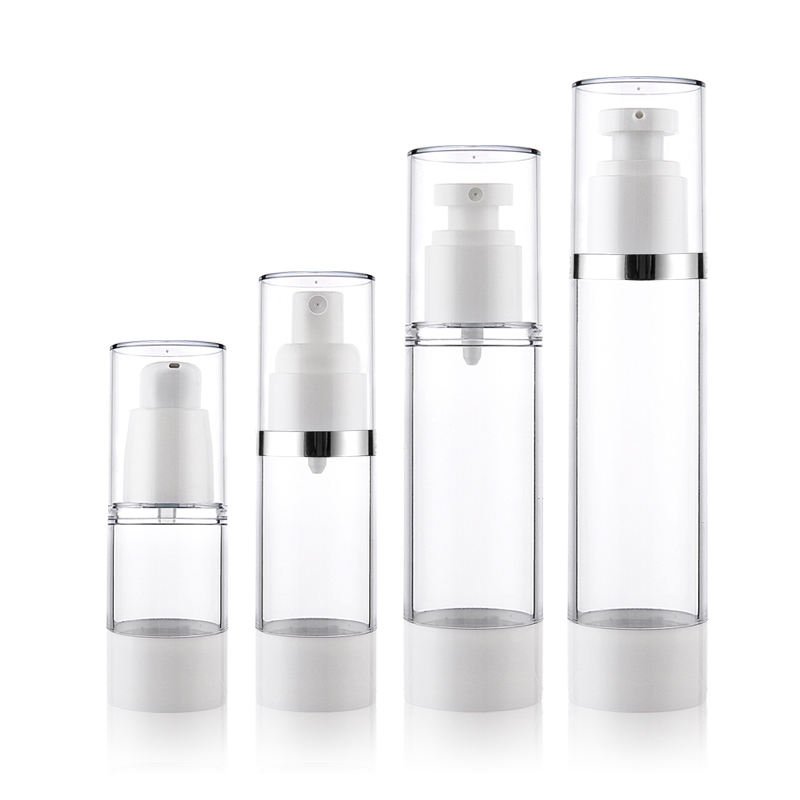
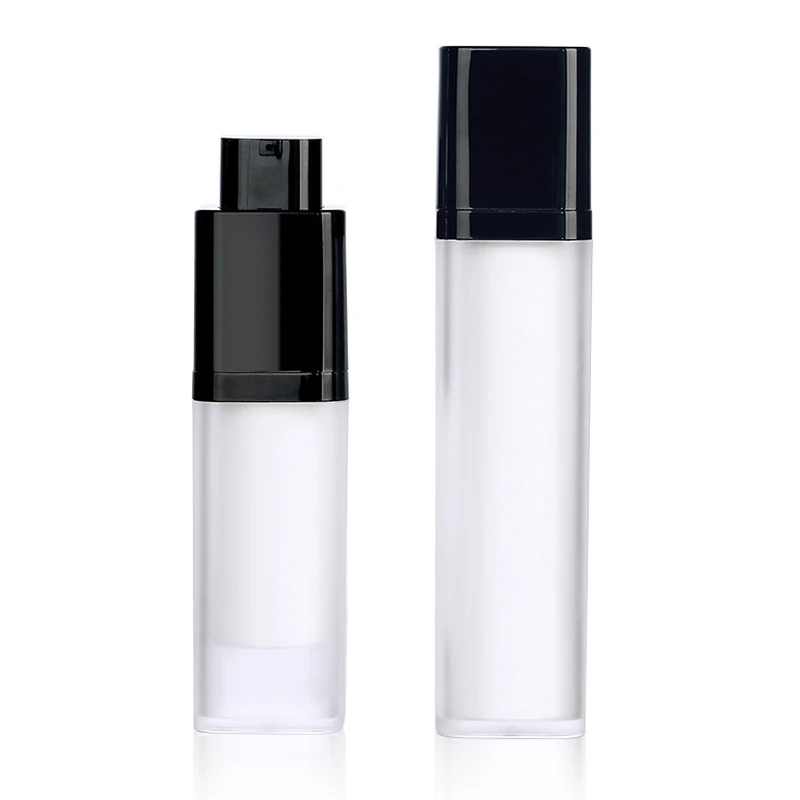
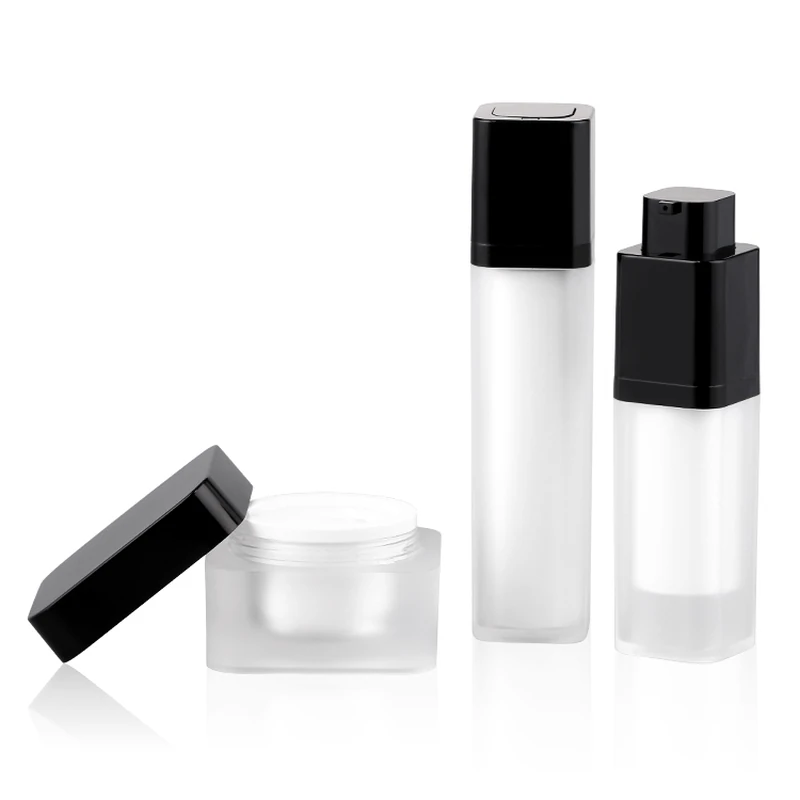
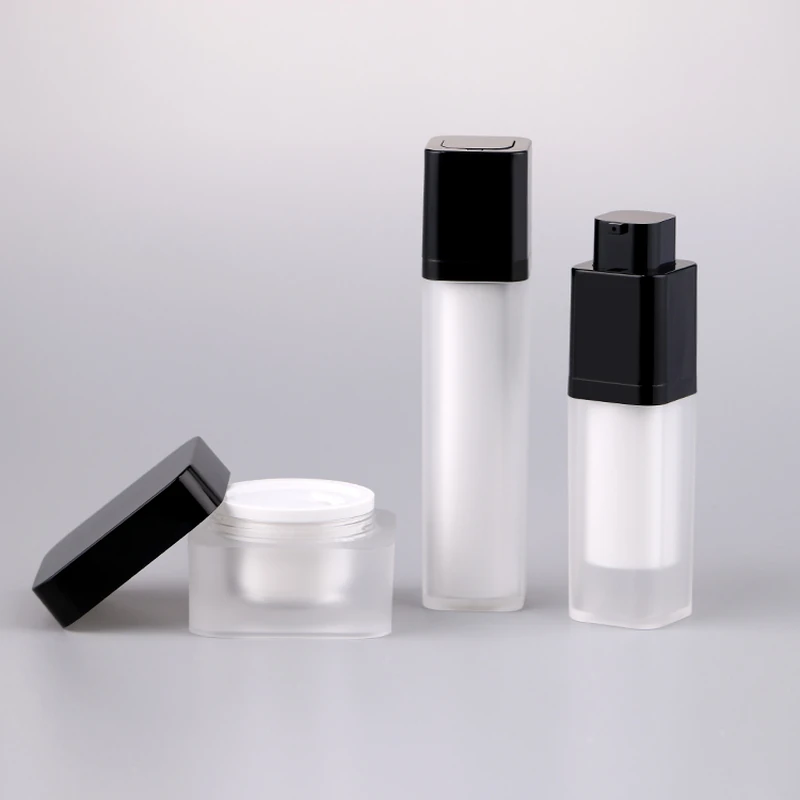
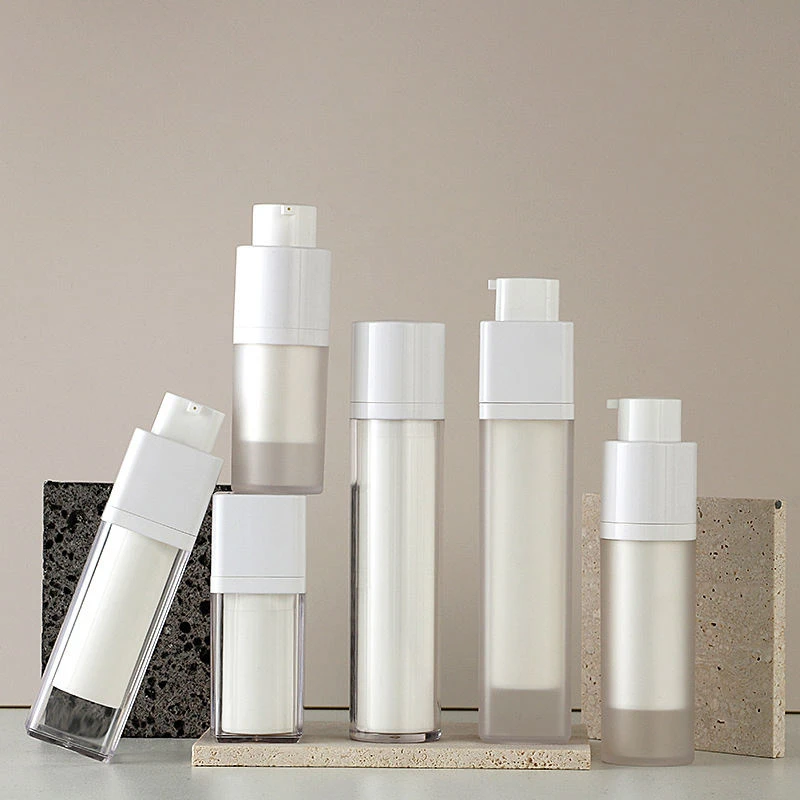
Boyu Packaging’s 15, 30 and 50 mL square airless bottles pair a frosted acrylic shell with a black twist-up pump for serums, lotions and pumpable creams. The retracting actuator and flat front panel suit coordinated skincare ranges. Compare airless packaging formats for related projects. Made in Zhejiang, China. MOQ 10,000 pieces.
Specifications
| Brand and origin | Boyu Packaging · Zhejiang, China |
|---|---|
| Nominal bottle sizes | 15 mL, 30 mL and 50 mL. Approve usable fill and headspace for each SKU. |
| Bottle construction | Square acrylic outer shell with a frosted appearance and an inner reservoir. Confirm the full bill of materials, including formula-contact parts, on the approved part drawing. |
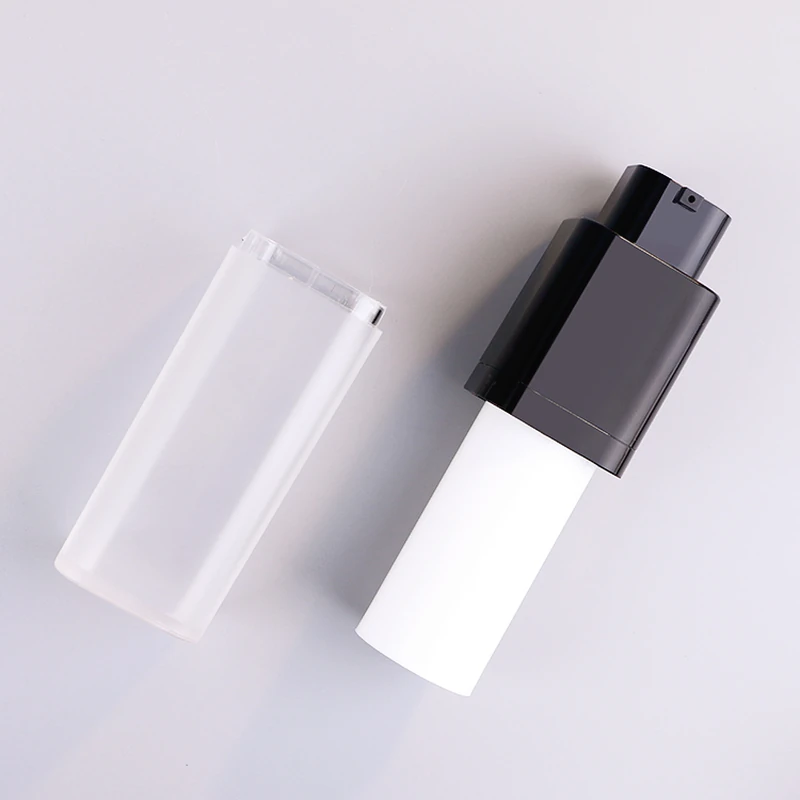
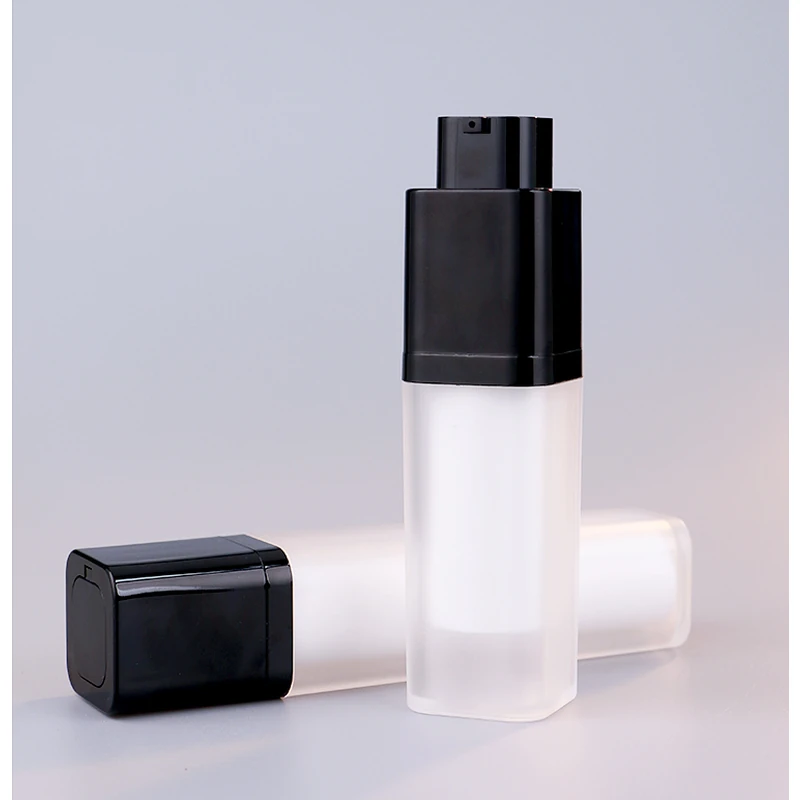
| Dispensing | Black twist-up airless pump. Rotate to raise the actuator, press to dispense, then rotate to retract. Approve the mechanism and operating effort on the sample. |
| Pump output | Approve target output per stroke, priming limit and residual product with your formula. Confirm the proposed 1 mL per stroke on the quote and filled sample. |
| Decoration | Screen printing. Approve printable area, color, artwork orientation and surface adhesion. |
| Applications | Cosmetic serums, lotions and pumpable creams. Qualify each formula with the complete package. |
| Dimensions and filling | Request size-by-size drawings, closed and open height, width, fill opening, fill limits and assembly instructions. |
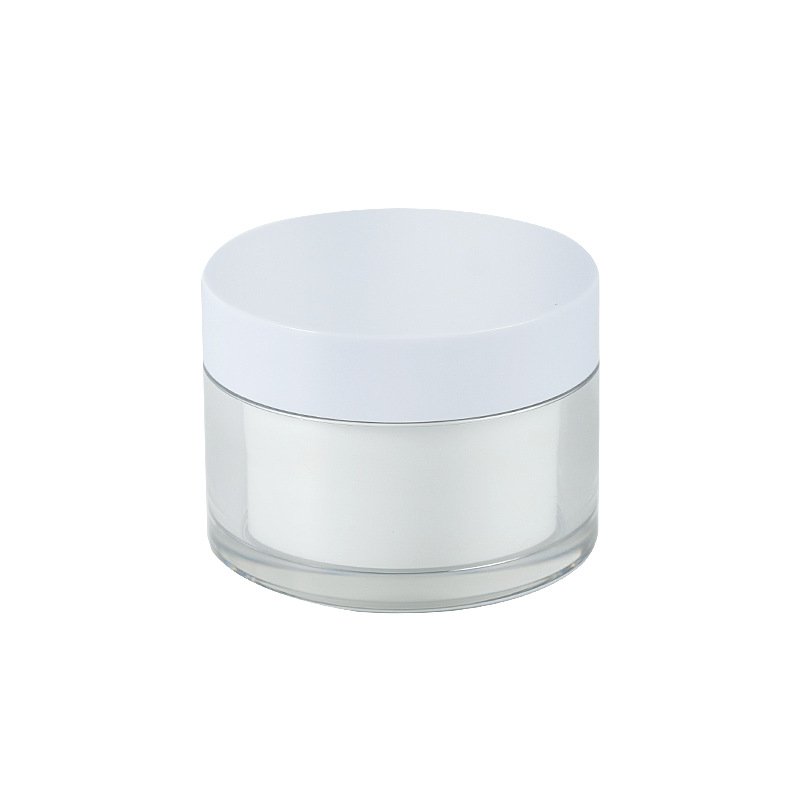
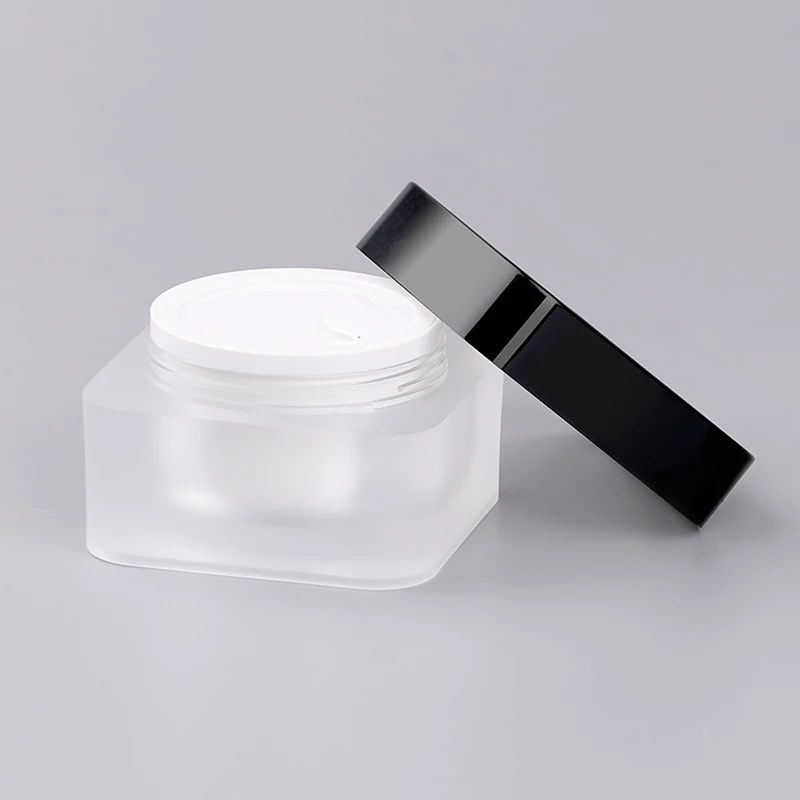
| Companion cream jar | Request a separate quotation and specification for 30 g or 50 g references. Confirm usable fill for the intended formula. |
| MOQ | 10,000 pieces. Confirm allocation by capacity, component color and artwork. |
| Delivery and packing | Confirm the production window, inspection date, dispatch terms and export carton configuration in the order acknowledgment. |
Choose the Pump and Fill Configuration
Match dose to formula and use
Send your filled-product target dose, density and viscosity range, including the temperature at which viscosity was measured. A smaller daily-use serum may need a different dose from a face lotion. Test the intended formula for priming, output variation, nozzle residue and post-storage restart. Measure residual product by weight at end of use, using the airless pump evacuation guide to agree on a repeatable test.
Confirm filling and appearance before artwork
Approve the reservoir and pump interface on a drawing. Run a line trial to set fill height, assembly order, seating depth and the handling fixture for the square shell. Check the neck area for trapped product or air. Set a front-face datum for printing and confirm how the actuator and square collar align when retracted. Approve the frosted appearance, black pump shade and screen-print adhesion on the assembled sample.
Bottle Construction and Matching Jar
Review the open and closed actuator positions and the separated shell and reservoir. Specify the companion cream jar as a separate item in your RFQ.
Factory Production and Approval Flow
1. Confirm drawings, material and order split
Specify the 15, 30 or 50 mL SKU, outer shell, resin for each formula-contact part, pump target dose, color and decoration. Approve dimensions and the agreed tooling route before material release. If the project needs modified tooling or a new insert, document tooling ownership, trial rounds and approval criteria.
2. Mold components and approve decorated samples
Confirm the proposed molding and finishing route for the shell, reservoir and pump components. Use first-off parts to check dimensions, shell clarity and frosting, corner finish and mating surfaces. Run a decoration sample for each artwork and color. Check ink cure, print position, coverage and the condition of coated or frosted surfaces after handling.
3. Assemble, qualify and release the bulk lot
Confirm whether pump assemblies and bottle bodies ship together or separately. On first assembled units, check seating, collar alignment and actuator rotation, then use filled samples for function and seal approval. Compare the bulk run with the signed samples and agreed inspection plan. Release cartons after the acceptance report, traceability labels and packing counts are checked.
Quality Control and Buyer Acceptance
Incoming and in-process checks
Record material and color lot references. Check key assembly dimensions, wall appearance, flash, stress marks, corner damage and print variation. Inspect actuator travel and collar-to-shell alignment in both positions. Agree on measurable limits for turning effort and cycle checks if the twist-up mechanism is critical to the launch.
Functional and finished-lot inspection
Define priming, output, leakage and residual-product acceptance with the intended formula. Recheck output after the specified storage and transport conditions. Confirm that the raised actuator clears adjacent fixtures and that the retracted position survives carton compression and handling. Agree on critical, major and minor defect definitions, the sampling plan and the evidence required to release a lot. Retain samples and inspection records for claims and repeat orders.
Lead Time, Export Packing and Quotation
Request dated milestones for drawing approval, sample dispatch, decorated sample sign-off, component production, assembly, final inspection and dispatch. Ask for separate timelines for an existing configuration and an order that needs new tooling or decoration trials. Confirm which event starts the production clock, such as written sample approval and deposit receipt, and whether the quote’s lead time includes inspection or transit.
For a wholesale quotation, send quantities by capacity, the formula brief, dose target, color swatches, vector art, requested test documents, destination and required arrival date. Request itemized costs for tooling, samples, pumps, bottles, printing, inspection and freight where applicable. Confirm pieces per carton, dividers for the acrylic corners, outer dimensions, carton weight and shipment volume for freight planning.
Buyer FAQ
Can I mix all three sizes at the MOQ?
The MOQ is 10,000 pieces. Confirm the accepted quantity by size, color and artwork on the quote.
Does the pump dispense 1 mL every time?
Approve the target dose and tolerance using filled samples. Measure full-stroke output after priming and after storage for each formula.
Which parts contact the formula?
Request the material list for the inner reservoir, pump flow path and seals. Approve compatibility on the selected assembly.
Can I fill a thick cream or a thin serum?
Test your viscosity range at intended use temperatures. Check priming, dose consistency, pump return and leakage on the specific formula.
Is the inner reservoir refillable?
Approve the cartridge or replacement procedure if refillability is required. Confirm retention, seals and repeat installation on the intended design.
Can the pump and body be customized?
Submit color references and artwork. Confirm tooling and component availability, then sign off on physical shades and print proofs.
Can I order the matching jars?
Request separate specifications and pricing for the jar, including capacity, closure, formula fit and packing.
How long will sampling and production take?
Request a written schedule by SKU and finish. Confirm the sample approval date, bulk release conditions, dispatch window and transit estimate.
What if bottles arrive scratched or the pump malfunctions?
Record batch and carton numbers, affected quantities and photos. Retain units for repeatable testing and follow the agreed claims process.
What documents are available for importing?
List the material declarations, traceability, inspection reports and destination-specific documents needed. Confirm availability and scope before issuing the order.
 English
 Español de Argentina
 Русский
 Italiano
 日本語
 한국어
 العربية
 Français
 Deutsch