1. Home
  2. /
  3. Blog
  4. /
  5. Product Knowledge

Do you need our help?

If you have any questions, please feel free to contact us by leaving a message.

hot product

100ml 200ml Custom Soft Empty Cosmetic Squeeze Tubes Skincare Facial Cleanser Cream Packaging Tube

Custom Empty Squeeze Skincare Facial Cleanser Cream Tube 100/200ml

MORE
Black matte Plastic Empty Facial Cleanser Squeeze Lotion Tube 200ml

Black Matte Plastic Empty Facial Cleanser Squeeze Lotion Tube 200ml

MORE
Plastic Gold Disc Cap Press Pump Shampoo Bottles 150/250/300ml

Plastic Gold Disc Cap Press Pump Shampoo Bottles 150/250/300ml

MORE
Custom 3 Wick Matte Black Frosted White Eco-friendly Handmade Modern Empty Glass Candle Jars 16 OZ

Custom 16 oz Three-Wick Glass Candle Jars in Matte Black and Frosted White

MORE
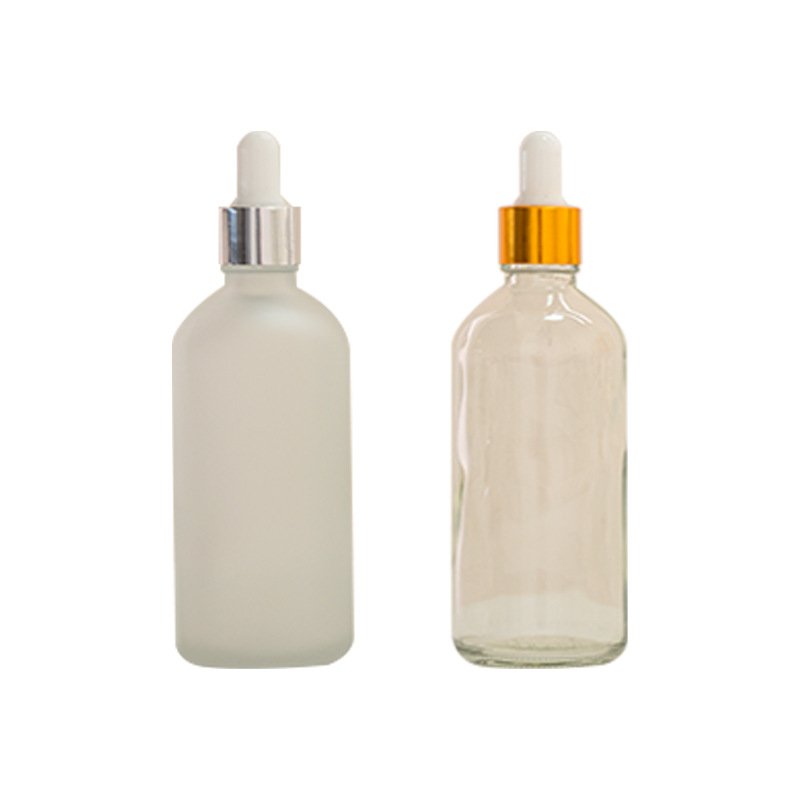
30ml, 50ml, 100ml, 120ml Transparent Flat Square Rectangular Glass Empty Dropper Oil Serum Bottles

Custom Transparent Flat Square Glass Dropper Serum Bottles 30-120ml

MORE
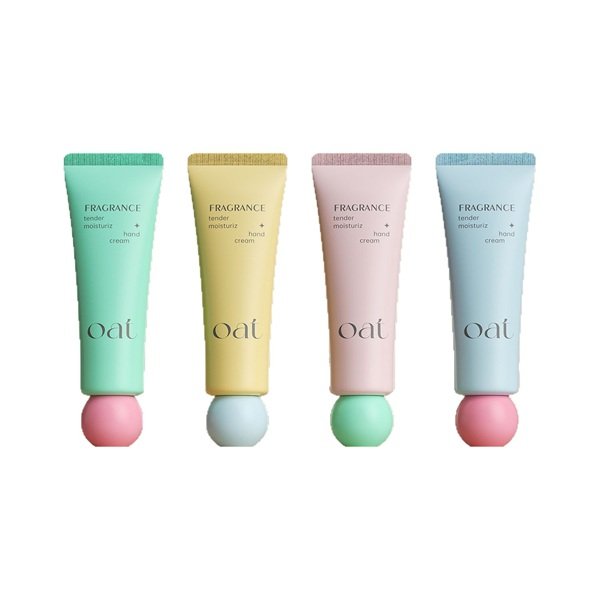
Luxury Customized Empty Soft Squeeze Plastic Tube for Hand Face BB Cream Foam Skin Care

Luxury Custom Soft Squeeze Plastic Tube for Hand Cream, Face Cream 30-200ml

MORE

Product Knowledge

Which Pump Is Best for High-Viscosity Products?

Short answer: For most pumpable high-viscosity lotions, creams, gels, hair masks and conditioners, the best starting point is a high-viscosity lotion or treatment pump with a generous inlet, wide product passages, adequate suction and a clean-cut outlet. Choose an airless piston system when oxidation protection, hygienic dosing, any-angle use or low residual product matters more […]

How to Choose an Industrial Strapping Manufacturer: Guide to Reliable Suppliers

Direct answer: choose an industrial strapping manufacturer by qualifying the load-securing system, not by comparing strap price or a certificate list. First specify the load, transport route, strap material, break load, elongation, retained tension, joint method, machine, coil and acceptance tests. Then score factories on production control, lot evidence, machine trials, market-specific compliance, traceability, supply […]

How Are Shampoo Bottles Made? Design to Production

Short answer: a factory-made shampoo bottle starts with the formula, dose, shower use and distribution requirements—not with a bottle sketch. The pack is then engineered as one system: bottle resin and blow-moulding route, neck finish, pump or cap, decoration and shipping pack. PET bottles are usually made from injection-moulded preforms by stretch blow moulding; HDPE […]

Can a Lotion Pump Be Used for Shampoo? Important Notes

Direct answer: Yes—a lotion pump can be used for shampoo if the complete pump, bottle and formula pass functional and compatibility testing. The neck must fit and seal; the pump must prime, refill and return with the shampoo at intended temperatures; a full stroke must deliver a useful dose without excessive force, stringing or suck-back; […]

How Is Glass Made? Step-by-Step Glass Bottle Manufacturing

Short answer: industrial glass is made by accurately weighing silica sand, soda ash, limestone or dolomite, alumina-bearing materials and clean recycled glass; melting and refining the batch in a continuous furnace; cooling it to a controlled forming viscosity; shaping it; and annealing it through a controlled cooling curve. In a bottle plant, the conditioned glass […]

Why Does a Fine Mist Sprayer Produce a Stream? Causes & Fixes

Direct answer: A fine mist sprayer produces a stream when the liquid does not leave the actuator as a thin, rotating sheet that can break into droplets. The usual causes are residue or damage in the tiny orifice or swirl insert, an incorrect or displaced insert, insufficient pressure from a partial/slow stroke or weak pump, […]

Why Does a Lotion Pump Lose Prime? Causes & Fixes

Direct answer: A lotion pump loses prime when the product column drains back or the pump chamber fills with air faster than the mechanism can create suction. The usual root causes are an inlet check valve that does not seal, air leakage at the dip-tube joint or piston seal, a tube inlet above the product […]

How to Calculate the Correct Dip Tube Length: Guide to Calculation Methods

Direct answer: Measure the assembled path from the bottom of the pump gasket (the sealing datum) to the bottle’s internal base at the tube location, then choose a finished dip-tube length that places the open end close to—but not sealed against—the lowest usable point. For a straight tube, the engineering start point is FBOG bottle […]

How to Choose Pump Output for Lotion and Serum: Complete Guide

Dispensing specification guide Choose pump output by dividing the product’s intended amount per use by the number of full strokes consumers should make. Then verify that target gravimetrically with the finished formula in the production-intent bottle and pump. Serum usually needs a smaller, more controllable dose than body lotion, but there is no universal “correct” […]

Why Does a Cosmetic Formula Discolor Inside the Bottle?

Direct answer: A cosmetic usually discolors because ingredients are oxidizing, reacting to light or heat, shifting with pH, interacting with trace metals, degrading together, or supporting microbial growth. Packaging can accelerate or reveal the change when it admits oxygen/light, loses volatile components, releases migrants, adsorbs ingredients or exposes the formula to reactive pump and seal […]

How Long Should a Cosmetic Packaging Compatibility Test Take?

Direct answer: Plan about 8–12 weeks for the main accelerated cosmetic packaging compatibility study, with observations at baseline and several intermediate points. Use a shorter 1–4 week screen only to reject obvious failures. Continue real-time monitoring in the final package through the claimed shelf life—often 12, 24 or 36 months depending on the brand’s justified […]

What Packaging Is Best for Facial Toner? A Formula-to-Format Guide

Direct answer: For most low-viscosity facial toners, the best practical package is a PET or glass bottle with a controlled-flow reducer, treatment pump or well-matched fine-mist sprayer. PET is the balanced choice for lightweight daily use; glass suits premium or light-sensitive positioning; HDPE suits opaque, impact-resistant packs. Choose the dispenser from how the toner is […]

What Bottle Is Best for Alcohol-Based Body Spray? A Material and Sprayer Guide

Direct answer: For most non-aerosol, alcohol-based body sprays, a compatible PET bottle with a high-quality fine-mist sprayer is the best practical starting point: it is lightweight, impact resistant, transparent and economical. Choose glass when premium feel and a strong fragrance barrier outweigh weight and breakage risk; choose HDPE when opacity and rugged handling matter more […]

Is retinol better in an airless pump or a jar? Best Packaging

Direct answer: Retinol is usually better packaged in an opaque, well-validated airless pump than in a conventional wide-mouth jar. Retinol is vulnerable to light and oxidation, and an airless system limits repeated air exchange while dispensing without fingers entering the product. However, “airless” does not mean oxygen-free: initial headspace, package permeability, pump design, light transmission […]

Cosmetic Packaging Drop Test Standards: ASTM, ISO and ISTA Explained

Direct answer: The principal free-fall methods for cosmetic transport packages are ASTM D5276 and ISO 2248. For a complete parcel-delivery simulation, ISTA 3A is commonly considered for packaged products up to 70 kg (150 lb); ASTM D4169 provides distribution-cycle test sequences, while ASTM D7386 addresses single-parcel shipments. None creates one universal cosmetic-package drop height. The […]

What tests are required for cosmetic bottles? Required Tests & Checklist

Short answer: there is no single, universal list of tests that every cosmetic bottle must pass. A defensible launch programme normally covers specification and appearance, bottle–closure fit and torque, leak integrity, formula–package compatibility and stability, dispensing performance, mechanical strength, distribution testing, and label or decoration durability. Material migration, barrier, light-protection, child-resistant, tamper-evident or pressure tests […]