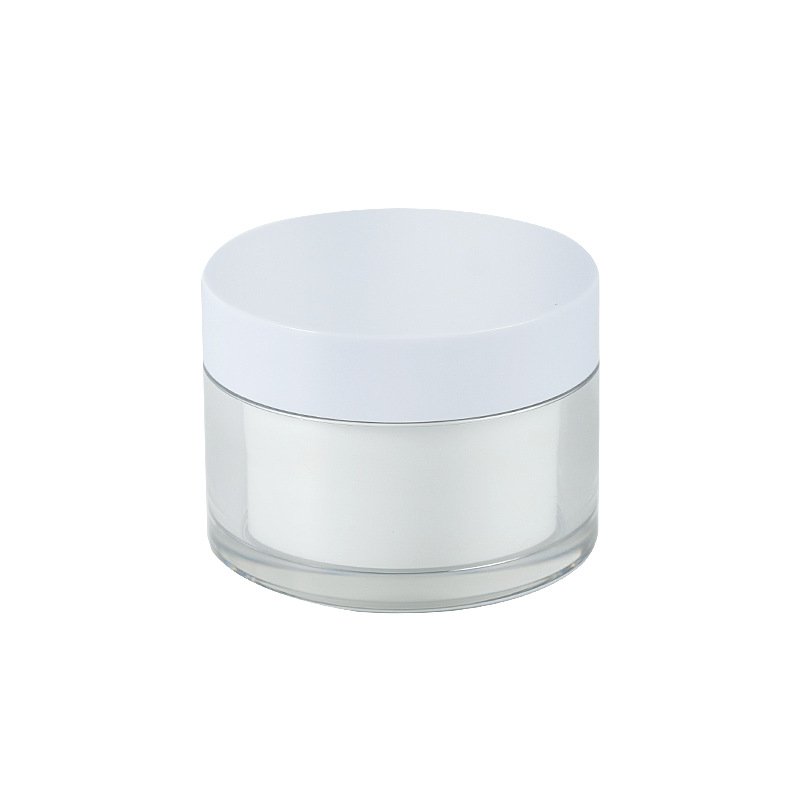
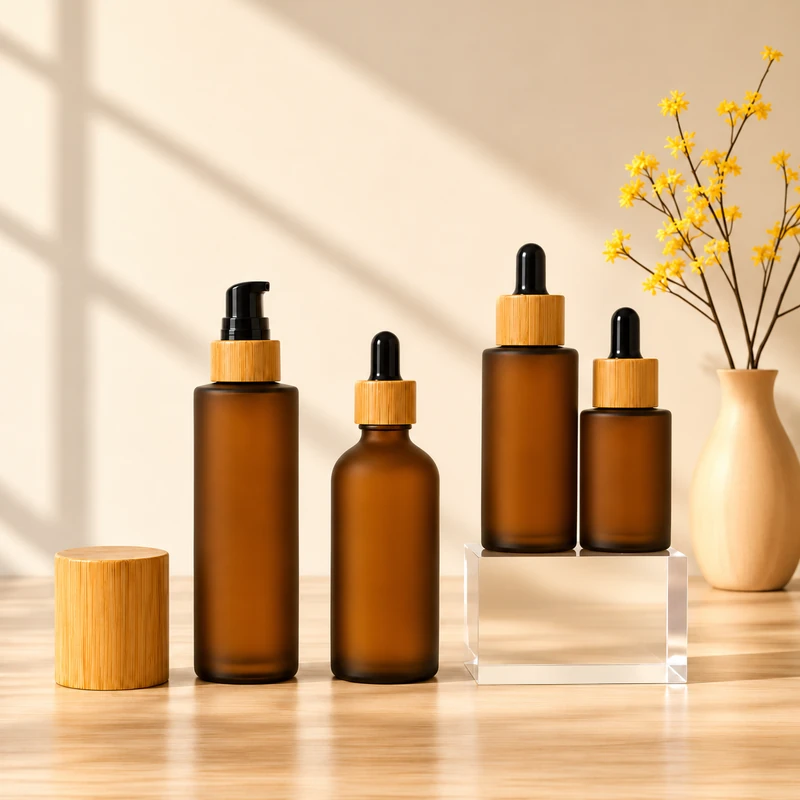
100 mL Amber Glass Dropper Bottle with Bamboo Exterior Collar
Boyu Packaging offers a 100 mL amber glass bottle with a bamboo-trimmed dropper closure for qualified cosmetic serum and oil formulas. A bamboo-trimmed lotion pump is a separate dispenser option. Explore the glass dropper bottle range to compare formats. Brand: Boyu Packaging. Origin: Zhejiang, China. MOQ: 10,000 pieces.
Product Specifications
| Brand / origin | Boyu Packaging / Zhejiang, China |
|---|---|
| Primary format | 100 mL nominal amber glass cosmetic bottle |
| Body material | Glass body, base and threaded neck |
| Primary closure | Dropper assembly with bamboo exterior collar |
| Alternative dispenser | Lotion pump with bamboo exterior trim, selected as a separate assembly |
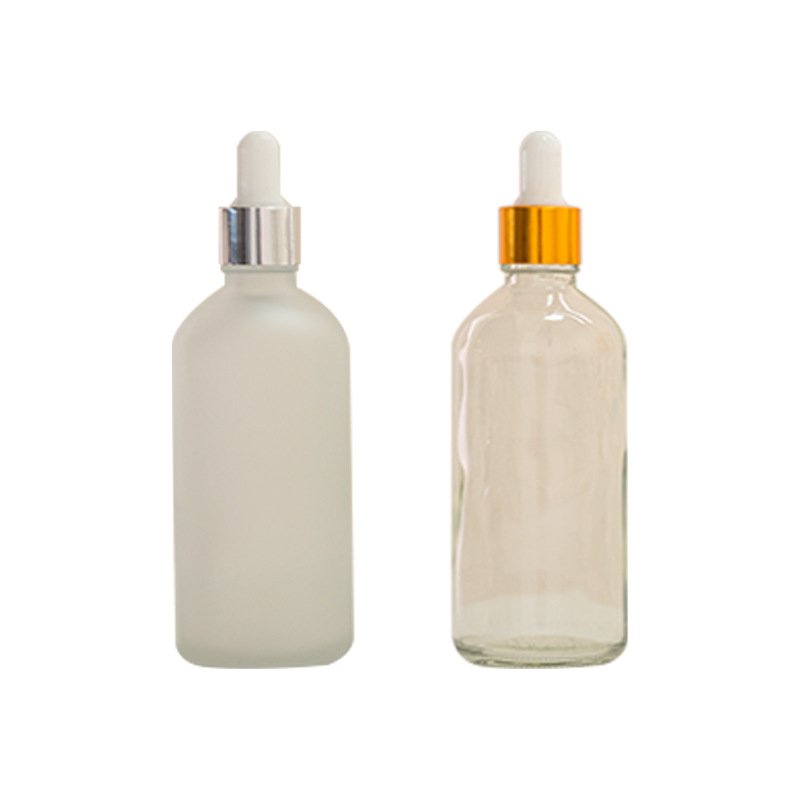
| Appearance | Amber presentation; frosted and clear glass variants belong to separately approved configurations. |
| Body profiles | Round bottles with different shoulder presentations; the order identifies the exact drawing and bottle code. |
| Customization | Logo, decoration, glass finish, closure appearance and retail packout by signed sample |
| MOQ | 10,000 pieces |
| Supply scope | Empty bottle and selected closure. Formula, filling, accessories and retail contents are separate quotation items. |
Amber Glass and Bamboo for a Coordinated Skincare Range
100 mL Bottle Presentation
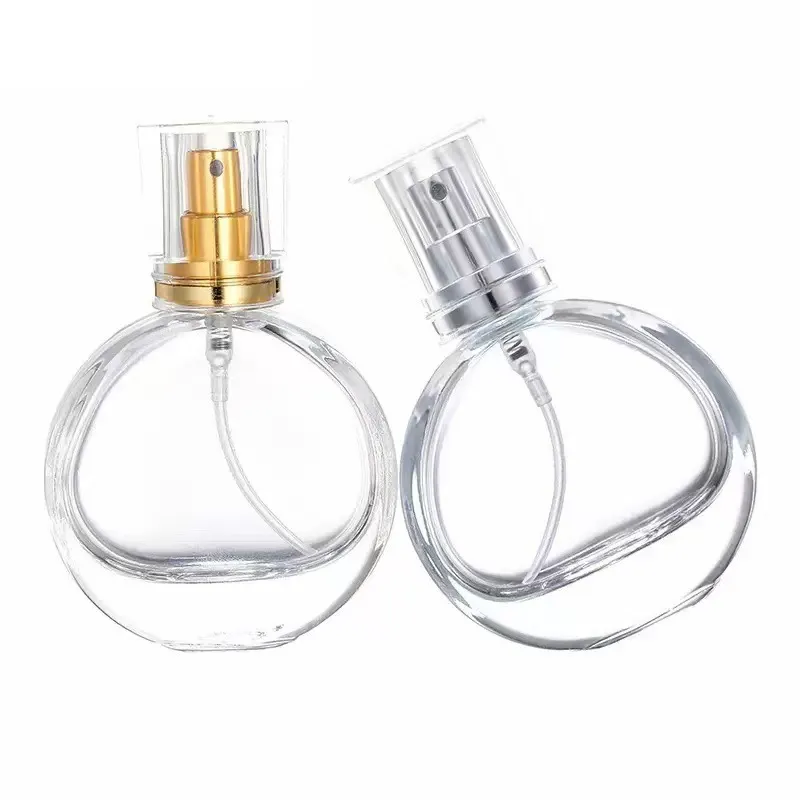
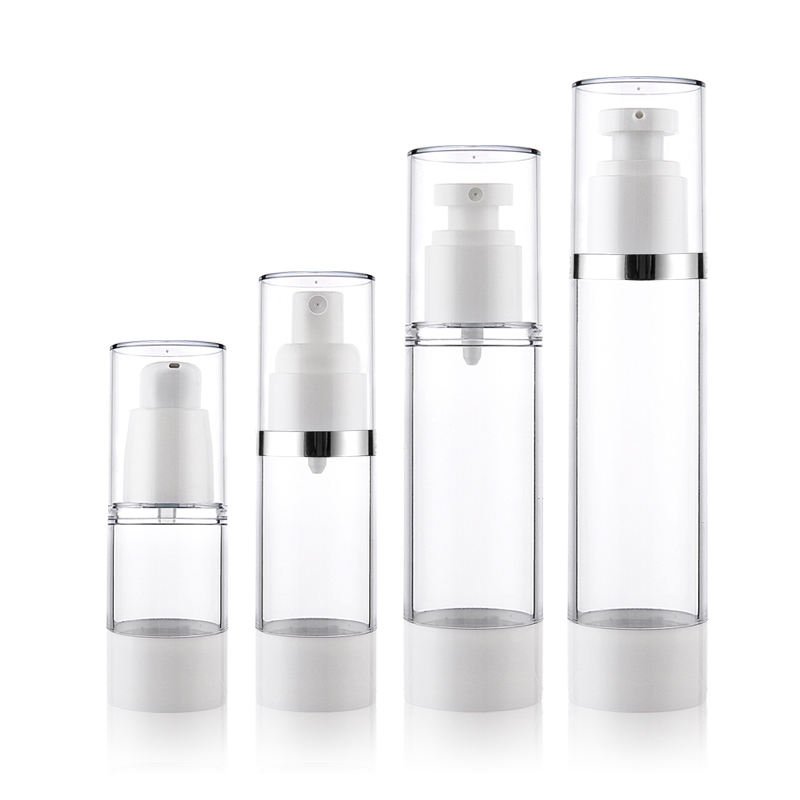
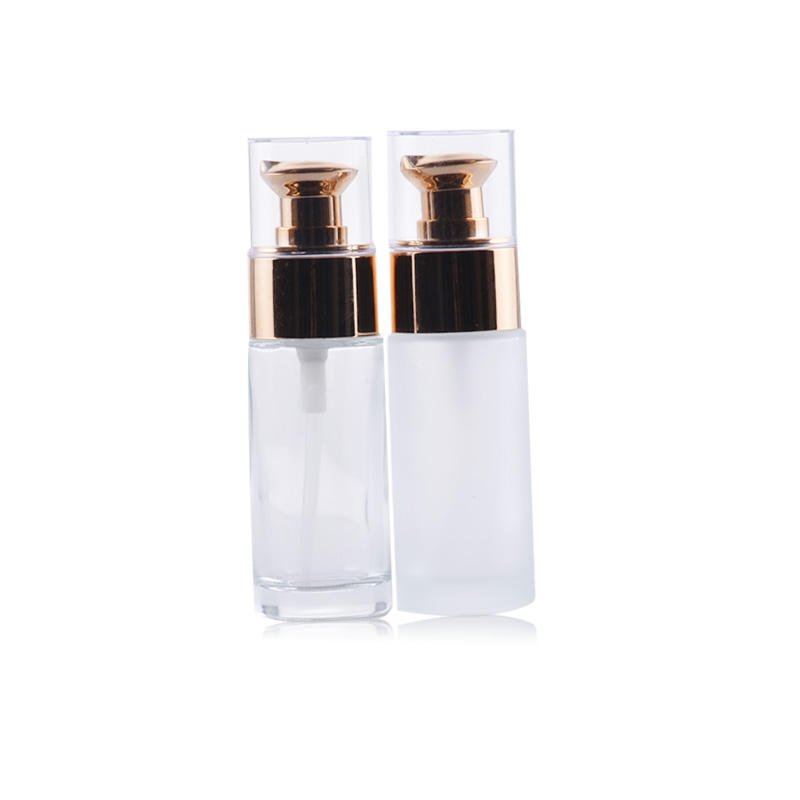
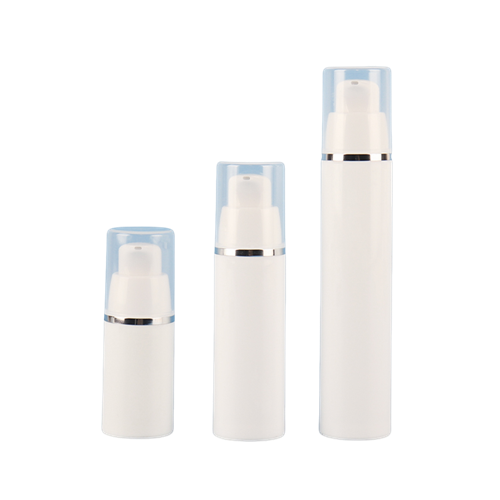
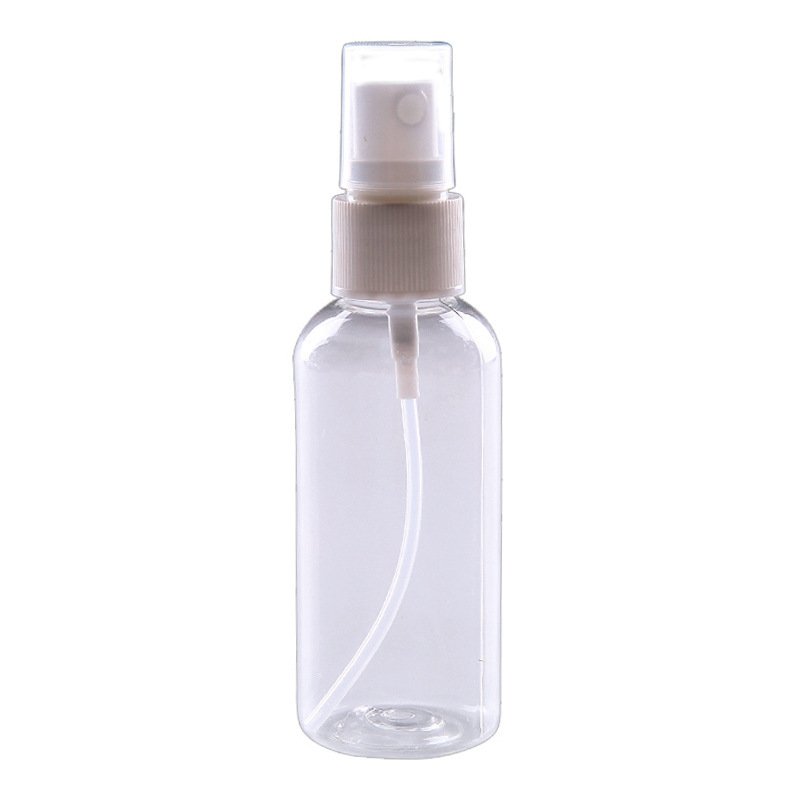
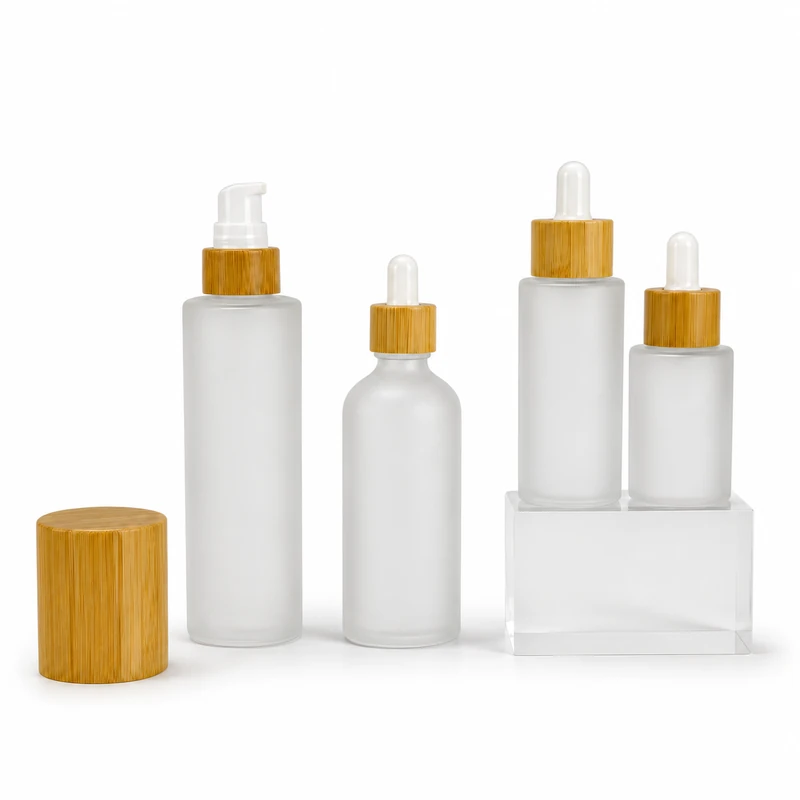
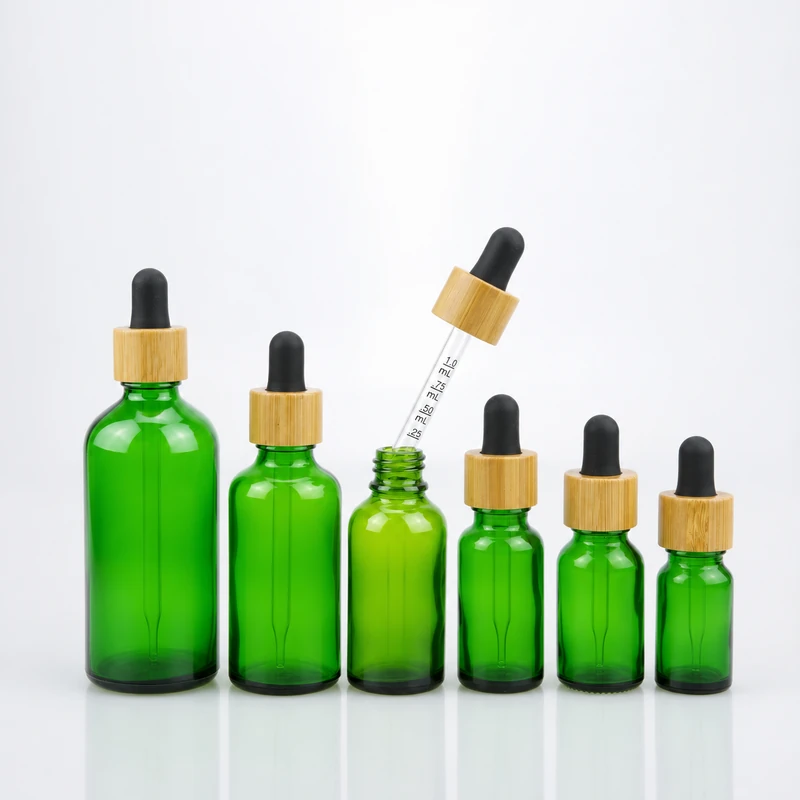
The amber glass body pairs with a bamboo exterior collar for a distinct serum or oil presentation. The round format offers a continuous decoration surface. Select the flat-shoulder or rounded-shoulder profile from a size-specific drawing. The gallery includes other finishes and sizes as configuration references; it does not define a mixed shipment.
Bamboo Exterior and Internal Closure
Bamboo provides the visible collar or trim surface. It is not the complete sealing or dispensing mechanism. The component list identifies the internal threaded part, liner, dropper bulb, pipette and any formula-contact seals. The signed sample sets acceptable bamboo grain, shade variation, finish and attachment quality.
Amber, Frosted and Clear Glass Configuration Views
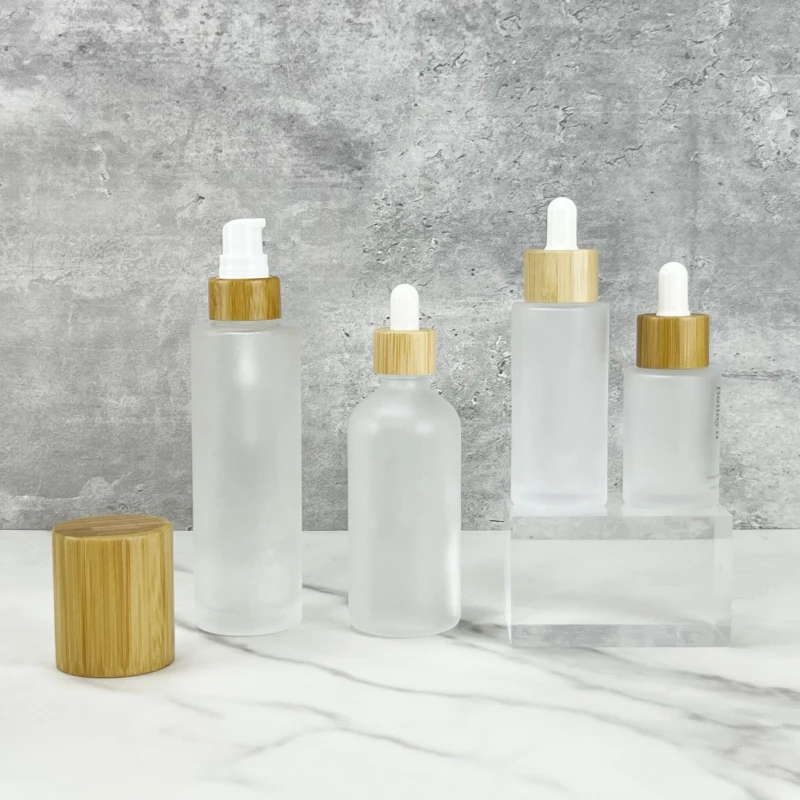
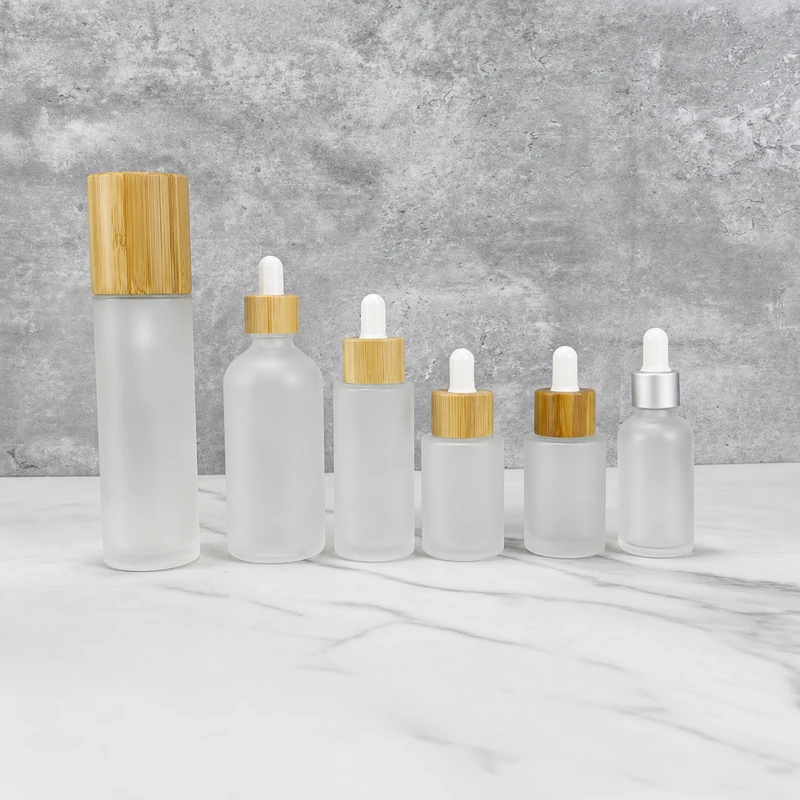
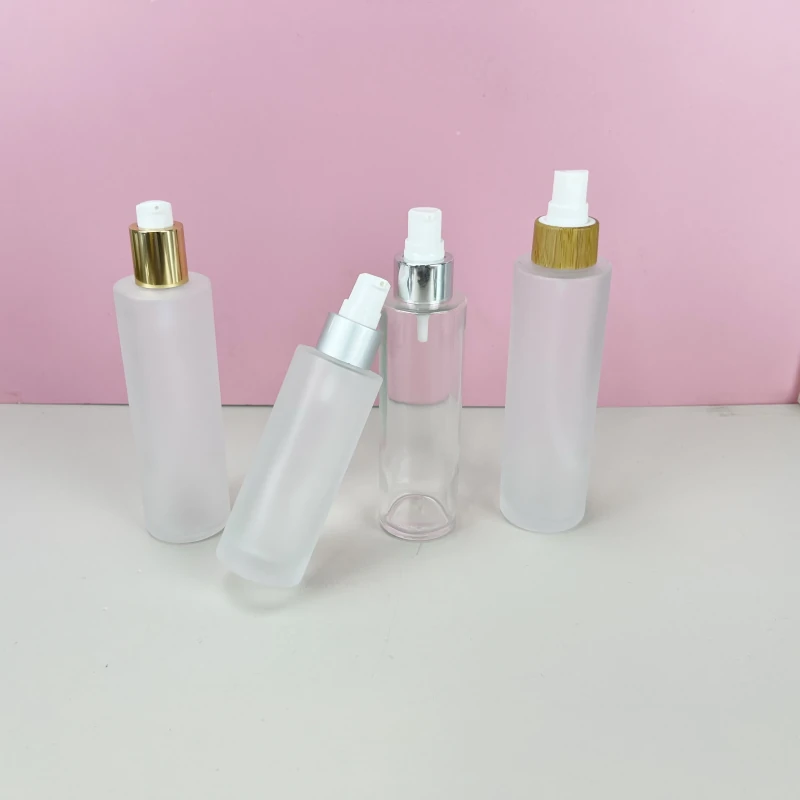
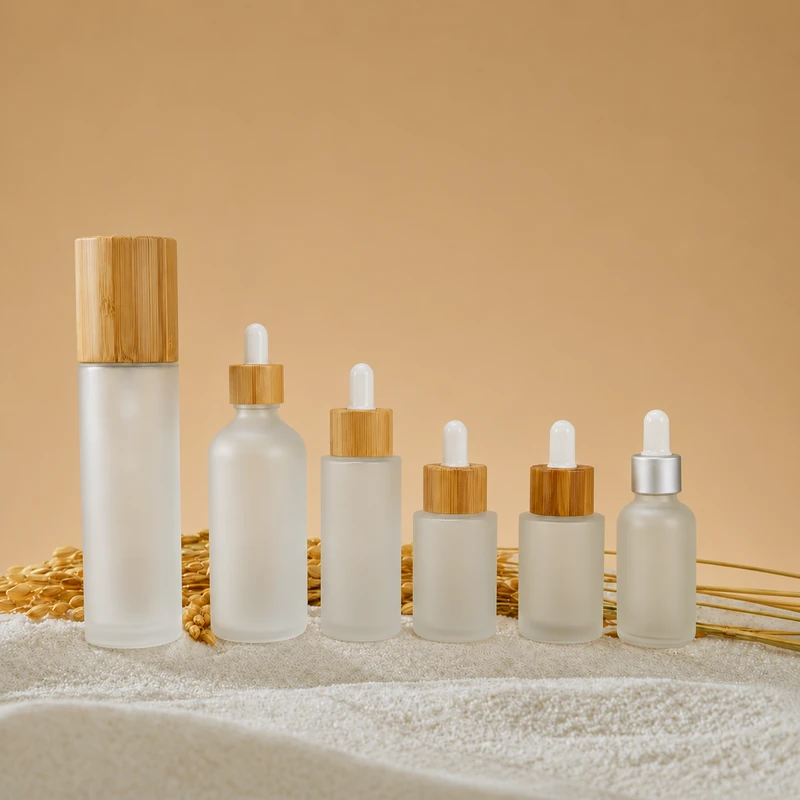
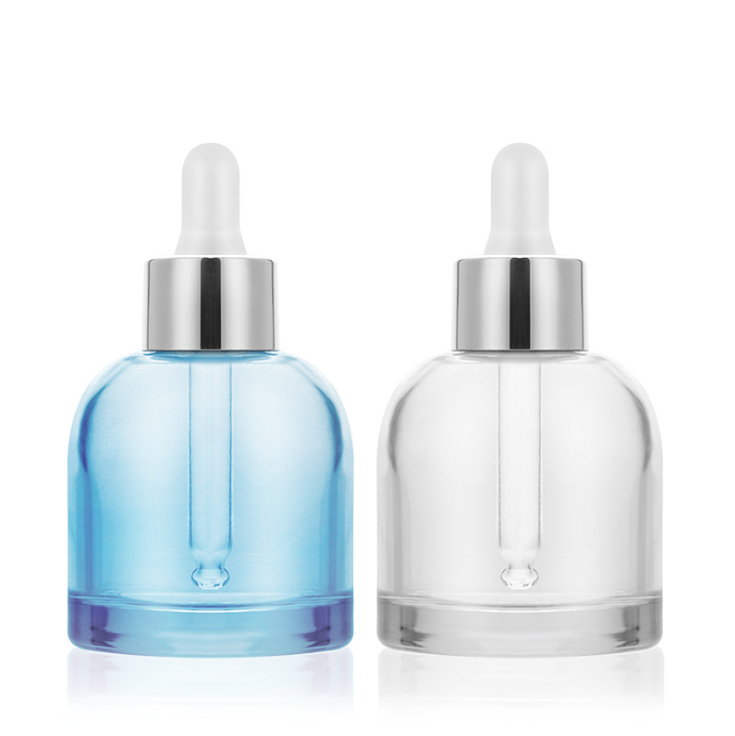
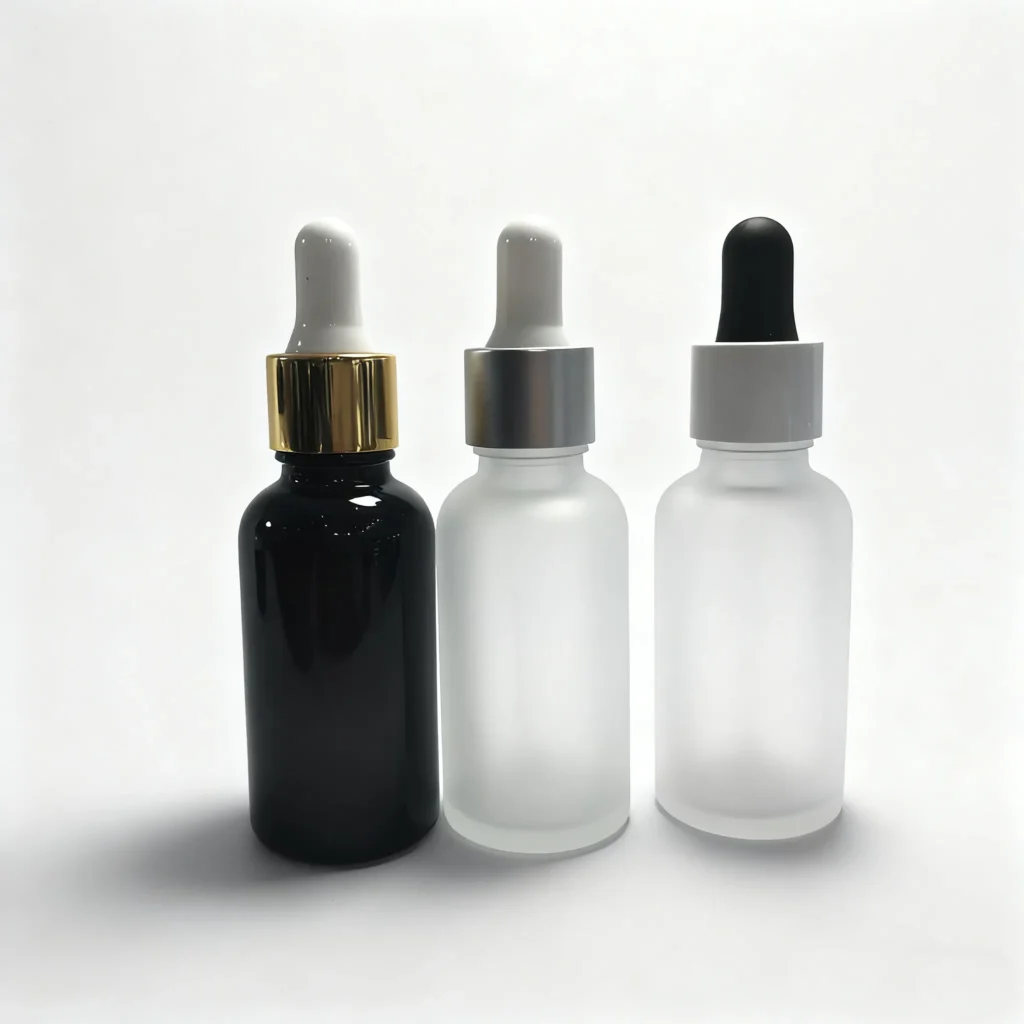
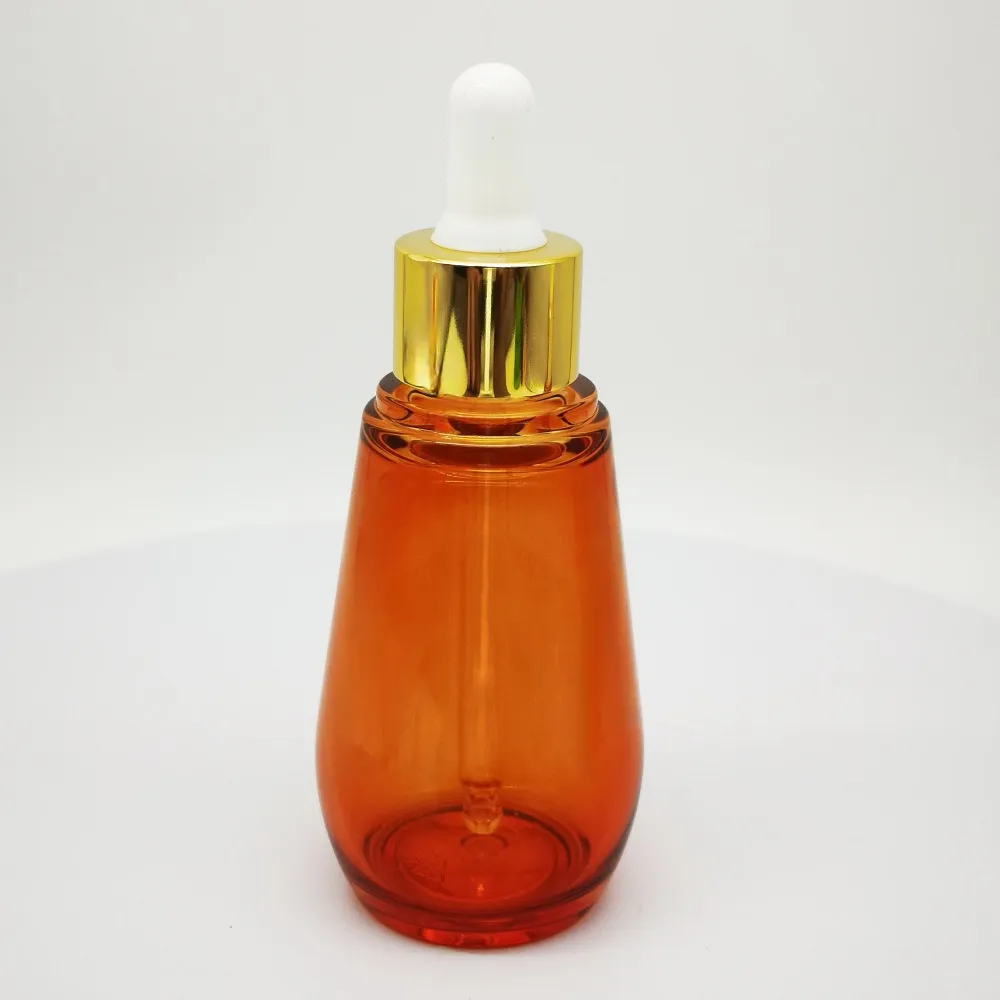
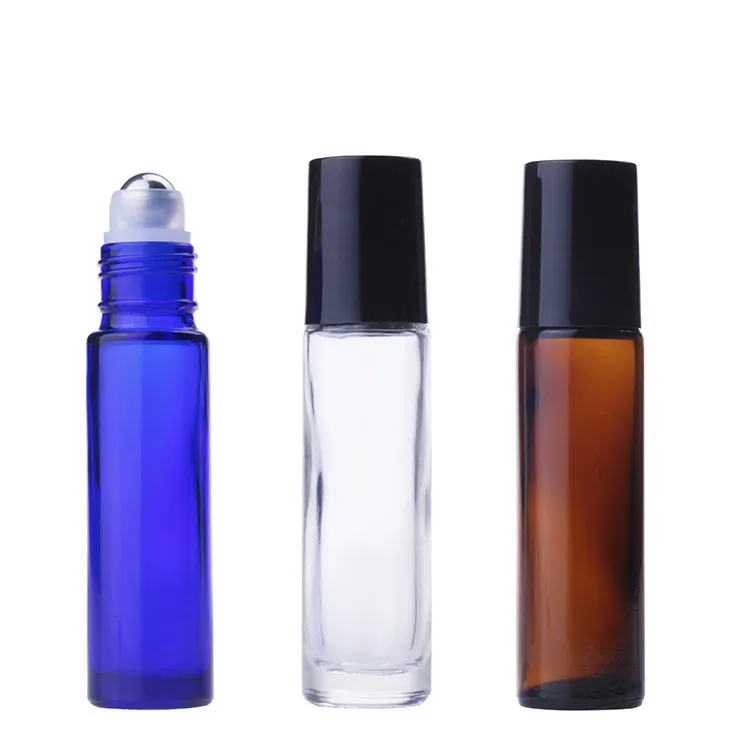
Six views cover the amber presentation and alternative frosted or clear configurations. Bottle size, shoulder profile and closure are selected separately; the gallery does not define the shipment assortment.
Material, Capacity and Formula Compatibility
Glass Body and Amber Finish
The body, base and neck are glass. The order identifies the glass color and whether any external treatment is applied. Amber appearance alone does not establish a quantified light-protection rating or a formula shelf-life result. A light-sensitive formula uses the actual bottle’s transmission data and finished-pack stability evidence for its claim brief.
Working Fill in the 100 mL Format
100 mL is the nominal capacity. The drawing and filling trial establish working fill, headspace and the space occupied by the pipette or pump. A gram declaration uses measured formula density. Set the fill with the selected closure installed to avoid overflow or an unsuitable headspace.
Serums, Oils and Formula-Contact Parts
Test the actual serum or oil against the complete glass-and-closure assembly. Evaluate bulb and seal swelling, changes in odor or appearance, leakage, glass finish and dosing behavior under agreed conditions. Concentrated essential oils require their own compatibility program; a cosmetic oil blend does not qualify every essential-oil concentration.
Other Capacities and Finishes
A coordinated range requires a drawing and closure match for each size. Frosted or clear glass, different shoulder profiles and alternative cap finishes are separate specifications. Confirm each bottle code, working fill and packout rather than assigning the 100 mL dimensions to the full gallery.
Dropper and Pump Configuration
Pipette Length and Pickup
Match the pipette length, tip geometry and bulb recovery to the bottle and formula. Set the clearance from the glass base and verify pickup at the intended fill level. Record drop formation, draw volume, residue and drips with the actual liquid. A dropper is not a calibrated measuring device unless its graduation and accuracy are separately qualified.
Neck Fit and Leakage
The closure thread, internal seal and glass neck form a matched assembly. Approve the neck drawing and cap fit together, then trial application torque and removal force. Test filled units in the agreed orientations and temperatures. Distinguish leakage at the neck from liquid expelled through the pipette during use.
Lotion Pump Alternative
The pump version is a separate dispenser configuration for qualified lotion or serum formulas. Specify output, priming strokes, operating force, dip-tube length and any transport lock. The selected closure must match the bottle neck; a bamboo exterior finish does not establish interchangeability between all dropper and pump assemblies.
Consumer Use and Repeated Opening
The use instructions cover pipette handling, cleaning of external residue and secure cap replacement. A refill program requires a defined cleaning and reassembly procedure and repeat-use tests. Glass appearance and a removable closure do not establish a refill-cycle result or universal hygiene performance.
OEM Branding and Factory Project Workflow
1. Define the Bottle and Closure
The RFQ states 100 mL nominal format, glass finish, shoulder profile, formula, dropper or pump, quantity by SKU and retail contents. The quotation identifies the exact bottle and closure codes. Tooling, samples, decoration, retail inserts and freight are separate cost lines where applicable.
2. Approve Artwork and Bamboo Appearance
Supply vector artwork, logo dimensions, color references and front-panel position. Compare packaging printing and decoration methods before choosing direct print, foil or labels. Trial the process on the actual amber or treated glass and bamboo surface. The decorated master sets color, registration, grain variation and finish.
3. Sample and Filling Qualification
Plain samples qualify dimensions, fit and formula compatibility. Decorated samples establish the visual master. Run the actual filling operation with the selected pipette or pump. Record nozzle clearance, fill accuracy, closure displacement, cap application and label placement. Freeze the drawing, material list, artwork revision and test criteria before production release.
4. Document Production and Assembly
Use this project route for order approval: specify glass forming and annealing requirements for newly made bottles, inspect incoming glass, prepare bamboo trim, apply the selected decoration, inspect closures, assemble to the agreed condition and pack. The actual factory route and responsibility for outsourced components are recorded in the order production plan.
5. Final Inspection and Release
Compare lot samples with the signed master, drawings and functional criteria. Verify bottle and closure quantities, appearance, neck fit and packout. The release file links glass lot, closure code, artwork revision and inspection report. Keep approval and lot samples for repeat orders and quality assessment.
Quality Control for Glass, Bamboo and the Dispenser
Glass and Exterior Inspection
Inspect the neck and sealing surface for chips, cracks, sharp edges and damage. Check dimensional tolerances, base stability, visible defects and finish consistency. The sampling plan defines cosmetic limits and critical defects separately. Bamboo inspection covers splits, rough edges, looseness and shade variation against the agreed master.
Functional and Filled-Pack Tests
Test dropper draw, bulb return, dose behavior, cap retention and leakage with the intended formula. For pumps, use the agreed priming and output criteria. Record fill level, storage conditions, orientations and duration. A successful empty-pack fit test does not replace filled-product compatibility and storage testing.
Decoration and Export Protection
Check ink or label adhesion and rub resistance after contact with spilled formula. Use dividers or trays to limit glass-to-glass contact and protect bamboo finishes and pipettes. Trial the intended filled or empty shipping pack for breakage, scuffing and closure movement. The test applies to the complete packout, not only one unprotected bottle.
Traceability and Claims
The order defines sampling, acceptance limits and reporting time. A claim includes lot identification, affected quantities, photographs, carton labels and relevant test conditions. Preserve broken components and packaging evidence when handling damage is involved. The written remedy procedure governs assessment and resolution.
Lead Time, Export Shipping and Payment
Milestones for Development and Production
The written schedule separates plain samples, decoration approval, compatibility tests, tooling if needed, glass and closure procurement, inspection and cargo readiness. Changes to formula, pipette, seal, bottle or artwork return the project to the relevant approval stage. The order states production-release conditions and the agreed dates.
Export Packout and Freight
Define whether bottles and closures arrive assembled or separately protected, plus units per carton, outside dimensions, net/gross weight and pallet requirements. Protect glass from impact and pipettes from compression. Compare sample courier, bulk air and sea freight using the actual cargo measurements. Glass weight and protective packing affect the freight quote.
Delivery Scope and Documents
The delivery term and named place identify responsibility for freight, insurance, customs, duties and taxes. The document list covers commercial invoice, packing list and the material or inspection records needed for the destination. Bamboo trim belongs in the component description supplied for the exact shipment. Filled formulas require a separate freight review.
Payment and Commercial Approval
The pro forma invoice states accepted payment methods, currency, beneficiary, deposit, balance trigger and bank charges. Samples, tooling, decoration, retail packaging and freight are itemized. Tie payment to the agreed approval, production, inspection and dispatch sequence. Verify beneficiary details through the established supplier contact before remitting funds.
Items to Finalize Before Purchase
The drawing sets bottle dimensions, weight, neck finish and pipette clearance. The material list sets glass color, bulb, seals, pipette and internal cap construction. The working sample sets draw and dispensing criteria. The filling report sets net content and closure application. The visual master sets artwork, bamboo grain and finish. The order sets dates, payment, protective packing and delivery scope.
Buyer Frequently Asked Questions
What is the capacity?
The primary bottle is a 100 mL nominal format. Working fill and headspace are approved with the selected pipette or pump.
Is the complete closure made from bamboo?
No. Bamboo is the exterior trim. The internal cap, seals and dispensing components have separate material specifications.
Is the bottle filled with serum?
The product is empty packaging. Formula and filling require separately agreed scope.
Can I select a lotion pump?
A lotion pump is a separate configuration. Neck fit, output, dip-tube length and formula performance are approved for that assembly.
Does amber glass guarantee light protection?
Any quantified light-protection or shelf-life claim uses transmission data for the actual glass and stability evidence for the filled formula.
Can the dropper hold essential oils?
The exact oil or blend goes through complete-pack compatibility testing, including bulb and seal performance.
Is the dropper calibrated?
Graduations and dispensing accuracy require a separate measurement specification and validation. A plain cosmetic pipette has no assumed calibration.
Can I order frosted or clear glass?
Finish, capacity and shoulder profile are selected as separate SKUs with their own drawings and samples.
Can my logo be printed on glass or bamboo?
The decoration plan identifies the surface and process. A decorated sample sets the accepted result and durability criteria.
What is the MOQ?
The MOQ is 10,000 pieces. The quotation records allocation by bottle, finish, artwork and closure.
Can I receive samples?
The sample plan includes plain assemblies for filling and compatibility tests and decorated units for visual approval. Fee, quantity and timing appear in the quote.
What is the production lead time?
The order records sample approval, compatibility, component procurement, production, inspection and cargo-ready dates as separate milestones.
What payment terms apply?
The pro forma invoice states methods, currency, deposit, balance trigger and charges.
How is glass protected during shipping?
The approved packout uses suitable individual protection, dividers or trays and export cartons. Handling tests evaluate the complete packed unit.
Request Your 100 mL Amber Glass Bottle Quote
Send Boyu Packaging your RFQ with shoulder profile, formula, dropper or pump, quantity by SKU, artwork, bamboo appearance requirements, retail contents, destination and target cargo-ready date. Request an itemized assembly, development, packing, freight and payment offer.
 English
 Español de Argentina
 Русский
 Italiano
 日本語
 한국어
 العربية
 Français
 Deutsch