
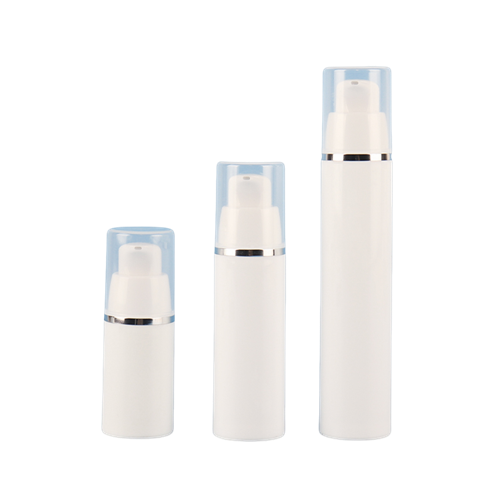
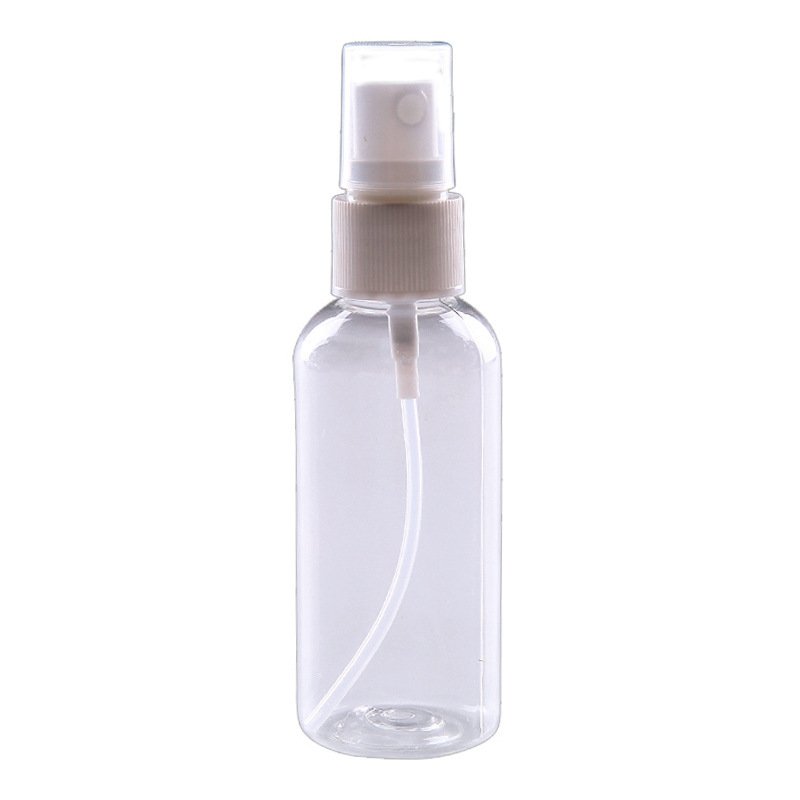

Direct answer: Yes—a lotion pump can be used for shampoo if the complete pump, bottle and formula pass functional and compatibility testing. The neck must fit and seal; the pump must prime, refill and return with the shampoo at intended temperatures; a full stroke must deliver a useful dose without excessive force, stringing or suck-back; the dip tube must remain immersed and evacuate the bottle; and wetted components must remain stable through shelf life. A pump marketed for lotion is only a candidate, not proof of shampoo suitability.

Use a lotion pump for shampoo only if it passes these six conditions
| Condition | What acceptable performance means | Evidence to request |
|---|---|---|
| Mechanical fit | Matching neck finish, secure thread/snap engagement, gasket compression and no interference | Controlled drawings and assembled samples |
| Formula transport | Reasonable prime, full chamber refill, complete actuator return and no air ingestion | Prime and repeated-stroke results with finished shampoo |
| Dose | A practical number of full strokes delivers the intended use amount | Gravimetric output distribution, not nominal pump volume alone |
| Consumer handling | Comfortable force with wet hands; clean cutoff; manageable stringing and drip | User-relevant actuation and nozzle observations |
| Evacuation | Acceptable delivery through early, middle and late pack life | Residual mass and near-empty performance |
| Compatibility | No unacceptable swelling, cracking, corrosion, softening, sticking, leakage or performance drift | Aged filled-pack and component compatibility data |
If any condition fails, do not assume a larger pump is the answer. The correction may be a different engine, tube diameter, actuator, output, material, bottle geometry or closure format.
Shampoo rheology determines more than “thickness”
Many shampoos are non-Newtonian and shear-thinning: apparent viscosity changes with shear rate. Their viscoelasticity controls how quickly structure rebuilds after flow, and extensional behaviour influences the thread between nozzle and hand. A shampoo can therefore share one viscosity reading with another formula yet prime, refill and cut off differently.
A review in the International Journal of Cosmetic Science notes that pump-dispensed shampoo should be easy to dispense without stringiness and describes flow curve, viscoelastic recovery and thread-drawing behaviour as distinct parts of the rheological fingerprint. A 2023 study of complex-fluid discharge also found that rheology and operational variables including dip-tube diameter, suction pressure and volumetric flow affect dispensing and residual “heel.”
- High yield stress or low-shear viscosity: may resist initial pickup and chamber refill.
- Strong elasticity: can produce stringing or draw product back toward the nozzle.
- Slow structural recovery: may change dose during rapid repeated use.
- Pearlizers, silicones or suspended actives: require passage and valve screening for deposition or obstruction.
- Temperature sensitivity: can make a pack work in the laboratory but fail in a cold bathroom or hot distribution environment.
Match the pump engine and bottle—not just the closure size
Flow path and chamber refill
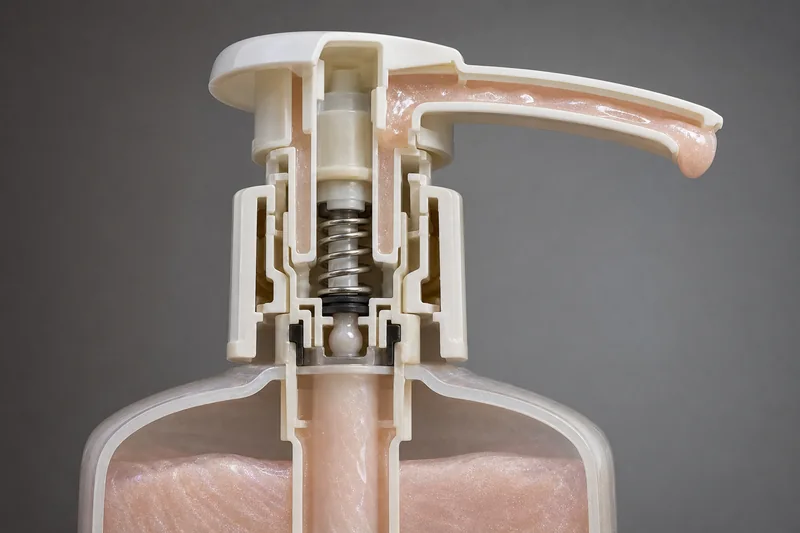
Tube internal diameter, valve openings, chamber geometry, spring return and seals determine whether the pump can pull shampoo into the chamber between strokes. Wider passages may help structured products, but every change also affects output, prime and component design. Ask for production-intent samples instead of selecting from a generic viscosity range.
Dip-tube geometry
A tube that is short draws air near empty; one that is overlong may kink or seal against the base. Specify the finished length from the sealing datum, cut style, tube material and inside/outside diameter. Validate local base geometry rather than using external bottle height.
Bottle venting and panel strength
A conventional lotion pump replaces dispensed product with air through its vent path. Restricted venting can slow output or deform a flexible bottle; uncontrolled leakage paths can compromise transport performance. Confirm the bottle remains stable through repeated use and closure application.
Wet-environment usability
Shampoo is used with wet hands. Review actuator area, travel, force, lock operation, bottle stability and one-handed use. A decorative narrow actuator may fit the formula but still be a poor bathroom interaction.
Choose pump output from the shampoo dose
Define the intended mass per use for the target hair length/use case, then divide by the preferred number of complete strokes. Convert volume only with measured formula density.
Engineering start point: target pump output (g/full stroke) = intended shampoo mass per use ÷ preferred full strokes per use.
ASTM D4336-18(2025) covers mean output by weight per actuation and notes that the method can support dosage/use instructions and final-package specifications. Report more than a mean: unit-to-unit and stroke-to-stroke variation, priming, first usable stroke, rapid repeats and near-empty output all affect the consumer experience.
A high-output pump reduces the number of presses but can oversupply short-hair or concentrated products. A low-output pump offers control but may frustrate family-size or salon users. The correct answer comes from dose and use testing, not a universal “shampoo pump” number.
Common failures when a lotion pump is used for shampoo
| Symptom | Likely contributors | Next controlled test |
|---|---|---|
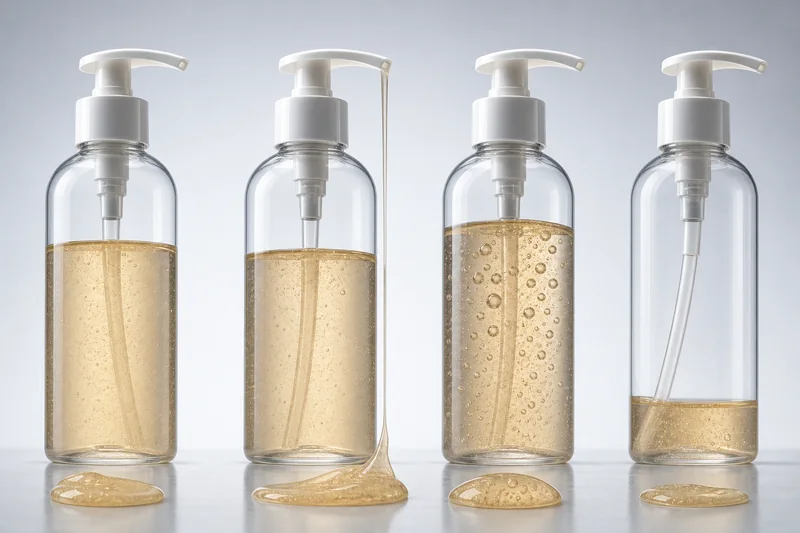
| Many strokes to prime | Air leak, long/narrow tube, restricted inlet, high flow resistance | Compare fresh pumps and tube configurations with the same shampoo |
| Actuator returns slowly | Chamber refill resistance, spring/engine mismatch, cold formula | Measure return and output versus temperature and stroke interval |
| Long string from spout | Extensional viscosity/elasticity, outlet geometry, suck-back behaviour | Compare actuators while holding pump engine and formula constant |
| Output declines in rapid use | Incomplete chamber refill or entrained air | Compare controlled cadence and inspect air in a transparent pack |
| Works fresh, sticks after ageing | Residue, material interaction, valve/seal change | Component compatibility and aged filled-pack examination |
| Too much shampoo remains | Tube position, bottle base, air ingestion, yield stress and flow field | Measure residual mass and inspect near-empty pickup |
If the pump loses its product column after storage, isolate air leakage, valve sealing, tube pickup and formula recovery in separate controlled comparisons. That diagnosis is related to, but distinct from, the initial shampoo-suitability decision covered here.
A production-ready validation plan

- Lock the candidate system. Record exact shampoo bottle, pump, actuator, gasket, dip tube and assembly condition.
- Use finished formula. Include representative shampoo batches and document density, rheological method, temperature and entrained-air condition.
- Measure prime and output. Count strokes to first product and stable output separately; weigh repeated full strokes across multiple units.
- Challenge use behaviour. Test slow/fast cadence, full return, wet-hand handling and intended bottle orientation.
- Run through pack life. Check early, middle and near empty; quantify residual mass and record air shots, stringing, drip and incomplete return.
- Age the filled pack. Use justified storage temperatures/orientations and assess leakage, swelling, cracking, corrosion, sticking and performance shift. ASTM D4333/D4333M-18(2025) provides a practice for compatibility of mechanical pump components with consumer products.
- Confirm transport and assembly. Evaluate closure retention/torque as applicable, lock or clip, leakage and packed-product distribution risks.
- Set limits before the pilot lot. Define acceptance for prime, output distribution, force/return, defects and residual product based on user need, risk and process capability.
Compare alternatives—including flip-top or disc-top packs—when pumping adds cost or complexity without a real consumer benefit. Boyu’s lotion bottle range can supply pump-format context, while the shampoo category page should remain the canonical starting point for haircare formats.
Frequently asked questions
Are lotion pumps and shampoo pumps the same?
The labels overlap in the packaging market, but pumps differ in output, engine, passage geometry, actuator, materials and intended product window. Approve the exact part number, not the category name.
Can a lotion pump handle thick shampoo?
Possibly, if the shampoo shear-thins enough through the inlet and chamber and the pump can refill and return at use temperature. High static viscosity alone neither approves nor rejects it.
Can I test the pump with water first?
Water can reveal assembly or gross functional defects, but it cannot reproduce shampoo rheology, stringing, particles or material interactions. Final approval requires the production formula.
Is a foam pump suitable for normal shampoo?
Not automatically. Foam pumps are designed around air–liquid mixing and often require a low-viscosity foamable formula. Standard shampoo may not pass the mesh or generate stable foam without reformulation and dedicated testing.
What bottle size works best with a shampoo pump?
Size follows use frequency, dose, channel and stability; pump fit follows neck and internal geometry. Larger family or salon packs also require adequate bottle stability and a practical number of strokes per use.
Sources
- ASTM D4333/D4333M-18(2025), Compatibility of Mechanical Pump Dispenser Components
- ASTM D4336-18(2025), Output per Stroke of a Mechanical Pump Dispenser
- International Journal of Cosmetic Science, A review of shampoo surfactant technology
- Teoman et al., Analysis of complex fluid discharge from consumer dispensing bottles
- Use of inline near-infrared spectroscopy to predict shampoo viscosity



 English
  Español de Argentina
  Русский
  Italiano
  日本語
日本語  한국어
한국어  العربية
  Français
  Deutsch