Oz to mL Conversion for Cosmetic Liquids: Formula, Examples and Calculator
Cosmetic packaging buyers often need to convert fluid ounces (fl oz) to milliliters (mL) when comparing bottles, preparing artwork or developing products for different markets. The basic US conversion is simple: 1 US fluid ounce = 29.5735 mL. Therefore, multiply US fl oz by 29.5735 to calculate the exact metric volume.
The same formula applies to perfume, serum, toner, lotion, shampoo and other cosmetic liquids because fluid ounces and milliliters both measure volume. However, viscosity, density, headspace and filling behavior still affect the package you should select. This manufacturer-focused guide explains the calculation and the packaging decisions behind it.
Oz to mL Calculator for Cosmetic Packaging
How to Convert Ounces to Milliliters
US Fluid Ounces to Milliliters
Use this formula for packaging labeled in US fluid ounces:
mL = US fl oz × 29.5735
For example, 2 US fl oz × 29.5735 = 59.147 mL. A brand may market this as 60 mL if the package and regulatory labeling strategy support that declared quantity. Do not assume that a nominal 60 mL bottle can always be filled to the rim; the manufacturer must allow appropriate headspace and closure displacement.
Milliliters to US Fluid Ounces
Use the reverse formula when the bottle specification is metric:
US fl oz = mL ÷ 29.5735
For example, 100 mL ÷ 29.5735 = 3.381 US fl oz, commonly rounded to 3.4 fl oz on consumer packaging.
US and Imperial Fluid Ounces Are Different
A US fluid ounce is approximately 29.5735 mL, while an Imperial fluid ounce is approximately 28.4131 mL. Cosmetic brands selling internationally should identify which system appears in their brief. Most US cosmetic labeling uses US fluid ounces. Never use weight ounces when the specification requires fluid ounces: oz measures mass, while fl oz measures volume.
Common Cosmetic Packaging Conversions
| US fl oz | Exact mL | Common nominal size | Typical applications |
|---|---|---|---|
| 0.17 | 5.03 | 5 mL | Perfume samples, eye serum |
| 0.34 | 10.06 | 10 mL | Travel perfume, roll-on, serum |
| 0.5 | 14.79 | 15 mL | Eye treatment, concentrated serum |
| 1 | 29.57 | 30 mL | Face serum, foundation, perfume |
| 1.7 | 50.28 | 50 mL | Perfume, face lotion, sunscreen |
| 2 | 59.15 | 60 mL | Skincare lotion, hair treatment |
| 3.4 | 100.55 | 100 mL | Perfume, toner, travel personal care |
| 4 | 118.29 | 120 mL | Cleanser, lotion, toner |
| 8 | 236.59 | 240 or 250 mL | Shampoo, conditioner, body lotion |
| 16 | 473.18 | 480 or 500 mL | Salon and family-size products |
These nominal sizes are industry examples, not automatic fill recommendations. Confirm the bottle's brimful capacity, recommended fill level and closure system with your packaging supplier.
Does the Formula Change for Different Cosmetic Liquids?
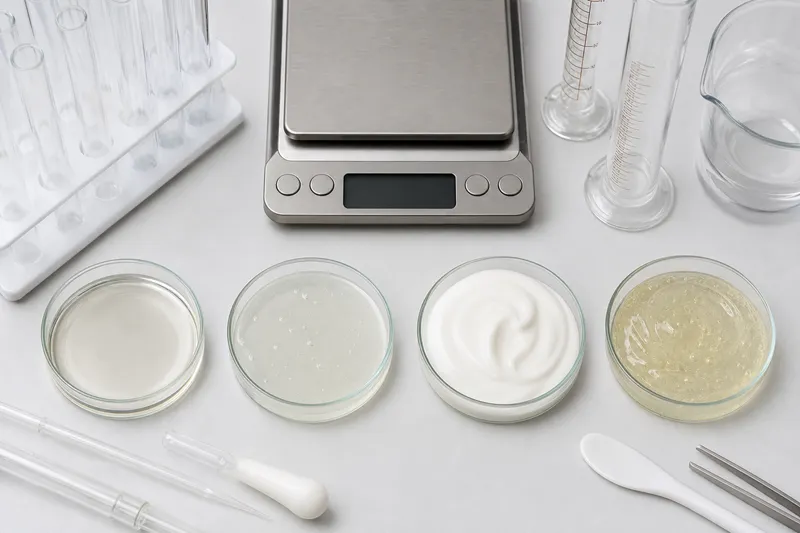
No. When converting volume, the oz-to-mL formula does not change with the formula type. One US fluid ounce of perfume and one US fluid ounce of lotion both equal 29.5735 mL. What changes is how the product behaves during filling and dispensing.
Perfume and Alcohol-Based Fragrances
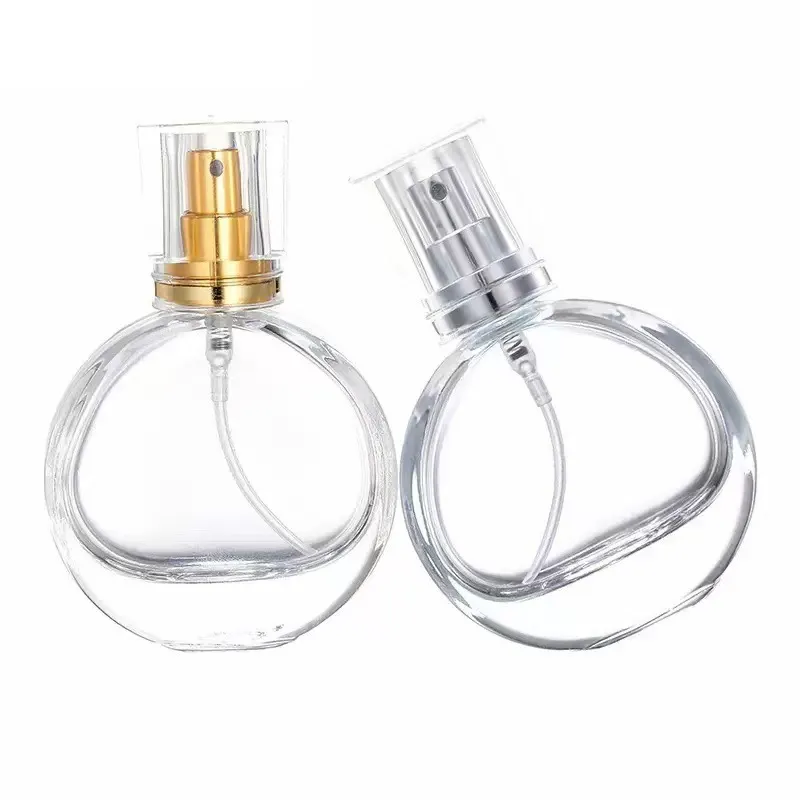
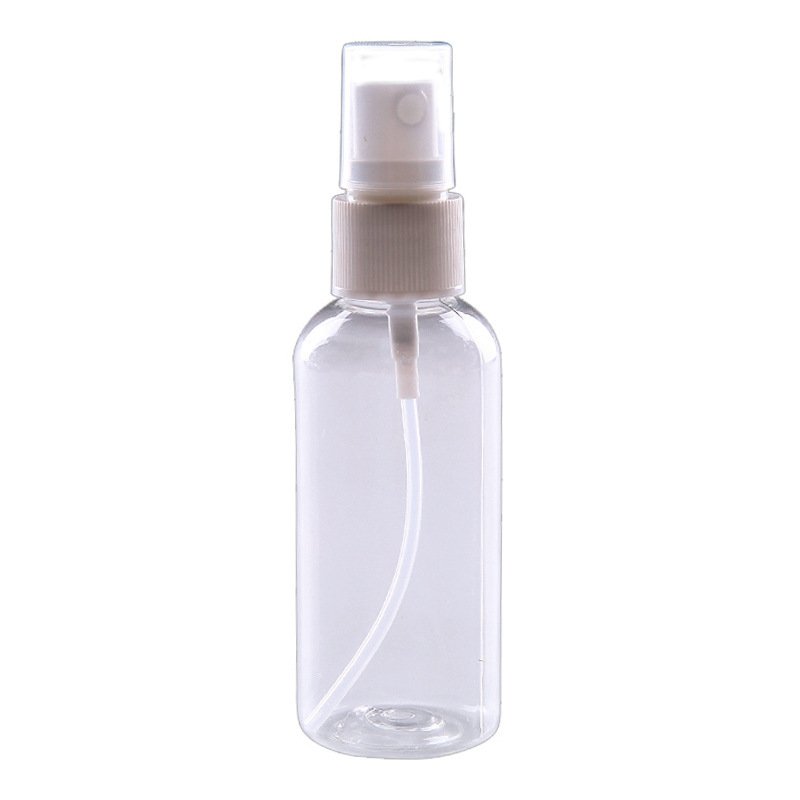
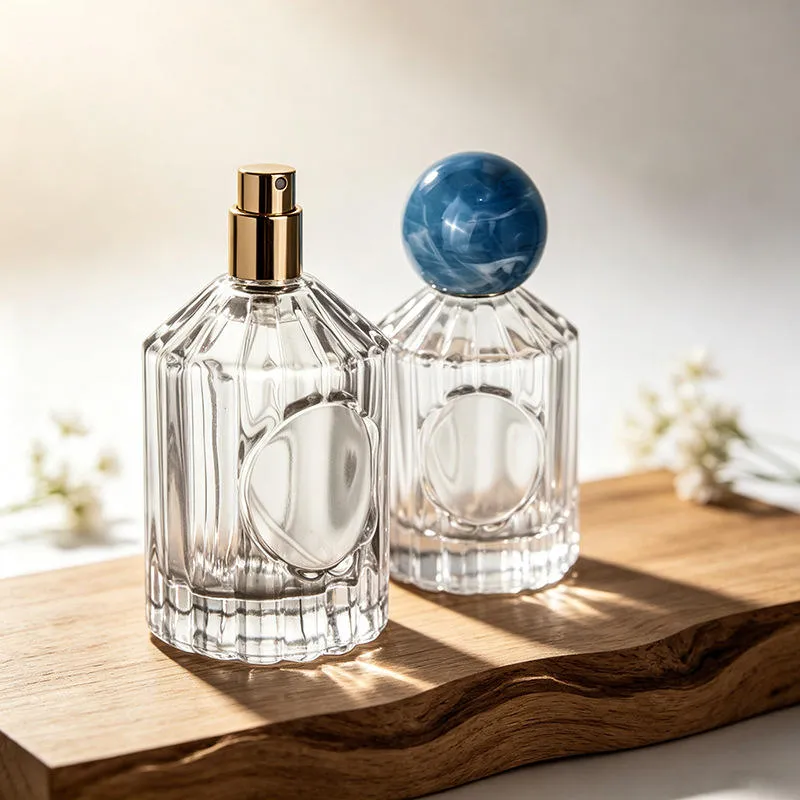
Perfume is low in viscosity and is normally paired with a fine-mist spray system. A 1.7 fl oz fragrance converts to about 50.28 mL, making 50 mL a familiar nominal format. Packaging engineers should still confirm pump crimping or screw-neck compatibility, leakage performance, alcohol compatibility and evaporation control. Explore Boyu's perfume packaging solutions when comparing bottle and spray options.
Serums, Essential Oils and Face Oils
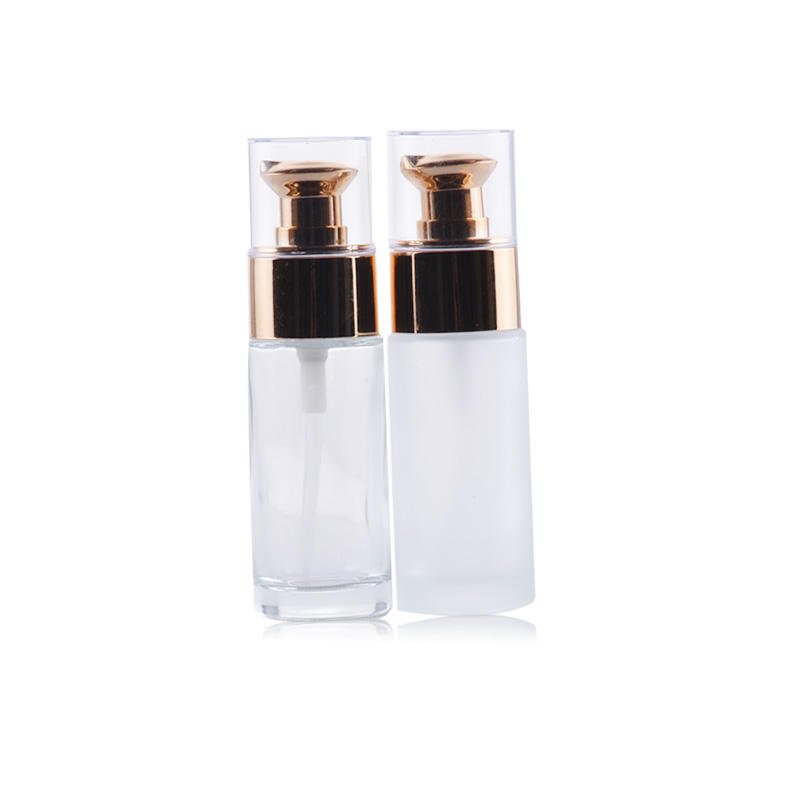
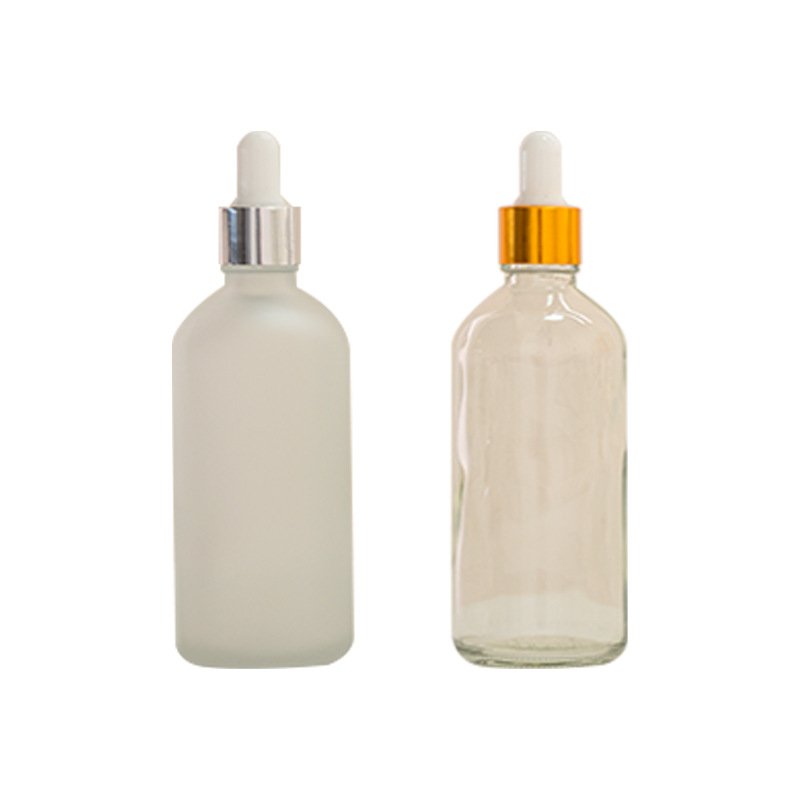
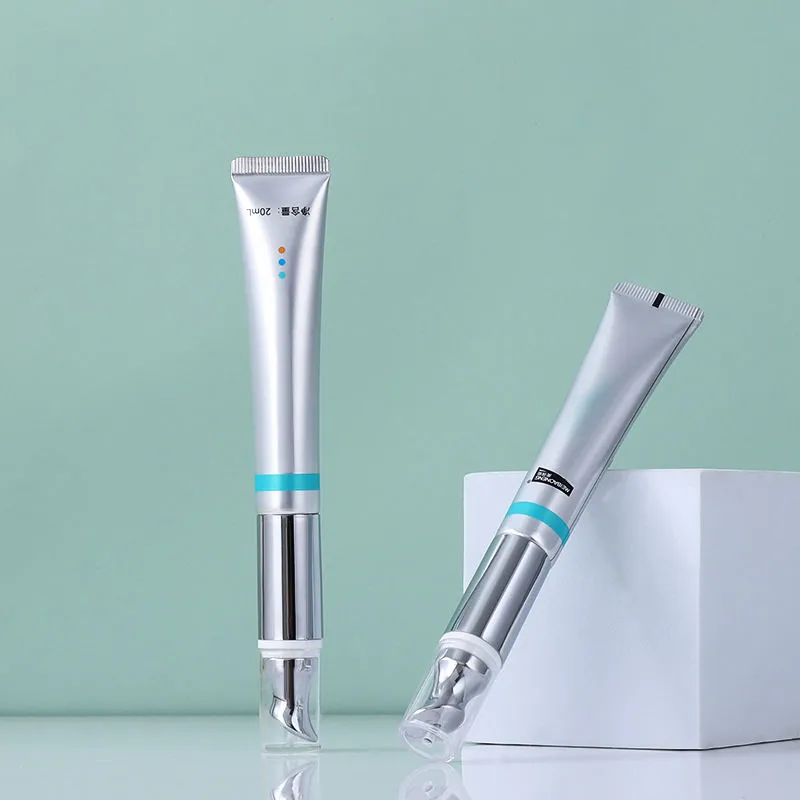
Serums range from water-like liquids to higher-viscosity gels. Essential oils may require compatibility testing with the bottle, liner, bulb and wiper. Common sizes include 15 mL (about 0.51 fl oz), 30 mL (about 1.01 fl oz) and 50 mL (about 1.69 fl oz). The dropper's liquid uptake and dosage should be tested with the actual formula.
Lotions and Emulsions
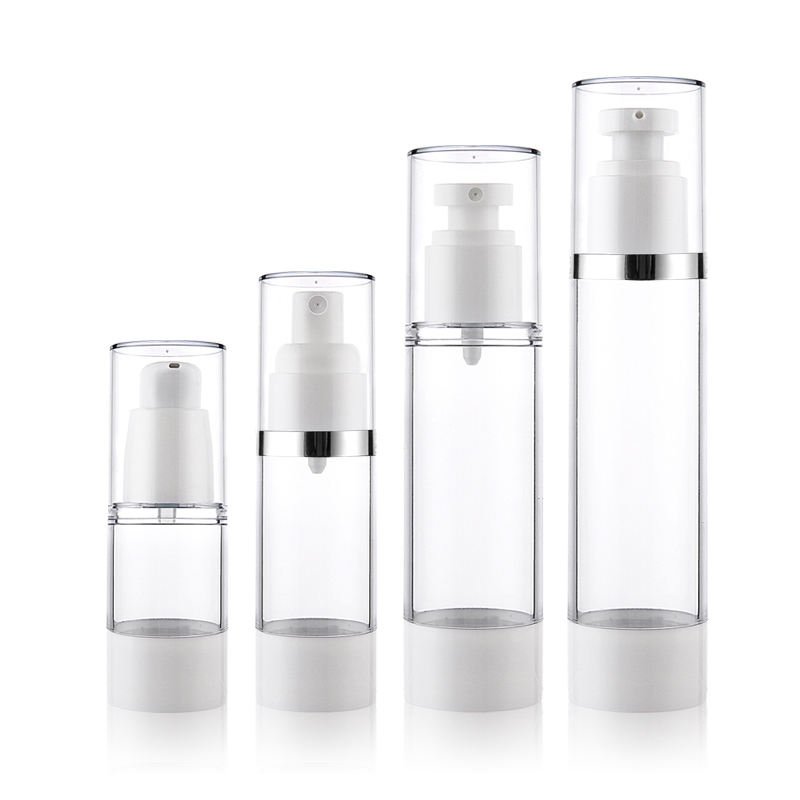
Lotions are usually specified by volume, but viscosity influences pump selection, dip-tube design and evacuation. A 4 fl oz label corresponds to 118.29 mL, often associated with a nominal 120 mL pack. The product developer should test priming, output per stroke, residual product and compatibility.
Shampoo, Conditioner and Body Wash
These products may be sold in 8, 12, 16 or larger fluid-ounce formats. Thick shampoo and conditioner need an orifice and pump system matched to viscosity. A 16 fl oz declaration equals 473.18 mL; a 500 mL package is larger and should not be treated as an exact equivalent without adjusting the declared quantity.
Creams, Balms and High-Viscosity Products
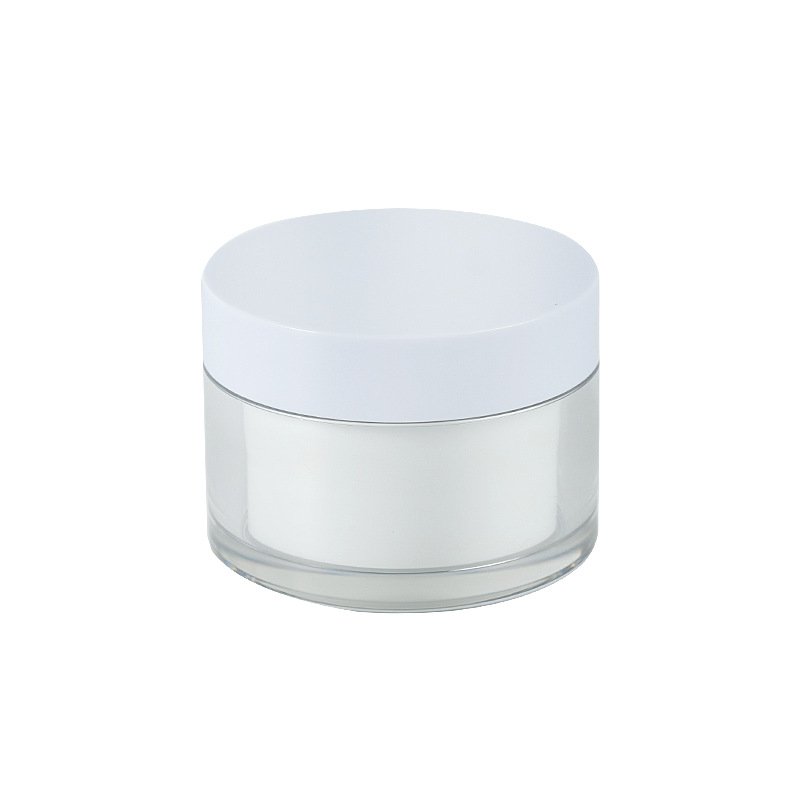
Cream jars may be marketed in fluid ounces or net weight ounces depending on the market and product. Volume conversion alone cannot convert grams to milliliters. To convert mass to volume, you need the formula density: mL = grams ÷ density in g/mL. Obtain density from the formulator under defined test conditions.
Volume, Weight, Density and Viscosity: What Buyers Must Separate
Fluid Ounces Measure Volume
The abbreviation fl oz refers to volume. It can be converted directly to mL. The abbreviation oz without “fluid” usually refers to weight and cannot be converted directly to mL without density.
Density Connects Weight and Volume
If a filling line controls product by weight, density is needed to determine the corresponding fill volume. Water has a density close to 1 g/mL under typical conditions, but cosmetic formulations can differ substantially. Do not use water as a universal assumption for oils, alcohol-rich fragrance, creams or concentrated cleansers.
Viscosity Influences Filling, Not the Conversion Constant
Viscosity describes resistance to flow. It affects filling speed, stringing, air entrapment, pump performance and product evacuation. It does not change the fact that 1 US fl oz equals 29.5735 mL.
How to Select a Bottle After Converting oz to mL
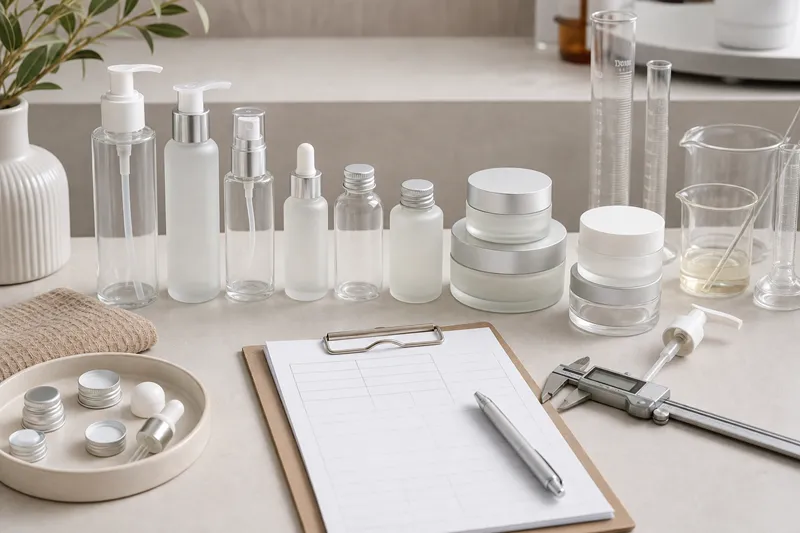
Confirm Nominal and Brimful Capacity
Nominal capacity is the intended commercial fill. Brimful or overflow capacity is the maximum internal volume. A correctly selected package leaves enough headspace for the formula, closure displacement, filling tolerances and distribution conditions.
Test the Real Formula
Run compatibility and dispensing tests with the final formula. Evaluate leakage, paneling, discoloration, swelling, weight loss, pump output and user experience over the required test period.
Align Artwork with the Declared Quantity
Do not copy rounded conversions blindly. The package artwork, technical specification and actual fill plan must agree. Confirm applicable labeling rules with a qualified regulatory professional for each destination market.
Frequently Asked Questions
How many mL are in 1 oz?
One US fluid ounce equals approximately 29.5735 mL. In cosmetic packaging it is commonly associated with a nominal 30 mL size.
Is 3.4 oz exactly 100 mL?
No. 3.4 US fl oz equals approximately 100.55 mL, while 100 mL equals approximately 3.381 US fl oz. Labeling commonly rounds the displayed values.
Can I convert cosmetic ounces to mL without density?
You can convert fluid ounces to mL without density because both measure volume. You cannot accurately convert weight ounces or grams to mL without knowing product density.
Does a 100 mL bottle hold exactly 100 mL to the rim?
Not necessarily. A nominal 100 mL bottle usually has additional brimful capacity. Request both nominal and overflow capacities from the supplier.
What information should I send for a packaging quotation?
Provide product type, target fill volume, formula characteristics, bottle material, closure or pump, decoration, estimated quantity, destination market and launch schedule.
Choose the Right Cosmetic Packaging Capacity with Boyu Packaging
Oz-to-mL conversion is the first step. Successful packaging also depends on formula compatibility, headspace, dispensing performance, decoration and production requirements. Boyu Packaging supplies customizable packaging for perfume, skincare, lotion, shampoo and other cosmetic products.
Contact Boyu Packaging with your target capacity, formula type, dispensing system and estimated quantity to discuss a suitable packaging solution.
 English
  Español de Argentina
  Русский
  Italiano
  日本語
日本語  한국어
한국어  العربية
  Français
  Deutsch