
Rechargeable Eye Serum Tube with Round Button and Metal Tip
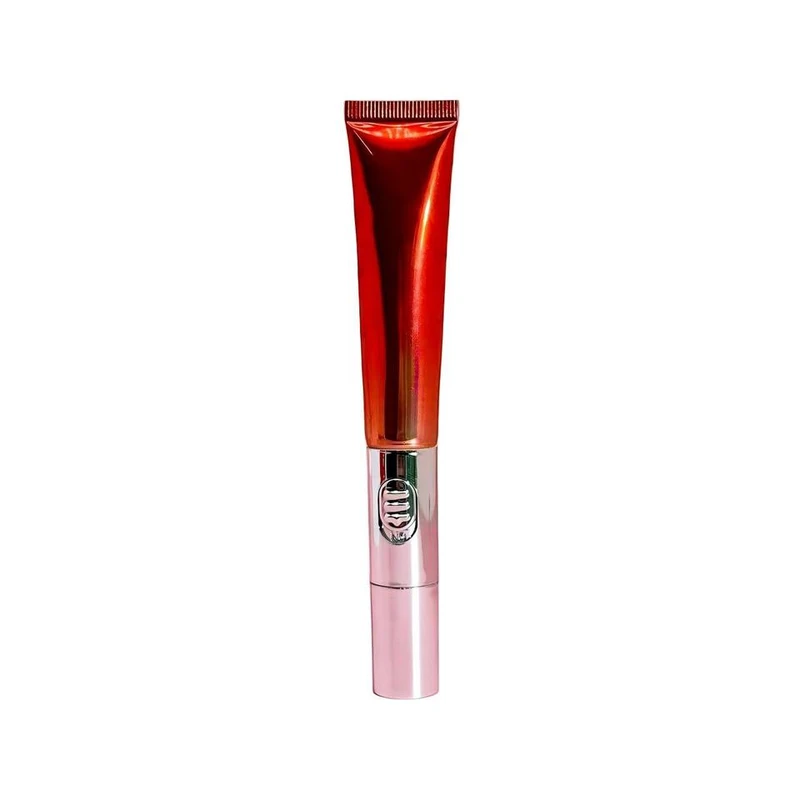
Boyu Packaging pairs a white PE squeeze tube with a smooth silver-tone rechargeable vibrating module, a round control button and a rounded metal dispensing tip. The compact applicator format brings dispensing and contact application into one empty pack for eye serum and eye cream programs. Select capacity, tube length and decoration within the eye cream tube range. Supplied empty from Zhejiang, China, with an MOQ of 10,000 pieces.
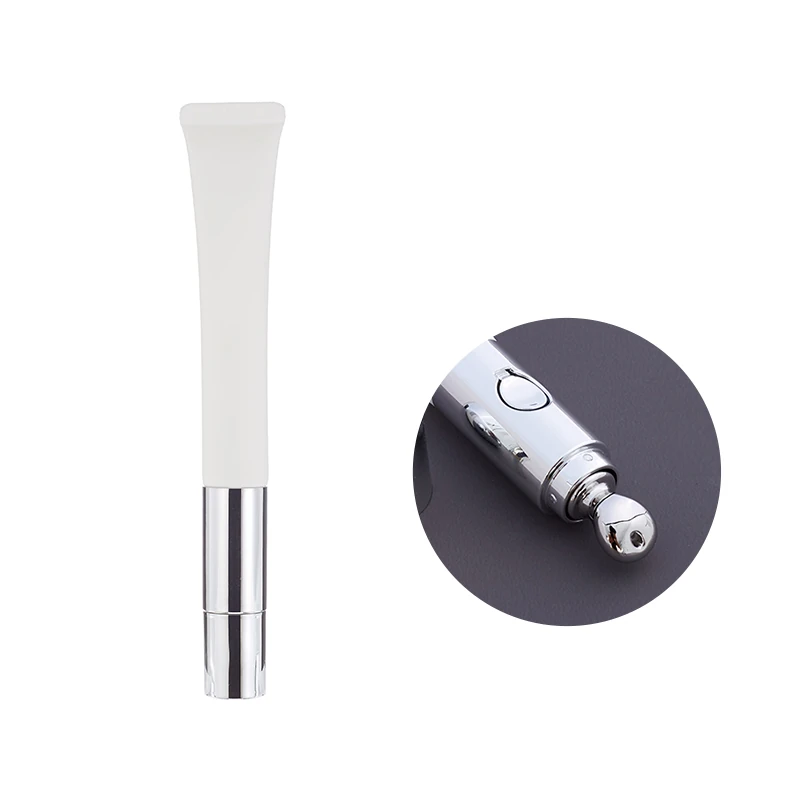
Product Specifications
| Brand / origin | Boyu Packaging / Zhejiang, China |
|---|---|
| Format | Empty round squeeze tube with an electric vibrating metal applicator and protective cap. |
| Tube material | PE plastic. Specify the resin grade, layer structure and formula-contact materials on the approved bill of materials. |
| Applicator material | Metal contact tip. Confirm exact alloy, contact-surface plating or finish, and all internal wetted materials on the approved bill of materials and sample. |
| Capacity | Customized. Select the target net fill and approve tube length, working volume, headspace and final tail seal on a dimensioned drawing and filling trial. |
| Diameter | 19 mm reference format; quote 22, 25 or 30 mm configurations separately and verify compatibility with the selected applicator. |
| Tube construction | Two-layer or five-layer options subject to the selected tube specification. Confirm the barrier layer and complete material stack before approval. |
| Appearance / closure | White tube, smooth silver-tone applicator housing and protective cap. Confirm cap fit and retention on the finished assembly. |
| Power | Rechargeable vibrating module with a round control button. Confirm charging interface and accessories, battery chemistry/capacity, rated input and operating instructions before order release. |
| Filling condition | Tail-open or tail-sealed supply by order specification. Approve the filling and sealing sequence with your contract filler. |
| MOQ | 10,000 pieces. Confirm quantity allocation per diameter, finish and artwork. |
| Dimensions / weight | Confirm assembled dimensions, decoration area and complete unit weight on the approved drawing and sample. |
Choose the Capacity and Material Structure
Set Fill Size Before Fixing Tube Length
Select net content from the formula dose, usage pattern and target retail presentation. Capacity is customized rather than a fixed size. Specify whether the label declares mL or g; a gram fill requires the formula density and a filling trial. Check applicator and shoulder volume, usable tube length, headspace and tail-seal allowance together. Approve the assembled pack and filled sample before printing a capacity declaration.
PE Tube and Metal Contact Head
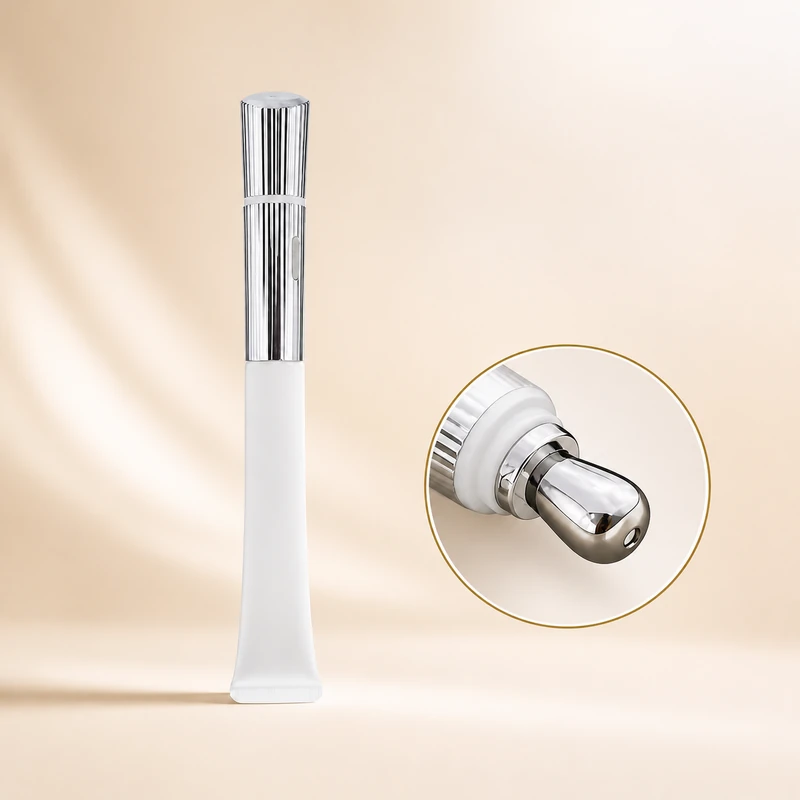
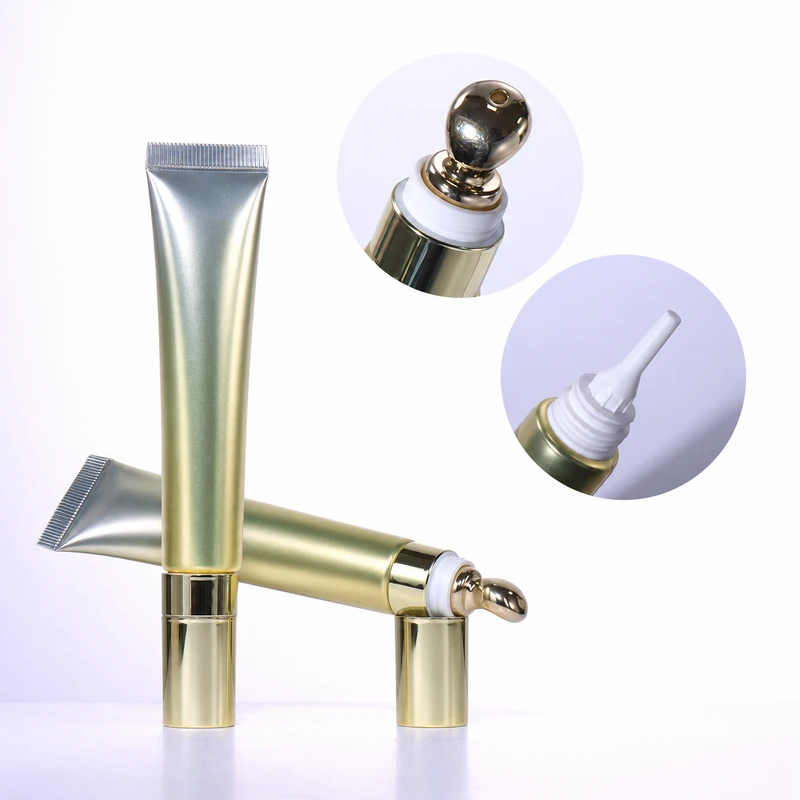
The PE body dispenses through squeezing. The rounded metal tip combines a contact surface with a dispensing opening, and the smooth silver-tone section incorporates a round control button. Specify the formula flow path separately from the electric module. Confirm whether each silver-tone part is plated plastic, metal or another construction on the bill of materials; appearance alone does not determine its material. Test the actual plating and formula together for discoloration, corrosion, roughness or coating release.
Two-Layer and Five-Layer Options
Choose the tube structure against the formula and required shelf-life evidence. A five-layer description does not specify the exact barrier material or prove a storage-life result. Request the layer stack, resin grades and any barrier data needed for your project, then assess the complete filled pack, including the shoulder, orifice and closure.
Dispensing, Vibration and Rechargeable Operation
Match the Orifice to Formula Rheology
Test the actual eye cream or serum at expected storage and use temperatures. Evaluate dispensing effort, initial priming, dose consistency, dribble after squeezing and residue around the metal tip. Set acceptance criteria for a thin serum separately from a viscous cream; avoid adopting the same orifice without a filling and dispensing trial.
Approve the Electrical Module
Verify the activation method, button behavior, charging interface, charging indication and operation after repeated use. Record battery chemistry, capacity, rated input, module dimensions and the supplied cable configuration. Define run-time and charge-time acceptance tests rather than using unverified numerical claims. Include cleaning instructions and precautions that match the approved module; confirm any water-resistance rating before using it in marketing.
Position the Product Accurately
Present this as cosmetic packaging with a vibrating application function. The metal contact surface provides a distinct application feel. It does not establish an actively refrigerated tip; confirm whether any active temperature-control function exists before specifying cooling hardware or claims. Claims about absorption, wrinkle reduction or therapeutic benefit require separate finished-product substantiation. Approve the final consumer instructions for dispensing, gentle application, cleaning and charging with your product team.
Round Button, Metal Tip and Assembly Details
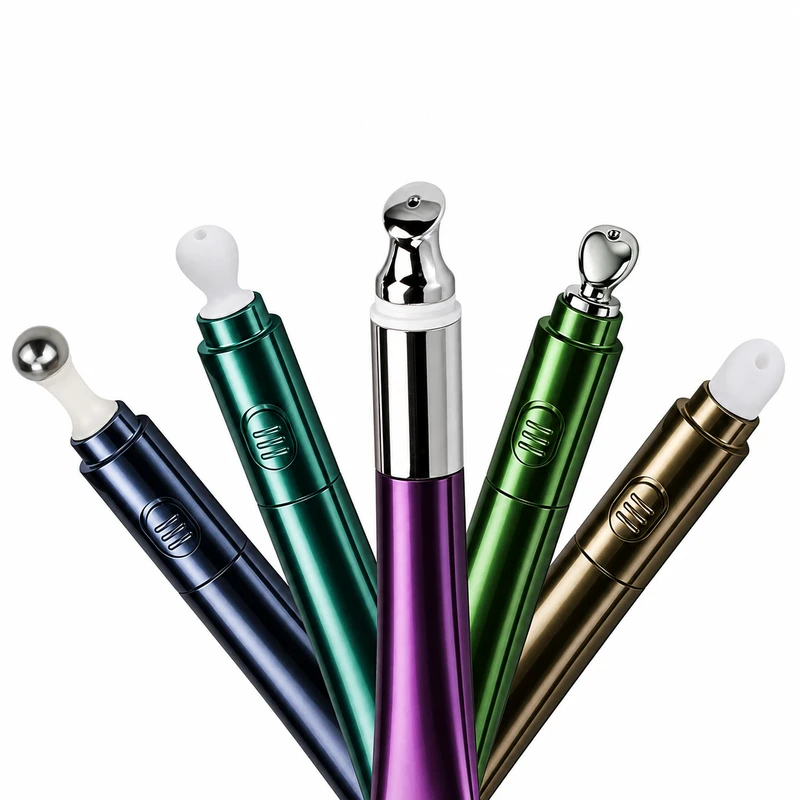
Six product views cover the white tube, smooth module, round button, metal tip and component connection. Approve the exact assembly and charging configuration on a working sample.
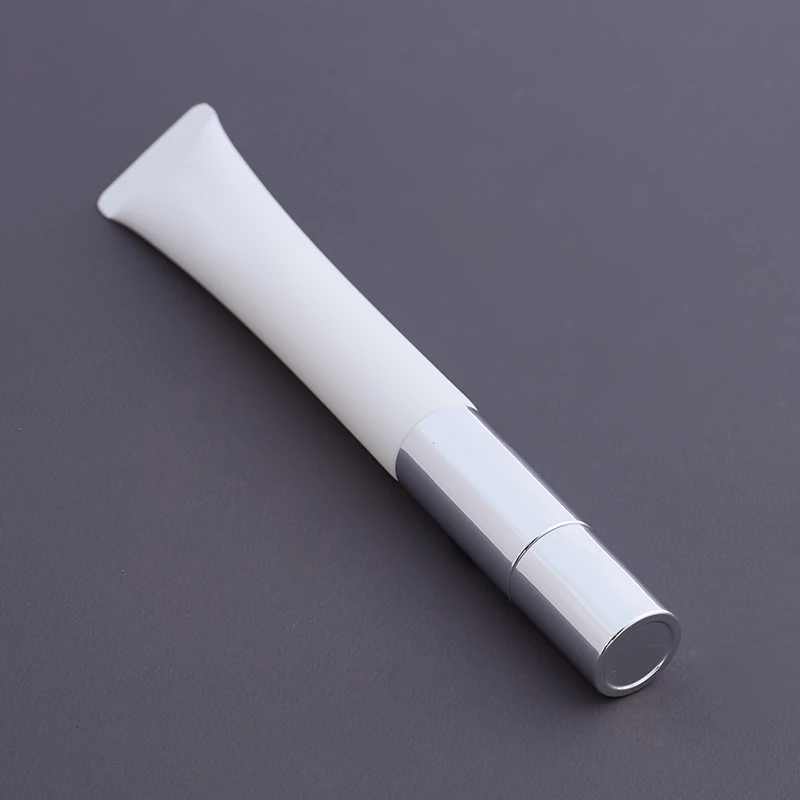
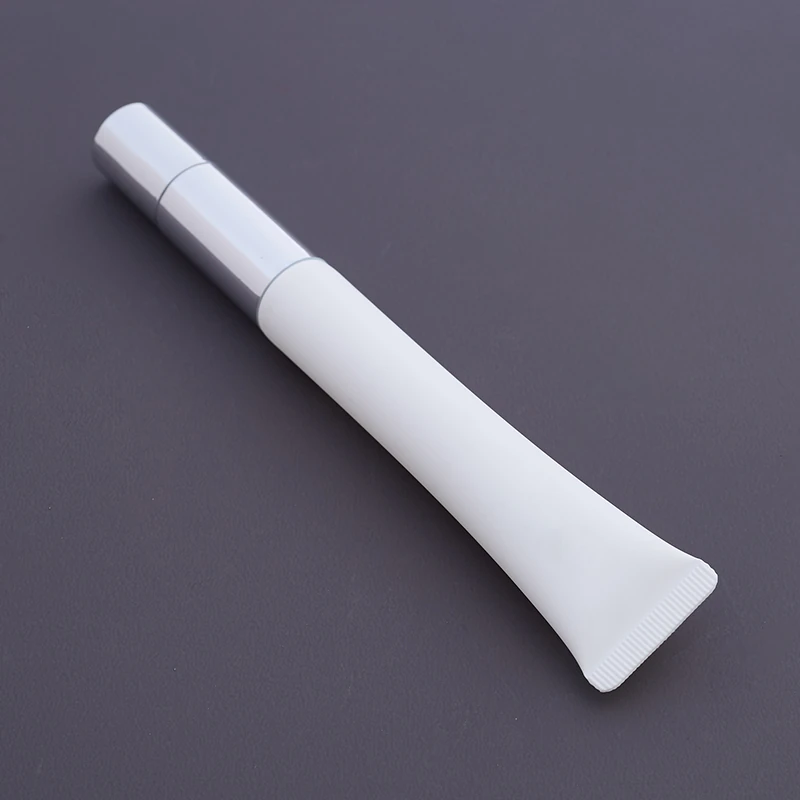
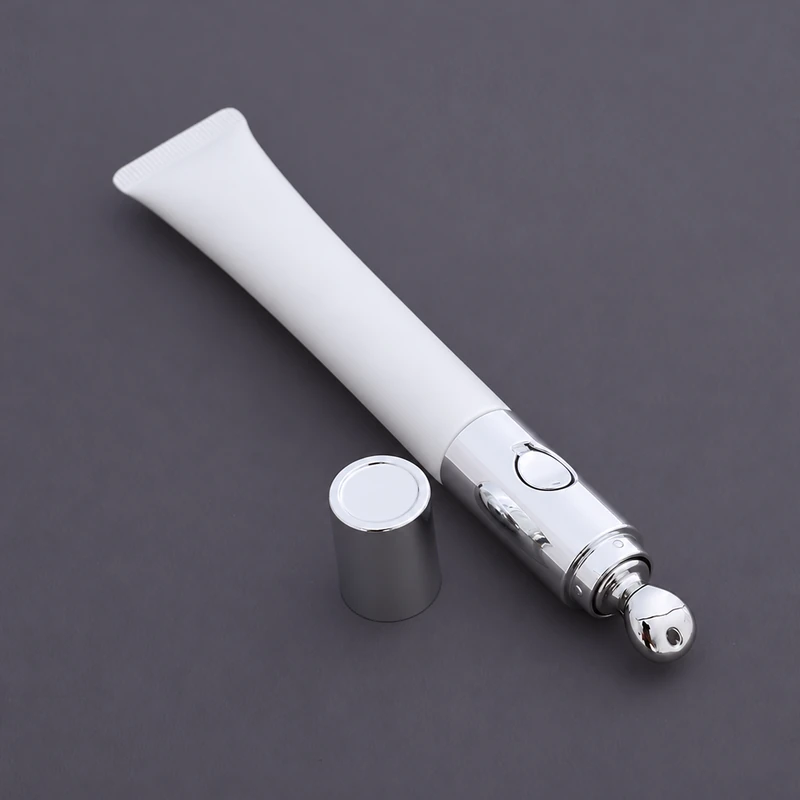
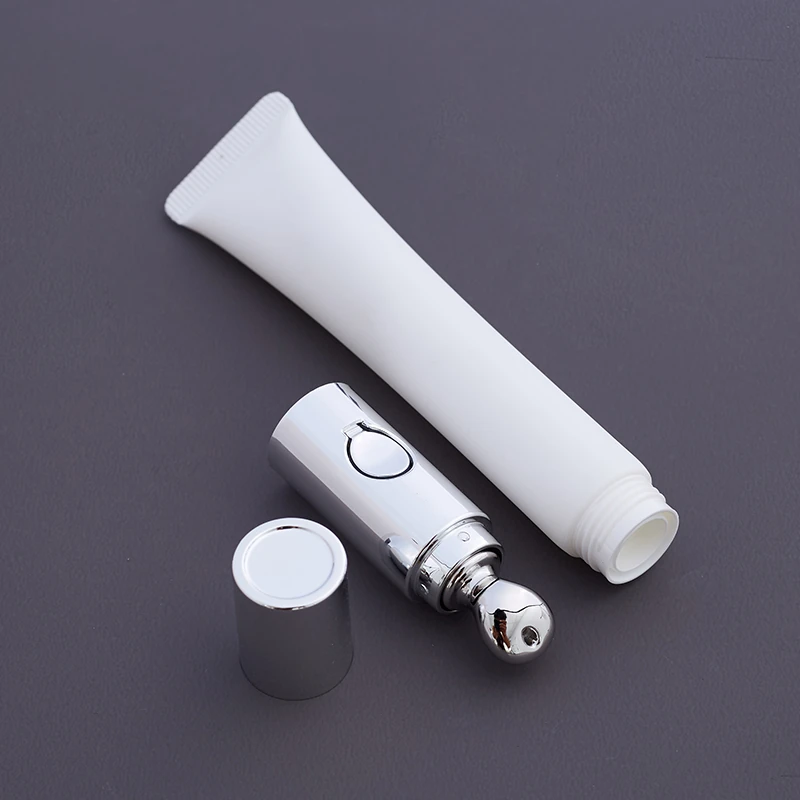
Define the Button, Protective Cap and Module Connection
Approve the round button’s activation sequence, press force, indicator behavior and stop function on a working sample. Check its accessibility during use and the risk of unintended activation after packing. Test cap fitting and removal without disturbing the module or exposing the tip to carton abrasion.
The tube and module are separable components for specification and assembly review. Define whether removal is intended for factory assembly, servicing or consumer replacement. Approve connection dimensions, attachment strength and seal integrity with the actual formula. Any reusable-module or replacement-tube program needs its own cycle testing, cleaning method and compatibility labels before release.
OEM Branding and Factory Project Workflow
Artwork and Decoration
Quote logo printing, color matching, offset printing, screen printing, hot stamping or labels against the selected PE surface and artwork. Define print area, color references, foil placement and orientation relative to the applicator. Compare packaging printing methods before approving artwork. Check print adhesion, scuffing and flexibility on a decorated sample after repeated squeezing.
1. Confirm the Technical Brief
Specify target fill, formula characteristics, tube diameter and length, layers, applicator and electrical configuration, cap, decoration, fill condition and destination. Agree whether the quotation covers empty tubes only, cables, inserts and retail boxes. Record drawings and the bill of materials as the controlling specification.
2. Approve Samples and the Filling Trial
Start with unprinted assembly samples for fit and operation, followed by decorated samples for the visual master. Trial-fill the actual formula, check head leakage and dispensing, then qualify the tail seal. Confirm whether the electronic assembly is fitted before or after filling and how the process protects it from heat and contamination.
3. Release Tube and Component Production
Use the following as an order approval plan: approve tube forming, shoulder attachment and decoration stages; check incoming applicators, caps and electrical modules; verify first assembled units against the signed sample. The selected layer structure, component sourcing and assembly route should be documented before production release.
4. Inspect, Pack and Release
Agree lot inspection, functional sampling, carton packout and a final report. Retain an approved reference and lot samples. Release the shipment after quantity, appearance, electrical operation, packing and purchase-order documents meet the agreed criteria.
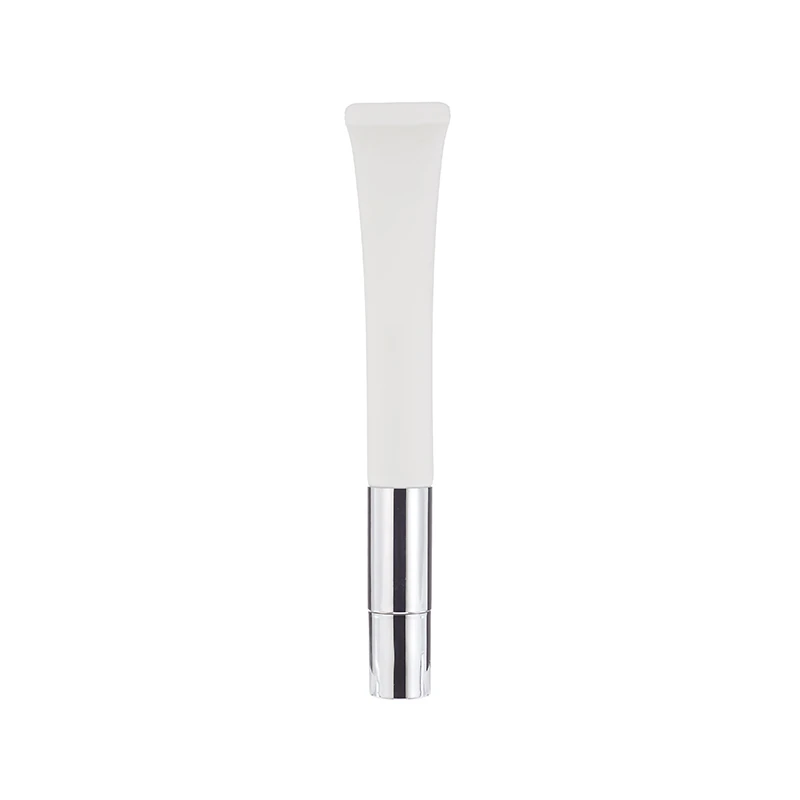
Quality Control for the Complete Pack
Tube, Head and Closure
Define inspection criteria for body dimensions, tube flexibility, tail sealing area, shoulder bonding, head attachment, cap retention and clean formula-contact surfaces. Inspect the metal contact face for sharp edges, scratches, plating defects and contamination. Agree critical, major and minor defects and the sampling acceptance plan in writing.
Formula Compatibility and Seal Validation
Evaluate the actual formula with all contact materials, including internal flow-path and gasket parts. Use agreed storage conditions and duration to check weight loss, leakage, odor or appearance change, tube stress, plating and dispensing. Test the filled and sealed pack in agreed orientations and distinguish cap closure performance from head-to-tube and tail-seal integrity.
Electrical and Transit Checks
Agree tests for activation, charging, indicators and vibration after handling and repeated operation. Check for unintended activation in the closed retail pack and protect the charging interface from residue. Trial the proposed carton and inserts for impact, vibration and scuffing. Any required electrical, battery or market documentation must match the exact supplied configuration and intended destination.
Lead Time, Shipping and Payment
Separate Development and Production Dates
Request dates for plain samples, decorated samples, module approval, tooling if needed, filling trials, bulk production, inspection and cargo readiness. Confirm what starts the production clock: approved artwork, signed sample, specification freeze and agreed payment. Material changes, module substitutions, failed trials or reinspection can change the schedule. Put the agreed cargo-ready date and change procedure in the order.
Export Packing and Transport
Agree whether tubes arrive tail-open, assembled and individually protected or in trays. Set carton quantity, dimensions, net/gross weight and any pallet requirements before comparing freight. Protect metal surfaces and electrical modules from abrasion, compression, moisture and accidental activation. Quote sample courier, bulk air or sea freight against actual cargo dimensions and the destination.
Battery Documents and Delivery Scope
Identify the battery chemistry and transport configuration before booking. Ask the forwarder to confirm the documents and handling needed for the exact module; request relevant manufacturer test documentation where applicable. State the trade term, named place or port, importer responsibilities and whether freight, duties, taxes and insurance are included in the written offer. Filled cosmetics require a separate transport review.
Payment and Commercial Approval
Request the accepted payment methods, currency, deposit amount, balance trigger and bank charges in the formal quotation. Agree sample, decoration and tooling fees separately, including which charges are credited on an order. Confirm beneficiary details against your approved supplier record before remitting funds, and verify any changed instructions through an established contact. Set the inspection and shipment-release sequence alongside payment milestones; no fixed deposit ratio or credit term is assumed.
Buyer Frequently Asked Questions
What is the capacity?
Capacity is customized. Send the desired net fill and formula density where relevant; approve diameter, tube length, usable volume and seal allowance before ordering.
Is the package filled with eye serum?
It is supplied as empty cosmetic packaging. Specify filling services separately if required and confirm the exact supply scope in the quote.
Is the entire silver applicator assembly metal?
The contact tip is metal. Confirm its exact alloy and finish, and identify the housing, protective cap, seals and internal flow-path parts separately on the bill of materials.
Can I order 19, 22, 25 or 30 mm tubes?
19 mm is the reference size. Request an assembly drawing and compatibility confirmation for each alternative diameter; the same electric module may require a different shoulder or connection.
Can I use this with both cream and serum?
Trial the actual formula for dispensing, dribble, sealing and material compatibility. Confirm the orifice and flow path for the chosen viscosity.
Are a cable and charger included?
Confirm cable inclusion, connector type, rated input and the retail-box contents in the order. Do not assume a wall adapter is included.
What are the vibration frequency, battery life and charge time?
Approve these on the selected module specification and operating sample. Define the measurement conditions and acceptance limits in writing.
Can the tube be supplied open for filling?
Specify tail-open supply and qualify your filler’s equipment, sealing conditions and assembly sequence. Confirm which electrical components are already attached.
Can I customize the color and logo?
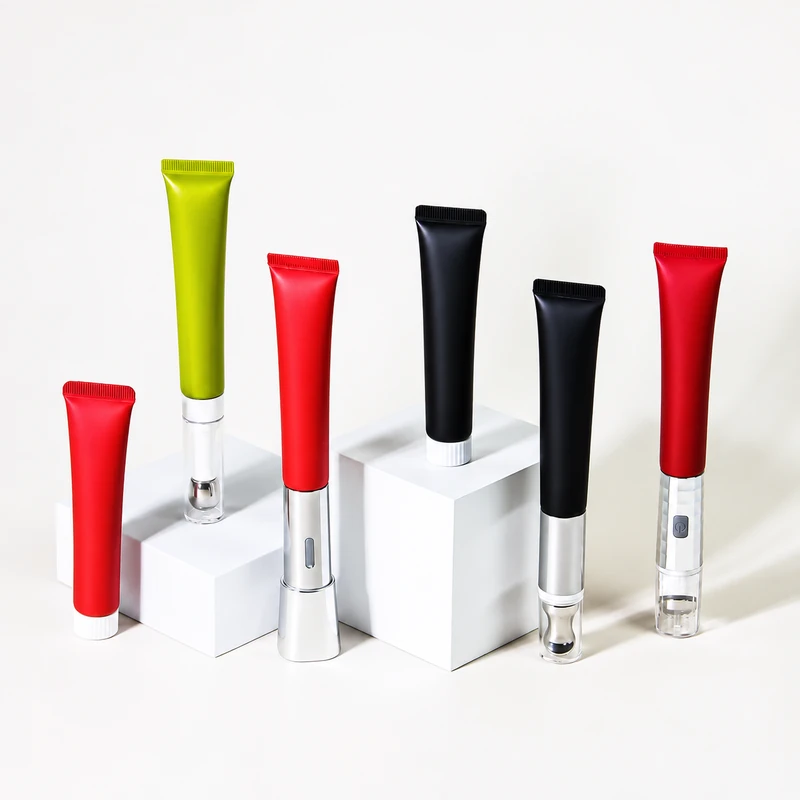
Request a quote for white or custom tube color, decoration, smooth silver-tone housing finish and retail packaging. Approve decorated samples and print durability before bulk release.
What is the MOQ and can artwork be mixed?
MOQ is 10,000 pieces. Confirm allocation per size, material structure, artwork and electrical configuration before approving a mixed assortment.
Are certificates included?
List the exact material, electrical and battery documents required for the intended market. Confirm document availability, scope and match to the supplied unit before placing the order.
How do I compare delivery and payment offers?
Compare the same assembly, sample approvals, packout, named delivery term, production milestones, deposit, balance trigger and included charges. Ask for one written commercial specification.
What happens if inspection finds defects?
Agree the reporting window and remedy process in the purchase order. Retain lot numbers, quantities, inspection results and photographs of the affected parts and cartons for assessment.
Does the metal tip actively cool the skin?
Specify this as a metal contact applicator. Confirm any powered temperature-control function on the exact module before using an active-cooling claim. Evaluate the application feel on the approved sample.
Can the electrical module be removed or reused?
Define removal purpose and replacement scope in the order. Qualify the connection, seal, cleaning and repeat-use cycles before marketing refillability or cross-compatibility with other tubes.
Request Your Customized Tube Quotation
Send Boyu Packaging your RFQ with the target capacity, diameter, formula type, layer specification, applicator and charging requirements, artwork, quantity per SKU, filling condition, retail contents, destination and target cargo-ready date. Request itemized sample, tooling, packaging, freight and payment terms alongside the technical specification.
 English
 Español de Argentina
 Русский
 Italiano
 日本語
 한국어
 العربية
 Français
 Deutsch