
Why Does an Airless Pump Bottle Leak from the Bottom? Common Causes, Solutions & Troubleshooting Guide
Airless pump bottles are widely used for lotions, serums, creams, and cosmetic products because they protect formulations from air contamination and improve product shelf life. However, some customers may occasionally encounter issues such as difficult dispensing, intermittent output, or liquid leaking from the bottom of the bottle.

Case Study
A customer purchased 50ml and 100ml PE Airless Pump Bottles and reported the following problems:
- Lotion does not dispense smoothly.
- Product comes out intermittently when pressing the pump.
- Multiple presses are required before dispensing.
- Liquid eventually leaks from the bottom of the bottle.
How Does an Airless Pump Bottle Work?
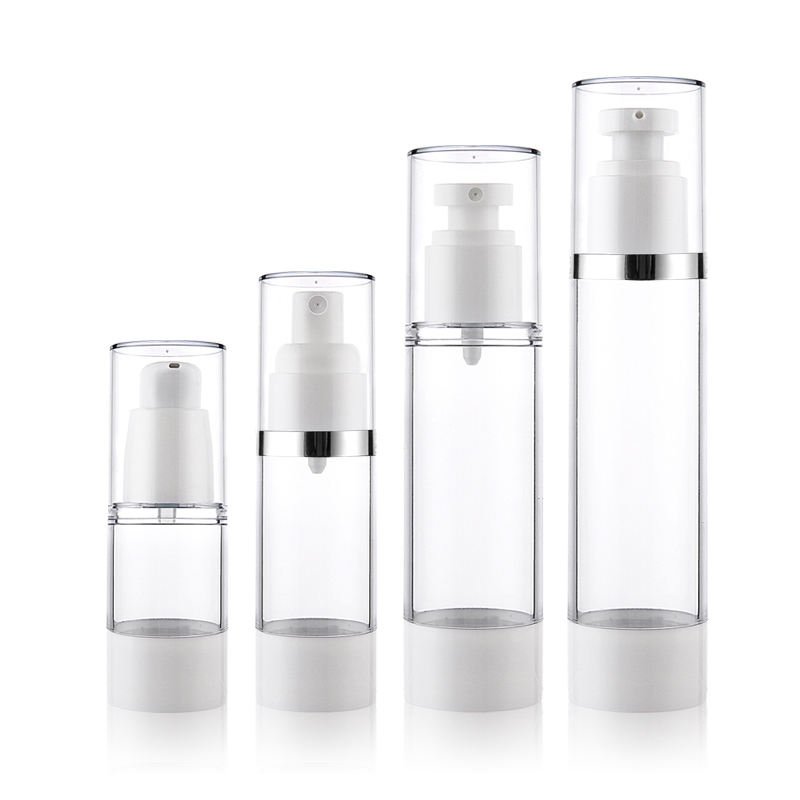
Unlike traditional bottles with dip tubes, airless bottles use a movable piston (disc) at the bottom.
When the pump is pressed:
- The pump creates negative pressure.
- The piston gradually moves upward.
- The product is pushed toward the pump chamber.
- The formula is dispensed without introducing air into the bottle.
If any component fails to maintain an airtight seal, dispensing performance may be affected.
Possible Causes of Bottom Leakage
1. Loose or Damaged Bottom Piston (Most Common)
Symptoms:
- Product dispenses inconsistently.
- Piston rises unevenly.
- Leakage appears around the bottom.
Cause:
The piston may be:
- Improperly installed during assembly.
- Damaged during transportation.
- Deformed by excessive internal pressure.
- Manufactured outside tolerance specifications.
Solution:
- Replace the defective bottle.
- Check piston dimensions and sealing performance during production.
- Perform vacuum and leakage tests before shipment.
2. Product Viscosity Is Too High
Symptoms:
- Pump feels hard to press.
- Lotion comes out in short bursts.
- Excessive force is needed.
Cause:
Very thick creams or high-viscosity formulas create excessive pressure inside the bottle, potentially causing piston movement issues or seal failure.
Solution:
- Verify compatibility before mass production.
- Conduct filling tests with actual formulations.
- Use a larger-output pump for thick products.
3. Air Leakage Between Pump and Bottle Neck
Symptoms:
- Pump repeatedly fails to prime.
- Product output is inconsistent.
- Air bubbles appear inside the bottle.
Cause:
Poor sealing between:
- Pump and bottle neck.
- Gasket and closure.
- Threaded connection.
Even a small air leak can prevent proper vacuum formation.
Solution:
- Inspect gasket quality.
- Verify tightening torque.
- Conduct vacuum retention testing.
4. Filling Temperature Too High
Symptoms:
- Leakage develops several days after filling.
- Bottle appears normal immediately after production.
Cause:
Hot-filled products may expand during cooling and create pressure differences that affect the piston seal.
Solution:
- Follow recommended filling temperatures.
- Perform cooling and stability tests.
- Allow products to reach room temperature before sealing.
5. Overfilling the Bottle
Symptoms:
- Pump does not operate correctly.
- Leakage occurs after transportation.
Cause:
Insufficient headspace can create excessive internal pressure.
Solution:
- Follow recommended filling volumes.
- Maintain appropriate manufacturing tolerances.
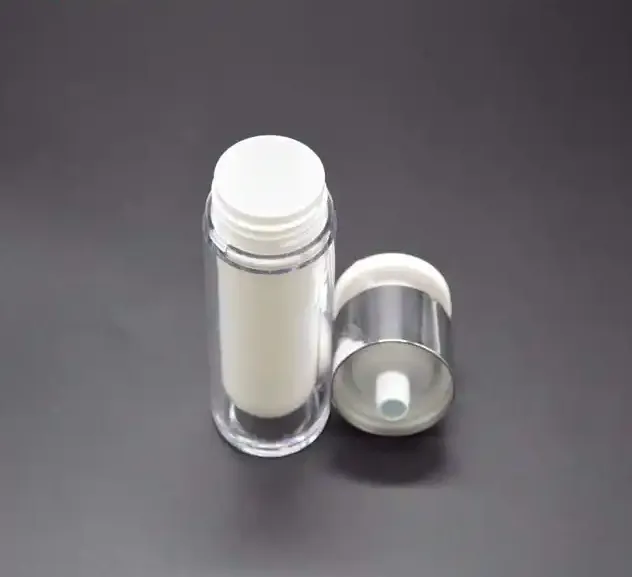
6. Pump Component Defects
Symptoms:
- Product output is inconsistent.
- Pump requires many presses before dispensing.
Cause:
Possible defects include:
- Weak spring.
- Faulty valve.
- Poor sealing ring.
- Improper assembly.
Solution:
- Inspect pump components.
- Perform life-cycle testing.
- Replace defective pumps.
7. Transportation or Storage Damage
Symptoms:
- Problem appears after shipping.
- Not all bottles are affected.
Cause:
High temperatures, compression, impact, or long-distance transportation can deform plastic components and weaken seals.
Solution:
- Improve packaging protection.
- Avoid prolonged exposure to high temperatures.
- Perform drop and transportation tests.
Recommended Troubleshooting Process
When a customer reports bottom leakage:
Step 1: Collect Information
Request:
- Product photos and videos.
- Filling formula type.
- Viscosity information.
- Filling temperature.
- Batch number.
- Quantity affected.
Step 2: Determine Failure Rate
- Less than 1%: likely isolated manufacturing issue.
- Multiple cartons: investigate production batch.
- Entire order: conduct full root-cause analysis.
Step 3: Conduct Testing
Check:
- Pump functionality.
- Piston sealing.
- Vacuum performance.
- Bottle dimensions.
- Formula compatibility.
Step 4: Provide Corrective Action
Depending on the cause:
- Replace defective bottles.
- Replace pumps.
- Optimize filling process.
- Recommend a more suitable airless bottle structure.
Frequently Asked Questions (FAQ)
Q1: Why does the lotion come out intermittently?
A: This is usually caused by insufficient vacuum, air leakage, excessive product viscosity, or pump valve issues.
Q2: Why is liquid leaking from the bottom?
A: The most common reason is piston seal failure. Other causes include overfilling, transportation damage, poor assembly, or formula incompatibility.
Q3: Can all cosmetic formulas be used in airless bottles?
A: No. Extremely thick creams, products containing particles, or highly volatile formulas should be tested before mass production.
Q4: How many times should an airless pump be pressed before first use?
A: Normally 5–15 presses are required to prime the pump after filling.
Q5: How can leakage risks be reduced?
A: Perform compatibility testing, vacuum testing, filling trials, and transportation simulation before mass production.
Professional Recommendation
For customers using 50ml and 100ml PE Airless Pump Bottles, bottom leakage is often associated with piston sealing failure, but it is important not to overlook factors such as formula viscosity, pump quality, filling conditions, overfilling, and transportation damage.
Before mass production, suppliers should conduct:
- Formula compatibility tests
- Vacuum leakage tests
- Pump life-cycle tests
- Transportation simulation tests
- Finished product inspections
These preventive measures can significantly reduce customer complaints and improve product reliability.
 English
  Español de Argentina
  Русский
  Italiano
  日本語
日本語  한국어
한국어  العربية
  Français
  Deutsch