Short answer: Choose an airless pump bottle manufacturer by verifying five things: whether it controls the critical production and assembly processes, whether its quality system covers the actual factory and products you will buy, whether it can test your formula in the proposed package, whether it freezes specifications and controls component changes, and whether its confirmed capacity supports your launch date. A certificate, catalog, or low quotation cannot replace a filled-product compatibility and dispensing trial.
Airless packaging is a system, not just a bottle with a pump. The actuator, pump chamber, valve, piston or inner pouch, seals, body dimensions, formula viscosity, filling method, and headspace all affect performance. For that reason, selecting a Chinese airless pump bottle factory requires more technical review than sourcing a simple screw-cap container.
This guide is written for skincare brands, contract fillers, packaging distributors, and importers comparing an airless pump bottle manufacturer in China. It explains what evidence to request, how to read ISO 9001 information, which bottle type fits which formula, how to test samples, and how to reduce first-order risk.
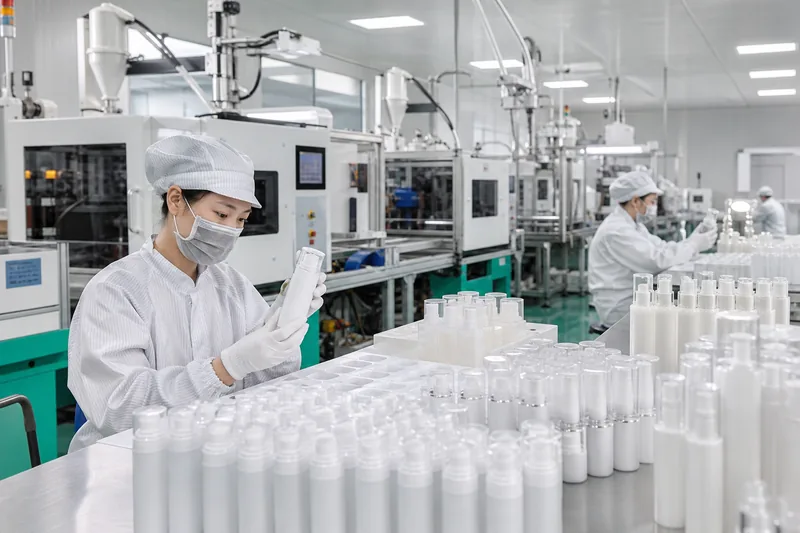
A useful factory review follows the product from molding and component receipt through assembly, testing, packing, and lot release.
What Makes an Airless Pump Bottle Manufacturer Reliable?
A reliable supplier is one that repeatedly produces the agreed specification and provides traceable evidence when something changes. The word “factory” alone says little. Some suppliers mold the bottle body but purchase the pump; others assemble systems designed and molded by specialist partners. Either model can work if responsibilities, approved component sources, inspection methods, and change control are clear.
Identifies which parts are molded, decorated, assembled, tested, or subcontracted and where each process occurs.
Uses drawings, material grades, colors, pump output, defect limits, packaging method, and an approved reference sample.
Can measure priming, dose consistency, leakage, evacuation, actuator force, and package performance with your formula or a justified simulant.
Connects finished cartons to molding, assembly, decoration, inspection, and component lots.
Does not replace resin, seals, springs, pumps, colorants, decorators, or molds without written evaluation and buyer approval where required.
Can contain a defect, identify root cause, document corrective action, and verify that the action worked.
Manufacturer, assembler, or trading company?
Ask for a process map rather than relying on the company label. It should show the legal entity taking your order, the manufacturing site, the pump and bottle-body source, the assembly site, the decorator, the inspection location, and the party responsible for nonconforming goods. An integrated supplier may simplify coordination; a qualified integrator may offer a broader range. The procurement risk comes from undisclosed outsourcing, not from outsourcing itself.
Understand the Airless System Before Auditing the Factory
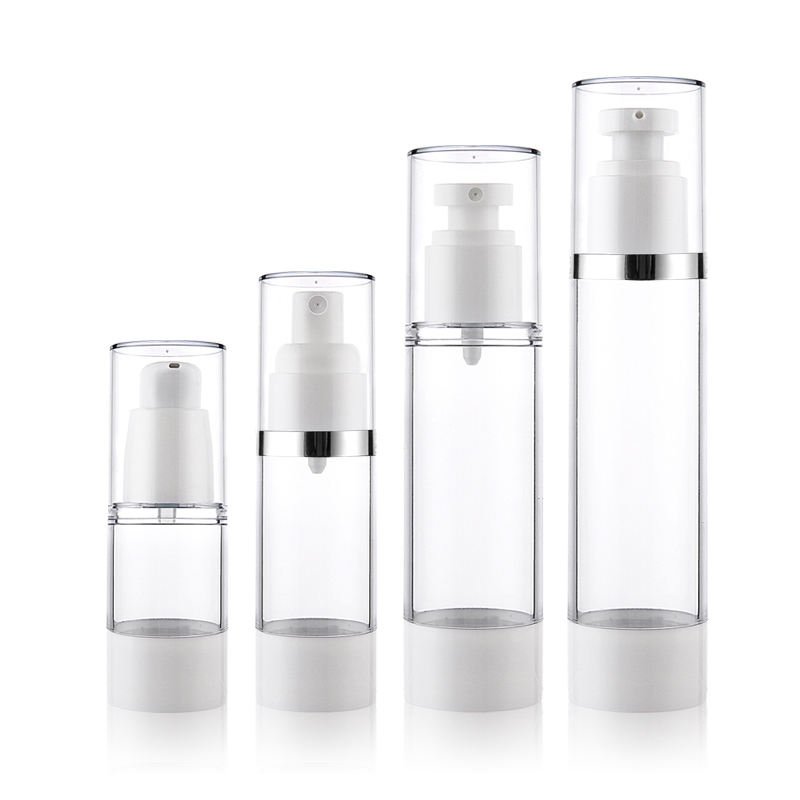
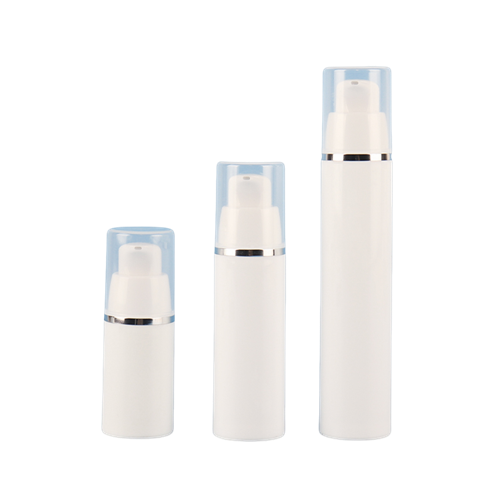
In a common piston-type airless bottle, pressing the actuator changes pressure inside the pump chamber. The outlet valve opens, a measured dose leaves the nozzle, and the inlet valve then allows product into the chamber for the next stroke. As product is removed, a piston rises from the base. No dip tube is required. Other systems use a collapsible inner pouch or cartridge.
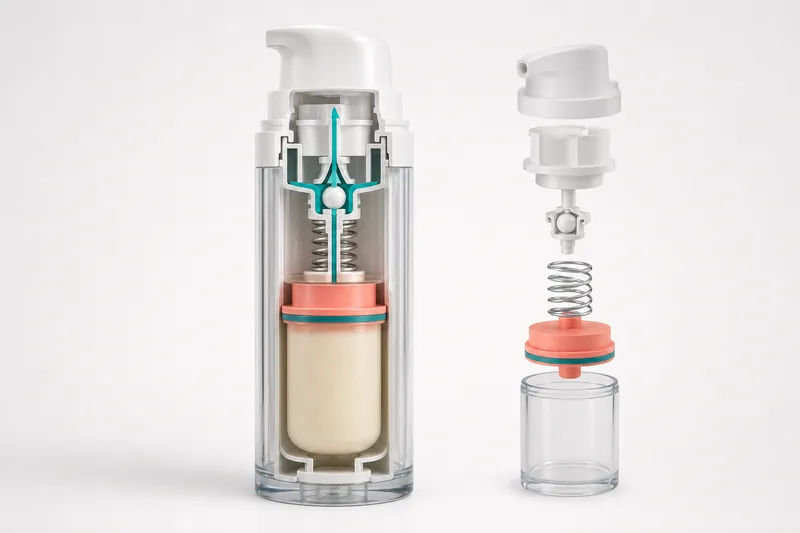
The package must be assessed as an assembled dispensing system. Pump, valve, seal, piston, bottle geometry, and formula influence one another.
This mechanism can reduce repeated air entry during use, but it does not make a formula sterile, eliminate all oxygen, or guarantee shelf-life extension. Those claims require stability, microbiological, and package-compatibility evidence from the formula owner.
Performance data to request
- Priming strokes: the number of full presses required to obtain a stable dose after correct filling and assembly.
- Nominal output and tolerance: measured gravimetrically over multiple strokes and samples, not described only as “high output” or “smooth.”
- Evacuation rate: the percentage of product dispensed under a defined procedure. Thick or shear-sensitive formulas may behave differently from water.
- Leak and vacuum integrity: tested in intended orientations and after relevant temperature or transport conditioning.
- Actuation force and recovery: important for consumer use, especially with viscous products and small actuators.
- Cycle durability: confirms that the pump continues to dose through the expected number of uses.
- Dimensional and assembly controls: includes piston fit, seal interfaces, pump seating, component engagement, and cap retention.
How to Judge Factory Capability
1. Audit the process that makes your exact SKU
A polished showroom is not production evidence. During an onsite or remote audit, follow one comparable airless SKU from incoming material through molding or component receipt, assembly, inspection, packing, and warehouse release. Record equipment identification, process parameters, mold maintenance status, work instructions, inspection frequency, and segregation of rejected parts.
Ask the supplier to demonstrate a live batch record with confidential customer details removed. The record should link raw material or purchased components to in-process checks and finished cartons. For custom projects, confirm who owns the mold, who stores it, how many cavities it has, how preventive maintenance is recorded, and what happens to the tool if the commercial relationship ends.
2. Review the laboratory, not just the equipment list
A test machine matters only when the method, sample count, acceptance criterion, calibration status, and result are documented. Ask an operator to run a pump-output or leak test and show the applicable work instruction. Compare the method with the specification in your purchase contract. If the supplier cannot reproduce its own result, the certificate of analysis has limited value.
3. Check capacity using evidence
Request the number of active molds and assembly lines for your design, demonstrated output from recent comparable orders, planned utilization during your production window, and the constraint process. High molding capacity does not help if a single assembly fixture, decorator, or purchased pump is the bottleneck. Ask what contingency exists for equipment failure and how maintenance affects the schedule.
How to Verify ISO 9001 and Other Certificates
ISO 9001 specifies requirements for a quality management system. Certification is performed by an independent certification body; ISO itself does not certify factories. Most importantly, ISO 9001 certification concerns the management system. It is not product approval and does not prove that a particular airless bottle is compatible with your serum.
Review a certificate in this order:
- Legal name: it should match the manufacturing entity, not only an export office or unrelated group company.
- Site address: confirm that the location producing or assembling your order is included.
- Certification scope: look for relevant activities such as design, manufacture, assembly, or sale of plastic packaging. A scope that excludes the actual product or site is weak evidence.
- Standard and validity: check the edition, issue date, expiry date, and certificate status.
- Certification and accreditation chain: identify the certification body and its accreditation. Search the certificate number, company, or body in IAF CertSearch where coverage is available, and confirm discrepancies directly with the issuer.
Common Airless Bottle Types, Materials, and Uses
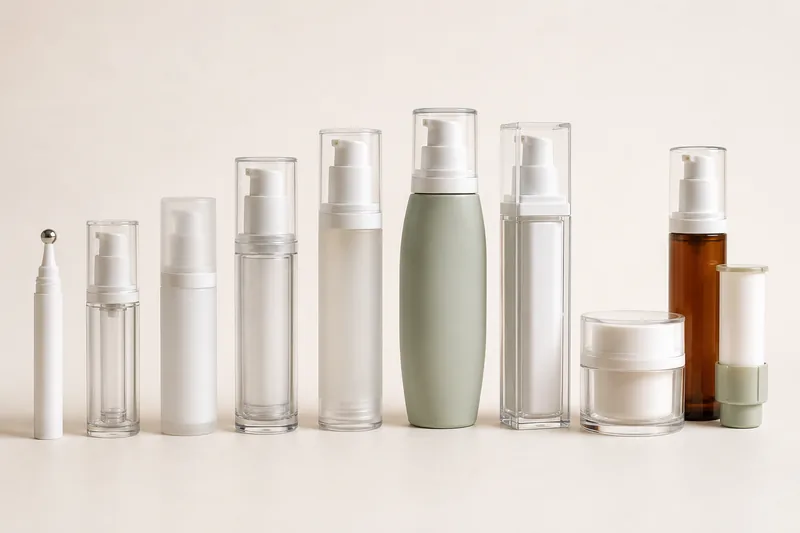
Select the dispensing architecture first, then refine capacity, shape, decoration, and secondary packaging.
| Format | Typical capacity band | Common use | Points to verify |
|---|---|---|---|
| Mini or slim piston bottle | 5–15 ml | Eye serum, spot treatment, samples, travel packs | Small dose, priming, label area, filling accuracy |
| Standard round or square bottle | 15–50 ml | Serum, foundation, facial lotion, treatment cream | Formula viscosity, output, evacuation, actuator comfort |
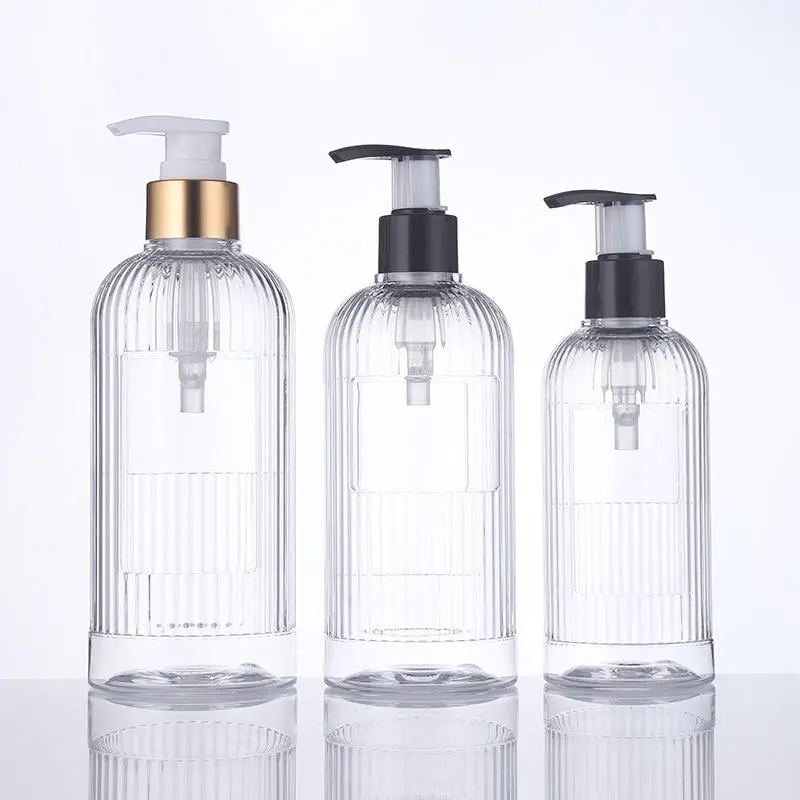
| Medium airless bottle | 60–150 ml | Sunscreen, facial lotion, primer, hair treatment | Panel stability, drop performance, total stroke count |
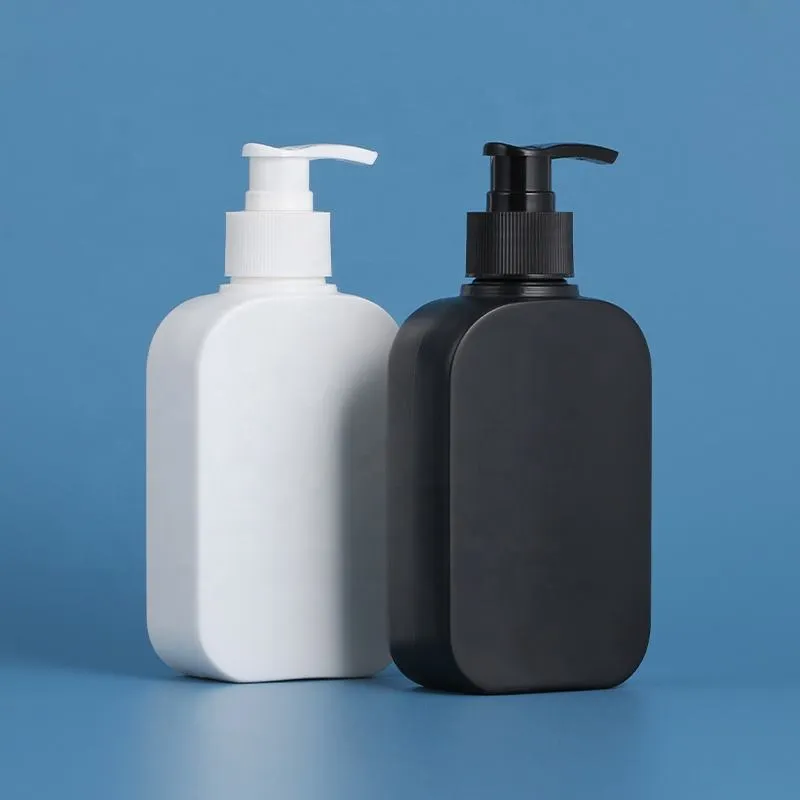
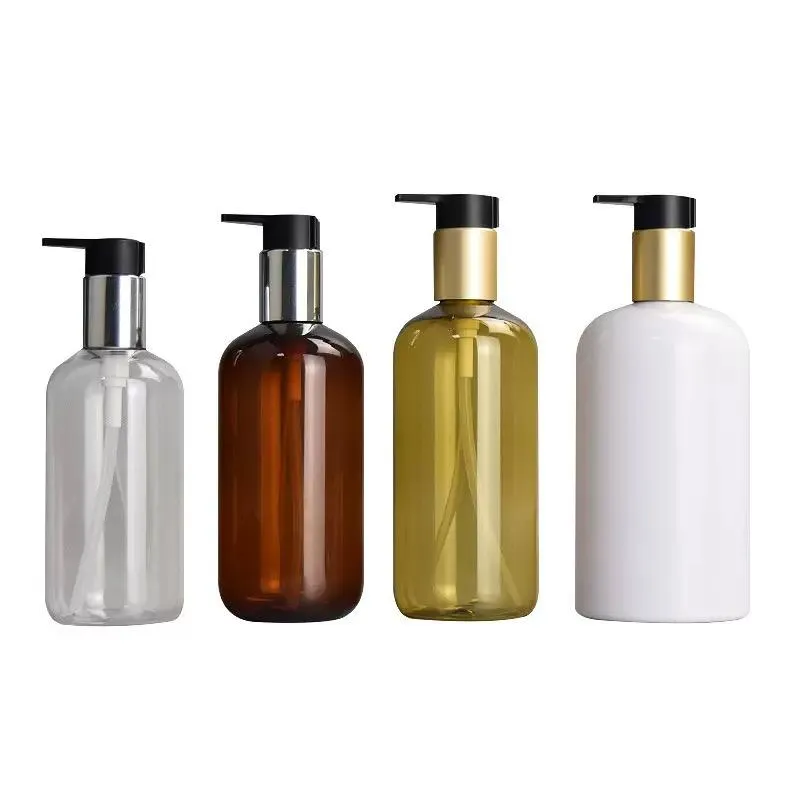
| Large airless dispenser | 150–250 ml or supplier-specific | Body care and professional products | Pump output, shipping weight, carton compression, consumer force |
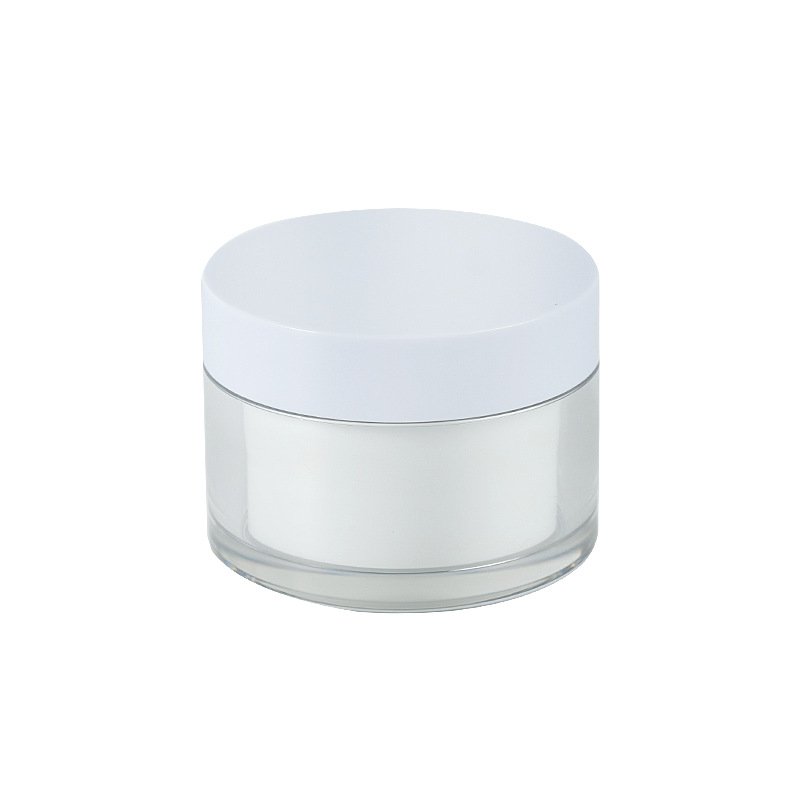
| Airless jar | 30–100 g or supplier-specific | Viscous cream and balm-like cosmetics | Plate movement, dose consistency, cleaning and refill design |
| Pouch, bag, or replaceable cartridge system | Design-specific | Formula isolation or refill-oriented formats | Seal integrity, filling equipment, replacement interface, recyclability claim |
Material comparison
| Material or construction | Why buyers choose it | Limits to investigate |
|---|---|---|
| PP | Common in pumps, pistons, inner containers, and opaque bottles; low density and useful chemical resistance for many cosmetic systems. | Lower clarity; color and stiffness depend on grade; compatibility still needs testing. |
| PE | Used in selected inner components or containers where flexibility and resistance are useful. | Lower stiffness and decoration behavior than some alternatives; grade and contact surface matter. |
| PET or PETG outer/body components | Clarity and rigid appearance; useful when the brand wants visible color or a thick-wall look. | Confirm the actual product-contact layer, stress cracking, temperature limits, and recycling stream in the destination market. |
| AS or PMMA outer shell | Clear, rigid, thick-wall appearance around an inner container. | Multi-material disassembly and recycling can be more complex; impact and chemical resistance are structure-specific. |
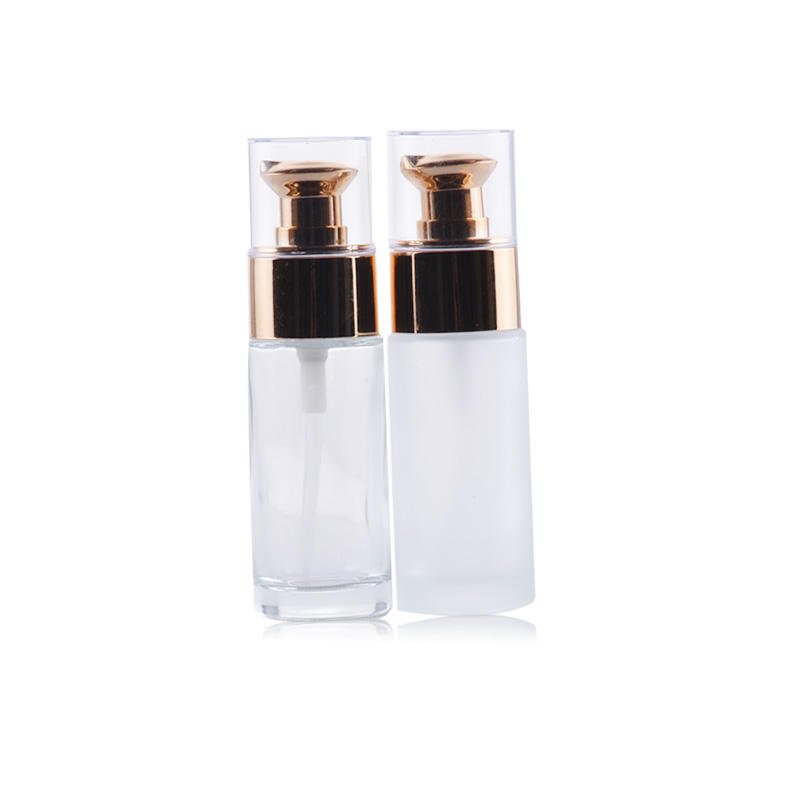
| Glass outer bottle with inner airless system | Weight, rigidity, and a glass presentation while the formula is held in an inner system. | Higher freight weight and breakage risk; verify inner cartridge, retention, drop protection, and material separation. |
| PCR-content plastic | May support a packaging strategy when supply, compliance, and claims are controlled. | Color, odor, mechanical variation, regulatory acceptance, and formula contact must be evaluated by grade and percentage. |
For current designs, review Boyu Packaging’s airless pump bottle range. Buyers comparing a broader skincare line can also review skincare packaging, lotion bottles, and dropper bottles. These links are starting points for sample selection, not a substitute for compatibility testing.
How to Test Samples Before Approving Mass Production
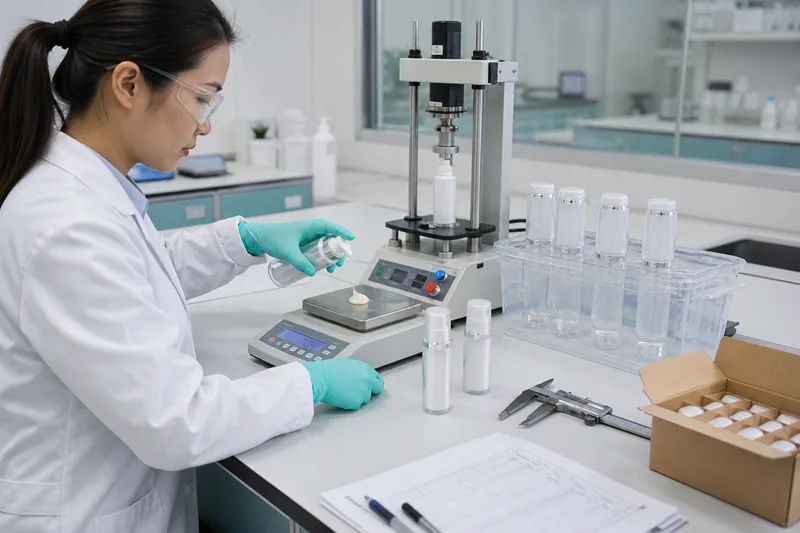
A useful approval test uses production-representative components, the intended filling process, the real formula, and written acceptance criteria.
- Screen stock samples. Confirm the basic architecture, user experience, dose range, fill method, label or decoration area, and secondary packaging dimensions.
- Fill with the actual formula. Use the intended filling temperature, fill weight, headspace, assembly force, and priming procedure. Water-only tests cannot predict every lotion or serum.
- Run compatibility and stability work. Observe swelling, stress cracking, discoloration, odor transfer, seal changes, pump resistance, leakage, and dose drift at justified conditions and intervals. The brand or responsible person should define the protocol.
- Approve decoration on production materials. Check color against a defined standard, print position, adhesion, abrasion, oil or alcohol resistance where relevant, and barcode readability.
- Create a signed golden sample and specification. The written specification takes priority for measurable criteria; the golden sample supports visual judgment.
- Repeat critical tests on production units. A handmade sample may use different processes or components from mass production.
For recurring lots, acceptance sampling can be built around ISO 2859-1 where appropriate. AQL is an acceptance-sampling method, not permission to intentionally ship a known defect percentage. Critical, major, and minor defect definitions must be written for the actual package. Functional or safety-critical characteristics may need special sampling or 100% controls.
Factory Lead Time: Ask for a Schedule, Not One Number
Lead time depends on whether the design is in stock, uses an existing mold, requires a custom color or decoration, needs a new tool, and requires compatibility or stability work. Instead of asking only “How many days?”, request a dated schedule with dependencies:
- technical review and quotation;
- stock sample dispatch;
- custom color or decorated sample;
- new mold design, fabrication, trial, and correction if applicable;
- formula compatibility and filling-line trial owned by the buyer or filler;
- material procurement, molding, decoration, assembly, and curing;
- final inspection, corrective work if needed, packing, and export preparation;
- international freight, customs clearance, and delivery to the filling site.
Boyu’s airless category currently presents planning information for samples, molds, and production. Confirm the current dates, order quantity, decoration, and component availability in the quotation because published ranges are not a delivery commitment. Add buffer between packaging arrival and filling. Do not plan a launch on the assumption that the first production lot will require no rework.
A Practical OEM Purchasing Process
- Issue a complete RFQ. Include formula category, viscosity or rheology information, fill volume, target dose, annual volume, order quantity, destination market, decoration, color standard, launch date, and filling method.
- Compare proposals on the same specification. Separate unit price, decoration, mold, samples, inspection, packing, freight, and tax or duty assumptions.
- Audit the shortlisted supply chain. Confirm legal identity, manufacturing responsibility, certification scope, critical subcontractors, quality records, and capacity.
- Test samples with the formula. Approve performance and decoration before releasing mass production.
- Freeze the specification. Attach drawings, bill of materials, approved colors, output tolerance, defect classification, test methods, packing, and change-control terms to the order.
- Approve a pre-production reference. Confirm that it uses production-intent materials and processes.
- Monitor production and inspect before shipment. Use in-process evidence and an independent pre-shipment inspection when risk, value, or supplier history warrants it.
- Retain samples and performance data. Keep supplier and buyer retention samples from each lot for complaint investigation.
First Order from a Chinese Factory: Risk Controls
- Contract with the correct entity. The company receiving payment should match the agreed contracting party. Treat late bank-account changes as a fraud-control event and verify them through an independent channel.
- Define Incoterms and responsibility. State the named place, version of the Incoterm, export documents, insurance responsibility, and the point where risk transfers.
- Control tooling and intellectual property. Record ownership, permitted use, storage, maintenance, access to drawings, transfer conditions, and treatment at end of life.
- Link payments to evidence. Commercial terms vary, but milestones can be tied to mold approval, sample approval, production progress, and passed inspection.
- Specify spare components. Agree whether extra pumps, caps, or cartridges are supplied, because component failure rates and filling-line losses affect usable yield.
- Validate transit packaging. Carton, divider, bag, pallet, stacking, vibration, drop, and climate exposure should reflect the distribution route. ASTM D4169 is one recognized framework for evaluating shipping units; select methods appropriate to your channel.
- Plan complaint handling before shipment. Define notification windows, evidence required, containment, sorting, replacement or credit rules, and responsibility for consequential operations such as refilling or relabeling.
Questions to Put in the Supplier Audit
| Question | Evidence to request | Warning sign |
|---|---|---|
| Who makes each critical component? | Process map, approved supplier list, incoming specifications | Source cannot be disclosed even under confidentiality, or changes are uncontrolled |
| How is pump output controlled? | Test method, calibrated balance, sampling frequency, recent anonymized record | Only a nominal marketing value is available |
| How are formula complaints investigated? | Complaint workflow, retention samples, root-cause and corrective-action example | No lot traceability or retained samples |
| Does ISO 9001 cover this site and activity? | Current certificate, scope, issuing body, database verification | Certificate belongs to another entity or sales office |
| What can delay this order? | Capacity plan, critical-path schedule, purchased-component lead times | Unconditional delivery promise without dependency review |
| How are engineering changes approved? | Change request form, validation requirements, buyer-notification rule | Supplier may change resin, pump, or decorator without notice |
Frequently Asked Questions
What is the most important test for an airless pump bottle?
There is no single universal test. The minimum decision package should combine formula compatibility, priming, dose consistency, evacuation, leakage, actuator durability, and distribution testing. The real formula and intended filling process are essential because viscosity, surfactants, oils, solvents, and filling conditions can change performance.
Does ISO 9001 mean the bottle is cosmetic-safe?
No. ISO 9001 addresses a quality management system. It does not certify a specific bottle as compatible with a formula, compliant in every market, or suitable for a particular claim. Review the certificate scope and separately obtain material, regulatory, compatibility, and performance evidence.
Is PP always the best material for an airless bottle?
PP is common because it works well in many pump, piston, and inner-container applications, but “best” depends on formula contact, barrier needs, rigidity, appearance, decoration, recycling strategy, market requirements, and cost. Test the exact resin grade and complete assembled package.
How many samples should I test before mass production?
The sample count should follow the risk, test purpose, number of cavities or component sources, and confidence needed. A few appearance samples may support early selection, but they cannot characterize production variation. Define a sampling plan with your packaging engineer, contract filler, quality team, or test laboratory.
Can an airless manufacturer guarantee a longer formula shelf life?
The supplier can provide packaging performance data, but the formula owner must substantiate shelf life through stability and compatibility work. Airless dispensing may reduce repeated air entry during use; it does not replace preservation, formulation controls, or finished-product testing.
Prepare an RFQ that can be tested. Send Boyu Packaging your formula category, desired capacity, pump output, order quantity, decoration, destination market, filling method, and launch schedule. Review the airless bottle collection or request samples and a technical quotation.
Sources and Further Reading
- ISO — ISO 9001 explained
- ISO 9001 Auditing Practices Group — Scope and applicability guidance
- IAF CertSearch — management-system certificate verification
- ISO 2859-1:2026 — sampling procedures indexed by acceptance quality limit
- ISO 15378:2017 — primary packaging materials for medicinal products
- ASTM D4169 — performance testing of shipping containers and systems


 English
  Español de Argentina
  Русский
  Italiano
  日本語
日本語  한국어
한국어  العربية
  Français
  Deutsch