
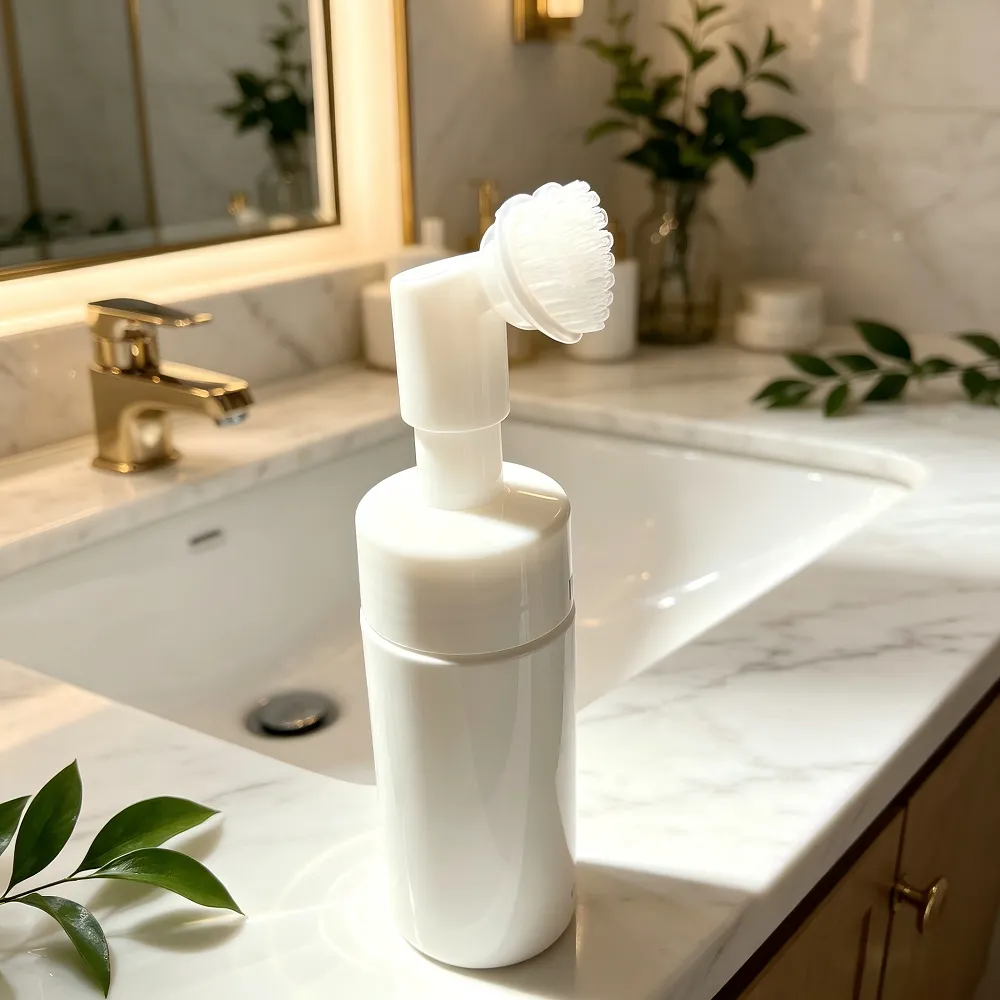
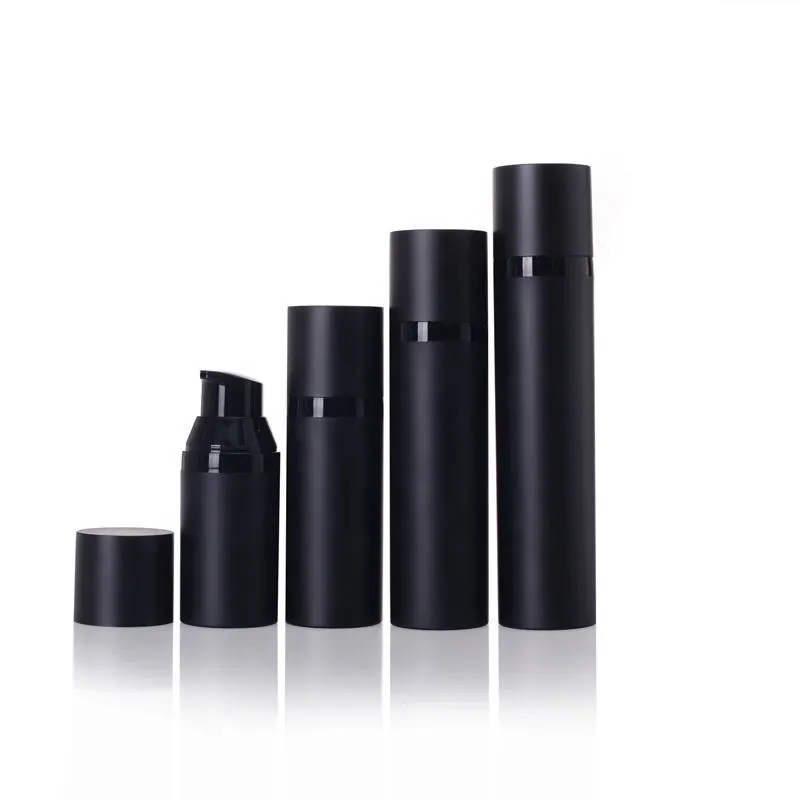
A new shampoo bottle should be simple: turn the pump, let the actuator rise, and press. When it stays locked, however, twisting harder is rarely the best first move. The closure may be rotating with the head, the transport lock may still be engaged, or dried formula may have bonded the moving parts.
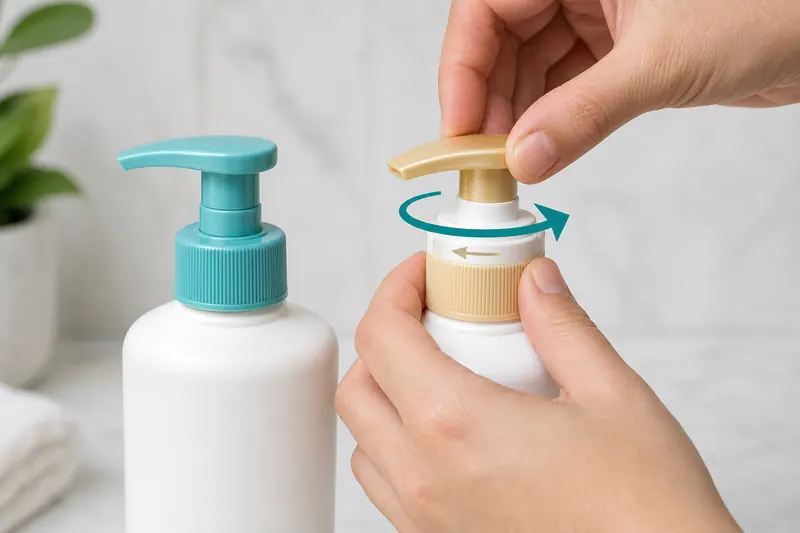
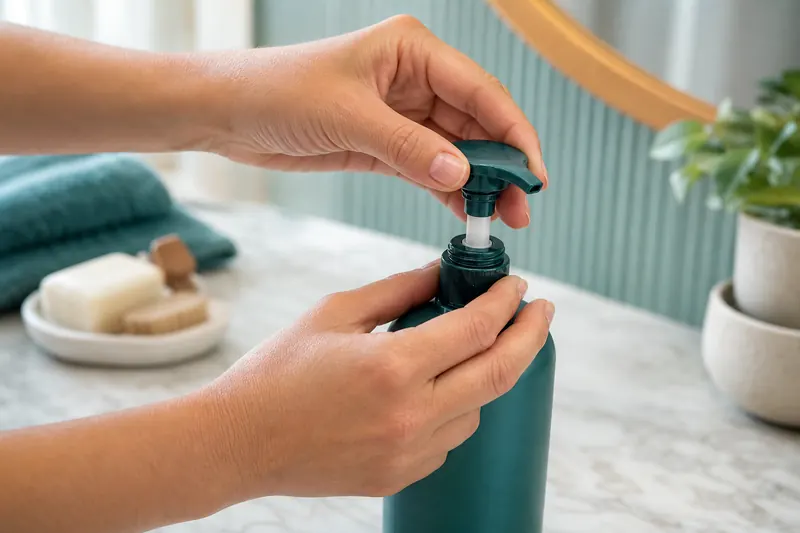
Quick answer: dry the bottle, tighten the threaded collar onto the bottle, hold that collar firmly, and turn only the pump head in the direction shown by its arrow—usually counterclockwise. Once it rises, press it several times to prime the chamber. If it still will not open, use the checks below before deciding that the pump is broken.
How to Unlock a Shampoo Bottle Pump Step by Step
1. Check for a clip, seal, or molded arrow
Remove any plastic transit clip under the actuator. Look for “open,” “close,” or a curved arrow molded into the pump head. Most retail pumps unlock counterclockwise, but some down-lock and quarter-turn designs use the opposite direction. The marking on the component is more reliable than a universal rule.
2. Tighten the collar first
If the entire pump rotates, the unlocking motion cannot separate the head from the lock. Turn the ribbed collar clockwise until it is snug on the bottle neck. Do not overtighten it; excessive torque can deform a plastic thread or gasket.
3. Hold the collar and rotate only the head
Grip the collar with one hand. With the other hand, press the head down very slightly and rotate it toward “open.” Many pumps release within a quarter to several turns. Keep the dip tube inside the bottle so the formula does not spill.
4. Improve your grip without crushing the pump
Use a dry towel, silicone jar grip, or rubber glove if the surface is slippery. Avoid squeezing the actuator with metal pliers; they can ovalize the stem or crack the nozzle. Do not apply boiling water or an open flame. Gentle warmth from a cloth dampened with warm water can soften dried shampoo around the external joint.
5. Prime the unlocked pump
After the actuator pops up, press it slowly 5–15 times. Priming replaces air in the chamber and dip tube with shampoo. Keep the bottle upright. If the head moves but nothing dispenses, the problem is now a flow issue rather than a lock issue.
Know Which Locking Pump You Have
A pump that appears “stuck” may simply use a different locking system:
- Up-lock pump: the head rises when rotated to the open position. It is common on shampoos, lotions, and body wash.
- Down-lock pump: the head locks while pushed down, which reduces package height for shipping. It may dispense a little product while being closed.
- Quarter-turn lock: a short rotation engages or releases an internal stop.
- Clip lock: a removable plastic clip physically blocks the actuator from traveling downward.
- External overcap: a clear or colored cap protects the actuator instead of using a twist lock.
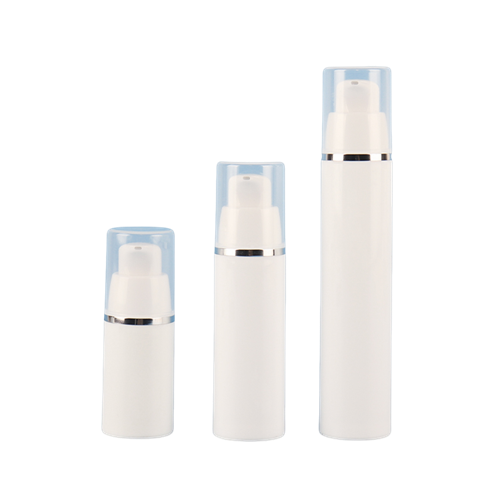
For brands sourcing custom shampoo bottles, lock style affects filling-line handling, e-commerce leakage risk, shelf presentation, and consumer instructions. It should be selected with the complete package—not treated as a separate accessory.
Shampoo Pump Structure and Working Principle
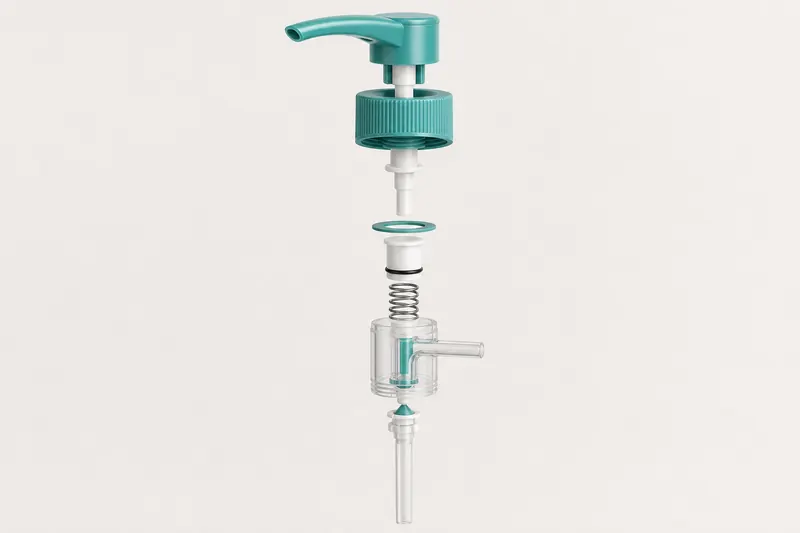
| Part | Function | Typical failure symptom |
|---|---|---|
| Actuator and nozzle | Receives finger pressure and directs the dose | Head will not move, weak stream, or product exits sideways |
| Closure and gasket | Secures the pump and seals the bottle neck | Leakage, loss of prime, or spinning collar |
| Stem and piston | Move inside the chamber to change pressure | Rough travel, no suction, or actuator stuck down |
| Spring | Returns the actuator and piston after each stroke | Head rises slowly or does not return |
| Inlet/outlet valves | Control one-way product flow | Backflow, sputtering, or failure to prime |
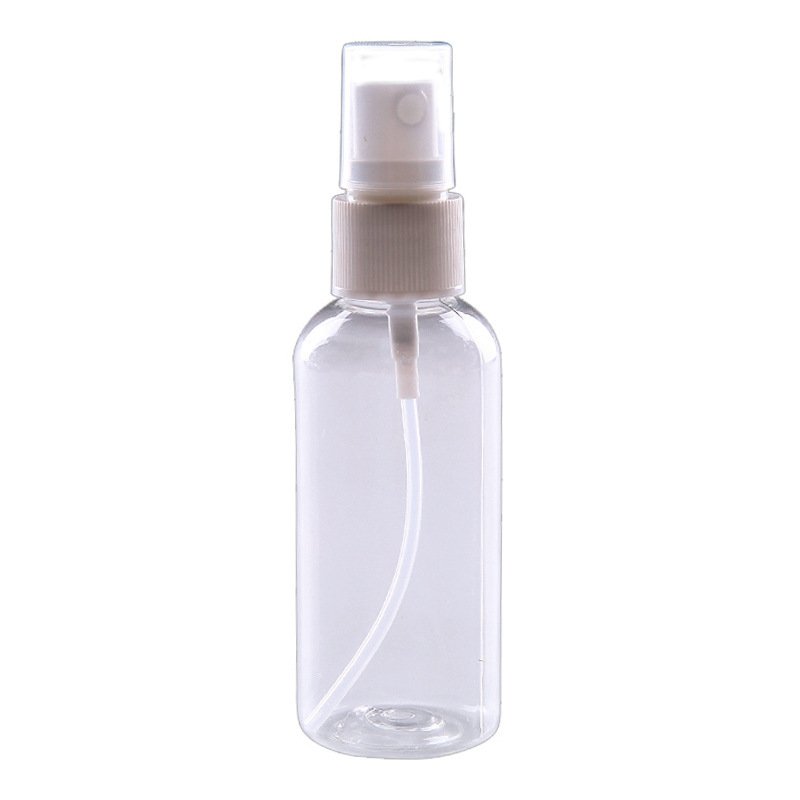
| Dip tube | Carries formula from the bottle to the chamber | Pump works only when tilted or leaves excess product |
On the downstroke, the piston reduces chamber volume and pressure forces product through the outlet and nozzle. When the finger is released, the spring raises the piston. The expanding chamber creates a partial vacuum, the inlet valve opens, and product rises through the dip tube to refill the chamber. A seal leak, blocked passage, damaged valve, or poorly fitted dip tube breaks this pressure cycle.
Pump Opens but Shampoo Will Not Come Out
Clear an air lock
Tighten the closure, keep the bottle upright, and use full, slow strokes. If the bottle is almost empty, tilt it only enough to submerge the dip-tube end, then prime again. A badly warped gasket or cracked housing cannot maintain the vacuum and normally requires replacement.
Flush dried formula from the pump
Unscrew the pump and wipe the dip tube. Place the tube in a separate cup of warm—not boiling—water and press the actuator repeatedly until water flows freely. Rinse the nozzle, pump clean water through once more, and allow the assembly to dry fully before reinstalling it.
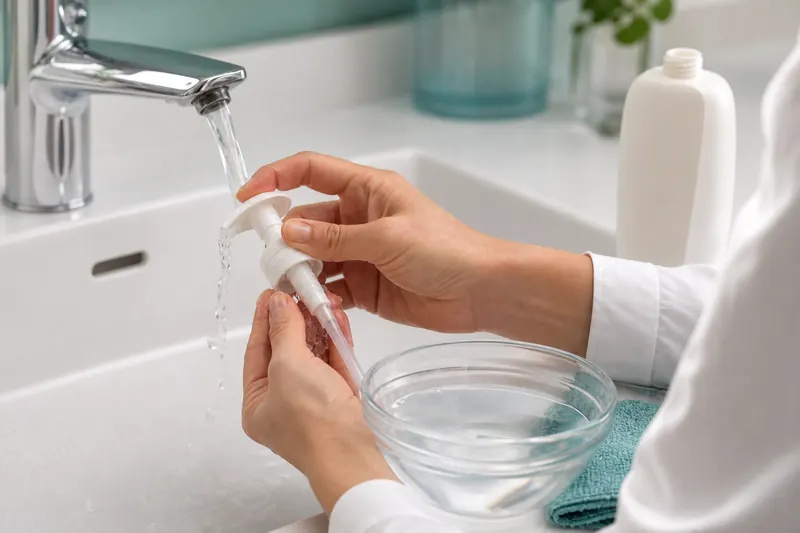
Do not pump rinse water back into the product. For a commercial cosmetic pack, reuse after opening should be evaluated under the brand’s hygiene and compatibility procedures; a household cleaning method is not a substitute for microbiological controls.
Check formula-to-pump compatibility
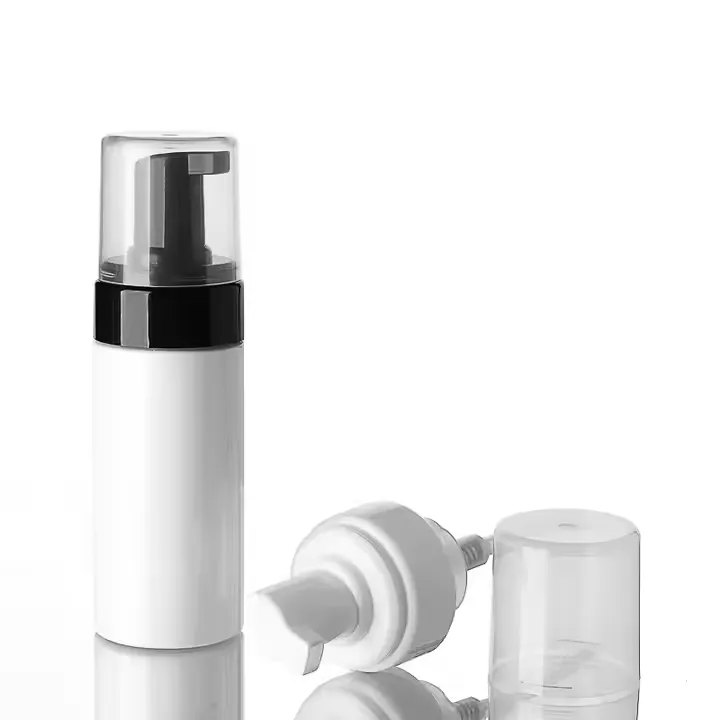
Highly viscous shampoo, suspended particles, salt-rich formulas, and formulas that dry quickly can exceed the pump’s passage or valve capability. A larger pathway or a pump engineered for higher viscosity may be needed. Foam pumps are a separate system: they require an appropriate low-viscosity formula and an air/liquid mixing mesh. Filling a foam pump with conventional thick shampoo often produces poor output or a blockage.
Common Problems, Causes, and Practical Fixes
| Symptom | Likely cause | What to do |
|---|---|---|
| Head rotates but does not rise | Collar is rotating; wrong unlock direction | Tighten and hold the collar; follow molded arrow |
| Head rises but no product appears | Air in chamber; loose seal; disconnected tube | Prime slowly, tighten closure, inspect tube and gasket |
| Pump sputters | Air leak or tube not submerged | Keep upright, check fill level and seal |
| Actuator remains down | Dried formula, damaged spring, swollen component | Flush with warm water; replace if return does not recover |
| Leakage at bottle neck | Loose closure, damaged gasket, mismatched neck finish | Reseat or replace with the correct closure specification |
| Weak or reduced dose | Partial blockage, high viscosity, damaged valve | Clean and retest; use a compatible output system |
How to Replace a Broken Shampoo Pump
- Remove the old pump. Unscrew the collar and lift it out slowly. Protect the work surface from drips.
- Identify the bottle neck finish. Match both neck diameter and thread style. A familiar diameter alone does not guarantee that two closures share the same thread.
- Match the formula and desired output. Consider viscosity, particles, dose per stroke, actuator size, flow path, spring location, and whether the pack needs an up-lock, down-lock, clip, or overcap.
- Set the dip-tube length. The tube should approach the bottom without buckling hard against it. If trimming is required, make a clean angled cut to reduce the chance of sealing against the base.
- Inspect the gasket and screw on squarely. Cross-threading creates leaks. Tighten evenly to the closure specification.
- Prime and test. Check output, return speed, neck leakage, bottle paneling, and performance at different fill levels.
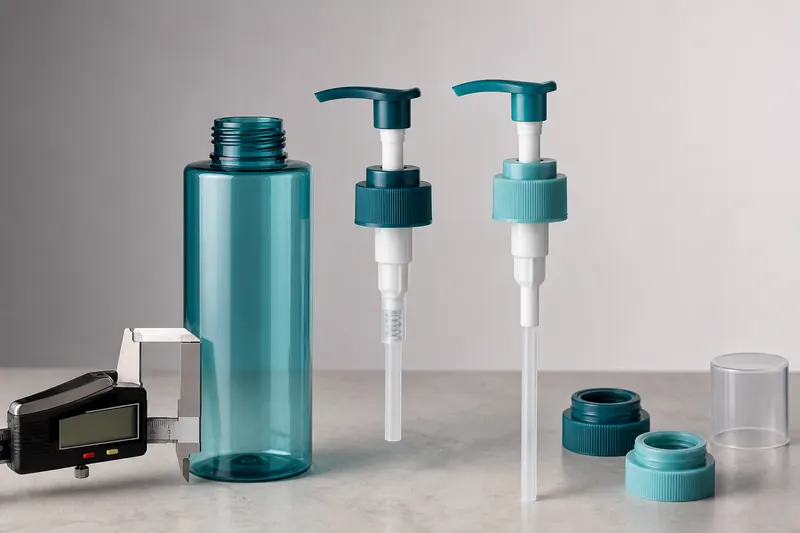
For household use, a compatible replacement is often more reliable than dismantling the small valve and spring assembly. For a brand launch, pump selection should be validated against the actual filled formula. Boyu Packaging can pair pumps with plastic cosmetic bottles in materials such as PET, HDPE, PP, and PCR options, subject to project requirements and compatibility testing.
What Brands and Buyers Should Test Before Production
A pump that works with water may fail with the finished shampoo. A meaningful approval protocol uses production-representative bottles, pumps, gaskets, decoration, and formula. Buyers should define and record:
- unlocking behavior and acceptable opening/closing torque;
- number of priming strokes and dose consistency;
- actuator return speed after repeated cycles;
- upright, inverted, and side leakage where relevant;
- formula compatibility after aging at defined conditions;
- dip-tube reach at full and low fill levels;
- drop, vibration, carton, and e-commerce transit performance;
- consumer usability with wet hands.
These tests help separate a one-off unlocking problem from a system-level mismatch. They also give the packaging manufacturer, filler, and brand a shared acceptance standard before mass production.
Frequently Asked Questions
Why does my shampoo pump spin without opening?
The threaded collar is probably turning with the actuator. Tighten the collar, hold it still, and rotate only the head toward the molded “open” arrow.
Should I push down while twisting a shampoo pump?
A small amount of downward pressure can help some lock designs disengage. Do not force the head to the bottom unless the pump instructions indicate a down-lock mechanism.
How many times should a new shampoo pump be pressed?
Several full strokes are normal because the chamber and dip tube initially contain air. Many pumps prime within 5–15 slow strokes, but the exact number depends on tube length, chamber volume, formula viscosity, and pump design.
Can a broken spring be repaired?
Internal springs and valves are difficult to service consistently. If warm-water flushing does not restore return action, replace the complete pump with a compatible unit.
Can I shorten a replacement dip tube?
Yes, when the pump supplier permits it. Measure carefully and make a clean angled cut. A tube that is too short leaves product behind; one that is too long can buckle and restrict flow.
What is the best pump for thick shampoo?
There is no single best model. The correct pump has a flow path, valve design, output, spring system, and dip tube validated for the actual formula. Sample testing with the filled product is essential.
Need a Shampoo Bottle and Pump That Work as a System?
Send Boyu Packaging your formula viscosity range, target capacity, bottle material, neck finish, desired dose, decoration, and shipping market. Our team can help evaluate compatible bottle-and-pump options and prepare samples for your own filling and performance tests.

 English
  Español de Argentina
  Русский
  Italiano
  日本語
日本語  한국어
한국어  العربية
  Français
  Deutsch