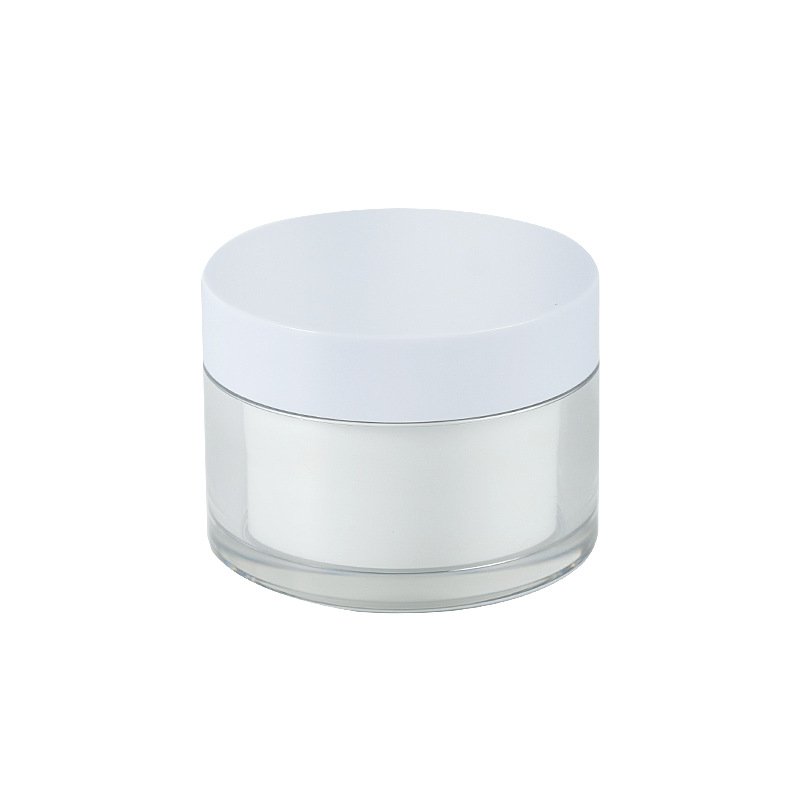
100g Frosted-Look Double-Layer Cosmetic Cream Jar
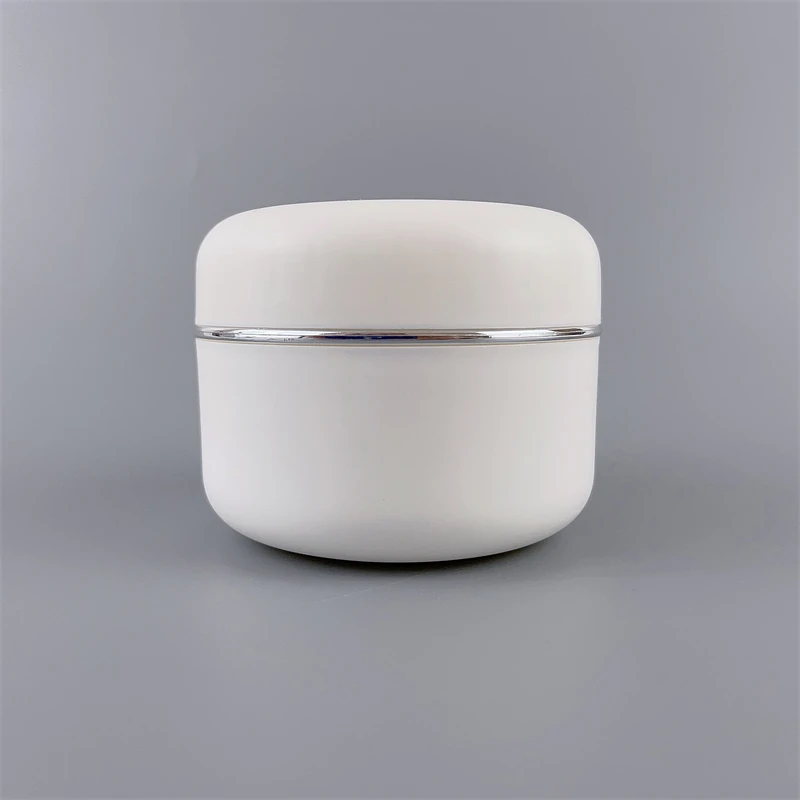
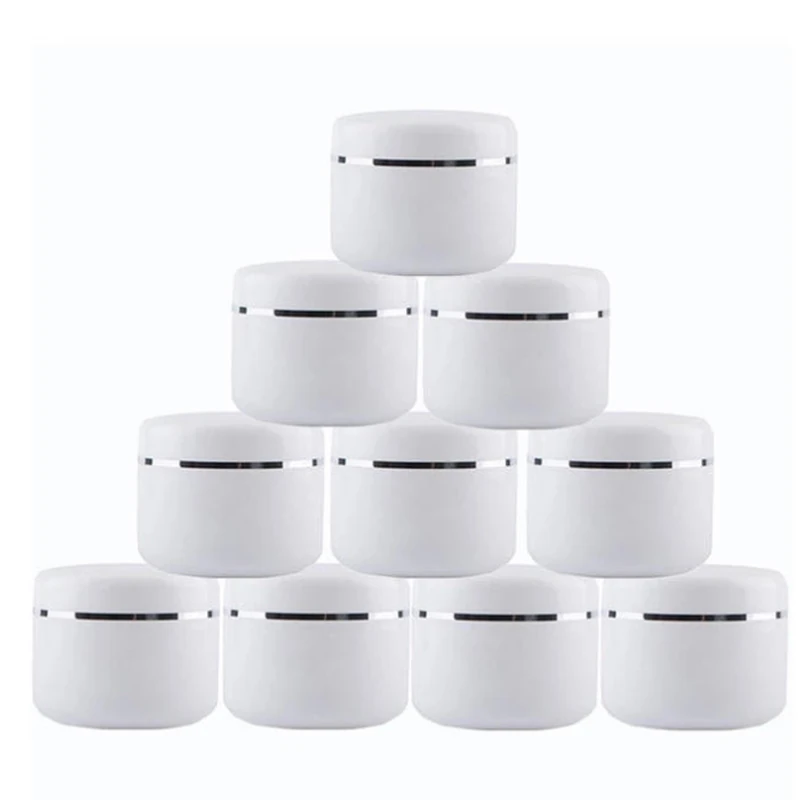
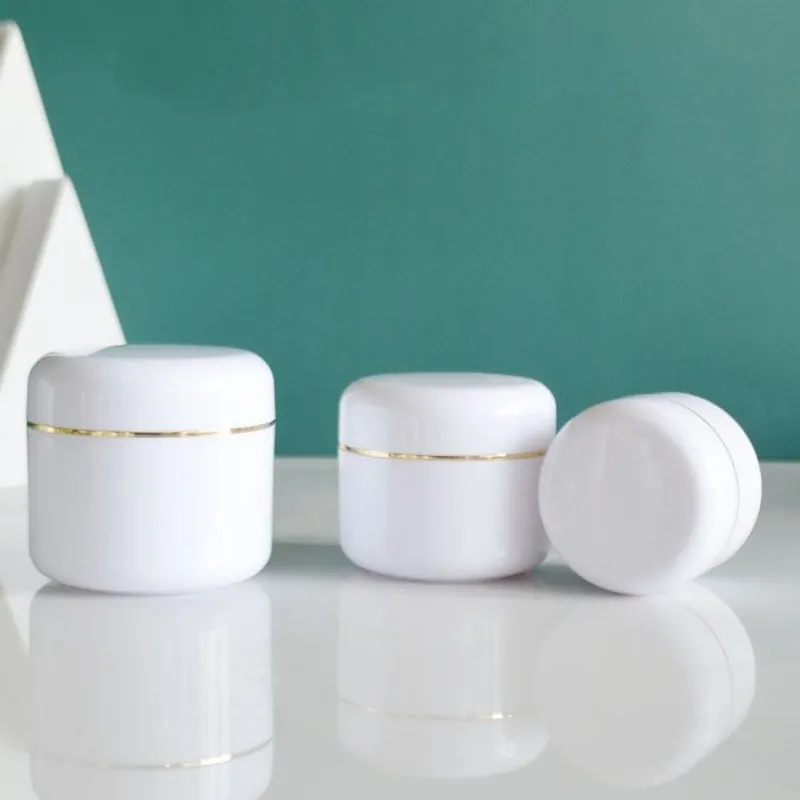
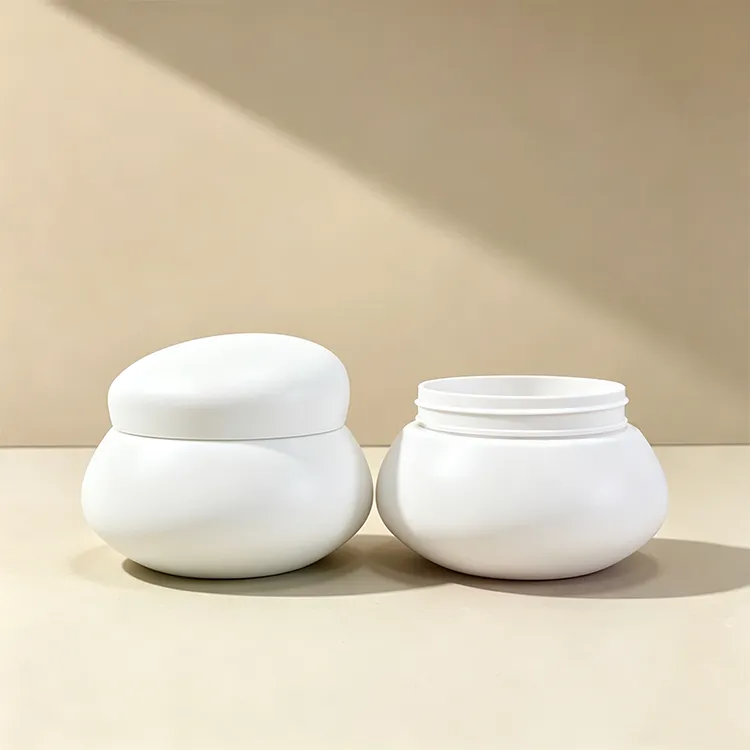
Boyu Packaging offers an empty round cosmetic jar with a white frosted-look exterior, silver-tone ring, screw lid and removable inner cover disc. The 100 g product format supports qualified cream and body-care formulas after fill-volume approval. Explore the cosmetic cream jar range. Brand: Boyu Packaging. Origin: Zhejiang, China. MOQ: 10,000 pieces.
Product Specifications
| Brand / origin | Boyu Packaging / Zhejiang, China |
|---|---|
| Product | Empty wide-mouth, double-layer cosmetic cream jar |
| Nominal fill format | 100 g product format. Actual fill suitability is established using formula density, measured usable volume and headspace. |
| Materials | PP base and PP cap-type specification; PET also forms part of the material brief. The signed component list maps resin grades to inner cup, outer shell, lid and insert individually. |
| Appearance | White frosted-look exterior with a silver-tone decorative ring |
| Closure | Threaded screw lid with a removable inner cover disc |
| Shape | Round jar with rounded base and lid edges |
| Customization | Color, logo, decoration and retail packout by approved specification |
| MOQ | 10,000 pieces |
| Supply scope | Empty jar, selected lid and inner disc. Formula, filling, retail cartons and accessories are separately quoted. |
A White Frosted-Look Jar for Cream and Body Care
Double-Layer Presentation
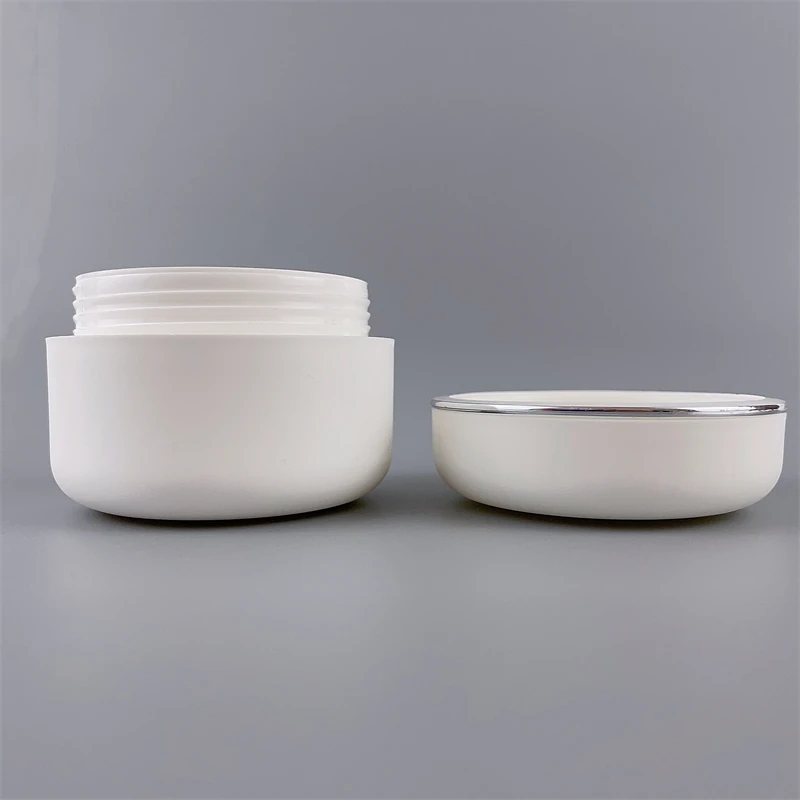
The round jar combines a white frosted-look exterior, rounded edges and a silver-tone ring beneath the lid. The double-layer format separates the exterior presentation from the product-holding construction. The approved drawing defines that assembly; it does not establish a removable refill cup or a measured insulation benefit.
Wide-Mouth Access
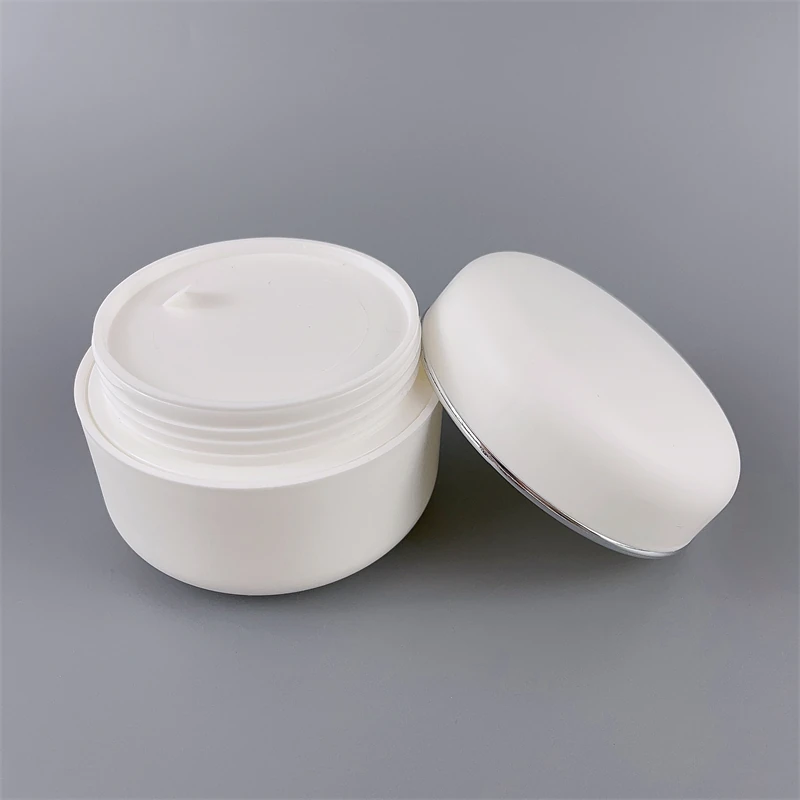
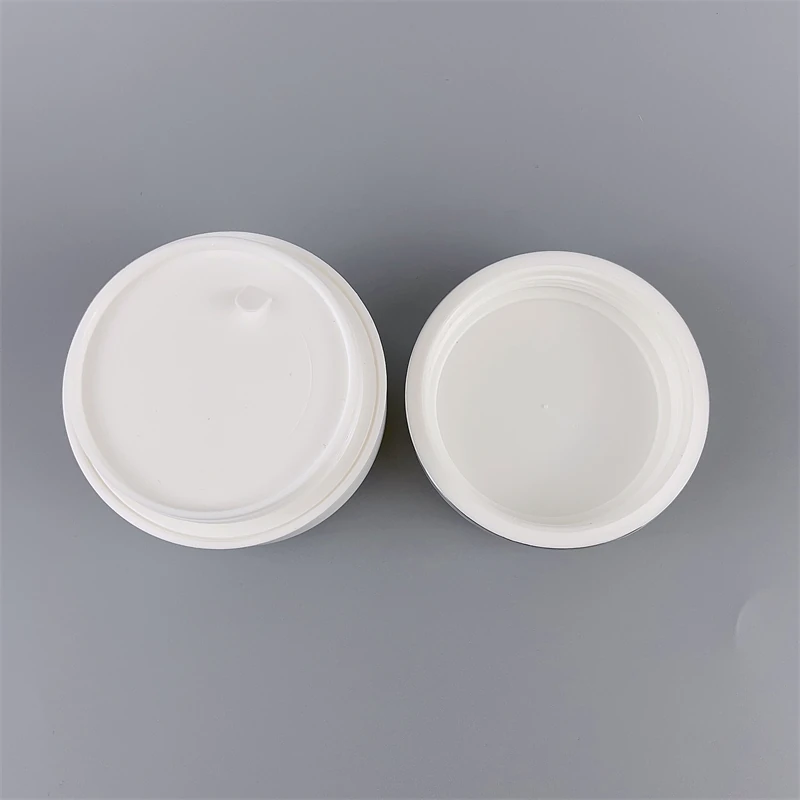
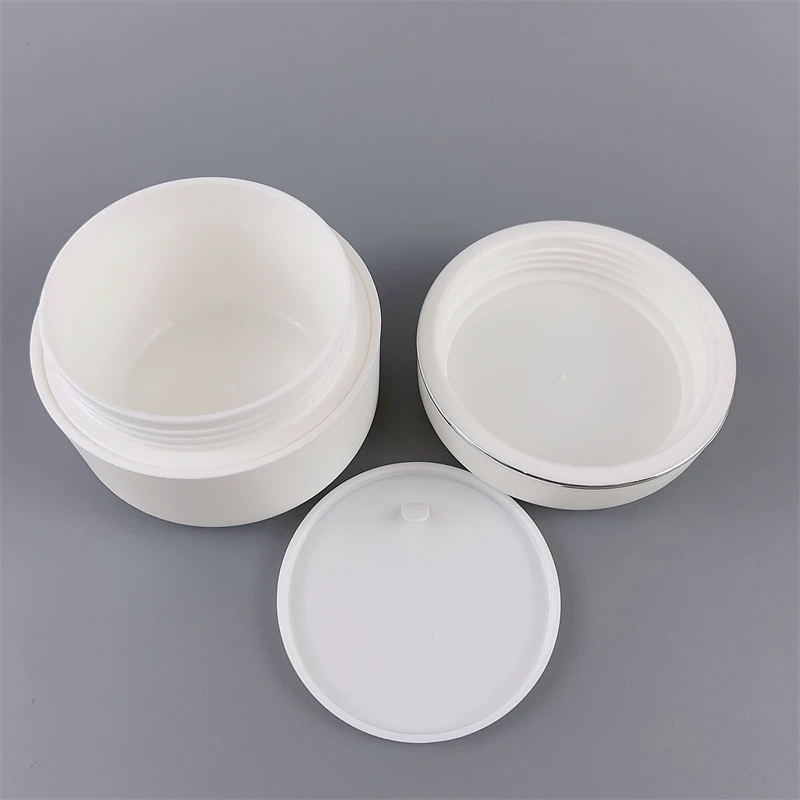
The wide opening gives direct access to cream and supports filling from above. The screw lid closes over the neck, and the removable inner disc covers the product opening. The disc is a separate component. It is not automatically an induction seal or a tamper-evidence feature.
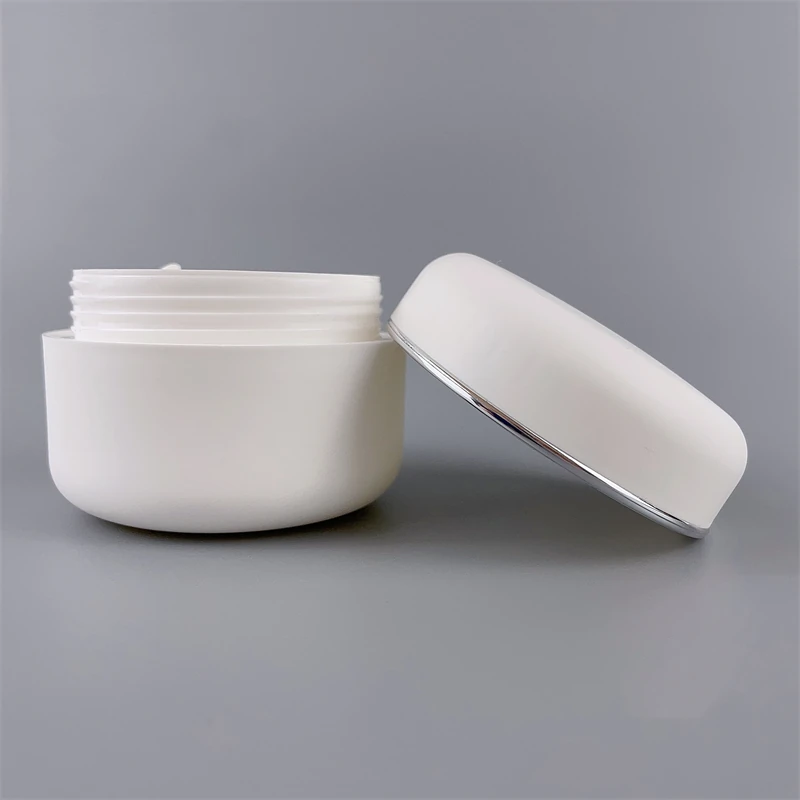
Jar Opening, Screw Lid and Inner Disc Details
Six product views show the closed jar, threaded opening, lid and removable inner disc. Fill volume and component dimensions follow the signed jar drawing and formula trial.
Materials and the 100 g Fill Specification
Map Each Resin to Its Component
The material brief includes PP and PET, with PP identified for the base and cap-type specification. The signed bill of materials assigns the actual resin and grade to the inner cup, exterior shell, lid, ring and cover disc. A white or frosted appearance cannot identify those parts on its own. The silver-tone ring is a finish description; its substrate and coating are separate specifications.
100 g Is a Mass Format
100 g describes product weight. It does not state a 100 mL jar volume. Measure the formula density and approve usable fill volume, headspace and disc clearance on a filling trial. Nominal and brimful capacity explains why the jar’s full internal volume is not the finished fill target.
Formula Compatibility
Test the actual face cream, body cream or other intended formula with the complete jar assembly. Include contact with the inner cup, neck, disc, lid liner if used, and any part exposed during storage or use. Record color or odor change, swelling, cracking, loss of mass and closure behavior under the agreed conditions.
Frosted Finish and External Product Contact
The visual master sets shade, haze or gloss level, texture and the silver ring appearance. Check formula spills and wet-hand handling against the exterior and decoration. Approve actual surface durability before making scuff-resistance or chemical-resistance claims.
Lid, Inner Disc and Filling-Line Fit
Thread Fit and Application Torque
The neck thread and lid form a matched pair. Approve the drawing, cap seating, removal effort and application conditions together. Check for cross-threading, lid tilt and ring interference. Record the tightening setting used in the line trial so filled-pack leakage tests use the intended closure condition.
Inner Disc Handling
The insert has a lift feature for removal. Check disc seating, lift effort and contact with the product at the intended fill level. Define the disc material, thickness and dimensions in the order. Any liner, induction seal or additional tamper-evidence system requires its own compatible pack specification.
Fill Temperature and Headspace
The filler approves nozzle access, net fill, product temperature, dwell time and closure application on production-intent samples. Keep the neck and lid sealing area clean. If the process uses heated filling, cooling or a post-fill temperature step, qualify the complete jar under those actual conditions.
Consumer Use and Refill Programs
The standard pack provides access through a removable screw lid and inner disc. A consumer refill program needs a separate cleaning, drying, filling and repeat-closure protocol. Do not market the double-layer construction as an interchangeable refill system without the relevant fit and cycle validation.
OEM Branding and Factory Production Workflow
1. Define the Complete Pack
Specify the 100 g target formula fill, material requirements, jar dimensions, inner disc, lid finish, artwork and quantity by SKU. State whether the quote includes all components assembled, separately protected or supplied for the filler to assemble. Samples, tooling, decoration, retail inserts and freight are separate cost lines where applicable.
2. Approve Color and Artwork
Supply vector artwork, logo size, print area and color references. Compare packaging printing methods before selecting direct print, foil or a label. The decorated sample sets logo registration, white shade, surface finish and ring alignment. Artwork must stay within the usable panel and clear the lid and base transitions.
3. Qualify Samples and Filling
Plain assemblies establish dimensions, lid fit and disc handling. Decorated units establish the visual master. Trial-fill the actual formula, assess compatibility and set net weight and headspace. Freeze the drawing, resin list, artwork revision and quality criteria before production release.
4. Record the Factory Route
Use this project route for order approval: form and inspect the selected plastic parts, prepare the exterior finish and ring, decorate, inspect the inner disc, assemble the double-layer construction and lid, then pack. The written production plan identifies the actual manufacturing route, component sourcing and assembly responsibilities.
5. Inspect and Release
Compare lot samples with the approved master, drawings and test plan. Verify appearance, component fit, counts and packout. The release record links resin specification, component codes, finish and artwork revision to the inspection report. Retain reference and lot samples for future orders.
Quality Control and Acceptance Criteria
Components and Appearance
Define dimensional tolerances, jar weight and cosmetic limits in the quality plan. Inspect for cracks, sharp edges, contamination, distortion, loose components and poor ring attachment. Check lid alignment, uniform white color and acceptable finish variation under agreed lighting.
Filled-Pack Leakage and Storage
Test the filled jar at the agreed orientations, temperatures and duration with closure conditions recorded. Assess leakage, lid seating, disc movement, formula change and mass loss separately. A clean empty sample does not prove storage performance with a specific cream.
Decoration and Transport
Check print adhesion or label bond on the actual finished jar. Include rub tests and contact with spilled product. Trial the retail insert and export carton for lid scuffing, ring damage, crushing and component movement. The test article is the complete packed unit.
Traceability and Claims
The purchase order defines sampling, critical/major/minor defects, acceptance limits and reporting period. A claim includes lot identification, affected quantities, photos, carton labels and test conditions. Those records support the assessment and remedy process agreed in writing.
Lead Time, Shipping and Payment
Schedule by Approval Stage
The order schedule separates plain samples, decorated samples, formula trials, tooling when needed, component procurement, production, inspection and cargo readiness. The signed order states release conditions and dates. Changes to resin, disc, lid, finish or artwork return the project to the relevant approval gate.
Export Packing and Freight
Specify individual protection, dividers or trays, lid assembly condition, units per carton, outside dimensions, gross weight and pallet requirements. Protect the ring and frosted-look surface from rubbing. Compare sample courier, bulk air and sea freight using actual packout and the destination.
Delivery Scope and Documents
The delivery term and named place identify responsibility for freight, insurance, customs, duties and taxes. The order document list states drawings, material declarations and inspection records required for the exact supplied jar. Empty-pack export and filled cosmetic shipment have separate documentation and transport briefs.
Payment Milestones
The pro forma invoice states accepted payment methods, currency, beneficiary, deposit, balance trigger and bank charges. Samples, tooling, decoration, retail packing and freight are itemized where applicable. Connect payment to the agreed approval, production, inspection and dispatch sequence. Verify beneficiary details through the established supplier contact before payment.
Items to Finalize Before Purchase
The drawing sets jar volume, dimensions, thread and assembly tolerances. The material list maps each resin and finish to its actual component. The filling trial establishes the 100 g formula fill, headspace and disc clearance. The signed sample sets lid operation, ring alignment, white finish and artwork. The order records quantity, dates, sample fees, payment, protective packing and delivery scope.
Buyer Frequently Asked Questions
Does 100 g mean 100 mL?
No. 100 g is a mass format. Formula density, usable jar volume and headspace determine whether the intended fill fits.
What is the jar material?
The material brief includes PP and PET. The approved bill of materials identifies the exact resin of the inner cup, outer shell, lid and disc separately.
Is the jar made from glass?
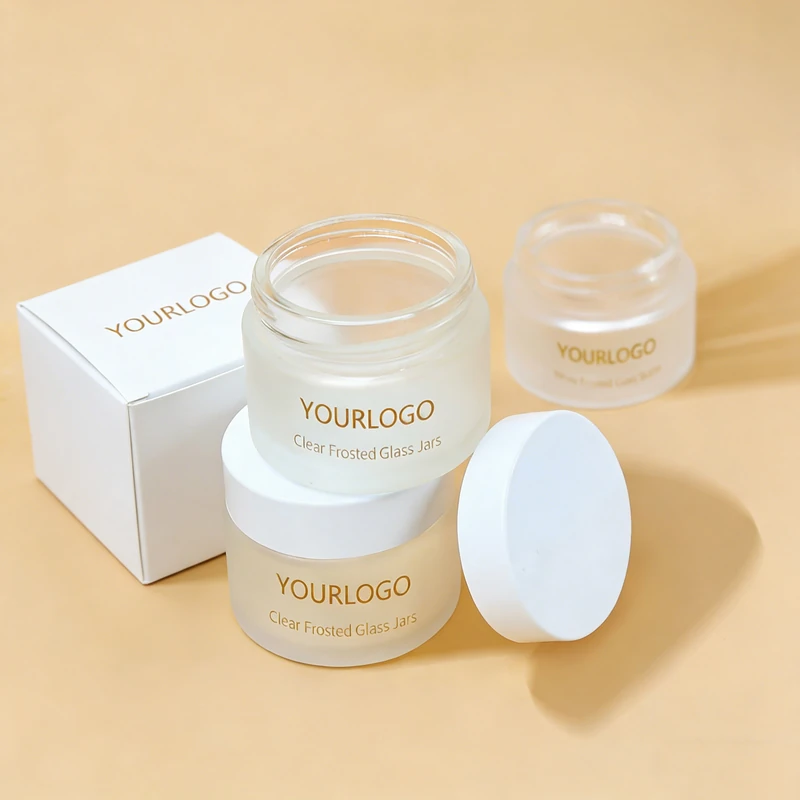
The pack is specified as a plastic double-layer cosmetic jar. Its frosted appearance does not make it glass.
Is the inner disc a tamper seal?
The removable disc covers the opening. A tamper-evidence or induction-seal system is a separate qualified component.
Can I use it for body cream and face cream?
Each actual formula is tested for contact compatibility, storage and filled-pack closure performance.
Can I hot-fill it?
The filler defines the actual temperature and process. The complete jar must pass that process trial before hot-fill approval.
Can I change the logo and color?
The customization brief defines artwork, color and finish. A physical decorated sample becomes the visual standard.
Is the silver ring metal?
Silver-tone describes appearance. The component list specifies ring substrate, coating and attachment.
Is the double-layer jar refillable?
A refill program requires a defined refill unit or cleaning and reassembly procedure plus repeated-use validation.
Are samples free?
The quotation states sample quantity, fees and courier cost. Sample terms are agreed before dispatch.
What is the MOQ?
The MOQ is 10,000 pieces. The quote allocates quantity by finish, artwork and component combination.
How long does production take?
The order records sample approval, compatibility, procurement, production, inspection and cargo-ready dates as separate milestones.
What payment terms apply?
The pro forma invoice states payment methods, currency, deposit, balance trigger and charges.
How is the surface protected during shipping?
The approved packout separates jars and protects lids and rings from rubbing. Handling tests assess the complete retail and export pack.
Request Your 100 g Cosmetic Jar Quote
Send Boyu Packaging your RFQ with the formula and 100 g fill target, resin requirements, lid and disc specification, quantity by SKU, artwork, packing preference, destination and target cargo-ready date. Request an itemized jar assembly, development, packing, freight and payment offer.
 English
 Español de Argentina
 Русский
 Italiano
 日本語
 한국어
 العربية
 Français
 Deutsch