

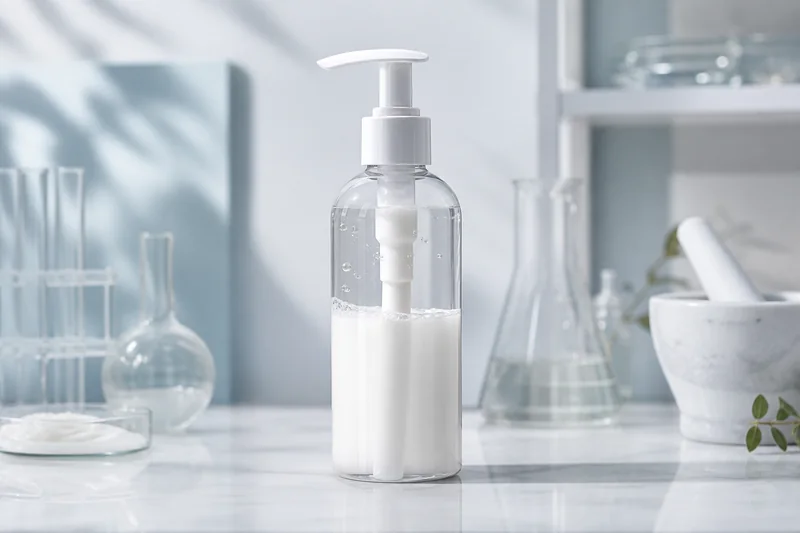
Direct answer: A lotion pump loses prime when the product column drains back or the pump chamber fills with air faster than the mechanism can create suction. The usual root causes are an inlet check valve that does not seal, air leakage at the dip-tube joint or piston seal, a tube inlet above the product or blocked against the base, and a formula whose flow or trapped air is incompatible with the pump. Diagnose the timing first: failure at initial start-up, after storage, during rapid use, and near empty point to different causes.
What happens inside a lotion pump
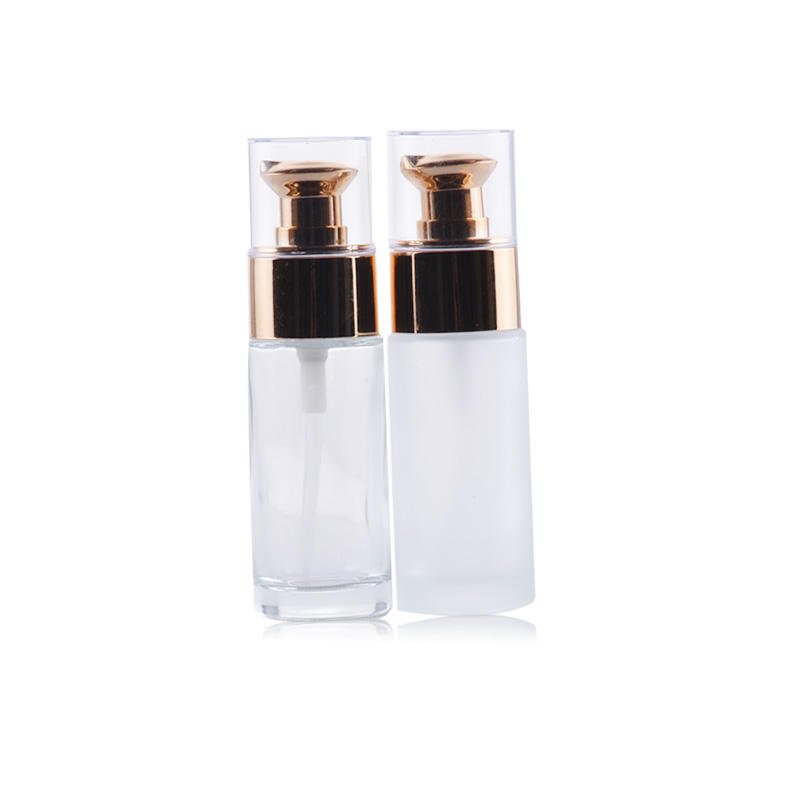
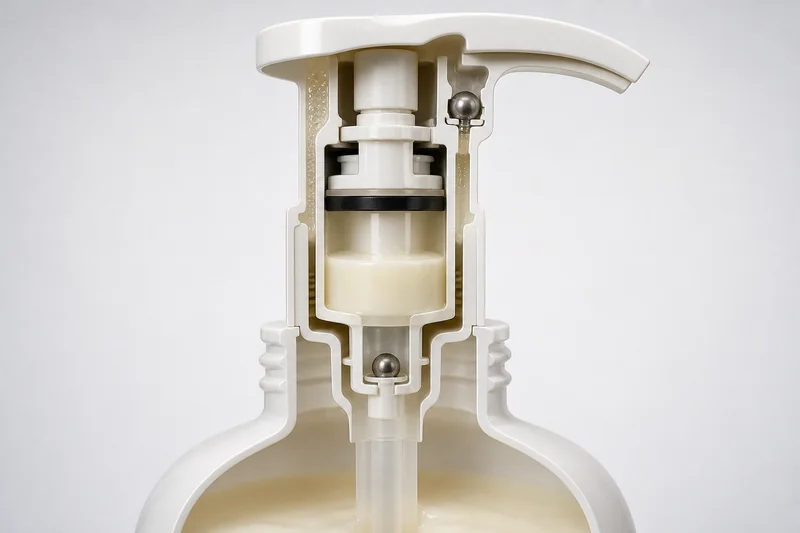
A conventional lotion pump draws product through a dip tube into a chamber during actuator return, then sends it through the outlet during the next downstroke. One-way inlet and outlet valves must control direction, while piston seals must create enough pressure difference to move the formula. “Primed” means that the suction path and chamber contain sufficient product for stable delivery; a few air-clearing strokes at first use are not automatically a defect.
ASTM D3890 provides a method for determining strokes to prime, while ASTM D4336 addresses output per actuation. Neither supplies one universal acceptance number for every lotion: brands must define limits for their pump, formula and pack.
Diagnose the problem by when it occurs
| Observed pattern | First checks | Likely mechanism |
|---|---|---|
| Never primes after filling | Lock fully open, dip-tube attachment and length, tube inlet, formula air, pump/formula match | Air cannot purge or chamber cannot refill |
| Works, then fails after overnight storage | Inlet valve seat, tube joint, piston seals, visible product fall in clear tube | Slow drain-back or air ingress |
| Output fades during rapid strokes | Allow full actuator return; compare slower cadence | Chamber refill is slower than actuation |
| Fails only when cold | Measure rheology and actuation at low-use temperature | Higher flow resistance or slow valve response |
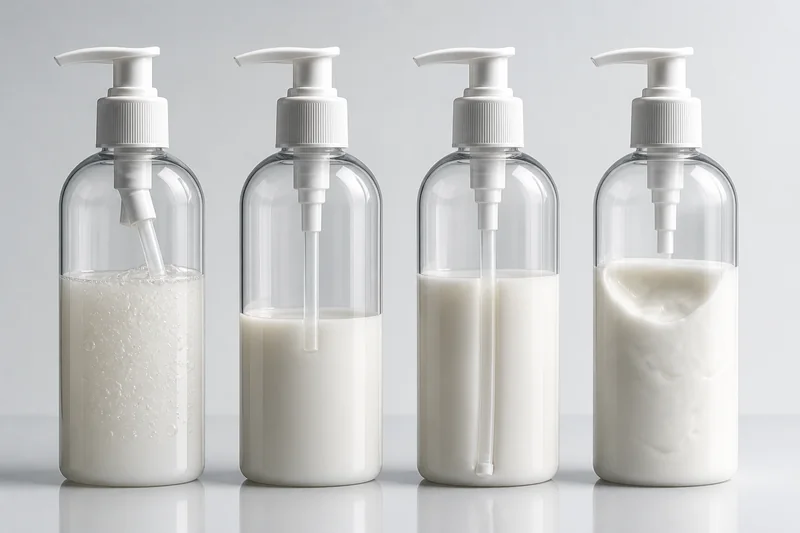
| Fails near empty or when tilted | Tube inlet immersion, curling, base clearance and bottle geometry | Tube draws air instead of product |
| Intermittent foam or sputter | Entrained air, loose tube joint, vortexing and low fill | Two-phase air/product intake |
The main causes of lost prime
1. The inlet check valve leaks back
Product can drain down the dip tube if debris, dried formula, a damaged seat, incompatible material swelling or dimensional variation prevents the inlet valve from closing. A storage-only failure makes this route especially important.
2. Air enters on the suction side
A loose or split dip tube, poor tube-to-body interference, cracked housing or worn piston seal may admit air without creating an obvious external lotion leak. Inspect connections under representative storage and actuation, not only visually when dry.
3. The dip tube cannot stay immersed
A short tube sits above the remaining lotion; an overly long tube may curl or press its square end against the base. An angled end with an open flow path and a validated length usually provides more reliable pickup. See the guide to calculating dip-tube length once published, or validate directly from the bottle drawing and samples.
4. Formula flow does not match the pump
High viscosity, yield stress or slow structural recovery can prevent full chamber refill; low-viscosity products can expose marginal valve sealing. Particles may foul valves, while air introduced during manufacturing or filling can interrupt suction. A single viscosity number is insufficient: temperature, shear response and aeration matter.
How to correct a lotion pump that loses prime
- For an individual consumer pack: unlock the head fully, keep the bottle upright and make slow complete strokes with full return. If safe for the product, gently settle obvious air rather than violently shaking more air into it. Replace the dispenser if the tube is detached or the pump remains nonfunctional; do not open a contaminated cosmetic pack merely to repair internal parts.
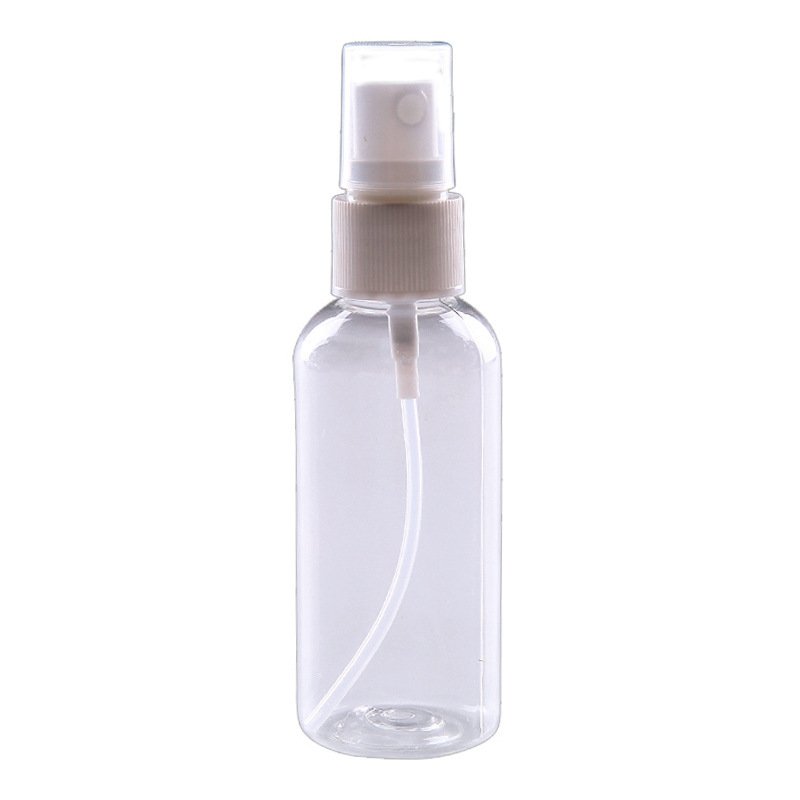
- For development samples: substitute one variable at a time—pump, tube, bottle, formula batch or temperature. A transparent diagnostic bottle helps reveal drain-back and air gaps.
- For valve leakage: review valve geometry, cleanliness, molding and material compatibility with the pump supplier. Do not assume thickening the formula is an acceptable packaging fix.
- For restricted refill: screen a pump with suitable flow passages and return characteristics; reassess tube ID, output and actuator cadence.
- For pickup failure: correct tube length and cut, then confirm residual mass at the end of life.
- For aeration: examine mixing, transfer and filling conditions and allow an evidence-based deaeration process compatible with the formula.
A prime-retention validation plan
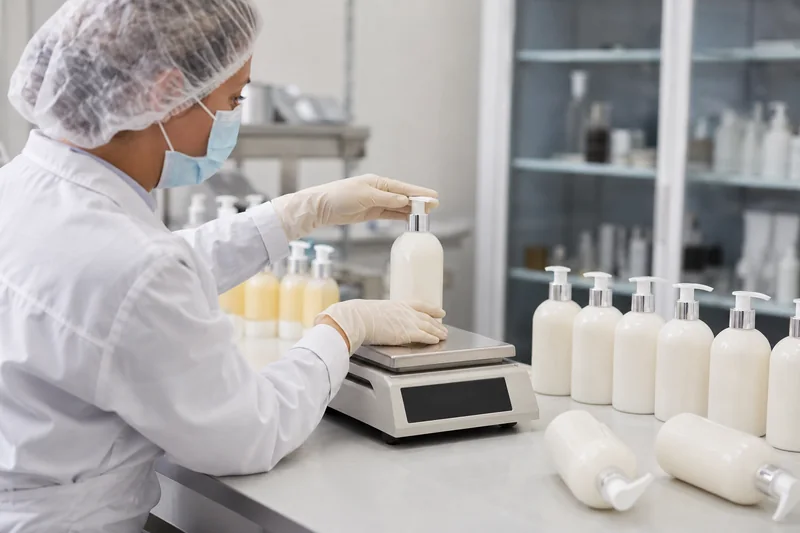
- Use the market-intent lotion bottle and pump, actual formula and representative component lots.
- Condition consistently; record fill level, headspace, temperature and assembly torque or engagement.
- Count complete strokes to first product and to stable full output; keep those definitions separate.
- Measure output after priming, then store packs upright, on side and inverted only where relevant to distribution and consumer use.
- After defined intervals, record re-prime strokes, first-stroke mass, steady-state output, leaks and visible drain-back.
- Test early, middle and late pack life plus relevant cold/hot conditions and aged compatibility samples.
- Set sample size and acceptance limits from product risk and process capability. ASTM D6654 can inform storage-stability thinking, but its published scope explicitly excludes pharmaceutical and cosmetic products including perfume; do not cite it as a cosmetic compliance requirement.
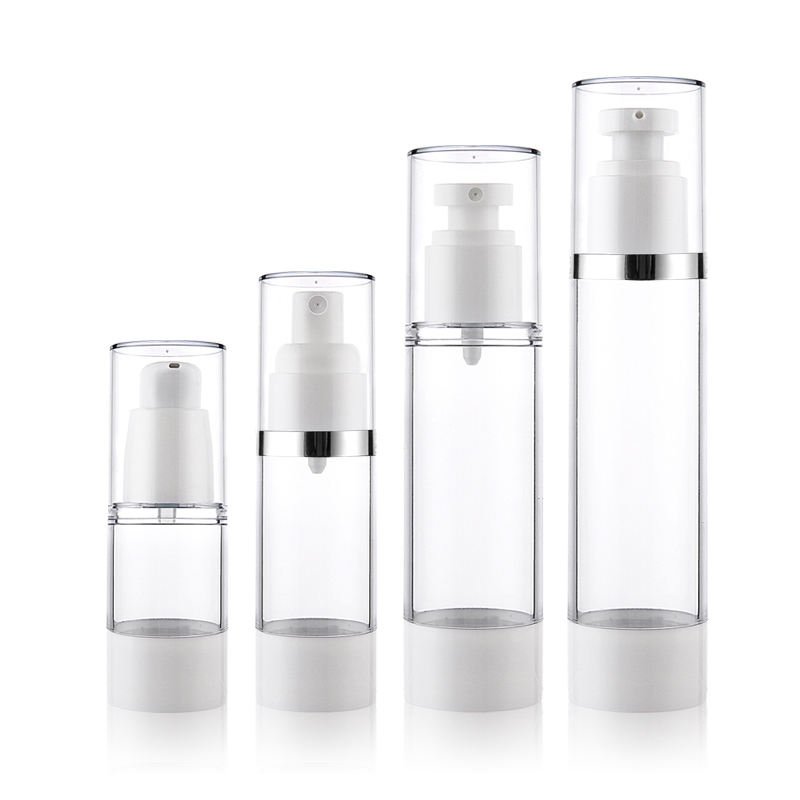
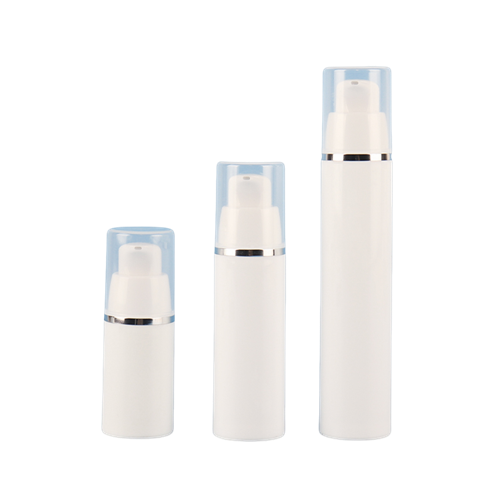
If conventional pump performance remains unsuitable, a compatible airless pump bottle may be worth screening. It uses a different product-feed architecture, but it is not immune to trapped air, piston or seal problems and still requires validation.
Frequently asked questions
Is a lotion pump defective if it needs several first-use strokes?
Not necessarily. Initial strokes purge air from the tube and chamber. It becomes a quality concern when the count exceeds the approved specification, varies excessively or the pump repeatedly needs re-priming.
Can lotion be too thick to prime?
Yes, if chamber refill and valve operation are too slow under use conditions. Confirm with the actual formula at relevant temperatures; do not diagnose from a nominal viscosity value alone.
Why does the pump work after tapping the bottle?
Tapping may temporarily move an air pocket or re-immerse the tube inlet. That observation points toward aeration or pickup geometry but is not a durable fix.
Does tightening the closure restore prime?
Only if the problem is related to improper assembly, and overtightening can damage threads or seals. Apply the supplier-approved assembly condition and investigate the actual suction path.


 English
  Español de Argentina
  Русский
  Italiano
  日本語
日本語  한국어
한국어  العربية
  Français
  Deutsch