
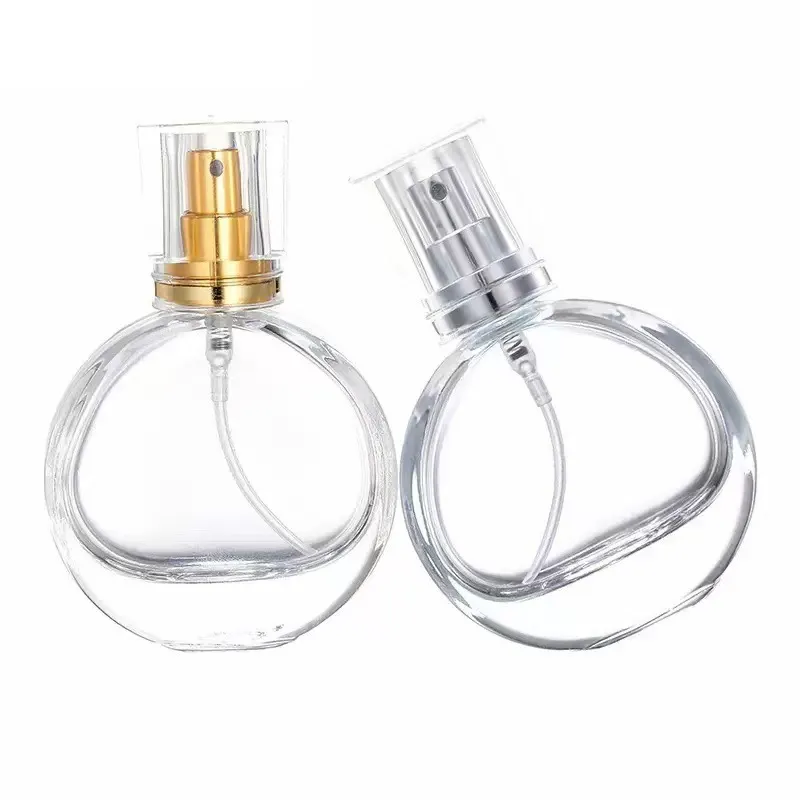
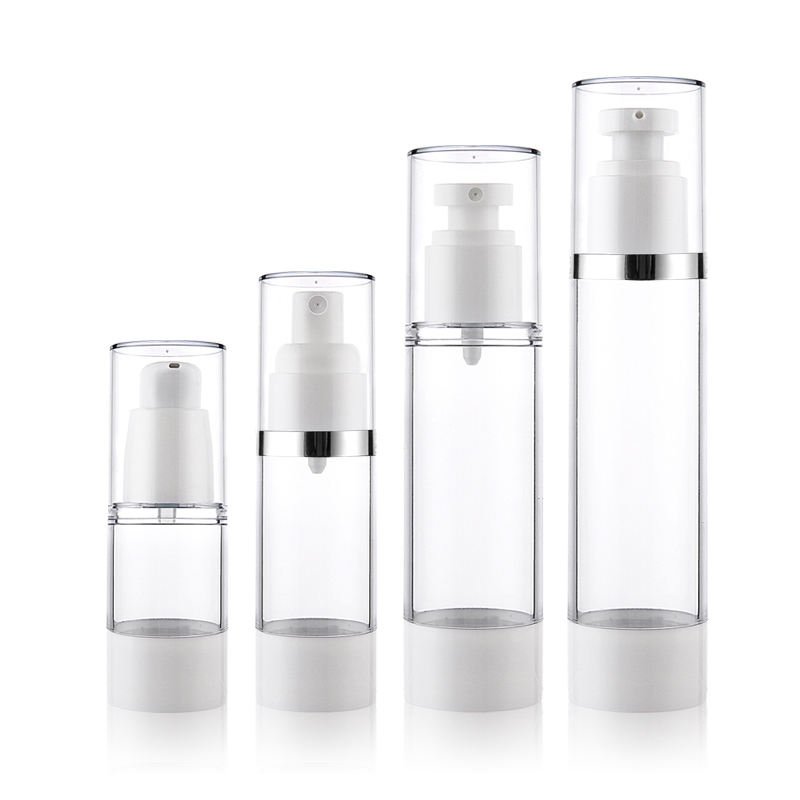
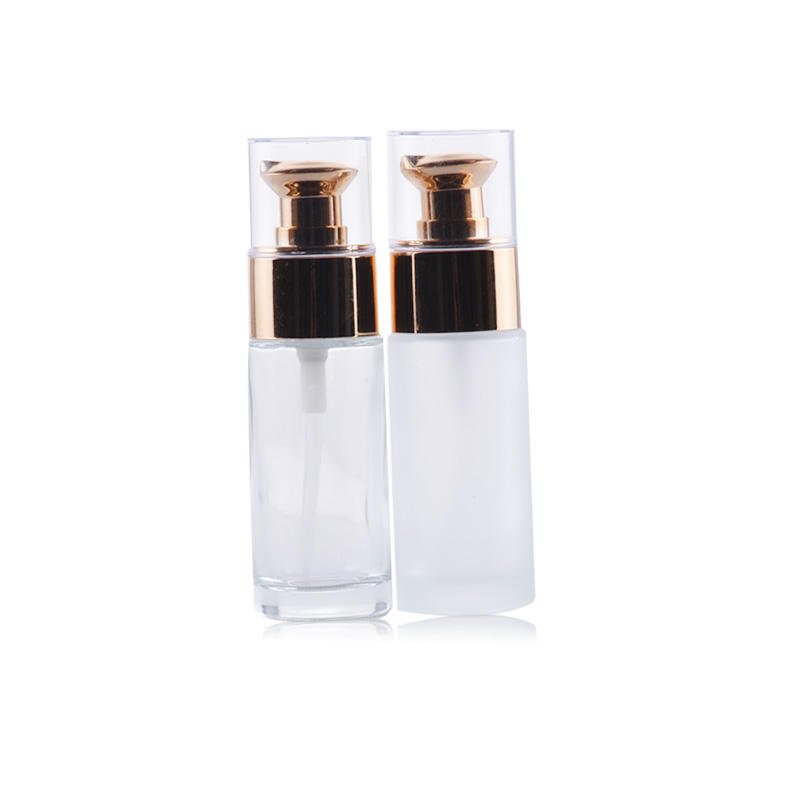
A pump makes lotion convenient—until the head will not unlock, the dip tube stops drawing product, or the mechanism fails with lotion still inside. The right way to open the package depends on what is actually stuck: the locking actuator, the threaded closure, or the pump mechanism itself.
First, Decide What “Open” Means
People use the same phrase for three different problems. Identifying yours prevents unnecessary force:
- The pump is still transport-locked: the actuator will not rise or press down.
- The pump works poorly: the actuator moves, but no lotion—or only a small amount—comes out.
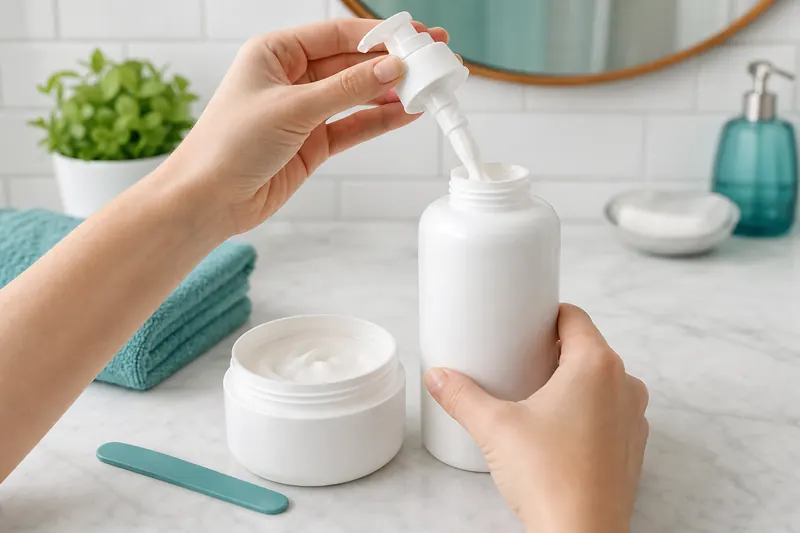
- You want access without the pump: the closure must be unscrewed so the product can be poured, scooped, or transferred.
If your goal is simply to unlock a new pump, do not unscrew the entire assembly first. If the mechanism is broken or you need the last portion of product, removing the complete closure is usually more practical.
How to Open a Lotion Bottle Without a Pump
Step 1: Clean and dry the outside
Wipe lotion from the collar and bottle shoulder. Dry hands and packaging give you control and reduce the chance of dropping the bottle. Work over a washable counter or tray.
Step 2: Release any external lock
Remove a transport clip or overcap if present. A clip beneath the actuator may block travel but does not normally secure the threaded closure to the bottle.
Step 3: Grip the threaded collar—not the actuator
Hold the bottle around its shoulder. Turn the ribbed closure collar counterclockwise. A rubber glove, silicone grip, or dry towel can improve traction. Avoid gripping the nozzle with pliers; concentrated pressure can crack the stem or distort the locking track.
Step 4: Lift the assembly slowly
Once the threads release, raise the pump vertically. The dip tube may carry a column of lotion, so pause over the bottle and let it drain. Place the pump on a clean tray rather than directly on a sink or countertop.
Step 5: Remove or transfer the lotion safely
For immediate personal use, a clean narrow cosmetic spatula can reach through many bottle necks. For a larger amount, invert the bottle over a clean wide-mouth jar and allow thick lotion time to move. A small compatible funnel helps with lower-viscosity products.
Do not add water and store the diluted product. Water can change viscosity, pH, preservative concentration, and microbial control. If a consumer adds a small amount of water to rinse out a wash-off product, it should be used immediately rather than stored. For commercial refilling or repacking, follow validated hygiene, compatibility, and stability procedures.
How to Unlock a Lotion, Shampoo, or Body-Wash Pump
- Place the bottle upright on a stable surface.
- Tighten the ribbed collar gently onto the bottle so it cannot spin freely.
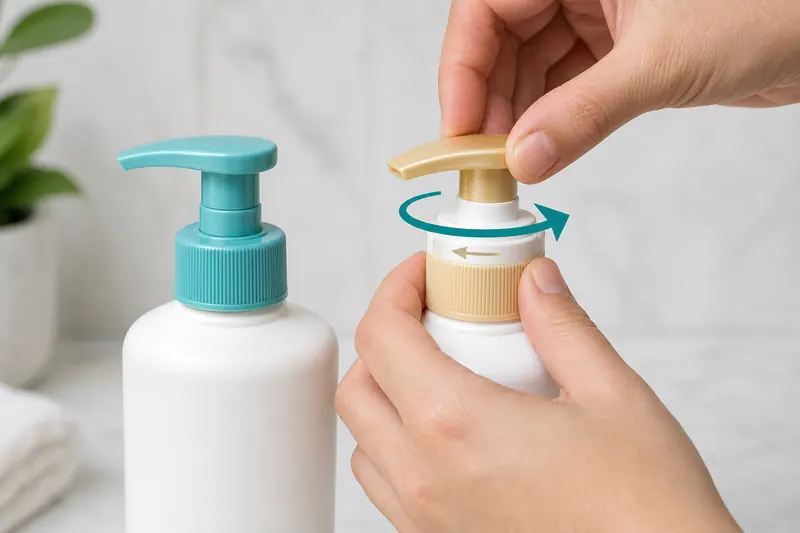
- Hold the collar firmly with one hand.
- With the other hand, rotate only the actuator in the direction shown by the molded arrow. Many pumps open counterclockwise, but some down-lock and quarter-turn designs differ.
- If necessary, press the actuator down slightly while turning; stop if the plastic begins to twist or whiten.
- Once the head rises, use 5–15 slow, full strokes to prime the chamber.
How to open a Pantene shampoo bottle pump
Pantene packaging varies by product, bottle size, market, and production period. On a typical twist-lock version, stabilize the closure collar and turn the actuator toward its molded opening direction—commonly counterclockwise—until it rises. Prime it with several full strokes. If the entire closure rotates, retighten the collar first and try again. Do not assume every Pantene package uses the same lock; follow the markings on the pump in your hand.
How to open a Dove body-wash pump bottle
Dove also uses more than one packaging system, including conventional retail pumps and refillable formats. For a conventional twist-lock pump, hold the collar and turn the actuator according to the molded arrow, then prime. For a refillable system, follow the instructions supplied with that specific starter bottle and refill. Do not force a quick-connect refill interface as though it were a standard threaded pump.
Boyu Packaging is not affiliated with Pantene or Dove. These names identify common consumer search scenarios; package designs can change.
Lotion Pump Structure and Working Principle
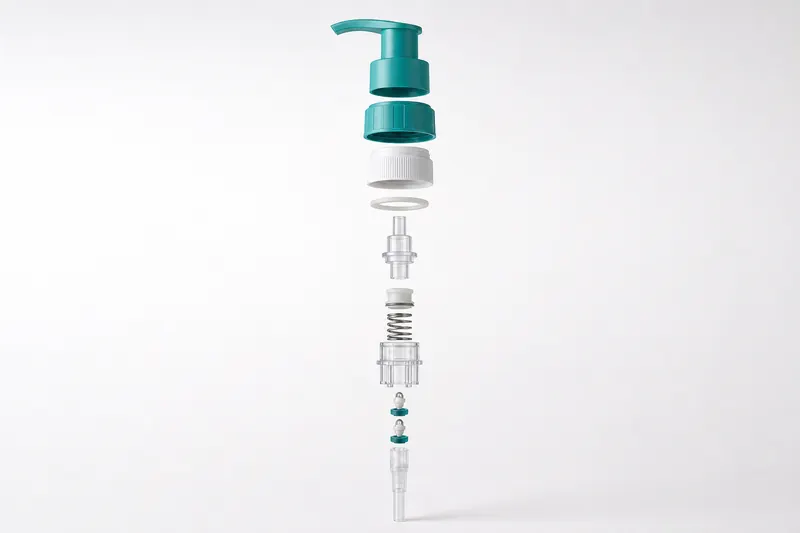
| Component | What it does | Failure symptom |
|---|---|---|
| Actuator and nozzle | Receives finger force and directs the dose | Stuck head, blocked outlet, sideways stream |
| Closure and gasket | Secures and seals the bottle neck | Neck leakage or loss of prime |
| Stem, piston, and chamber | Change chamber volume and pressure | No suction, rough travel, inconsistent dose |
| Spring | Returns the actuator after each stroke | Head stays down or returns slowly |
| One-way valves | Control inlet and outlet flow | Backflow, sputtering, failure to prime |
| Dip tube | Draws product from the bottle | Product remains at bottom or pump works only when tilted |
During the downstroke, the piston reduces the chamber volume and pushes lotion through the outlet. When the actuator is released, the spring raises the piston. The expanding chamber creates suction, the inlet valve opens, and lotion rises through the dip tube. If the closure leaks air, a valve sticks, or the dip tube is disconnected, the chamber cannot refill correctly.
Common Problems, Causes, and Solutions
| Problem | Likely cause | Solution |
|---|---|---|
| Actuator will not pop up | Collar rotates, lock is still engaged, wrong opening direction | Tighten and hold collar; follow molded arrow; use a rubber grip |
| Pump moves but dispenses nothing | Air lock, loose closure, detached tube | Keep upright, tighten closure, prime slowly, inspect tube |
| Head remains down | Dried formula, damaged spring, swollen part | Flush removed pump with warm water; replace if return action does not recover |
| Output is weak or intermittent | Partial blockage, excessive viscosity, air leak | Clean, retighten, then test a pump designed for the formula |
| Lotion remains at the bottom | Tube too short, tube sealed against base, bottle geometry traps product | Use an angled tube cut and validated length; consider an airless or different bottle geometry |
| Leakage around the neck | Damaged gasket, cross-threading, mismatched neck finish | Reseat or replace with the correct closure and gasket |
How to Clean or Replace a Failed Pump
Flush a clogged pump
Remove the pump and wipe the dip tube. Put the tube into a separate cup of warm—not boiling—water. Press repeatedly until clean water flows through the nozzle. Rinse once more and let the assembly dry completely. Never pump dirty rinse water back into the lotion.
Match a replacement correctly
A replacement must match the bottle neck diameter and thread style; diameter alone is not enough. It must also suit formula viscosity, required output per stroke, gasket material, locking style, and dip-tube length. Trim an approved tube with a clean angled cut so it approaches the bottom without buckling.
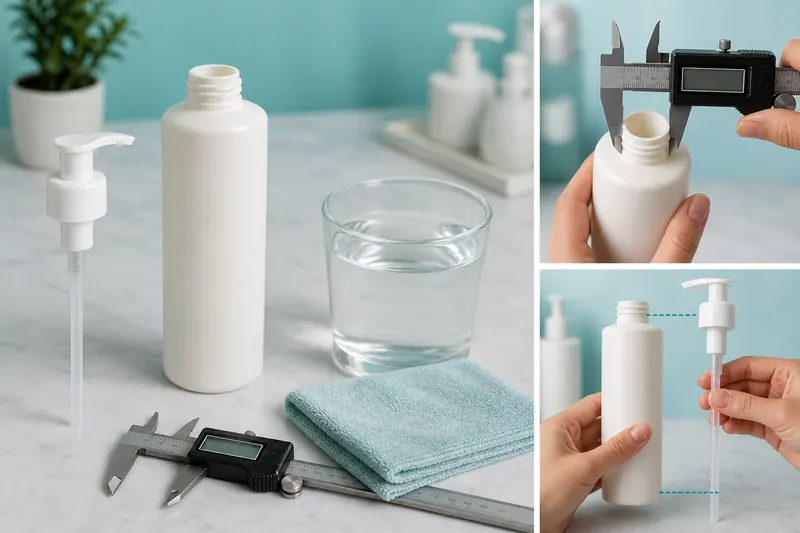
For a household bottle, replacing the complete pump is usually more reliable than dismantling its small valves and spring. For a commercial launch, test the filled package after aging and transport simulation. Boyu Packaging supplies custom lotion bottles, shampoo bottles, and matching closures for personal-care projects.
Packaging Lessons for Beauty Brands
Consumer searches for brand-specific opening instructions reveal a usability problem: a lock that works mechanically can still fail if wet hands cannot distinguish the collar from the actuator. During package development, brands should evaluate:
- opening direction and whether the molded arrow is easy to see;
- unlocking torque with dry and wet hands;
- priming strokes, output consistency, and actuator return;
- formula compatibility after defined aging conditions;
- dip-tube reach and residual product at low fill levels;
- leakage during vibration, drops, temperature changes, and e-commerce shipping;
- whether a flip-top, disc-top, squeeze bottle, or airless system better fits the formula and user.
Explore Boyu’s broader range of plastic cosmetic bottles when comparing pump and non-pump dispensing formats.
Frequently Asked Questions
Can I open a lotion bottle if the pump is completely broken?
Yes. Unscrew the complete closure collar, lift out the pump and dip tube, and use a clean spatula or transfer the lotion into a clean compatible container.
Why does the entire pump spin without opening?
The threaded collar is rotating with the actuator. Tighten the collar gently, hold it stationary, and rotate only the pump head according to the molded opening arrow.
Can I cut a lotion bottle open?
Cutting creates sharp edges, contamination risk, and an unsealable package. Try unscrewing the closure, inverting the bottle, or using a clean spatula first. If a consumer cuts a soft bottle as a last resort, the remaining product should be moved immediately into a clean closable container; commercial reuse requires validated procedures.
Can I replace a lotion pump with any pump of the same diameter?
No. Thread profile, gasket, dip-tube length, formula viscosity, output, and locking design must also be compatible.
Why does a thick lotion stop pumping before the bottle is empty?
The formula may not flow back toward the dip-tube inlet, the tube may be too short, or the inlet may seal against the base. Bottle geometry and pump pathway should be tested with the actual formula.
Developing a Lotion or Body-Wash Package?
Share your formula viscosity range, target capacity, bottle material, neck finish, desired pump output, locking preference, decoration, and destination market. Boyu Packaging can help shortlist compatible bottle-and-closure combinations for your own filling, compatibility, usability, and transport tests.

 English
  Español de Argentina
  Русский
  Italiano
  日本語
日本語  한국어
한국어  العربية
  Français
  Deutsch