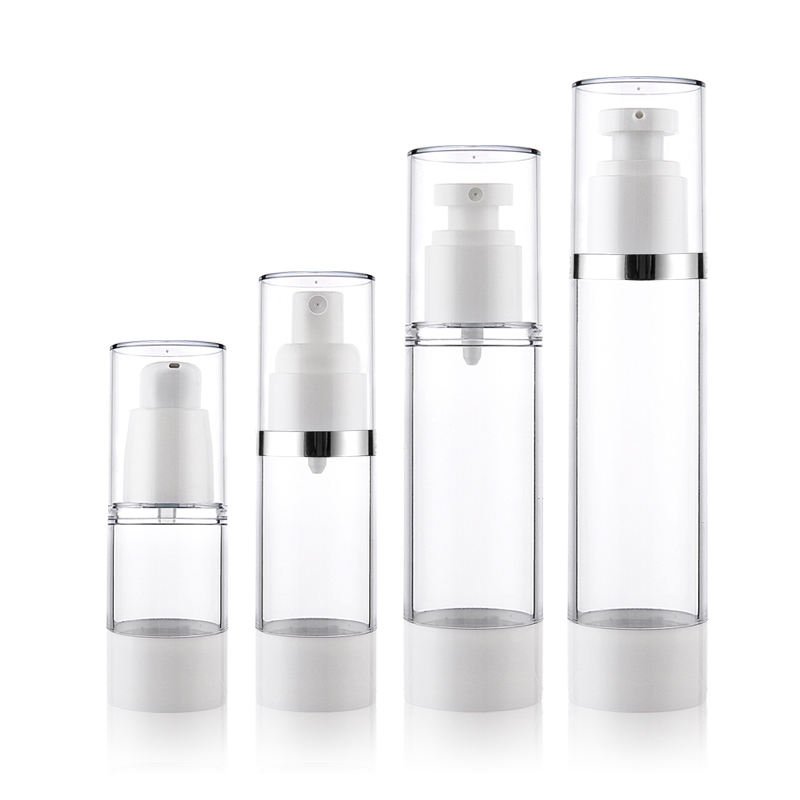
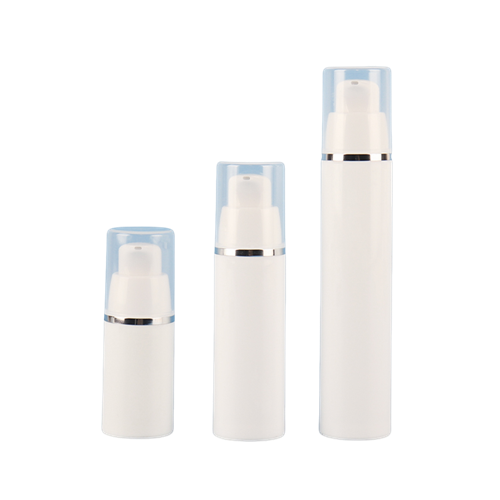
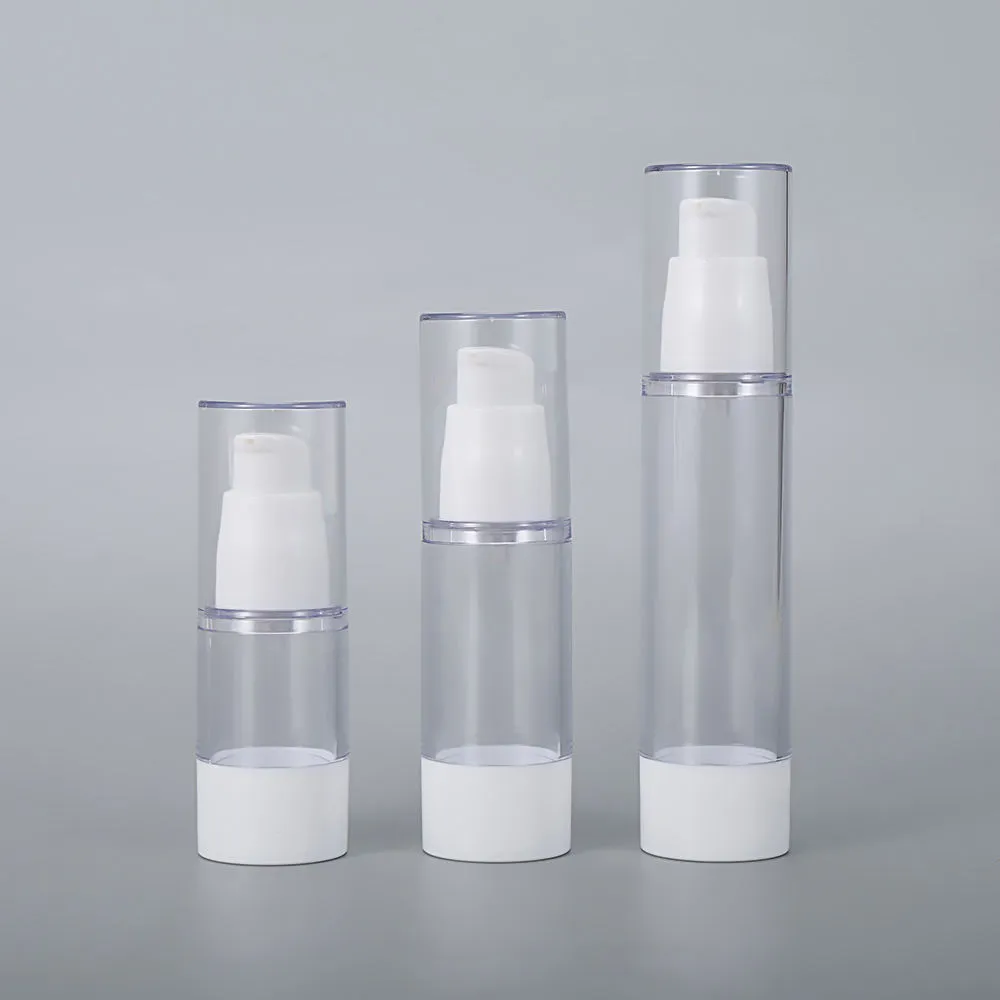
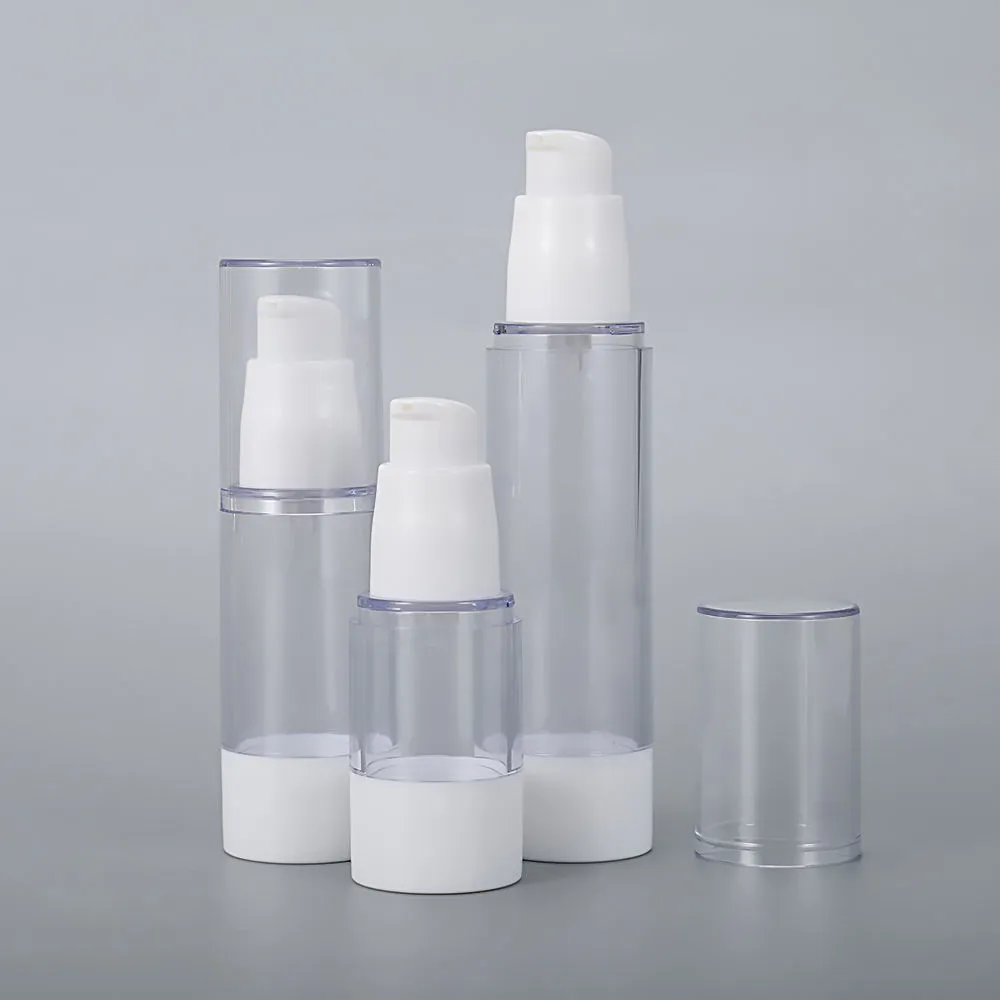
15ml, 30ml and 50ml AS Vacuum Airless Lotion Pump Bottles
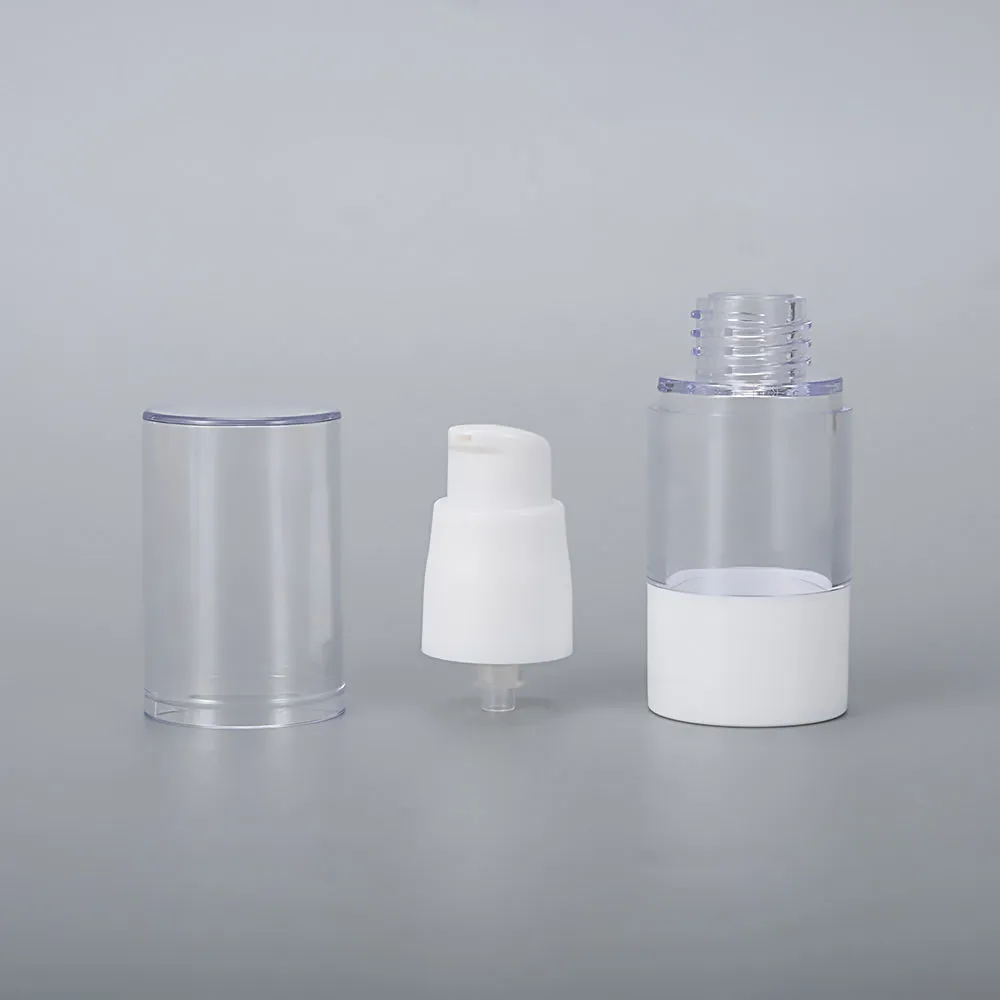
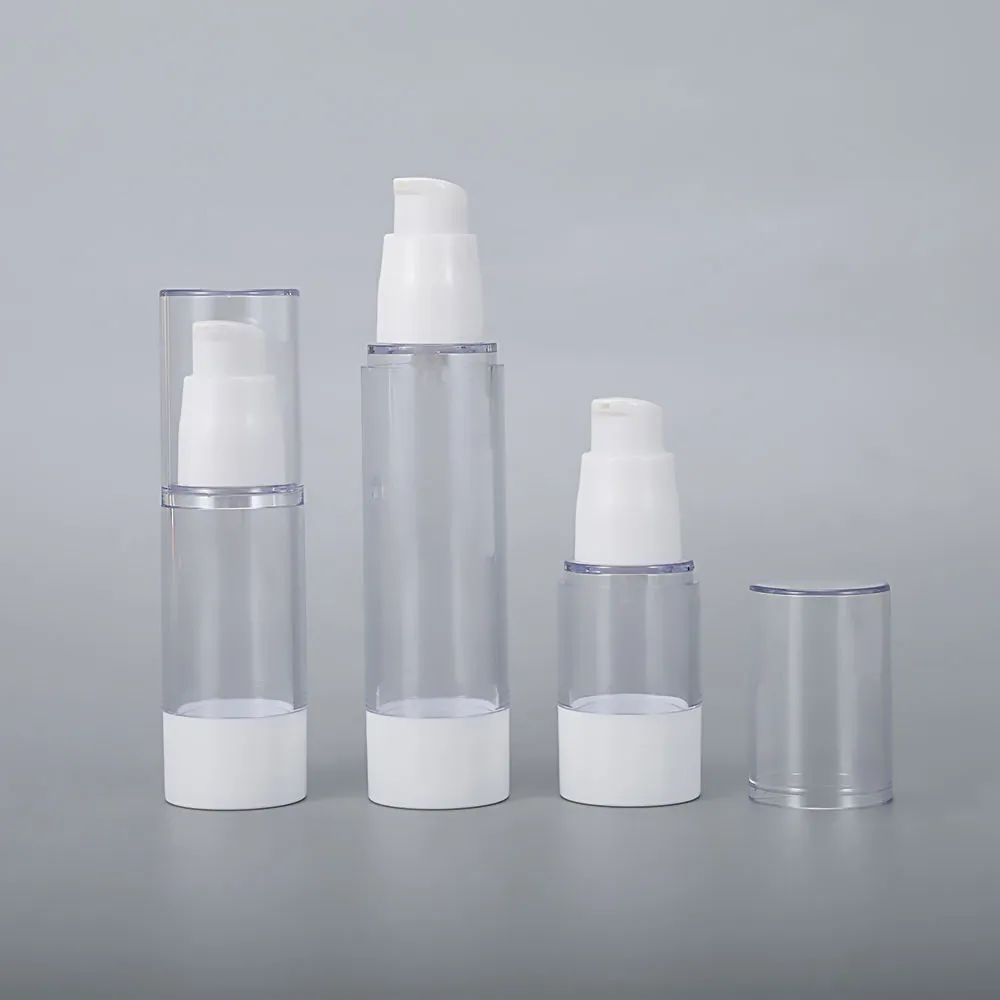
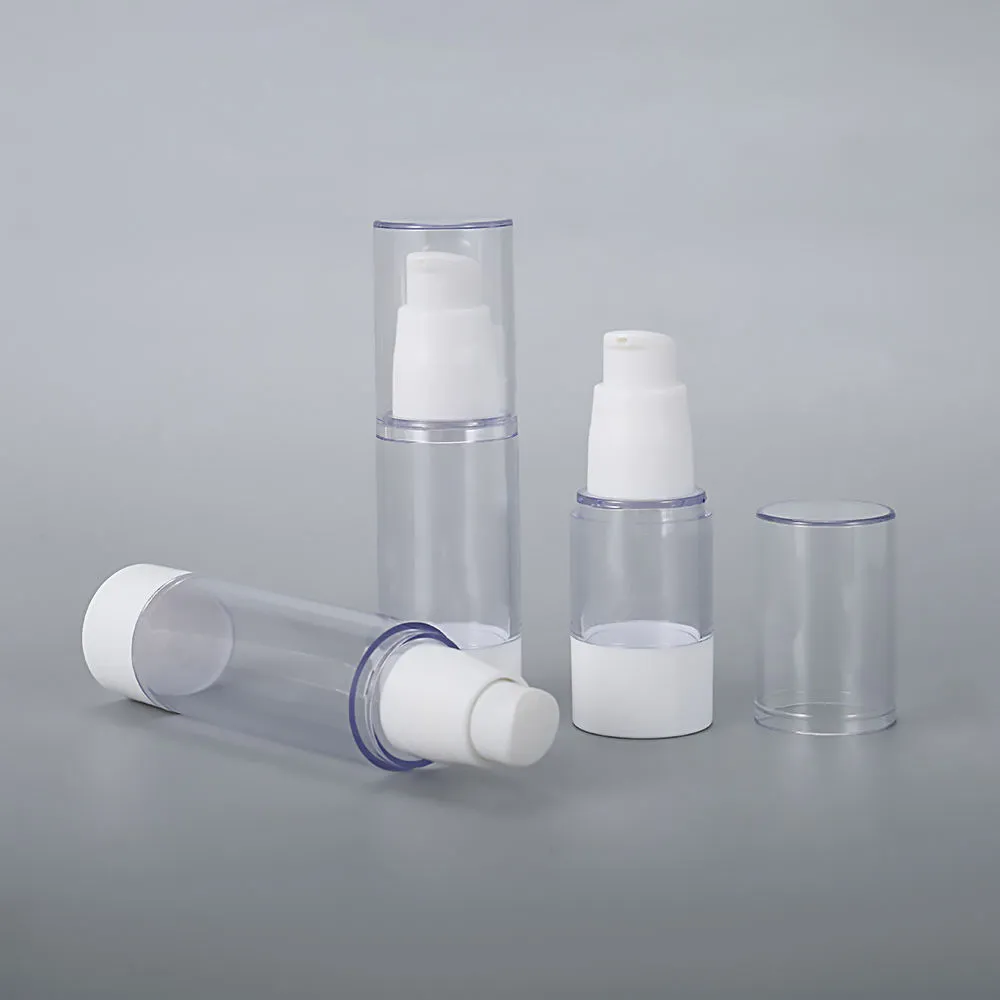
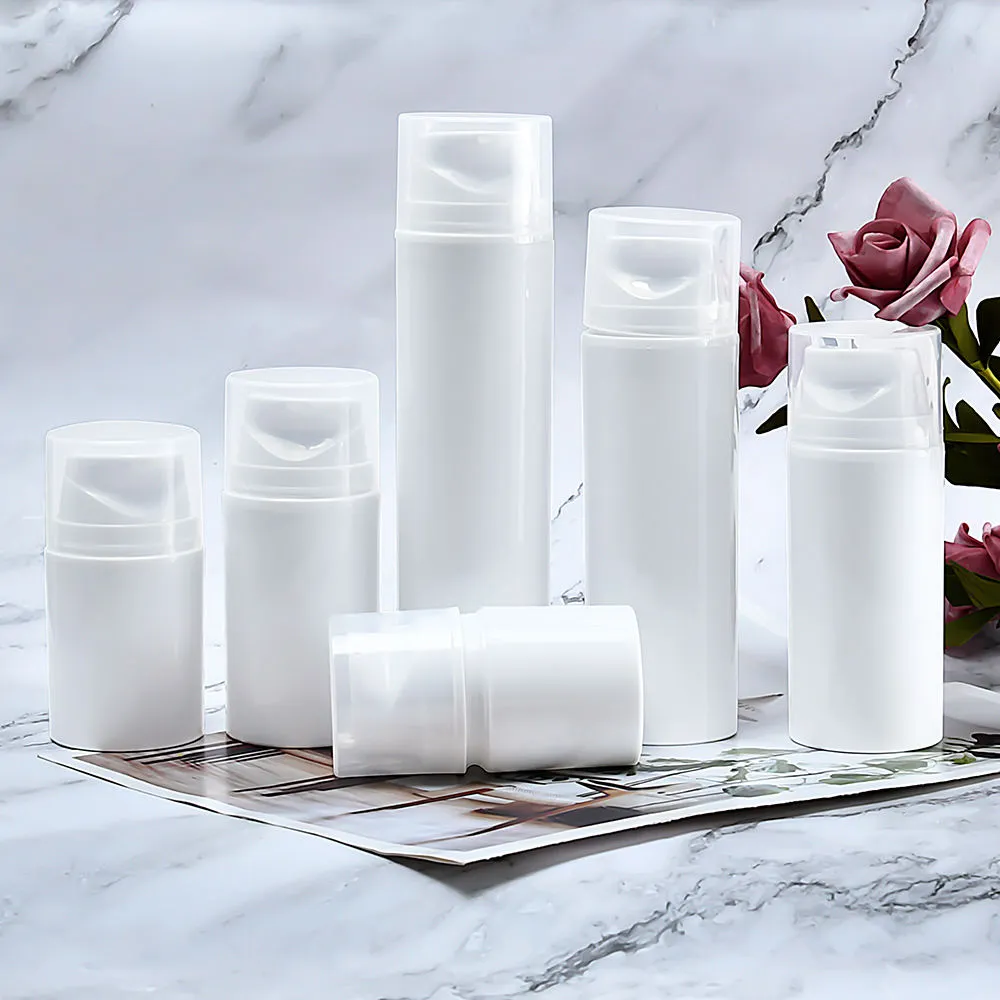
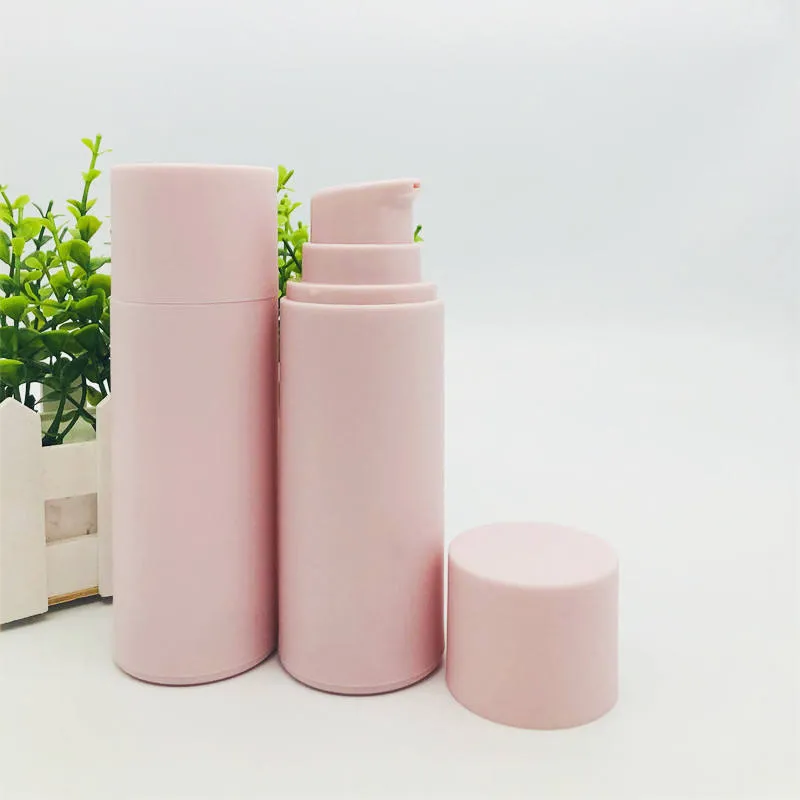
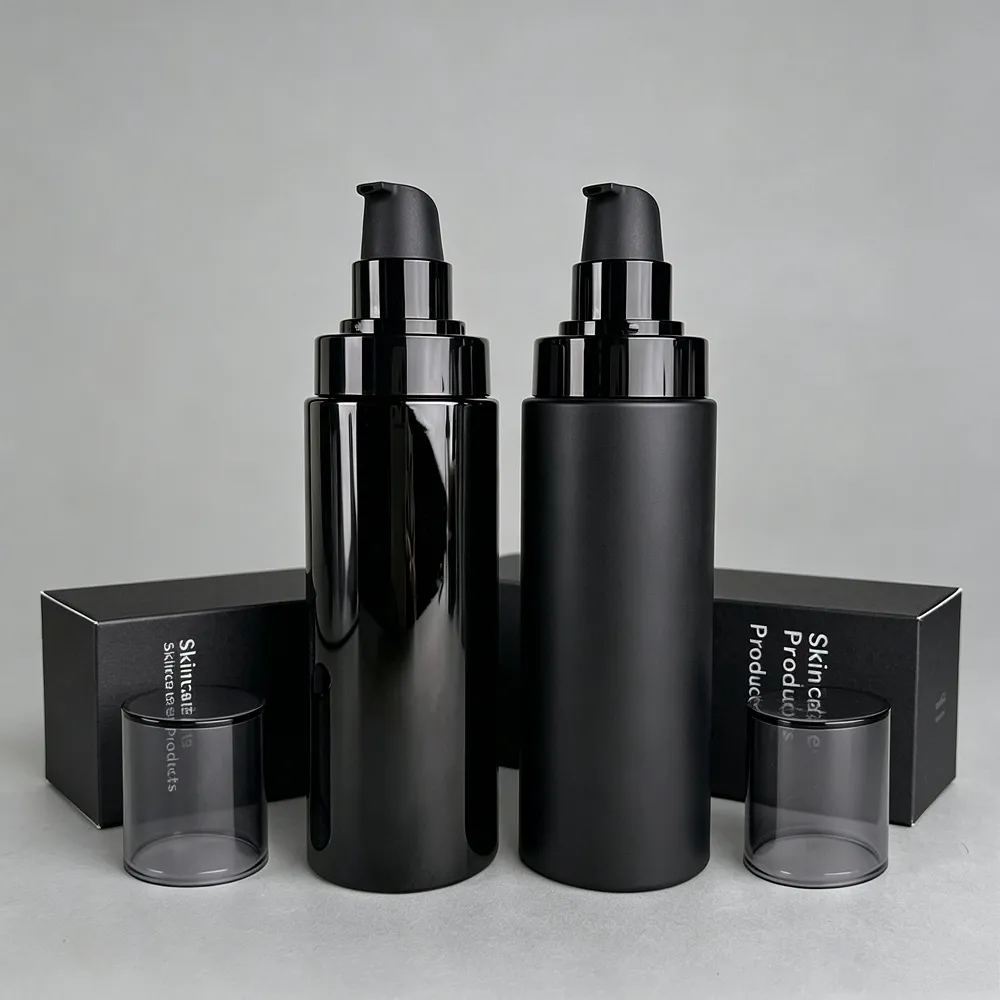
Boyu Packaging model BY-AP33 is a cylindrical airless pump bottle series for serum, facial lotion, eye treatment, foundation and compatible skincare formulas. Available in 15ml, 30ml and 50ml, the coordinated sizes help brands build travel, treatment and full-size retail products within one packaging family. The clear or white AS-style outer body creates a clean premium appearance, while the internal airless system dispenses product without a conventional dip tube.
Explore Boyu Packaging’s airless pump bottle range, compare related skincare packaging and lotion bottles, or read the airless bottle supplier selection guide. For drawings, samples and a formal quotation, contact Boyu Packaging.
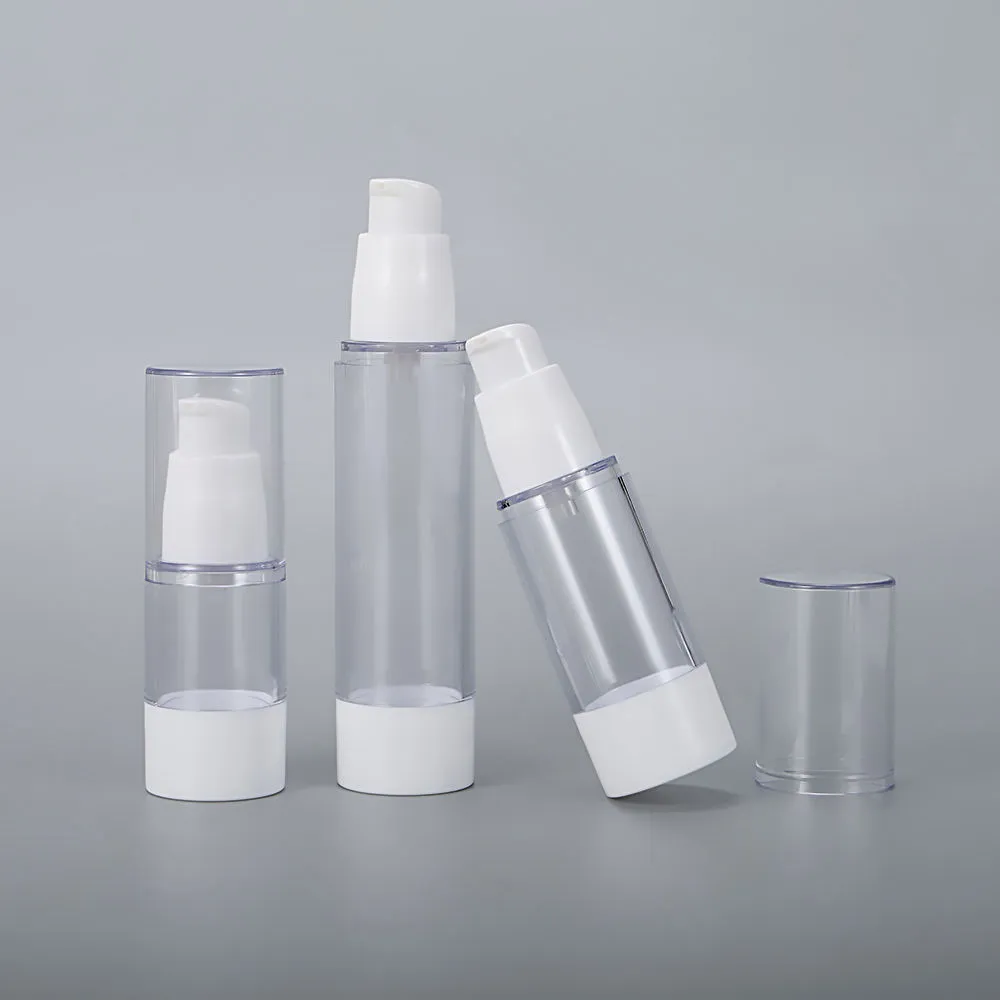
Specification clarification: the marketplace field “Pump Sprayer” is not the best technical description. BY-AP33 should be specified as an airless treatment or lotion pump bottle. The final bill of materials must identify the AS outer parts and the PP, PE, elastomer or other formula-contact components used in the pump and piston system.
Core Specifications
| Product | Cylindrical vacuum airless lotion pump bottle |
|---|---|
| Model Number | BY-AP33 |
| Brand | Boyu Packaging |
| Capacity | 15ml, 30ml and 50ml |
| Material Direction | AS outer bottle or collar with plastic airless components; exact formula-contact materials confirmed by specification sheet |
| Shape | Round cylindrical profile |
| Dispensing System | Airless pump with moving piston or equivalent sealed reservoir architecture; final structure to be confirmed |
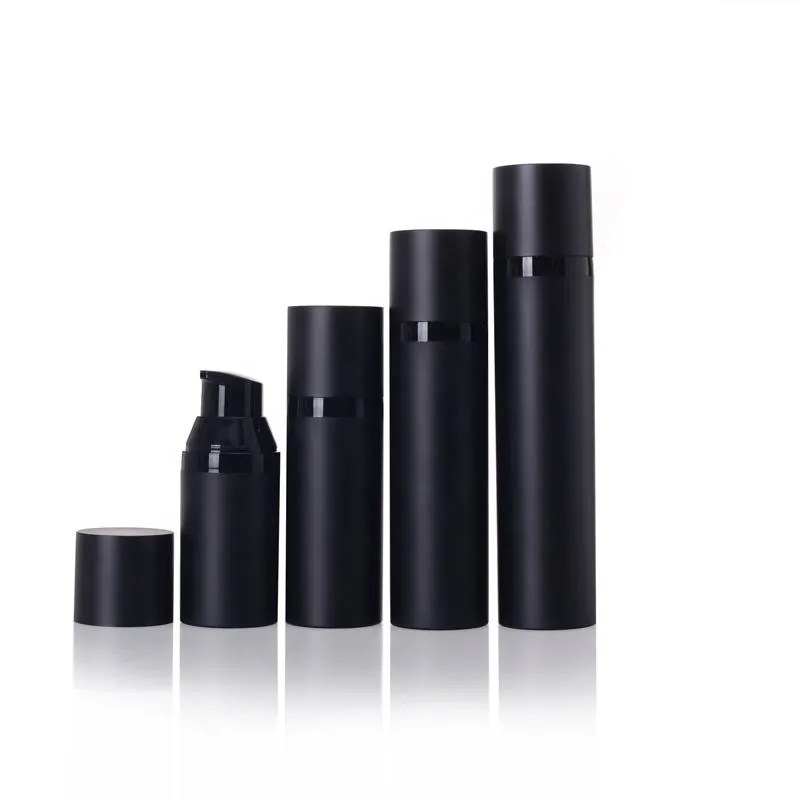
| Color | White and clear; customized colors subject to color matching and MOQ |
| Decoration | Silk-screen printing; other decoration options subject to surface and artwork review |
| Applications | Serum, lotion, essence, eye treatment, foundation, moisturizer and compatible skincare formulas |
| OEM / ODM | Accepted |
| MOQ | Boyu standard custom MOQ: 10,000 pieces per capacity, color and design; final MOQ confirmed by quotation |
| Sample | Available; stock availability, decoration fees and courier cost confirmed before dispatch |
| Place of Origin | Zhejiang, China |
| Height, Diameter, Unit Weight and Wall Thickness | Confirmed separately for each capacity on the approved drawing and physical sample |
Data note: no verified height, diameter, empty weight, wall thickness, pump output, overflow capacity or export-carton specification was provided. These values must not be copied from a visually similar 33mm airless series because internal structure and mold dimensions can differ.
Capacity and Market Positioning
| Capacity | Typical Positioning | Common Applications |
|---|---|---|
| 15ml | Eye care, targeted treatment, travel or trial size | Eye serum, spot treatment, concentrated essence |
| 30ml | Standard serum and foundation size | Serum, liquid foundation, facial treatment |
| 50ml | Full-size facial skincare | Moisturizer, lotion, sunscreen and light cream |
Nominal fill, overflow capacity and usable evacuation volume are different measurements. Confirm the filling level and expected residual product through a production-intent filling trial.
How the Airless System Works
Unlike a conventional lotion pump with a dip tube, a piston-style airless bottle uses pump action to create a pressure difference. Each press draws product through the outlet while the base piston moves upward, reducing the empty space beneath the formula. The package therefore limits repeated air intake during dispensing.
“Airless” does not mean that the package contains zero air or that it will preserve every formula automatically. Initial headspace, filling method, pump design, seals, materials and user handling all affect performance. Formula stability and shelf-life claims must be established by the brand’s own testing.
Key Features and Buyer Benefits
- Reduced repeated air exposure: the airless architecture can help protect compatible oxidation-sensitive formulations during normal dispensing.
- Hygienic delivery: users do not need to insert fingers or a spatula into the remaining product.
- Controlled dosage: a matched pump can provide a consistent amount per stroke after proper priming.
- Improved evacuation: a well-matched formula and piston can reduce residual product compared with some dip-tube packages.
- Coordinated size range: 15ml, 30ml and 50ml support one visual family across several skincare SKUs.
- Premium appearance: clear AS-style components offer a glass-like outer look with lower weight and reduced breakage risk.
AS Compared with PP, PETG and Acrylic
| Material | Advantages | Buyer Considerations |
|---|---|---|
| AS / SAN | High clarity, rigid feel and premium visual presentation | Brittleness and compatibility with alcohol, fragrance, oils or aggressive actives require testing |
| PP | Good chemical resistance, lightweight and commonly used for pistons, pumps and inner containers | Usually opaque or translucent and less glass-like |
| PETG | Clear, impact resistant and suitable for premium cosmetic styling | Higher cost; formula and local recycling acceptance must be reviewed |
| Acrylic / PMMA | Luxury clarity, substantial wall appearance and strong decoration potential | Higher cost and normally used as an outer shell rather than the sole formula-contact material |
An airless bottle is a multi-part system. The outer AS material alone does not determine compatibility. Request the complete bill of materials for the inner container, piston, pump engine, spring, gasket and sealing components, then test them with the actual formula.
Formula Compatibility and Pump Selection
BY-AP33 may suit serums, essences, facial lotions, light emulsions, liquid foundation, sunscreen and compatible treatment formulas. Very thick creams, particle-containing products, volatile solvent systems or formulas that crystallize may require a different pump path, larger orifice, airless jar or soft tube.
Before ordering, provide formula viscosity, density, alcohol level, oil phase, fragrance content, active ingredients and filling temperature. Evaluate the intended formula in the complete package for:
- first priming and number of strokes to dispense;
- pump output and dose consistency;
- actuation force and pump recovery;
- piston movement and evacuation near empty;
- clogging, crystallization, dripping or stringing;
- material swelling, cracking, discoloration or stress damage;
- storage stability at relevant temperatures and orientations.
Pump, Sealing and Filling Requirements
The pump output per stroke, actuator design, outlet diameter and piston friction should be matched to the formula and intended consumer dose. Do not assume a dose from another visually similar bottle. Ask for a measured pump-output range and verify it using the actual product.
Many piston airless bottles require bottom or top filling followed by correct piston installation or priming. The contract filler should review the filling method, equipment, fill speed, headspace and piston-setting process before mass production. Incorrect filling can cause trapped air, delayed priming, piston jamming, leakage or poor evacuation.
How to Reduce Leakage and Functional Failure
- Freeze the approved bottle, pump, piston and sealing bill of materials.
- Confirm neck, snap-fit or thread dimensions and assembly force.
- Control filling level and avoid contaminating sealing surfaces.
- Use the specified pump assembly torque or snap-fit procedure.
- Test upright, side and inverted storage with the actual formula.
- Run heat, cold, vibration, drop and transport simulation.
- Check first priming, repeated actuation, pump recovery and near-empty performance.
- Verify that the cap remains secure and does not press the actuator during transport.
Color, Logo and Decoration
Standard white and clear components create a clean clinical or premium look. Customized bottle and pump colors can be developed from a physical standard or Pantone reference, subject to resin, transparency, component availability and MOQ. Because clear and opaque plastics reflect color differently, approve an assembled physical sample rather than a screen image alone.
Silk-screen printing is appropriate for simple logos and limited-color artwork. Additional options such as hot stamping, spraying, metallized collars or labels may be evaluated after the printable area and surface material are confirmed. Artwork should be provided in editable vector format, with Pantone colors and print position clearly marked.
Manufacturing Process
- Component definition: confirm capacity, airless architecture, materials, pump output, color and decoration.
- Plastic molding: mold the AS outer components and PP/PE or other functional components under controlled conditions.
- Pump assembly: assemble actuator, engine, spring, valves, seals and outlet components.
- Piston and bottle assembly: fit functional parts to the correct tolerance.
- Decoration: apply screen printing or approved surface treatments.
- Functional inspection: test priming, output, piston movement, leakage and cap fit.
- Cleaning and packing: protect clear surfaces and formula-contact parts from dust and scratches.
Quality Control
Recommended incoming, in-process and final checks include resin and color verification, appearance, dimensions, bottle weight, nominal and overflow capacity, wall distribution, transparency, scratches, assembly fit, pump output, actuation force, priming, piston travel, evacuation, cap retention, print adhesion and carton protection.
For B2B projects, approve a signed physical sample and define the inspection level before production. If the formula is high value or sensitive, run a pilot filling test on production components rather than relying only on empty-bottle inspection.
Target Markets and Use Scenarios
The series is aimed at skincare brands, cosmetic importers, private-label companies, contract fillers, dermocosmetic lines, beauty distributors, e-commerce brands, spas and hotel skincare programs. The 15ml bottle suits eye care and travel treatment; 30ml is practical for serum and foundation; 50ml is commonly positioned for moisturizer, lotion or sunscreen.
Safety, Sustainability and Reuse
Product safety depends on the verified resin grades, complete bill of materials, formula compatibility, manufacturing controls and destination-market requirements. Claims such as BPA-free, recyclable, medical-grade or eco-friendly should only be used when supported by the applicable documentation for the final configuration.
Airless bottles are often multi-material and may be difficult to separate in some recycling systems. AS recycling acceptance varies by region. Although a bottle may technically be opened or refilled, a standard sealed airless package should not be marketed as refillable unless it was designed and validated for repeated opening, cleaning, piston resetting and hygienic refilling.
MOQ, Pricing and Tooling
For a customized BY-AP33 project, use 10,000 pieces per capacity, color and design as the standard planning MOQ unless the written quotation states otherwise. Price depends on capacity, component structure, resin, pump output, color, printing, surface treatment, packing, inspection and Incoterm. The cheapest visually similar bottle may have a different pump engine, piston tolerance or material structure.
An existing BY-AP33 structure normally does not require a new bottle mold when only color and logo change. Screens, plates, fixtures or color-matching fees may still apply. A new capacity, proprietary shape, altered pump, special actuator or different airless structure requires engineering review and may need new tooling.
OEM Process and Lead Time
- Send the selected capacity, formula information, dose target, quantity, color, artwork and destination market.
- Confirm the bottle structure, materials, pump output, cap and filling method.
- Receive stock or customized samples and conduct dispensing and compatibility tests.
- Approve technical drawings, color, decoration and functional samples.
- Confirm price, payment terms, inspection standard, packing and delivery schedule.
- Begin mass production after sample approval and deposit.
- Complete final inspection, documentation and shipment.
Existing samples are normally prepared in about 3–5 days when components are available. Custom color or decorated samples generally require about 7–15 days. Mass production is usually planned for approximately 30–45 days after final approval and deposit. New tooling or complex decoration adds development time.
Packing, Logistics and After-Sales
Clear AS surfaces should be protected against rubbing and scratches with suitable inner bags, trays, dividers or layered packing. Pumps and bottles may be shipped assembled or separately according to filling requirements. Final carton quantity, carton size, net weight, gross weight and pallet plan must be confirmed from the chosen capacity and component configuration.
Sea freight is generally economical for 10,000-piece orders, while express or air freight is suitable for samples. For an after-sales claim, provide the purchase order, batch number, carton label, affected quantity, photos, videos, formula information and test conditions. This allows the supplier to distinguish component, assembly, filling, transport and storage causes. Learn more about Boyu Packaging.
Buyer Checklist Before Ordering
- Request a capacity-specific drawing, not dimensions from a similar 33mm bottle.
- Confirm all formula-contact materials and the complete bill of materials.
- Provide formula viscosity, density, alcohol, oil phase and filling temperature.
- Approve measured pump output, first priming and evacuation performance.
- Confirm whether the filler can handle the selected piston airless structure.
- Run compatibility, storage, leak and transport tests using the actual formula.
- Clarify MOQ for every capacity, color and artwork.
- Approve color and printing on an assembled physical sample.
- Confirm carton specifications and shipment terms in writing.
Frequently Asked Questions
Is BY-AP33 a true airless bottle?
It is described as an airless pump bottle, but the final sample and technical specification should confirm the piston or sealed-reservoir structure, pump path and absence of a conventional dip tube.
What capacities are available?
The listed capacities are 15ml, 30ml and 50ml. Exact height, diameter, overflow capacity and empty weight must be confirmed separately for each size.
What formulas can be filled?
Compatible serums, essences, lotions, foundations, moisturizers and light creams may be suitable. Final approval requires testing with the production-intent formula.
Does airless packaging prevent oxidation completely?
No. It can reduce repeated air intake during use, but initial headspace, filling, material barrier, seals and formula stability still affect oxidation and shelf life.
Can customized colors and logos be produced?
Yes. White, clear and customized colors can be reviewed, and silk-screen printing is available. Other decoration depends on the selected surface and artwork.
Does logo customization require a new mold?
Normally no. Printing an existing bottle does not require a structural mold. A new proprietary shape, capacity or pump design may require tooling.
What is the MOQ?
The standard custom-project planning MOQ is 10,000 pieces per capacity, color and design. Confirm the final MOQ in the written quotation.
How should the package be tested before production?
Test filling, first priming, dose consistency, actuator force, piston movement, evacuation, formula compatibility, leakage, storage and transport performance on the final components.
Request a Drawing, Sample and Quotation
Send Boyu Packaging your required capacity, formula type, viscosity, dose target, bottle color, artwork, quantity and destination. The team can confirm the airless structure, material specification, sampling plan, customization cost and production schedule. Request a quotation.
 English
 Español de Argentina
 Русский
 Italiano
 日本語
 한국어
 العربية
 Français
 Deutsch