
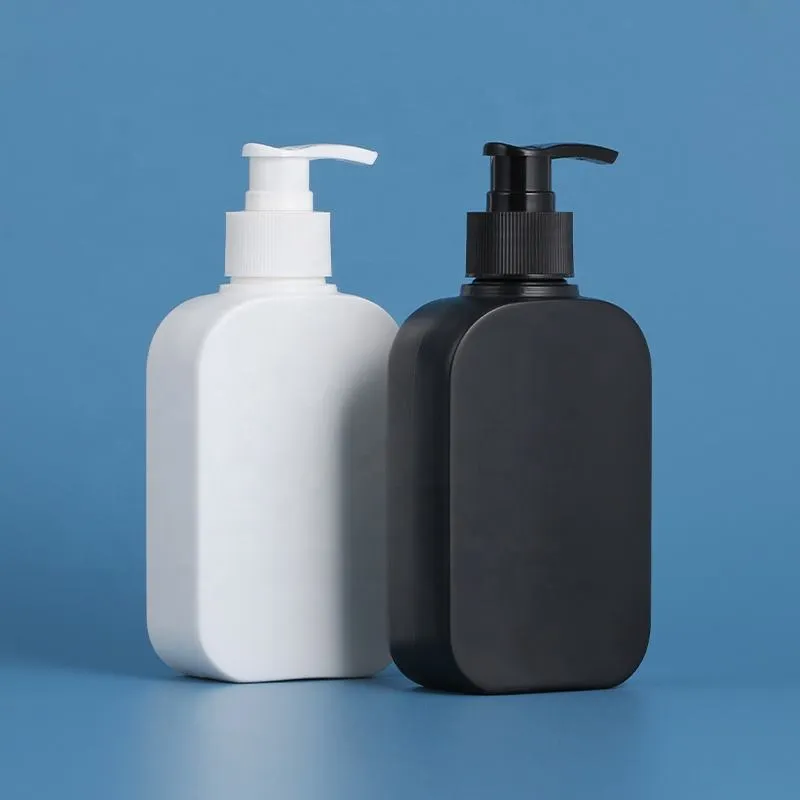
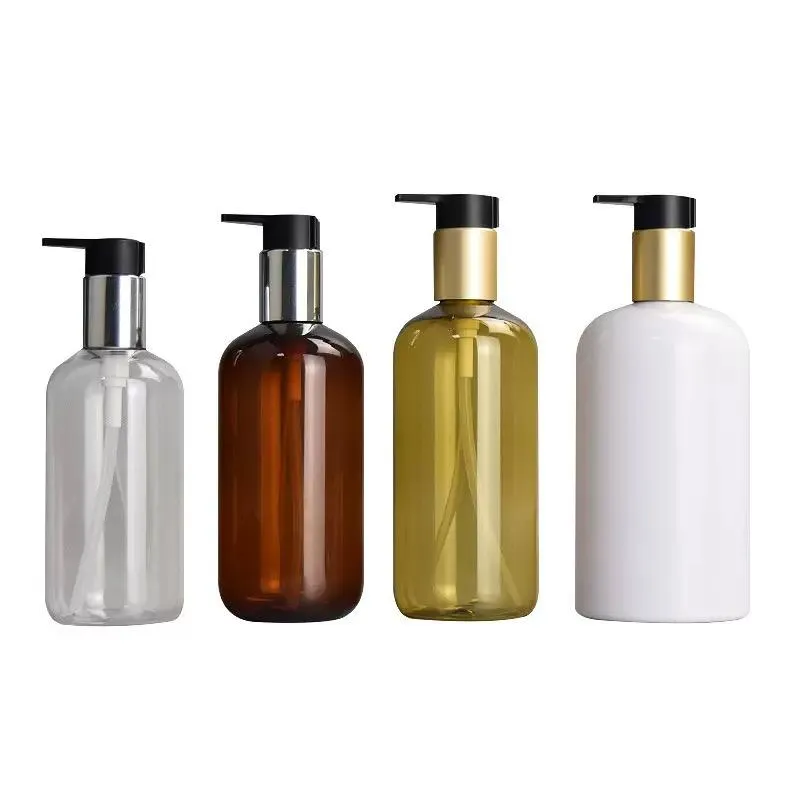
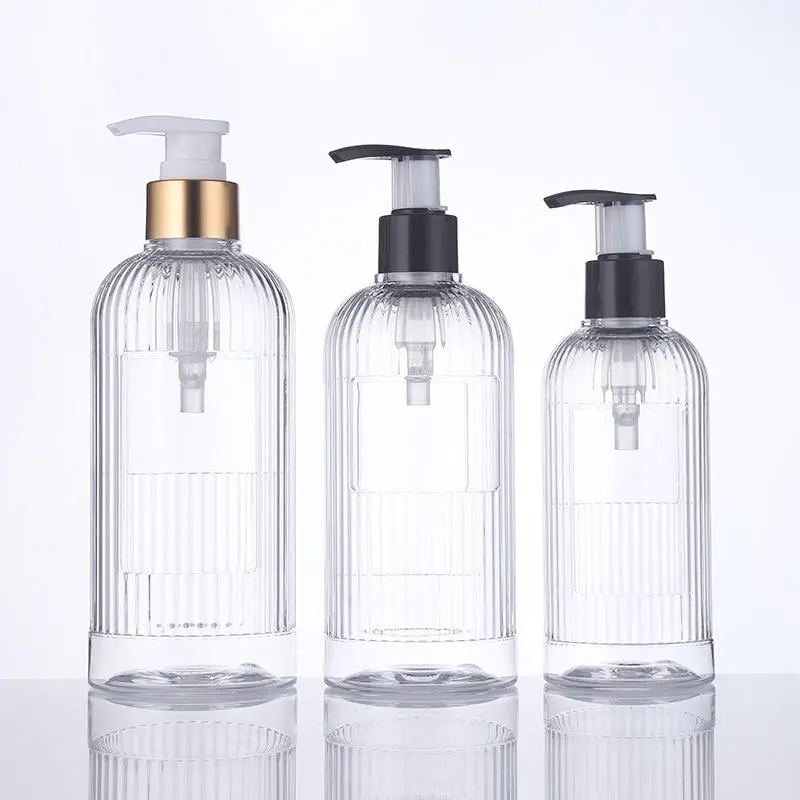
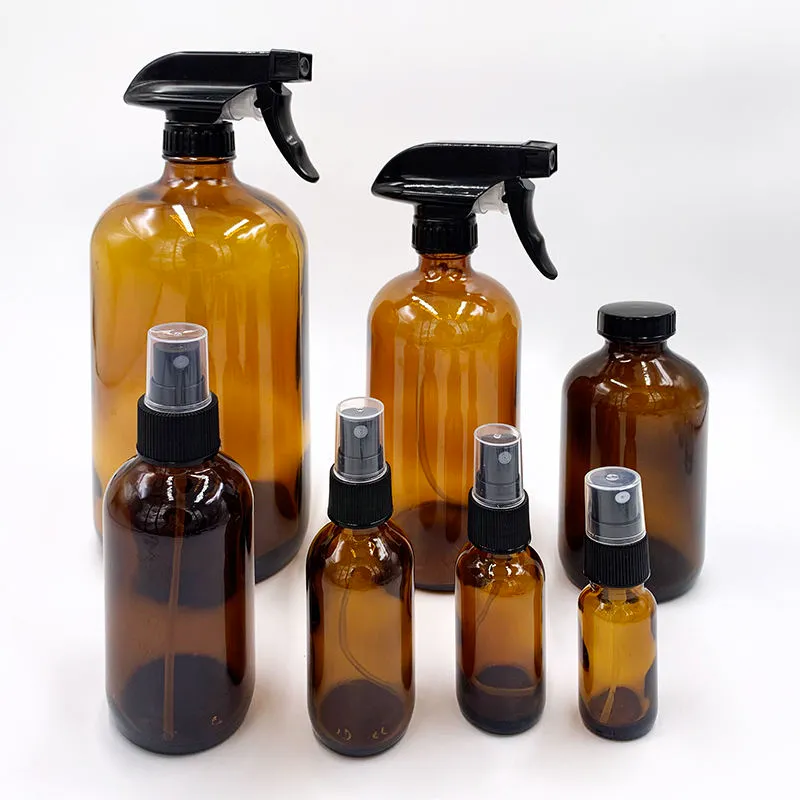
Direct answer: for most people carrying liquid foundation on a short trip, the best all-round container is a 10–15 mL refillable airless pump made for cosmetics, with a secure overcap. It is light, doses cleanly, limits repeated air return during dispensing, and avoids dipping fingers into the product. Choose 5–10 mL for a weekend, 10–15 mL for many one- to two-week trips, or calculate your own requirement instead of automatically carrying 30 mL.
That recommendation has conditions. The bottle must be designed to be refilled, the foundation must flow through its pump, all formula-contact materials must be compatible, and the filled pack must pass a leak test. Thick cream foundation is often easier in a mini squeeze tube or small jar; a stick is the most spill-resistant format if changing formula is acceptable. “Airless,” “BPA-free” and “TSA approved” are not substitutes for those checks.
Which Travel Container Is Best for Your Foundation?
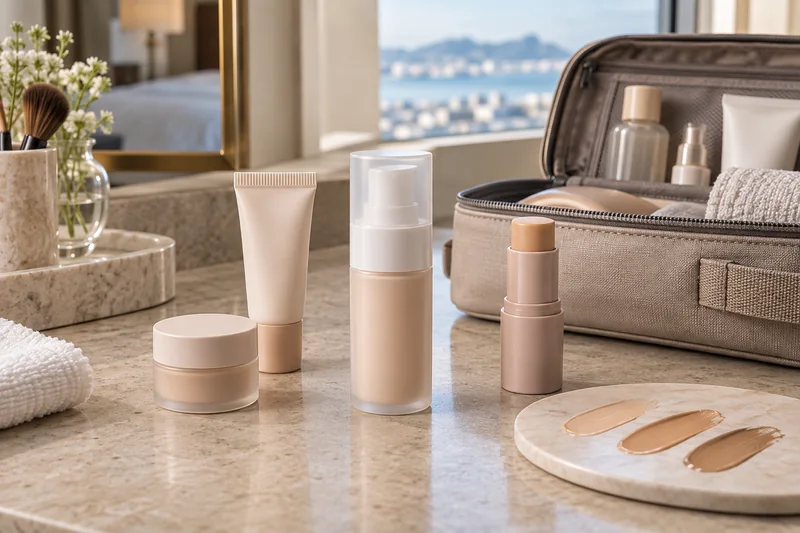
Start with the foundation’s physical form and the way you apply it. A container that is excellent for a fluid, pumpable emulsion may be frustrating for a dense cream, and a wide-mouth pot that is easy to fill creates more opportunities for hand contact than a pump. The following matrix is a practical starting point, not a compatibility approval.
| Need | Best starting container | Why it fits | Main qualification point |
|---|---|---|---|
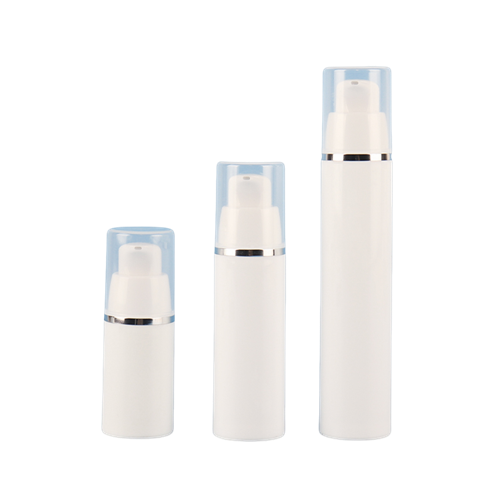
| Fluid or medium-viscosity liquid foundation | 10–15 mL refillable airless pump with overcap | Clean metered dispensing; no dip tube; compact and light | Foundation must prime, dispense consistently and not clog the pump |
| Very fluid skin tint | Small treatment pump or narrow-orifice squeeze bottle | Better dose control than an open jar | A loose formula can seep through an unsuitable closure; test inverted and on its side |
| Thick cream foundation or balm | 5–10 mL mini jar, or compatible soft tube | Wide access or direct squeeze avoids a pump that cannot recover | Use a clean spatula with a jar; verify tube orifice and squeeze force |
| One to three applications | 2–5 mL cosmetic sample vial or pot | Minimum bulk and weight | Screw closure, liner and opening must suit the formula; do not improvise with food or lens containers |
| Frequent traveller | Purpose-designed refillable airless pack with replaceable or cleanable inner reservoir | Repeatable filling and controlled dispensing | Follow the pack maker’s disassembly and cleaning instructions; many airless bottles are not refillable |
| Maximum spill resistance | Commercial foundation stick or solid compact | No free-flowing liquid; fast application | This changes the cosmetic formula and finish, not merely the container |
| Professional makeup kit | Small pump/vial system plus a clean mixing palette | Dispenses without touching the bulk and supports shade mixing | Identify shade, lot and decant date; use hygienic tools and avoid back-contamination |
Common Foundation Travel Containers: Advantages and Disadvantages
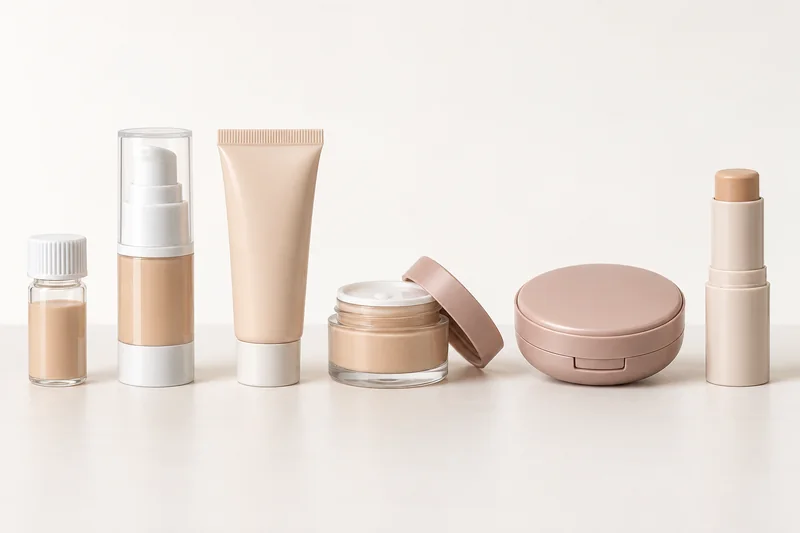
1. Refillable airless pump bottle
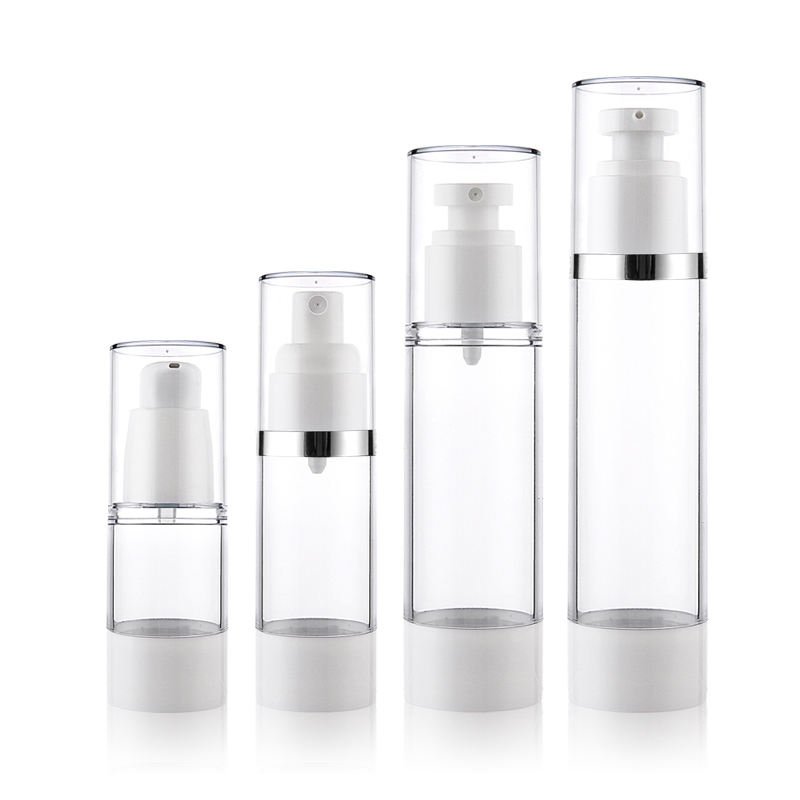
A true airless system normally uses a rising piston, collapsible bag or similar mechanism instead of a conventional dip tube. Product leaving the dispenser is not replaced by the same repeated stream of ambient air found in a vented dip-tube package. That can improve formula protection and evacuation, but the term does not mean the product has never contacted air: filling can introduce headspace, seals are not infinitely impermeable, and performance depends on the complete design.
Advantages: clean dose, reduced finger contact, good evacuation, useful at different orientations, and a premium appearance. Disadvantages: more parts, more difficult cleaning, possible priming failure, and poor performance if the formula contains agglomerated pigment or exceeds the pump’s workable viscosity. Some packs cannot be opened without damaging the piston or seal. Use only a model explicitly designed for refilling.
For available sizes and structures, review Boyu’s airless pump bottle range; product selection still requires testing with the real foundation.
2. Conventional mini pump bottle
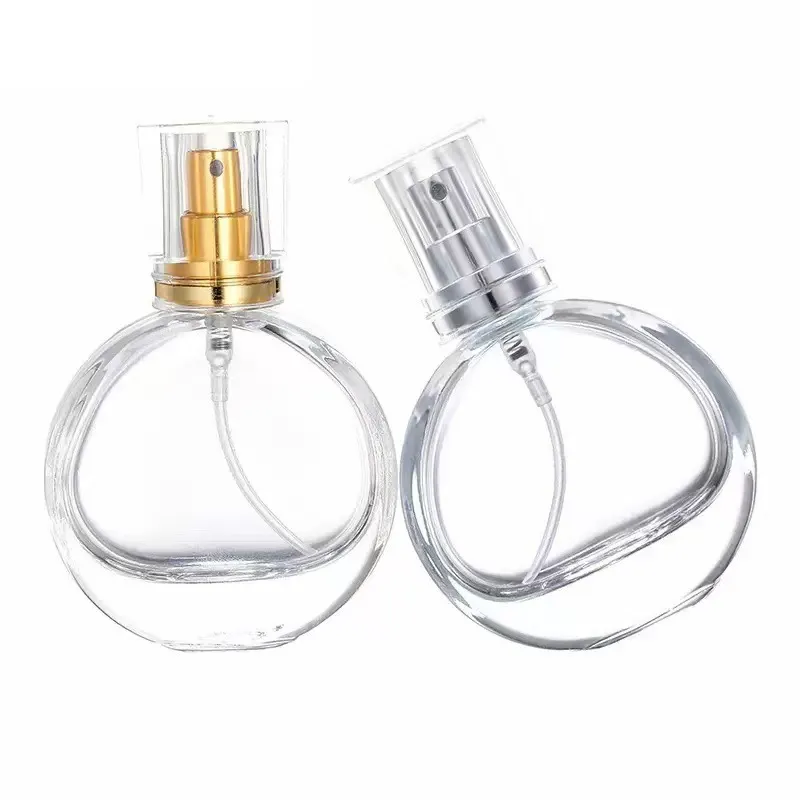
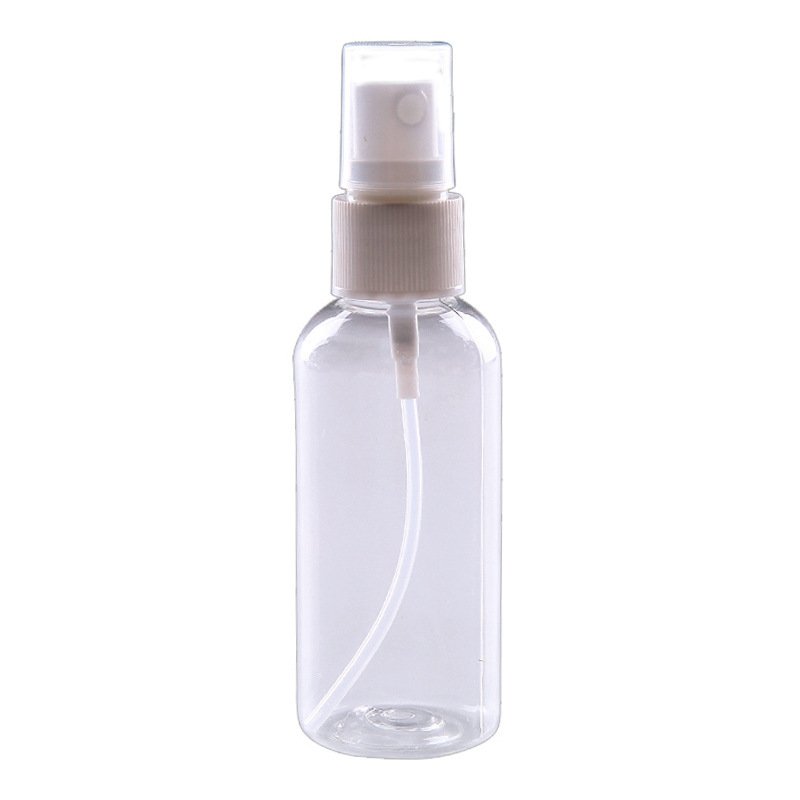
A dip-tube pump is familiar and can deliver an accurate dose when matched to the formula. It may also be easier to source and fill than an airless pack. However, it generally vents the bottle as product leaves, may lose prime when stored on its side, and can leave product below the dip-tube inlet. A secure overcap or lock is essential in a crowded makeup bag.
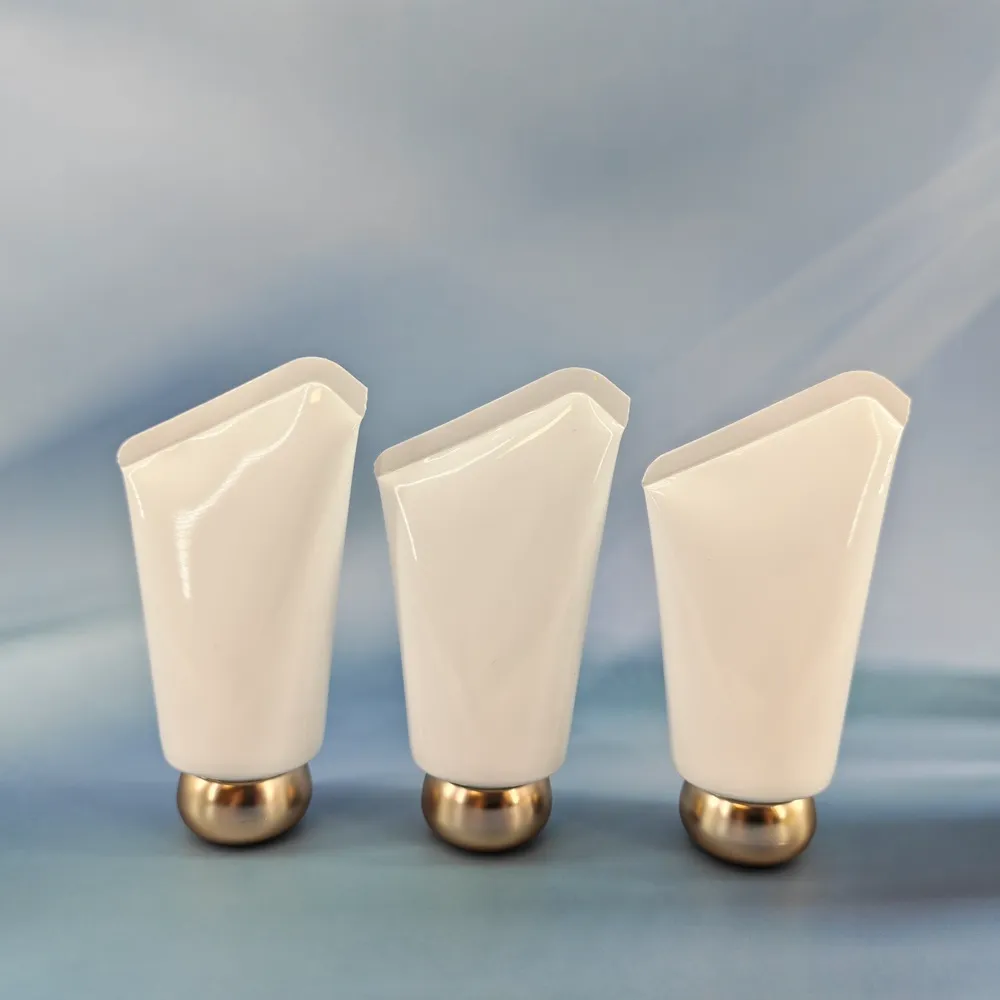
3. Mini squeeze tube
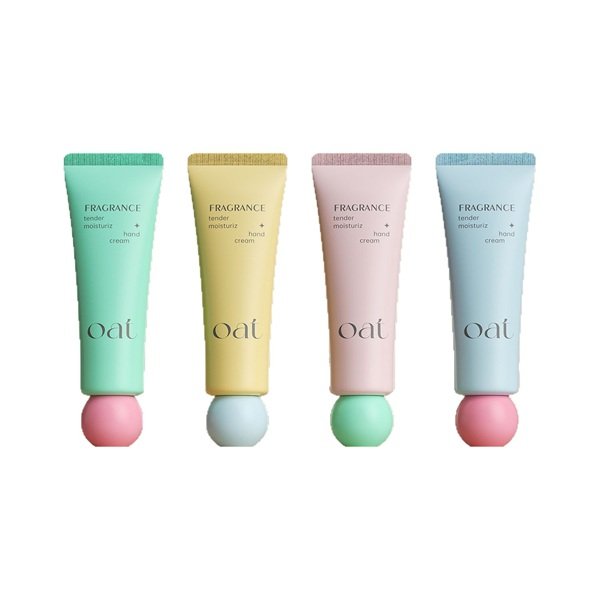
A 5–20 mL PE or multilayer tube is light, compact and resistant to breakage. It is particularly practical for creamier foundations, BB creams and formulas that are difficult to transfer through a small pump opening. The user can control dose by selecting the orifice and squeeze force.
The risks are cap opening, product accumulating around the orifice, decoration scuffing and formula–tube interaction. A screw cap with an inner sealing feature generally gives more travel security than an exposed snap top, although either design must be tested. Explore small cosmetic tube options when portability and low filled weight are priorities.
4. Sample vial or small screw-cap bottle
A 2–10 mL vial is the simplest low-bulk option for very short trips. It is easy to label and relatively easy to fill with a clean syringe. A narrow neck reduces direct finger contact, but a user may still need a spatula, palette or controlled pour. Confirm that the closure has a suitable liner and does not loosen after temperature changes.
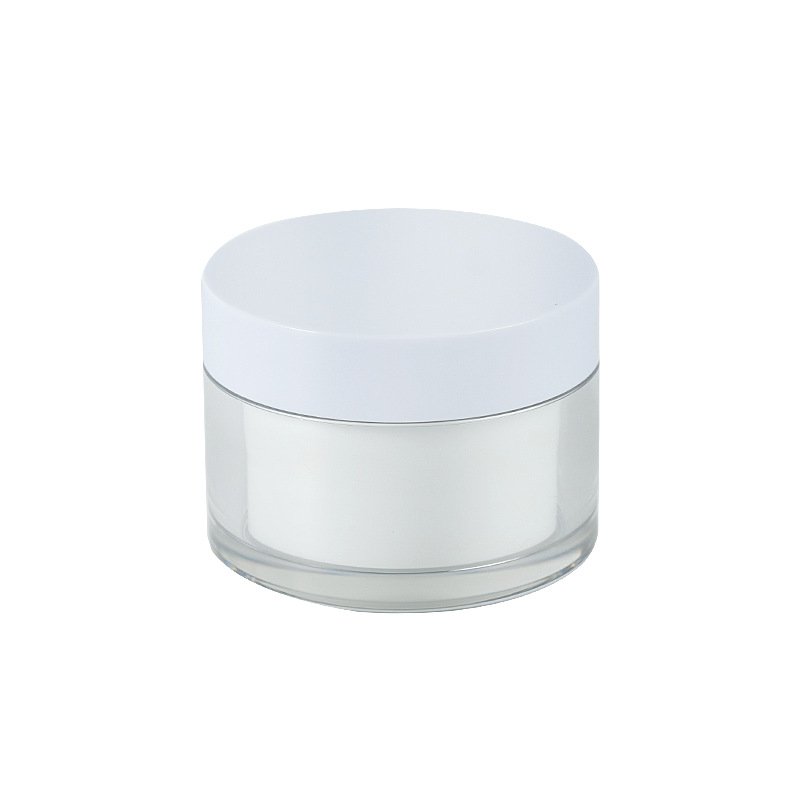
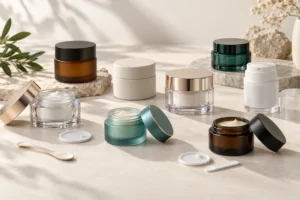
5. Mini jar or pot
A jar is easy to fill, clean and access, making it useful for thick cream foundation or a one-off sample. It is less suitable for fluid foundation because opening exposes a broad surface and a tipped jar can release most of its contents. Finger dipping also adds a contamination route; the FDA specifically identifies consumer use, including dipping fingers, as one way cosmetics can become contaminated.
If a jar is necessary, choose a small cosmetic jar with a tight screw lid and appropriate liner, use a clean spatula, and close it immediately. Compare plastic and glass cosmetic jars, bearing in mind that glass adds weight and breakage risk in travel.
6. Cushion compact or foundation stick
A cushion compact distributes a fluid formula through an impregnated sponge or controlled mesh and provides a portable mirror-and-puff experience. It is convenient but is a purpose-designed formula/package system, not an ideal do-it-yourself decant: sponge compatibility, dose, seal and microbial control must be validated.
A stick eliminates liquid leakage and may sit outside liquid-bag restrictions, subject to local screening decisions. Its limitation is fundamental: a stick foundation is not the same product as your bottled liquid foundation, and transferring liquid into a stick case is not a safe or functional conversion.
What Size Foundation Container Do You Need?
Foundation use varies too much for a universal “millilitres per day” rule. Full coverage, a large application area and sponge absorption increase consumption; spot coverage and fingers may reduce it. Measure your own use before the trip:
- Use the foundation normally for three to five days.
- If the original pump has a repeatable dose, count full strokes. Alternatively, weigh the original pack before and after the observation period on a scale sensitive enough for the change.
- Calculate average daily use and multiply it by the number of makeup days.
- Add a modest contingency—often 10–20%—for priming, tool absorption and one extra application.
- Choose the next suitable working capacity without exceeding the container’s fill guidance.
Example, not a universal consumption claim: if your measured use is 0.55 mL per day and you expect 10 makeup days, the base requirement is 5.5 mL. Adding 15% gives about 6.3 mL, so a correctly working 10 mL container is a rational choice. Carrying a 30 mL bottle would add unnecessary bulk.
| Capacity | Typical use | Strength | Watch for |
|---|---|---|---|
| 2–5 mL | Trial, event or short weekend | Minimal volume and bag space | Difficult filling, limited label area, opening may be too small for thick formula |
| 5–10 mL | Weekend to short holiday for many users | Compact without being single-use | Mini pumps can have high priming loss relative to fill |
| 10–15 mL | Best all-round travel range | Good balance of handling, dose and duration | Confirm actual consumption and refill method |
| 20–30 mL | Long trip, heavy use, professional work or original retail mini | Fewer refills; familiar retail size | May be more product than needed and occupies more liquids-bag space |
Which Material Is Best for a Travel Foundation Container?
No resin name guarantees cosmetic compatibility. Foundation may contain water, oils, silicones, pigments, film formers, fragrance, preservatives and sometimes UV filters. Those ingredients contact not only the body but also the piston or dip tube, gasket, valve, pump, liner, adhesive, coating and colorant. Ask for the material specification, then test the complete package.
PP and PE: practical, light and impact-resistant
Polypropylene is common in airless pistons, pumps, caps and some bottles; polyethylene is widely used in squeeze tubes and bottles. Both can provide low travel weight and good drop tolerance. Opaque versions also hide light from the formula. Their appearance may be less glass-like, and exact stiffness, barrier and compatibility vary by grade and construction.
PET and PETG: clear appearance with lower weight than glass
PET and PETG-style components can deliver clarity, colour visibility and a premium rigid feel. That makes them attractive for shade presentation. Clarity also exposes the product to light, and neither material should be approved from appearance alone. Coatings, recycled content and decorative layers add variables. Boyu’s plastic cosmetic bottle range illustrates how resin, shape and closure choices must be considered together.
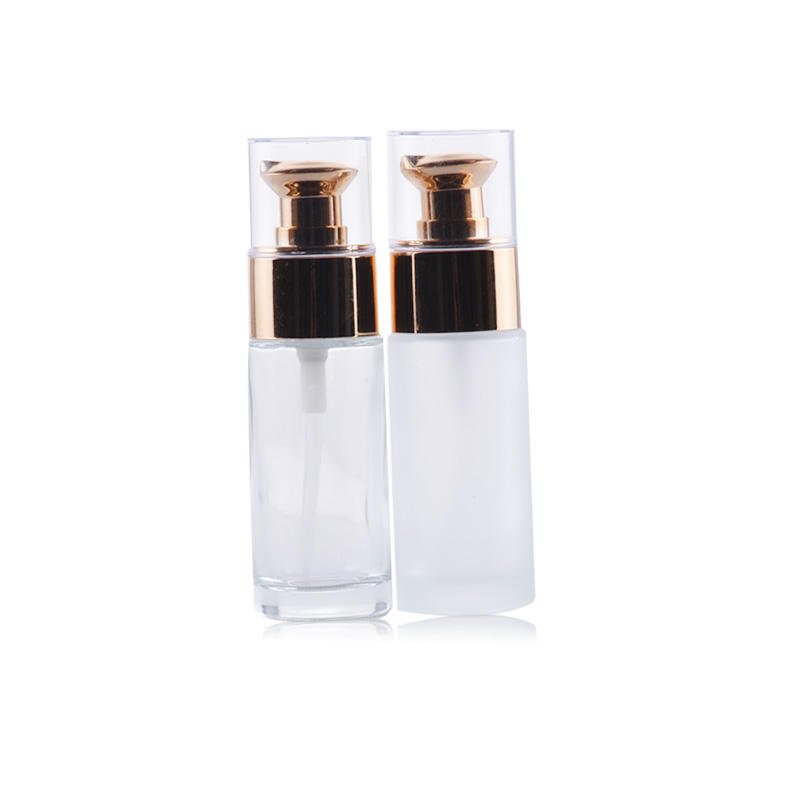
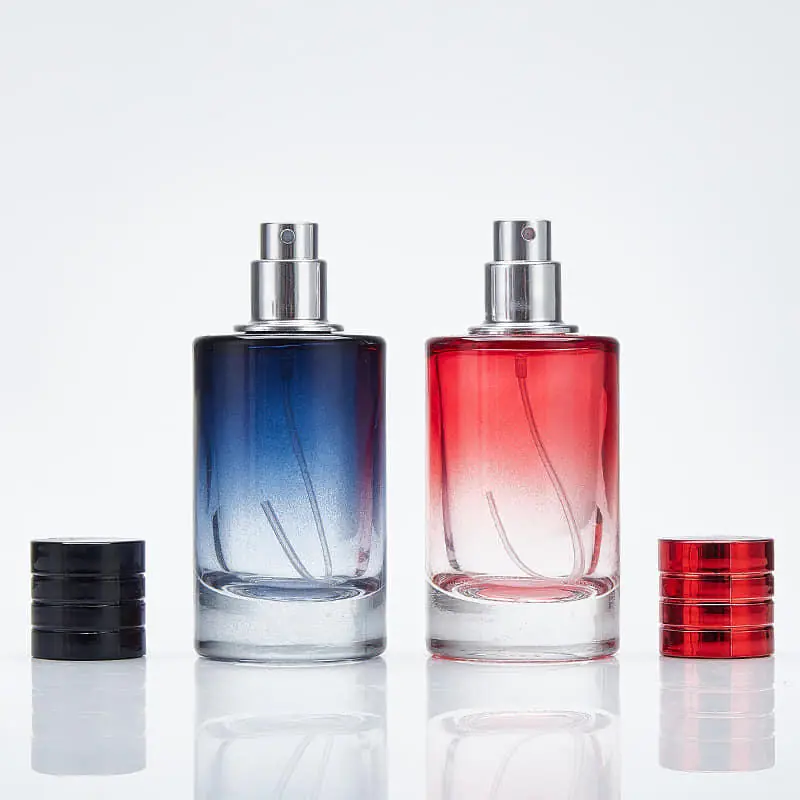
Glass is rigid, dimensionally stable and often selected for prestige foundation. For personal travel it is heavier and can chip or break, especially when the bottle is packed without secondary protection. The closure and pump remain critical leak paths. A small glass vial may suit a protected professional kit; it is rarely the best all-round recommendation for a one-bag traveller.
Acrylic, AS and metal-look parts: identify the actual contact layer
A luxurious outer shell may be PMMA/acrylic, AS, ABS or metallised plastic while an inner PP or PE reservoir holds the formula. Ask what directly contacts the foundation. An aluminium-looking collar may be decorative plastic, and a metal container may use an internal coating. Evaluate the contact layer, interfaces and assembled package rather than judging the exterior material.
Air-Travel Rules and How to Prevent Foundation Leaks
Liquid and cream foundation is normally treated as a liquid for cabin screening. In the United States, TSA’s 3-1-1 rule limits carry-on liquids, aerosols, gels, creams and pastes to containers of 3.4 oz/100 mL or less inside one quart-size bag. Current EU guidance uses individual containers no larger than 100 mL in one transparent, resealable one-litre bag. UK rules can vary by airport; GOV.UK explicitly tells travellers to check the departure, transfer and return airports, and notes that at most airports containers larger than 100 mL are not accepted even when partly full.
These are security rules, not packaging certifications. TSA does not “approve” a particular travel bottle, and a 15 mL bottle can still leak. Re-check official rules shortly before travel because airport procedures can change.
A five-step leak-control routine
- Inspect the sealing surfaces. Reject cracked threads, distorted liners, loose pump collars, damaged overcaps or foundation dried on the seal.
- Fill and assemble correctly. Leave any working space required by the pack maker; wipe the neck and engage the closure squarely without cross-threading.
- Prime and check dose. Make sure the pump recovers and dispenses without sputtering, product creeping around the collar or actuator sticking.
- Challenge all orientations. Place the filled container upright, inverted and on its side over clean absorbent paper for at least 24 hours at room conditions. Add a sensible warm-condition check if the trip will expose it to heat, but do not use unsafe temperatures.
- Use secondary containment. Lock the actuator or fit its overcap, then put the bottle in the required liquids bag. Keep it away from objects that can press the pump.
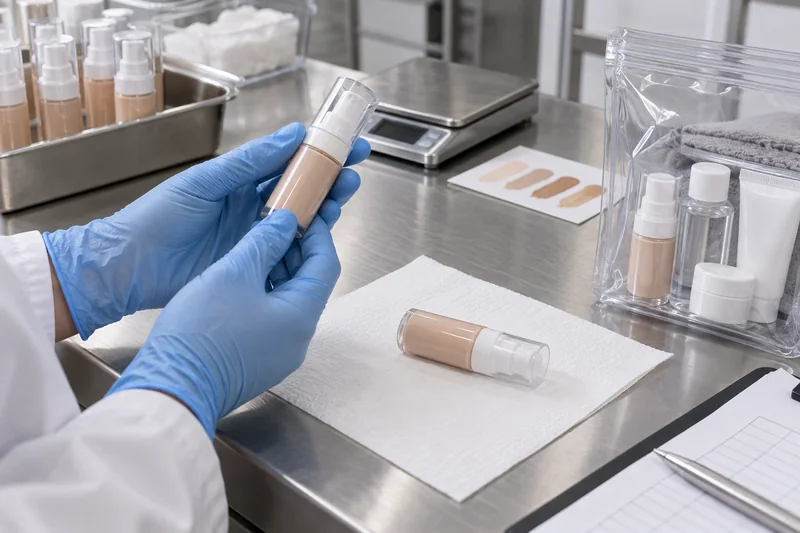
For a consumer, the orientation check is a useful screen, not a laboratory qualification or a guarantee against every pressure and temperature condition. Brands should use a documented, risk-based programme. Boyu’s guide to cosmetic bottle testing explains leak, dispensing, compatibility and distribution checks in more detail.
How to Decant Foundation into a Travel Container
- Check the foundation instructions first. If the brand warns against transfer, the formula needs vigorous shaking in its original pack, or the pump cannot be removed without damage, buy an original travel size or take the original container.
- Use a container intended for cosmetics. Confirm that it is refillable and has stated product-contact materials. Avoid repurposed food pots and contact-lens cases.
- Clean and dry exactly as the container maker directs. Residual rinse water can dilute preservatives. Never add water or saliva to make foundation flow; FDA warns that this can introduce microorganisms and weaken preservative protection.
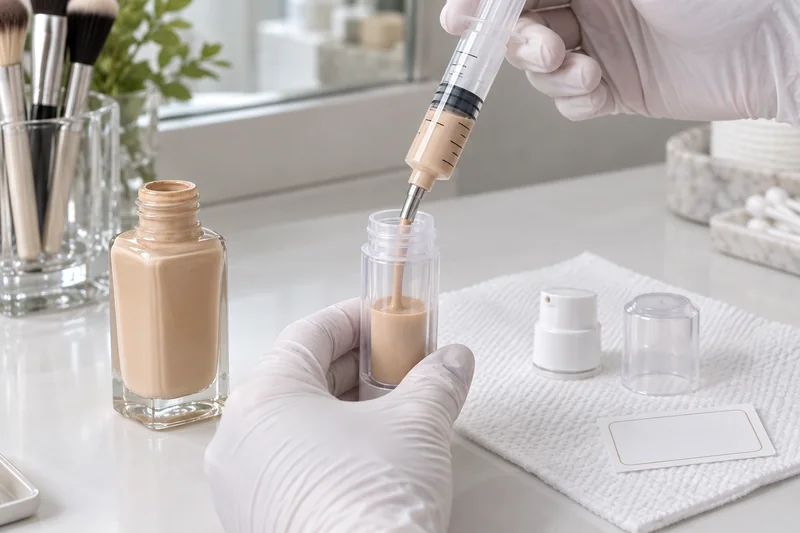
- Wash hands and prepare clean tools. A disposable transfer pipette, clean cosmetic syringe with a blunt transfer tip, or clean narrow spatula is more controlled than pouring over the neck. Do not touch the bulk product or inner sealing surfaces.
- Mix only as the foundation label instructs. If shaking is required, shake the original product before transfer. Do not combine shades or old and new batches inside a travel bottle unless you accept that traceability and stability become harder to assess.
- Transfer the measured amount. Keep the fill below any maximum line or working-volume instruction. Airless piston systems may require a particular fill and priming method.
- Close, label and test. Record the product/shade and decant date, prime the dispenser, wipe the exterior and perform the orientation leak check before it enters your bag.
Correct Use, Storage and Cleaning
- Keep the cap or overcap on whenever the container is not in use.
- Store foundation away from direct sun, a hot car, radiators and prolonged bathroom humidity. FDA advises keeping cosmetic containers clean, tightly closed and protected from temperature extremes.
- Do not share the decanted product. If a jar is used, remove each dose with a clean, dry spatula.
- Do not judge formula condition by time alone. Stop using it if colour, odour or texture changes, if the package swells or cracks, or if irritation occurs.
- Do not assume a travel container is dishwasher-safe, boil-safe or alcohol-safe. Follow its cleaning instructions; heat or solvent can distort plastics and seals.
- After the trip, do not indefinitely top up old residue. Finish or discard the remaining small amount as appropriate, clean and fully dry a genuinely reusable system, and inspect seals before refilling.
- If an airless pump does not dispense, keep it upright and make several complete, slow strokes. If priming fails, check the fill method and piston position rather than poking the valve with a pin.
For Brands: How to Develop a Retail Travel-Size Foundation Pack
A commercial 10–15 mL foundation is not simply a full-size formula poured into a smaller bottle. Miniaturisation changes the ratio of pump-priming loss to net fill, label area, decoration tolerances, filling accuracy, cap handling and consumer grip. Treat the pack as a new product configuration.
Write the performance brief before selecting a sample
Specify formula family, viscosity profile, pigment or particle risk, required dose, target capacity and fill, use orientation, desired evacuation, overcap or lock, market, decoration, distribution route and expected service life. A foundation pump may need a small, repeatable dose rather than the larger output used for lotion. Ask the supplier to identify every formula-contact material—not merely the bottle resin.
Run filled-pack compatibility and function testing
Use the final formula, production-intent bottle, pump, piston or dip tube, gasket, colorants, coatings, decoration and label. Observe formula colour, odour, viscosity or separation alongside package swelling, stress cracking, corrosion, leakage, mass loss, pump output, strokes to prime, actuation force, re-priming and usable evacuation. There is no single universal test duration or temperature that proves compatibility for every foundation; build a protocol around intended shelf life, markets and distribution. See Boyu’s practical guide to cosmetic packaging compatibility testing.
Validate filling, transport and labelling
Confirm that the filling line can handle the mini reservoir without trapping unacceptable air, contaminating the seal or varying net contents. Set closure application controls and inspect assembled height, cap retention and leakage. Test the final retail carton and shipping configuration, not only an unboxed bottle. A commercially sold travel size also needs market-compliant identity, net-contents, ingredient, warning and responsible-party information as applicable; limited label area does not remove those obligations.
| Evidence | Decision it supports |
|---|---|
| Component drawing, nominal/overflow capacity and tolerances | Line fit, fill control, carton dimensions and change management |
| Full material declaration for product-contact parts | Compatibility risk assessment and regulatory review |
| Pump output, priming, cycle and evacuation data with stated test fluid | Whether supplier data are relevant to your foundation |
| Leak method, orientations, conditioning and acceptance criteria | Whether “leak tested” has decision-grade meaning |
| Lot traceability, defect standard and change-notification process | Production consistency and investigation capability |
| Production-intent samples from representative cavities/lots | Filled-package qualification before purchase order approval |
Frequently Asked Questions
Can I put liquid foundation in an airless pump bottle?
Usually, if the bottle is refillable and the formula can prime and pass through the pump. Test a small amount first for output, clogging, leakage and visible formula change. Thick, pigment-rich or fast-setting foundations may need a wider flow path or a tube instead.
Is a contact-lens case safe for foundation?
It is not the best recommendation. A lens case is designed for lens care, not qualified as cosmetic packaging for your foundation; compatibility and seal performance are unknown, and the wide opening encourages finger or tool contact. Use a cosmetic-grade vial or mini jar with known materials and a suitable closure.
Does foundation count as a liquid at airport security?
Liquid and cream foundation normally falls under liquids, gels, creams or pastes. In the US, follow TSA’s 3-1-1 rule; EU rules currently use the 100 mL/one-litre-bag framework. UK procedures can vary by airport. Check every departure and transfer airport shortly before travel.
How long can foundation stay in a travel container?
There is no reliable universal number. The answer depends on the original formula and preservative system, container cleanliness, material compatibility, storage temperature and whether users touch the product. Decant only what you need, keep it clean and closed, use it promptly, and discard it if odour, colour or texture changes.
Why will my mini airless bottle not pump?
Common causes include a container that is not actually refillable, incorrect piston position, insufficient or poorly placed fill, trapped air in the pump path, excessive viscosity, pigment blocking a small valve, or incomplete strokes. Follow the maker’s fill/prime instructions. Do not puncture the valve or dilute foundation with water.
What is the lightest option?
A small PE squeeze tube or PP airless bottle is usually lighter and more impact-tolerant than an equivalent glass pack. The lightest practical choice is still the correctly sized one: measure consumption so you are not carrying unused product and oversized packaging.
Bottom Line
For a pumpable liquid foundation, begin with a 10–15 mL refillable airless bottle with an overcap, then prove that the exact formula fills, primes, doses and seals correctly. Choose a tube for a thicker squeeze-friendly product, a vial or pot for only a few uses, and a commercial stick when zero free-liquid leakage matters more than keeping the same formula. Clean transfer, a measured fill, a 24-hour orientation screen and secondary containment do more for a successful trip than a marketplace “leakproof” label.
Sources
- U.S. Transportation Security Administration — TSA Travel Tips and 3-1-1 Liquids Rule
- GOV.UK — Hand Luggage Restrictions: Liquids
- European Commission — Information for Air Travellers
- U.S. Food and Drug Administration — Microbiological Safety and Cosmetics
- U.S. Food and Drug Administration — Using Cosmetics Safely
- Aptar Beauty — Airless Packaging Mechanisms and Performance Considerations
 English
  Español de Argentina
  Русский
  Italiano
  日本語
日本語  한국어
한국어  العربية
  Français
  Deutsch