
Direct answer: the eight Chinese perfume brands most worth comparing in 2026 are To Summer, DOCUMENTS, melt season, Scentscape (formerly Scent Library), RECLASSIFIED, Boitown, Uttori and THE BEAST. They are not interchangeable: To Summer is the safest starting point for polished Chinese tea-and-wood storytelling; DOCUMENTS and melt season suit buyers seeking a more assertive niche experience; Scentscape and Boitown are more accessible; RECLASSIFIED offers the broadest discovery journey; Uttori is strong on compact botanical scents; and THE BEAST is especially gift-oriented.
Do not choose by brand fame alone. Choose a scent family first, then test the fragrance on skin, compare concentration and bottle size, and judge the dry-down after several hours. The “top eight” below is an editorial shortlist based on brand identity, current product continuity, retail presence and credible coverage—not a claimed national sales ranking.
What does “top Chinese perfume brand” mean?
There is no single public, audited 2026 league table covering every Chinese fragrance brand and every sales channel. Marketplace rankings are affected by promotions, bundles and the period measured; editorial lists favour discovery; social-media attention can be much larger than repeat purchase. A responsible answer therefore needs a transparent selection rule.
This guide prioritises brands that meet several of the following tests: a recognisable perfume identity, an active and coherent product range, current retail availability, sustained visibility in credible fragrance or business coverage, and enough pricing information for a buyer to make a practical comparison. It deliberately mixes premium niche, accessible niche and lifestyle-led brands. “Popular model” means a scent identified by the brand or retailer as popular, a consistently prominent product, or a current editorial entry point. It does not automatically mean the best-selling perfume across China.
Top eight Chinese perfume brands: quick comparison
| Brand | Good first scent | Observed reference price | Best for | Main trade-off |
|---|---|---|---|---|
| To Summer 观夏 | Kunlun Boils Snow | ¥498, official Youzan listing | Tea, soft woods, modern Chinese restraint; day or smart-casual wear | Subtle styles should be skin-tested if you want strong projection |
| DOCUMENTS 闻献 | Naive | ¥980/30 ml, brand website | Premium niche, concentrated and design-led fragrance | High entry price and less blind-buy-friendly intensity |
| melt season | Nobody Knows | ¥780/50 ml, current retailer listing | Modern green floral, polished date-night or evening scent | Limited international distribution; reference price is not an official universal RRP |
| Scentscape 气味图书馆 | Cool Boiled Water | ¥465 EDT / ¥565 EDP, 50 ml, official store | Clean nostalgia, casual daytime and office use | Recent repositioning means older reviews and old prices may no longer match |
| RECLASSIFIED RE调香室 | Piano Poet | NT$1,890/50 ml, official Taiwan site | Discovery, broad catalogue, fresh woody-citrus styles | Large range can overwhelm; regional prices differ |
| Boitown 冰希黎 | Fantasy Gilded | About ¥179/60 ml on JD listing | Accessible gifting, sweet floral everyday fragrance | Heavy promotion and many variants complicate like-for-like price comparison |
| Uttori 五朵里 | Ginger Lily | ¥188/18 ml, official Taobao price reported at launch | Compact botanical perfume, travel and low-commitment exploration | Small bottle and restricted international availability |
| THE BEAST 野兽派 | Oriental Beauty | US$109.99/30 ml at Yami; overseas retailer price | Tea-floral gifting and coordinated lifestyle presentation | Lifestyle-brand premium and overseas mark-up; compare mainland channels |
Eight Chinese perfume brands in detail
1. To Summer (观夏): the most balanced first stop
Best overall starting point
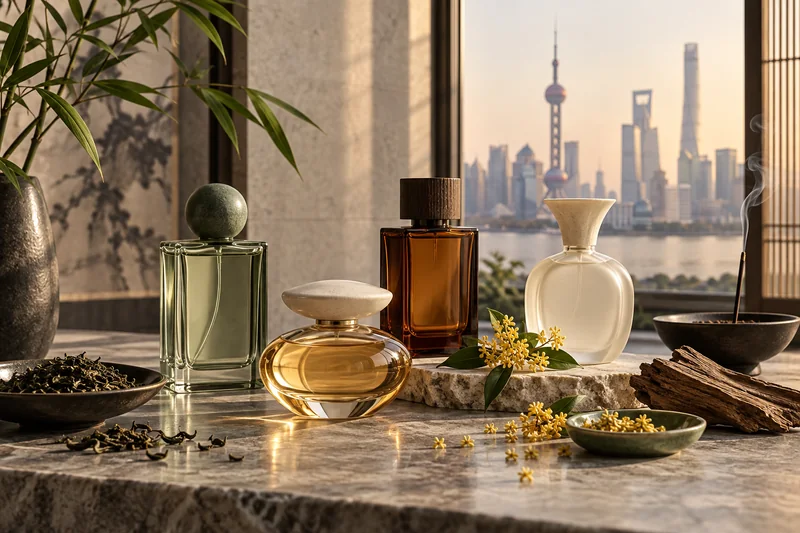
To Summer is a strong introduction to contemporary Chinese perfumery because its identity is easy to understand without feeling like a souvenir concept. Tea, jasmine, osmanthus, cedar, incense and other culturally familiar materials are translated into polished modern compositions and supported by highly considered retail spaces. Current international coverage consistently treats it as one of the best-known Chinese fragrance houses.
Try first: Kunlun Boils Snow (昆仑煮雪), a prominent Eastern Essence perfume and a frequently cited brand entry point. The official online store listed it at ¥498 when checked. It suits someone who prefers an understated, unisex tea-and-wood direction rather than a loud sweet perfume. Wear it for work, galleries, travel, quiet dinners or any setting where close-range refinement matters more than room-filling sillage.
Advantages: coherent Chinese aesthetic, credible premium positioning, accessible starting price relative to the highest-end local houses, and physical boutiques where possible. Drawbacks: international access remains uneven, and a restrained profile can disappoint people equating price with maximum projection. Test the exact scent; do not assume every To Summer fragrance performs or smells alike.
Best for luxury-niche buyers
Shanghai-founded DOCUMENTS positions fragrance, material and store design as one system. Its “BOLD-ZEN” language is more architectural and assertive than the gentle tea-shop stereotype sometimes applied to Chinese perfume. The brand has also attracted institutional attention, including investment from L’Oréal, but investment is not proof that a perfume will suit you; smell remains the deciding test.
Try first: Naive (初熟之物). The brand website listed the 30 ml concentrated perfume at ¥980. Contemporary reviews describe a vivid green-citrus opening that settles toward a cleaner, softer texture. It is a sensible choice for collectors, design-conscious buyers and people who want a Chinese niche fragrance with more presence. Use it for evening events, creative work settings or a signature scent—after a full skin test.
Advantages: distinct brand language, concentrated formats, sophisticated presentation and strong specialist credibility. Drawbacks: one of the highest entry prices in this list, smaller bottle size, and compositions that can feel demanding to a beginner. A discovery size or store test is more rational than buying 30 ml from notes alone.
3. melt season: contemporary storytelling with a polished niche finish
Best for modern green florals
melt season is regularly grouped with To Summer and DOCUMENTS as a leading Chinese independent fragrance name. Its presentation is modern rather than overtly traditional, and its range moves across florals, tea, marine, woody and atmospheric ideas. Estée Lauder Companies invested in the business in 2023, a useful signal of industry interest but not a consumer quality guarantee.
Try first: Nobody Knows (无人知晓), a green rose composition with citrus, pink-pepper and resinous brightness leading into rose, violet and a warm woody-musky base. A current Chinese retailer listed 50 ml at ¥780; treat that as a channel-specific reference, not a universal official price. The fragrance gained wider attention through a drama collaboration, which explains visibility but should not replace testing.
Best for: smart dinners, dates, evening cultural events and people who want a recognisable floral without a conventional sweet bouquet. Advantages: contemporary structure, strong narrative and a more international-looking niche vocabulary. Drawbacks: limited overseas availability and higher blind-buy risk. Spiced rose and ambery woods can develop differently in heat, so test through the dry-down.
4. Scentscape (气味图书馆, formerly Scent Library): familiar memories made wearable
Best for clean, nostalgic everyday wear
Scentscape is the 2026 identity of the business widely known as Scent Library. Its most recognisable idea is Cool Boiled Water (凉白开), which turns an ordinary Chinese domestic memory into a clean, skin-close fragrance concept. That makes it culturally specific without relying on ornate historical imagery.
Try first: Cool Boiled Water. The official store listed 50 ml at ¥465 for EDT and ¥565 for EDP. Choose EDT if you prefer a lighter, more transparent effect; choose EDP only after testing whether its greater concentration also produces the balance you like. Concentration does not guarantee a simple proportional increase in longevity or projection because the formula can be adjusted.
Best for: casual daytime wear, university, office settings, shared spaces and buyers who dislike heavy sweetness. Advantages: memorable concept, approachable scent direction and a direct concentration choice. Drawbacks: rebranding and higher current prices make some older reviews, packaging photos and value judgments obsolete. Verify that a listing uses the current brand identity and is sold by an authorised channel.
5. RECLASSIFIED (RE调香室): the broadest route into discovery
Best for sampling a wide catalogue
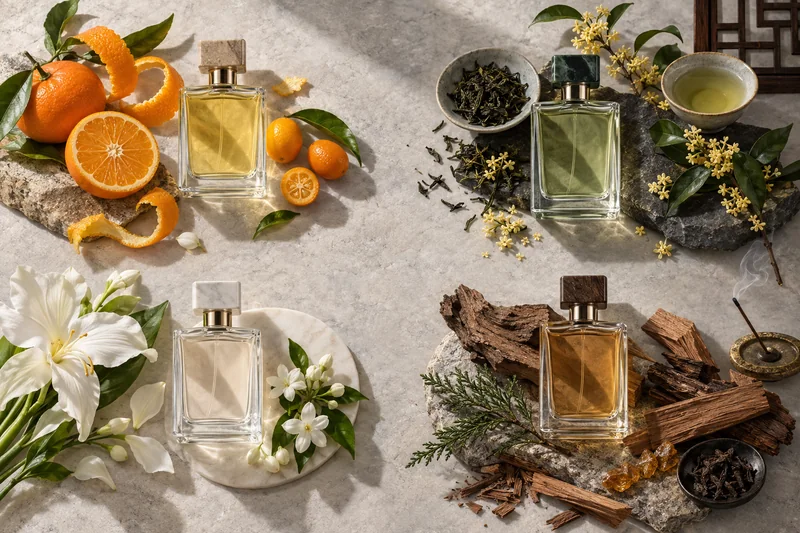
RECLASSIFIED offers many narrative collections, from classic scents to Peking Opera and perfumer-led ranges. The advantage is choice: a buyer can explore fresh, floral, woody, incense and theatrical directions without leaving one brand. The disadvantage is the same—dozens of poetic names can make a blind purchase feel like guesswork.
Try first: Piano Poet (钢琴诗人), a fresh woody-aromatic perfume built around mandarin, lemon and bergamot, then coriander, cardamom and pink pepper over patchouli and vetiver. The official Taiwan store listed 50 ml at NT$1,890. Mainland prices, promotions and bottle formats may differ, so compare the exact SKU rather than converting the number mechanically.
Best for: daytime, warm-weather smart casual wear and people who enjoy citrus with aromatic spice rather than sugar. Advantages: extensive catalogue, discovery sets and relatively approachable niche pricing in some regions. Drawbacks: choice overload and regional assortment differences. The most efficient route is a themed sampler, followed by a skin test of two finalists.
6. Boitown (冰希黎): accessible, giftable and widely retailed
Best budget-friendly gift option
Boitown occupies a more mass-accessible position than DOCUMENTS or melt season. It is useful for shoppers who want a full-size, presentable fragrance without a luxury-niche budget. JD currently shows Fantasy Gilded (幻彩鎏金) as a major brand line with very high platform review volume; review counts indicate marketplace activity, not independent proof of fragrance quality.
Try first: Fantasy Gilded, typically sold in 60 ml. A JD-linked current price reference was about ¥179, while promotions have been lower. Treat the exact gift box, limited edition and “classic,” “pure” or “couture” variant as separate products. The familiar sweet floral and creamy direction works for casual dates, parties and gifting to someone who already enjoys feminine, easy-to-read perfumes.
Advantages: accessible price, broad domestic availability, gift presentation and multiple sizes/variants. Drawbacks: constant promotions blur the real baseline price; similarly named variants can confuse buyers; and collectors seeking unusual materials may find it more conventional. Buy from the official or authorised store and match the full product name, volume and concentration before comparing.
7. Uttori (五朵里): compact perfumes built around Chinese botanicals and places
Best low-commitment niche exploration
Uttori is a smaller independent option with fragrances inspired by native flowers, teas and regional landscapes. Its compact bottle strategy is practical for discovery: you pay less in total than for a 50 ml niche bottle, although the cost per millilitre is not necessarily lower.
Try first: Ginger Lily (姜百合), launched in 2026. It pairs lily, ginger, pear and fig with gardenia, jasmine and ylang-ylang over musk and sandalwood. The 18 ml EDP was ¥188 through Uttori’s official Taobao store at the time of the launch report. It suits floral lovers, humid summer evenings, travel and people who want a recognisable white-flower theme with a crisp ginger edge.
Advantages: compact format, specific botanical storytelling and a manageable total spend. Drawbacks: restricted international distribution, less opportunity to test outside China and fewer independent long-term reviews. Buyers abroad should confirm whether the seller ships perfume legally; alcohol-based fragrance cannot always travel through ordinary parcel channels.
8. THE BEAST (野兽派): fragrance as part of a complete gift world
Best for premium gifting
THE BEAST grew from floristry into a broad art-and-lifestyle business spanning home fragrance, perfume, gifts and collaborations. It is therefore different from a perfume-first niche house. Its strength is the coordinated emotional presentation; its limitation is that some of the price pays for that wider gift and lifestyle experience.
Try first: Oriental Beauty (东方美人), an aquatic floral and tea composition opening with blackcurrant and citrus, followed by lily of the valley, camellia, orchid, tea and other transparent florals over ambergris and musk. Yami listed the 30 ml bottle at US$109.99 when checked. This is an overseas retail price and should not be treated as mainland China RRP.
Best for: elegant gifting, spring and early-autumn events, tea-floral lovers and people who value a complete presentation. Advantages: strong gift language, recognisable Chinese floral concept and broader retail ecosystem. Drawbacks: overseas mark-up, lifestyle-brand premium and possible confusion between personal perfume, home fragrance and gift-set versions. Confirm that you are buying the wearable EDP and not a candle, diffuser or scented object with the same name.
How should you choose: brand, fragrance family or something else?
Choose the fragrance family first, the actual perfume second and the brand third. A brand can narrow the aesthetic and price band, but it cannot tell you whether you will enjoy osmanthus, a dry tea accord, indolic white flowers, incense or sweet musk on your skin. The most useful sequence is:
- Define the job. Is this quiet office wear, a signature scent, a special-event perfume, a gift or a China travel souvenir?
- Choose one or two scent directions. For example: green tea/woods, transparent floral, citrus aromatic, sweet floral, incense/amber or clean musk.
- Set a total budget and bottle-size ceiling. A ¥188 18 ml bottle costs about ¥10.44 per ml; a ¥498 30 ml bottle would be about ¥16.60 per ml. Total spend and value per ml answer different questions.
- Decide desired presence. Do you want a discreet skin scent, moderate personal cloud or conspicuous trail? Never infer this from EDP/EDT alone.
- Shortlist two to four actual scents. Compare concentration, notes, size, return rules and access to samples.
- Test before buying the large bottle. Skin chemistry, temperature, humidity and application amount change what you perceive.
| If you want… | Start with… | Why | Test carefully for… |
|---|---|---|---|
| Tea and quiet woods | To Summer; Scentscape | Restrained, recognisably Chinese everyday direction | Whether projection is sufficient for your preference |
| Premium niche impact | DOCUMENTS; melt season | More assertive composition and design positioning | Density, spice and dry-down over 4–8 hours |
| Wide discovery range | RECLASSIFIED | Many families and sampler options | Choice overload; narrow by family first |
| Affordable full-size gift | Boitown | Lower total spend and broad channel availability | Variant name, promotion and seller authenticity |
| Small botanical perfume | Uttori | 18 ml format and culturally specific flower/tea concepts | International shipping and cost per ml |
| Coordinated premium gift | THE BEAST | Perfume, floristry and lifestyle presentation | Personal fragrance versus home-fragrance SKU |
A practical perfume test that prevents expensive mistakes
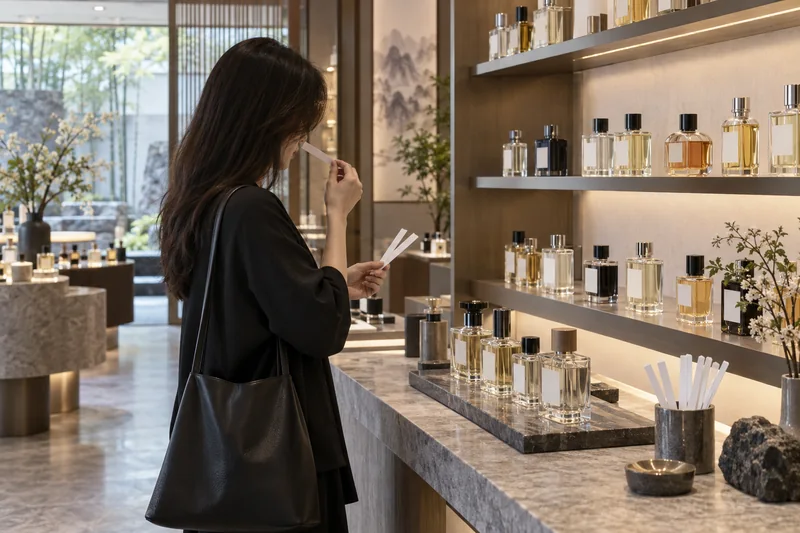
- Smell no more than four to six blotters in one session. Write the name and time on each strip.
- Wait 10–15 minutes. Eliminate anything whose opening or early heart you actively dislike.
- Apply one finalist to each forearm. Do not rub the wrists together; rubbing warms and spreads the liquid and makes side-by-side observation less consistent.
- Check at four points: immediately, around 30 minutes, after 2–3 hours and near the end of the day. Record pleasure, projection, dryness/sweetness and any irritation—not just “longevity.”
- Repeat in your actual climate. A dense amber or white floral can feel larger in humid heat; a delicate tea can disappear faster to your nose in an air-conditioned office or after olfactory adaptation.
- Buy a sample or smallest format if uncertain. Several full-day wears reveal more than a note pyramid or a five-minute counter test.
Coffee beans do not reset the nose in a scientifically guaranteed way. Fresh air, time and smelling a neutral area of your own skin or clothing are more useful. If you develop redness, itching, swelling, breathing difficulty or other symptoms, stop using the product. Seek medical help for serious symptoms.
How to compare price and value correctly
Do not compare the headline price without checking size and concentration. A 50 ml bottle at ¥565 is not automatically worse value than 60 ml at ¥179, because composition, ingredient cost, packaging, distribution, brand positioning and consumer experience are different. However, price is also not proof of better raw materials, performance or safety.
- Total price matters when you are exploring and want to limit risk.
- Price per ml helps compare sizes within the same fragrance, but it ignores packaging and discovery value.
- Cost per wear depends on sprays used, pump output and how often you genuinely reach for the scent.
- Channel cost can include international freight, dangerous-goods handling, tax, distributor margin and scarcity.
- Usable value is highest when you like the entire dry-down. A discounted bottle you never wear is expensive.
Where to buy and how to reduce counterfeit risk
In mainland China, start with the brand’s own boutique, official website, official WeChat/Youzan store, or verified official marketplace flagship. Abroad, use the brand’s named stockist or a specialist retailer with a physical address, clear returns, intact batch coding and traceable invoices. A marketplace badge is helpful but not a substitute for checking the seller name.
Red flags include a price dramatically below every official channel, spelling differences, a missing or overprinted batch code, loose cellophane or an uneven crimp, poor atomisation, wrong capacity, and a seller unable to explain origin. None of those signs alone proves a counterfeit, because brands change packaging and genuine products can have cosmetic variation. Compare with current official images and contact the brand when in doubt.
What can perfume packaging tell you—and what can’t it tell you?
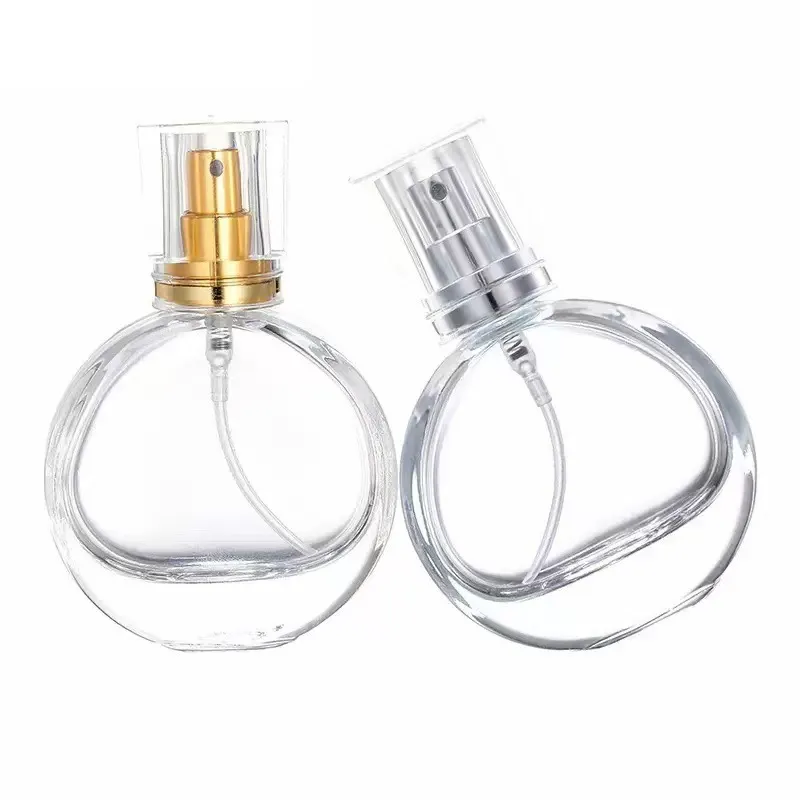
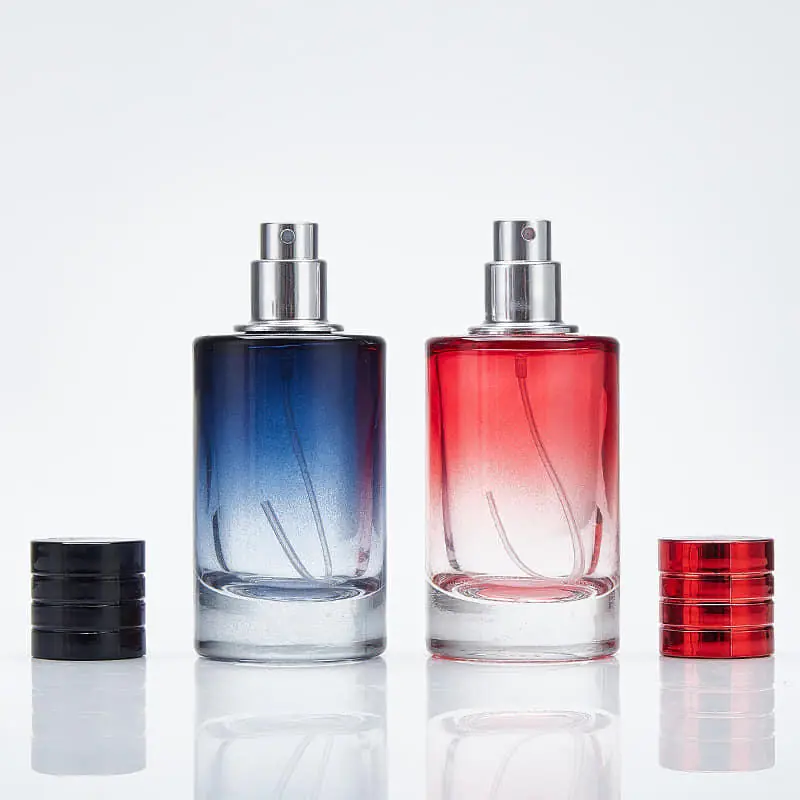
Good packaging improves protection and use: chemically compatible product-contact materials, a controlled neck finish, suitable gasket, reliable crimp or screw torque, fine and repeatable spray, sufficient headspace, legible labelling and a carton that limits light and transport damage. Heavy glass may feel luxurious, but weight alone does not prove annealing quality, seal integrity or a better fragrance.
For a deeper technical explanation, see Boyu Packaging’s guide to materials used for perfume packaging and its comparison of perfume bottle types, sizes and uses. Fragrance brands developing a new line can review custom perfume packaging options; importers should also use the perfume-bottle sourcing and import checklist before approving mass production.
Packaging cannot verify that a formula is safe, authentic or long-lasting merely because it looks expensive. Those claims require traceability, correct labelling, formula safety work and performance testing. For brands, bottle, pump, gasket, decoration and finished formula must be compatibility-tested as a system.
Use, sensitivity and storage precautions
- Read the product label and ingredient declaration. In the US, individual fragrance components may be grouped under “fragrance” or “perfume,” so contact the manufacturer if you have a known sensitivity.
- Do not rely on “natural,” “clean” or “hypoallergenic” as a guarantee that a fragrance cannot irritate you. Natural and synthetic fragrance materials can both trigger sensitivity in some people.
- Avoid eyes, mouth, broken skin and open flame. Let sprayed fragrance dry before approaching an ignition source.
- Do not spray heavily in confined shared spaces or near someone with fragrance sensitivity, asthma or migraine triggers.
- Store the bottle upright, tightly closed, cool and dark. Avoid bathroom temperature swings, sunny windows and hot cars.
- Keep original packaging and proof of purchase for valuable bottles. Photograph the batch code if the outer box may be discarded.
Boyu’s detailed hot-weather perfume storage guide explains why stable, dark storage is usually more useful than repeatedly moving a daily-use bottle in and out of a refrigerator.
Frequently asked questions
Which Chinese perfume brand is best overall?
For a first purchase, To Summer is the most balanced starting point because it combines a clear Chinese scent identity, premium presentation and a lower entry price than DOCUMENTS. “Best” changes with taste: choose DOCUMENTS for concentrated niche impact, Scentscape for clean nostalgia, Boitown for affordable gifting and Uttori for compact botanical exploration.
Are Chinese perfumes long-lasting?
Some are and some are not. Country of origin does not determine longevity. Formula, concentration, volatile-material balance, spray amount, climate, skin, clothing and olfactory adaptation all matter. Test the exact perfume for a full day; do not generalise from one brand or infer performance from EDP/EDT alone.
Are Chinese perfume brands cheaper than Western niche brands?
Accessible brands can be, but premium Chinese houses are not positioned as budget substitutes. DOCUMENTS at ¥980 for 30 ml, for example, belongs in a premium comparison. International resale prices can also erase a mainland price advantage.
Should I buy perfume by notes?
Use notes to narrow options, not to predict the smell exactly. A listed tea, rose or cedar note is an artistic accord, not necessarily a literal raw-material inventory. Two perfumes sharing the same notes can smell very different because of proportions, materials and structure.
What is the safest blind buy?
No fragrance is universally safe to blind-buy. Lower-risk options are a sample, discovery set or small bottle in a family you already wear. For a gift, obtain the recipient’s preferred perfume or ask whether they like tea, citrus, white flowers, sweet florals, woods or incense.
Can I take Chinese perfume home on a flight?
Personal baggage rules depend on departure, transit, destination and airline. Liquids in cabin baggage are usually capacity-limited, while alcohol-based perfume has quantity and packing rules because it is flammable. Check the current airline and airport rules before travel and keep the bottle protected from breakage.
Developing a fragrance brand—not buying a finished perfume?
Use this consumer comparison to define the experience your packaging must support: sampling, portability, gift value, controlled spray and a recognisable shelf identity. Boyu Packaging can help evaluate glass bottle, sprayer, cap, decoration and carton options as one system. Contact Boyu with your fill size, annual quantity, formula type, target market and reference design for a project-specific discussion.
Sources and price references
- Cathay Pacific, Chinese indie perfume brands in Shanghai — current market overview and brand context.
- CNA Lifestyle, Chinese perfume brands to know — cross-brand editorial context.
- To Summer official Youzan store — Kunlun Boils Snow price reference.
- DOCUMENTS official product page, Naive 30 ml — size and price reference.
- 2026 China Perfume and Fragrance Industry White Paper — market and product visibility context.
- Scentscape official store, Cool Boiled Water 50 ml — current EDT/EDP prices.
- RECLASSIFIED official Taiwan store, Piano Poet 50 ml — notes and regional price.
- JD Boitown listings — Fantasy Gilded format and marketplace activity.
- Fragrantica, Uttori Gold and Ginger Lily launch — notes, size, price and availability.
- Yami, THE BEAST Oriental Beauty 30 ml — overseas retailer price and product description.
- US FDA, Fragrances in Cosmetics — regulation, labelling and sensitivity information.
- US FDA, Allergens in Cosmetics — consumer precautions and fragrance sensitivity.


 English
  Español de Argentina
  Русский
  Italiano
  日本語
日本語  한국어
한국어  العربية
  Français
  Deutsch