Create a distinctive eye-care ritual with custom squeeze tubes and electric vibration applicators. Compare PE, PBL and ABL bodies, metal contact heads and portable capacities, then qualify the complete package for your formula and brand.
Planning reference: 10,000 pieces per design · verified powered product examples in 10–25ml formats · custom color and logo · electrical specifications confirmed by model.
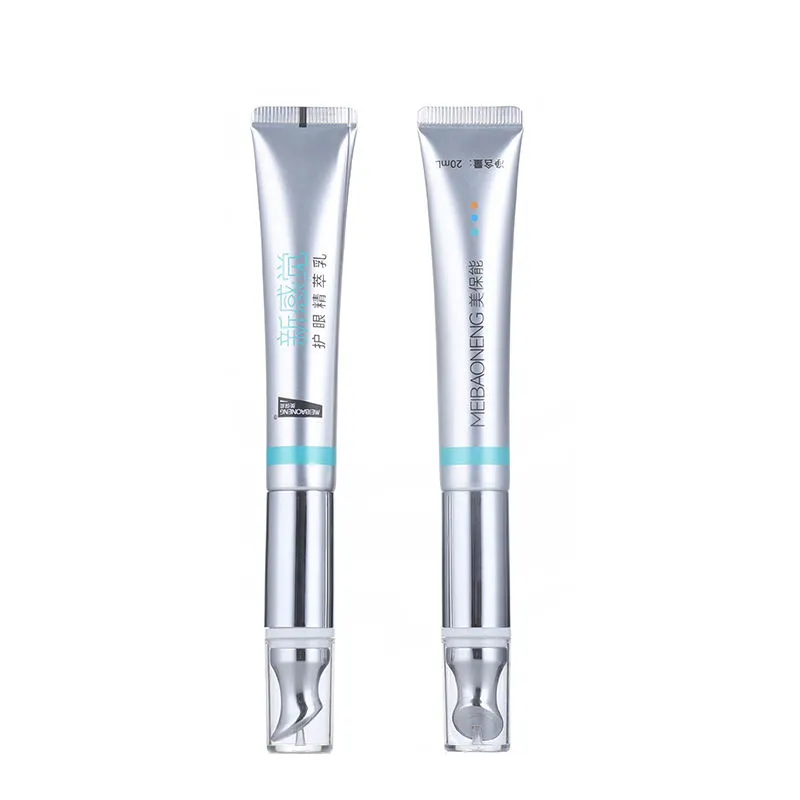
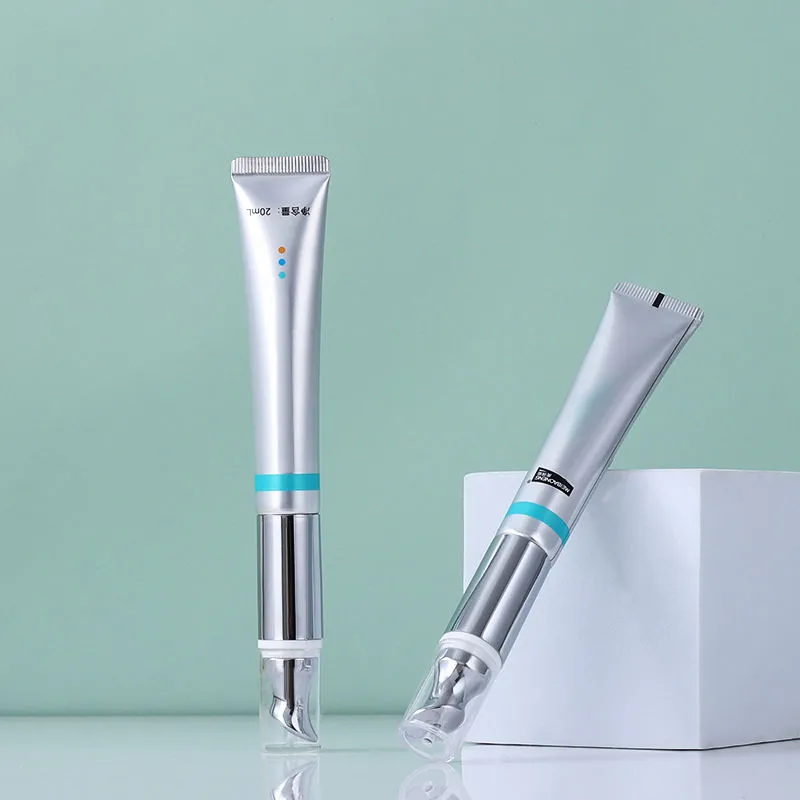
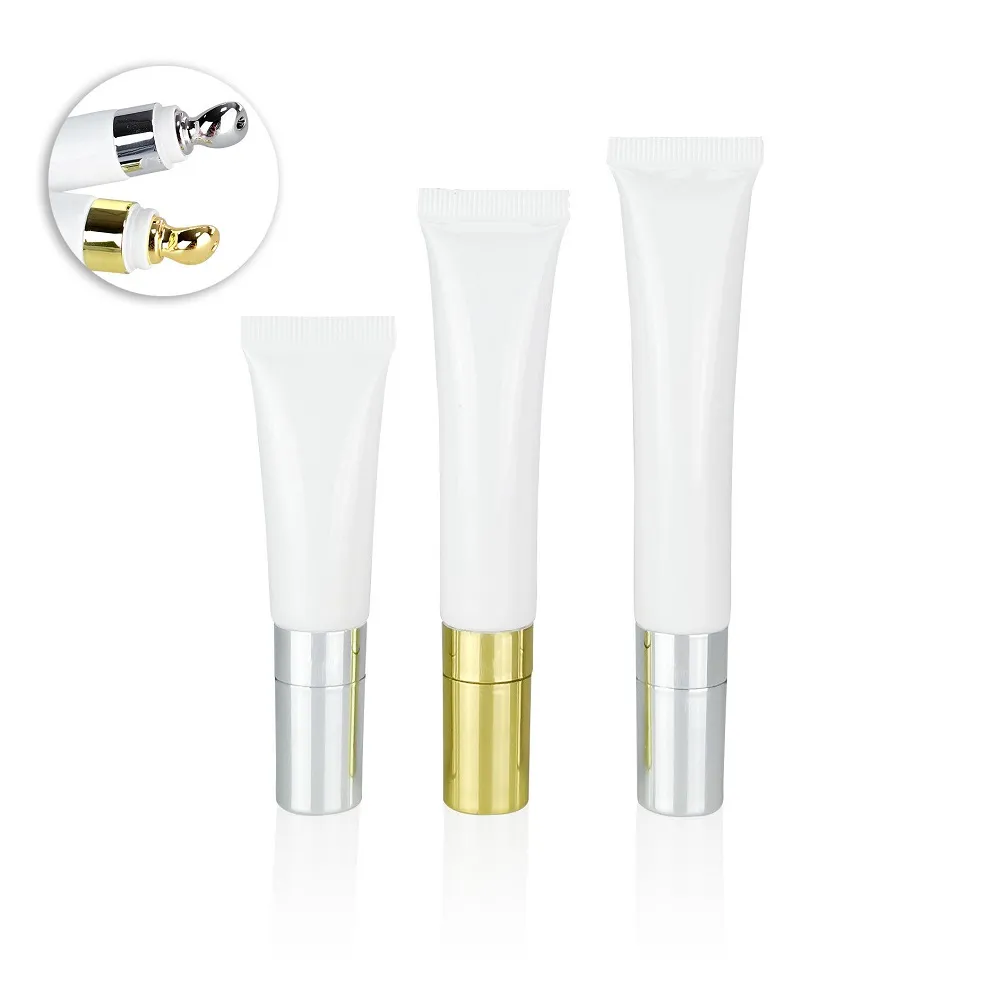
BY-E221 product reference: 15ml/20ml ABL tube and metal vibration applicator; electrical details are confirmed for the selected version.
Choose a Powered Eye Cream Tube Around the Formula and Application Routine
Boyu supplies empty eye-care packaging for brands, importers and contract fillers. A powered massage head adds a distinctive application ritual, but it also adds an electrical subsystem to the tube, outlet, cap and final seal. Approve these parts as one complete package, rather than selecting a metal tip on appearance alone.
Premium daily eye care
Start with a 15ml or 20ml squeeze tube and a comfortable applicator. Compare head shape, cleaning instructions, cold-formula squeeze force and controlled product placement.
Travel and discovery sets
Compare 10ml formats where the selected powered assembly is available. A small reservoir does not guarantee a short or light finished pack: the head, cap and battery occupy fixed space.
Sensitive or high-value formulas
Identify product-contact metal, coating, polymer, adhesives and seals. Choose the qualified PE or laminate construction, then confirm formula stability in the final assembled and filled pack.
For a thin, pump-compatible serum, airless pump bottle alternatives may suit a different dispensing routine. A conventional squeeze tube with a vibrating head is not automatically an airless pack.
Electric function is available only on the confirmed powered version. A metal applicator or roller does not by itself indicate a battery or vibration motor. Final capacity, materials and performance are approved model by model.
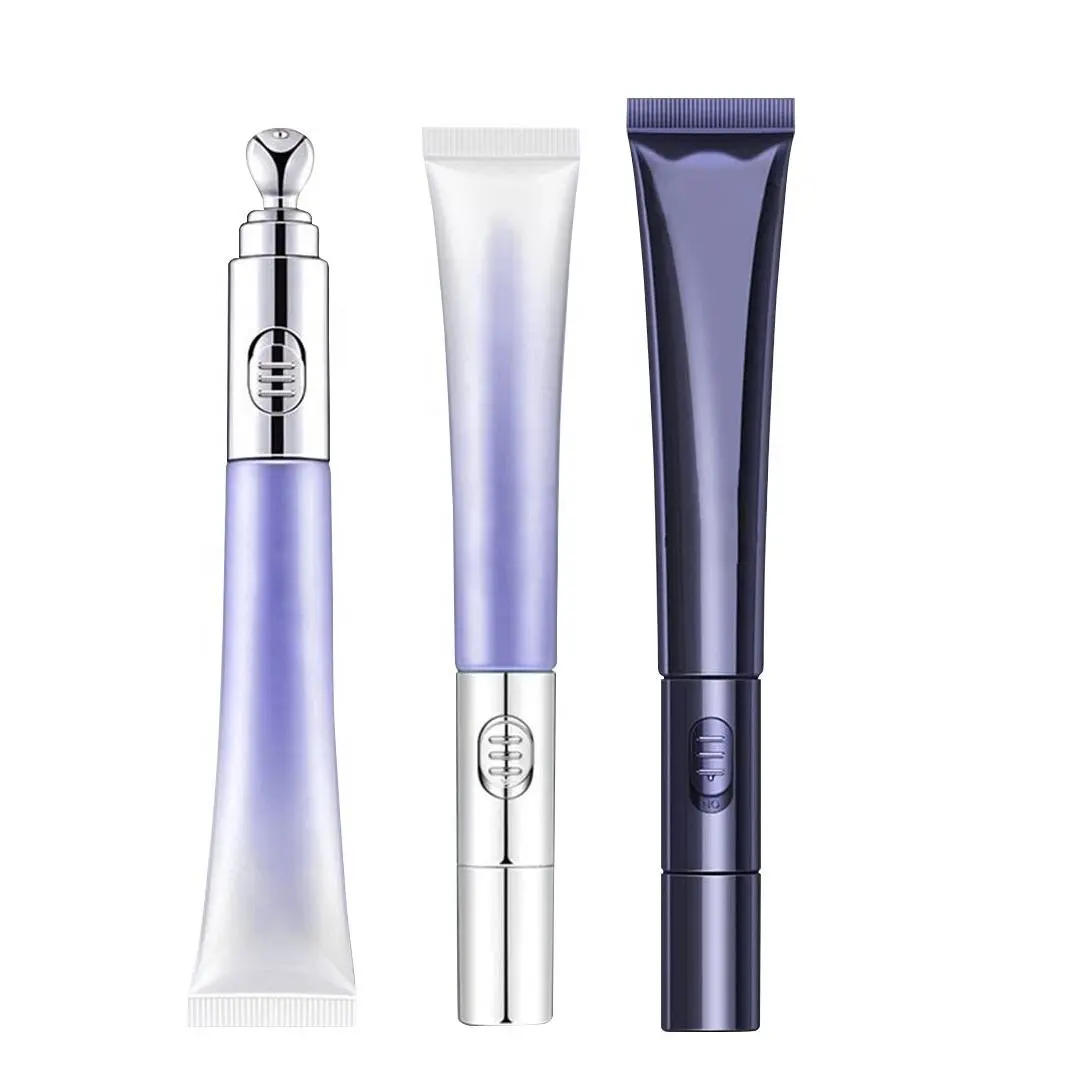
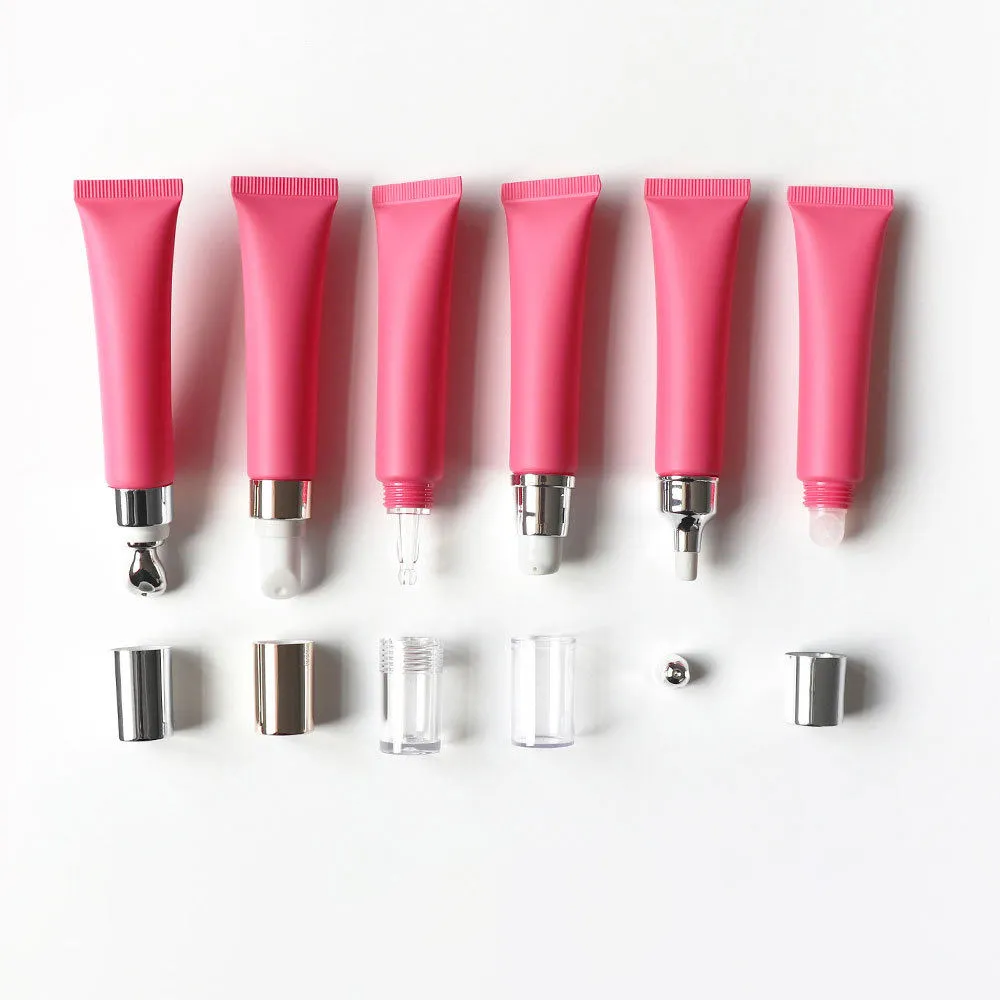
Main Applicator Formats: Electric, Metal-Tip and Roller Tubes
Format
Advantages and appropriate use
Limitations and checks
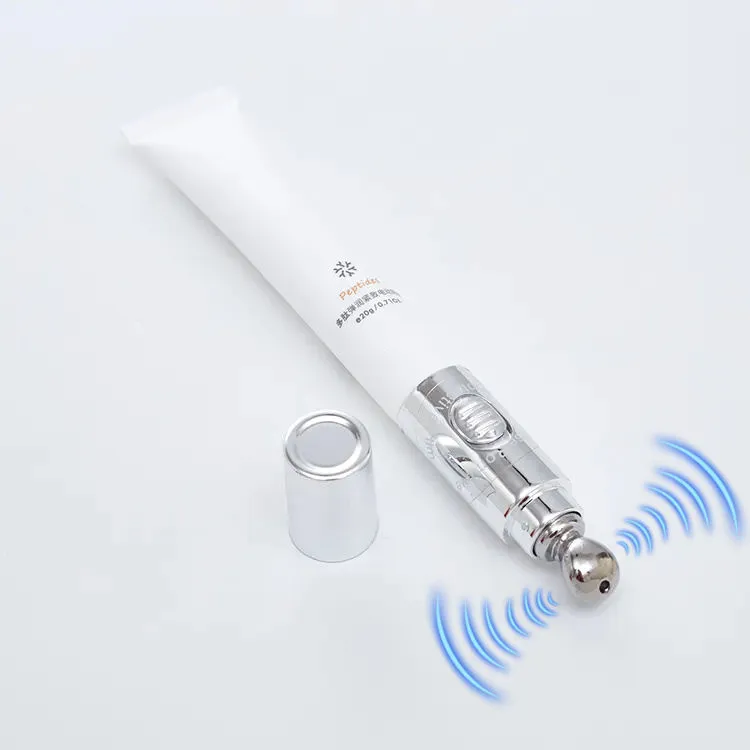
Switch-activated electric metal head
Defined on/off control; useful for a deliberate home or evening routine.
Check switch force, accidental activation under the cap, noise, battery isolation and cleaning access.
Contact-activated electric head, where available
Can simplify the application sequence for selected engineered assemblies.
Confirm activation conditions with dry fingers, cream residue and normal grip. Availability is reviewed for the actual model.
Smooth fixed metal tip without power
Direct spreading with fewer components, lower assembled weight and no battery qualification.
No powered motion; smoothness, exposed coating, tip temperature and formulation contact still need assessment.
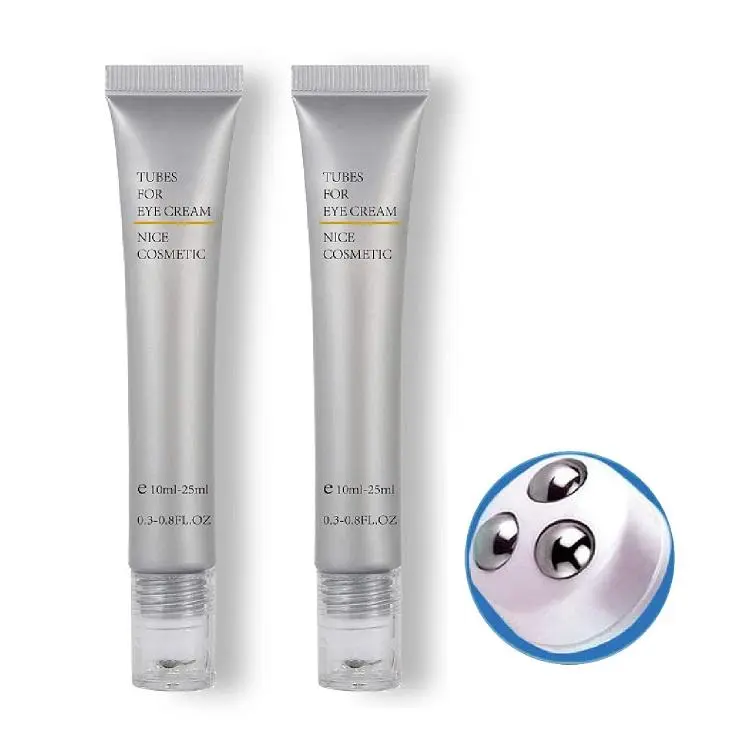
Manual single- or multi-ball applicator
Rolling application; a useful comparison for eye gel or compatible fluid cream.
No motor unless specified. Ball retention, residue, flow control and free rotation must be checked.
Conventional precision-nozzle tube
Simple, compact and suitable for lower-cost travel or sample programs.
User spreads the product separately; outlet design and squeeze pressure affect delivered quantity.
Rechargeable or heated device concept
May support a different reusable-device brief if an appropriate component can be sourced and qualified.
Not a default Boyu tube option. Charging, heat, ingress protection and performance require separate feasibility and evidence.
Define which functions belong in the quotation. Vibration, roller motion, electrical heating and light emission are different features; none should be assumed from a catalog photograph.
Common Capacities: Benefits, Tradeoffs and Use
Nominal capacity
Best starting application
Advantages / limitations
5ml
Discovery or promotional sample; powered head availability to be reviewed.
Compact formula quantity, but electrical head cost and mass can dominate. A plain nozzle is often a more proportionate comparison.
10ml
Short travel, trial retail or compact targeted treatment.
Portable fill quantity; less product per pack and a high component-to-fill ratio. Confirm whether the complete pack fits the intended pouch.
15ml
Core retail eye cream and premium daily routine.
A practical middle ground for development. Existing Boyu powered examples include 15ml formats; total height is model dependent.
20ml
Daily home use or a larger travel retail pack.
More formula per pack without a large reservoir; may need more sleeve length and artwork area than 15ml.
25ml
Extended-use eye care or selected targeted skincare.
Available on the BY-E014 product reference, subject to selected configuration. Adds fill mass and possible dispensing effort near empty.
30ml
Larger targeted-care concept where suitable tooling exists.
Greater formula quantity and branding area; review overall size, layer structure and head compatibility instead of scaling a 15ml drawing.
Volume and fill weight are different: specify ml and the intended fill mass separately. Fill mass in grams = volume in ml × measured formulation density in g/ml. A 15ml tube does not automatically contain 15g, and a fluid-ounce label is not a product-weight specification.
What Size Is Best for Travel? Dimensions, Grams and Wall Thickness
For a first retail brief, compare 15ml and 20ml; for a compact travel brief, compare a 10ml tube with a 15ml sample. A 19mm tube diameter is verified on selected Boyu designs, including BY-E221, but it is a sleeve reference rather than the maximum width of every finished applicator.
Measurement
What to specify
Why it matters
Tube diameter / finished maximum width
Identify sleeve outside diameter, shoulder width, cap width and widest head feature separately.
A 19mm sleeve can have a wider cap. Confirm pouch fit with the complete pack.
Tube length / total height
Show open-tail sleeve length, final sealed length, head projection and capped overall height.
Filling and tail sealing consume length; an open empty tube is not the same size as the sealed retail pack.
Net empty-pack weight
Record tube-only grams and assembled grams including applicator, cap and fitted battery.
A metal head and battery can outweigh the sleeve. Product and carton gross weights must be reported separately.
Filled carry weight
Add actual fill mass to complete empty-pack mass and any carry/retail packing.
Compare travel options on the weight consumers carry, not only nominal tube volume.
Wall thickness / laminate build
Confirm total gauge, individual layers where required, shoulder geometry and controlled measurement locations.
No universal thickness fits all PE, PBL and ABL structures. Thickness changes affect squeeze feel and sealing settings.
Outlet and ergonomics
Approve outlet bore, tip curvature, contact surface, cap clearance and squeeze grip.
A small outlet can restrict thick cream; a larger one can release too much fluid. Test at the intended use temperature.
Exact height, grams, wall thickness and outlet dimensions are confirmed from the selected drawing and approved physical sample. For outdoor carry, use a protective cap and packing that prevents squeezing or switching on in the bag. Do not claim a pack is waterproof or flight-approved without applicable evidence.
Tube Body Materials: PE vs. PBL vs. ABL
Construction
Advantages
Tradeoffs and approval
Extruded PE, single or multilayer
Flexible squeeze feel; broad color and print options; multilayer structures can be selected for additional protection.
Basic PE is not equivalent to a barrier laminate. Approve actual layer construction, permeation needs, recovery and shoulder/tail integrity.
PBL: plastic barrier laminate
Supports a printed laminate body and selected barrier layers, depending on the specification.
Barrier performance depends on the actual layers and conditions. A PBL body does not make an electronic multi-material pack automatically recyclable.
ABL: aluminum barrier laminate
Aluminum layer supports light shielding and barrier performance when the laminate and seams remain sound.
Can crease and retain squeeze marks; mixed layers complicate recycling. Check seam, shoulder and tail seal as well as the sleeve.
Eligible recycled-content or bio-based option
May support a project-specific material brief where suitable supply and evidence exist.
Not assumed for product-contact or electronic parts. Confirm content, source documentation, appearance variation, processing and formula compatibility.
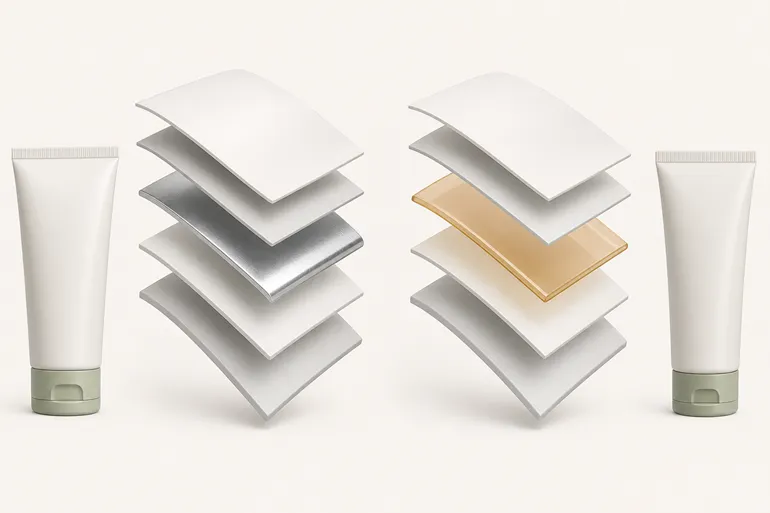
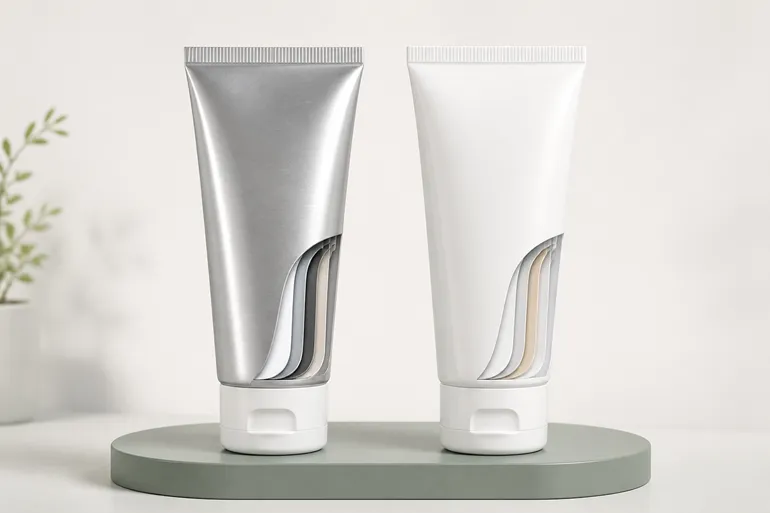
Use the ABL and PBL cosmetic tube comparison to define the layer structure. The head’s liquid channel, shoulder, cap and final seal can limit the performance of an otherwise protective sleeve.
Tube-layer illustration: confirm the exact laminate specification for your selected eye cream tube.
Massage Head Materials and Product-Contact Surfaces
Material / surface
Advantages
Limitations and required evidence
Zinc alloy / Zamak, with approved finish
Supports shaped, substantial metal heads and decorative plating; present in Boyu’s 15ml powered catalog reference.
Specify alloy and exposed finish separately. Evaluate porosity, plating adhesion, corrosion, worn surfaces and actual formulation contact.
Stainless steel, if available for the assembly
A metal alternative for smooth surfaces and roller elements; may reduce dependence on decorative plating for selected designs.
Specify grade, polish and joining method. It is not universally corrosion-proof; verify the formulation and component availability.
Aluminum, if available
Potentially lighter metal appearance; selected finishes and geometry may suit a portability brief.
Identify anodizing or coating and exposed edges; validate corrosion and formula contact. Do not assume the same fit as a zinc-alloy head.
Ceramic contact tip, feasibility option
A hard, smooth contact surface may suit a non-metal applicator concept.
Brittleness, attachment, chipping and motor coupling need evaluation. Not a confirmed standard electric option.
PP/ABS housing or non-powered plastic tip
Molded features can reduce mass and provide space for switches or cap interfaces.
Housing material is not proof of liquid-path material. Check resin identity, assembly stresses, formula exposure and surface finish.
Specify the complete contact map: cosmetic may touch the outlet insert, channel, head surface, seals or nearby residue traps. A silver-colored head may be plated zinc alloy, stainless steel or a decorated plastic housing. Appearance does not identify the material. A cool-feeling metal surface is not evidence of electrically controlled cooling, medical grade or proven wrinkle reduction.
Power, Battery and Vibration: What Buyers Should Confirm
The verified Boyu product pages describe electric vibration but do not provide a validated wattage, battery chemistry, operating current, frequency or runtime for every version. These must be supplied and approved for the selected electrical assembly. Comparing only “strong vibration” is insufficient.
Identifies the compatible motor/control system and required transport documentation. No universal battery is assumed.
Electrical input power, W
Measure voltage and operating current under agreed conditions; P = V × I, with I expressed in amperes. Include start-up current and measurement conditions.
Input watts describe electrical consumption; they are not a dose, a skin-contact force or proof of skincare efficacy.
Vibration behavior
Record whether a value describes motor speed in RPM, vibration frequency in Hz, amplitude or acceleration at the tip. Test under defined contact load.
Motor RPM and perceived vibration are not interchangeable; head mass, mounting and contact change the result.
Activation and standby current
Approve switch/contact logic, off-state behavior, accidental-start protection and isolation tab where fitted.
Determines ease of use and the risk of battery depletion during storage or transport.
Runtime / usable session count
Define session length, on/off duty cycle, contact load, storage age, temperature and end-of-life criterion.
A continuous-runtime result cannot automatically predict months of consumer use.
Noise, temperature and fault behavior
Agree measurement method and acceptable limits; check prolonged operation, stalled/abnormal states and component retention as applicable.
Controls user experience and detects assembly or electrical defects before release.
Ingress / cleaning claim
Use the approved cleaning method and any tested ingress rating for the exact assembly.
Wipe-clean instructions do not establish washability, immersion resistance or an IP rating.
Agree the electronic component source, exact bill of materials and available reports before order release. Cosmetic material documents or a factory quality-system certificate do not automatically certify the powered assembly. For market-specific documentation and batteries, confirm applicability with the responsible compliance and logistics partners.
How the Tube and Electric Applicator Work Together
1. Open and dispense
Remove the protective cap and squeeze the flexible tube gently. Product passes through the shoulder and dedicated outlet channel; verify that this path is separated from the electrical compartment.
2. Activate the selected mechanism
Start the approved switch or contact mechanism. In a typical vibration assembly, a small motor produces motion transmitted through its mounting to the applicator; it does not necessarily pump the cream.
3. Spread, stop and close
Use the approved application and cleaning instructions, stop the vibration and replace the cap. Test for residue around the outlet, cap interference and unintended activation after closing.
Consumer instructions should follow the selected assembly and the brand’s eye-care assessment. No dosage, treatment duration, absorption improvement or therapeutic result is guaranteed by the empty packaging.
Which Cosmetics Can Use an Electric Eye Cream Tube?
Formula type
Potential fit
Qualification focus
Eye cream / smooth emulsion
A core candidate for squeeze dispensing and a smooth applicator.
Cold and aged viscosity, dose placement, coating/contact compatibility, seal strength and evacuation.
Eye gel / gel-cream
May suit a compact applicator with controlled outlet.
Flow recovery, stringing, dried residue, switch/contact behavior and tip cleanup.
Targeted cosmetic serum
Consider for a sufficiently structured serum; compare a pump for very fluid formulas.
Drips, cap accumulation, accidental squeeze release, electrical isolation and in-use handling.
Lip treatment / localized face care
Selected smooth formulas may suit the same packaging family after review.
Contact area, hygiene instructions, taste/odor relevance where appropriate, and formula-specific stability.
Particulate, very thick or reactive product
Requires detailed feasibility before selecting the head.
Assess the finished formulation rather than an ingredient name. Include the tube, liquid channel, head finish, seals and decoration in a cosmetic packaging compatibility protocol. Empty-pack tests and appearance samples do not replace filled-pack stability and the brand’s in-use assessment.
Factory Manufacturing: Tube Body, Applicator and Electrical Assembly
Manufacturing follows the selected tube construction and component design. Boyu’s integrated supply model can include qualified component suppliers; the electronic head’s production source and inspection responsibility are confirmed for the project. Do not infer that motors, cells or circuit boards are manufactured in-house.
1. Material and component preparation
Release the resin or laminate structure, head material/finish, cap, channel insert and electrical bill of materials. Check batch identity and retain supplier records.
2. PE extrusion or laminate conversion
For extruded PE, form and cool the sleeve, then cut to the approved length. For PBL/ABL, convert printed laminate into sleeves with a controlled longitudinal seam. Check thickness, length and seam condition.
3. Shoulder, outlet and cap forming
Mold the shoulder/outlet and compatible cap by the qualified route; join the shoulder to the sleeve. Inspect bore, thread or snap fit, sealing features and shoulder bond.
4. Metal tip and surface finishing
Form the metal contact part by the selected process, finish edges and polish or apply the approved coating. Inspect smoothness, surface defects, adhesion and relevant contact-material evidence.
5. Decoration and controlled assembly
Apply approved printing/foil/varnish; assemble channel, seals, head, motor, controls, battery and cap as specified. Protect the product path from contamination and prevent polarity/assembly errors.
6. Function inspection and empty-pack dispatch
Check electrical start/stop and the agreed sampling tests, dimensions, leakage of assembled interfaces, decoration and lot identification. Protect heads and switches in the approved export packing.
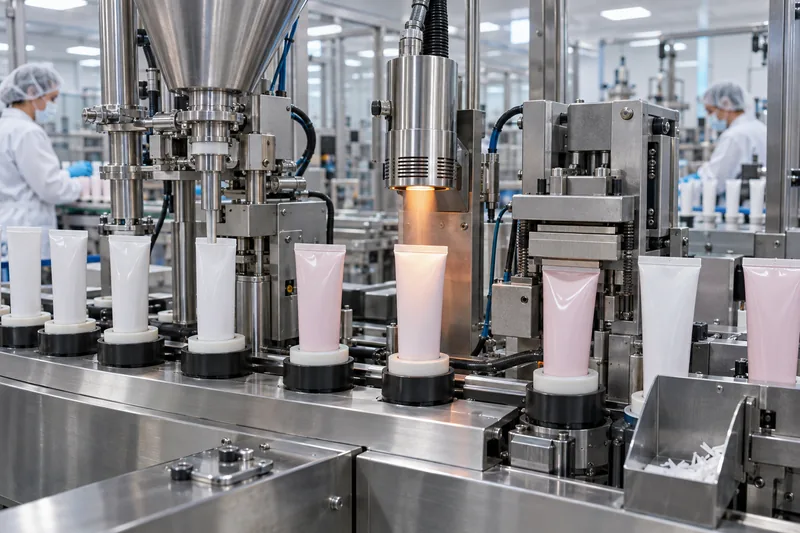
Filling is a separate stage: many tubes are supplied with an open tail for the customer to fill and seal. Confirm equipment clearance, tail-seal method, formula temperature and any exposure of the battery assembly to heat. A filler must qualify the final seal with the actual laminate and product.
Filling and tail-sealing process illustration, separate from empty-tube manufacture. Powered heads require their own heat and equipment-clearance assessment.
What Can Be Customized?
Feature
Realistic options to discuss
Approval / limits
Capacity and sleeve dimensions
Available tube diameters and lengths; coordinated 10ml, 15ml, 20ml or other feasible formats.
Existing body/head options may avoid tooling. New diameter, shoulder, head or cap may require molds.
Body and layer structure
Qualified PE, PBL or ABL; selected barrier, squeeze feel and thickness targets.
Confirm layer build and finished performance. Not every head fits every tube shoulder.
Applicator geometry and material
Available fixed metal heads, selected roller alternatives and confirmed powered assemblies.
New contact geometry, alloy, coating or motor mounting requires feasibility and functional samples.
Activation and power configuration
Existing switch/contact versions and supplier-supported electrical options.
Changes to motor, battery, electronics or charging structure need engineering and fresh qualification.
Color and component finish
Tube/head/cap color combinations, matte/gloss, eligible metallic finishes.
Approve physical color/finish masters; different substrates can show visible shade differences.
Logo and artwork
Silk screen, offset, supported foil/hot stamping, labels and suitable finishes.
Approve print area, squeezing durability, tip contact zones, registration and adhesive/ink resistance.
Tail, cap and transport protection
Open-tail supply, agreed cap structure, battery isolation feature where designed.
Fit the filler’s process and prevent unintended operation. A cap must not press the switch.
Retail and export packing
Printed cartons, inserts, trays or dividers; lot labels and agreed quantities.
Approve packed dimensions, abrasion/impact protection and any battery transport requirements.
A visual mockup approves appearance only. The exact head material, battery version, fit and function must appear in the technical specification and quotation.
Custom-Order Workflow and Approval Milestones
1. Buyer brief
Send formula texture/density, desired fill, market, use routine, quantity by SKU, reference image and electrical expectations. Identify open-tail delivery and filler constraints.
2. Existing option or new tooling
Check tube/head compatibility and supplier-supported options. Agree tooling scope, costs, ownership, maintenance and whether custom development is justified.
3. Drawing, BOM and artwork
Approve capped size, sleeve length, component identity, outlet, power/activation, print and packing. Keep revision-controlled records; changes can reset sampling.
4. Samples and qualification
Review appearance separately from electrical function and filled-pack trials. A prototype or unpowered sample does not validate production battery life or formula stability.
5. Production release
Release approved drawings, reference samples, acceptance plan and deposit. Confirm incoming materials, head assembly, decoration and final inspection responsibilities.
6. Shipment and repeat order control
Approve packed samples and inspection evidence. Retain batch samples; review any head finish, battery, motor, resin or supplier substitution before repeat production.
Quality Control for Electric Massage Eye Cream Tubes
QC stage
Key checks
Evidence / acceptance basis
Incoming materials
Sleeve construction, resins, head alloy/finish, channel/seals, battery and motor identity.
Approved BOM, traceable lots and relevant supplier documents.
Tube forming and joining
Dimensions, gauge, seam where present, shoulder attachment and outlet geometry.
Drawing measurements and process records; inspect localized weak areas rather than only average thickness.
Head contact surface
Burrs, sharp edges, pits, exposed substrate, plating/coat adhesion and contamination.
Boundary samples, agreed surface inspection and formula-contact assessment.
Electrical assembly
Polarity, wiring/contact retention, start/stop, off-state behavior and compartment separation.
Function records and defined test conditions. Agree 100% start/stop screening where required, plus sampled endurance/aging.
Dispensing and sealing
Outlet flow, cap seal/clearance, shoulder integrity and filler-qualified tail seal.
Specified squeeze/leak conditions, orientation, temperature and actual formula trials.
Decoration
Color, print position, adhesion, abrasion and resistance to squeezed folds and cosmetic drips.
Approved masters, test method and allowable appearance variation.
Finished pack and distribution
Accidental activation, motor noise, fit after drop/transport, leakage and retained function.
Agreed test plan, packed configuration and pre-shipment report.
Packing and lot control
Count, separation, abrasion protection, labels, cartons and any battery shipping details.
Packing specification, carton records and agreed sampling/defect plan.
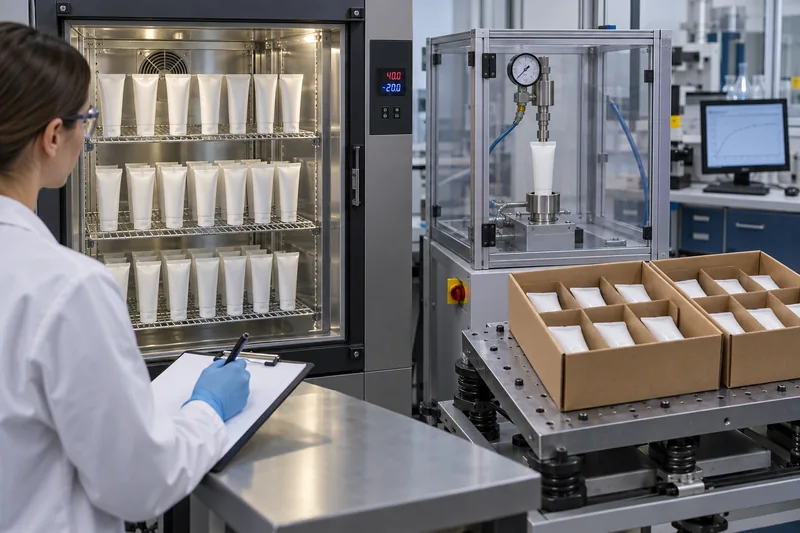
Agree critical defects, sampling, test limits and reporting in writing. Accelerated conditions do not automatically prove shelf life. Use separate appearance, function, endurance and filled-package acceptance criteria.
Filled-tube qualification illustration. Test orientation, temperature, pressure and shipment configuration must be defined for the actual powered pack.
Common Problems: Diagnose, Correct and Verify
Observed symptom
Possible causes / distinguishing checks
Action and verification
Vibration does not start
Check isolation tab, battery voltage/polarity, switch/contact conditions, continuity and motor separately.
Correct the identified component/assembly issue; retest start/stop after storage, under expected grip and at agreed use temperatures.
Weak, noisy or inconsistent vibration
Compare loaded/unloaded behavior, battery condition, motor mounting and tip retention; exclude poor mechanical fit.
Approve a corrected assembly and power configuration; verify noise, vibration and endurance using the same measurement setup.
Battery depleted before use
Check off-state current, cap-switch contact, isolation and activation during packing/distribution.
Correct protection or circuitry through the component supplier; repeat storage and packed-transport trials plus residual battery/function checks.
Cream leaks into cap or around head
Locate outlet, seal, shoulder or joint source; inspect fit and torque/engagement using the actual formula.
Correct interface or filling/assembly conditions; repeat filled orientation, temperature and pressure tests, then inspect electrical compartment isolation.
Cream hard to squeeze / outlet clogs
Compare cold vs. warm formula, aged viscosity, outlet bore, dried residue and particulate size.
Review outlet or formula fit; do not enlarge blindly. Verify dose control, near-empty evacuation and restarted dispensing after idle storage.
Tail seal splits or leaks
Separate under-fusion, overheating, seal contamination and incorrect laminate setup at the filler.
Optimize filler parameters and seal cleanliness; validate seal strength, leak/burst criteria and filled distribution tests.
Head finish discolors or flakes
Check alloy/coat identity, formula compatibility, wear, adhesion and edge coverage.
Change qualified material/finish if needed; repeat chemical/contact and abrasion tests on the final production surface.
Pack runs while capped or in a bag
Inspect cap clearance, switch force and contact logic under compression; replicate packing conditions.
Revise the approved protection/fit; verify off-state and accidental-start resistance in packed handling tests.
Decoration rubs or cracks on folds
Check substrate pretreatment, cure, ink/foil compatibility and squeeze strain.
Approve corrected process and artwork placement; repeat adhesion, abrasion, squeeze cycling and formula-drip exposure.
For tail-seal causes and filler checks, consult the cosmetic tube seal-failure troubleshooting guide. Electrical faults and fluid-path leaks must be investigated together when there is any evidence of cream entering the powered compartment.
Public Product References and Illustrative Applications
Public catalog example: BY-E221
The 15ml/20ml ABL electric vibration eye cream tube uses a 19mm sleeve, matte finish and protected metal applicator. It offers a starting point for a barrier-focused brief. Battery, wattage, complete weight and height still require specification; this catalog listing is not evidence of a completed stability trial.
Public catalog example: BY-E014
The 10–25ml PE electric massage eye cream tube provides several capacity references for a premium eye-care range. Confirm layer structure, activation and power source for the version selected. No published customer outcome or endurance result is inferred.
Illustrative application example: travel duo
For a proposed travel set, compare a 10ml powered tube against a 15ml manual metal-tip alternative. Measure capped size and assembled grams, assess pouch compression and accidental activation, and qualify dispensing after storage. This is a development scenario, not a delivered project.
Home, Office and Outdoor Use Scenarios
At-home daily routine
A 15–20ml format is a useful starting comparison. Prioritize comfortable contact, low noise, clear on/off operation, residue cleanup and repeated cap fit.
Desk or handbag care
A 10–15ml brief can limit fill bulk. Confirm total assembled size and use a cap/insert that protects the switch and head during bag handling.
Outdoor and short travel
Choose secure closure and squeeze protection; define storage conditions and a wipe-clean routine. Heat exposure, dusty environments and packing pressure need validation; the pack is not inherently weatherproof.
For gift sets and premium retail, coordinate tube print, head finish and box presentation. For low-cost sampling, compare a conventional small tube before adding an electrical module. Choose the format that fits the intended routine and commercial budget.
MOQ, Samples, Lead Time and Shipping
Purchasing question
Planning basis
Minimum order
Standard planning MOQ: 10,000 pieces per design. Confirm minimums for each capacity, color, artwork and powered assembly; do not combine different configurations automatically.
Quotation scope
Define tube, head, cap, fitted battery, decoration, sample/testing, tooling, retail/export packing and shipping term as separate included or excluded items. No unit price is reliable without the configuration.
Samples
Existing stock samples subject to availability. Custom appearance samples commonly 7–15 days after confirmation; functional, tooling and qualification samples may take longer. Courier and sample costs are confirmed by project.
Mass-production schedule
Normal planning reference: 30–45 days after final approvals and deposit. Tooling, electronic supply, testing, quantity, decoration and holidays affect the final schedule.
Payment and tooling
Typical bulk terms are 30% deposit and 70% balance before shipment, subject to quotation. Confirm tooling payment, ownership and maintenance in writing before development.
Export packing
Agree tube/cap supply condition, open-tail protection, insert/tray, battery isolation where fitted, count/carton, packed dimensions and gross weight.
Battery logistics
Identify chemistry and configuration, installed vs. separate cells, required documentation and carrier acceptance before booking. Ordinary empty-tube freight assumptions may not cover a powered assembly.
Repeat orders and defects
Keep a master sample and revision-controlled specification. Confirm component changes before release; report defects with batch, quantity, photos, test conditions and retained samples for investigation.
RFQ Checklist: Send the Information That Defines the Pack
For a technically complete quotation, send nominal capacity and target fill mass/density; formula texture and any contact concerns; desired body structure; reference image and maximum capped size; head material/finish; activation, battery and power requirements; quantity by SKU/color/artwork; destination market; vector artwork and physical color reference; filling/sealing process; retail/export packing; delivery location, trade term and launch date.
State what evidence you need: drawings, BOM, component reports, electrical measurements, samples, inspection plan and filled-package trials. Boyu can review available options and identify the remaining development work before production.
Frequently Asked Questions
Is an electric massage tube the same as an automatic dispenser?
No. Many designs dispense by squeezing the tube while a separate motor vibrates the applicator. Automatic pumping must be explicitly engineered and confirmed.
What capacities should we compare first?
Compare 15ml and 20ml for a core retail program and 10ml for compact travel, subject to the selected powered head. Smaller sample sizes may be better served by a manual tube.
Is 19mm the finished pack diameter?
It is a verified sleeve diameter on selected designs such as BY-E221. Confirm the maximum head/cap width and capped total height from the drawing and physical sample.
What is the power in watts?
No universal wattage is verified across the range. Obtain rated voltage and measured operating current for the selected assembly; input power is voltage multiplied by current in amperes under stated conditions.
Which battery is supplied?
Battery chemistry, cell count, model, voltage, access and fitted or separate supply must be confirmed in the quotation. Do not assume a button-cell or rechargeable version from the image.
How long will the battery last?
Approve a test protocol defining session length, duty cycle, load, storage age, temperature and the end-of-life criterion. Continuous runtime does not automatically equal a consumer service life.
Which metal is used for the applicator?
Selected Boyu listings specify zinc alloy; other models describe metal without a confirmed alloy. Specify the substrate, exposed coating and all formula-contact surfaces for the exact head.
Is vibration proven to reduce wrinkles or improve absorption?
The empty packaging does not establish clinical or cosmetic efficacy. Any performance claim needs evidence for the actual formulation, device and use protocol.
Can we rinse the electric head under water?
Follow the approved cleaning instructions for the exact assembly. Wipe-clean guidance does not establish water resistance, immersion safety or an IP rating.
Can the tube use ABL or PBL instead of PE?
Selected structures can be reviewed for compatible shoulders and heads. Confirm the actual layer build, body/shoulder seam, squeeze feel and filler tail-seal performance.
Are 15ml and 15g equivalent?
Only if the measured formulation density and fill conditions make them equivalent. Specify fill volume and mass separately rather than treating the units as interchangeable.
How much does the empty tube weigh?
Confirm tube-only mass and assembled empty-pack mass separately, including head, cap and fitted battery. Neither carton gross weight nor nominal capacity gives the product weight.
Can these tubes travel in a handbag?
A compact version may suit daily carry after secure closure, squeeze protection and accidental-activation trials. Confirm complete size, weight and intended storage conditions.
Who fills and seals the tail?
Many models are supplied with an open tail for the customer or contract filler. Confirm the supply condition and qualify filling temperature, equipment clearance and final tail sealing.
What is the MOQ for custom logo and color?
Use 10,000 pieces per design as the initial planning basis. Final minimums depend on capacity, color, artwork and the powered assembly; confirm each SKU in the quotation.
Can we request samples before ordering?
Yes, subject to availability and project review. Appearance, electrical function and filled-pack compatibility require different sample purposes and approvals.
Does an ISO certificate cover the electrical head?
A quality-management certificate is not automatic product certification. Confirm exact component identity and the applicable market documentation and reports for the selected powered pack.
Do all pictured eye cream tubes have an electric head?
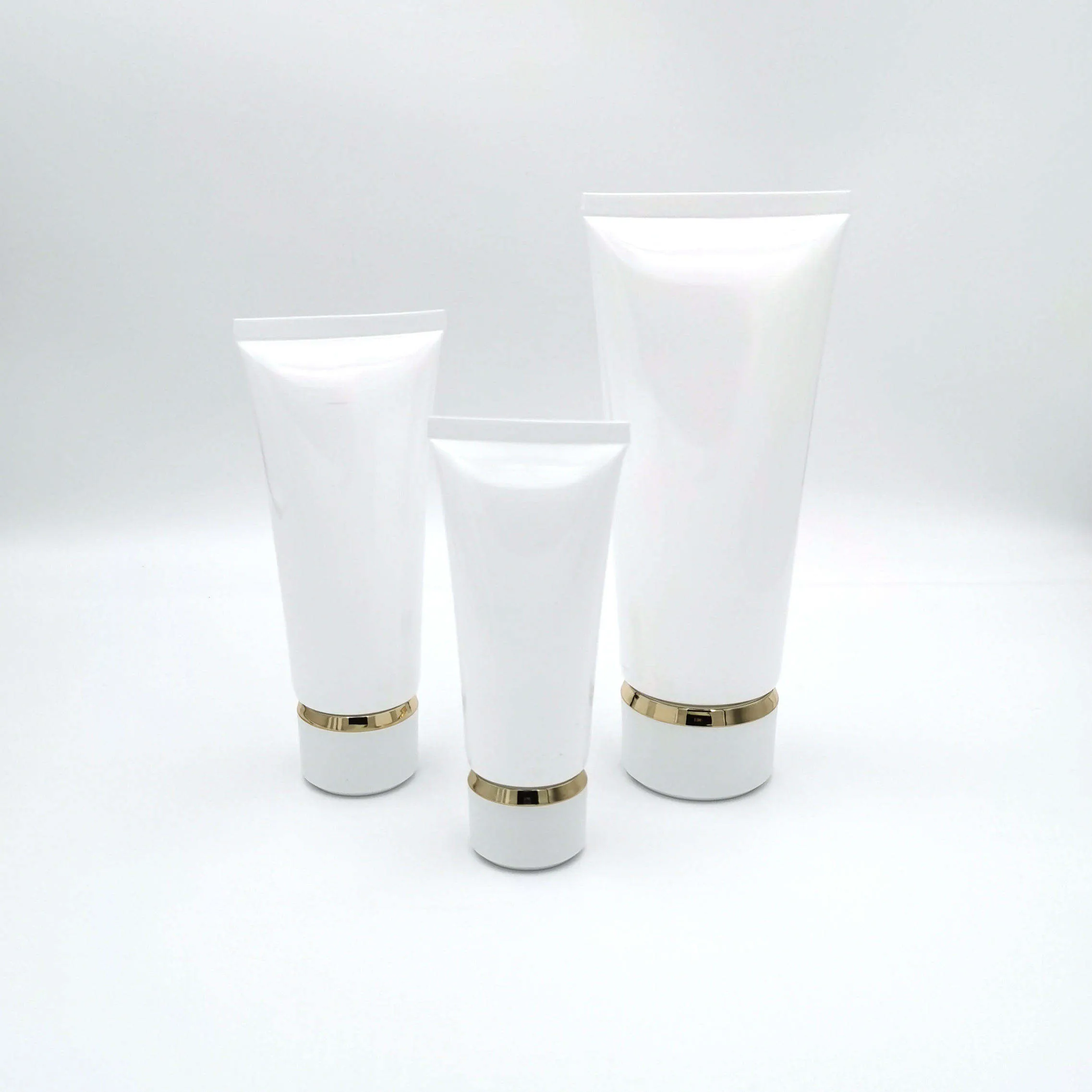
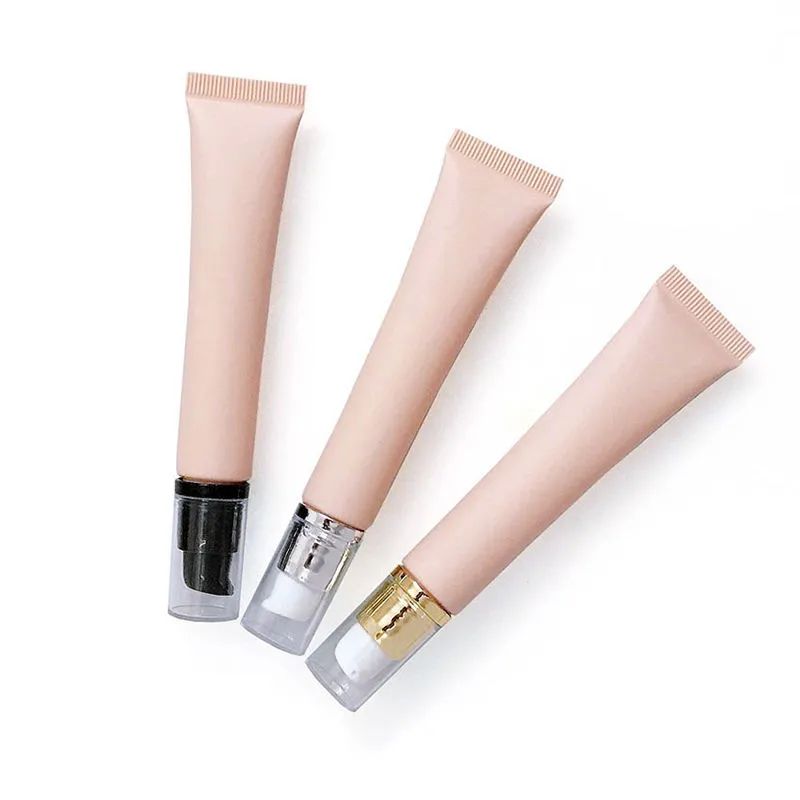
No. The gallery labels electric vibration, versions requiring confirmation, manual rollers, fixed metal tips and conventional tube alternatives separately.
Discuss Your Electric Eye Cream Tube Project
Send your capacity, formula type, head reference and quantity to Boyu Packaging. We will review suitable tube/applicator options, confirm the specification gaps and prepare the sample and quotation scope.





 English
 Español de Argentina
 Русский
 Italiano
 日本語
 한국어
 العربية
 Français
 Deutsch