ABL vs PBL Cosmetic Tubes: How to Choose the Right Barrier Structure
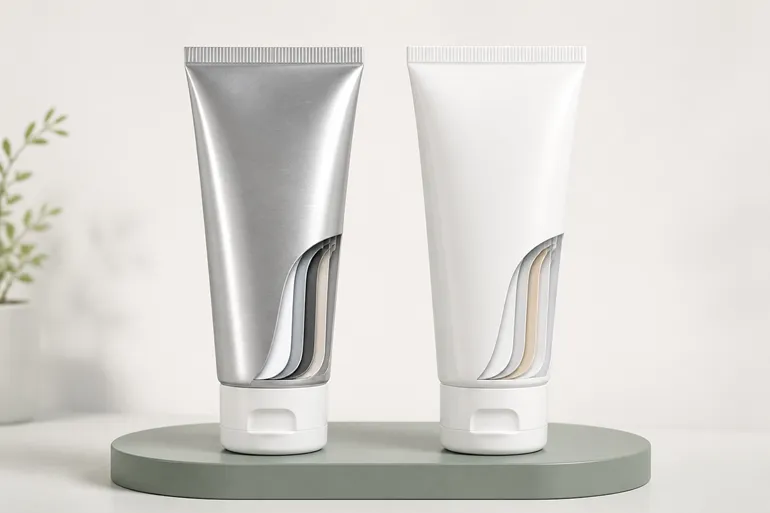
When a buyer asks for a “plastic cosmetic tube,” the phrase is not precise enough for material selection. A mono- or multi-layer PE tube, an aluminum barrier laminate (ABL) tube and a plastic barrier laminate (PBL) tube can look similar in a product photograph while behaving differently during filling, storage, dispensing and recovery after squeezing.
The correct decision starts with the formula and the required shelf life, then moves to appearance, dispensing behavior, filling-line settings, regional recovery infrastructure and cost. This guide explains the practical differences for skincare, sun care, hair care, personal care and other semi-viscous products. Buyers reviewing available formats can also see Boyu Packaging’s custom cosmetic cream tubes and broader skincare packaging range.
What Do ABL and PBL Mean?
ABL: Aluminum Barrier Laminate
An ABL tube is produced from a printed laminate web containing a thin aluminum foil barrier bonded between polymer layers. The product-contact layer is normally a suitable polymer rather than bare aluminum. The foil reduces transmission of light, oxygen and water vapor, helping protect formulas that are sensitive to oxidation, fragrance loss or moisture change.
The same foil that creates the barrier also affects feel and recovery. After a consumer squeezes an ABL tube, the body may retain a crease or compressed shape. For some pharmaceutical-style, dermocosmetic or treatment products, that appearance supports the intended positioning. For brands expecting a soft tube to spring back to its original form, it can be a disadvantage.
PBL: Plastic Barrier Laminate
A PBL tube uses polymer layers and a plastic barrier layer instead of aluminum foil. The exact resin, layer sequence, wall thickness and adhesive system vary by supplier. PBL generally provides a smooth printable surface, good flex-crack resistance and stronger shape recovery than ABL. Some structures can also support a visible side seam that is less noticeable than the seam on a metallic laminate.
“PBL” does not automatically mean mono-material or recyclable everywhere. A tube still includes a shoulder, cap, inks, coatings and sometimes more than one polymer. Whether it is accepted depends on the complete construction and the collection and sorting system in the target market.
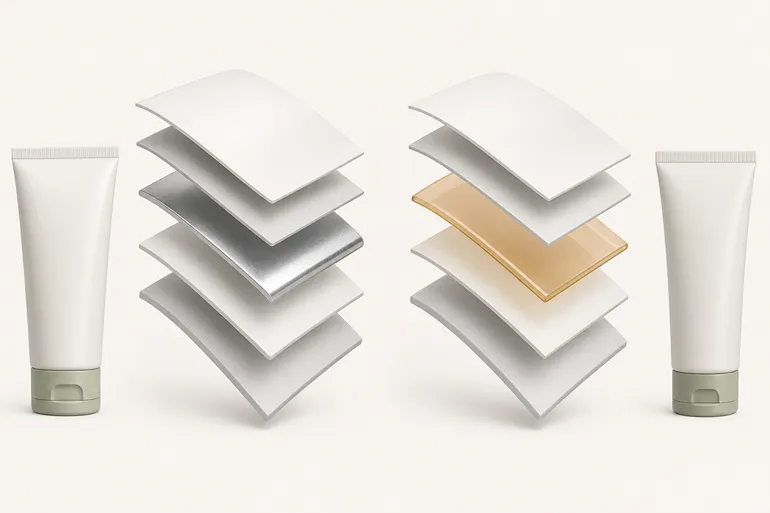
ABL vs PBL Cosmetic Tubes: Side-by-Side Comparison
| Decision factor | ABL tube | PBL tube | What the buyer should verify |
|---|---|---|---|
| Barrier | Typically strong protection against light, oxygen and moisture transmission. | Good barrier; the level depends on barrier resin, structure and thickness. | Ask for measured data for the proposed laminate, not a generic material claim. |
| Appearance | Opaque; a metallic base may influence printed colors unless covered. | Usually white or clear-base options with a clean, smooth appearance. | Approve a decorated physical sample under retail lighting. |
| Squeeze behavior | Can retain dents and folds after dispensing. | Usually recovers its shape more readily. | Test with the actual product viscosity and orifice. |
| Light protection | Inherently opaque because of the foil layer. | Requires an appropriate opaque structure, pigment or overprint where light protection is needed. | Define whether the formula is UV- or visible-light-sensitive. |
| Recycling design | Mixed metal-plastic laminate can be difficult for conventional plastic sorting and reprocessing. | Can be designed closer to a PE stream, but acceptance is market- and construction-specific. | Check the complete pack against a recognized regional design guide. |
| Decoration | Supports high-quality printing; the foil can create a metallic visual effect. | Supports detailed graphics and a more conventional plastic-tube look. | Assess ink adhesion, rub resistance, seam alignment and color tolerance. |
| Typical use | Barrier-sensitive creams, ointment-style products, selected oral care and treatment formulas. | Skincare, facial cleanser, sunscreen, hair care and personal-care formulas with validated compatibility. | Do not assign material solely by product category; formulas within a category differ. |
Which Tube Material Fits Different Cosmetic Formulas?
Skincare creams and treatment formulas
For a cream containing oxidation-sensitive oils, volatile fragrance components or ingredients affected by light, ABL may provide a useful protection margin. PBL may still be suitable when its measured barrier performance supports the target shelf life. The decision should include accelerated and real-time compatibility work because active ingredients, preservatives and essential oils can interact with the inner layer, shoulder or seal.
Facial cleansers, masks and body products
Many cleansers, clay masks, body creams and hand creams can work in PE or PBL tubes, subject to testing. These applications often value controlled squeezing, clean decoration and shape recovery. High-viscosity or particle-containing formulas may need a larger orifice and a closure designed to resist clogging. The tube wall alone does not solve dispensing problems.
Sunscreen and light-sensitive products
Sunscreen packaging must be treated as a formula-specific system. UV filters, solvents, oils and pigments can create demanding compatibility conditions. An opaque ABL structure may be considered where light and gas barrier are priorities, while an opaque PBL structure may be chosen when recovery and plastic-oriented design goals matter. Run stability studies in the intended pack; do not infer compatibility from another brand’s tube.
Hair color, depilatory and chemically demanding formulas
Oxidizing agents, reducing agents, strong alkalinity or other reactive systems require a documented material assessment. In some multi-part products, each component needs a different tube and closure. Confirm product-contact layers, permeation, swelling, paneling, seal strength and cap compatibility with the tube converter and formulator before ordering mass production.
How Laminate Cosmetic Tubes Are Manufactured
Laminate tubes are commonly made from a pre-formed multilayer web rather than extruded as a seamless cylindrical body. A typical project follows these stages:
- Structure selection: The supplier proposes a laminate based on barrier, diameter, wall feel, decoration and end-use requirements.
- Artwork preparation and printing: Graphics are adapted to the print method, side seam and shoulder orientation. Color standards and readable-code areas are defined.
- Sleeve forming: The printed web is cut and formed into a cylinder. Its longitudinal edges are joined to create the side seam.
- Head and shoulder formation: A molded shoulder and neck are joined to the sleeve. Neck finish and orifice must match the selected closure and dispensing target.
- Cap assembly and inspection: Caps are fitted and the tube is checked for dimensions, appearance, seam quality, torque or opening behavior.
- Customer filling and end sealing: The open tail is filled and heat-sealed by the brand or contract filler. Seal settings must suit the laminate and filling line.
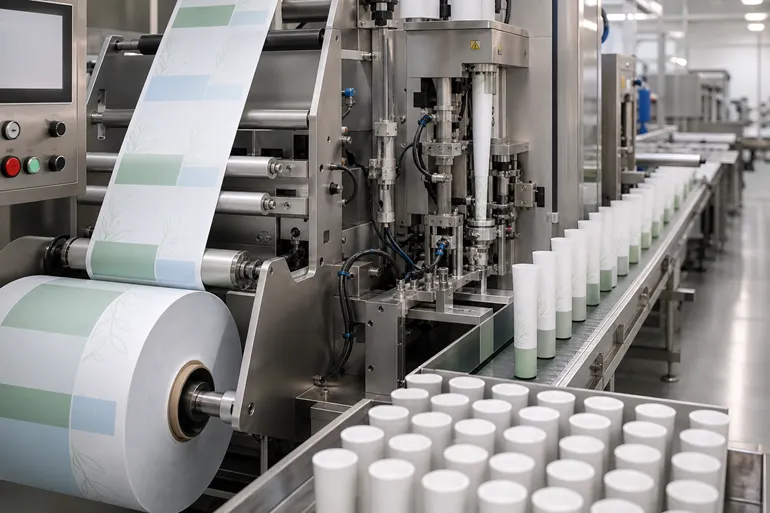
Decoration, Seam and Filling-Line Considerations
Artwork must account for the side seam
A laminated tube normally has a longitudinal seam. Keep mandatory copy, fine rules, registration-sensitive graphics and critical color transitions away from it. Ask the supplier for the correct dieline and confirm whether the tube will be oriented during capping or filling. A digitally approved artwork file is necessary, but it does not replace a printed color and seam sample.
The closure is part of dispensing performance
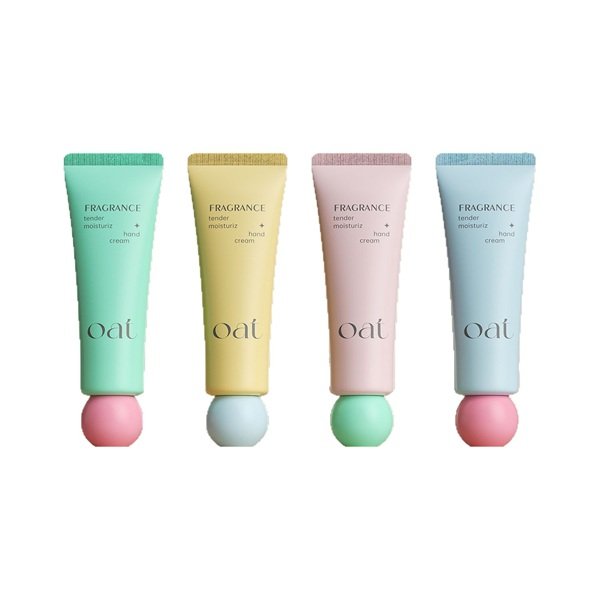
Flip-top caps, screw caps, precision nozzles, airless-style tube pumps and applicator heads create different user experiences. Match the orifice to viscosity, dose target and particle size. Confirm neck fit, opening force, closure torque, liner or valve requirements, and leakage after repeated use. Explore hand cream tube formats when comparing everyday squeeze-and-dispense options.
End-seal settings must be established before launch
ABL and PBL laminates can require different sealing windows. Excess heat, insufficient heat, contaminated seal areas, unsuitable pressure or poor cooling may produce weak seals, wrinkles or delamination. The converter should provide a starting range, but the filler must run a line trial using production-intent tubes and the actual formula. Seal strength should be checked after conditioning, not only immediately after filling.
Recyclability: Avoid Simple Material Claims
PBL is often preferred for projects pursuing a predominantly plastic construction, while ABL contains a metal-plastic laminate that is harder to handle in many conventional recycling systems. However, a responsible claim must consider the entire package and its destination. A PE-rich tube with an incompatible cap, heavy decoration or an unsupported barrier structure may still fail a local design-for-recycling assessment.
Ask the supplier for a component-level bill of materials, including the tube wall, shoulder, cap, masterbatch, inks and coatings. Then compare the design with the rules used in the sales market. ISO 18604 provides requirements for assessing whether packaging can be classified as recoverable through material recycling, but it does not guarantee collection or acceptance in every municipality.
Compatibility and Quality Tests to Request
A purchase specification should identify test methods, conditioning, sample quantity and acceptance criteria. Depending on the formula and distribution route, a practical validation plan may include:
- Filled-pack compatibility at intended and elevated storage conditions
- Weight loss, odor change, color change and formula separation monitoring
- Tube swelling, softening, brittleness, delamination and paneling checks
- Side-seam and end-seal integrity testing
- Cap fit, torque, hinge cycling, tamper feature and leakage checks
- Dispensed dose, evacuation rate, squeeze force and shape recovery
- Decoration adhesion, rub resistance and product-contact staining
- Drop, vibration, compression and temperature-cycle testing for the packed shipper
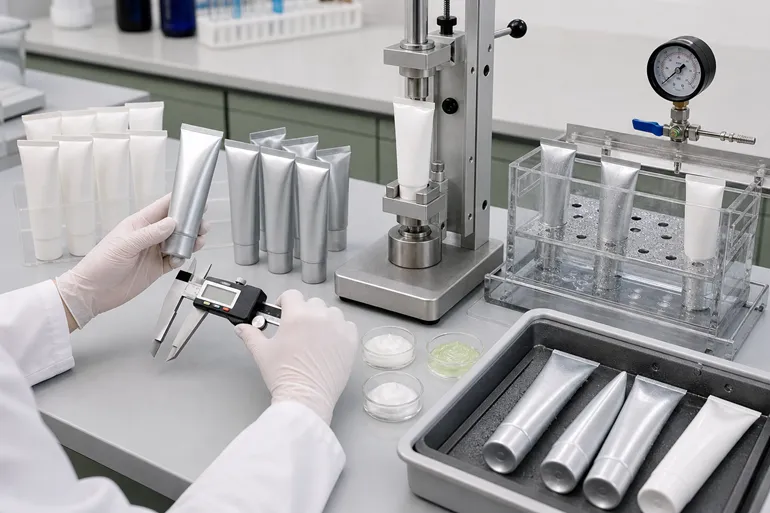
A Practical Selection Process for Buyers
- Describe the formula: Provide viscosity range, pH, oil and solvent content, fragrance or essential oils, active ingredients, particles and known sensitivities under a confidentiality agreement where needed.
- Define shelf life and markets: State target life, climate, distribution route, retail channel and recycling-claim requirements.
- Set pack performance: Specify fill volume, tube diameter, dispensing dose, orifice, cap style, recovery preference and required barrier data.
- Compare production-intent samples: Evaluate ABL, PBL and PE candidates where technically reasonable. Use the same formula and test conditions.
- Run the filling trial: Confirm handling, filling speed, cleanliness of the seal area, tail-seal strength, coding and case packing.
- Approve a limit sample: Retain signed color, print, seam, surface and functional standards for mass-production inspection.
- Freeze the specification: Record material code, dimensions, decoration, closure, tolerances, test plan, packing method and change-control requirements in the purchase documents.
Questions to Send a Cosmetic Tube Supplier
- What is the exact laminate structure and total wall thickness?
- Can you provide oxygen- and water-vapor transmission data for this specific structure?
- Which resin contacts the formula in the body and shoulder?
- Which closures and orifices fit the formula’s viscosity and dose?
- Where is the side seam, and what artwork clearance is required?
- What filled-product and line trials are required before mass production?
- How are print adhesion, seal integrity, leakage and dimensions inspected?
- Will any raw material, layer, adhesive, ink or tooling change require written approval?
For a technical review, send the formula profile, capacity, diameter, target market, decoration file and expected order quantity through Boyu Packaging’s packaging project contact page. Material, MOQ, sampling cost and lead time should be confirmed for the selected construction rather than assumed from a different tube project.
Frequently Asked Questions
Is ABL better than PBL for cosmetic tubes?
Not universally. ABL is usually selected for stronger barrier and opacity. PBL is usually selected for shape recovery, a smooth plastic appearance and a structure that may be easier to align with a PE-oriented recycling design. Formula tests and market requirements determine which is better.
Can PBL tubes protect light-sensitive skincare?
They can be made opaque through the selected structure, pigments and printing, but protection should be verified for the actual pack. If the formula is highly sensitive, compare measured light and gas barrier performance with an ABL candidate.
Are PBL cosmetic tubes recyclable?
Some PBL tubes are designed to be compatible with specific plastic recycling streams, but “PBL” alone is not proof. The full material composition, cap, shoulder, decoration and local collection system must be assessed.
Why does an ABL tube stay dented after squeezing?
The aluminum layer has less elastic recovery than an all-plastic laminate. The retained shape is a normal material behavior, although wall construction and tube geometry affect its severity.
Can the same filling machine run ABL and PBL tubes?
Often yes, but changeover settings may differ. Tube handling, sealing temperature, pressure, dwell time, cooling and coding should be validated for each laminate, diameter and fill product.
Request a Tube Structure Review
Share your formula profile, fill volume, diameter, closure, decoration and destination markets. Boyu Packaging can compare suitable PE, ABL and PBL tube options and prepare samples for your own compatibility and filling-line approval.
References
- ISO 18604:2013 — Packaging and the environment — Material recycling (confirmed current in 2024).
- EPL Sustainability Report 2025 — industry discussion of ABL-to-PBL conversion and recyclable tube development.
- Tubapack product catalogue — examples of ABL and PBL (EVOH barrier) laminate tube structures.
 English
  Español de Argentina
  Русский
  Italiano
  日本語
日本語  한국어
한국어  العربية
  Français
  Deutsch