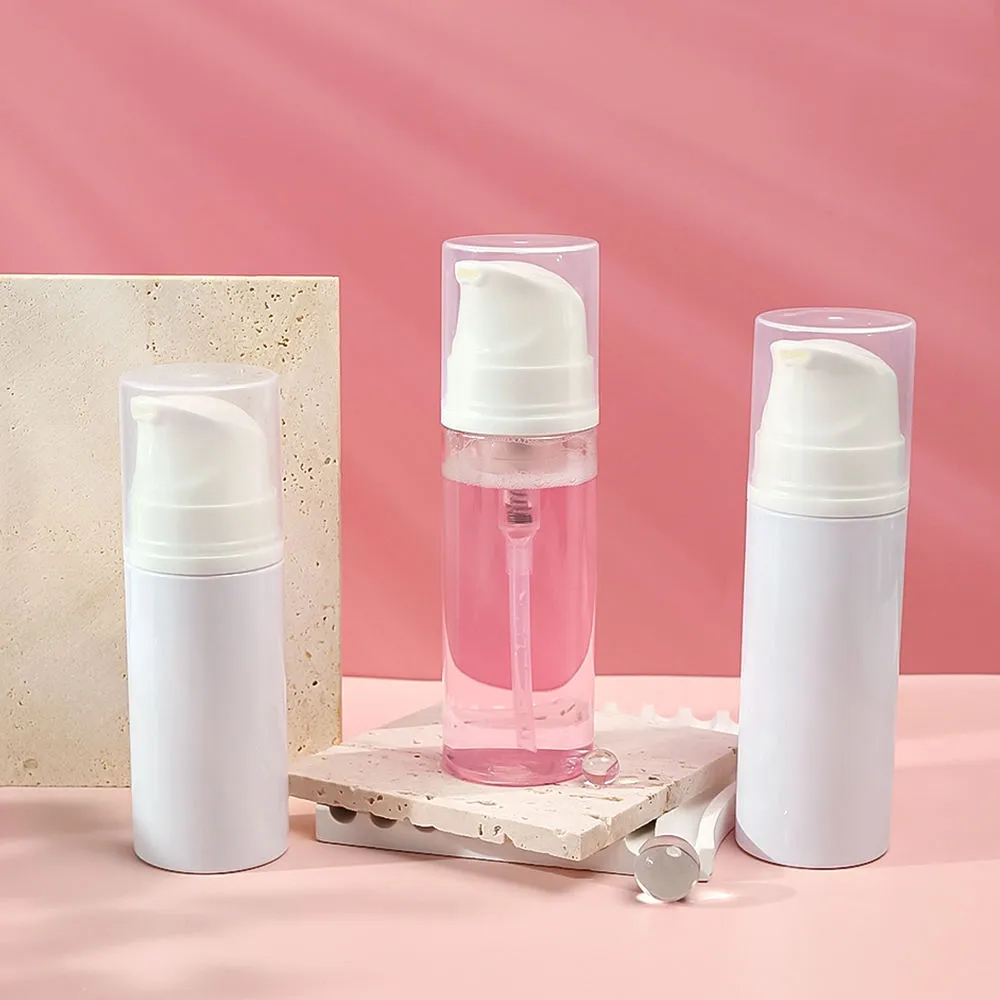
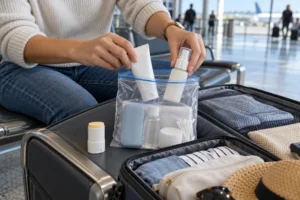
Direct answer: At a U.S. TSA checkpoint, lotion, cream, gel, pump-spray and aerosol sunscreen in a carry-on must be in a container whose stated capacity is 3.4 US fluid ounces (100 mL) or less. All carry-on liquids, aerosols and gels must fit inside one clear, quart-size, resealable bag per passenger. A half-empty 6 oz bottle is still too large because TSA looks at the container capacity, not the amount left inside.
A genuinely solid sunscreen stick generally does not use space in the liquids bag. Checked sunscreen may be larger, but FAA limits for personal medicinal/toiletry articles are 18 oz (0.5 kg) or 17 fl oz (500 mL) per container and 70 oz (2 kg) or 68 fl oz (2 L) total per person; aerosol nozzles must be protected against accidental release. Airlines and foreign airports can impose additional conditions.
Rule status: verified against TSA, FAA, eCFR, FDA, EU, UK and Canadian official guidance on October 30, 2026. Recheck your departure, connection and return airports shortly before travel.
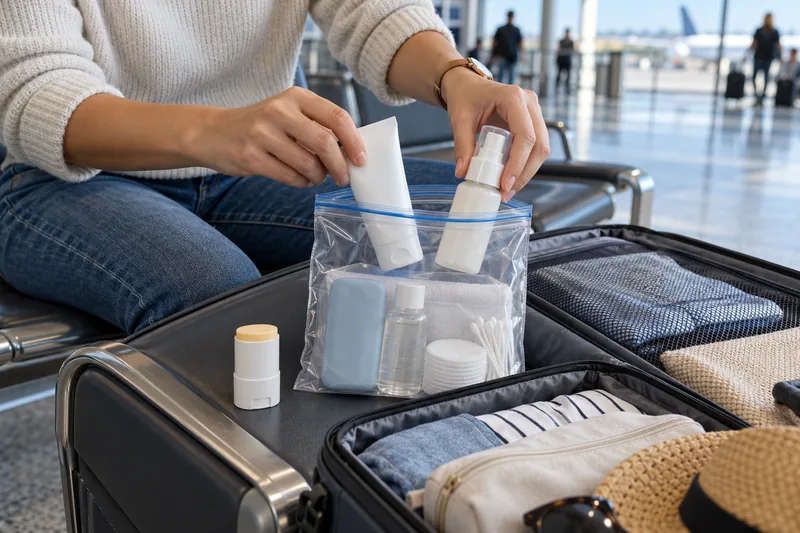
TSA sunscreen rules at a glance
| Sunscreen format | Carry-on through TSA | Checked bag | Critical detail |
|---|---|---|---|
| Lotion, cream, gel, oil, paste or ointment | Container ≤3.4 fl oz/100 mL; inside one quart-size liquids bag | Use FAA toiletry limits as the safe ceiling; protect against leakage | A larger partly empty bottle fails the carry-on rule |
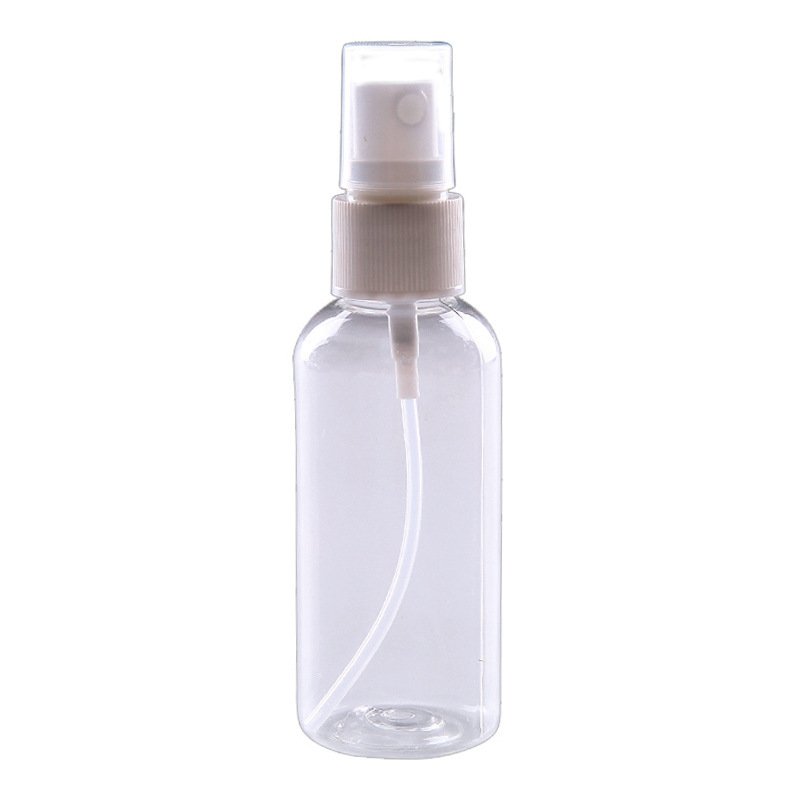
| Mechanical pump spray | Same 3-1-1 liquid rule | Allowed within applicable quantity limits | Lock the actuator or fit a rigid overcap |
| Aerosol spray | Container ≤3.4 fl oz/100 mL and in liquids bag | Each container ≤18 oz/0.5 kg or 17 fl oz/500 mL; aggregate limits apply | FAA requires the nozzle to be protected from accidental release |
| True solid stick | Generally outside the liquids bag | Allowed, subject to ordinary screening | A soft balm or semi-solid may be treated differently; final screening decisions rest with security |
| Powder sunscreen | Generally allowed, but larger powder containers can receive additional screening | Usually the simpler place for a large powder container | Do not rely on powder alone for adequate coverage; follow the product label |
How big can a sunscreen bottle be in your carry-on?
For liquid, gel, cream or spray sunscreen, the maximum carry-on container capacity is 3.4 US fluid ounces, equivalent to 100 milliliters. “3.4 oz” in this rule is a volume shorthand, not a density conversion. A sunscreen sold as 3 oz net weight may not represent exactly 3 fluid ounces, so the clearest travel pack is one marked with a capacity of 100 mL or less.
You may carry more than one sunscreen container as long as each one is within the limit and every liquid, cream, aerosol, gel and paste you carry fits comfortably in the same one-quart transparent resealable bag. There is no universal bottle count: a flat 50 mL tube, a round 100 mL bottle and a pump with a bulky overcap consume very different bag space. For the broader packing rule, see Boyu’s guide to how many 3 oz bottles fit in a carry-on.
What if the bottle is only partly full?
A 150 mL bottle containing only 30 mL is still a 150 mL container and should not pass under the normal 3-1-1 allowance. Security cannot validate every passenger’s remaining volume reliably, so stated container capacity is the operational test. Decanting into a compliant travel container can solve the size problem, but it creates formula identity, cleanliness and package-compatibility responsibilities discussed below.
Does TSA approve particular sunscreen bottles?
No bottle receives a general “TSA-approved” performance certification. The practical questions are whether the container’s capacity is within the rule, whether it fits in the required bag, whether the item can be screened, and whether it is otherwise permitted. “TSA compliant” on a marketplace listing does not prove leak resistance, formula compatibility or accurate capacity.
How much sunscreen can go in checked luggage?
Checked sunscreen is not subject to TSA’s quart-bag rule, but “unlimited full-size bottles” is an unsafe oversimplification. FAA classifies sunscreen among personal medicinal and toiletry articles. Under 49 CFR 175.10(a)(1), the aggregate hazardous toiletry allowance per passenger cannot exceed 2 kg (70 oz) by mass or 2 L (68 fl oz) by volume; each container cannot exceed 0.5 kg (18 oz) or 500 mL (17 fl oz). FAA’s July 2026 passenger guidance summarizes sunscreen in checked bags as 18 oz or less per container.
For a typical 150–250 mL lotion bottle, the quantity is normally within the per-container ceiling. Aerosol sunscreen deserves extra attention: keep the original cap or another effective nozzle protector fitted, check for dents or corrosion, and do not pack an actuator that can be pressed by another object. If your total toiletries include hairspray, perfume, rubbing alcohol, nail products and other regulated articles, count the aggregate—not sunscreen in isolation.
Does the rule change with the type of sunscreen?
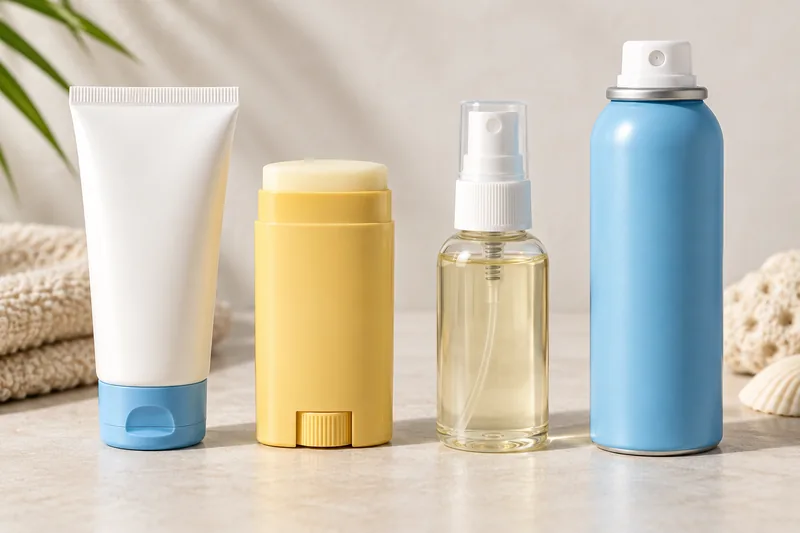
Yes, because screening categories follow physical form, while safe application follows the product label. FDA recognizes lotion, cream, stick, gel, oil, butter, paste, ointment, spray and powder sunscreen dosage forms. That does not make the formats interchangeable.
Lotion, cream and gel
These are liquids, gels, creams or pastes for security purposes and belong in the quart bag. A soft tube is often the most space-efficient format because it flattens as product is used, while a rigid pump can deliver a cleaner dose but uses more bag volume and needs an overcap or lock.
Solid stick
A true solid stick generally travels outside the liquids bag and is useful for a face, ears or touch-ups. It does not turn liquid sunscreen into a solid for screening; it is a different finished dosage form. CDC travel guidance notes that sticks are easy to apply but can be used unevenly, so travelers should follow label directions carefully and avoid skipped areas.
Pump spray versus aerosol
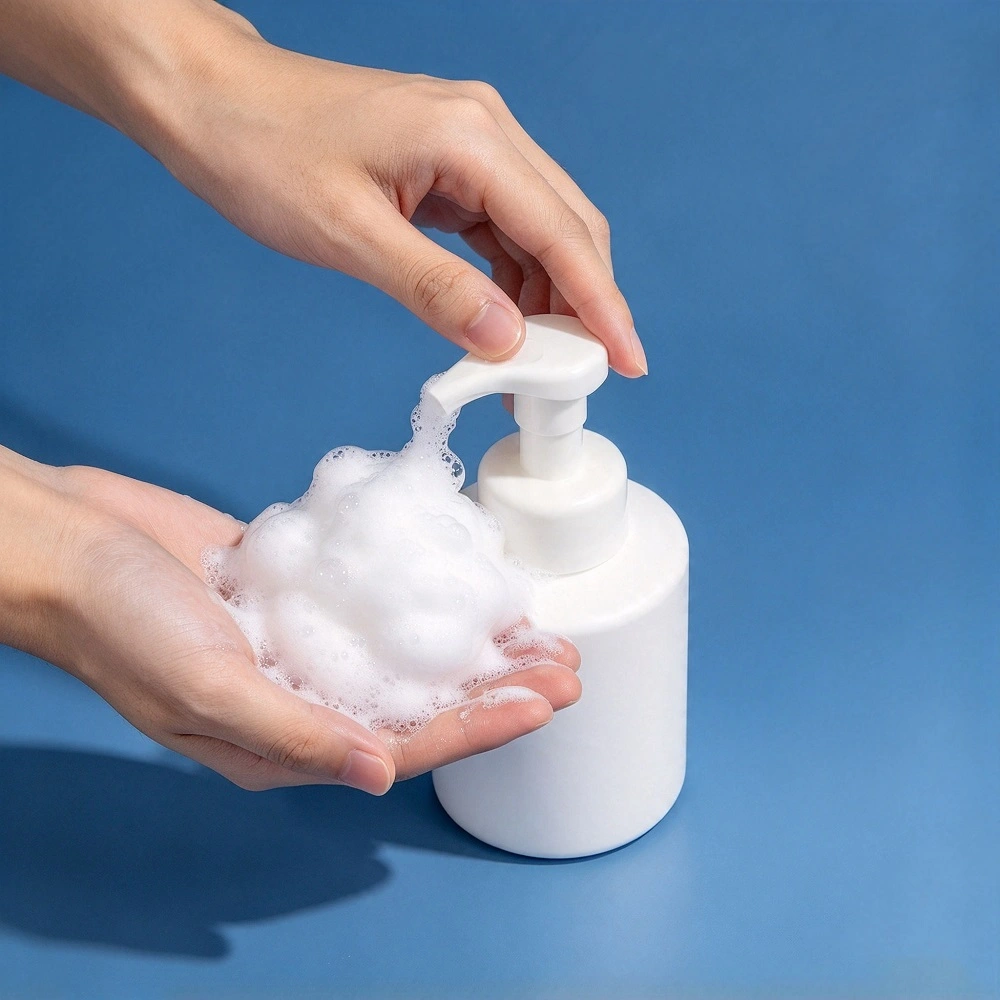
Both count toward the carry-on liquid limit. A mechanical pump uses finger force to move product through a valve and nozzle; an aerosol uses a pressurized can. The latter is subject to explicit release-device protection and may contain flammable ingredients. FDA warns that many spray sunscreens contain alcohol and can catch fire, so read the label and keep them away from flames, smoking and heat.
Powder
Powder is not packed as a liquid, but TSA encourages passengers to place powder-like substances over 12 oz/350 mL in checked bags because larger powders may require additional screening. More importantly, air-travel convenience does not prove adequate sun protection. Use only a legally marketed sunscreen product and apply it as directed; do not substitute ordinary cosmetic powder for labeled sunscreen.
Is there a maximum bottle height, diameter or shape?
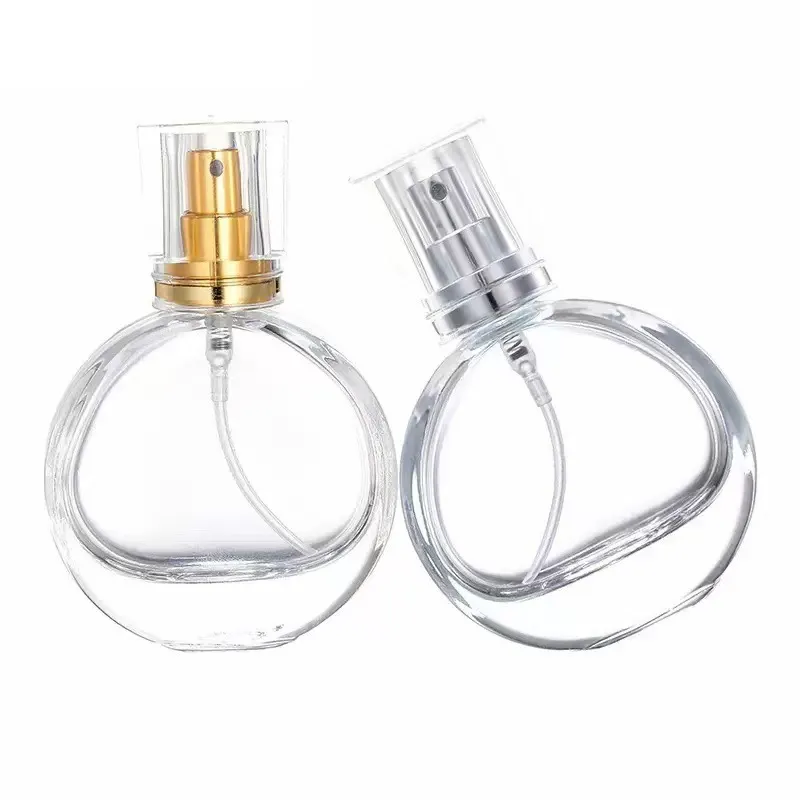
TSA does not specify one universal length, width or diameter for sunscreen bottles. It specifies capacity and bagging. A tall slim 100 mL bottle, flat oval 100 mL bottle and wide 100 mL tube can all satisfy the individual-container limit, but only if the entire liquids collection fits inside the quart bag and can be sealed.
External dimensions depend on wall thickness, headspace, closure, shoulders and geometry. “100 mL nominal fill” is also not the same as brimful capacity. A bottle needs appropriate headspace and a working closure volume; do not fill a 100 mL pack to the lip merely to maximize what you carry.
| Travel format | Space efficiency | Leak-control priority | Best starting use |
|---|---|---|---|
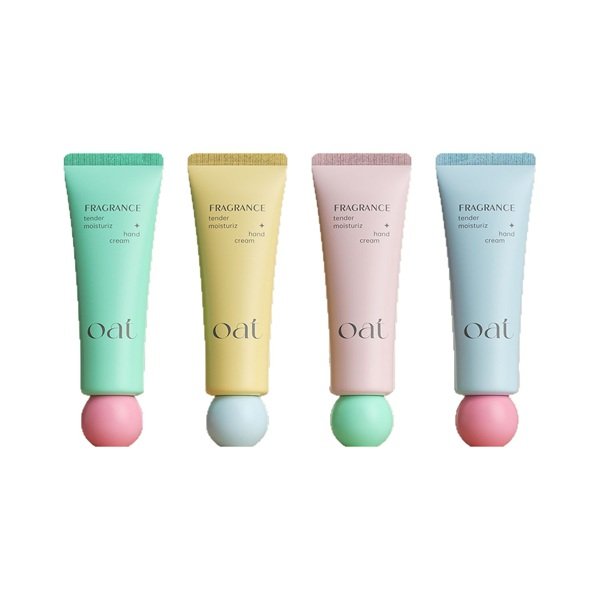
| Flat squeeze tube, 30–100 mL | High | Cap engagement, orifice seal and tube tail seal | Cream or lotion sunscreen |
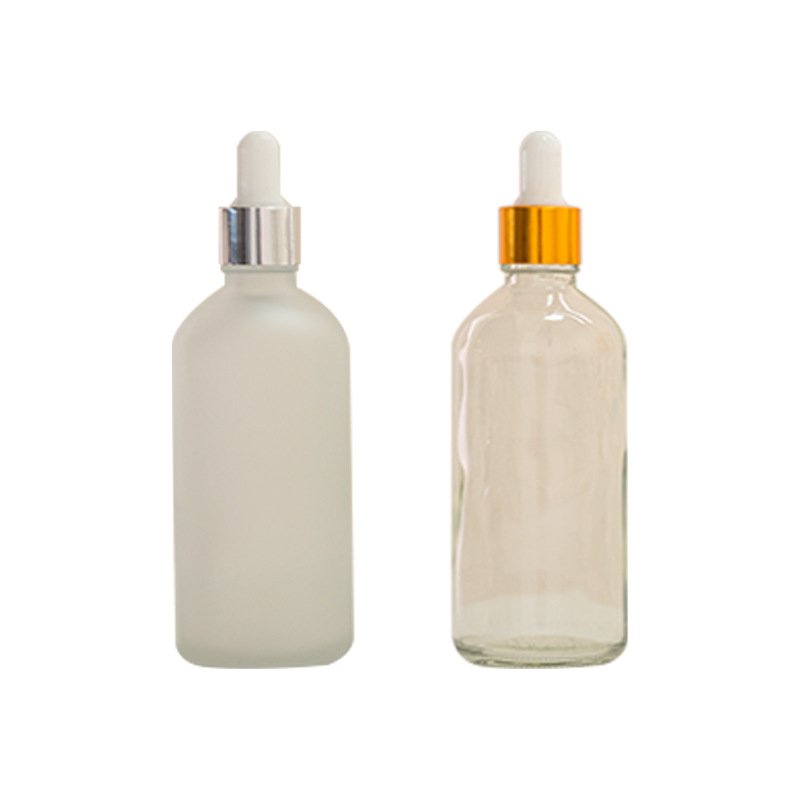
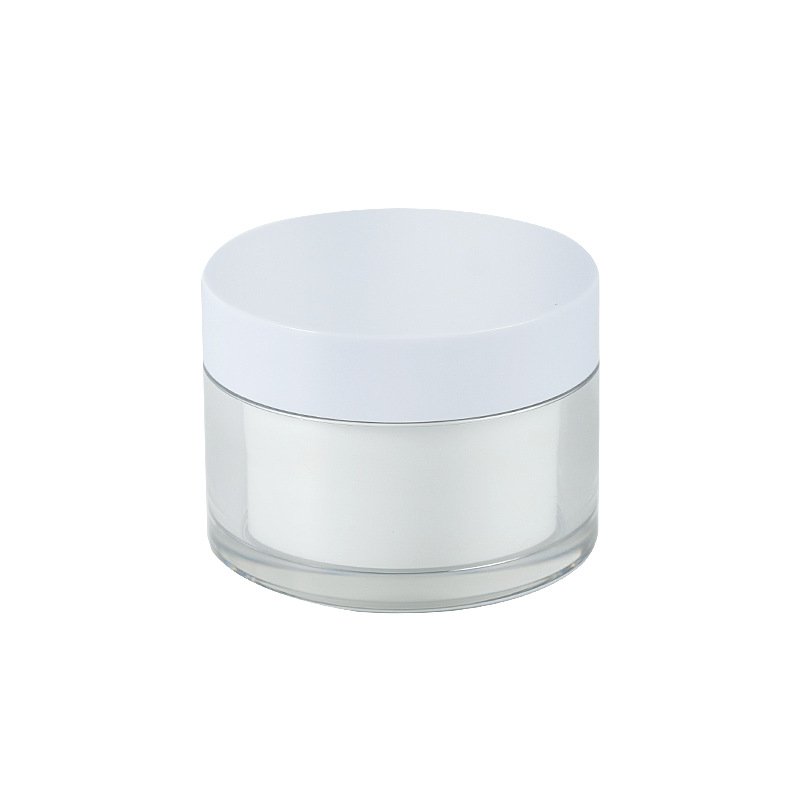
| Rigid bottle with screw/flip cap | Medium | Liner, land seal, torque and cap retention | Fluid lotion and frequent reuse where intended |
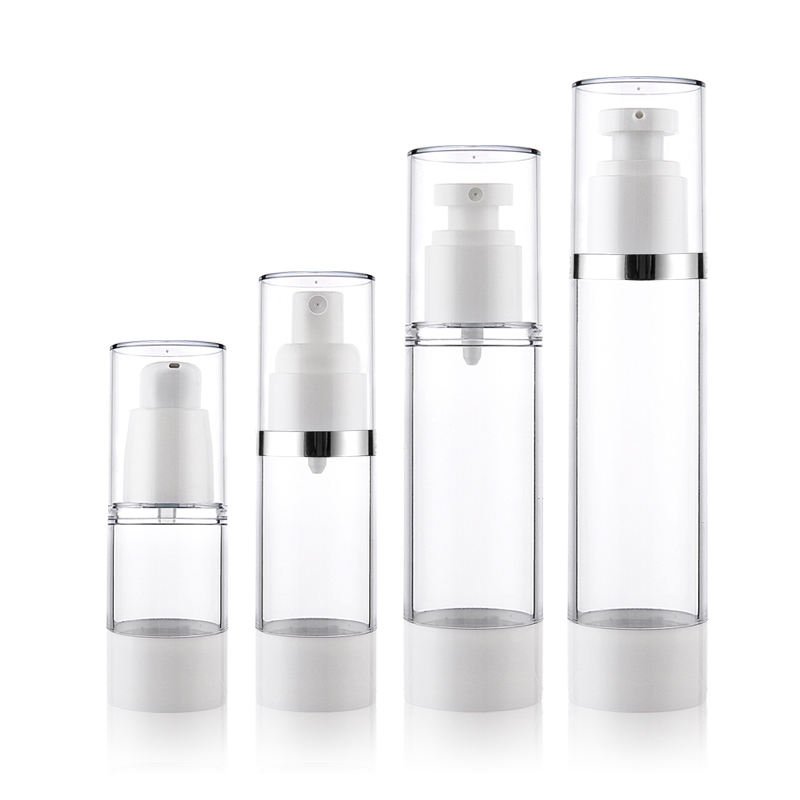
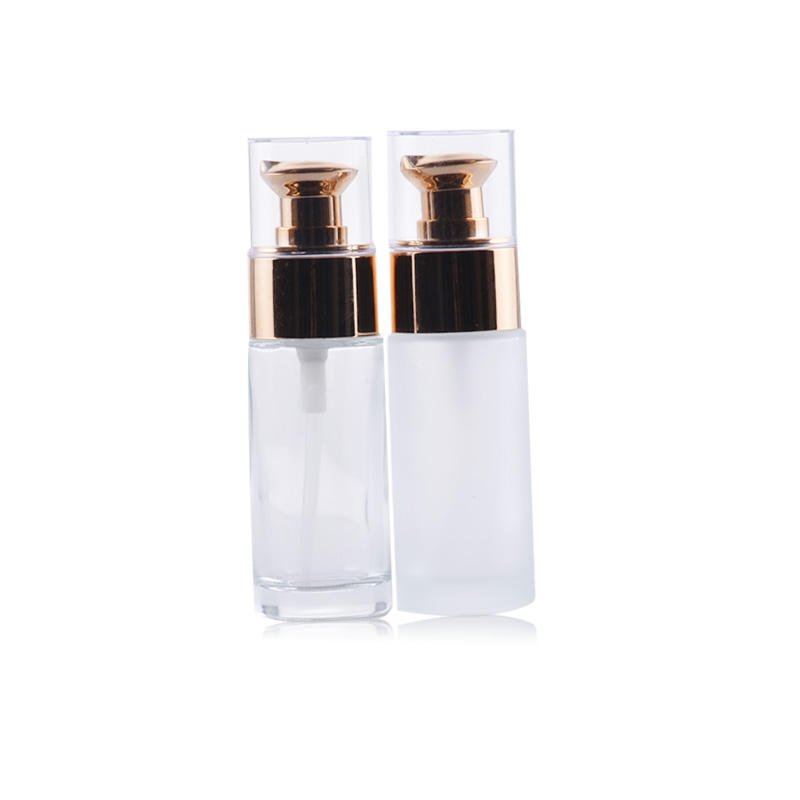
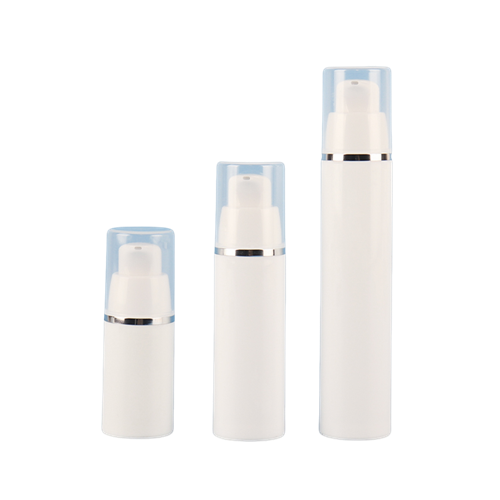
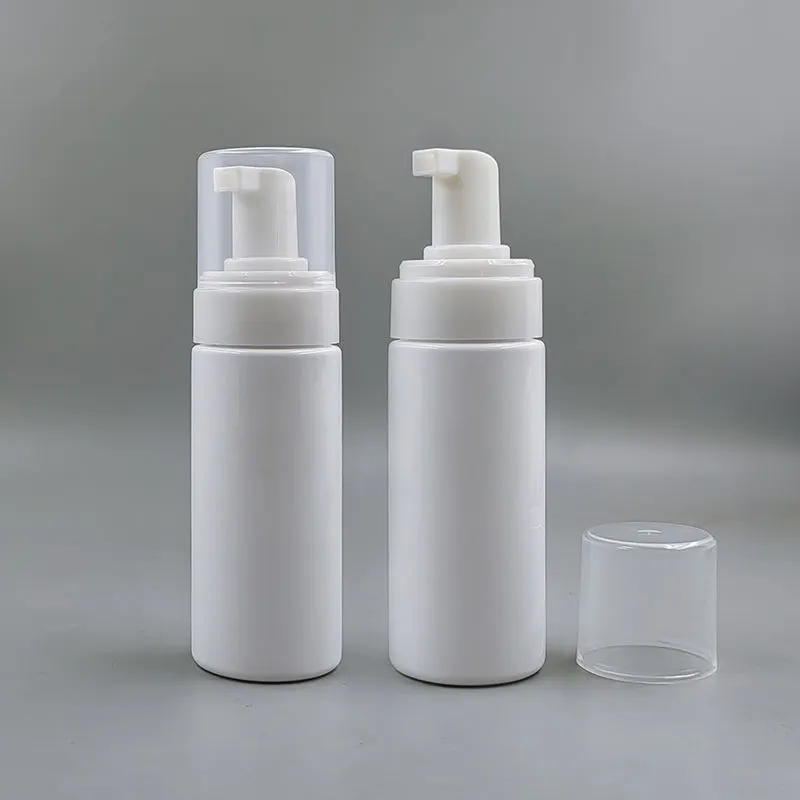
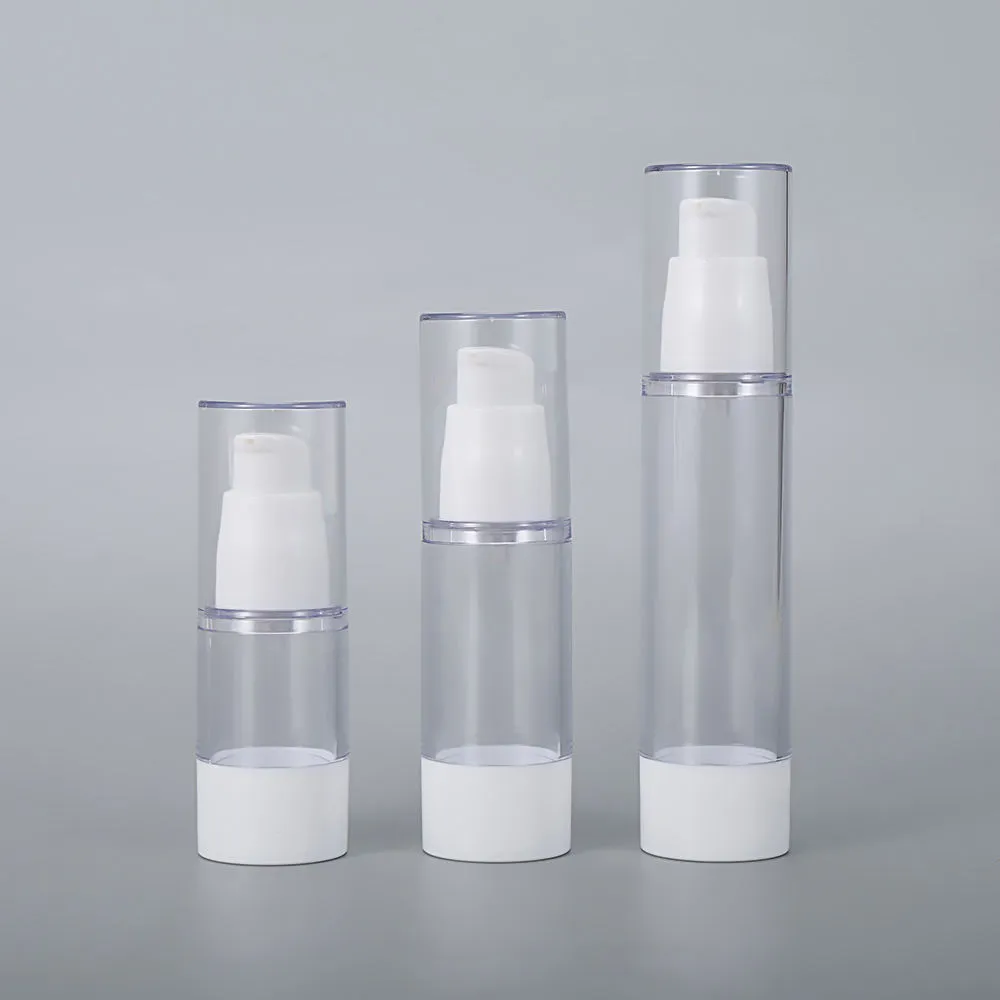
| Lockable pump/airless bottle | Lower per mL because the actuator adds bulk | Pump lock, overcap, collar seal and priming | Clean metered facial sunscreen |
| Solid stick | High and outside liquids bag | Cap retention and heat distortion | Small-area application and touch-ups |
How much sunscreen do you actually need for a trip?
Capacity compliance and adequate sun protection are separate decisions. FDA says an average-size adult or child needs at least 1 oz of sunscreen to cover the exposed body evenly and should reapply at least every two hours, more often when swimming or sweating. On that basis, one 3.4 fl oz bottle provides only about three full-body applications before dispensing loss. This is a planning estimate, not a dose for every body or activity; the product label governs.
Simple planning calculation
Estimated ounces needed = travelers × full-body applications per day × travel days × approximately 1 oz
Example: two adults, two full-body applications per day, three beach days = about 12 oz. That will not fit in one 3.4 oz container. Options include several compliant carry-on containers that all fit the quart bag, buying sunscreen after security/arrival, or placing a protected larger supply within checked-bag rules.
Do not reduce application merely to satisfy luggage convenience. Also account for face-only use, protective clothing, shade, swimming and destination availability. If buying after the checkpoint, remember that a connection with another security screening may reapply liquid limits.
Can sunscreen qualify as a medically necessary liquid?
Standard sunscreen is not automatically exempt just because it protects health. TSA allows medically necessary liquids, gels and aerosols in reasonable quantities above 3.4 oz, but the passenger must declare them to officers for inspection. Whether a particular larger sunscreen is medically necessary depends on the traveler’s actual medical circumstances, not a general claim that all sunscreen is medicine.
If a clinician has directed a specific sunscreen or quantity for a medical condition, keep it accessible, inform the officer before screening and allow time for additional inspection. Labeling is recommended because it can facilitate screening. TSA Cares can provide assistance for travelers with disabilities or medical conditions. A prescription label or clinician note may help explain the need, but it does not replace security screening or guarantee that every item will pass.
What changes on international flights?
TSA governs U.S. checkpoints, not every airport in the itinerary. Current European Union guidance uses individual containers no greater than 100 mL in one transparent one-liter resealable bag, with limited medical, dietary and qualifying duty-free exceptions. Canadian CATSA guidance also limits sunscreen and other liquids, aerosols and gels to 100 mL containers inside one clear resealable one-liter bag.
UK rules require special care because equipment and procedures can vary by airport. GOV.UK says that at most airports, containers larger than 100 mL cannot go through security even if partly full, while some airports may permit containers up to 2 liters. Travelers are specifically told to check the departure, connection and return airports. The most reliable frequent-flyer default remains 100 mL or less unless every checkpoint on the itinerary explicitly says otherwise.
Duty-free or post-security sunscreen
A bottle purchased after one security checkpoint may be allowed onto that flight, but a connection can send it through another checkpoint. Keep the receipt and any security tamper-evident bag sealed when those procedures apply. Buying airside does not permanently exempt the product for the return journey.
A reliable packing system for frequent flyers
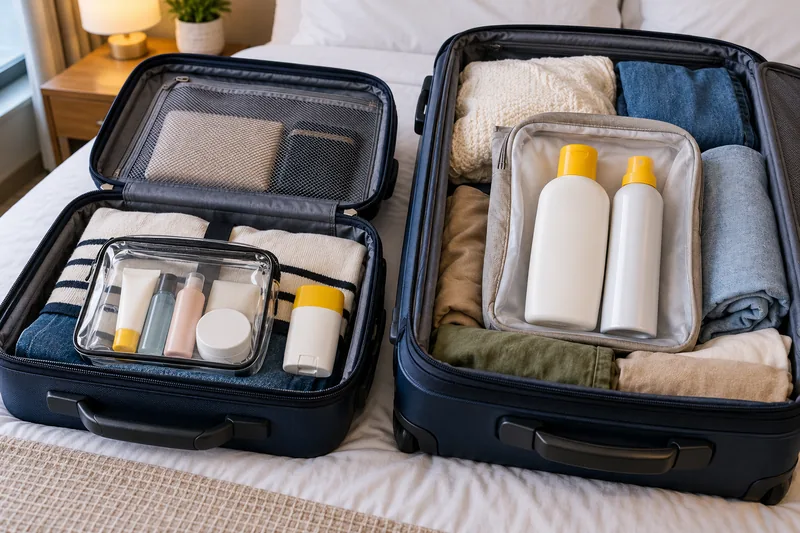
- Calculate use before choosing the pack. Separate face-only daily sunscreen from body/beach supply. Do not automatically carry the maximum permitted container.
- Keep cabin essentials small. Put one clearly labeled ≤100 mL sunscreen in the quart bag. A manufacturer-filled travel size is preferable when available because it preserves the original label, lot and package compatibility.
- Use solids strategically. A labeled sunscreen stick can save liquid-bag space for touch-ups, but it must still be applied thoroughly and as directed.
- Put the bulk supply in checked baggage or buy locally. Stay within FAA/airline limits, retain aerosol caps and protect all packages in a sealed secondary pouch.
- Check every airport 24–48 hours before departure. Rules and scanner procedures can change; include return and transfer points.
- Keep the liquids bag accessible. Screening technology may allow it to remain packed at some checkpoints, but accessibility prevents delays if officers ask to inspect it.
Six leak-prevention steps
- Inspect the tube tail, bottle neck, cap, pump collar, overcap and aerosol can for cracks, loose fit, dried product, dents or corrosion.
- Close the package squarely. Do not overtighten a cap until its liner distorts, and do not use a damaged thread.
- Lock the pump or fit its overcap. Never depend on tape alone to stop an actuator from being pressed.
- Place the container on absorbent paper, upright, on its side and inverted for a practical pre-trip screen. This is not a laboratory qualification, but it catches obvious leaks.
- Use a sealed secondary pouch in checked baggage and cushion rigid packages away from corners and hard objects.
- Do not leave sunscreen in a hot car. FDA advises reading the label, and excessive heat can affect the product or package; aerosols also require special care around heat and flame.
What is the best travel container for sunscreen?
For most lotion or cream sunscreen, an original 30–100 mL squeeze tube with a secure screw or well-retained flip cap is the best space-to-protection starting point. It is light, impact tolerant and evacuates without a dip tube. A lockable pump or small airless package can be better for face sunscreen when clean measured dispensing matters, but it consumes more quart-bag space and must be proven with the formula.
Boyu’s sunscreen bottle and tube range shows common travel-size structures, while the engineering guide to sunscreen tubes versus bottles compares formula, closure, label and manufacturing trade-offs. For compact flexible formats, review the custom cosmetic cream tube category.
Should you decant sunscreen?
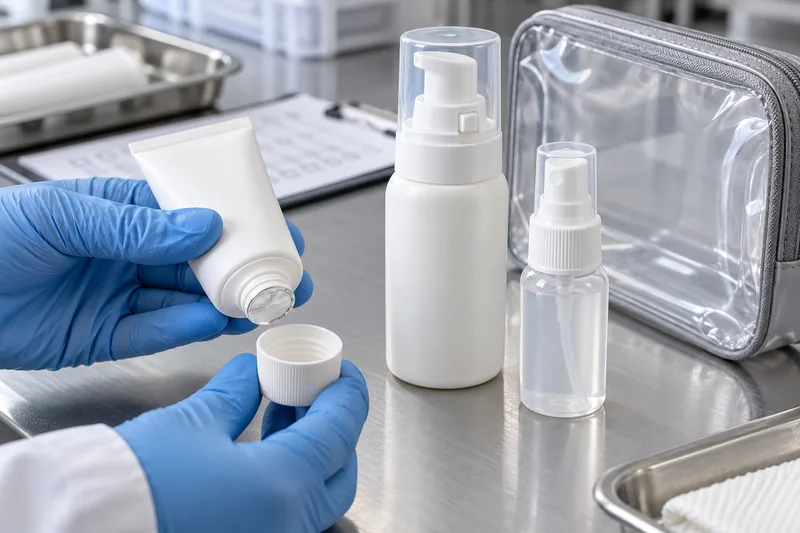
Prefer the brand’s original travel-size package. Sunscreen sold in the U.S. is an over-the-counter drug product, and the original container preserves identity, directions, expiration information, lot traceability and the package selected for the formula. If transfer is unavoidable, first follow the sunscreen manufacturer’s directions. Use only a clean, dry container intended for cosmetics with known contact materials; never add water, mix products or pour unused decanted sunscreen back into the original bottle.
TSA compliance does not establish package compatibility. UV filters, solvents, oils, fragrance and alcohol can interact with the bottle, tube, gasket, valve, adhesive or decoration. A container can also leak even when its resin is compatible. The approach used for choosing a travel cosmetic container—measured use, clean transfer, known materials and a filled-pack leak screen—applies here, but sunscreen label and drug-product integrity deserve extra caution.
For sunscreen brands: designing a travel-ready 100 mL pack
A 100 mL label claim alone does not make a reliable travel SKU. Define the market, formula, use pattern, filling process and distribution route before selecting the container. For U.S./EU/Canadian cabin convenience, many brands choose 30–100 mL, but 50 mL is often easier to fit in a liquids bag and can serve face-focused or short-trip positioning. Capacity must also satisfy local net-contents and labeling rules.
Qualification checklist
- Freeze the complete bill of materials: body, cap/pump, liner, gasket, valve, dip tube, colorant, coating, ink and label adhesive.
- Confirm nominal and brimful capacity: establish the fill volume and headspace instead of assuming a 100 mL body can simply be filled to 100 g.
- Run compatibility with final formula: monitor color, odor, viscosity, separation, mass loss, swelling, cracking, corrosion, seal change and dispensing over justified conditions.
- Validate closure and line setup: cap torque, pump crimp/screw fit, tail-seal quality, fill accuracy, seal contamination, priming and output consistency.
- Test distribution: filled-pack leakage in multiple orientations, thermal conditioning, vibration, drop and final shipper performance.
- Control travel claims: describe capacity accurately. Do not imply TSA endorsement or promise that a bottle cannot leak.
For a sourcing discussion covering travel-size sunscreen tubes, bottles, pumps, decoration and testing, contact Boyu Packaging with the formula type, target fill, market and closure preference. Production-intent samples should be evaluated with the real sunscreen before an order is approved.
Frequently asked questions
Can I bring a 4 oz sunscreen bottle through TSA?
Not under the normal carry-on liquids rule. A 4 fl oz container exceeds 3.4 fl oz/100 mL even if it is partly empty. Put it in checked baggage within applicable limits, buy sunscreen after security/arrival, or use smaller compliant containers. A genuine medical need follows a separate declaration and screening process.
Can I bring two 3.4 oz sunscreens?
Yes, if each container is 3.4 fl oz/100 mL or less and both fit with all your other liquids, gels, creams, pastes and aerosols in the one quart-size bag.
Does a sunscreen stick count as a liquid?
A true solid stick generally does not count toward the liquids bag. A soft balm or semi-solid may be assessed differently. Security officers can require additional screening, so keep the product recognizable and labeled.
Can I bring aerosol sunscreen on a plane?
Yes, within the quantity rules. Carry-on aerosol containers must be 3.4 fl oz/100 mL or less and packed in the liquids bag. In checked baggage, each personal toiletry aerosol must stay within the FAA per-container limit, aggregate limits apply, and the nozzle must be protected against accidental release.
Can I use a 100 mL bottle filled with 100 g of sunscreen?
Do not assume so. Milliliters measure volume; grams measure mass. The relationship depends on formula density, and the package also needs headspace. Brands should set net fill from measured density and package capacity. Travelers should rely on the original label and container capacity, not a home weight conversion.
Does TSA PreCheck change the sunscreen limit?
No. PreCheck may change what you remove during screening, but it does not create a larger standard liquid allowance. Follow the 3-1-1 limit unless a specific exemption applies.
Who makes the final decision at the checkpoint?
The security authority and screening officer make the operational decision. Rules describe what is generally permitted, but an item that cannot be cleared during screening can still be refused. Check official sources and allow time for inspection.
Bottom line
For the lowest-risk U.S. carry-on plan, choose an original sunscreen container marked 100 mL/3.4 fl oz or less, place it in the single quart-size liquids bag, and protect its cap or pump. Use a true solid stick to save bag space when it suits the application, and put larger supplies in checked baggage within FAA and airline limits. The best travel pack is not merely small: it is correctly labeled, compatible with the sunscreen, secure against leakage and appropriate for the way the product must be applied.
Sources
Official rules and health guidance checked October 30, 2026. Links are provided for verification; travelers should recheck before departure.
- Transportation Security Administration — Travel Checklist and 3-1-1 rule
- Transportation Security Administration — Travel Tips and medically necessary liquids
- Transportation Security Administration — Security Screening and powder guidance
- Federal Aviation Administration — PackSafe: Medicinal & Toiletry Articles
- Federal Aviation Administration — FAA Ready for Summer Travel Takeoff (July 2, 2026)
- Electronic Code of Federal Regulations — 49 CFR 175.10(a)(1)
- U.S. Food and Drug Administration — Tips to Stay Safe in the Sun
- CDC Yellow Book — Sun Exposure in Travelers
- European Commission — Liquids, Aerosols and Gels
- GOV.UK — Hand Luggage Restrictions: Liquids
- Canadian Air Transport Security Authority — What Not to Pack in Your Carry-On
 English
 Español de Argentina
 Русский
 Italiano
 日本語
 한국어
 العربية
 Français
 Deutsch