Mini Glass Perfume Spray Bottles in 2, 5 and 10 mL
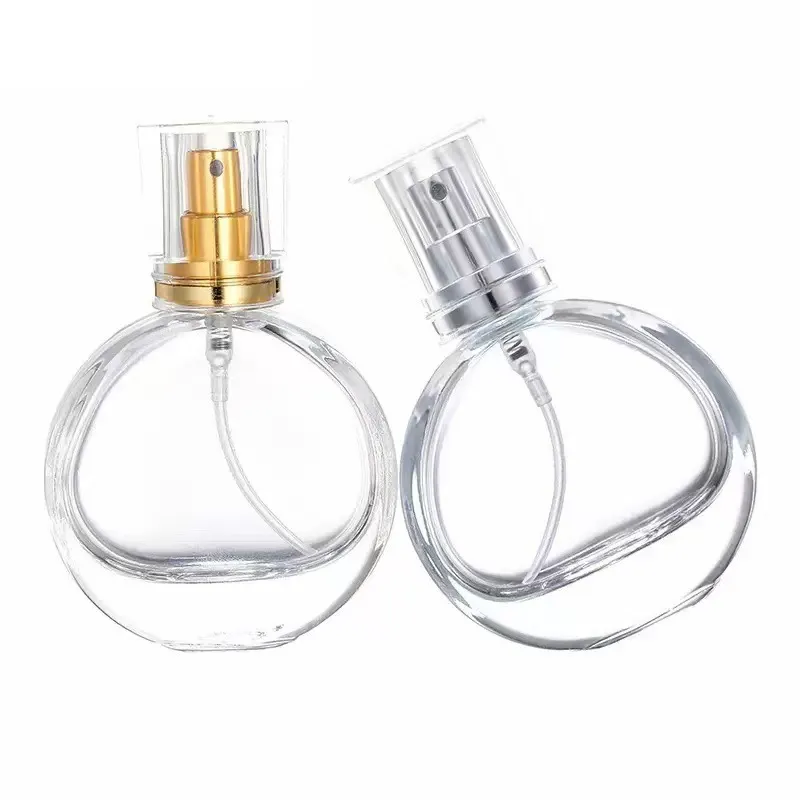
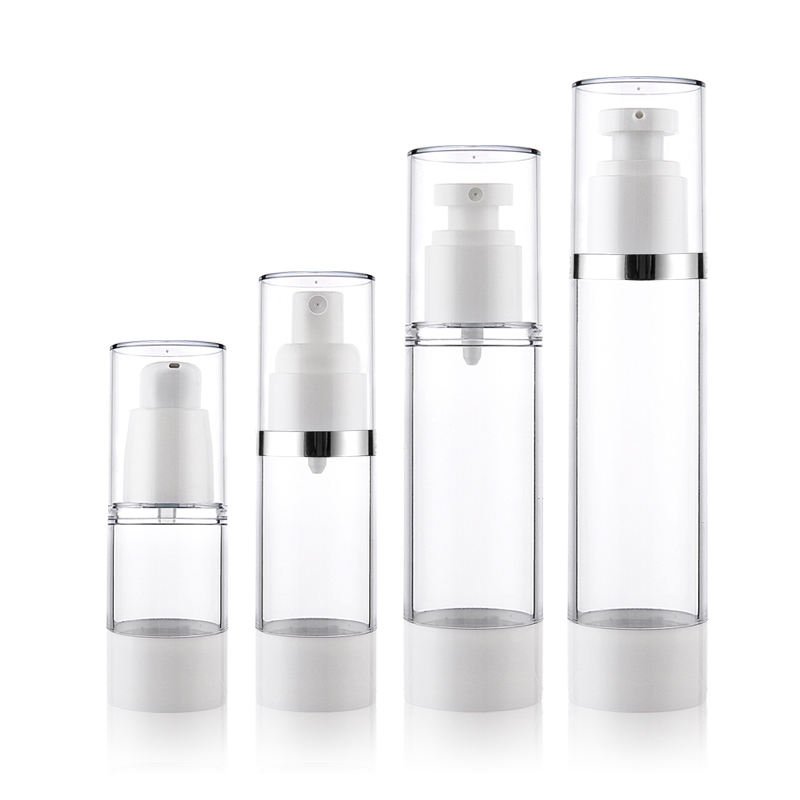
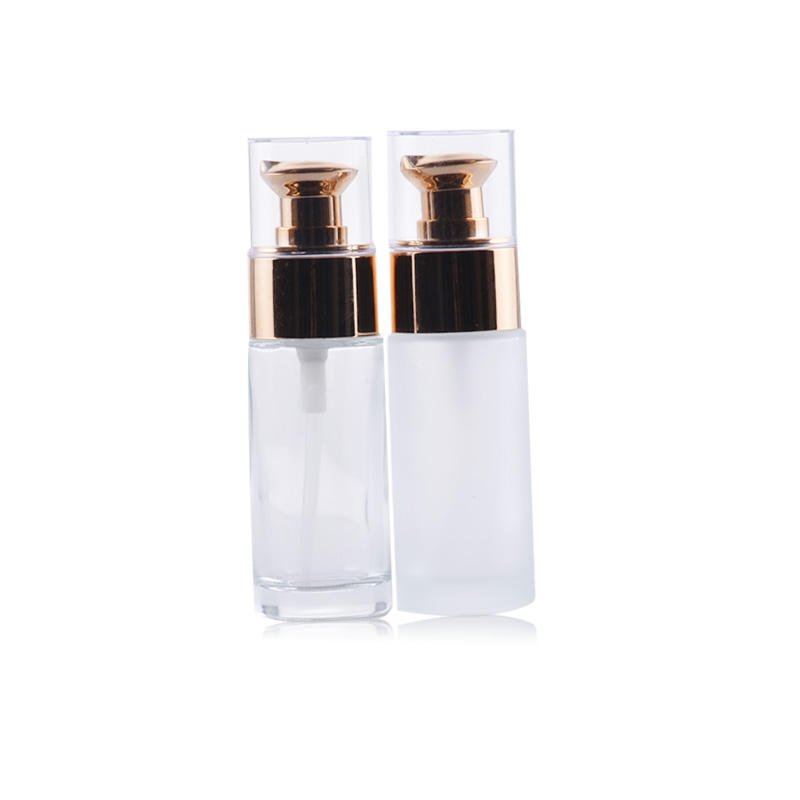
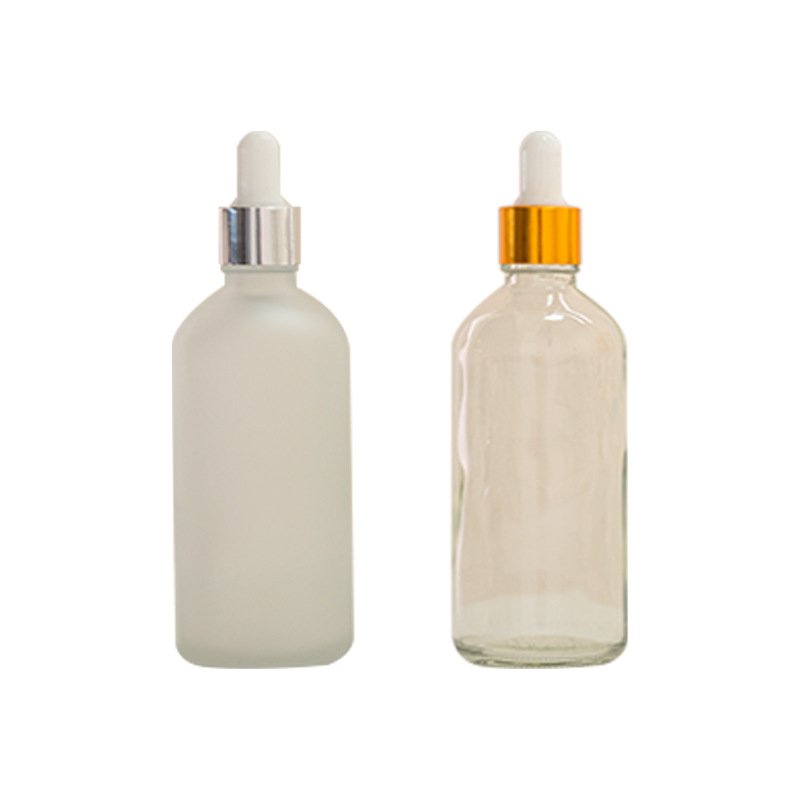
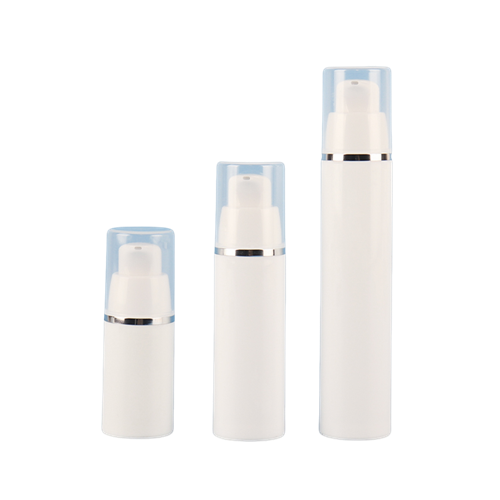
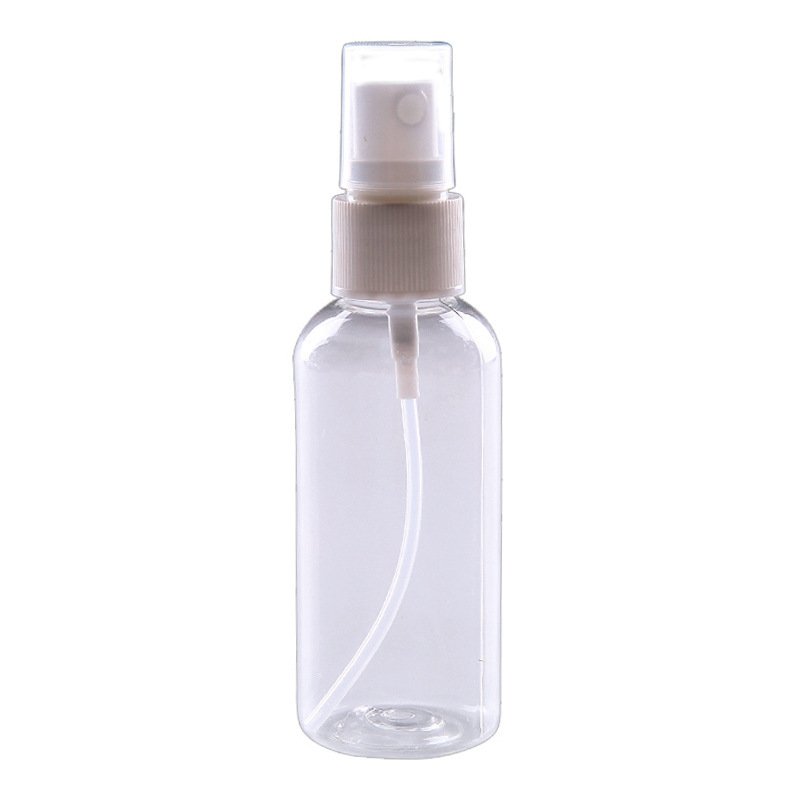
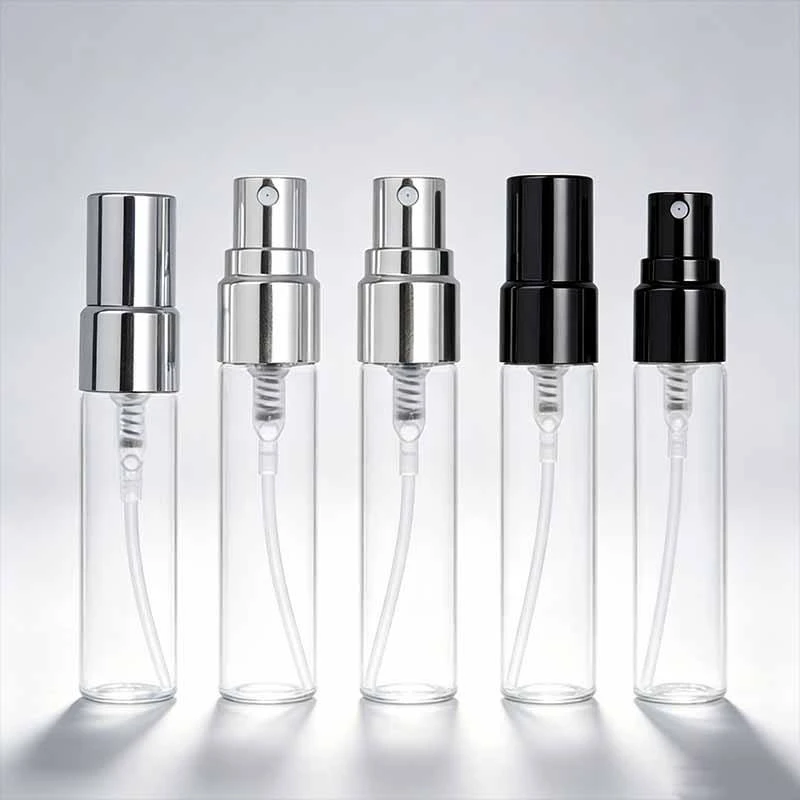
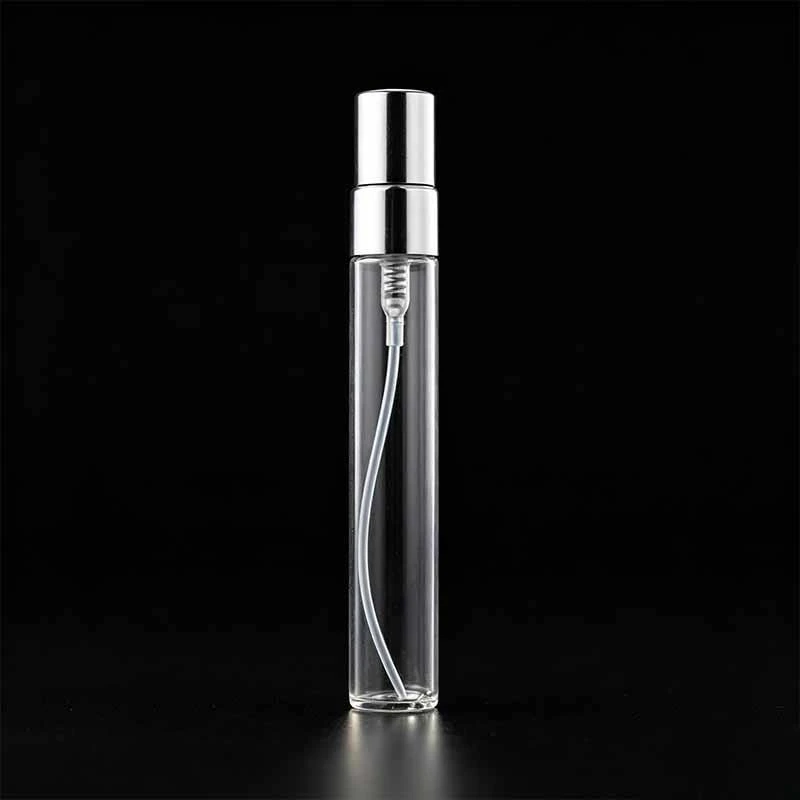
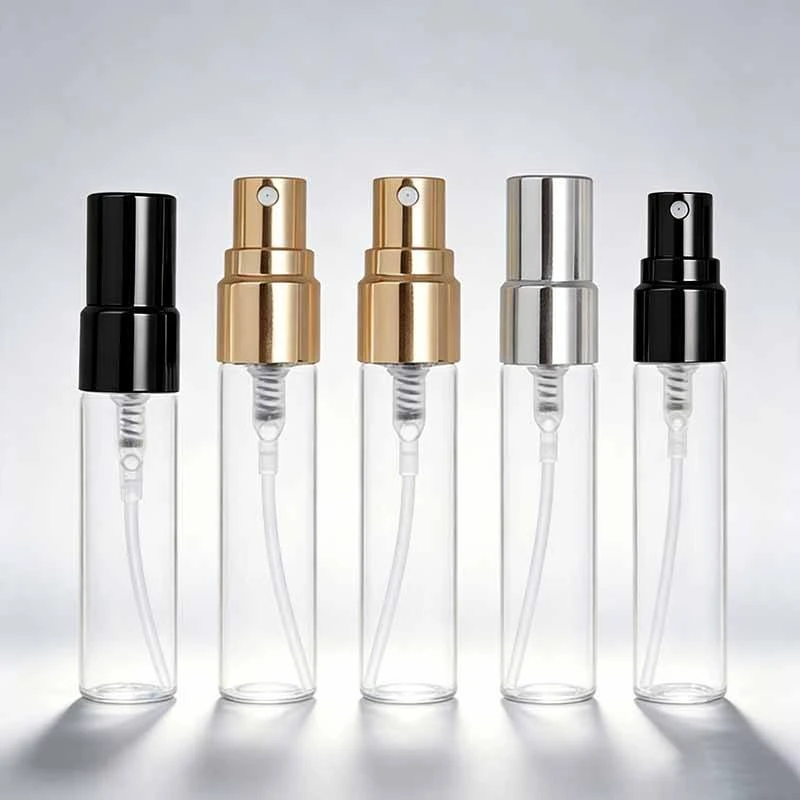
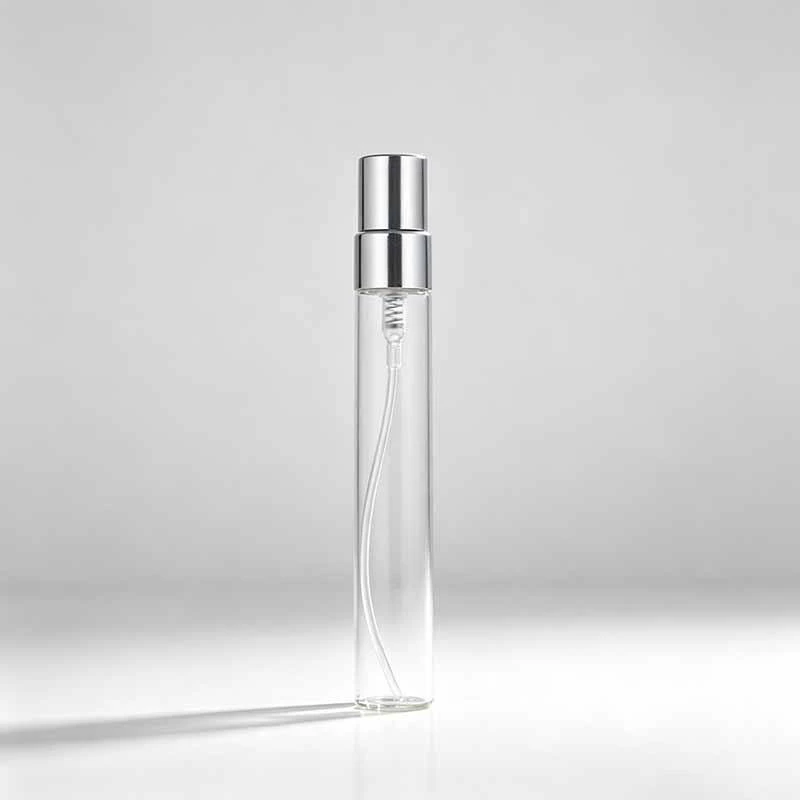
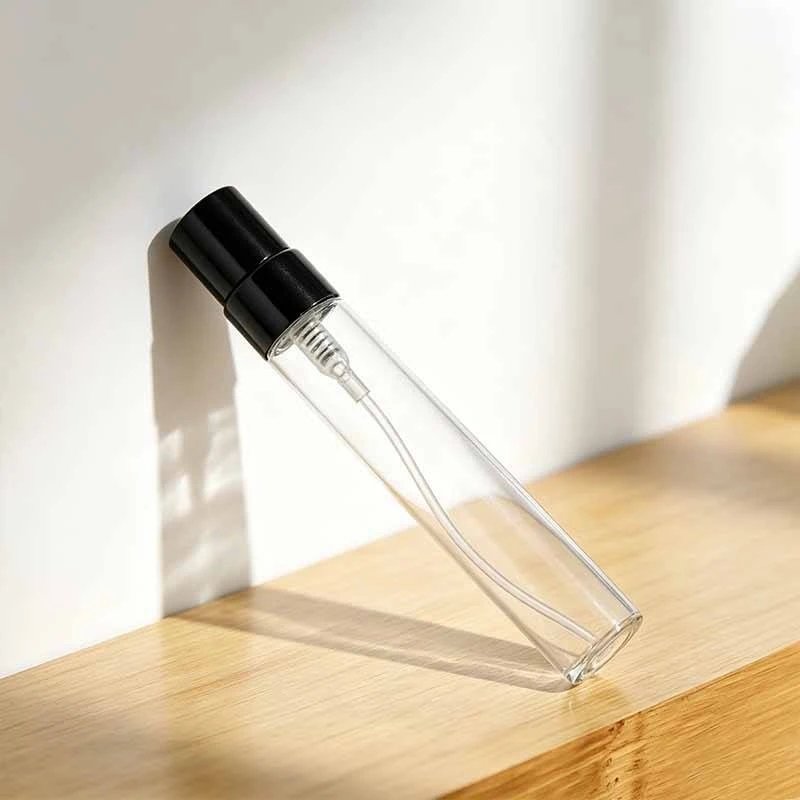
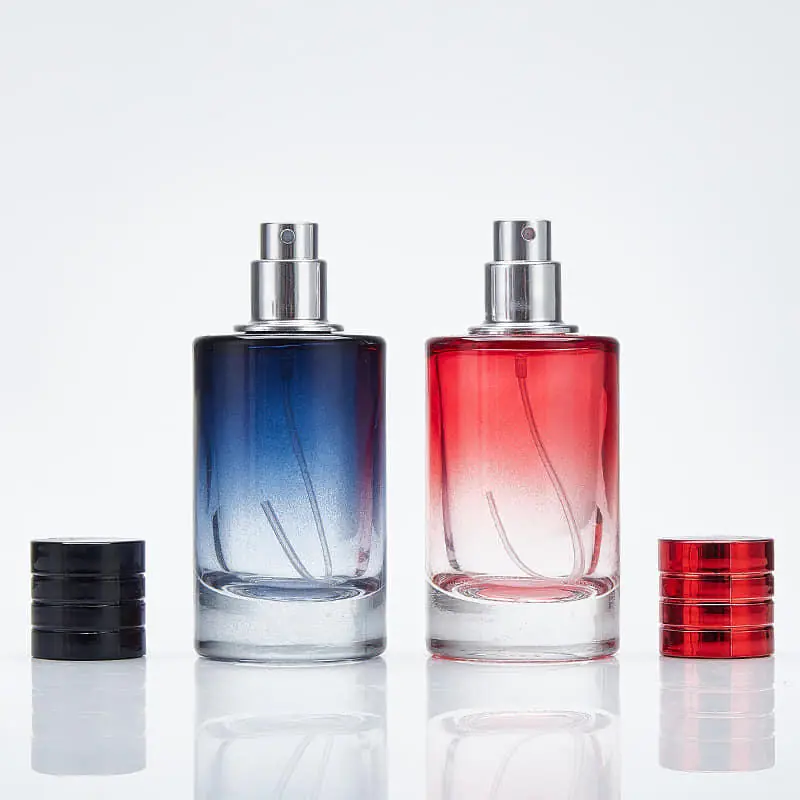
Build a fragrance sampling range around a slim, round glass vial and a compact pump sprayer. Use 2 mL for first impressions, 5 mL for discovery sets, and 10 mL for a longer-use portable format. The reference images show clear glass with gold-tone, silver-tone and black sprayer finishes. Approve the finish and assembly for each size before ordering.
Reference capacities 2, 5 and 10 mL | Body Clear round glass | MOQ 10,000 pieces
Choose a Format for Your Sampling Program
Start with the consumer experience and how the vial will be distributed. A short promotional sample needs reliable first-use priming and secure retention in a card. A discovery set needs consistent appearance across scents and enough usable liquid for comparison. A portable 10 mL format benefits from closer evaluation of cap retention, handling and repeated dispensing. Compare formats before finalizing your packaging brief. Perfume bottle size guide.
| 2 mL | Sampling card or promotional vial. Verify first spray and fit in the card. |
|---|---|
| 5 mL | Discovery set or extended trial. Check cap clearance, scent identification and retention. |
| 10 mL | Portable fragrance format. Check cap security and repeated dispensing through the fill. |
Set the labelled net fill, brimful capacity, assembly displacement and working headspace separately. On a 2 mL vial, small absolute changes in fill or liquid left in the pump can make a noticeable difference to the usable amount. Ask your filler to verify fill repeatability using the actual fragrance and the intended production line.
Technical Specifications
| Reference capacities | 2, 5 and 10 mL. Confirm net fill, brimful capacity and working headspace. |
|---|---|
| Bottle | Clear, round glass vial. |
| Dispensing | Pump sprayer. Confirm attachment, gasket, output, spray pattern and dip-tube length. |
| Visible finishes | Gold-tone, silver-tone and black shown. Confirm finish and component materials by sample. |
| Decoration | Discuss screen printing, frosting, coating or hot stamping on the selected size. |
| Dimensions and weight | Size-specific drawing and tolerance required. |
| Refilling | Confirm opening and refill mechanism and test the resealed assembly. |
| MOQ | 10,000 pieces |
| Packing and timing | Agree carton, trays or inserts and order-specific lead time in the quotation. |
Pump Fit, Filling and Refillability
Approve the neck and pump as a matched assembly
Request the vial drawing and the pump’s mating dimensions, including finish profile, sealing surface, gasket and assembly method. Confirm the cap fit, component stack height and dip-tube cut length for each size. Shared exterior styling does not establish component interchangeability. If a crimp assembly is proposed, agree the crimp tooling and acceptance criteria with your filler. Perfume bottle crimping guide.
Define a refill method before making a refill claim
The source describes the bottles as refillable but does not specify the closure or refill mechanism. If refilling is part of your program, specify how the consumer opens, fills and reseals the vial. Test the planned number of refill cycles for leakage, closure wear, cap retention and spray performance. Confirm whether any tool or adapter is required and include it in the quotation where applicable.
Measure usable spray performance
Agree priming strokes, output per full stroke, acceptable variation, mist pattern and end-of-fill residue. Measure output over repeated strokes with the actual formula at agreed temperatures. Use the measured dose, priming and residual volume to estimate usable applications. The nominal vial capacity alone cannot establish a spray count.
Fragrance and Material Compatibility
Clear glass shows the fragrance color and fill level. If the formula is light sensitive, evaluate the complete pack with its intended secondary packaging under the storage and display conditions of the launch. Approve the appearance of the fragrance in the filled vial and check whether the exposed dip tube affects the presentation.
Ask for the material specification of wetted components, including the gasket, dip tube, valve and any exposed metal. Use representative finished fragrance to evaluate changes in odor, appearance, spray pattern, leakage, mass loss and component condition. Validate each materially different formula, including alcohol-rich and oil-rich blends, with the specified closure.
Logo Printing and Set Presentation
Discuss screen printing, frosting, coating or hot stamping for the selected glass and artwork. Supply vector artwork and a finish reference, then approve a decorated vial for each size. Check minimum legible type, contrast against the fragrance, seam position, registration and print durability after handling and contact with the formula. Gold and silver describe the visible finish. Confirm the underlying material separately. Compare screen printing, hot stamping and labels.
For carded vials or multi-scent sets, approve the assembled pack with the actual vial and cap. Check retention without loading the actuator, scuffing between vials and how easily the consumer can remove one. Specify whether the quote covers loose empty bottles, assembled sets or custom cards and inserts.
Proposed Sample Approval and Quality Checks
1. Approve drawings and empty samples
Agree nominal and brimful volumes, bottle and closure dimensions, glass appearance, cap fit and dip-tube position. Define allowable appearance variation and critical defects such as chips or cracks at the neck. Keep approved samples and the drawing revision with the purchase specification.
2. Validate filled samples and the filling line
Run a representative filling and closure trial. Verify net fill, spray performance, cap retention and leakage in the orientations the product may experience during storage and transit. Set acceptable mass loss and inspection intervals, particularly for the smallest size. Agree the test conditions and pass/fail limits before releasing production.
3. Approve decoration, packing and release criteria
Approve print samples and the finished carton or discovery set. Define inspection sampling, defect classes, batch identification and release evidence. Confirm the actual glass, pump and decoration production routes with Boyu. Retain samples of the approved combination so a later component change can be assessed against the same requirements.
Export Packing and Quotation
Agree whether vials, pumps and caps ship separately or assembled. Request tray or divider details, units per carton, gross weight and carton dimensions. Protect glass-to-glass contact and prevent actuator loading in transit. For filled fragrance, have the party arranging shipment confirm the classification and transport requirements for the actual formula and route.
The MOQ is 10,000 pieces. Send the capacity and quantity split, fragrance type, closure and refill requirements, pump finish, artwork, required secondary packing and destination. Request an itemized quotation for bottles, pumps, caps, decoration, tooling if needed, samples and freight terms. Confirm the order schedule after drawing, component and artwork approvals.
For reorders or quality claims, retain approved drawings, component codes, carton labels and lot references. Document affected quantities, photographs and filling settings, and retain representative samples. Agree the reporting window and remedy process in the purchase terms.
Buyer FAQs
Confirm the neck drawing and assembly requirements for each size. Even if the same pump body fits, the dip tube and cap clearances may differ.
Is a 2 mm wall guaranteed?
The listing shows a 2 mm selector value without a size-specific tolerance or measurement location. Request the approved drawing and agree wall-distribution checks if thickness is critical.
Can I order multiple scents in one discovery set?
Provide your size, artwork and quantity split by scent, plus the insert layout. Confirm the packing scope, fragrance compatibility and lot identification for each variant.
Send your fragrance sampling brief to discuss drawings, samples and an order-specific quote. Contact Boyu Packaging.
 English
 Español de Argentina
 Русский
 Italiano
 日本語
 한국어
 العربية
 Français
 Deutsch