
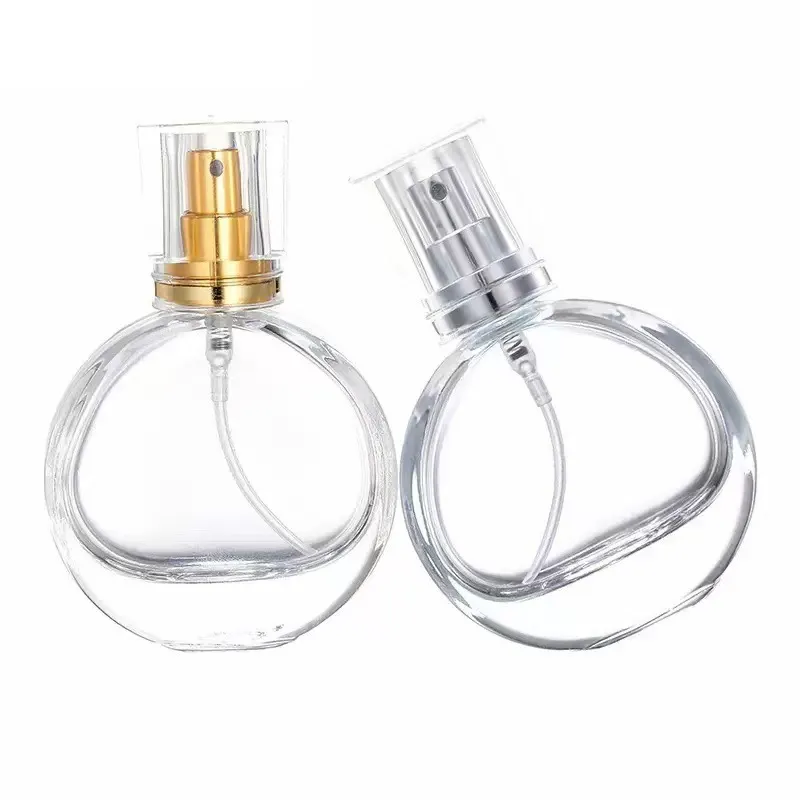
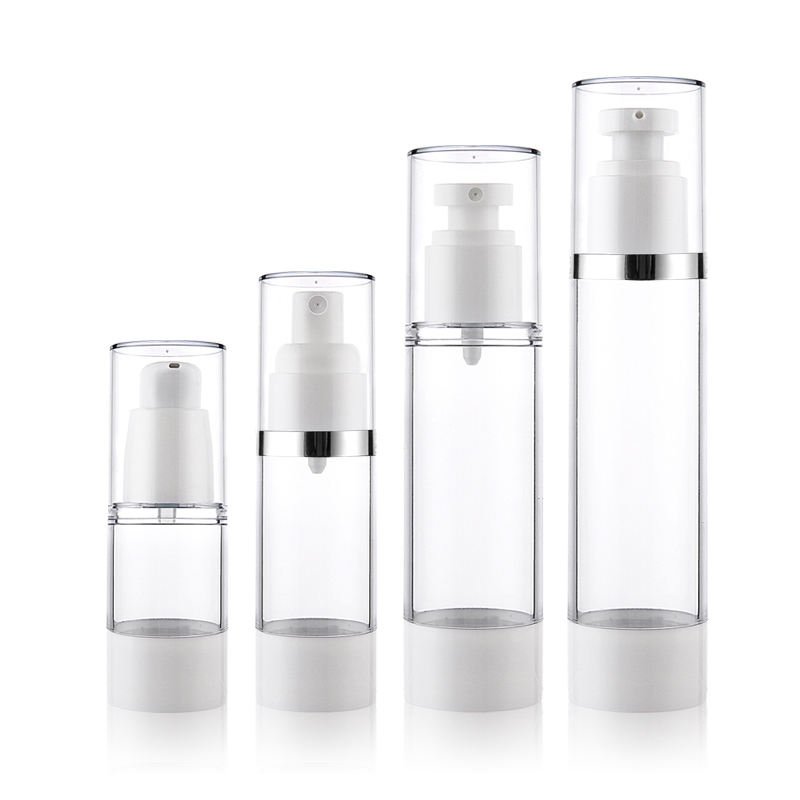
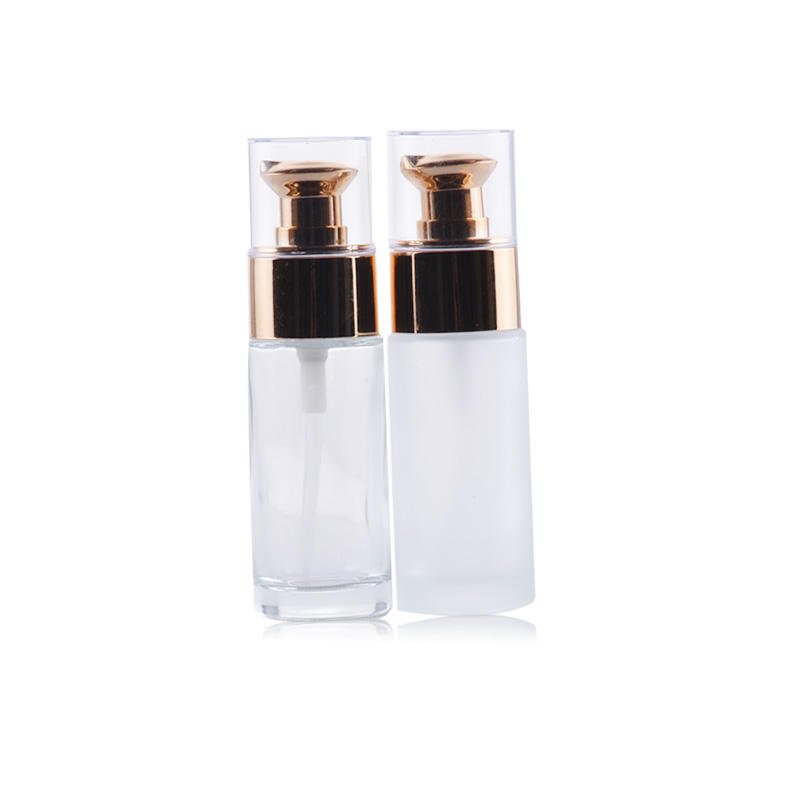
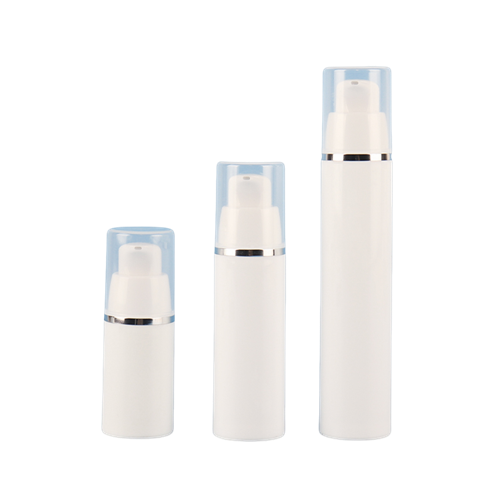
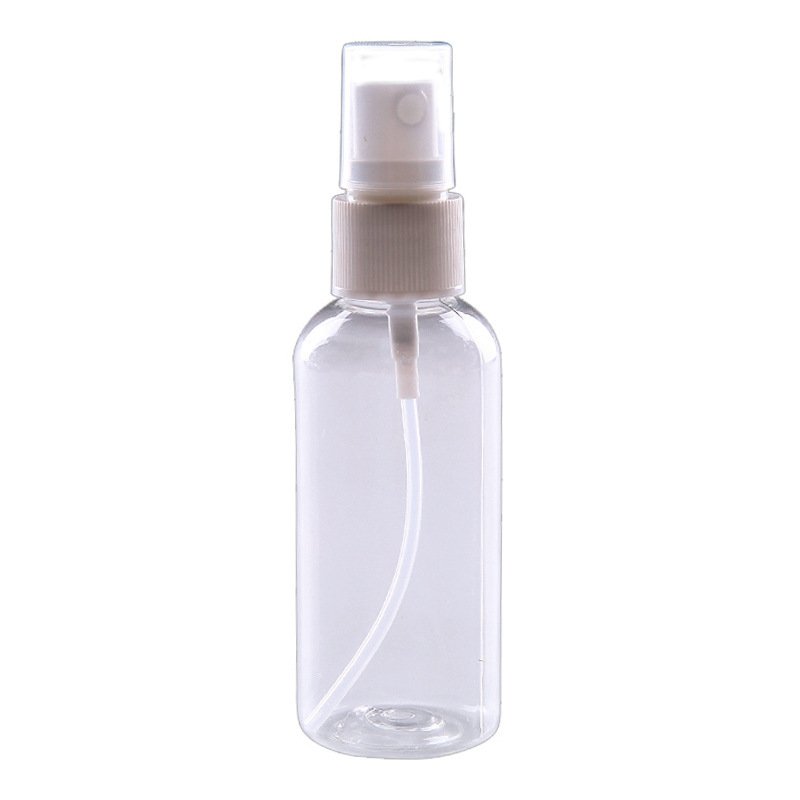
Direct answer: A standard lotion pump commonly dispenses about 0.5 to 2.0 mL per complete stroke. Compact treatment pumps and airless skincare pumps may deliver roughly 0.07–0.5 mL, while high-output personal-care pumps can deliver 2.0–3.5 mL or more. The only reliable figure for your product is the pump’s specified nominal output verified with the actual formula, bottle, dip tube, and a full press-and-release cycle.
In pump specifications, 1 cc equals 1 mL. A “2 cc pump” therefore has a nominal output of 2 mL per full stroke. Nominal output is a design target—not a guarantee that every consumer press, every formula, and every production unit will deliver exactly that amount.
Typical Lotion Pump Output Ranges
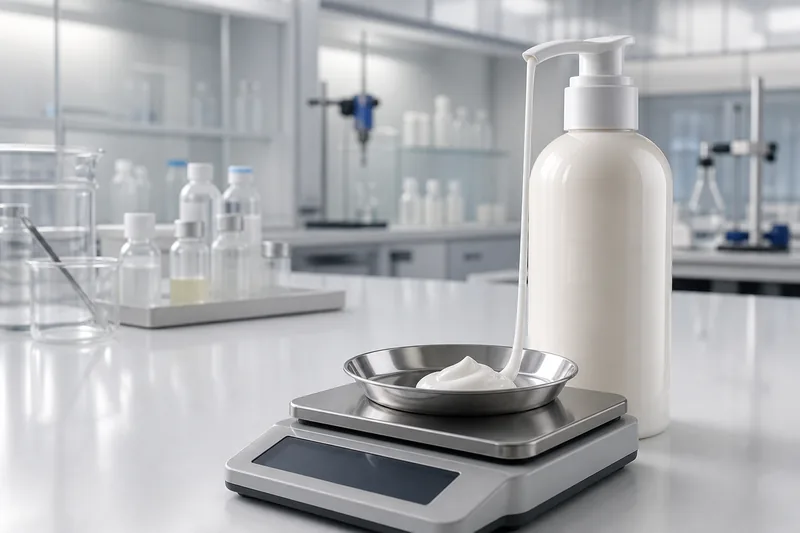
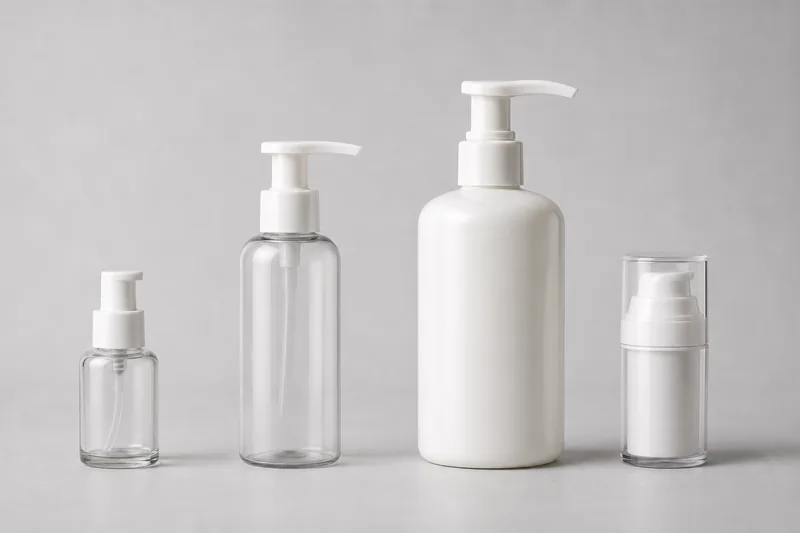
There is no single standard output for every lotion pump. Commercial pump families are designed around different chamber sizes, actuator travel, package formats, and formula applications. Supplier specifications show the spread clearly: Aptar lists atmospheric lotion pump options at 1.2 cc and 2 cc, a high-dose personal-care pump at 3.5 cc, and smaller cosmetic treatment pumps at fractions of a milliliter. Individual SKS lotion pumps are specified at either 0.5 mL or 2 cc per stroke.
| Pump/application category | Useful planning range | Typical reason for the range |
|---|---|---|
| Mini treatment or sample pump | About 0.07–0.25 mL | Small packs and concentrated facial or color-cosmetic products. |
| Compact cosmetic or airless pump | About 0.15–0.5 mL | Controlled delivery for serums, facial lotions, and higher-value formulas. |
| Standard lotion pump | About 0.5–2.0 mL | Common balance for hand lotion, facial moisturizer, liquid soap, and body-care products. |
| High-output personal-care pump | About 2.0–3.5 mL+ | Larger bottles and products that need a generous portion per use. |
These are selection ranges, not universal industry tolerances. A 24/410 pump may be available with several engine outputs, and two pumps that look similar can dispense very different volumes. Read the actual component drawing or technical data sheet.
What “Output per Stroke” Actually Means
Output per stroke is the quantity discharged through one complete actuation cycle: the actuator moves from its rest position to the designed bottom position and then returns fully. The pump chamber, piston, valves, spring, actuator travel, and nozzle work as a system to refill and discharge product.
The supplier’s nominal output is normally measured under defined test conditions using a specified liquid and procedure. It should not be confused with the first press from an unprimed pump, a partial press, the amount held in the nozzle, or the average dose a consumer happens to obtain.
Nominal output versus actual output
- Nominal output is the pump design’s stated target, such as 1.0 mL per stroke.
- Measured average output is the mean obtained from a defined sample and number of strokes.
- Stroke-to-stroke variation shows how consistent one pump is over repeated actuations.
- Pump-to-pump variation shows differences across components, cavities, assembly lots, or production batches.
A proper purchase specification states which result is controlled, the acceptable range, the test formula or reference liquid, temperature, priming method, sample size, and number of measured strokes.
Why the Actual Dispensed Amount Can Change
Formula viscosity and rheology
Viscosity matters, but it is not the only formula property. Shear-thinning behavior, yield stress, suspended particles, air entrainment, surface tension, density, and temperature can influence refill, valve sealing, flow through the dip tube, and product cut-off at the nozzle. A pump that delivers its rated volume with water may underfill, string, clog, or recover slowly with a thick cream.
Full versus partial actuation
Partial presses are not a dependable way to create half a dose. Consumers vary in speed, force, travel, and release. If the product needs a controlled 0.5 mL portion, select and validate a nominal 0.5 mL pump instead of relying on users to half-press a 1.0 mL engine.
Priming, air, and refill
An atmospheric pump must first pull product through the dip tube and fill the chamber. The initial strokes may contain air or no product, so they are excluded from steady-state output unless the study specifically evaluates consumer start-up. Loss of prime, an air leak, a restricted dip tube, or inadequate return time can reduce subsequent doses.
Temperature and component condition
A cold lotion may flow more slowly than the same product at room temperature. Aging can also change the formula, gasket, valve, spring, or piston behavior. Test at relevant storage and use conditions, then repeat after compatibility and stability exposure—not only on new components.
How to Measure Lotion Pump Output per Stroke
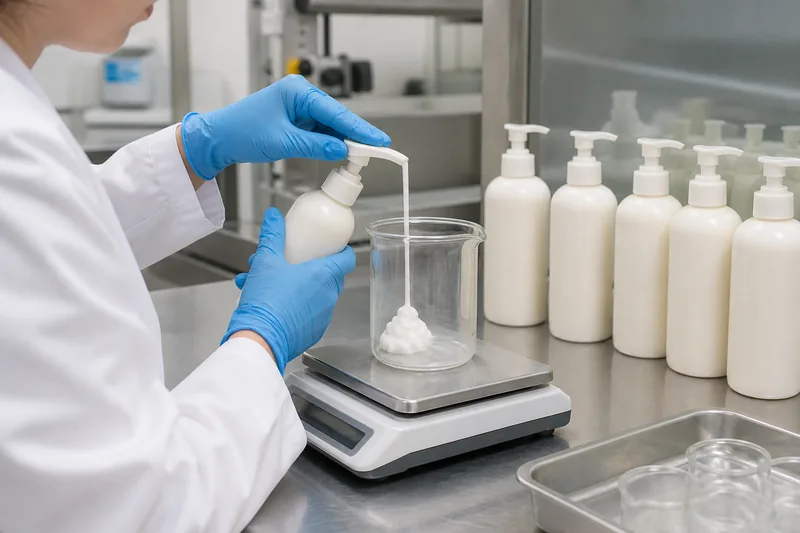
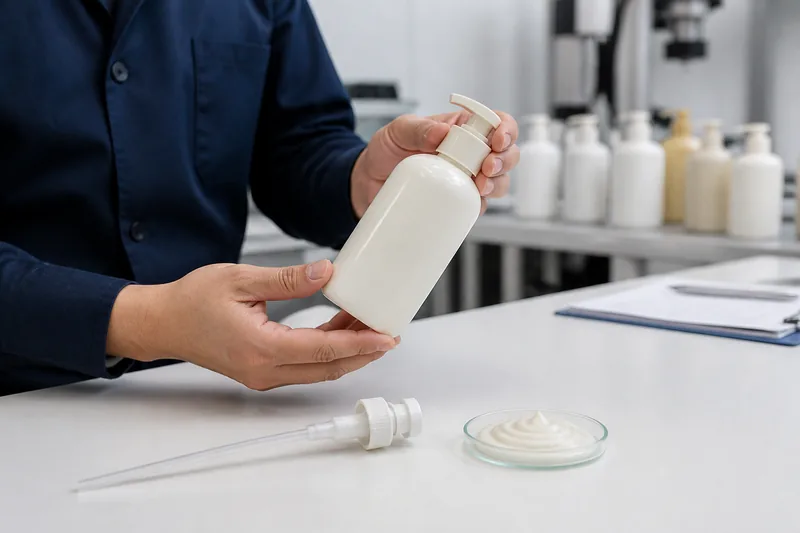
A gravimetric method—measuring mass on a balance—is usually more practical and repeatable than trying to read a small volume in a graduated cylinder, especially with viscous products. Convert mass to volume only when the product density at the test temperature is known.
Practical gravimetric test procedure
- Condition the formula, pumps, and representative bottles at the stated test temperature.
- Install the correct pump, gasket, and dip tube on the intended bottle and fill to the defined level.
- Prime each pump with complete strokes until the flow is continuous and free from visible air.
- Tare a suitable clean weighing vessel on a balance with resolution appropriate for the dose.
- Dispense a defined number of complete strokes—often 10 or more—allowing the actuator to return fully between strokes.
- Record the net mass. Divide by the number of strokes to obtain average grams per stroke.
- When volume is required, calculate: mL per stroke = grams per stroke ÷ density in g/mL.
- Repeat across the planned number of pumps and report the mean, minimum, maximum, and variation required by the quality plan.
For example, if 10 strokes produce 18.4 g of lotion and the lotion density is 0.96 g/mL, the average output is 18.4 ÷ 10 ÷ 0.96 = approximately 1.92 mL per stroke. Do not assume every lotion has a density of 1 g/mL.
Test more than the beginning of the bottle
Measure output after priming, during normal mid-pack use, and near the end of evacuation. Include repeated actuation, pause periods, different orientations where relevant, and aged samples. Also record priming strokes, actuation force, dose consistency, leakage, dripping, clogging, and residual product; a consistent dose is not useful if the pack leaks or leaves too much lotion inaccessible.
Boyu’s overview of cosmetic lotion bottles highlights the need to match pump type to formula viscosity. Brands evaluating smaller protected dispensing systems can also compare airless pump bottle formats.
How to Choose the Right Pump Output
Start with the amount of product the user should reasonably apply, not with the pump that happens to fit the bottle. Then balance product value, use area, bottle size, expected number of presses, accessibility, formula flow, and the brand’s desired dispensing experience.
| Decision question | Why it changes pump output |
|---|---|
| Is the product for face, hands, or body? | Facial products generally need a smaller controlled portion than body lotion or cleanser. |
| What is the intended amount per application? | The pump should deliver a convenient portion in one or a small number of full strokes. |
| What is the fill volume? | A high-output engine may empty a small bottle too quickly; a low-output engine may make a large bottle frustrating. |
| How valuable or concentrated is the formula? | Smaller metered output can reduce accidental over-dispensing. |
| Can the pump refill with the real formula? | A nominal dose is irrelevant if viscosity, particles, or air cause incomplete refill. |
| Who will use it? | Required actuation force, stroke length, grip, and one-handed use affect accessibility and dose consistency. |
Also confirm the complete package: neck finish, closure seal, dip tube length and cut, actuator lock, nozzle geometry, formula compatibility, transport protection, and decoration. A pump output number does not confirm that the pump will seal on the bottle. The Boyu article on cosmetic bottle leakage explains why closure fit, seals, formula, and shipping need to be evaluated together.
What to Specify to a Lotion Pump Supplier
Include the following in the RFQ or technical specification:
- Target nominal output in mL or cc per complete stroke.
- Acceptable mean output and unit-to-unit or stroke-to-stroke limits.
- Product category, formula viscosity range, density, particles, and compatibility risks under confidentiality controls.
- Bottle material, capacity, neck-finish drawing, fill level, and headspace.
- Dip tube material, inner diameter, length, bottom clearance, and cut style.
- Actuator, nozzle, lock type, gasket, spring or metal-free-path requirements, and color/decoration.
- Priming limit, actuation force, leakage criteria, product evacuation target, and transport conditions.
- Test method, reference liquid or final formula, temperature, sample size, and number of strokes.
Request production-representative samples and test them before approving mass production. Supplier data can narrow the choice, but it does not replace validation of the final formula-package system.
Frequently Asked Questions
Is 1 cc the same as 1 mL for pump output?
Yes. One cubic centimeter (cc) equals one milliliter (mL). A pump specified at 2 cc has a nominal volumetric output of 2 mL per complete stroke.
How many pumps are in a 250 mL lotion bottle?
Divide 250 mL by the pump’s nominal output. A 1 mL pump gives about 250 theoretical full strokes; a 2 mL pump gives about 125. Actual usable strokes depend on priming, output variation, leakage, and residual product.
Can I measure just one pump stroke?
One stroke is a weak estimate because balance resolution, product tailing, bubbles, and stroke variation can distort the result. Measure a series of complete strokes after priming and test multiple pumps.
Does thicker lotion make a pump dispense more or less?
Often less or less consistently if the pump cannot refill completely, but the outcome depends on the engine, dip tube, valves, nozzle, formula rheology, temperature, and actuation timing. Test the actual formula rather than predicting from viscosity alone.
Is a half press equal to half the pump’s stated output?
Not reliably. Partial actuation varies by user and may not discharge a proportional fraction of the chamber. Select a smaller metered pump when a smaller repeatable dose is required.
Sources
- Aptar — GS/GSA K2 atmospheric lotion pump specifications (1.2 cc and 2 cc)
- Aptar — HDP high-dose lotion pump specifications (3.5 cc)
- Aptar Beauty — Metropolitan cosmetic pump specifications (150, 280 and 500 mcl)
- Aptar — PAV dispenser specifications (130, 200 and 500 mcl)
- SKS Bottle & Packaging — 0.5 mL lotion pump specification
- SKS Bottle & Packaging — lotion pump examples at 0.5 cc and 2 cc

 English
  Español de Argentina
  Русский
  Italiano
  日本語
日本語  한국어
한국어  العربية
  Français
  Deutsch