


Why Don’t Spray Bottles Work Anymore? Causes, Fixes and Sprayer Selection Guide
You squeeze the trigger, but nothing comes out—or the bottle spits, drips, sprays sideways or only works when tilted. So, why don’t spray bottles work anymore? In most cases, the liquid path has been blocked, the pump cannot create suction, the dip tube is drawing air, or the formula is not compatible with the sprayer.
For one bottle, cleaning or priming may solve the problem. If the same fault appears across multiple finished products, however, the cause is usually a packaging specification, component-fit or formula-compatibility issue. This guide explains the fast fixes first, then shows how a spray bottle works and how brands can prevent failures before mass production.
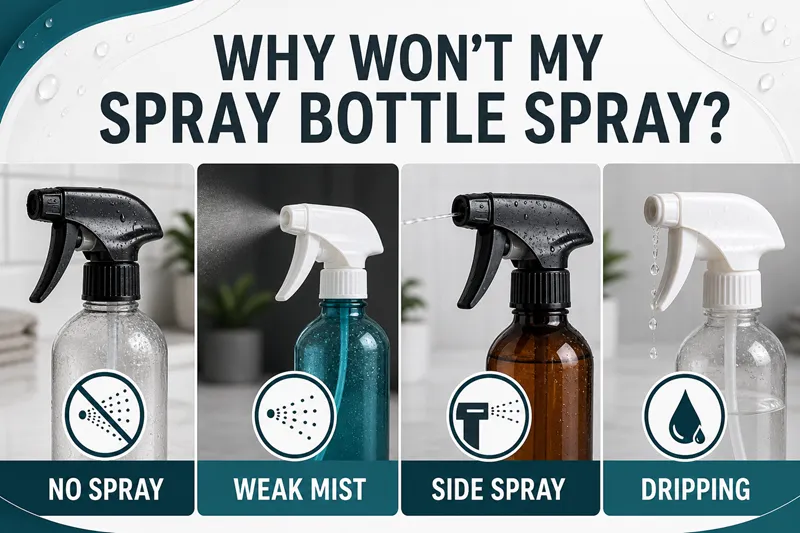
Quick Diagnosis: Match the Symptom to the Fault
| Symptom | Likely Cause | First Fix |
|---|---|---|
| No spray at all | Locked or clogged nozzle, stuck pump or blocked tube | Unlock, prime, soak and flush the head |
| Sprays air only | Detached, cracked, short or empty dip tube | Reconnect the tube and check its length |
| Weak mist or dribble | Partial clog, air leak, low pump pressure or thick formula | Flush, tighten the closure and test with water |
| Uneven or sideways spray | Residue or damage at the tiny nozzle orifice | Clean gently; replace if the insert is damaged |
| Works only when tilted | Dip tube too short or incorrectly cut | Use the correct tube length and angle |
| Leaks around the neck | Loose closure, damaged gasket or incompatible neck | Check torque, gasket and neck specification |
| Trigger stays down | Dried formula, stuck piston or failed spring | Flush the mechanism; replace the sprayer if needed |
How Does a Spray Bottle Work?
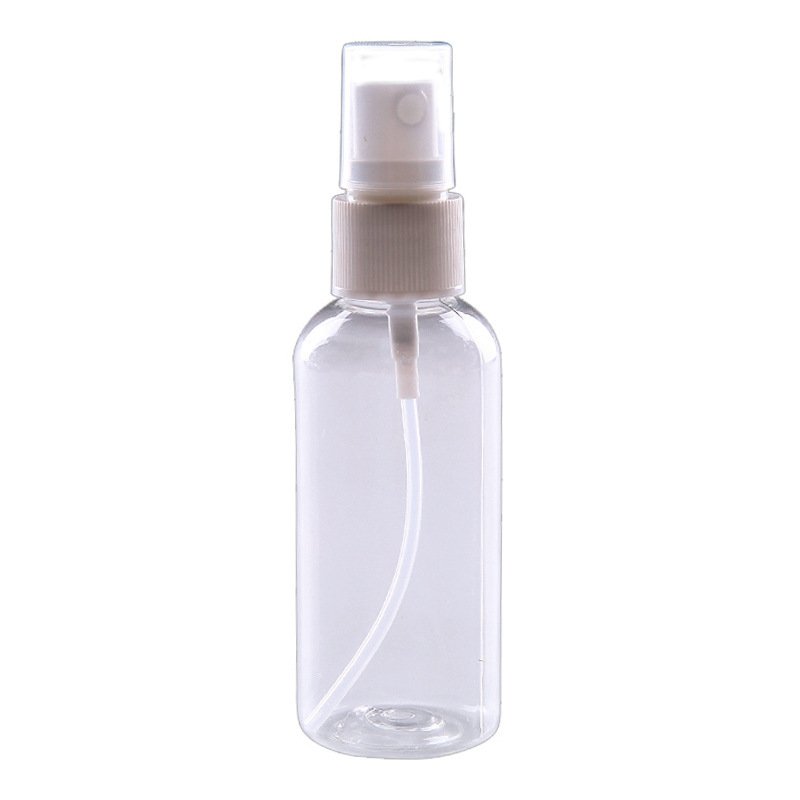
A trigger or fine-mist sprayer is a small reciprocating pump. When the trigger is pulled or the actuator is pressed, a piston moves inside the pump chamber. This closes the inlet valve and forces liquid through the outlet passage and nozzle. The nozzle insert breaks the liquid into droplets, producing a stream, spray or fine mist.
When the trigger is released, the spring returns the piston. The expanding chamber creates a pressure difference that opens the inlet check valve and draws more liquid up the dip tube. The chamber refills for the next stroke. A leak, blockage or worn seal interrupts this cycle.
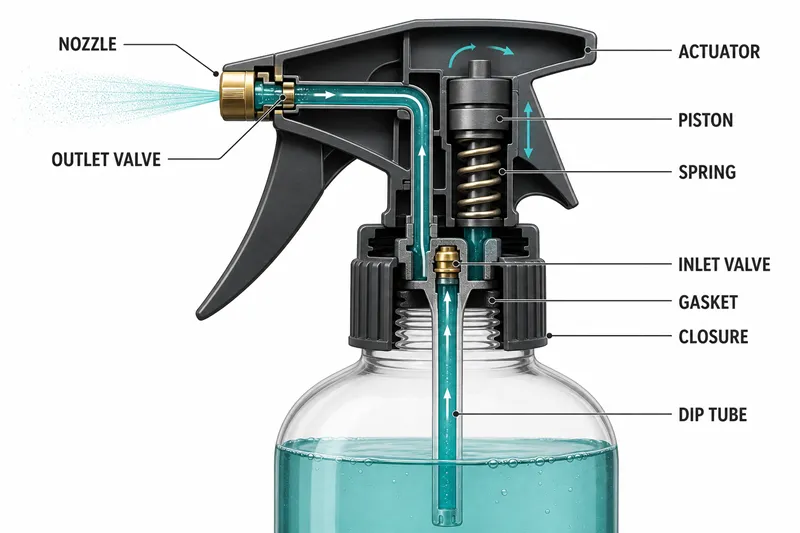
Spray Bottle Structure and What Happens When Each Part Fails
Nozzle and Orifice
The nozzle controls the spray pattern and droplet size. Dried product, minerals, powders or shimmer particles can partially block its tiny passages. The result may be no spray, a weak stream or spray deflection. Remove the spray head and pump warm water through it. Avoid aggressively enlarging the orifice with a metal pin because that can permanently change the pattern.
Actuator or Trigger
The actuator transfers finger movement to the piston. A cracked hinge, distorted trigger or poor engagement produces a loose feel and incomplete stroke. Cleaning helps only when residue causes sticking; damaged plastic normally requires a new sprayer head.
Piston and Pump Chamber
The piston creates pressure on the forward stroke and suction on the return stroke. Wear, deformation or dried formula prevents a proper seal. Symptoms include weak output, slow priming and a trigger that moves without resistance. Sealed consumer pumps are rarely economical to rebuild, so replacement is usually the practical fix.
Spring
The spring returns the piston after each stroke. If it corrodes, deforms or loses force, the trigger may stay depressed or return slowly. Spring material and location matter for formulas that may attack metal. A failed internal spring generally means replacing the pump.
Inlet and Outlet Check Valves
One-way valves keep liquid moving in the correct direction. Residue can hold a valve open or closed. An inlet-valve fault prevents liquid from entering the chamber; an outlet-valve fault can cause dripping, poor pressure or backflow. Repeated pumping with warm water may release residue, but a deformed valve is not reliably repairable.
Gasket, Seals and Closure
The gasket seals the sprayer against the bottle neck. Wrong neck dimensions, insufficient torque, gasket damage or chemical swelling can introduce air and cause leakage. Tightening may solve a loose closure, but a mismatched neck finish and closure must be corrected at the specification level.
Dip Tube
The dip tube carries liquid from the container to the pump. It must remain attached, reach the lowest usable point and have a cut that does not seal against the bottle base. A detached or cracked tube produces air-only pumping; a short tube leaves unusable product; an overly long tube may curl and restrict flow.
Step-by-Step: How to Fix a Spray Bottle That Will Not Spray
- Check the lock: turn the nozzle or actuator to the open position.
- Confirm liquid level: keep the tube end submerged and hold the bottle upright.
- Tighten the closure: an air leak can prevent priming, but do not overtighten and damage the threads.
- Prime the pump: make several full, steady strokes to fill the chamber.
- Inspect the tube: remove the head and check connection, cracks, blockage, length and cut angle.
- Flush the system: place the tube in warm water and pump until the spray becomes consistent.
- Clean the nozzle: soak removable parts in warm water and use a soft brush. Follow the formula supplier’s safety guidance for stronger cleaning agents.
- Test with water: if water sprays but the product does not, viscosity or particles are likely the real issue.
- Replace the head: do this when the spring, piston, valve, seal, trigger or orifice is physically damaged.
Why Formula Compatibility Matters
A sprayer that works with water may fail with the finished formula. High viscosity slows suction and prevents atomization. Suspended powders, botanicals, salts or shimmer can clog valves and nozzle channels. Oils, alcohol, fragrances, oxidizers and solvents may swell gaskets, stress plastics or corrode springs.
Brands should test the actual formula in the complete bottle and sprayer—not only individual components. Evaluation can include priming strokes, output per stroke, spray pattern, actuation force, leakage, upright and inverted storage, elevated-temperature aging and transportation conditions appropriate to the product.
What Type of Sprayer Is Best?
The best spray head is the one matched to the formula, dose, spray pattern and consumer use.
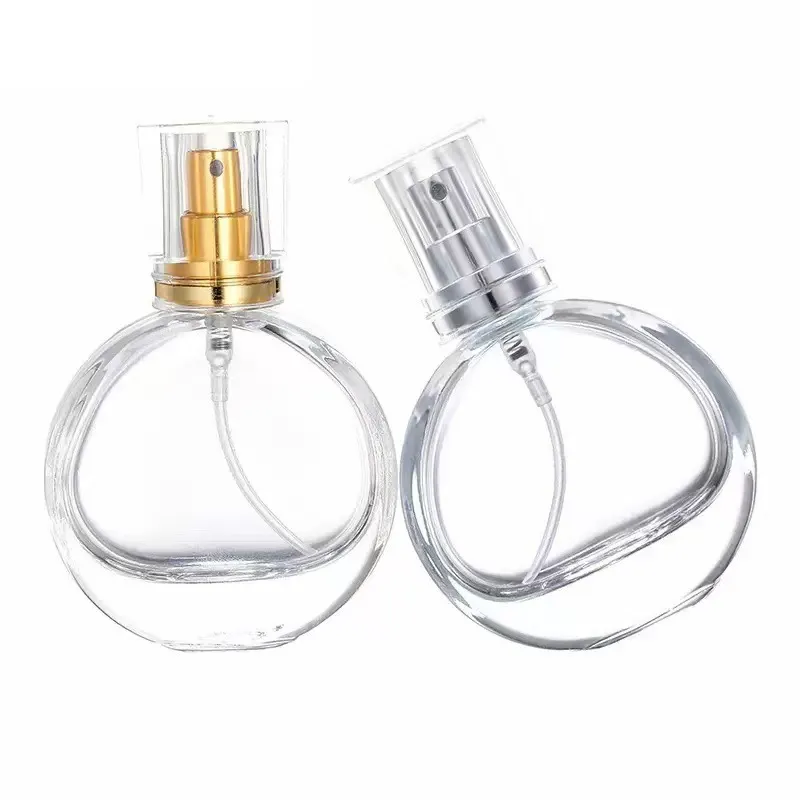
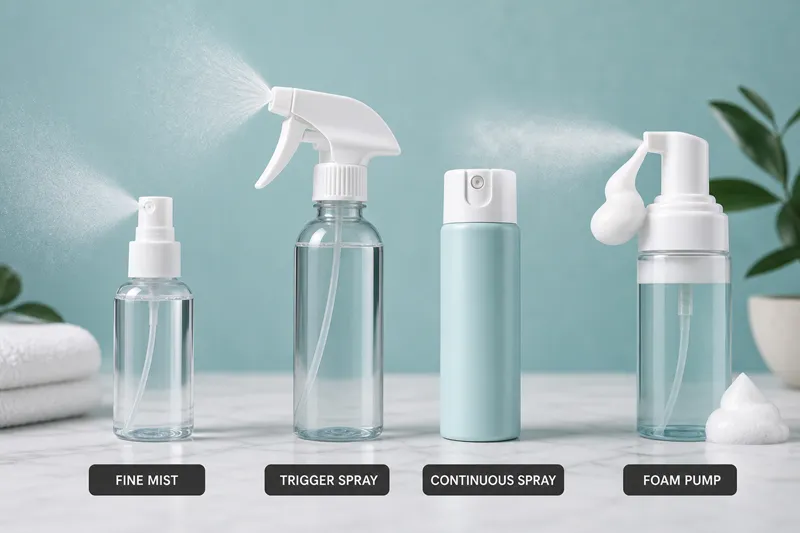
- Fine-mist sprayer: best for perfume, facial mist, toner and light hair products requiring small droplets.
- Trigger sprayer: offers higher output and comfortable repeated use for household, salon and larger personal-care formats.
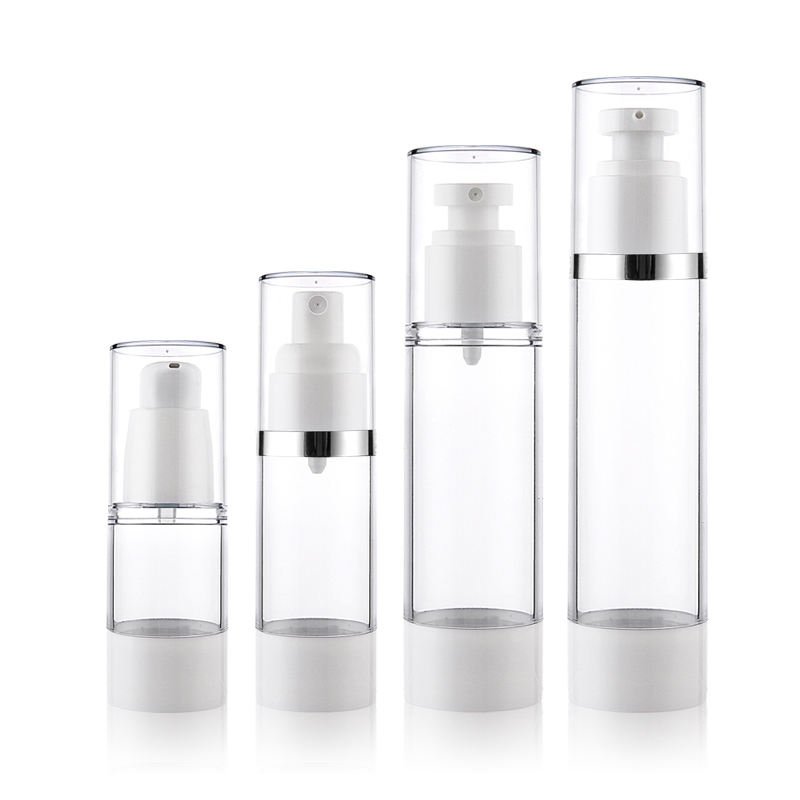
- Continuous or pre-compression sprayer: can provide a more uniform, longer spray, but must be validated for formula and package requirements.
- Foam pump: mixes liquid with air to dispense foam and is suitable only for formulas designed to foam. Explore Boyu’s foam pump bottles.
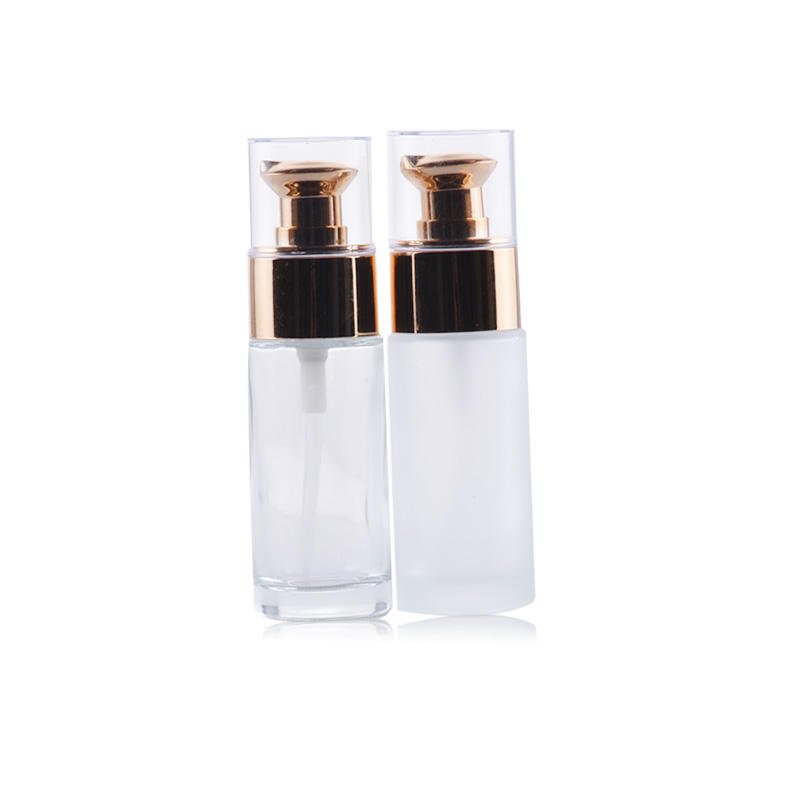
- Lotion pump: suits thicker lotions that should be dispensed as a dose rather than atomized. See lotion bottle packaging.
For custom projects, review Boyu Packaging’s spray bottle options and broader cosmetic packaging range. Project-specific materials, output, MOQ, testing and lead time require Boyu confirmation.
How Brands Can Prevent Sprayer Failures
- Define the bottle neck finish, closure and gasket as a matched system.
- Confirm dip-tube length and cut using an approved assembled bottle.
- Test the actual formula for viscosity, particles and chemical compatibility.
- Approve spray pattern, output, priming strokes and actuation force.
- Set leak, aging, transport and functional inspection criteria before production.
- Retain approved samples and control component or material changes.
Frequently Asked Questions
Why does my spray bottle pump air but no liquid?
The dip tube is probably detached, cracked, blocked, too short or no longer submerged. Reconnect it, inspect for damage and verify that it reaches the lowest point of the bottle.
How do I unclog a spray bottle nozzle?
Remove the sprayer, place the tube in warm water and pump until clean water sprays consistently. Soak removable nozzle parts and clean them gently. Replace the insert if its orifice is damaged.
Why does the sprayer work with water but not my product?
The formula may be too viscous or contain particles that the pump and nozzle cannot handle. Select a higher-output or larger-passage dispenser and validate it with the actual product.
Can a broken spray pump be repaired?
Clogs, air locks and detached tubes can often be fixed. A broken spring, piston, valve, seal, trigger or nozzle insert usually requires replacement of the complete spray head.
What information does a spray bottle supplier need?
Provide formula type, viscosity and particles; bottle volume and neck finish; target output and spray pattern; use orientation; decoration; estimated quantity; filling process; market; and testing requirements.
Choose a Spray System That Works with Your Formula
Discuss Your Spray Bottle Project with Boyu Packaging
A reliable package depends on the bottle, neck, gasket, pump, dip tube and formula working together. Share your formula characteristics, target spray pattern, volume and design requirements with Boyu Packaging for a component-matching review.
 English
  Español de Argentina
  Русский
  Italiano
  日本語
日本語  한국어
한국어  العربية
  Français
  Deutsch