
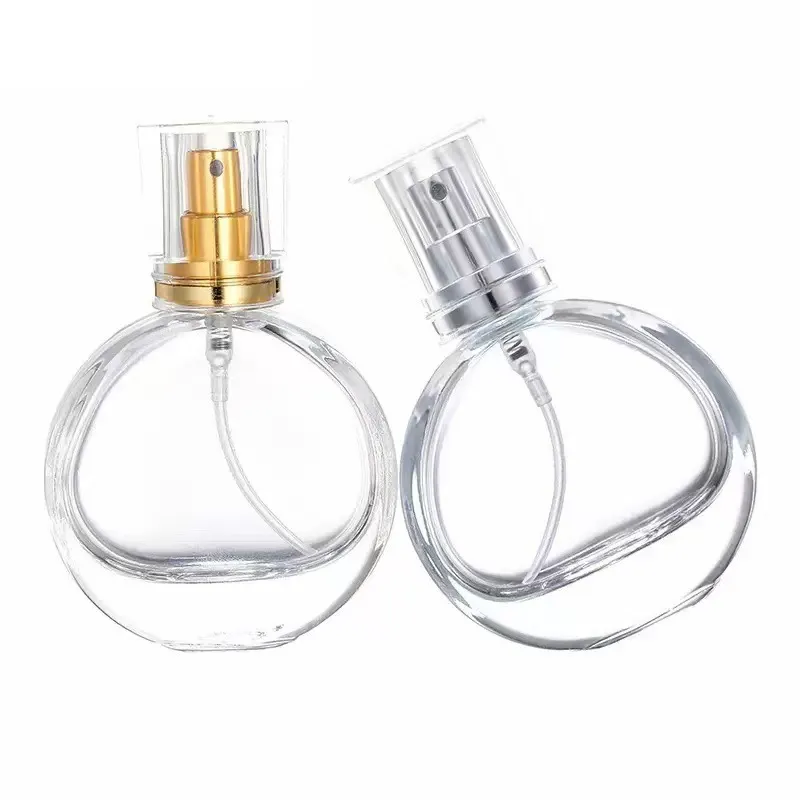
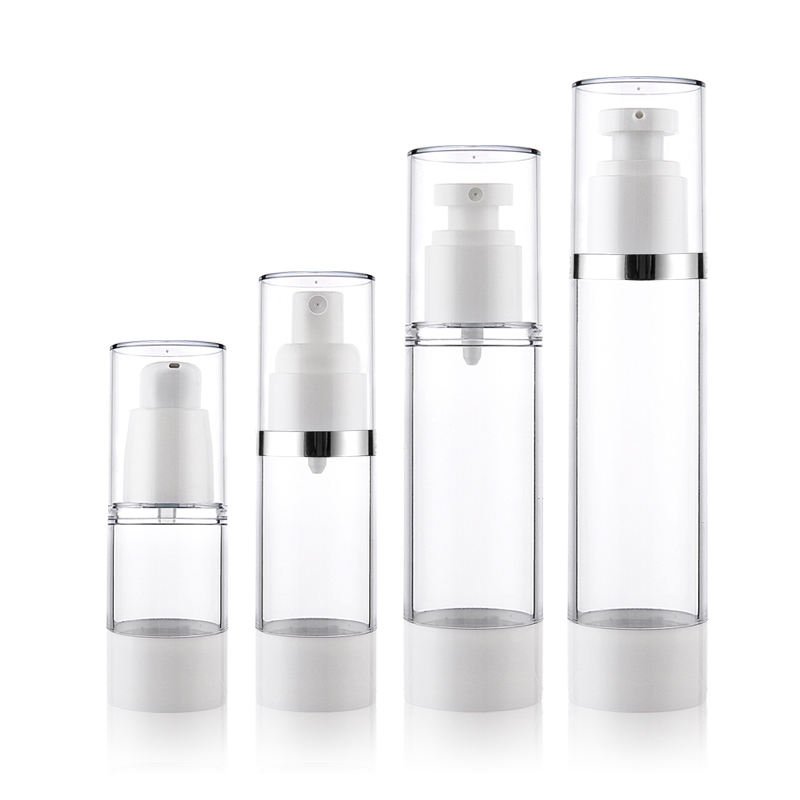
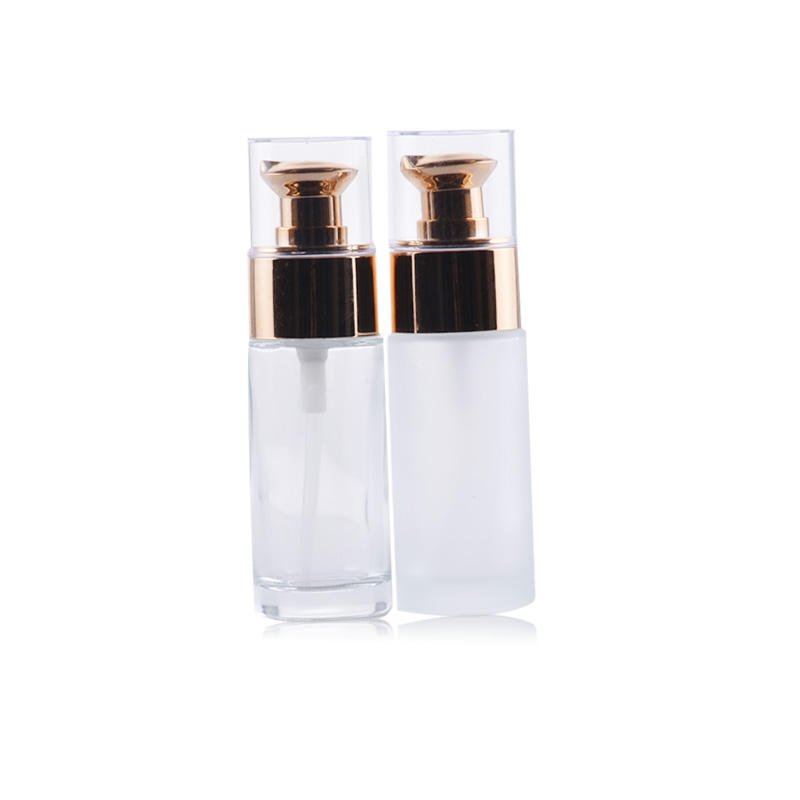
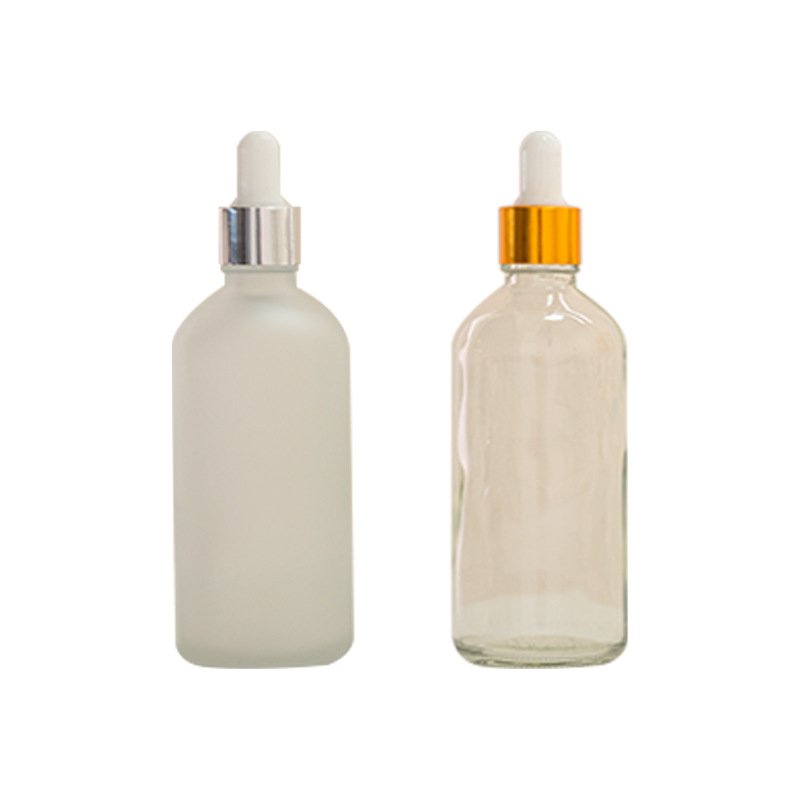
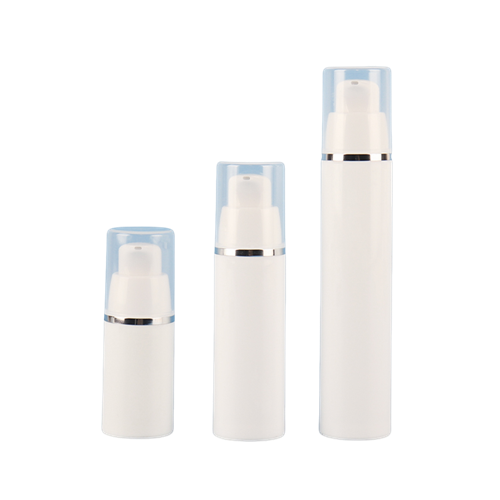
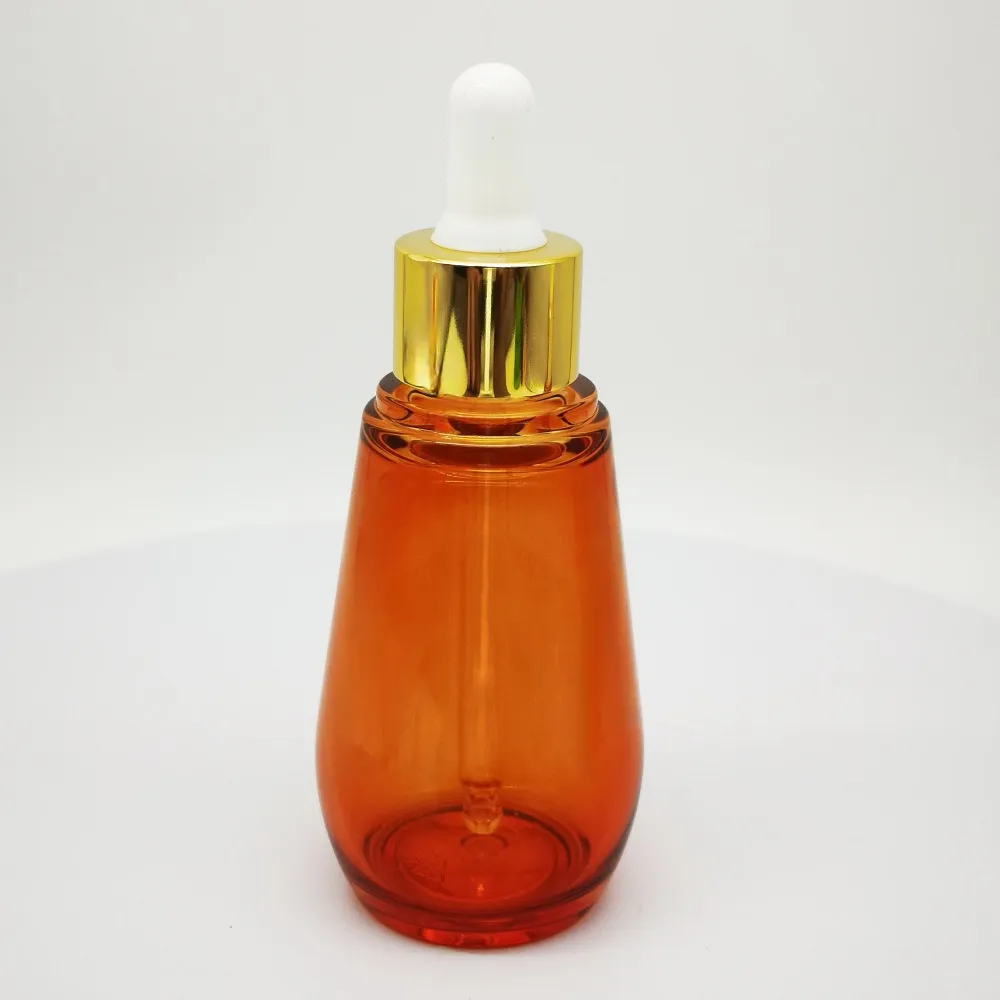
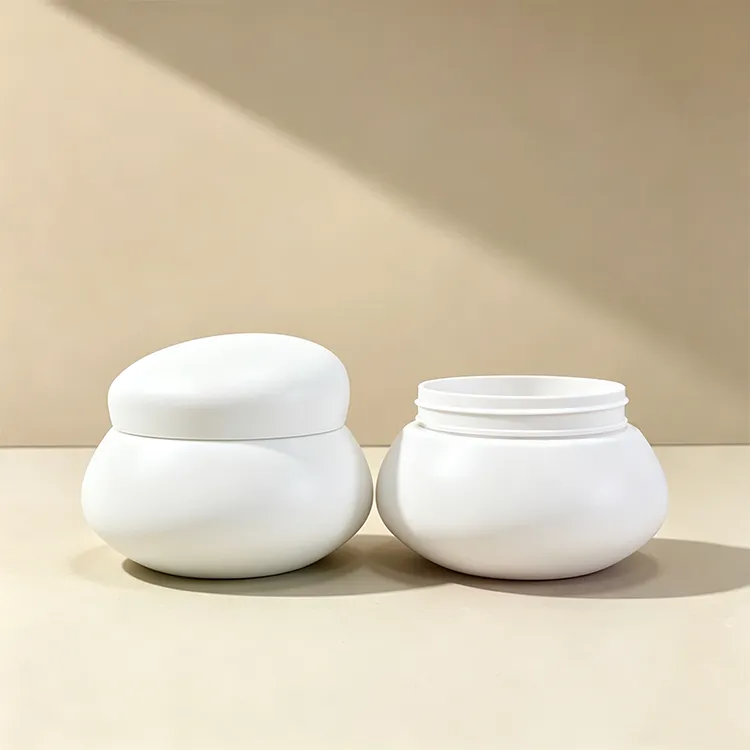


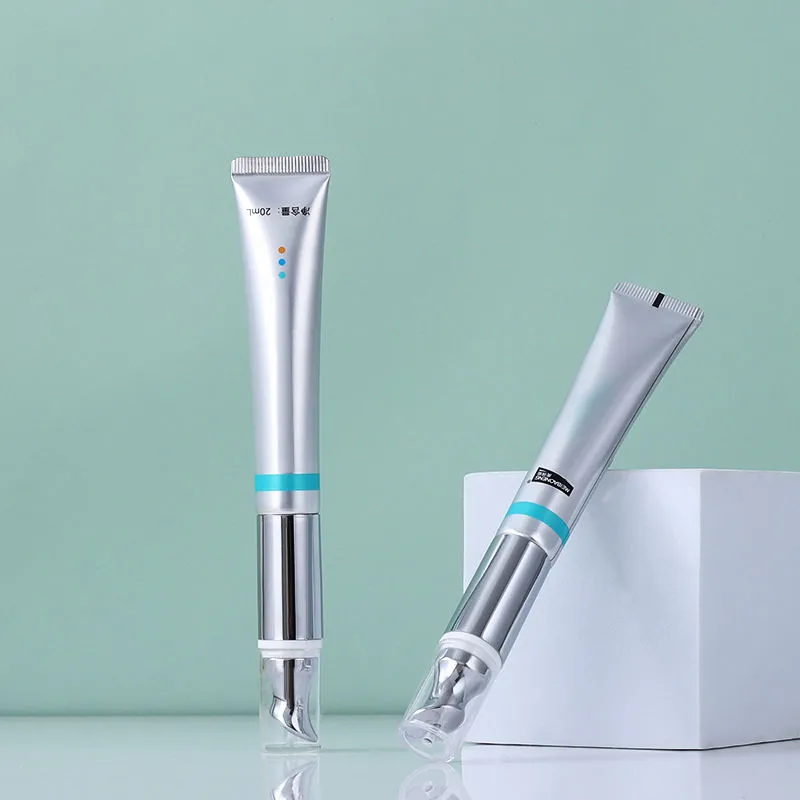
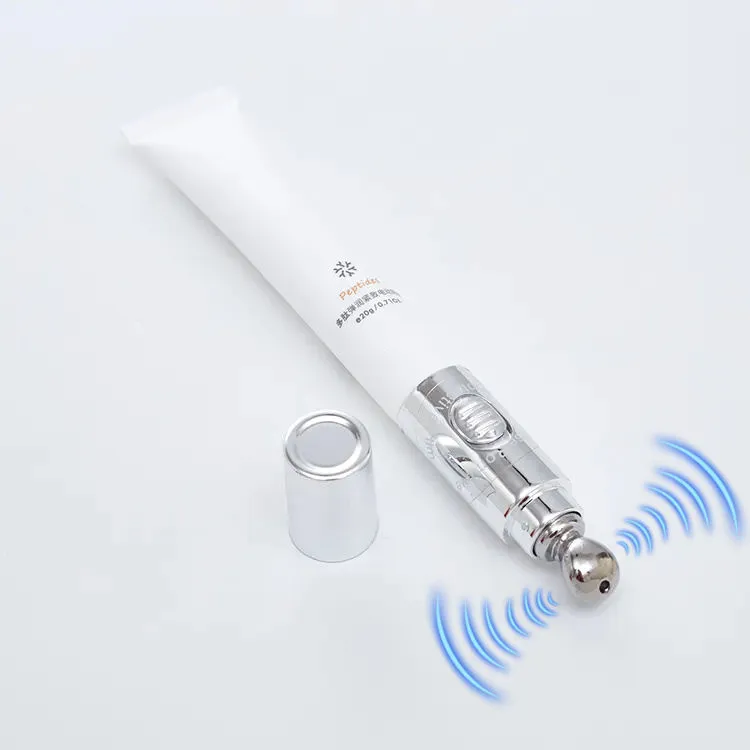
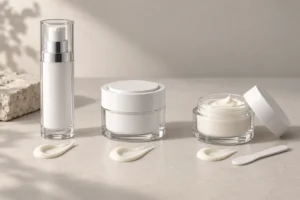
Direct answer: choose an airless bottle for a pumpable face cream that needs controlled one-hand dosing and reduced repeated exposure to air and fingers. Choose an airless jar when the formula can be pumped but the product should retain a stable, wide cream-jar presentation and top-press ritual. Choose a conventional jar for very stiff, high-yield, whipped or particulate creams that must be scooped—or when simplicity, easy filling and complete manual access matter more than enclosed dispensing.
Cream “concentration” alone does not decide the pack. The decisive properties are rheology at realistic temperatures and shear rates, yield stress, thixotropic recovery, particle size, aeration, formula sensitivity, required dose and the performance of the exact package. No universal viscosity cut-off safely separates bottle, airless jar and open jar.
This guide is for skincare brands, formulators, packaging engineers, contract fillers and sourcing teams choosing a primary package for face cream, moisturiser, treatment cream or balm-like skincare.
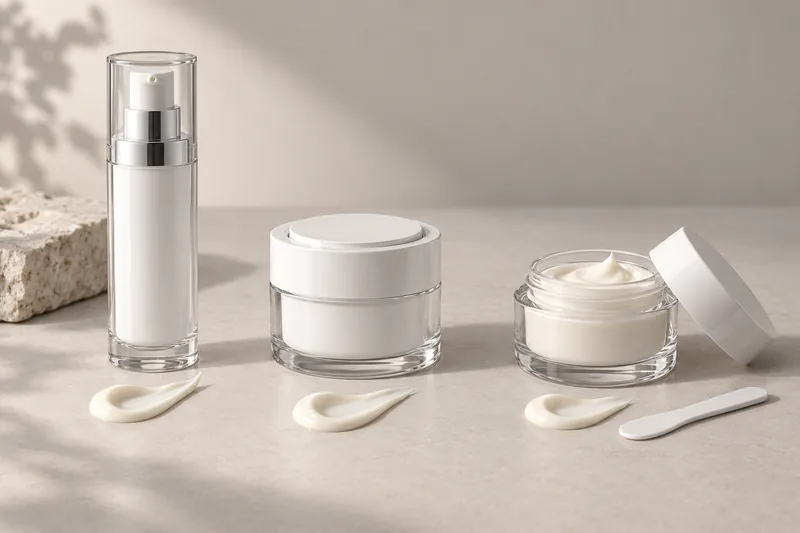
Airless bottle vs airless jar vs conventional jar: quick comparison
| Criterion | Airless bottle | Airless jar | Conventional open jar |
|---|---|---|---|
| Best starting use | Pumpable light-to-rich cream, treatment moisturiser, controlled dose | Pumpable richer cream with jar-style form and top dispensing | Very stiff, high-yield, whipped, particulate or scoop-applied texture |
| Product access | Narrow pump flow path; moving piston or collapsing pouch | Enclosed reservoir with broad press disc or integrated top pump; design varies | Full surface accessible by finger or spatula |
| Repeated air exchange | Reduced when the system seals and operates correctly | Reduced in a verified enclosed system | Fresh headspace air enters whenever the lid is removed |
| User contact | Bulk remains enclosed; nozzle can still be touched or contaminated | Bulk enclosed; dispensing surface must be kept clean | Direct contact is inherent unless a clean spatula is used consistently |
| Dose control | Potentially repeatable after full-stroke output validation | Controlled but disc press depth/user action may vary by design | User judges a scoop; variable dose |
| Particles/capsules | High blockage/valve risk unless specifically proven | May tolerate more with a wider route, but must be proven | Most tolerant of visible particles and capsules |
| Filling/assembly | Tighter control of fill, air, piston/pouch and pump installation | Model-specific fill and top assembly; air pockets matter | Usually simplest access for filling and visual level control |
| Pack complexity | Highest or near-highest component/functional complexity | High; broad actuator and inner reservoir add interfaces | Lowest, although double-wall luxury jars can still be material-heavy |
| Main risk | No prime, dose drift, piston stall, channeling or high residue | Top mechanism leakage, disc contamination, uneven evacuation or refill confusion | User contamination, drying/crusting, oxidation/headspace exposure and dose inconsistency |
How the three face-cream packages work
Airless bottle: the product chamber changes volume as cream is dispensed
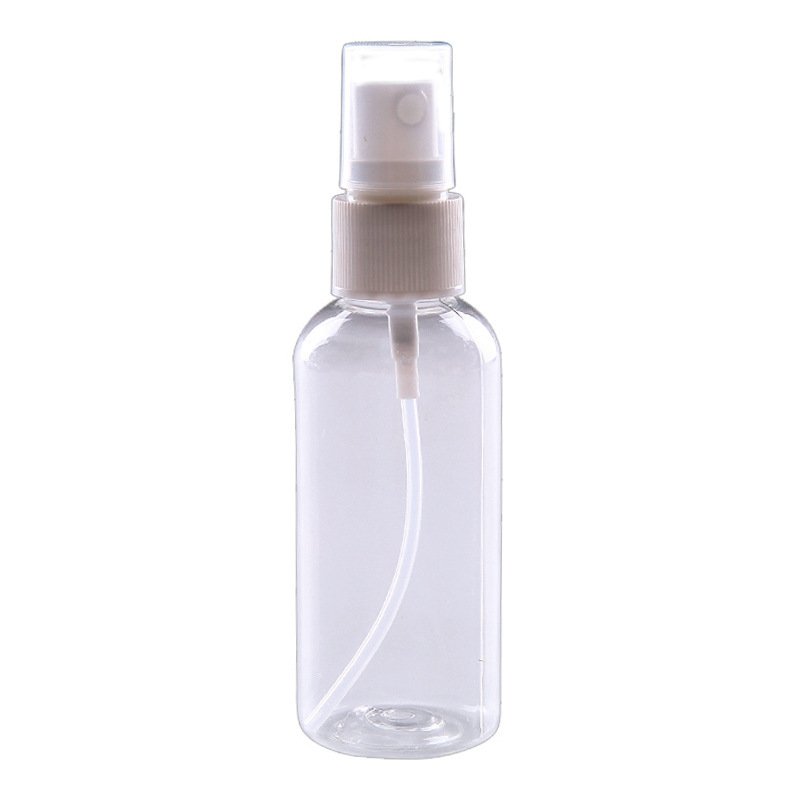
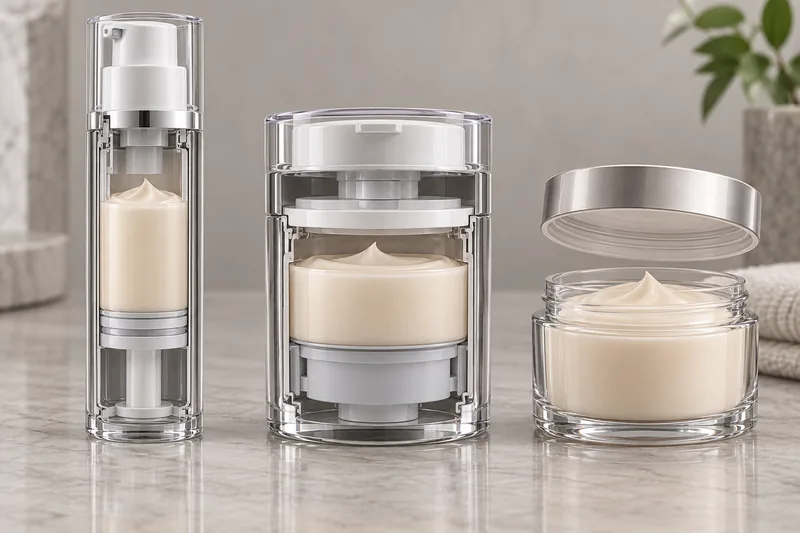
A non-pressurised airless bottle normally combines a mechanical pump with a rigid container and a moving follower piston, or with an inner pouch that collapses. Each full actuation removes product; the piston rises or pouch collapses to compensate for the displaced volume without the conventional dip-tube bottle drawing replacement air into the bulk reservoir.
This reduces repeated air exchange, but it does not make the product oxygen-free or sterile. Oxygen can already be present in raw materials, bulk, headspace or an imperfectly filled system; gases and volatiles can also interact with materials over time. The exact engine, valve, actuator, piston/pouch and seal determine performance. Browse airless pump bottle options only after defining the formula and test conditions.
Airless jar: a jar silhouette with enclosed top dispensing
An airless jar is wider and lower but uses an enclosed reservoir and a top-dispensing mechanism—often a broad press plate or integrated pump cap. The user presses the surface and cream emerges through an outlet. This can preserve the visual language and countertop stability of a jar while reducing direct access to the bulk formula.
Do not assume every airless jar has the same protection or viscosity capability. Some use a follower system, some a flexible inner container and some a proprietary diaphragm. Outlet geometry, return path, press force, seal area and the amount of cream left on the dispensing disc all differ. Ask for a section drawing and filled-sample test rather than buying the name.
Conventional jar: the full product surface opens to the user
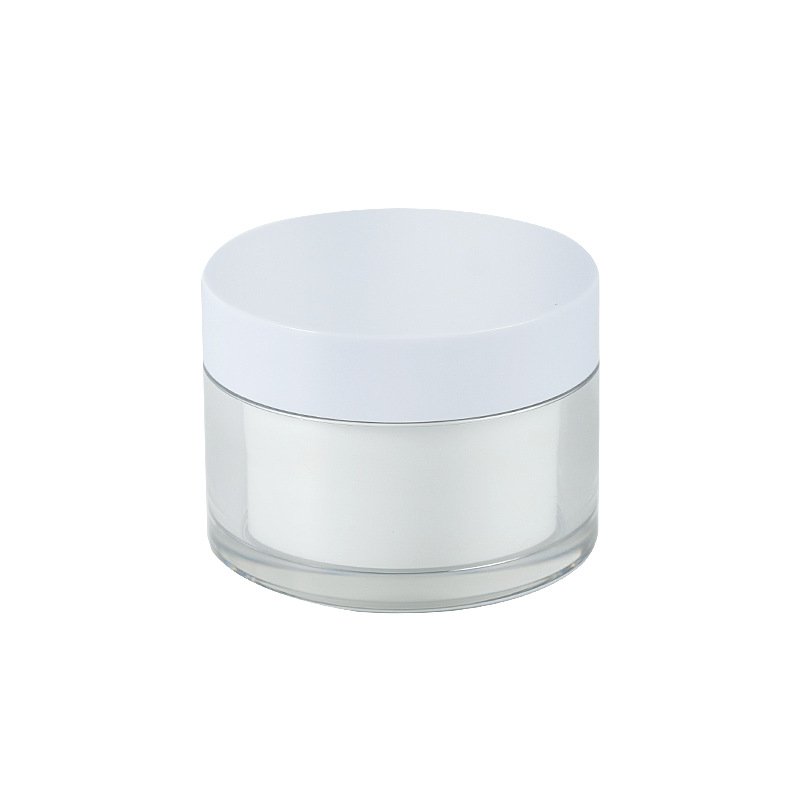
A conventional cream jar is a wide-mouth container closed by a threaded, snap or bayonet cap, often with a liner, sealing disc or inner cover. Once opened, the whole product surface is accessible. This makes it highly tolerant of stiff textures and gives consumers direct visual and tactile access, but each opening exchanges headspace air and permits fingers or tools to contact the cream.
Jars range from simple mono-material PP to glass-inner or double-wall prestige constructions. Compare actual cosmetic cream jar formats by product-contact material, closure seal, liner compatibility, brimful capacity, weight and filled-package validation—not exterior appearance alone.
Does cream concentration or viscosity determine the packaging?
Not by itself. “10% active,” “30% oil phase,” “rich cream” and even one viscosity result do not predict dispensing reliably. Face creams are commonly non-Newtonian: their apparent viscosity changes with applied shear. Many also have a yield stress—the minimum stress needed to start flow—and are thixotropic, meaning their structure breaks down under shear and rebuilds over time.
An airless engine must first pull or push the cream into a metering chamber, move it through valves and channels, and expel it through an orifice. A cream can look thick at rest yet shear-thin enough to pump well. Another can have the same single-point viscosity but a higher yield stress, slow structural recovery, trapped air or particles that cause incomplete refill, delayed output or valve blockage.
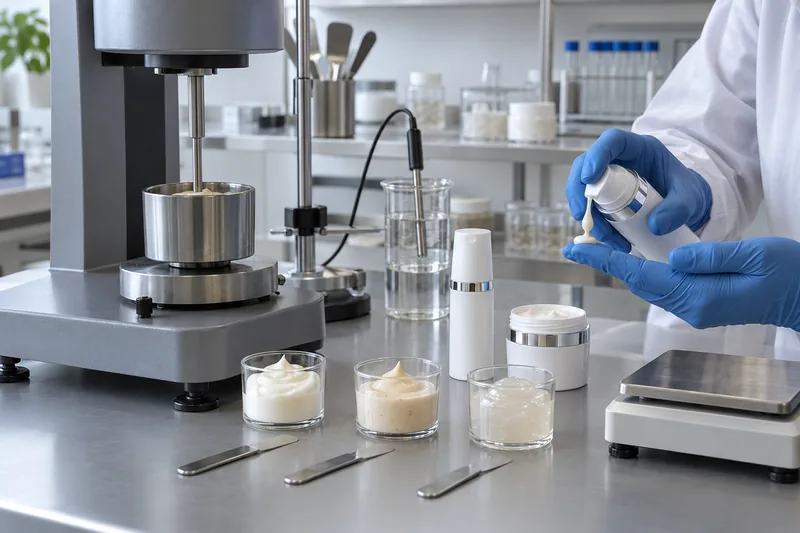
Give the package supplier a rheology profile, not “medium viscosity”
| Formula data | Why the package needs it | How to report it |
|---|---|---|
| Apparent viscosity | Screens likely flow resistance, but only at the measured condition | State instrument/geometry or spindle, speed or shear rate, time and temperature; provide more than one condition where possible |
| Flow curve and yield behaviour | Shows how flow begins and changes from storage to pump/filling shear | Provide controlled-shear or stress-sweep data with the test method and model used for any yield-stress estimate |
| Thixotropic recovery | Slow recovery can change dose, stringing and the next chamber refill | Record a defined low-high-low shear or recovery sequence and elapsed time |
| Temperature range | Cream may become much harder in cold use or lose structure in heat | Test realistic filling, storage and consumer-use temperatures, not room temperature alone |
| Particles/capsules/fibres | Can bridge an inlet, damage a valve or make dose content non-uniform | State maximum and distribution of particle size, hardness, concentration and whether particles deform or dissolve |
| Density and entrained air | Needed to convert mass/volume output; air pockets cause prime and fill errors | Report density at stated temperature and bulk deaeration/filling condition |
Aptar, for example, publishes a 1,000–80,000 cP range for its own airless portfolio. That is useful supplier data for those specified systems, not an industry boundary for every pump. The apparent viscosity depends on method, and channel geometry, actuator force and formula rheology differ. Treat each supplier range as a shortlist input; filled-pack testing remains the decision.
Practical texture-to-format starting points
- Light, pumpable emulsion: start with an airless bottle when one-hand dosing, a treatment identity and an upright footprint fit the range.
- Rich but pumpable cream: compare an airless jar with a suitable high-viscosity airless bottle. Let prime, output, user force and residual tests decide.
- High-yield, butter-like, whipped or clay-rich texture: a conventional jar is usually the lower-risk starting point because the user can scoop product without forcing it through a valve.
- Visible beads, capsules or exfoliating particles: prefer a jar unless the complete dispensing path has been specifically tested for blockage, particle damage and uniform delivery.
- Stringy or highly elastic gel-cream: test cut-off and nozzle cleanliness. A package can evacuate the formula yet still create an unacceptable tail after every dose.
Formula protection, oxidation, hygiene and preservation
Airless reduces repeated air exchange; it does not guarantee chemical stability
An airless system keeps the bulk enclosed during normal dispensing and avoids the large fresh-air exchange of an opened jar. That can be valuable for oxidation-sensitive formulas, but light transmission, initial dissolved oxygen, headspace, package permeability, seal integrity, temperature, metal contamination, antioxidants and the formula itself still influence stability. For a specific example, Boyu’s analysis of packaging retinol in an airless pump or jar explains why opaque airless is often a good starting point without pretending it is oxygen-free.
Enclosed dispensing changes exposure, not the duty to preserve and test
The FDA identifies inadequate packaging and consumer finger-dipping as possible contamination routes. An airless bottle or jar therefore removes one obvious bulk-contact route. However, contamination can still originate in water, raw materials, manufacturing, filling, the outlet or packaging interfaces. The nozzle and an airless jar’s top disc can also collect returned cream, water or skin contact.
A Danish Environmental Protection Agency project found no contamination in pump and airless samples for one specially prepared body-lotion study, while its jar reference and some tubes were more exposed. The report itself warns that the small dataset, sterilised packs and autoclaved formula make the result non-transferable to every product. It supports a mechanism hypothesis—not a claim that airless packaging makes preservative-free cream universally safe.
Dose consistency, user experience and product evacuation
Airless packaging earns its complexity only if it delivers an acceptable dose from beginning to end. Measure performance with the final cream; water and a generic factory test lotion are not adequate substitutes. A conventional jar has no pump output problem, but dose consistency depends entirely on user pickup and any spatula geometry.
Measure output across the pack life
- Condition filled packs upright, inverted and in intended consumer orientations at defined temperatures.
- Record priming strokes and any no-output or partial-output strokes. Define whether priming product is counted as usable.
- Collect a fixed number of complete strokes at the beginning, middle and end of life. Weigh each or grouped strokes on a suitable balance.
- Calculate mean output, range or standard deviation and drift. Convert mass to volume only with the measured formula density at a stated temperature.
- Repeat after hot/cold storage, transport conditioning and realistic pauses between uses. Observe spitting, stringing, nozzle crust and actuator return.
Calculate evacuation from measured fill and residual mass
Evacuation (%) = (net filled product mass − residual product mass) ÷ net filled product mass × 100
Define the stopping rule before testing: for example, a specified number of full actuations without an acceptable dose. Then weigh the closed package, carefully recover residual product for analysis if needed, and distinguish inaccessible residue from material intentionally left on the actuator. For jars, define a repeatable consumer-like scraping method; perfect laboratory scraping can overstate real-world emptiability.
A 2025 peer-reviewed study found wide differences between package/product combinations. Some airless face-cream packs had low residue, but one airless jar retained 5.18%, and airless serum results ranged widely in the study because formula and construction differed. The useful lesson is not a universal percentage—it is that format names cannot substitute for measured evacuation on the selected pack.
Filling and manufacturing differences
| Production issue | Airless bottle | Airless jar | Conventional jar |
|---|---|---|---|
| Fill access | Top or bottom fill depends on system; follow supplier sequence | Usually wide enough to fill, but inner cup/top assembly sequence is model-specific | Wide mouth is generally easiest for piston/nozzle access |
| Air control | Air pockets can break prime or create piston/pouch discontinuity | Voids beneath the dispensing system can cause delayed or uneven output | Visible air affects appearance/fill level; usually not a pump-prime failure |
| Formula temperature | Changes viscosity, fill accuracy and component stress | Changes flow under disc and seal behaviour | May change volume, cooling profile, condensation and liner/closure performance |
| Assembly control | Pump installation, seal engagement and piston/pouch integrity | Inner reservoir, top pump/disc and overcap alignment | Liner/inner disc placement, closure torque and thread engagement |
| Line trial priority | Prime/output, fill mass, seal, actuator protection, conveyor stability | Fill/assembly force, disc function, leakage, top cleanliness | Fill appearance, rim cleanliness, torque, liner compression, leakage |
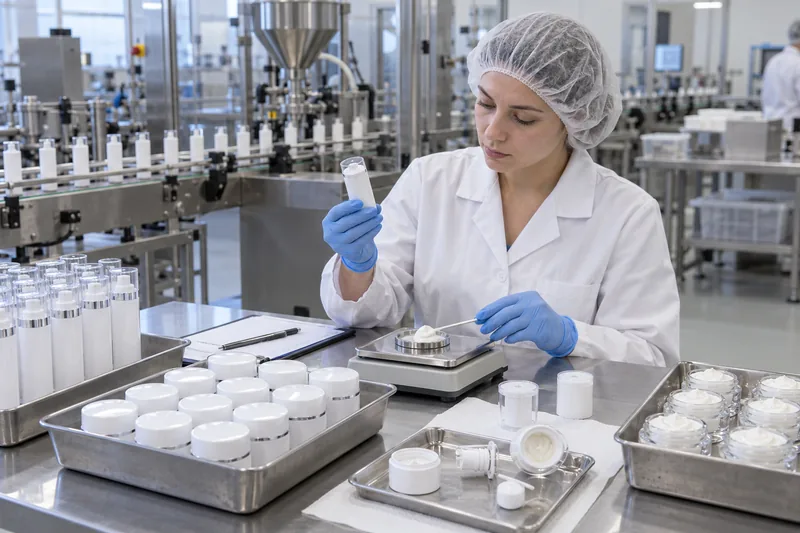
Run a production-intent trial on the intended filler and assembly equipment. A laboratory hand-fill can hide nozzle stringing, trapped air, conveyor instability, closure cross-threading and the actual line speed needed. Confirm nominal fill, brimful capacity, formula density and functional headspace separately; “50 mL package” is not a filling instruction.
Cost, MOQ, pack weight and sustainability
A conventional PP jar is normally the simplest cost baseline. Airless bottles and jars add pump/valve parts, piston or pouch, seals, assembly, tighter functional inspection and more demanding filling validation. But component price alone can mislead: a low-cost jar may require an extra spatula, inner disc, carton and greater formula robustness; a high-value active cream may justify controlled dosing and lower product residue.
Total accepted-pack cost = components + decoration + filling/assembly + validation + scrap/rework + secondary pack + freight + residual product + obsolete inventory
MOQ can be set by the package mould, resin colour, decoration, pump engine or minimum assembly run. A stock white airless system may have a different commercial threshold from a custom-colour, metallised, double-wall airless jar. Ask for separate MOQ and lead time by component and process.
Do not equate “less residue” with “more sustainable” automatically
Efficient evacuation can reduce product waste, which matters when the formula has a high material and manufacturing footprint. Yet an airless pack may contain several polymers, a metal spring, elastomers and an outer shell that complicate sorting or separation. A lightweight mono-material jar can be materially simpler but may expose more formula or encourage over-dosing. A life-cycle conclusion depends on package mass, formula impact, residual product, transport, local collection and actual recycling—not the word “airless.”
Refillability also requires system design. Refilling a non-refillable airless pack can damage the piston/pouch, introduce contamination and defeat the seal path. Use only a supplier-designed refill architecture with validated cleaning/handling instructions and a clear consumer process.
Common problems and how to solve them
| Symptom | Likely causes | Corrective action |
|---|---|---|
| Airless pack will not prime | Air pocket, incomplete seal, excessive yield stress, blocked inlet, piston/pouch fault or wrong filling sequence | Quarantine samples; check fill/deaeration and assembly records; inspect components; trial another qualified engine or larger flow path. Do not tell users to strike or dismantle retail packs as the primary fix. |
| Output falls near end of life | Piston hang-up, pouch fold, wall adhesion, cream channeling, insufficient refill or formula thickening | Map dose by pack life and temperature; inspect residual pattern; compare surface finish, piston/seal fit and formula recovery; adjust the package or formula only through controlled requalification. |
| Airless jar leaves cream on the top disc | Oversized dose, wide outlet, poor cut-off, disc shape or user press behaviour | Reduce/optimise output and outlet only within the engine’s validated range; run consumer-use trials; provide cleaning/use instructions and confirm overcap clearance. |
| Pump spits, strings or drips | Entrained air, elastic/stringy rheology, slow valve closure, incomplete actuation or nozzle geometry | Improve bulk deaeration; test full-stroke use; compare nozzle/valve designs; evaluate formula extensional behaviour and recovery at use temperature. |
| Jar cream dries, skins or discolours at surface | Volatile loss, oxygen/light exposure, cap not closed, poor liner/seal or incompatible materials | Test closure/liner and weight loss; improve barrier or opacity; validate headspace and formula stability; strengthen use/storage instructions. Do not rely on an inner disc alone. |
| Jar leaks in transport | Rim/liner mismatch, insufficient or excessive torque, product on sealing land, formula-induced liner swelling, thermal/pressure change | Inspect sealing geometry and cleanliness; establish closure torque; test liner compatibility and hot/cold/inverted transport conditions on filled packs. |
| Odour, colour or viscosity changes | Formula instability, oxidation, light, volatile loss, sorption/migration, temperature or microbial issue | Stop release and investigate against inert-control and final-pack stability samples; examine analytical, microbiological and packaging data. Changing to airless without root-cause evidence is not a complete CAPA. |
| Cap or airless components crack, swell or stick | Oil/fragrance/solvent compatibility, mould stress, hot storage, wrong elastomer or coating interaction | Identify every product-contact material; test components assembled with formula at intended conditions; control resin/colourant and supplier changes. |
How to choose: a practical decision framework
- Set three non-negotiable gates. The chosen pack must be chemically compatible, microbiologically appropriate and capable of delivering the formula at every required condition. A high design score cannot compensate for a failed gate.
- Classify the formula by behaviour. Record rheology versus temperature/shear, yield and recovery, density, particles, aeration, light/oxygen sensitivity, volatile ingredients and preservation strategy.
- Define the use event. Target dose, one- or two-hand use, wet bathroom hands, travel, night-time ritual, spatula acceptance, accessibility and whether the pack should visually read as a treatment bottle or cream jar.
- Confirm the filling route. Identify available filling nozzles, bulk temperature, deaeration, line speed, closure/assembly equipment, inspection and the contract filler’s experience with the exact mechanism.
- Compare complete systems. Shortlist at least two production-relevant packs per viable format where possible. Compare pump engine, reservoir, product-contact map, dose, brimful/nominal capacity, closure, decoration, secondary pack and shipping protection.
- Use data to select. Run the qualification plan below, calculate accepted-pack cost and record why the winner meets the requirement. Keep a signed control sample and drawing revision.
Format recommendations by real project condition
| Project condition | Best starting format | What must still be proved |
|---|---|---|
| Light emulsion, 0.2–0.5 g controlled dose, oxidation-sensitive active, one-hand use | Opaque airless bottle | Light barrier, chemical stability, dose, priming, evacuation and preservation |
| Rich pumpable moisturiser, premium jar identity, countertop stability, user presses from above | Airless jar | Press force, outlet cleanliness, dose variability, reservoir seal and residual pattern |
| Dense balm-cream with strong shape retention or visible capsules | Conventional jar | Preservation, closure barrier, user contamination scenario, liner and scoopability across temperature |
| Many related serum/lotion/cream SKUs need one vertical family | Airless bottle family | Each size/formula combination; never approve the family from one SKU |
| Low-cost robust moisturiser with proven preservation and simple wide-mouth filling | Conventional PP jar | Consumer-use microbial exposure, torque/seal, weight loss, transport and decoration |
| High-value formula where residual product is commercially critical | Test all technically viable formats | Measured evacuation, dose value, pack cost and life-cycle assumptions—not supplier averages |
If the product range includes serum, eye cream, moisturiser and mask, review the broader skincare packaging range before locking a single silhouette. A coherent family can mix vertical bottles and jars while sharing colour, decoration and cap language.
Qualification plan before mass production
Stage 1: document the formula and shortlist mechanisms
Issue a formula summary under confidentiality: product type, density, rheology method/results, pH, oil/solvent/fragrance content, particles, filling temperature, light/oxygen sensitivity, intended shelf life and use conditions. Obtain product-contact material declarations, mechanism drawings and supplier operating limits. Eliminate obvious mismatches before decoration.
Stage 2: run filled functional screening
Fill undecorated production-intent samples using the intended method. Measure priming, full-stroke output at start/middle/end, actuation force if relevant, cut-off/stringing, leakage, piston/pouch travel, top-disc cleanliness and evacuation. Test at cold, room and hot conditions appropriate to the product’s real market—do not borrow another brand’s temperatures or pass limits without justification.
Stage 3: stability, compatibility and microbiological protection
Run the formula in the market-intended pack and a suitable control. Observe appearance, odour, pH, viscosity/rheology, weight change, separation/crystallisation, analytical markers for sensitive actives where relevant, pack swelling/cracking/stress, liner or gasket change and functional output through the study. Include real-time confirmation; accelerated storage is not a universal shelf-life conversion.
Plan preservation efficacy and consumer-use risk with qualified specialists. ISO 11930 evaluates overall antimicrobial protection, and its framework recognises that protection can come from formula, package design and manufacturing together. Follow Boyu’s deeper cosmetic packaging compatibility testing guide for programme design, then adapt it to the formula and destination-market requirements.
Stage 4: filling line, consumer use and distribution
Run a representative line trial at planned speed. Check fill-weight control, aeration, rim/land cleanliness, pump or disc assembly, cap torque, coding, conveyor handling and pack-out. Then simulate intended consumer actuation or scooping frequency, wet-hand use, nozzle/disc wiping, pauses between uses and storage orientation. Complete leakage, drop, vibration and transport conditioning as justified by the distribution route; Boyu’s complete cosmetic bottle test plan provides the adjacent test categories.
Stage 5: approve specifications and control change
Sign the final drawing, bill of materials, colour/appearance limits, output and evacuation method, acceptance criteria, sampling plan, packing specification and filled reference sample. Require written approval before changes to resin, recycled-content level, colorant, pump engine, valve, piston/pouch, elastomer, liner, lubricant, mould, filling site or subcontractor. A visually identical replacement can behave differently.
Face-cream packaging RFQ checklist
Type, pH, density, documented rheology and temperatures; oils/solvents/fragrance; particles; filling condition; sensitivities; preservation plan.
Bottle/jar type; piston or pouch/inner cup; product-contact map; nominal and brimful capacity; opacity/barrier; refill design if genuine.
Target mass per full stroke; acceptable prime; orientation; actuation force; cut-off; minimum evacuation; start-to-end output criteria.
Line and nozzle; fill temperature/speed; deaeration; assembly equipment; closure torque; headspace; clean-room/GMP controls as applicable.
Sample stages; stability/compatibility; microbiology; output/evacuation; leak/drop/transport; cosmetic limits; sampling and change control.
MOQ by component/colour/process; tooling ownership; accepted yield; lead time; overruns/underruns; secondary pack; freight and delivery term.
Frequently asked questions
Is airless packaging always better for face cream?
No. It is better only when the formula dispenses reliably, the system provides the required protection and dose, the filler can assemble it consistently, and the benefit justifies its complexity. A failed airless pump is worse than a well-designed, adequately preserved jar.
Can a very thick cream work in an airless bottle?
Sometimes, but “very thick” is not a specification. High-viscosity airless engines exist, yet yield stress, shear thinning, refill rate, channel dimensions, temperature and air pockets all matter. Test at least one airless bottle and, where appropriate, an airless jar against a conventional jar using the final formula.
Is a conventional cream jar unhygienic?
It creates a higher-contact use scenario because fingers or a spatula enter the product surface, but it is not automatically unsafe. The formula, preservation system, manufacturing hygiene, closure and intended consumer use must be assessed together. Instruct users to wash hands, keep the rim clean, close the lid and avoid adding water.
Can an airless bottle make a face cream preservative-free?
The package alone cannot justify that claim. Airless can reduce consumer contact with the bulk, but contamination may arise from raw materials, water, production, filling or the outlet. A qualified microbiological risk assessment and preservation-efficacy evaluation are still needed for the finished product and its intended use.
Does an inner disc make a normal jar airless?
No. A lift-out disc can reduce mess and provide a surface for a spatula, but once the lid and disc are removed the product reservoir is open. Airless requires a defined dispensing system that compensates for delivered product without conventional bulk air return.
Can an airless bottle or jar be made of glass?
Glass can form the outer bottle or jar in some systems, while an internal plastic pouch, cup, piston, pump and seals perform the airless function. Confirm the actual product-contact materials and breakage/transport protection; an exterior glass wall does not mean the cream contacts only glass.
Can consumers decant jar cream into an empty airless pack?
That is not recommended unless the pack is specifically designed, cleaned and validated for refill. Manual decanting can add microorganisms and air, damage piston position, trap voids and pair the formula with untested materials. It also invalidates the original brand’s package-stability assumptions.
How long should package qualification take?
Functional screening can identify obvious failures quickly, but shelf-life and period-after-opening support require a justified stability programme plus real-time confirmation. There is no universal number of weeks. Set conditions and time points from the formula, target shelf life, market, prior data, distribution and regulatory/safety assessment.
Sources and technical references
- U.S. FDA — Microbiological Safety and Cosmetics.
- U.S. FDA — GMP Guidelines/Inspection Checklist for Cosmetics.
- ISO 11930:2019/Amd 1:2022 — Evaluation of antimicrobial protection.
- Regulation (EC) No 1223/2009 on cosmetic products.
- SCCS Notes of Guidance, 12th revision.
- Cosmetics Europe/CTFA — Guidelines on Stability Testing of Cosmetic Products.
- Danish Environmental Protection Agency — Less Preservatives in Cosmetics.
- Aptar Beauty — Airless packaging technical portfolio information (supplier-specific performance claims).
- Processes 2026 — Industrial Rheology of Cosmetic Products.
- Cosmetics 2020 — Quantitative Sensory Interpretation of Rheological Parameters of a Cream Formulation.
- Sustainability 2025 — Product Waste Resulting from Insufficient Emptiability of Cosmetic Packaging.
- Packaging Technology and Science — Life-cycle assessment of cosmetic dispensing systems.
 English
 Español de Argentina
 Русский
 Italiano
 日本語
 한국어
 العربية
 Français
 Deutsch