
How Big Is 3.4 oz? 3.4 oz and 1.0 oz Perfume Bottle Size Guide
When a perfume brand asks, “How big is 3.4 oz?” the answer has two parts. The first is liquid capacity: 3.4 US fluid ounces is approximately 100 milliliters. The second is the bottle’s physical size, which cannot be determined from capacity alone. A 100 mL perfume bottle may be tall and narrow, short and wide, or built with unusually thick glass. The pump, collar, cap, decorative base and bottle geometry all affect its final height, width, depth and shipping weight.
This guide compares common 3.4 oz (100 mL) and 1.0 oz (30 mL) perfume bottles, explains how packaging material changes external dimensions, and provides the ounce-to-milliliter formulas buyers need when developing fragrance packaging.
How Big Is 3.4 oz in Milliliters?
In perfume packaging, “3.4 oz” normally means 3.4 US fluid ounces by volume, not 3.4 ounces by weight. Using the exact conversion factor:
Milliliters = US fluid ounces × 29.5735
Therefore:
3.4 × 29.5735 = 100.55 mL
For commercial fragrance packaging, this is normally presented as a 100 mL size. The small difference is caused by rounding and labeling conventions. The bottle’s nominal fill, overflow capacity and recommended fill level must still be confirmed with the bottle manufacturer and filling partner.
How Big Is a 3.4 oz Perfume Bottle Physically?
A conventional rectangular 100 mL glass perfume bottle often falls roughly within these external ranges:
- Bottle body height: about 90–130 mm
- Width: about 50–75 mm
- Depth: about 25–50 mm
- Total height with pump and cap: commonly about 110–160 mm
These figures are indicative ranges, not a universal specification. Sculptural designs and heavy luxury glass can fall outside them. Buyers should never design a carton or shipping insert from the “100 mL” capacity alone.
How Big Is a 1.0 oz Perfume Bottle?
One US fluid ounce converts to 29.5735 mL and is normally sold as a 30 mL perfume bottle.
1.0 × 29.5735 = 29.57 mL ≈ 30 mL
A typical 30 mL rectangular glass perfume bottle may have a body height of approximately 65–100 mm, a width of about 35–55 mm and a depth of about 20–40 mm. Its total height with the spray pump and cap may commonly reach approximately 85–125 mm. Again, these are broad reference ranges rather than guaranteed dimensions.
3.4 oz vs. 1.0 oz: What Buyers Should Expect
| Marketed size | Approximate metric capacity | Typical positioning | Packaging implication |
|---|---|---|---|
| 1.0 oz | 30 mL | Travel, discovery, entry price, gifting | Compact carton and lower glass weight, depending on design |
| 3.4 oz | 100 mL | Full-size retail and value-focused purchase | Larger decoration area, carton and shipping footprint |
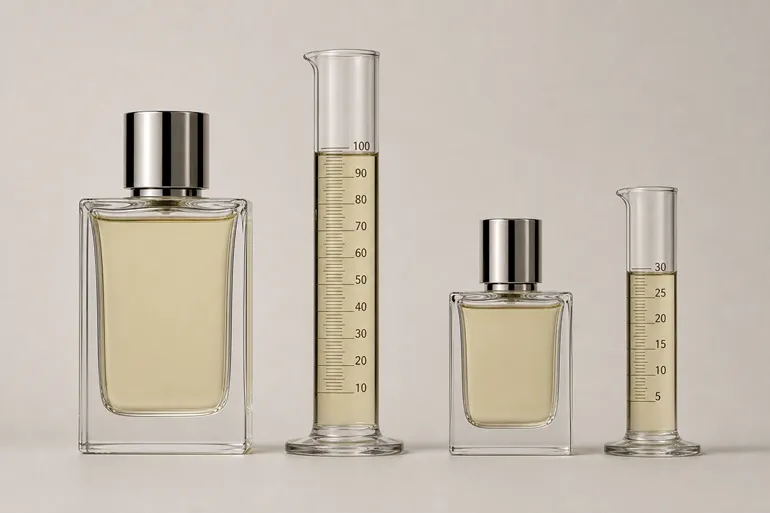
A 100mL bottle contains about 3.33 times the liquid of a 30 mL bottle. Its external dimensions, however, will not necessarily be 3.33 times larger. Volume increases in three dimensions, and bottle wall thickness and geometry change the relationship between internal capacity and external size.
How Perfume Bottle Material Changes Size
Material selection influences wall thickness, weight, decoration, chemical compatibility and perceived value. Two bottles with the same nominal capacity can therefore occupy very different amounts of shelf and shipping space.
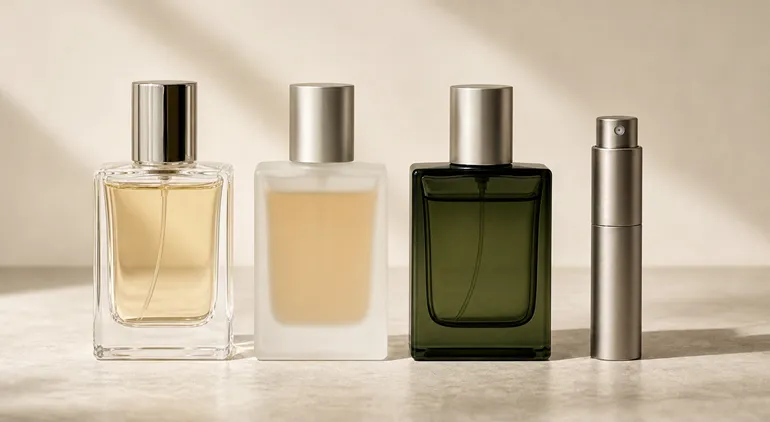
Clear Flint Glass Perfume Bottles
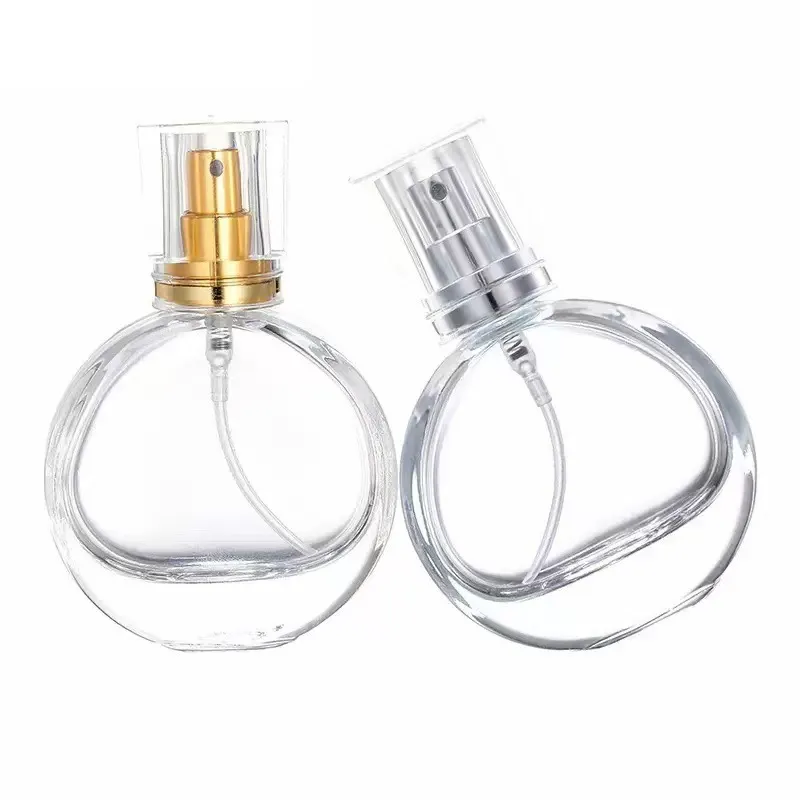
Glass is the standard choice for prestige and mass-market fragrance because it provides clarity, good barrier performance and broad decoration options. A standard glass bottle balances internal volume with structural wall thickness. It can be relatively compact when the geometry is simple and the base is not excessively heavy.
Heavy-Base Luxury Glass Bottles
Luxury bottles often use thicker walls, a heavy base and a substantial shoulder. These elements create visual depth and a premium hand feel, but they can make a 100 mL bottle considerably larger and heavier than a standard 100 mL design. The apparent bottle volume may look much greater than the actual fragrance capacity.
Frosted and Colored Glass Bottles
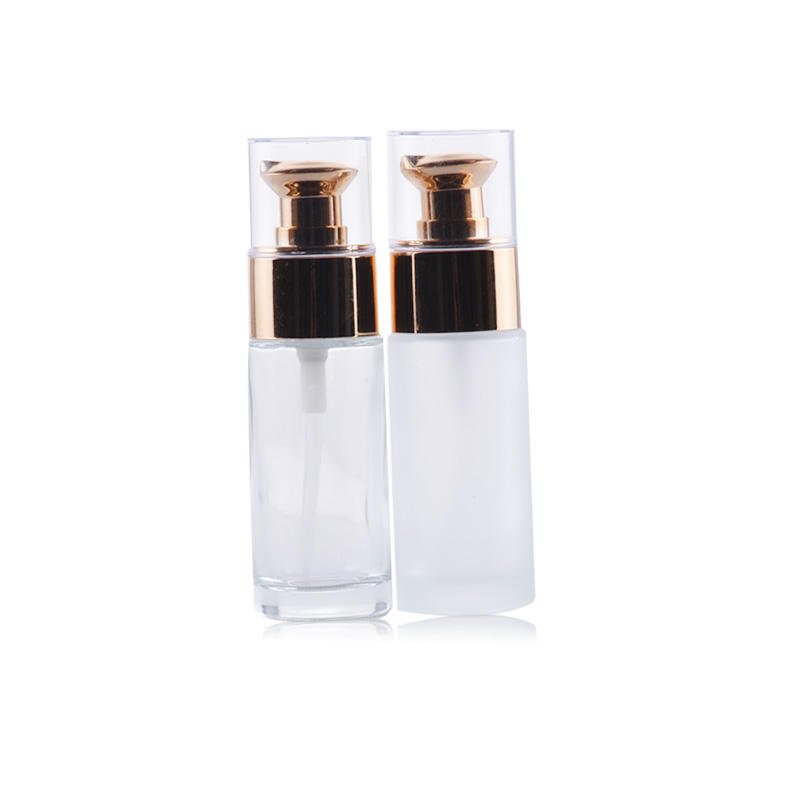
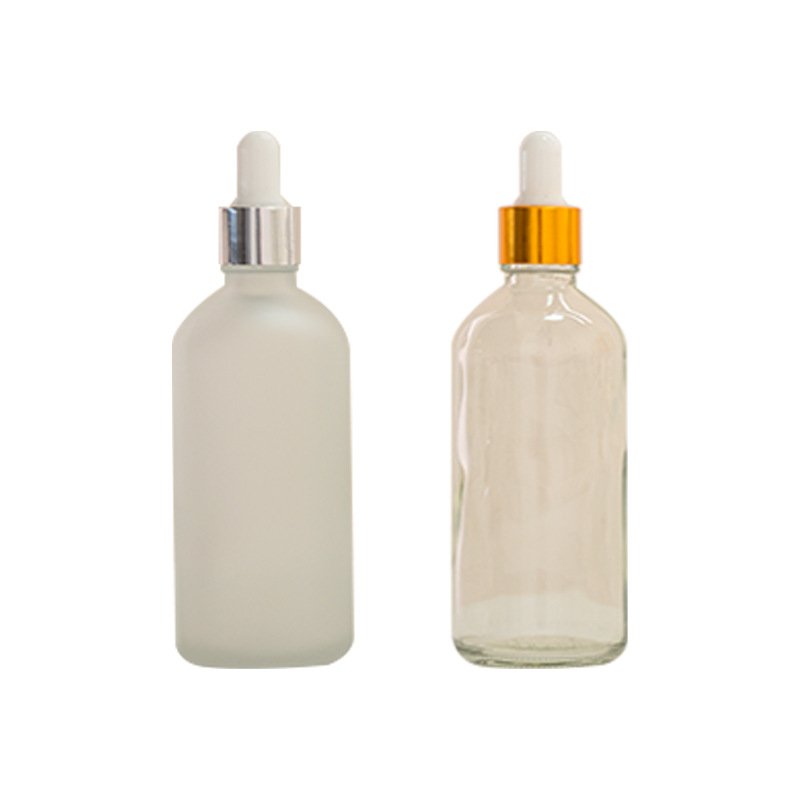
Frosting and color treatments generally change the finish more than the nominal dimensions when applied to an existing bottle mold. However, custom colored glass formulations, sprayed coatings and multiple decoration layers can affect dimensional tolerances and assembly clearances. Cap fit and carton inserts should be validated with decorated production samples.
Plastic Perfume Bottles
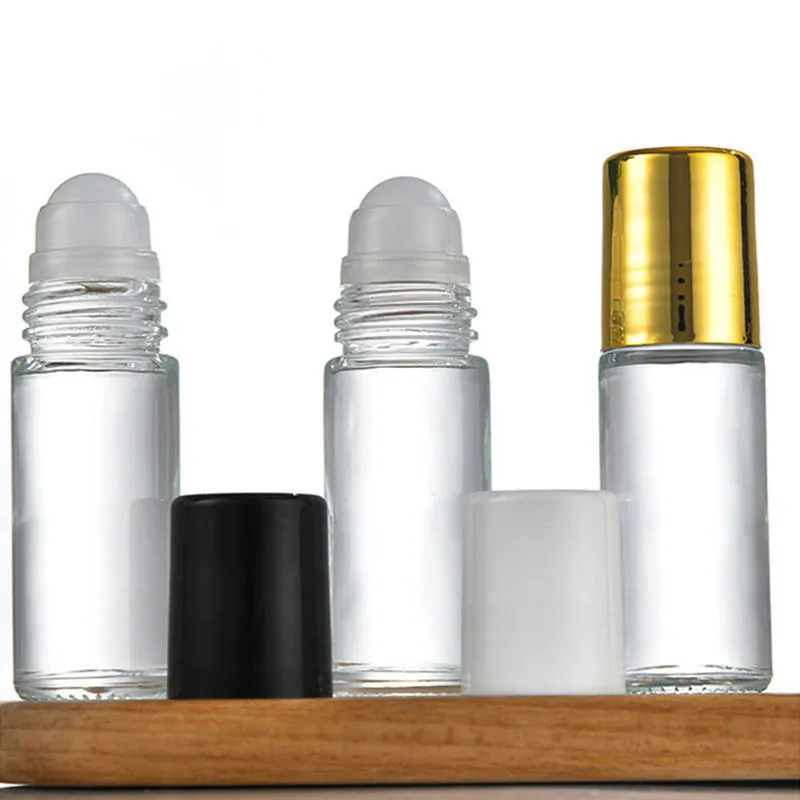
PET, PETG and other compatible plastics can reduce package weight and provide greater impact resistance. Plastic walls may be thinner than heavy glass, allowing a more compact or lightweight package, although resin, fragrance compatibility and barrier requirements must be evaluated. Not every fragrance formula is suitable for every plastic.
Aluminum and Metal Travel Atomizers
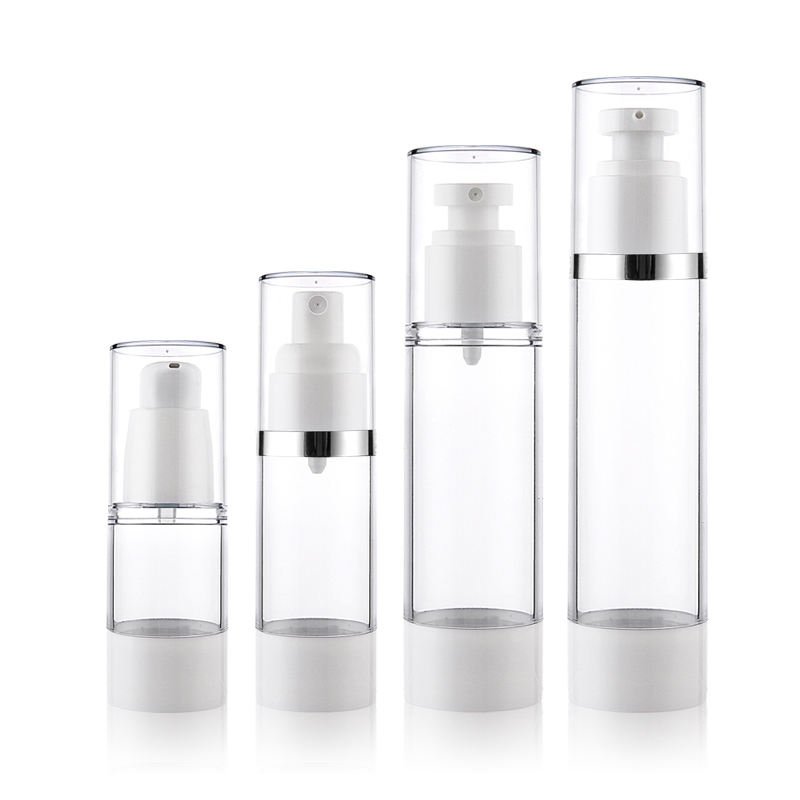
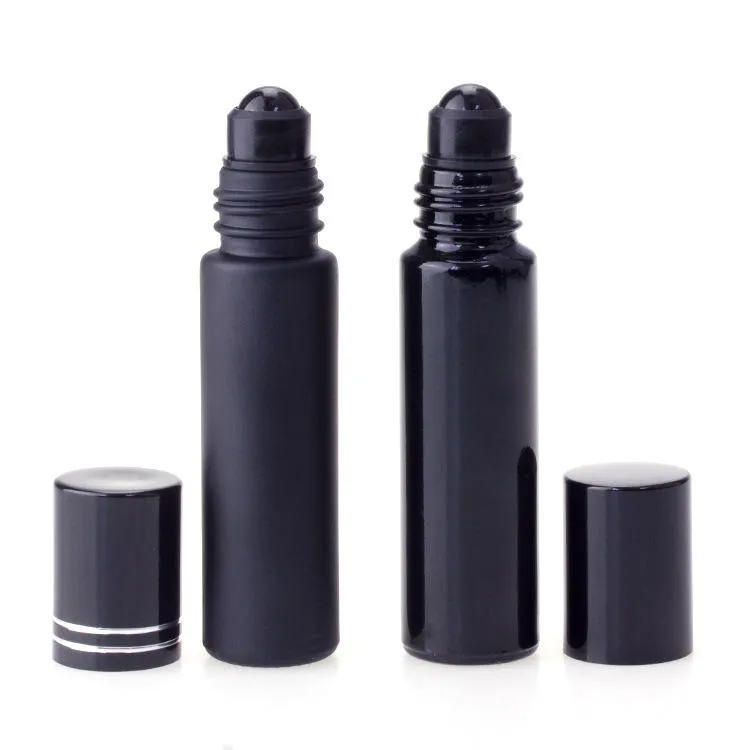
Metal is frequently used for travel sprays, refillable atomizers or an outer shell surrounding an inner container. Cylindrical metal formats can be slim and protective, but the complete system may include an inner glass or plastic vial. Buyers should distinguish the declared net capacity from the dimensions of the assembled outer case.
Perfume Ounce-to-Milliliter Calculation Formulas
Convert US Fluid Ounces to Milliliters
mL = US fl oz × 29.5735
Examples:
- 0.33 oz × 29.5735 = 9.76 mL, commonly marketed as 10 mL
- 1.0 oz × 29.5735 = 29.57 mL, commonly marketed as 30 mL
- 1.7 oz × 29.5735 = 50.28 mL, commonly marketed as 50 mL
- 3.4 oz × 29.5735 = 100.55 mL, commonly marketed as 100 mL
Convert Milliliters to US Fluid Ounces
US fl oz = mL ÷ 29.5735
For example, 100 mL ÷ 29.5735 = 3.381 US fl oz, which is often rounded and marketed as 3.4 fl oz.
Do Not Confuse Fluid Ounces with Weight Ounces
A fluid ounce measures volume. A regular ounce measures mass. Converting a fragrance from weight ounces to milliliters requires its density:
Volume (mL) = Mass (g) ÷ Density (g/mL)
Because alcohol-based perfume formulas do not all have exactly the same density, buyers should use formula-specific density data when working from filling weight. Do not assume that one weight ounce equals one fluid ounce.
Why Capacity Does Not Determine Bottle Dimensions
A bottle’s internal capacity is influenced by its internal cavity, while its external size includes glass walls, base thickness, shoulders and decorative geometry. The complete pack also includes the neck, crimp or screw pump, collar and cap.
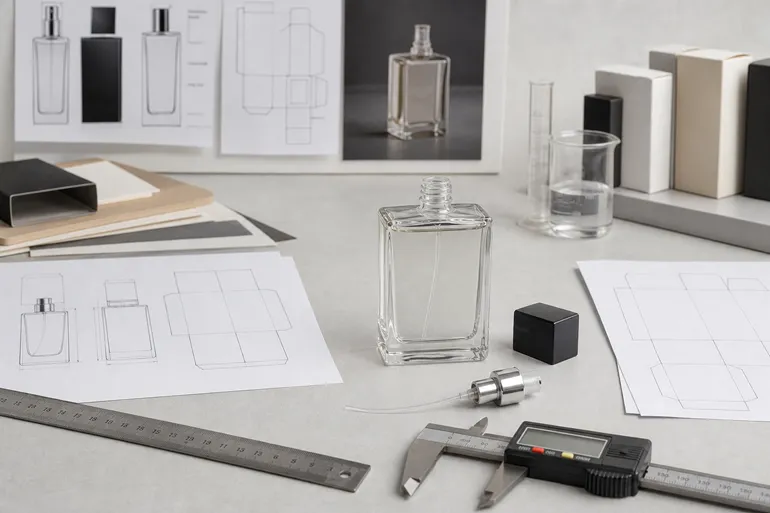
For packaging development, request at least these measurements:
- Maximum bottle width and depth
- Bottle height without the closure
- Total assembled height with pump and cap
- Nominal fill and brimful or overflow capacity
- Neck finish and pump compatibility
- Bottle and complete-component weight
- Dimensional tolerances
- Decoration area and artwork limits
- Carton and insert dimensions
How to Choose Between 30 mL and 100 mL Perfume Packaging
A 30 mL format can support travel-friendly collections, discovery-to-full-size conversion, gift sets and a lower entry price. A 100 mL format provides more fragrance per purchase and a larger visual and decoration area. The best choice depends on the target market, retail price architecture, distribution channel and packaging budget.
Many brands build a family using the same design language in several capacities. When doing so, avoid simply scaling every component. Pump dosage, neck finish, cap proportions, label area, base thickness and carton protection should be engineered for each size.
Questions to Ask a Perfume Bottle Manufacturer
- Is the stated capacity nominal fill or overflow capacity?
- What are the bottle-only and fully assembled dimensions?
- Which pumps, collars and caps have been tested with this neck finish?
- What decoration processes are available for the selected material?
- Can you provide technical drawings and samples before carton approval?
- Which specifications, MOQ, lead time and testing requirements need confirmation for this project?
Frequently Asked Questions
Is 3.4 oz perfume exactly 100 mL?
Mathematically, 3.4 US fluid ounces is about 100.55 mL. In fragrance retail, it is commonly used as the ounce label for a 100 mL product.
Is 1.0 oz perfume 30 mL?
Yes, one US fluid ounce is approximately 29.57 mL and is normally marketed as 30 mL.
Are all 100 mL perfume bottles the same size?
No. Shape, glass thickness, base weight, shoulders, pump and cap can produce substantially different external dimensions.
Which perfume bottle material is smallest?
There is no universal answer. A lightweight plastic or metal format may be compact, while a heavy luxury glass design may be larger. Compare actual technical drawings for the complete pack.
What information is needed for a custom perfume bottle quote?
Provide target capacity, material, bottle shape, neck and pump requirements, decoration, cap concept, expected quantity and destination market. MOQ, tooling, pricing, lead time and compliance details must be confirmed for the specific project.
Develop the Right Perfume Bottle Size with Boyu Packaging
Boyu Packaging helps fragrance brands, packaging distributors and sourcing teams evaluate perfume bottle capacities, materials, components and decoration options. Send us your target 30 mL or 100 mL format, reference design and market requirements. Our team can review the package structure and identify the specifications that must be confirmed before sampling and production.



 English
  Español de Argentina
  Русский
  Italiano
  日本語
日本語  한국어
한국어  العربية
  Français
  Deutsch