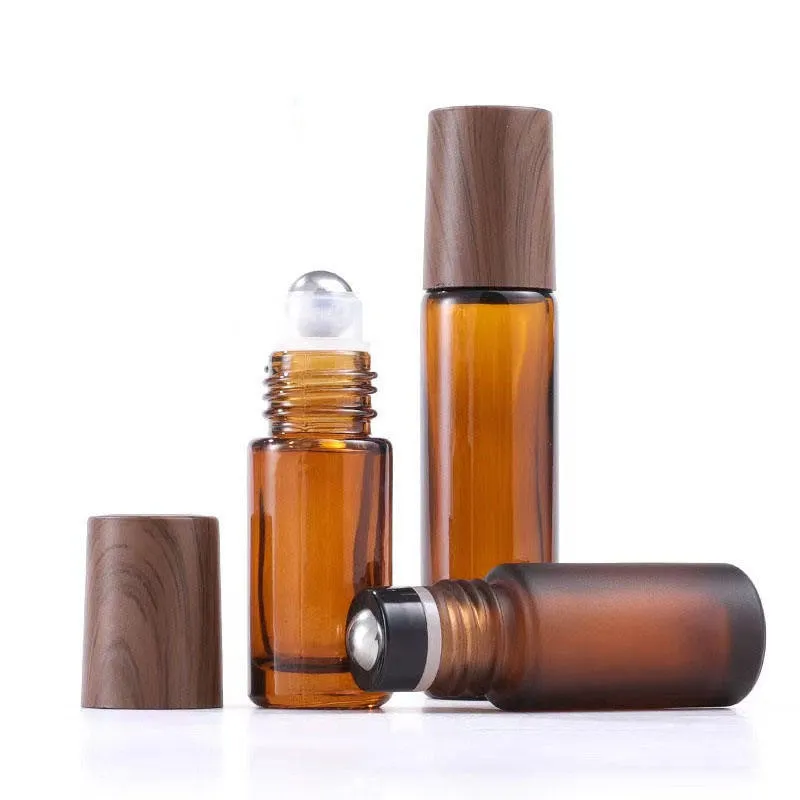
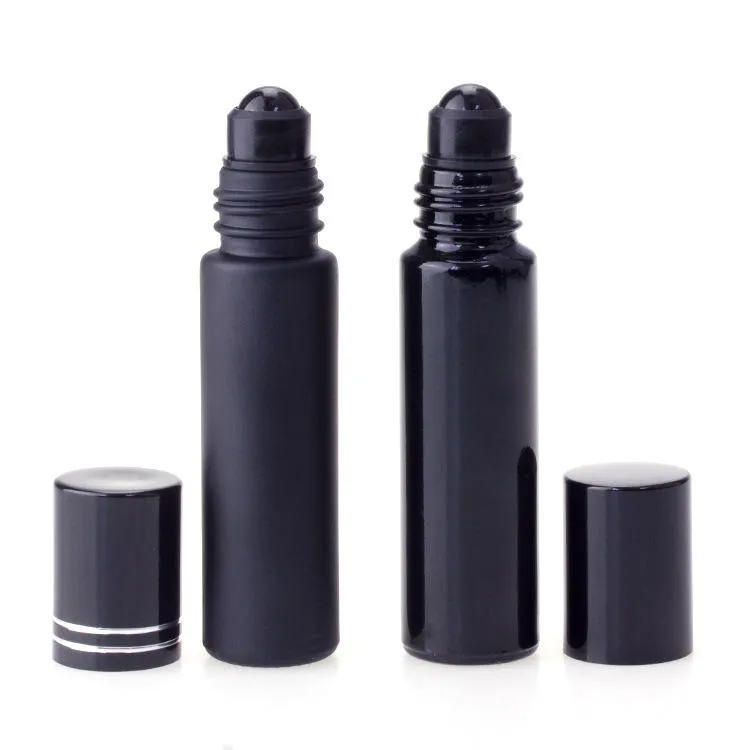
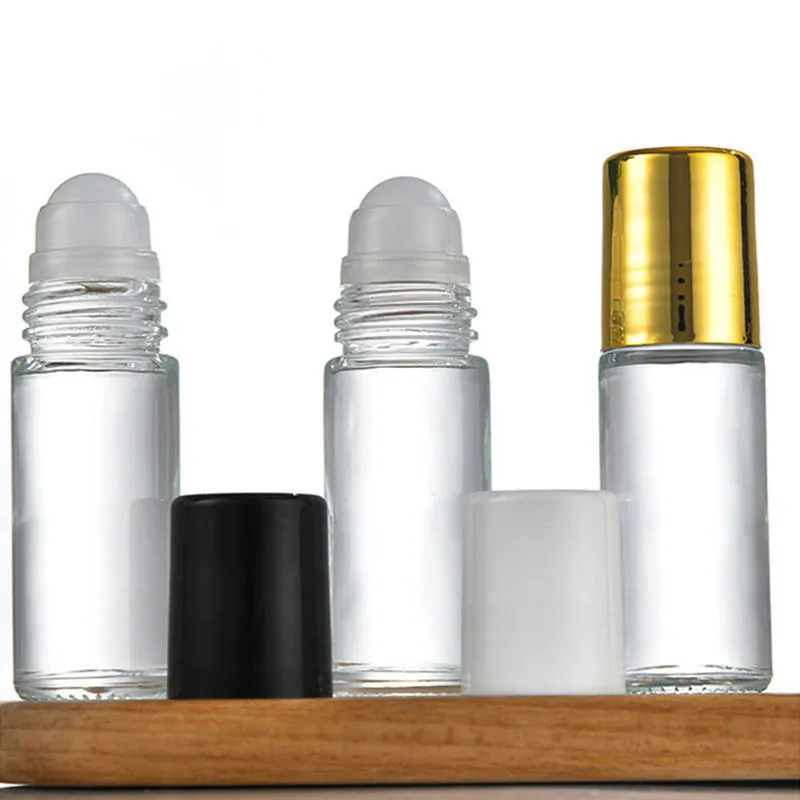
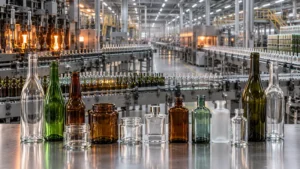
Direct answer: O-I Glass is the best-supported answer to “Who is the biggest glass bottle manufacturer in the world?” O-I describes itself as the world’s largest glass container manufacturer and currently reports approximately 34 billion containers sold, 61 plants in 18 countries and 19,000 employees. The claim applies to glass containers—principally food and beverage bottles and jars—not every kind of glass product.
Buyer’s answer: the largest producer is not automatically the best supplier for your order. A beverage multinational, a pharmaceutical-vial specialist and a custom perfume-bottle integrator solve different problems. This guide compares 15 major manufacturers by verified scale, product focus, market, MOQ transparency and customization, then provides a qualification and China-import workflow.
A credible comparison must avoid a common listicle error: converting incomparable company claims into a false league table. Some businesses disclose annual units, others tonnes, revenue, furnaces or group-wide sites. Private companies rarely publish audited segment figures, and an “MOQ” for a stock bottle says nothing about the minimum for a private mold, custom color, pump or decoration. Therefore, only O-I is identified as the direct-answer leader; the remaining companies are presented as major suppliers to compare, not a mathematically proven global rank.
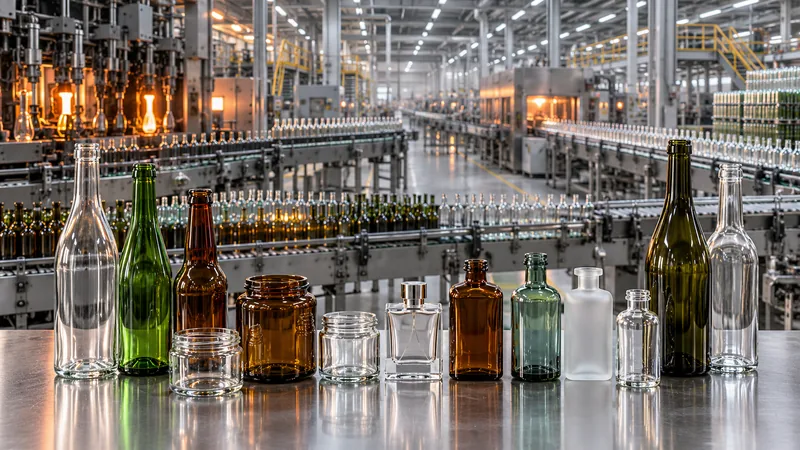
Who is the biggest glass bottle manufacturer in the world?
O-I Glass is the clearest answer when “biggest” means global glass-container scale. Its current corporate data—about 34 billion containers sold, 61 manufacturing plants, operations in 18 countries and 19,000 employees—gives a broader and more transparent scale basis than most competitors publish. Its center of gravity is food and beverage packaging, where continuous furnaces, standardized high-speed production, recycled cullet use and long-term supply programs reward very large volume.
That answer needs three boundaries. First, “glass bottle” does not include flat glass, fiberglass, tableware or display glass. Second, a group’s total employees or plants may include non-container businesses; this guide uses container-specific figures wherever possible. Third, biggest does not mean universally best. A 30 ml decorated serum bottle with a matched dropper, a Type I injectable vial and a lightweight beer bottle require different molds, glass chemistry, dimensional controls, clean handling, decoration and commercial service.
15 major glass bottle manufacturers: quick comparison
| Company / country | Main products | Public scale evidence | Main markets | MOQ | Customization / best fit |
|---|---|---|---|---|---|
| 1. O-I Glass United States |
Food and beverage bottles and jars | ~34bn units; 61 plants; 18 countries; 19k employees | Global high-volume consumer goods | Not public; contract quote | Structural design, embossing, color; large programs |
| 2. Ardagh Glass Packaging Luxembourg / global |
Beverage, food, pharmaceutical and chemical containers | 35+ glass facilities; 12 countries; 14k+ people; $4bn+ glass sales | Europe, North America, Africa | Not public; project quote | High-volume design and regional supply |
| 3. Verallia France |
Beverage and food bottles and jars | 34 glass sites; 63 furnaces; close to 18bn units; 12 countries | Europe and Latin America | Not public; project quote | Design, premium ranges, high-volume food/beverage |
| 4. BA Glass Portugal |
Beer, wine, spirits, soft drinks and food jars | 13 plants; ~12bn units/year; 70 markets; ~4.5k employees | Europe and export markets | Quote-based | Large food/beverage runs and automatic inspection |
| 5. Vidrala Spain |
Food and beverage glass; logistics and filling services | 9 plants; 21 furnaces; ~9bn units/year; 1,600+ customers | Europe | Quote-based | Regional volume supply and service integration |
| 6. Sisecam Glass Packaging Türkiye |
Food, beverage, pharma and household glass containers | 10 facilities in 4 countries; ~3.3m tonnes annual capacity | Türkiye, Europe and nearby export regions | Quote-based | Broad high-volume formats and color capability |
| 7. Vetropack Switzerland |
Food and beverage containers | 8 glassworks in 7 countries; 3,532 employees in 2025 | Central and Eastern Europe | Quote-based | Regional programs where freight distance is controlled |
| 8. Orora / Saverglass Australia / France |
Premium wine and spirits bottles with decoration | 7 manufacturing and 4 decoration sites in Global Glass | Global premium beverage | Quote-based | Heavy-base, distinctive shapes, premium finishes |
| 9. Gerresheimer Germany |
Pharma glass, drug delivery, perfume and skincare packaging | ~13k employees; 39 group production plants | Global pharma, biotech and beauty | Project quote | Regulated packages and decorated prestige beauty |
| 10. SGD Pharma France |
Molded pharmaceutical glass bottles and vials | 5 manufacturing plants; supply reach through 90+ agents/distributors | Global pharmaceuticals | Project quote | Type I/II/III pharma containers and regulated control |
| 11. Stoelzle Glass Group Austria |
Spirits, pharma, perfumery, cosmetics, food and candles | 7 manufacturing and 3 decoration sites; ~3.1bn units/year | Europe and global premium segments | Numeric minimum not public; small-batch routes exist | Premium customization and multi-segment expertise |
| 12. PGP Glass India |
Cosmetics, perfumery, pharma and specialty food/beverage | 3 facilities; 1,720 t/day; 12 furnaces; 70 lines; 50+ countries | Global beauty, pharma and specialty markets | Quote-based | High-volume perfume/cosmetic glass and decoration |
| 13. AGI Greenpac India |
Food, pharma, soft drink, beer, wine, spirits and chemical containers | 3 plants; >2,000 t/day; 1.5–6,000 ml range | India and export markets | Quote-based | In-house design, molds and ACL printing |
| 14. Nihon Yamamura Glass Japan |
Glass bottles, plastic packaging, logistics and production engineering | Company materials identify No. 1 Japanese glass-bottle market share | Japan and Asian partnerships | Quote-based | Japanese domestic quality/service and engineering |
| 15. Boyu Packaging China recommendation |
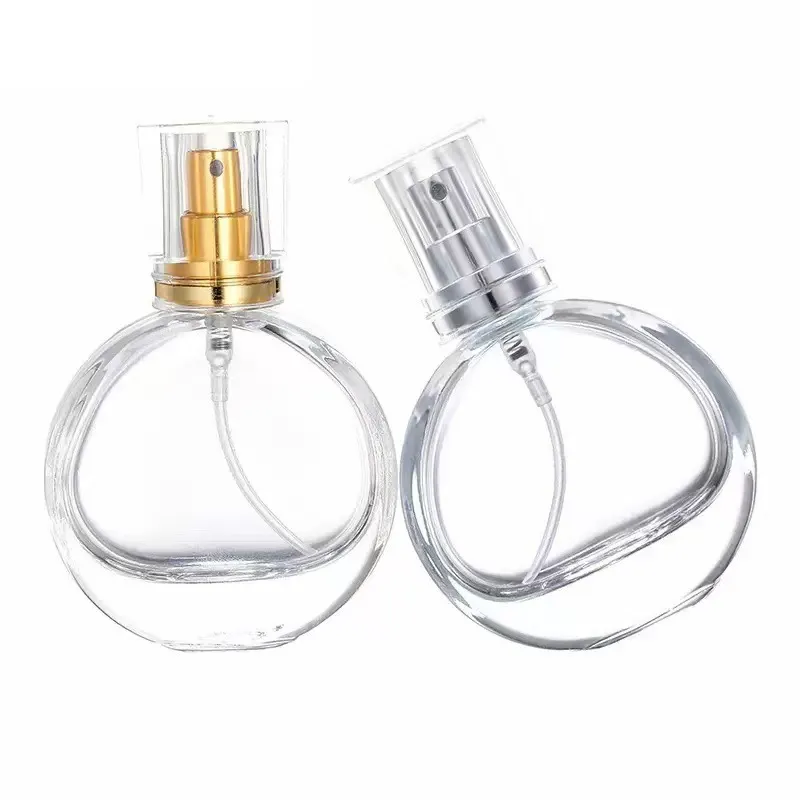
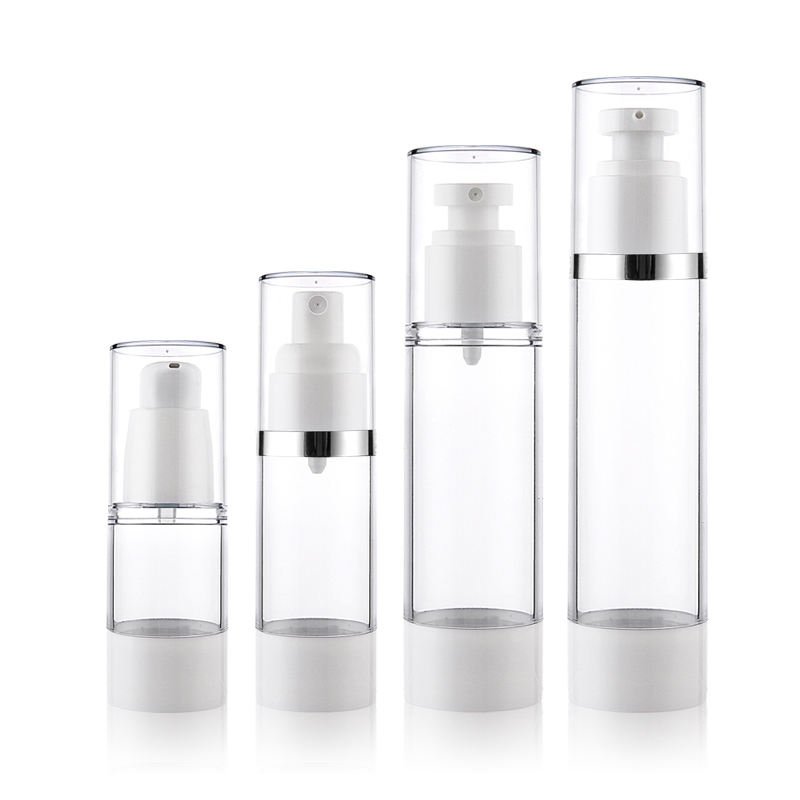
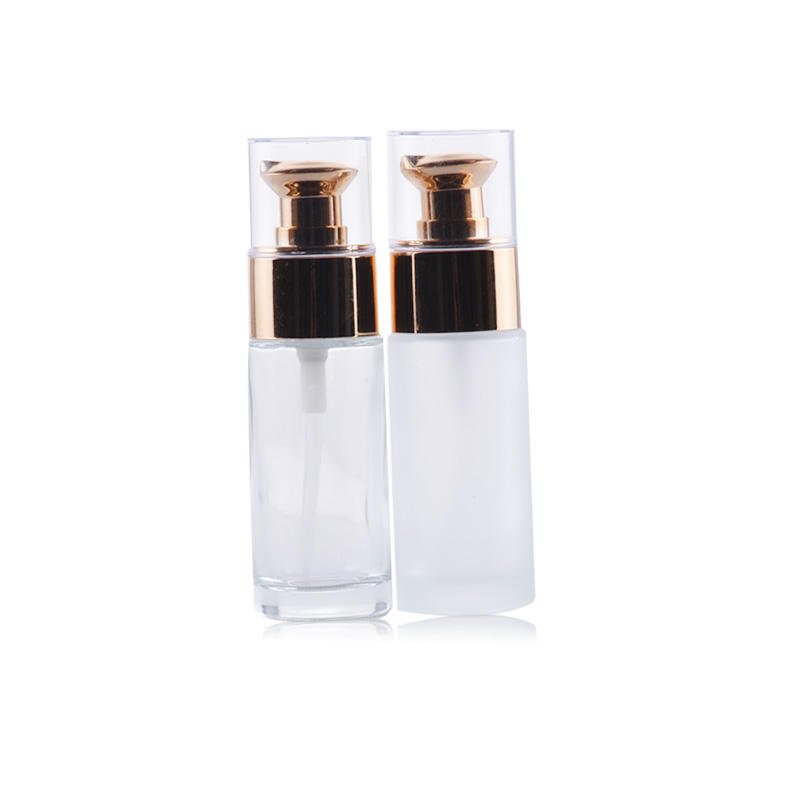
Perfume, serum, lotion and cream glass; pumps, caps and droppers | Cosmetic-packaging specialist and supply-chain integrator; not presented as a global volume leader | International beauty and personal care | From 10,000 on the glass category page; confirm by SKU/process | OEM/ODM, mold, coating, frosting, print, hot stamp and full-pack coordination |
Manufacturer profiles: strengths, limitations and suitable buyers
1. O-I Glass — the scale leader for glass containers
O-I’s strength is a global network designed for enormous, repeatable food and beverage programs. The company combines container design, mold engineering, color development, furnace operations and high-speed inspection. Regional production reduces the otherwise punishing freight cost and carbon impact of shipping empty glass long distances.
Best for: large beverage and food brands with forecast stability and enough annual volume to justify line allocation. Trade-off: a startup seeking 10,000 highly decorated 30 ml cosmetic bottles may be commercially mismatched. Public standard MOQs are not provided; qualification starts with a project brief and forecast, not a catalog-cart quantity.
2. Ardagh Glass Packaging — broad regional beverage and food network
Ardagh operates a large network across Europe, North America and Africa, serving beverage, food, pharmaceutical and chemical applications. Its value is not just furnace capacity: a multi-plant footprint can support regionalization, business continuity and large program launches.
Best for: established brands requiring high-volume regional supply and industrial design support. Watch: confirm the exact plant, glass color, line campaign, annual commitment and backup-site plan. A group-wide capability does not mean every site makes every neck finish or color.
3. Verallia — large-scale food and beverage specialist
Verallia identifies itself as the world’s third-largest producer of glass bottles and jars for beverages and food. With 34 glass-production sites and 63 furnaces, it is a serious comparison for wine, beer, spirits, non-alcoholic drinks and food brands. Premium ranges and design services extend beyond commodity bottles.
Best for: substantial European or Latin American programs, especially where recycled content and nearby manufacturing matter. Watch: verify whether your product will use a standard mold, exclusive model or customer-owned tool and how forecast variance affects capacity reservation.
4. BA Glass — high-output European container platform
BA Glass reports about 12 billion containers a year across 13 plants, serving beer, wine, spirits, soft drinks and food. It highlights automatic inspection at its plants plus laboratory testing. This scale suits brands that need repeatability and efficient distribution within its manufacturing footprint.
Best for: high-volume food and beverage buyers. Watch: request defect classifications, automatic-inspection reject logic, laboratory frequency and evidence that the chosen plant can hold critical neck and pressure requirements—not only group-level quality statements.
5. Vidrala — regional integration and service
Vidrala combines nine glass plants and 21 furnaces with logistics and, in parts of its business, filling services. That integration can simplify planning for European food and beverage customers. Its approximately nine billion containers per year and 1,600-plus customers show meaningful scale without making it a cosmetic-packaging specialist.
Best for: European regional programs that value operational proximity and integrated services. Watch: compare delivered cost and supply resilience, not ex-works piece price alone; empty glass freight frequently changes the apparent winner.
6. Sisecam Glass Packaging — large-capacity platform from Türkiye
Sisecam’s packaging business reports 10 facilities in four countries and about 3.3 million tonnes of annual capacity. Its Eskisehir campus is described as the world’s largest single-site glass-packaging production facility by capacity, with multiple furnaces and lines. The company serves food, beverage, pharmaceutical and household-product categories.
Best for: large programs supplied from Türkiye and adjacent regions. Watch: do not confuse the size of the broader Sisecam group with container capacity; evaluate the packaging division and named plant only.
7. Vetropack — proximity-led European supply
Vetropack operates eight glassworks in seven European countries. Its regional network illustrates a fundamental bottle-sourcing rule: because empty glass has a low value-to-volume ratio, supply radius can matter as much as furnace size. The company’s portfolio is centered on food and beverage containers.
Best for: Central and Eastern European customers whose plants are within an efficient logistics radius. Watch: model full-lorry/pallet utilization, returnable-pack systems and lane risk. A lower unit price from a distant factory can disappear after freight and breakage.
Orora’s Global Glass business, including Saverglass, is oriented toward high-end wine and spirits. Seven manufacturing sites and four decoration sites support distinctive silhouettes, heavy bases, glass color and premium finishing. Its competitive set is therefore not the same as a commodity food-jar supplier.
Best for: premium beverage brands where shelf impact and decoration justify higher package cost. Watch: heavy glass raises freight, impact energy and sustainability questions. Require dimensional and cosmetic standards for the decorated finished bottle, not just the bare container.
9. Gerresheimer — pharma control with prestige beauty capability
Gerresheimer spans pharmaceutical primary packaging, drug-delivery systems and cosmetics. Its group scale—about 13,000 employees and 39 production plants—should not be read as 39 glass-bottle factories. For beauty buyers, the Momignies operation is relevant because it produces and decorates glass flacons and jars for perfume, skincare and body care.
Best for: regulated pharma programs and prestige beauty projects needing strong technical control. Watch: qualify the exact business unit and facility. Pharma discipline does not automatically mean a cosmetic project will have a startup-friendly MOQ or commercial model.
10. SGD Pharma — molded pharmaceutical-glass specialist
SGD Pharma focuses on molded pharmaceutical glass rather than general consumer bottles. Its five manufacturing plants, global commercial reach and pharmaceutical quality systems make it a logical candidate for medicine, diagnostic and healthcare containers requiring defined hydrolytic performance and GMP-oriented controls.
Best for: pharmaceutical customers whose specifications and regulatory dossier demand a specialist. Watch: do not use beverage or cosmetic acceptance criteria for primary drug packaging. Glass type, extractables risk, dimensional systems and change control must align with the drug application.
Stoelzle’s seven manufacturing and three decoration sites serve spirits, pharmaceuticals, perfumery/cosmetics, food/beverage and candles. Around 3.1 billion containers annually gives it industrial scale, while its flaconnage business promotes premium customization and routes for smaller batches.
Best for: premium brands seeking European glass and decoration. Watch: “small batch” is not a universal numeric MOQ. Ask whether the minimum applies to bare glass, one decoration color, one order release or an annual call-off agreement.
12. PGP Glass — strong cosmetics and perfumery scale
PGP Glass reports three facilities, 12 furnaces, 70 production lines and 1,720 tonnes per day, serving more than 50 countries. Unlike many mass-container groups, cosmetics and perfumery are core segments; company materials also describe very high annual perfume and skincare/foundation output.
Best for: established global beauty and fragrance programs that need substantial forming and decoration capacity. Watch: request the facility and line proposed for the job, component sourcing map, decoration yield, private-mold terms and realistic campaign MOQ.
13. AGI Greenpac — high-capacity Indian multi-segment supplier
AGI Greenpac’s glass business reports three plants and more than 2,000 tonnes per day, with container sizes from 1.5 ml to 6,000 ml. It serves food, pharmaceuticals, soft drinks, spirits, beer, wine and chemicals and lists in-house design, mold development and applied ceramic labeling.
Best for: buyers needing a wide capacity range, Indian sourcing and substantial production scale. Watch: obtain the product-specific minimum run, color campaign schedule and export-pack history for your lane.
14. Nihon Yamamura Glass — leading Japanese domestic supplier
Nihon Yamamura’s corporate materials identify it as Japan’s number-one glass-bottle supplier by domestic market share. The group also covers plastic containers, logistics and production engineering, which can support integrated Japanese customer programs and technical services.
Best for: buyers prioritizing Japanese market service, engineering and local quality expectations. Watch: Japan market leadership is not the same as a worldwide volume rank. Obtain current plant, capacity and export-commercial information directly for the proposed project.
15. Boyu Packaging — China recommendation for coordinated cosmetic glass
Boyu is included because the user asking “largest” often really needs “which supplier can execute my cosmetic package?” Boyu’s focus is glass bottles and jars for perfume, serum, lotion and cream, plus pumps, droppers, sprayers, caps and decoration. Its public cosmetic glass packaging range states an MOQ from 10,000 pieces, subject to product and process.
Best for: international beauty buyers that want one project owner to coordinate the bottle, closure, decoration, assembly and export pack. Limitation: Boyu is not presented as a volume peer of O-I, and “one-stop” must not be confused with every process occurring at one owned site. Confirm the bare-glass factory, decoration site, pump/cap source, final-inspection location and change-control responsibilities for the selected SKU.
Choose the supplier model by product—not by headline size
| Project | Prioritize | Likely supplier type | Mistake to avoid |
|---|---|---|---|
| Mainstream beer, sauce or soft drink | Regional furnace scale, pressure/thermal performance, line efficiency | O-I, Ardagh, Verallia, BA Glass, Vidrala, Sisecam, Vetropack | Buying distant empty glass on ex-works price alone |
| Premium wine or spirits | Shape, glass distribution, heavy base, decoration, brand protection | Orora/Saverglass, Stoelzle, selected large groups | Approving only a beauty sample without filled-line and transit tests |
| Pharmaceutical bottle or vial | Glass type, GMP/ISO scope, traceability, change control, compendial tests | SGD Pharma, Gerresheimer, qualified pharma divisions | Treating a food-safe statement as pharmaceutical qualification |
| Perfume, serum or cream package | Appearance, neck/closure fit, formula compatibility, decoration adhesion, assembly | PGP, Gerresheimer, Stoelzle, Boyu and verified cosmetic specialists | Qualifying the bottle but not the closure, gasket, decoration and finished pack |
Geography changes the decision. A North American beverage filler usually benefits from local or regional furnaces. European brands should compare transport distance, cullet access and pallet systems across regional plants. Middle Eastern and African buyers may favor suppliers with established nearby distribution. Beauty importers can justify longer Asian lanes because high decoration and component integration create more value per cubic meter—but only when protective packing and schedule control are strong.
Cosmetic glass example: when Boyu Packaging can be the better choice
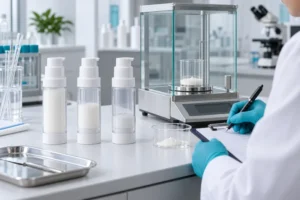
Imagine a skincare brand needs a 30 ml frosted serum bottle, a custom-color shoulder, a metalized collar, a dropper calibrated to its dose, two-color printing and a partitioned export carton. The purchasing problem is not “Who owns the most furnaces?” It is “Who accepts responsibility for the interfaces?” A cosmetic-focused integrator can be more useful than a giant container group because one team can manage appearance, bottle/closure fit, component tolerances and the finished pack.
For a prestige fragrance program, review Boyu’s custom perfume bottle development route. For a wider China shortlist, compare the dedicated China glass bottle manufacturer guide. The correct sourcing model still depends on evidence.
Ask Boyu—or any integrator—to show five things before approval:
- The legal entity and address of the bare-glass forming site.
- The actual decoration site and whether any step is subcontracted.
- The closure/pump manufacturer, materials and approved drawing.
- A signed golden sample, component drawings and acceptance limits.
- A change-control clause requiring written approval before a resin, coating, component source, mold, plant or process changes.
How to choose a reliable glass bottle manufacturer: a 100-point scorecard
Use the same evidence-based scorecard for every candidate. Weighting prevents a polished sample or low price from hiding weak process control.
| Criterion | Weight | Evidence to request | Reject or downgrade when |
|---|---|---|---|
| Technical fit | 20 | Drawings, neck standards, glass color, forming route, closure interface and filled-product risk review | Supplier quotes from a photo without resolving capacity, finish and compatibility |
| Quality system | 20 | Valid certificates by entity/site/scope, control plan, calibration, traceability, CAPA and change control | Only logos or expired certificates are supplied |
| Production control | 15 | Named plant/line, furnace campaign, mold maintenance, decoration ownership and capacity plan | Factory identity changes or subcontracting is concealed |
| Sample-to-mass repeatability | 15 | Cavity-marked production samples, capability data, limit samples and pilot/line trial | Only hand-made showroom samples are available |
| Commercial transparency | 10 | Price breakdown, MOQ per component/process, tooling ownership, over/under tolerance, payment terms | Ambiguous “all included” quote or unexplained price swings |
| Delivery resilience | 10 | Capacity reservation, critical-component lead times, backup tooling/site and schedule milestones | Lead time starts before artwork/sample approval or excludes components |
| Export execution and service | 10 | Market experience, packing validation, documents, claims workflow and references | No destination-specific document/pack plan or written claims process |
Decision rule: set non-negotiable gates before comparing totals. For example, any supplier that fails formula compatibility, neck/closure fit, regulatory-document validity or traceability is disqualified even if its score is otherwise high. A practical shortlist usually needs one commercial sample round, one production-representative pilot and one audited or independently inspected mass-production lot.
MOQ, tooling and price: why “just 10,000 bottles” is not one number
Glass furnaces run continuously. The economic minimum depends on the bottle’s gob weight, color campaign, machine configuration, number of cavities, mold-change time, expected yield and how efficiently the job fits a production campaign. Decoration, pumps and caps each have separate setup economics. Consequently, total order quantity may be 50,000 while each color, artwork, size or closure still needs its own minimum.
- Stock mold, clear/flint glass: lowest development risk; MOQ may be driven by pallet or decoration batch.
- Private mold: tooling cost, trials and efficient furnace campaign raise the practical minimum. Define ownership, maintenance and transfer rights.
- Custom glass color: may require a tank or campaign; coating a clear bottle can be more accessible but changes adhesion and compatibility risks.
- Decoration: every ink color, spray color, hot-stamp foil or artwork can create a separate setup and yield loss.
- Closure and dispenser: a pump color or metalized collar may exceed the bottle MOQ. Align all components before issuing the purchase order.
Ask for four numbers: engineering/tooling charge, minimum order by component and process, unit price at two or three annual volumes, and expected production yield/overrun. Compare landed cost per accepted assembled unit, not the quoted cost per bare bottle.
How a glass bottle factory produces bottles
The following is the standard container-glass flow. Exact recipes, temperatures, forming speeds and inspection limits belong to the plant and product specification. Published industry descriptions commonly place melting around 1,550–1,565°C, but this is representative—not a universal setpoint.
- Specification and design: define fill point, brimful capacity, overflow volume, neck finish, weight, label/print area, top load, color and appearance zones.
- Mold engineering: create blank, blow, neck-ring and related tooling; plan cavities, shrinkage, seams and base geometry.
- Batch preparation: meter silica sand, soda ash, limestone and minor ingredients with clean recycled cullet. Composition and cullet color affect melt behavior and final appearance.
- Melting and refining: the furnace melts the batch and removes gases/inhomogeneity. Furnace condition, residence time and temperature stability influence stones, cords, seeds and color.
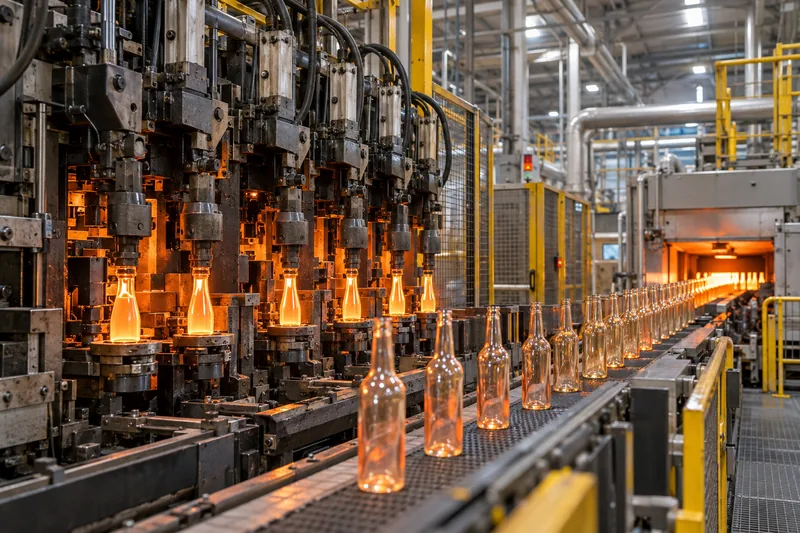
- Conditioning and gob cutting: molten glass is cooled to forming viscosity and sheared into controlled gobs. Gob weight distribution is a critical driver of bottle weight and wall distribution.
- Forming: individual-section machines use blow-and-blow or press-and-blow variants. The gob enters the blank mold, forms a parison, transfers to the final mold and is blown to shape.
- Hot-end coating: an approved coating may be applied to protect the surface and improve downstream durability.
- Annealing: bottles pass through a lehr under a controlled temperature profile to reduce residual stress. Poor annealing increases breakage risk.
- Cold-end coating and inspection: cold-end treatment may improve lubricity. Cameras and sensors reject dimensional, wall, base, finish, stress and appearance defects; laboratory tests verify sampled performance.
- Decoration and packing: cosmetic bottles may be coated, frosted, screen printed, hot stamped or metallized, then assembled and packed in cells, trays or dividers matched to the distribution route.
For a deeper walkthrough of forming and decoration, see the glass perfume bottle manufacturing process.
Glass bottle quality-control process and acceptance standards
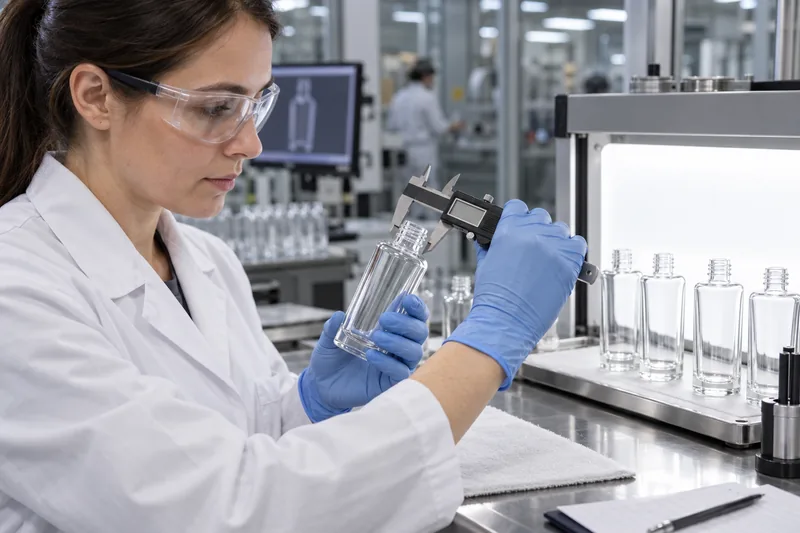
Quality begins with an agreed specification, not a final inspection. The drawing should identify critical dimensions, tolerances, defect zones, functional tests, decoration limits and mating components. The quality agreement should classify critical, major and minor defects and state sampling plans. ISO 2859-1 provides a framework for attribute sampling, but it does not choose your AQLs or turn an unsafe defect into an acceptable one.
| Control point | What to verify | Typical method | Why it matters |
|---|---|---|---|
| Finish and dimensions | T/E/H dimensions, thread or crimp profile, height, diameter, verticality | Gauges, calipers, vision system, go/no-go fixtures | Closure fit, capping, filling-line handling and seal integrity |
| Capacity and weight | Brimful capacity, fill-point capacity, container mass and distribution | Gravimetric volume, calibrated scale, wall scan/section study | Correct declared fill and sufficient headspace without weak walls |
| Appearance | Cracks, checks, stones, blisters, seeds, seams, deformation, scuffs and color | Automatic inspection plus controlled-light visual standard and limit samples | Safety, premium appearance and decoration yield |
| Residual stress | Annealing quality | Polariscopic examination, such as ASTM C148 where applicable | Reduces spontaneous breakage and handling failures |
| Mechanical/thermal performance | Internal pressure, thermal shock, top load or impact as risk requires | ASTM C147/C149 or product-specific validated methods | Filling, hot/cold exposure, capping, pallet and consumer safety |
| Closure system | Torque/crimp, gasket contact, leakage, dispenser output and dip-tube fit | Assembly trials, vacuum/pressure or inverted leak tests, dosage test | A bottle alone cannot prove package integrity |
| Decoration | Color, registration, coverage, adhesion, abrasion and formula resistance | Master/limit samples plus tape, rub and chemical exposure methods agreed in writing | Prevents peeling, color mismatch and brand complaints |
| Distribution pack | Partition fit, pallet compression, vibration, shock, humidity and container loading | ISTA route-appropriate procedure and shipment trial | Factory-perfect bottles can still scuff or break in transit |
For cosmetics, approve the package with the actual formula, closure and decoration. Follow a documented cosmetic packaging compatibility test, then validate the packed shipper against relevant drop and distribution test conditions. No single FDA list substitutes for a product-specific safety and stability rationale.
How to import cosmetic glass packaging from China
- Freeze the product brief: formula, nominal and brimful capacity, bottle drawing, neck, closure, decoration, annual volume, launch date, filling line and destination market.
- Classify the supply chain: identify who forms the glass, decorates it, makes the cap/pump, assembles the set and performs final release. Record legal entities and addresses.
- Issue the same RFQ to finalists: request EXW/FOB and, where useful, landed alternatives; separate tooling, samples, unit price, component MOQ and packing.
- Verify the supplier: business license, bank-account match, factory video or audit, certificates by site and scope, export history, calibration and traceability.
- Develop production-representative samples: sign drawings, color targets, decoration artwork and golden/limit samples. Hand samples are not enough for mass-production approval.
- Test the complete package: fill with the real formula; evaluate seal, dispenser, decoration, stress, temperature and orientation. Run it on the actual filling/capping line.
- Sign commercial and quality agreements: include Incoterms 2020 rule and named place, inspection/AQL plan, change approval, over/under-delivery, claims, tooling ownership and remedies.
- Control production milestones: raw materials/components ready, glass-forming slot, decoration, assembly, pre-shipment inspection, packing and vessel cutoff. Do not accept one vague “30-day lead time.”
- Validate export packing: cell dividers or trays, abrasion control, corner boards, stretch wrap, pallet specification, moisture management and container-loading photos. Select ISTA testing that represents the route.
- Prepare customs and receipt: confirm commodity code with a broker, commercial invoice, packing list, bill of lading, origin or preference evidence where applicable, EORI for EU customs operations, and any destination-specific documents. Inspect incoming pallets before releasing them to filling.
Incoterms allocate delivery tasks and risk; they do not replace a specification, insurance decision or quality remedy. For perfume-specific freight, documents and supplier negotiation, use the detailed guide to importing perfume bottles from China.
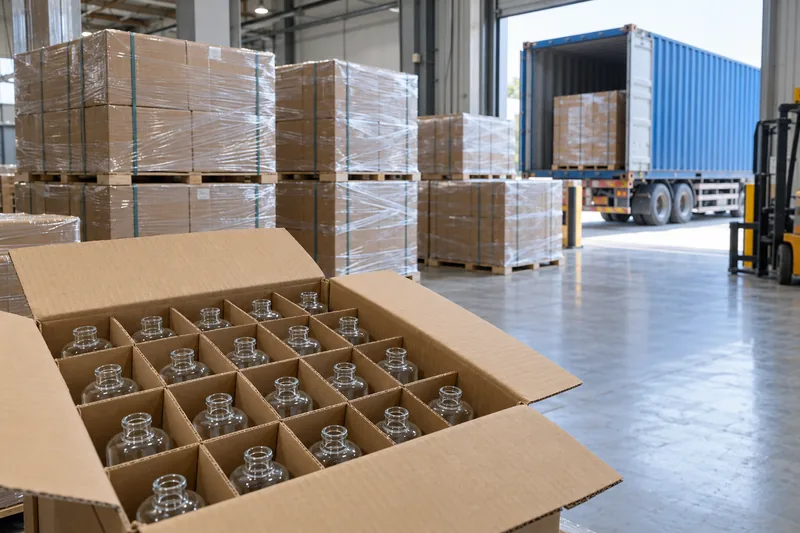
Production-ready RFQ checklist and common sourcing mistakes
Formula family, fill volume, brimful target, bottle weight, neck finish, closure, pump dose, dip tube and filling-line drawing.
Glass color, coating master, Pantone/L*a*b* method, artwork files, registration, appearance zones and signed limit samples.
Forecast, quantity per SKU, MOQ per process, tooling, sample charge, payment, delivery tolerance, Incoterm and destination.
CTQs, defect classes, AQL/inspection level, functional tests, compatibility, golden samples, traceability, CAPA and change control.
Ten mistakes that create avoidable loss
- Choosing a company by claimed size without confirming the product segment and actual plant.
- Comparing bare-bottle prices when one quote includes decoration, closure or stronger export packing.
- Using nominal capacity as brimful capacity and leaving inadequate headspace.
- Approving a hand sample that was not made on mass-production equipment and tooling.
- Testing the bottle without the actual formula, gasket, closure and dispenser.
- Accepting a certificate logo without validating issuer, entity, site, scope and expiry.
- Leaving mold ownership, repair, storage and transfer rights out of the contract.
- Allowing resin, ink, coating, component source or subcontractor changes without written approval.
- Skipping filling-line and route-representative distribution trials.
- Paying final balance before agreed inspection, evidence and release criteria are satisfied.
Need a cosmetic glass package rather than the world’s largest furnace network?
Send the formula type, volume, bottle/closure reference, decoration, annual demand, destination and target launch date. Boyu can assess a stock-mold or custom route and identify the tests and component interfaces the project needs.
Frequently asked questions
Is O-I bigger than Ardagh and Verallia?
On current public glass-container scale evidence, O-I is the best-supported largest manufacturer. Verallia describes itself as number three in food and beverage glass, while Ardagh reports a major 35-plus-facility glass network. Exact comparisons depend on year, segment and metric, so use current audited filings where available.
Which manufacturer is best for cosmetic glass bottles?
There is no universal winner. Choose a supplier that can prove cosmetic appearance control, compatible closures, stable decoration, formula testing, filling-line performance and export packing at your volume. PGP, Gerresheimer, Stoelzle and qualified Chinese specialists serve different volume and service needs; Boyu is a practical option when component and decoration coordination is central.
What is a normal MOQ for custom glass bottles?
It varies from pallet-level stock programs to tens or hundreds of thousands for a new shape or color campaign. Boyu publishes a starting MOQ of 10,000 on its cosmetic-glass category page, but the exact minimum depends on bottle, mold, color, decoration and closure. Ask for separate MOQs for every component and process.
Is buying from a factory always better than a trading company?
No. A furnace owner offers direct process control, while a strong integrator may coordinate glass, decoration, closures and logistics more effectively. The essential requirement is transparency: know every process owner, audit the critical sites and make one party contractually accountable for the finished package.
What tests should be completed before mass production?
At minimum, verify drawings and capacity, appearance, neck/closure fit, leak performance, formula compatibility, decoration adhesion and filling-line handling. Add residual stress, pressure, thermal shock, top load, impact and distribution testing according to the product and route. Pharmaceutical and pressurized products require application-specific standards and regulatory review.
How long does custom glass bottle development take?
A stock bottle with existing decoration can move much faster than a private mold. Custom work adds design freeze, mold engineering, tooling, trial production, decoration sampling, compatibility and line trials. Build the schedule from approval gates and the factory’s actual campaign slot rather than relying on a generic lead-time promise.
Sources and further reading
Company scale and capability figures below are company-reported unless the link is a regulatory filing. Accessed October 2026. Supplier claims still require project-specific verification.
- O-I Glass — About O-I
- O-I Glass — 2025 Form 10-K
- Ardagh Group — Corporate overview
- Verallia — About us
- BA Glass — About us
- Vidrala — Annual reports
- Sisecam — Glass Packaging
- Vetropack — Annual Report 2025
- Orora — Global Glass
- Gerresheimer — Company
- Gerresheimer — Cosmetics portfolio
- SGD Pharma — About us
- Stoelzle Glass Group — Company
- PGP Glass — About us
- AGI Greenpac — Glass packaging
- Nihon Yamamura Glass — Corporate information
- ISO 2859-1:2026 — Acceptance sampling by attributes
- ASTM International — Glass standards
- ISTA — Test procedures
- FEVE — How glass is made
- U.S. Customs and Border Protection — Commercial invoice requirements
- European Commission — EORI number
- UK Government — Import goods into the UK
- U.S. FDA — Product testing of cosmetics
- ICC — Incoterms 2020 checklist
 English
  Español de Argentina
  Русский
  Italiano
  日本語
日本語  한국어
한국어  العربية
  Français
  Deutsch