
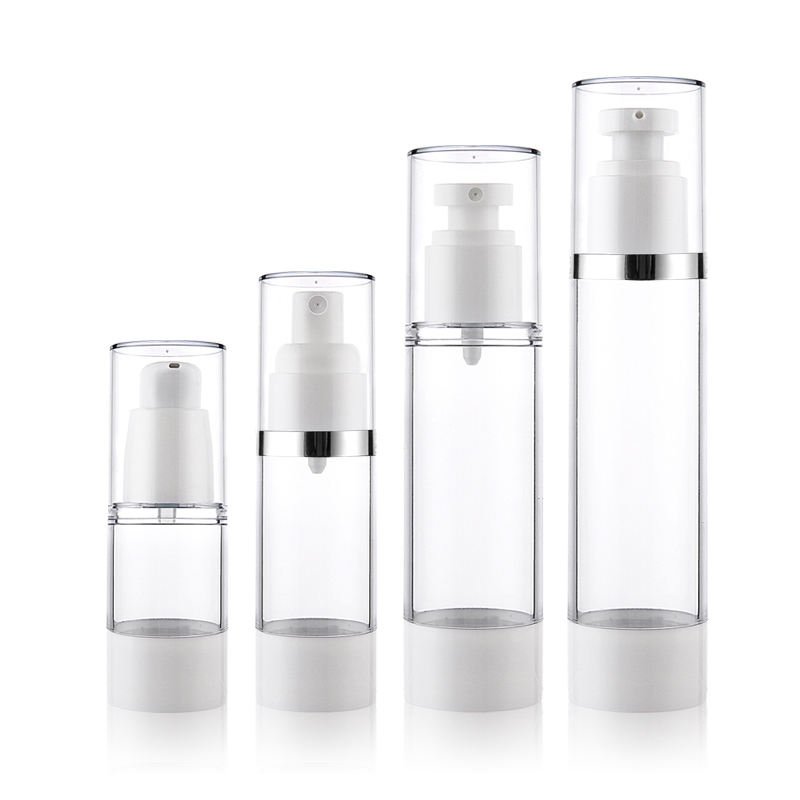
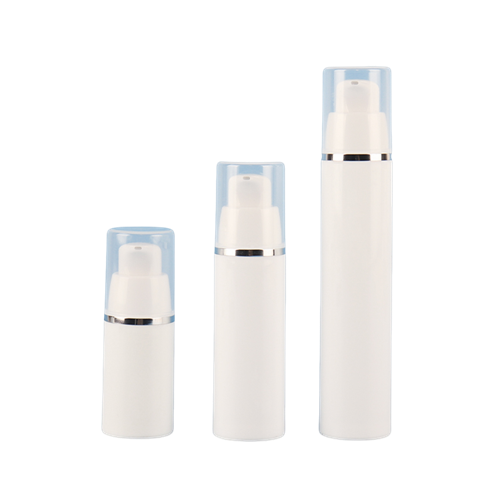
Short answer: some airless pump bottles can be reused, but not every airless package is designed to be opened, cleaned, or refilled. A purpose-built refillable airless bottle with a removable cartridge or threaded pump is the safer choice. A sealed, snap-fit bottle should normally be treated as a single-use package because forcing it apart can damage the seal, piston, or pump.
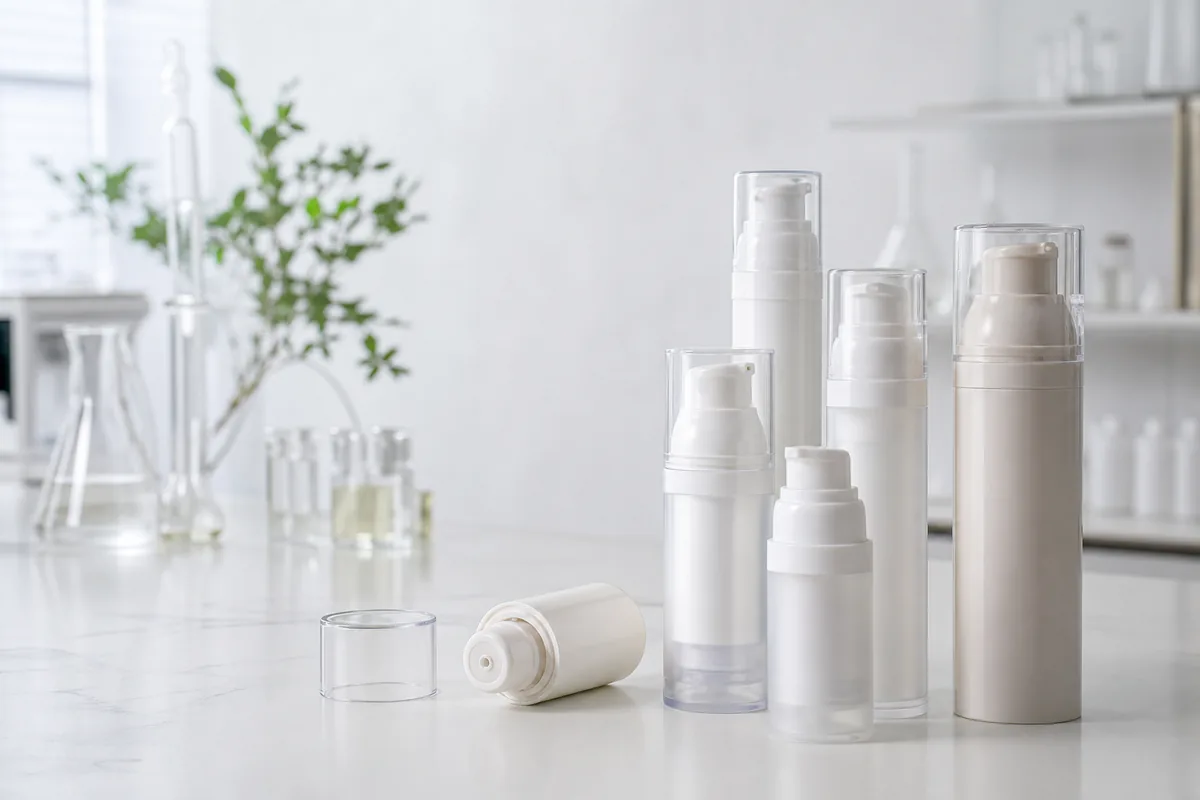 Refillable airless packaging should be selected as a complete bottle, pump, formula, and refill system.
Can Airless Pump Bottles Be Reused?
Yes—if the package was engineered for reuse and the formula can be handled hygienically. Refillable designs usually have a screw-off pump, removable inner cartridge, accessible piston, or replaceable pump module. These parts allow the user or filling operation to reset the package without prying apart permanent snap fits.
Reusing an unknown bottle is different. A package that cannot be opened without tools may lose its vacuum seal after disassembly. Pumps also retain product in narrow internal passages, where water and residue are difficult to remove. For a commercial skincare product, that creates a contamination and compatibility risk that cannot be solved by appearance alone.
Reuse, refill, and recycle are not the same claim
- Reusable: the complete package is designed to withstand multiple fill-and-use cycles.
- Refillable: the consumer can replenish the product, often by replacing an inner cartridge.
- Recyclable: the package may enter an appropriate recycling stream after separation and cleaning; local acceptance still varies.
For a new packaging project, define which claim matters before choosing the bottle. A durable decorative outer shell with a replaceable mono-material inner cartridge may be more practical than asking consumers to wash a complex pump.
How Does an Airless Pump Bottle Work?
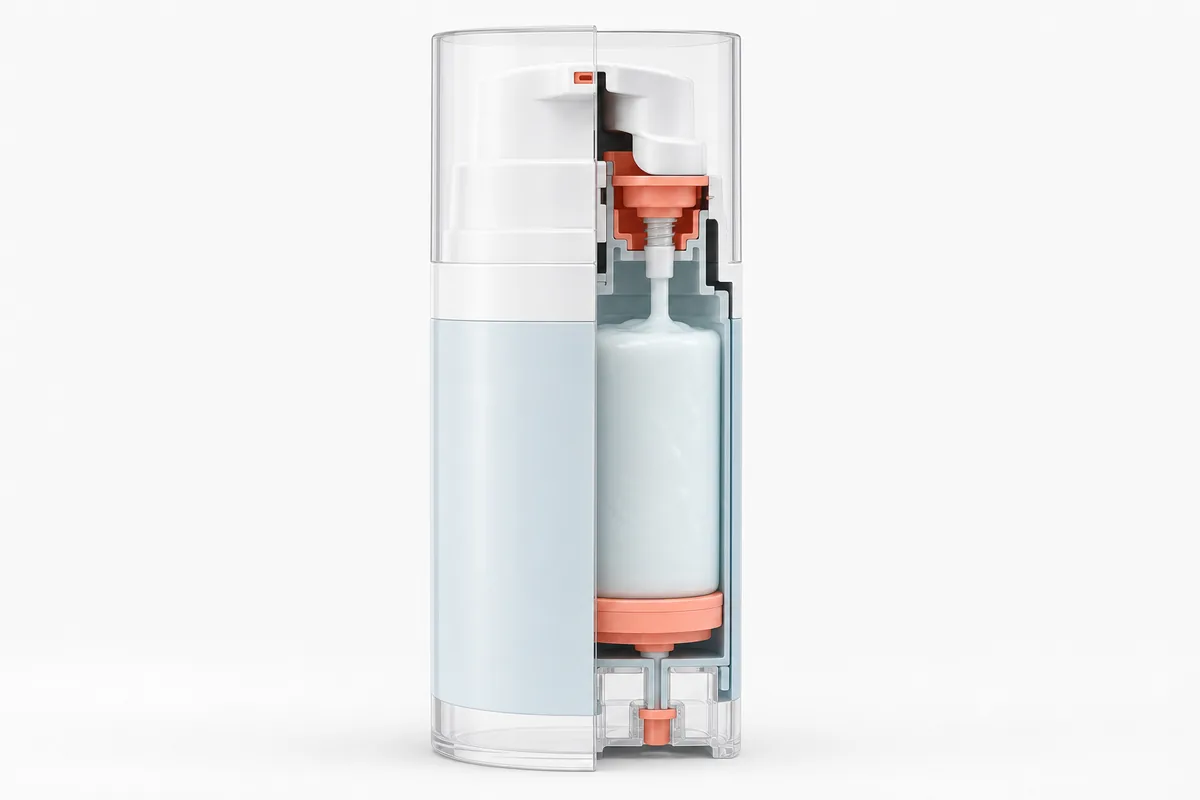
A conventional lotion pump normally uses a dip tube and allows replacement air into the bottle as product leaves. A piston-based airless bottle works differently. Pressing the actuator moves a small pump chamber. The resulting pressure difference draws formula toward the outlet while an internal platform rises from the base. The product chamber becomes smaller with each dose, so the formula can be dispensed without a long dip tube.
The bottom vent is important: it allows air to enter below the rising piston, not into the product chamber. If a label, hand, or secondary component blocks that vent, the piston may not move and the pump may appear broken.
Main components and what can fail
| Component | Function | Typical symptom | First check |
|---|---|---|---|
| Actuator/nozzle | Controls dose and exit pattern | Weak stream or blocked outlet | Dried formula at the orifice |
| Pump engine | Creates each pressure cycle | No rebound or inconsistent dose | Spring, valve, seal, and compatibility |
| Rising piston | Reduces chamber volume | Pump primes but product stops | Tilted or stuck platform |
| Bottom vent | Admits air beneath the piston | Piston does not rise | Blocked label or surface |
| Neck/closure seal | Maintains a controlled system | Leakage or failure to prime | Thread, gasket, snap fit, and torque |
How to Reuse an Airless Bottle Safely
First confirm that the supplier identifies the model as refillable. Then document the previous formula. Reusing a bottle for the same product is generally easier to assess than switching from an oil-rich cream to a water-based serum, because residues and absorbed fragrance can migrate into the next fill.
A practical refill sequence
- Disassemble only the intended parts. Unlock the actuator, pump, base, or cartridge according to the component drawing. Do not pry a welded or permanent snap-fit package.
- Remove bulk residue. Wipe or drain product before introducing water. Thick cream left in a valve is much harder to clean after it dries.
- Wash using a formula-appropriate process. Warm water and a mild, fragrance-free cleanser may be suitable for many water-based cosmetics. Oil-rich or silicone-heavy formulas need a validated cleaning process; adding harsher solvents without checking the plastic and seals can make the package swell, crack, or stress-whiten.
- Rinse and dry completely. Moisture trapped inside a pump path can dilute the next formula and support microbial growth. A pump that cannot be inspected or dried is a poor candidate for home reuse.
- Reset the piston. On a refillable piston bottle, return the platform evenly to the bottom using the method approved for that design. Never puncture or deform the sealing edge.
- Fill with minimal trapped air. Deposit the formula steadily and avoid large voids. Fit the pump squarely and tighten or lock it to the specified position.
- Prime and test. Press slowly several times. Confirm dose consistency, leakage, actuator rebound, and piston travel before regular use.
Does the Formula Change the Reuse Method?
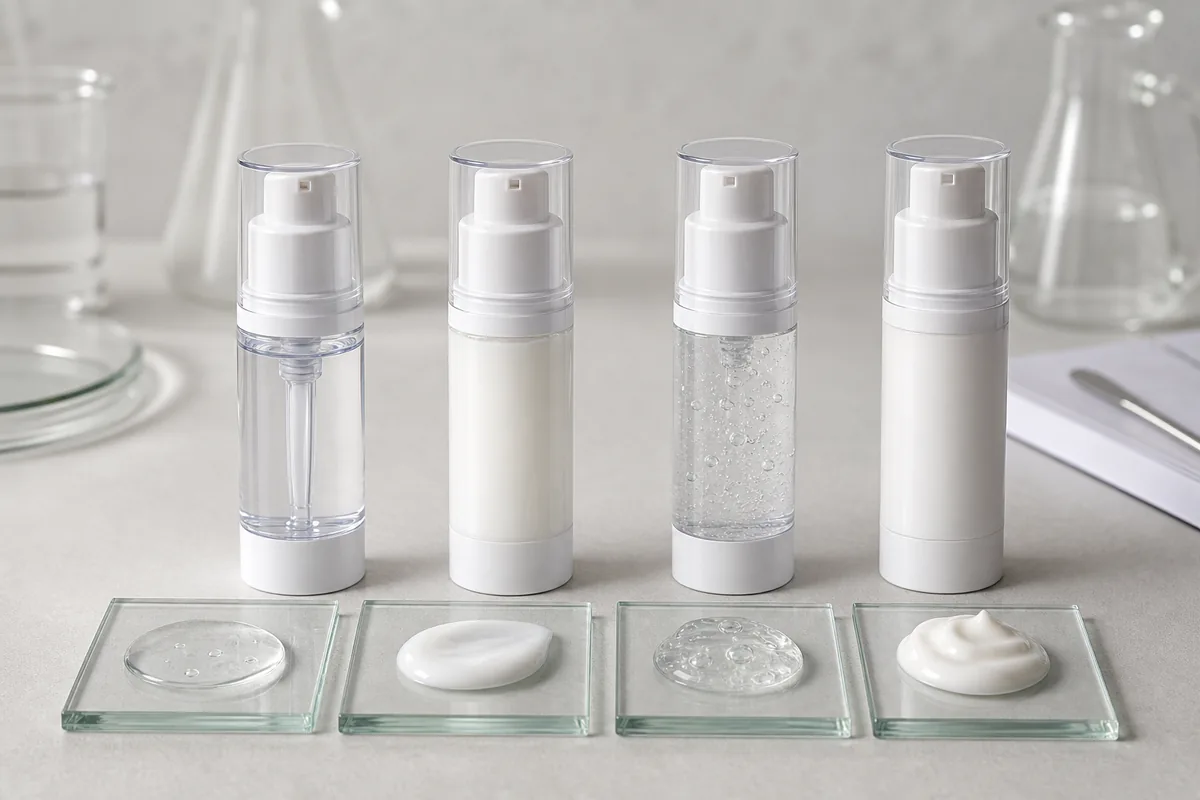
Very much so. Viscosity is only one factor. Oils, alcohol, essential oils, pigments, powders, acids, fragrances, silicones, and suspended particles can interact differently with the bottle wall, valve, gasket, and pump pathway. Packaging compatibility should be tested with the actual finished formula—not only with water or a generic lotion.
| Formula type | Packaging concern | Reuse guidance | Pump direction |
|---|---|---|---|
| Watery serum or essence | Leak paths and low-viscosity valve control | Dry the pump fully; check seepage after refilling | Low-output treatment pump or compatible airless spray |
| Lotion or emulsion | Residue in valves; emulsion stability | Prefer same-formula reuse and inspect for odor or separation | Standard airless lotion pump |
| Clear gel | Stringing, bubbles, and slow refill leveling | Fill slowly and test dose recovery | Treatment pump with suitable flow path |
| Rich cream or balm-like emulsion | High force and incomplete priming | Avoid narrow passages; remove all dried residue | High-output, larger-orifice airless pump |
| Oil-rich or fragranced formula | Seal swelling, odor carryover, stress cracking | Do not reuse until material compatibility is confirmed | Chemically compatible valve and gasket system |
| Suspension or exfoliating formula | Particle blockage and valve wear | Often unsuitable unless particle size is validated | Wide, tested pathway; not a fine-mist head |
What Is the Best Pump Head for an Airless Bottle?
There is no universal “best” pump. The correct head is the one that produces a stable dose with the target formula throughout storage and use. For facial serums, buyers often prioritize a small, controlled output. Lotions and creams may need a wider flow path and higher output. A fine-mist actuator is only appropriate when the formula can atomize without clogging and the complete airless spray system is designed for that viscosity.
Specify these points before sampling
- Desired output per stroke and acceptable dose variation
- Formula viscosity, rheology, particles, oils, alcohol, and active ingredients
- Actuator style: treatment nozzle, lotion spout, or airless spray
- All-plastic or metal-containing pump construction
- Locking method, overcap clearance, neck finish, and sealing interface
- Target refill cycles and whether the pump or cartridge will be replaced
Sample testing should include priming, output, leakage, evacuation, storage orientation, transport simulation, and formula compatibility. A visually matching pump is not automatically interchangeable.
How to Replace a Broken Airless Pump Head
A replacement pump must match the bottle’s locking system, seal, output, and formula pathway.If the pump is designed as a removable module, replacement can be straightforward. First identify the exact bottle model, neck or locking system, pump output, gasket, and actuator geometry. Ask the packaging supplier for a matched replacement rather than choosing by outside diameter alone.
- Confirm that the fault is not a locked actuator, blocked vent, trapped air pocket, or clogged nozzle.
- Remove the overcap and unlock or unscrew the pump without twisting the bottle wall.
- Inspect the sealing surface. Do not reuse a distorted gasket or cracked collar.
- Fit the specified replacement pump squarely. Do not combine components from different pump families unless the supplier has approved the assembly.
- Prime the package and record the number of strokes, dose consistency, leakage, and piston movement.
For crimped, welded, or permanent snap-fit airless packs, replacing the pump may not be practical. Transfer the remaining formula only if the product owner permits it and contamination can be controlled. For a recurring field failure, keep samples and batch information so the bottle supplier, pump supplier, filler, and formula team can reproduce the problem.
Buyer’s Checklist for a Refillable Airless Packaging Project
- Is the bottle intentionally refillable, or merely possible to force open?
- Which component is retained: outer bottle, pump, actuator, or only the decorative shell?
- Can users access, clean, rinse, and completely dry every product-contact part?
- Will each refill use the same formula?
- How will tamper evidence and refill instructions be handled?
- Has the complete package passed compatibility, leakage, output, evacuation, and transport tests?
- Are replacement pumps or cartridges controlled by part number?
- Can the materials be separated at end of life?
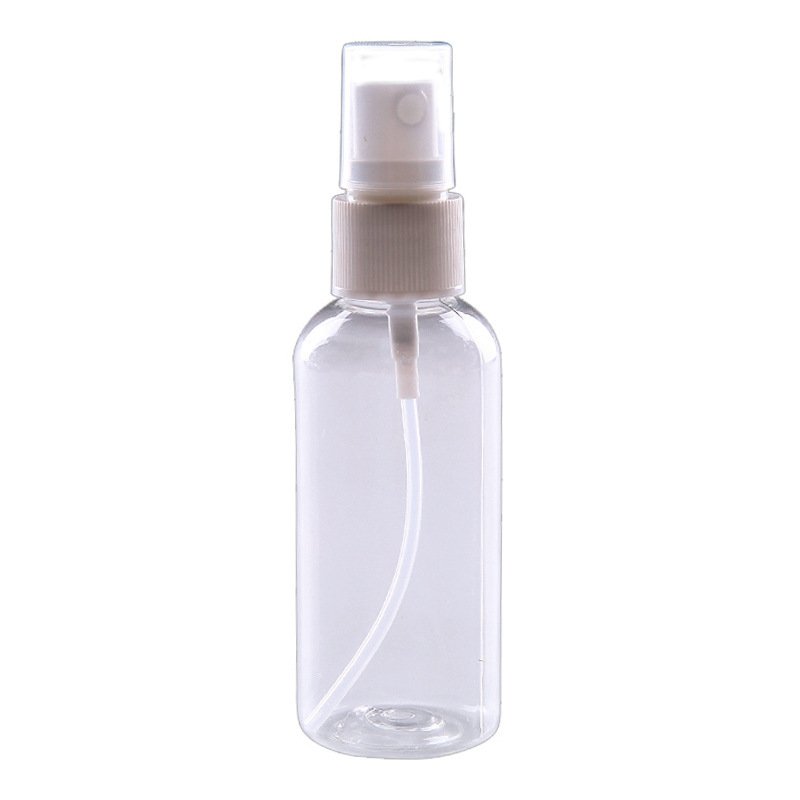
Boyu Packaging offers custom skincare packaging, including airless bottle formats for serum, lotion, cream, and treatment products. Buyers comparing structures can also review our plastic cosmetic bottle range and cosmetic spray bottle options. Final material, pump, refill, and formula compatibility requirements should be confirmed through project-specific samples and testing.
Frequently Asked Questions
Can I refill any airless pump bottle?
No. Refill only a model designed to open and reseal. Forcing apart a sealed bottle can damage the vacuum path and create leakage or hygiene problems.
Why does my refilled airless bottle not pump?
The bottle may need priming, the piston may not be reset evenly, a large air pocket may be trapped near the pump inlet, or the bottom vent may be blocked. A damaged seal or incompatible high-viscosity formula can cause the same symptom.
Can I clean an airless pump with alcohol?
Do not assume so. Alcohol can affect certain plastics, coatings, adhesives, gaskets, and printed decoration. The cleaning agent and concentration should be checked against every contact material and the formula’s hygiene requirements.
Can the same airless bottle be used for serum and cream?
Not automatically. Low-viscosity serum and rich cream may require different valves, flow paths, outputs, and sealing behavior. Test the exact formula in the exact package.
Should a brand reuse the pump or replace it with every refill?
Replacing the product-contact cartridge and pump can simplify hygiene and performance control, while retaining a durable outer shell. Reusing the pump may reduce component consumption but requires a validated cleaning process and cycle-life testing.
Develop a Refillable Airless Bottle for Your Formula
Send Boyu Packaging your formula type, viscosity, fill volume, desired dose, material preference, decoration, and target refill concept. Our team can help you compare airless structures and prepare suitable samples for compatibility and performance evaluation.

 English
  Español de Argentina
  Русский
  Italiano
  日本語
日本語  한국어
한국어  العربية
  Français
  Deutsch