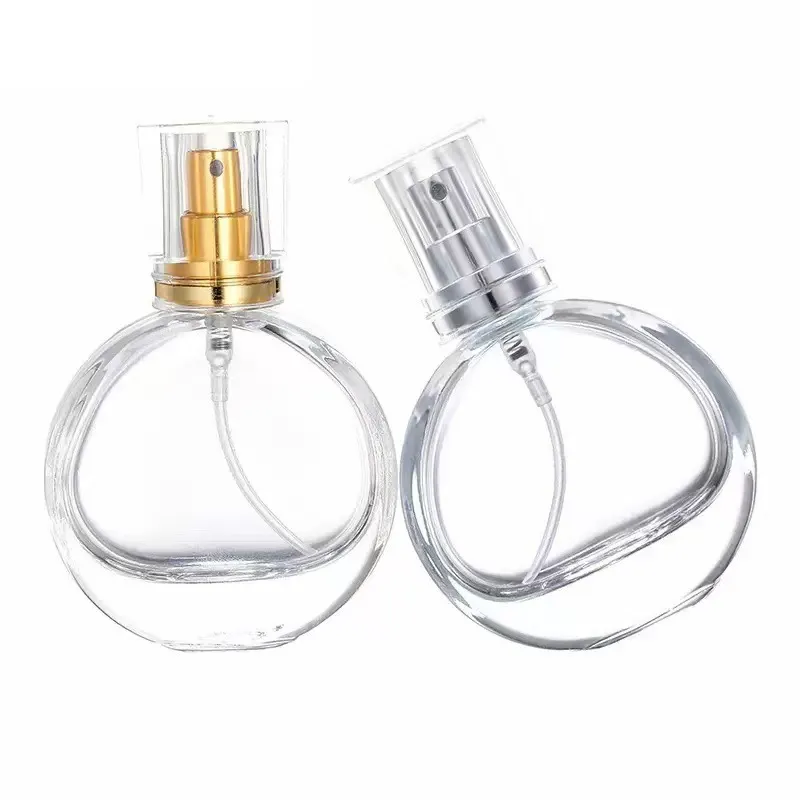
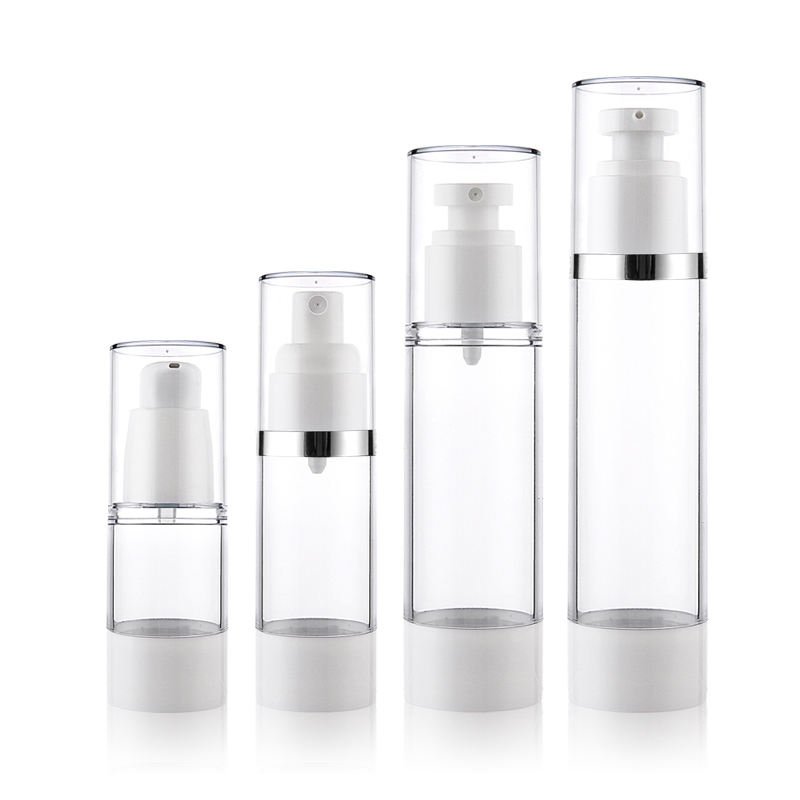
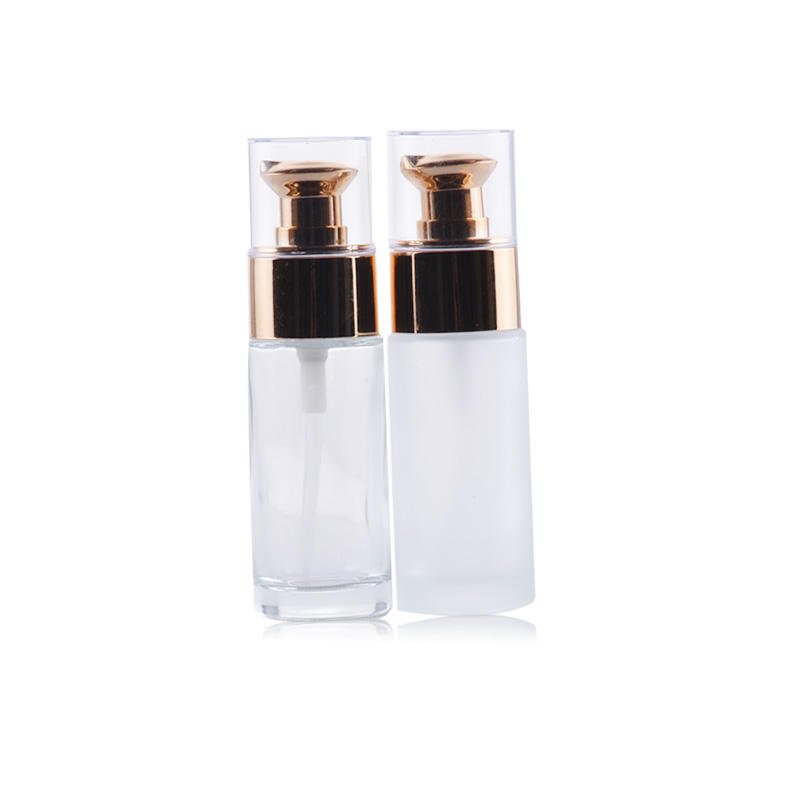
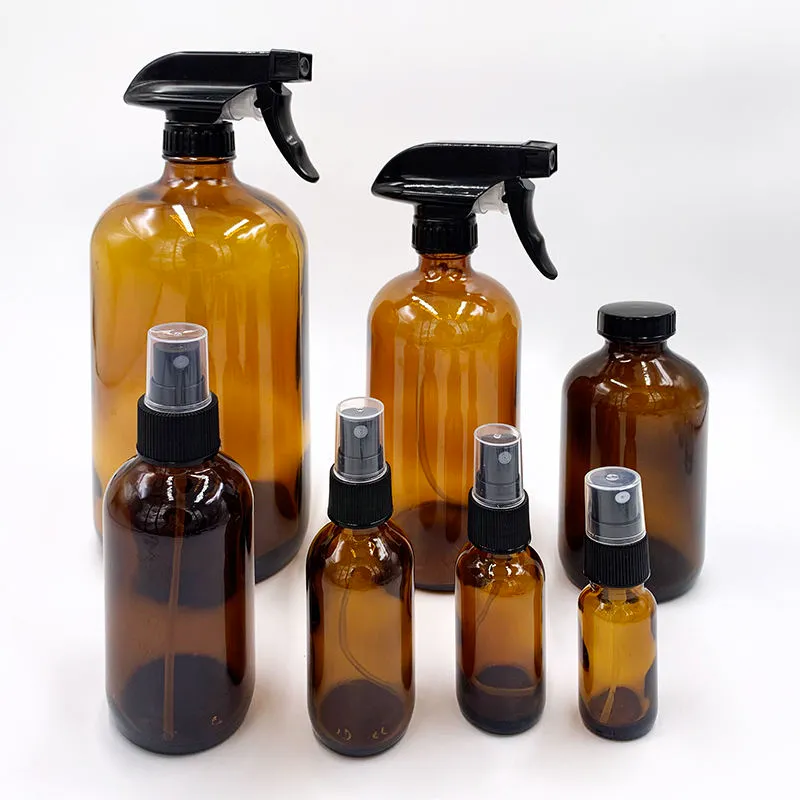
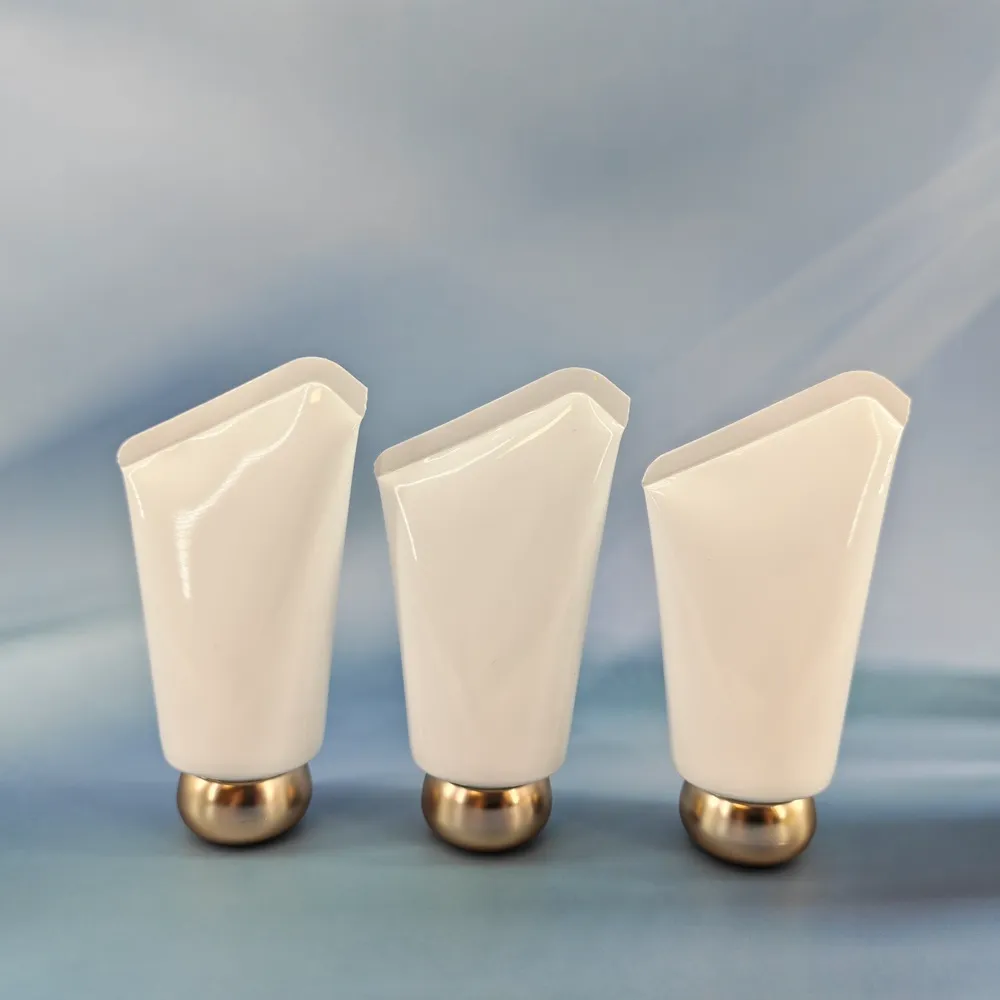
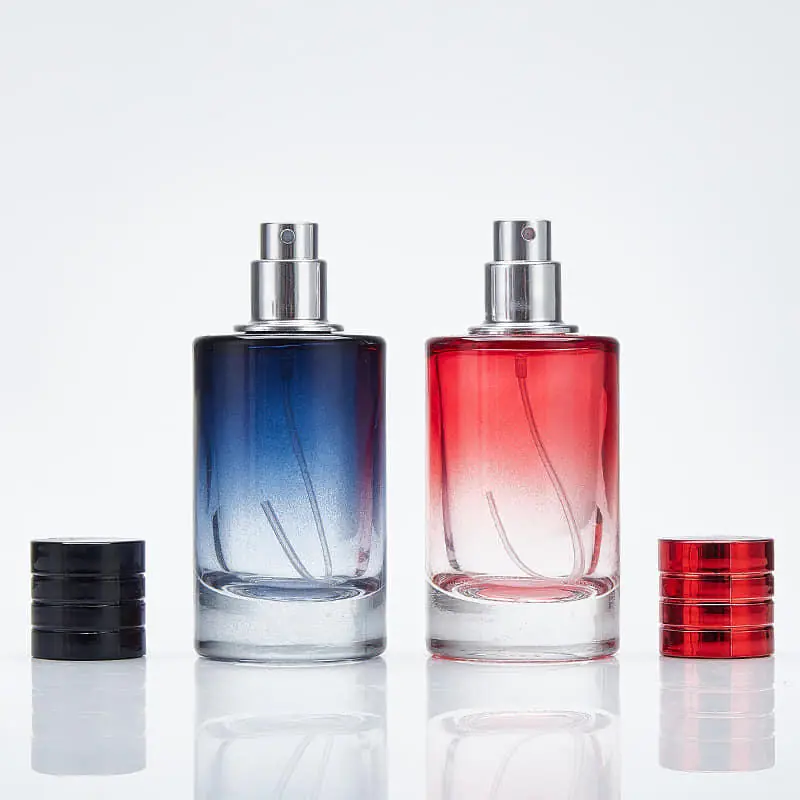
Short answer: PET bottles can be suitable for some essential-oil products, especially diluted cosmetic formulas and short-use formats, but PET should not be treated as universally compatible with every pure essential oil. For long-term storage of undiluted essential oils, a tightly sealed amber glass bottle remains the conservative first choice. A brand considering PET must test the actual oil or finished formula in the complete production package—including the cap, liner, reducer, pump, sprayer, dip tube, decoration, and label adhesive.
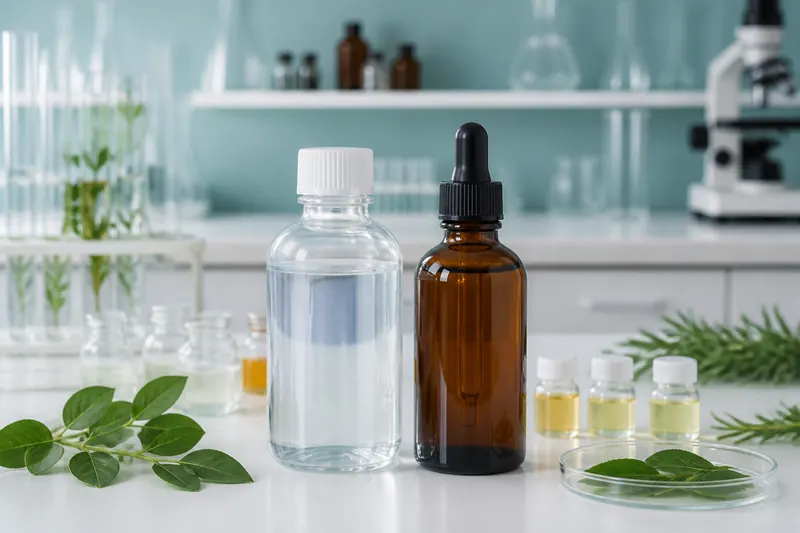
Can Essential Oils Be Stored in PET Bottles?
Yes—under controlled conditions. PET (polyethylene terephthalate, resin identification code 1) is lightweight, clear, impact-resistant, and more chemically resistant than many buyers assume. It is used for numerous cosmetic, personal-care, and household formulations. However, essential oils are not one uniform chemical. They contain varying proportions of terpenes, alcohols, aldehydes, ketones, esters, and other volatile compounds. A PET package that performs well with one diluted lavender formula may haze, lose rigidity, leak, or change odor with another concentrated blend.
This is why a simple online “safe plastic list” is not enough for commercial packaging. The correct question is: Does this specific PET bottle system remain stable with this specific formula for the intended shelf life and distribution conditions?
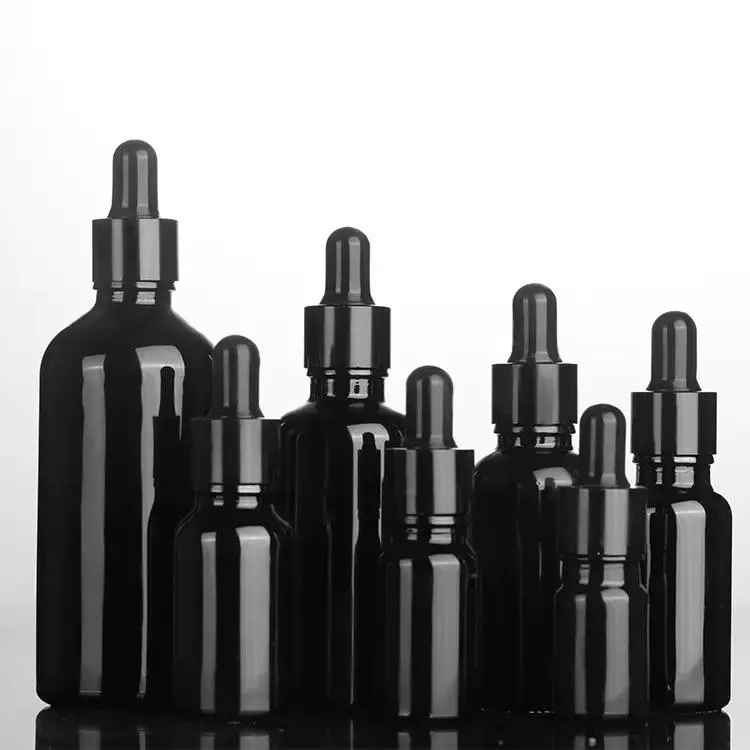
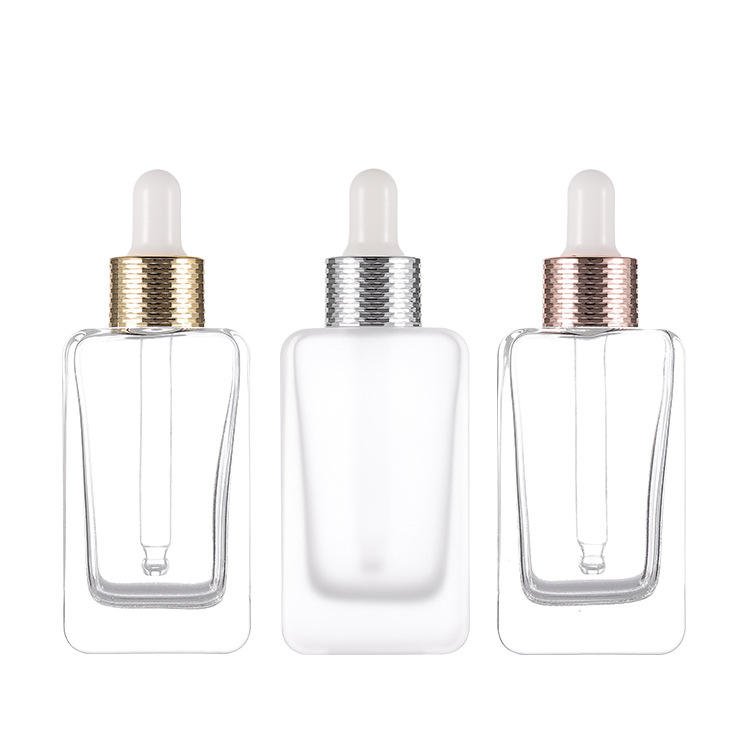
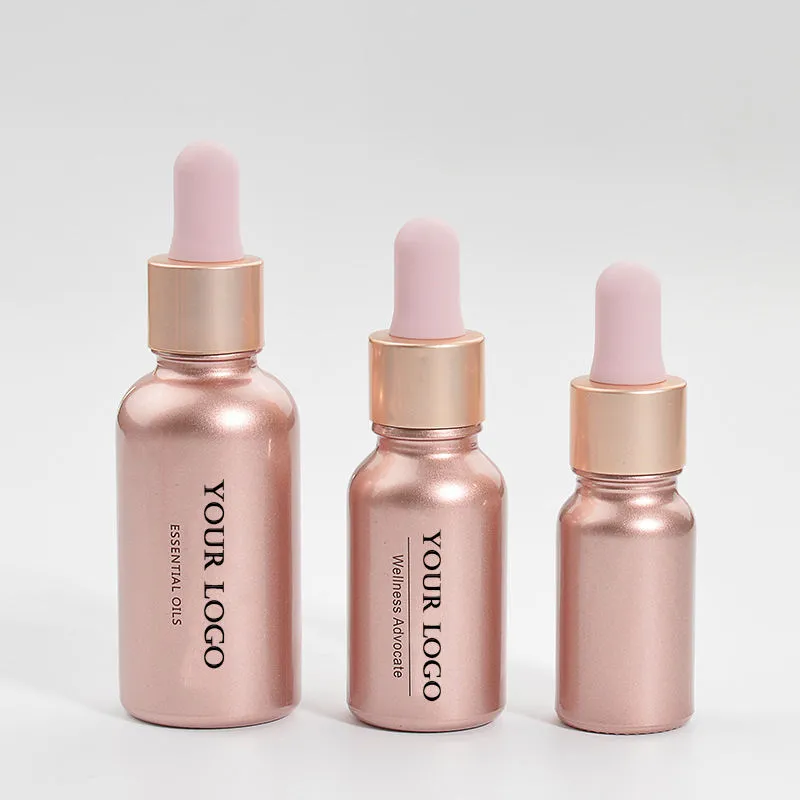
When PET is a reasonable candidate
- Essential oils are diluted in a properly formulated cosmetic product, carrier oil, cleanser, lotion, or spray.
- The product needs low weight and shatter resistance for travel, spa, salon, or e-commerce use.
- The intended use period is relatively short after filling or opening.
- The bottle is colored, sleeved, coated, or protected by a carton when light sensitivity matters.
- Filled-package testing confirms no visible, functional, chemical, or sensory failure.
When amber glass is the safer starting point
- The product is a pure or highly concentrated essential oil.
- The oil will be stored for a long period, used as a reference sample, or exposed to uncertain temperatures.
- The formula contains components known to be aggressive toward plastics or elastomers.
- The brand cannot run a robust compatibility and stability program before launch.
- Maximum light and aroma protection is more important than weight or break resistance.
Why Essential Oils Can Challenge Plastic Packaging
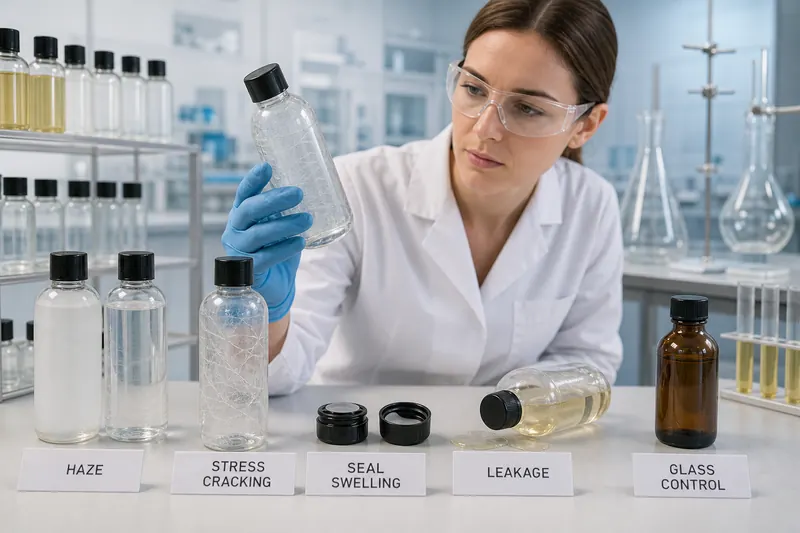
Essential oils are concentrated mixtures of small organic molecules. Some can diffuse into polymers, extract additives, plasticize a surface, or interact with closure elastomers. The visible symptom may appear slowly: a once-clear bottle becomes cloudy, a stressed shoulder develops fine cracks, the base deforms, a liner swells, or the closure loses torque. The first failure is sometimes sensory rather than structural—the aroma changes because volatile components are lost, absorbed, or altered.
Stress matters as much as chemistry. PET is stretched during bottle manufacture and may carry residual stress around the neck, base, corners, or gate. An oil that seems harmless in an unstressed material coupon may contribute to environmental stress cracking in a finished bottle. Elevated warehouse or parcel temperatures can accelerate interactions, so room-temperature observation alone is not a commercial validation.
Pure Essential Oil vs Diluted Formula
Undiluted essential oils
For pure essential oils, dark glass is usually the most defensible retail choice. It offers high chemical inertness, strong barrier performance, and established consumer expectations. PET may still be evaluated for a particular oil and commercial use, but the evidence must come from testing—not from the PET symbol alone.
Carrier-oil blends
Dilution generally reduces the concentration of aggressive essential-oil constituents, but the carrier oil adds its own compatibility, oxygen-barrier, and label-staining considerations. A roll-on, dropper, or treatment pump should be tested as a complete system. For example, the bottle may remain stable while the dropper bulb softens or the roller fit begins to leak.
Water-based sprays and cosmetics
A water-based product containing essential oils also requires appropriate solubilization and preservation. Visible separation can expose parts of the package to locally concentrated oil. Packaging compatibility does not establish microbiological safety, and an essential oil should not be assumed to replace a validated preservative system.
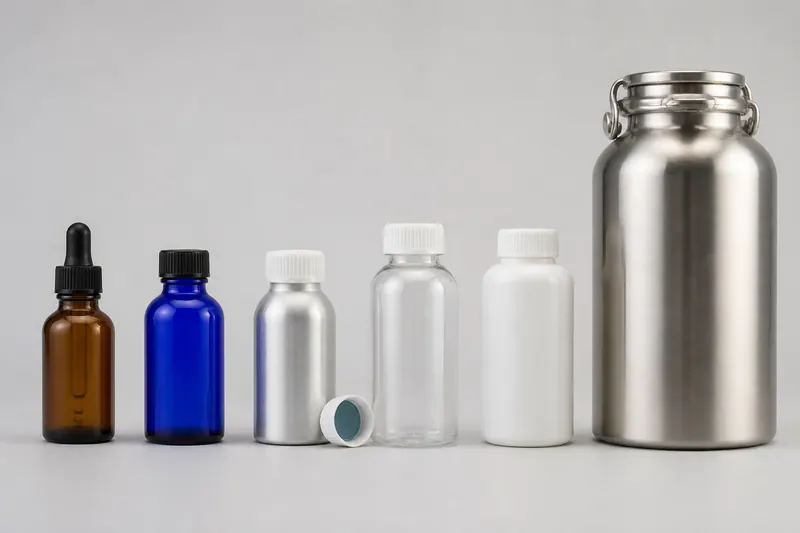
Best Bottle Materials for Essential Oils
| Material | Advantages | Limitations | Best-fit use |
|---|---|---|---|
| Amber glass | Chemically inert; strong light protection; premium; excellent aroma barrier | Heavy; breakable; higher freight and protective-packaging needs | Pure oils and long-term retail storage |
| Cobalt/green glass | Distinctive appearance; better light control than clear glass | Protection depends on color and spectral transmission; still breakable | Brand-led oils with secondary light control |
| Clear glass | Inert; displays formula color | Little inherent light protection | Dark storage or protective carton |
| PET | Lightweight; clear; impact-resistant; good design flexibility | Formula-dependent resistance; transparent PET needs light management; stress cracking/haze must be assessed | Tested diluted formulas, short-use or travel formats |
| HDPE/PP | Lightweight; opaque options; good impact performance | Permeation, paneling, odor interaction, and closure fit remain formula-dependent | Tested diluted or larger-volume applications |
| Aluminum | Lightweight; opaque; good for larger quantities | Internal lining is critical and must be compatible; dents possible | Bulk, refill, and professional formats after lining tests |
| Stainless steel | Durable; opaque; suitable for controlled bulk handling | Cost, weight, grade, cleaning, and closure design | Bulk storage and processing |
What Color Bottle Is Best for Essential Oils?
Amber is the safest default color for retail essential-oil bottles because it provides broad light reduction while allowing the fill level to remain somewhat visible. Cobalt blue and green glass can also reduce light exposure, but visual darkness alone does not prove equal UV/visible-light performance. Buyers should request spectral-transmission information when the formula has a defined light-sensitivity risk.
Clear PET or clear glass can be used when the formula is sufficiently stable and the package receives effective secondary protection—such as an opaque carton, full-body sleeve, verified coating, or controlled dark storage. A colored bottle does not replace stability testing, and no bottle color can compensate for a loose closure or repeated heat exposure.
For a broader comparison, see Boyu’s guide to the best bottle color for essential oils.
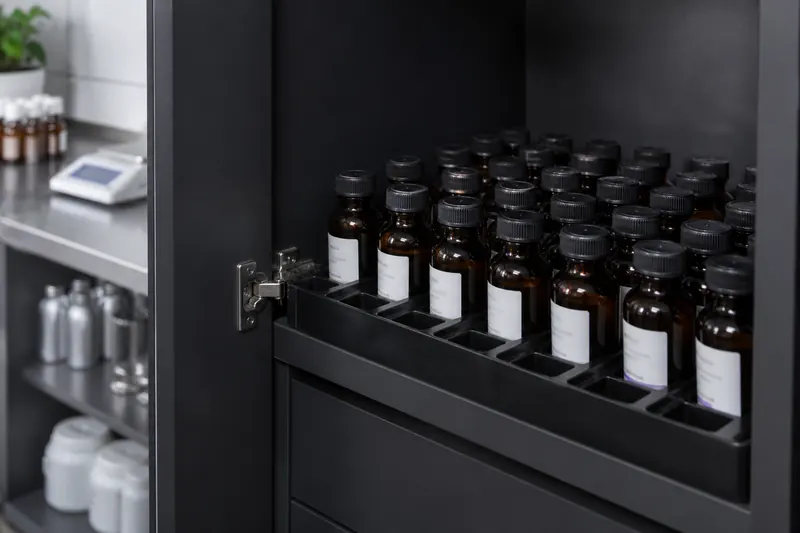
How to Test a PET Essential-Oil Package
- Define the real formula: record oil species, supplier, concentration, carrier phase, pH where applicable, and known volatile constituents.
- Use production-equivalent components: test the actual bottle resin, colorant, closure, liner, reducer, pump, sprayer, dip tube, bulb, gasket, decoration, and label.
- Include controls: compare PET results with a compatible glass control and retain samples of the original formula.
- Store in relevant orientations: upright, side, and inverted positions reveal different contact points and leakage risks.
- Use justified conditions: include intended room conditions and suitably designed accelerated or temperature-cycle studies. Do not convert accelerated exposure directly into shelf life without a validated model.
- Inspect repeatedly: monitor weight loss, dimensions, haze, color, odor, cracking, paneling, cap torque, liner swelling, label lift, leakage, and dispensing performance.
- Test distribution: conduct drop, vibration, compression, and parcel tests appropriate to the sales channel.
- Document acceptance criteria: approve a written specification and reference sample before mass production.
Correct Essential Oil Storage Conditions
- Keep bottles cool and temperature-stable. Avoid windowsills, radiators, hot vehicles, and warehouse hot spots.
- Limit light exposure. Use dark glass or verified light-protective packaging and store bottles in a cabinet or carton.
- Close tightly after use. Volatile compounds escape through poorly sealed systems, while oxygen enters the headspace.
- Store upright. This reduces continuous contact between concentrated oil and the closure, liner, bulb, or pump pathway.
- Minimize headspace for long storage. Use a suitable bottle size rather than keeping a small amount in an oversized container.
- Prevent contamination. Do not touch reducers or pipettes to unclean surfaces, and do not pour unused oil back into the master bottle.
- Track the batch. Retain supplier, lot, filling, and opening information so odor or color changes can be investigated.
Packaging Recommendations for Beauty Brands
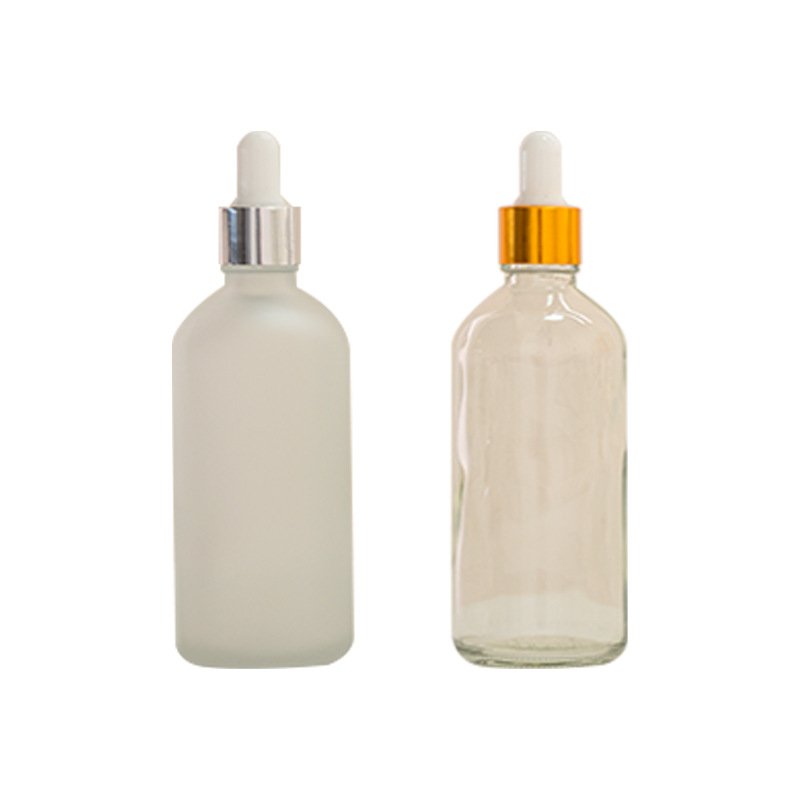
Start with product risk, not appearance. Pure essential oils usually point toward small amber essential oil bottles with reducers, compatible screw caps, child-resistant closures where required, or carefully qualified dropper bottles. Diluted aromatherapy blends may also use roll-ons, treatment pumps, or tested PET formats where break resistance matters.
When requesting samples, tell the supplier whether the contents are pure oil, a carrier-oil blend, an emulsion, or a water-based spray. Include concentration and intended shelf life. Follow a documented cosmetic packaging sampling process, and never approve a package based only on an empty-bottle appearance sample.
Frequently Asked Questions
Can pure essential oil stay in PET permanently?
PET is not a universal long-term solution for every pure essential oil. Amber glass is the more conservative default. Use PET only when the exact oil and complete package have passed a justified compatibility program.
Are diluted essential oils safe in PET spray bottles?
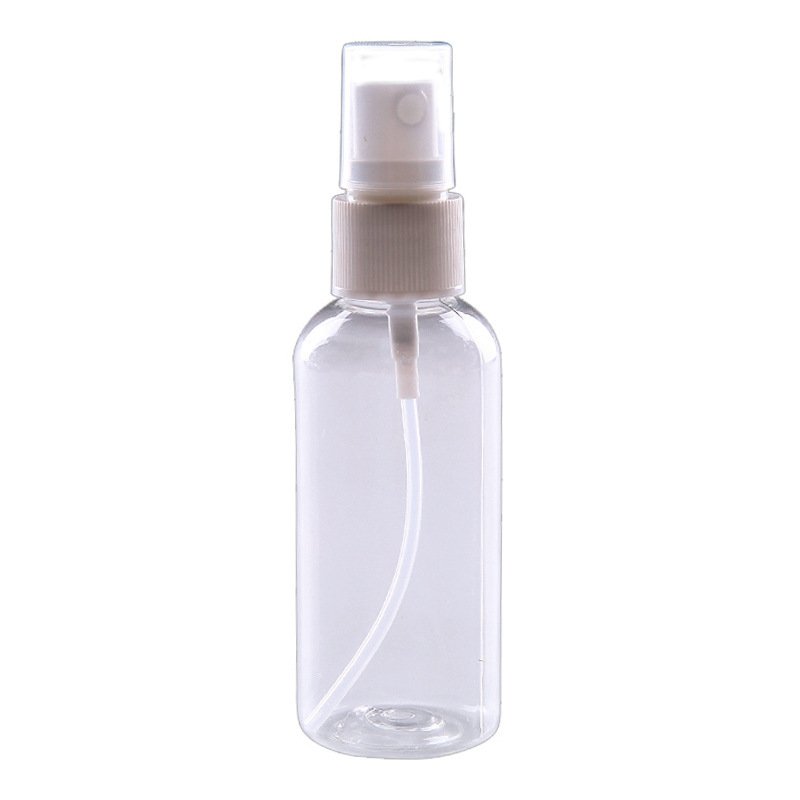
They may be, but dilution alone is not proof. Test the formula with the bottle, sprayer, gasket, spring, dip tube, and label. Water-based sprays also require solubilization, preservation, and microbiological assessment.
Is PET better than HDPE for essential oils?
Neither resin is always better. PET offers clarity and rigidity; HDPE offers opacity and impact resistance. Oil chemistry, concentration, temperature, package stress, and closure design determine the result.
Can essential oils damage a dropper bulb?
Yes. Elastomer bulbs can soften, swell, harden, discolor, or transfer odor depending on the oil. Store bottles upright and test the complete dropper assembly, not only the glass bottle.
Is cobalt blue glass as good as amber?
Both reduce light exposure, but their transmission profiles differ. Amber is the safest general default; use measured light-barrier data and finished-product stability testing for sensitive formulas.
Need to Compare PET and Glass for Your Oil Formula?
Send Boyu Packaging your oil type, concentration, target capacity, dispensing system, market, and expected shelf life. We can help shortlist production-ready samples for your compatibility tests.
 English
  Español de Argentina
  Русский
  Italiano
  日本語
日本語  한국어
한국어  العربية
  Français
  Deutsch