
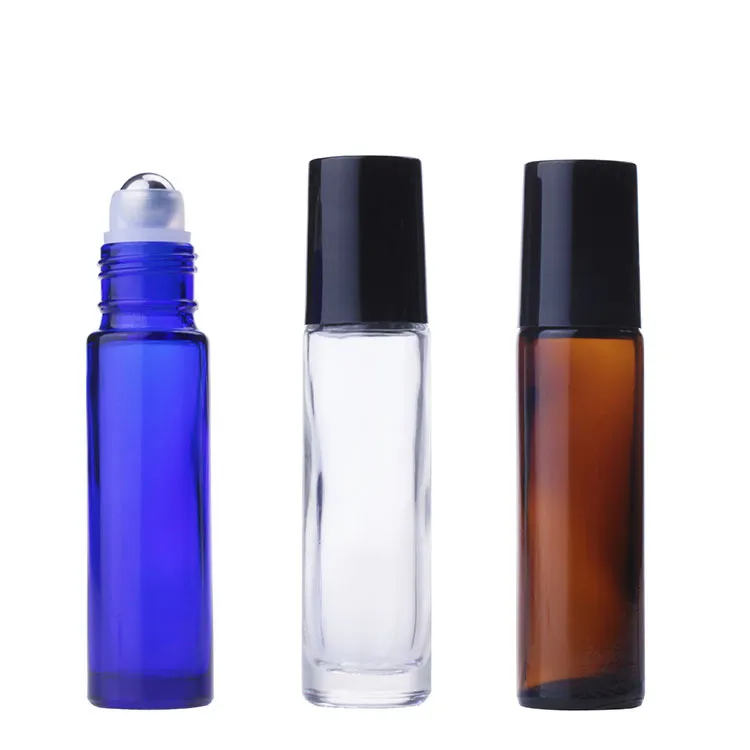
What bottles are best for essential oils?
Short answer: For most pure essential oils and long-term retail storage, an amber glass bottle with a compatible, tightly sealing closure is the safest general choice. Cobalt blue glass is also useful and visually distinctive, but color alone does not guarantee protection. The actual glass transmission, wall thickness, closure, headspace, temperature, formula and secondary carton all affect stability. Clear glass is best reserved for controlled situations where the bottle remains inside light-blocking packaging or a dark cabinet.
This guide compares amber, blue, green and clear bottles without treating appearance as the only specification. It also explains the bottle types essential oils normally come in, why glass is usually preferred, how to store oils correctly, and what to do when an oil is past its expected useful life.
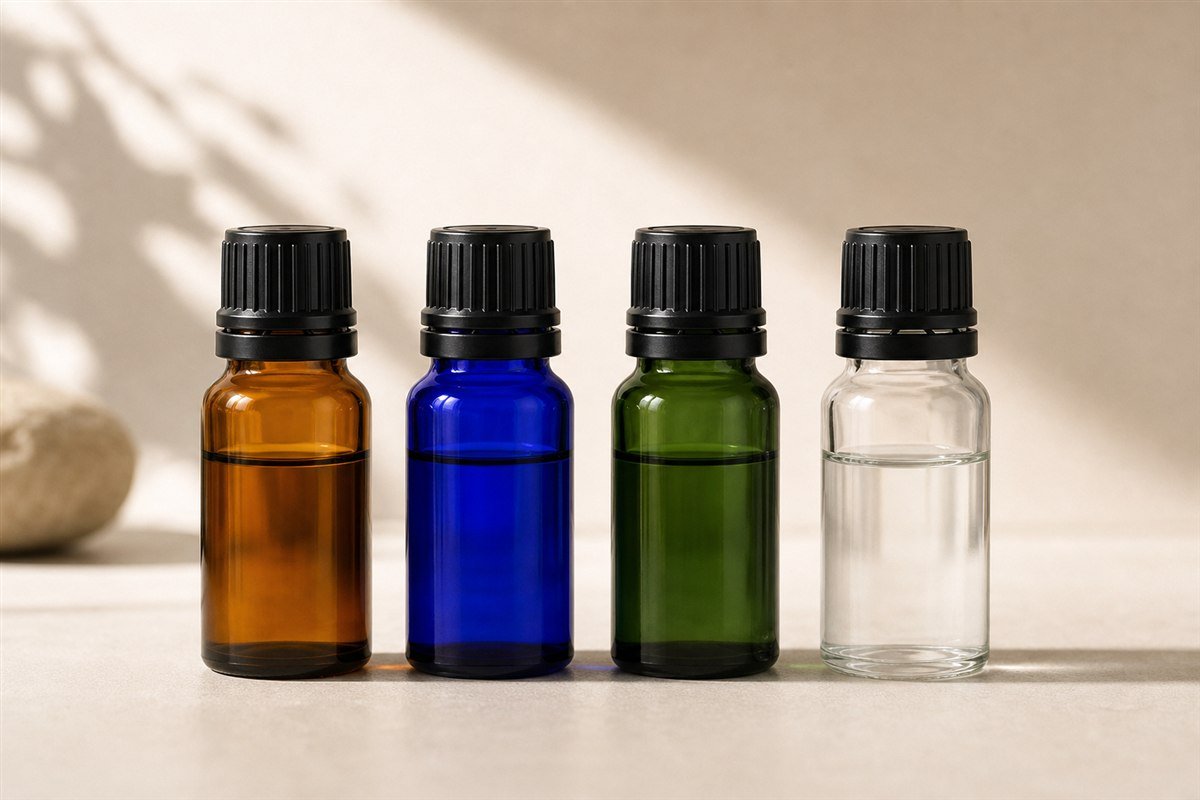
What Color Bottle Is Best for Essential Oils?
Amber, or brown, glass is the most practical default. It is widely used for small essential-oil containers because it reduces exposure to ultraviolet and short-wavelength visible light while remaining economical and readily available. UNIDO bottling guidance identifies amber as the color most commonly used for essential oils and notes that clear glass provides little light protection unless it is kept in a dark place.
That does not mean every amber bottle performs identically. A pale spray coating on clear glass is not automatically equivalent to glass that is colored through the wall. Buyers should ask for transmission data or conduct stability testing rather than relying on a color name or website photograph.
Color comparison at a glance
| Bottle color | Practical role | Main limitation |
|---|---|---|
| Amber/brown | Strong general-purpose choice for pure oils and light-sensitive blends | Protection still varies by glass specification and storage conditions |
| Cobalt blue | Protective colored glass with premium shelf differentiation | Should not be assumed equal to amber without transmission or stability data |
| Dark green | Some light reduction and a botanical visual identity | Usually a weaker default than amber for sensitive oils |
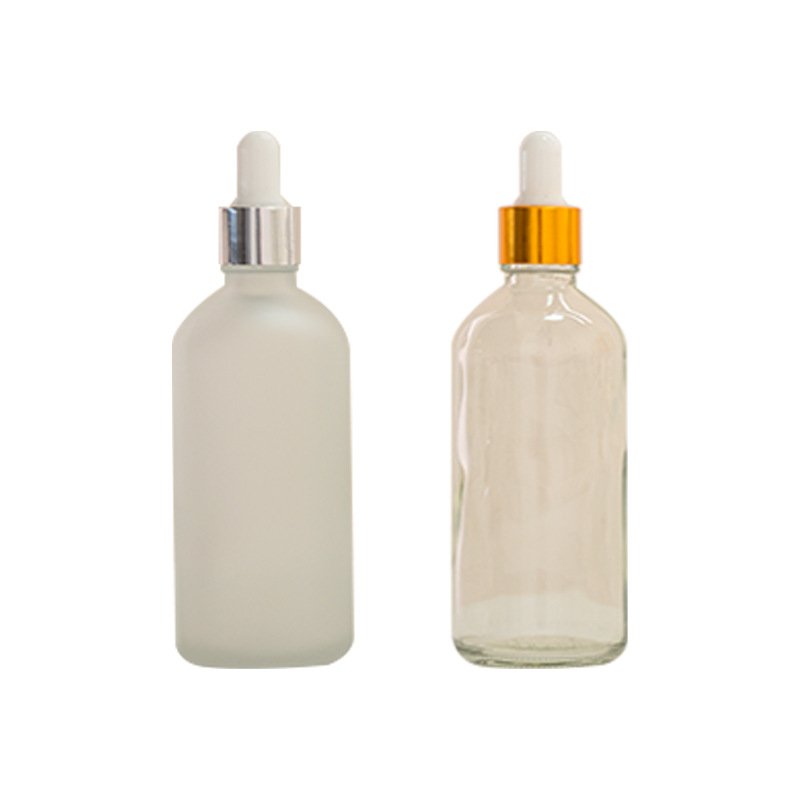
| Clear/flint | Shows the formula color; useful for samples, testing or boxed products | Relies on secondary packaging and disciplined dark storage |
Are Blue or Amber Bottles Better for Essential Oils?
Amber is the more conservative answer when preservation is the first priority. Blue glass can be a good commercial choice when the supplier can document its light-transmission performance and the finished product passes stability testing. It offers recognizable shelf presence and may suit spa, aromatherapy or premium skincare positioning.
The decision should therefore be “tested amber versus tested blue,” not simply brown versus blue. Ask whether the color is formed in the glass or applied as a coating, whether the decoration changes during filling or transport, and whether the closure remains compatible with the oil. If the brand chooses cobalt blue primarily for aesthetics, a carton and controlled warehousing can provide another layer of light management.
When clear glass can still work
Clear glass is not inherently chemically incompatible with essential oils; its weakness is light transmission. It can work for a laboratory retain sample, a fast-moving diluted product, or a retail bottle that remains inside an opaque carton and is stored away from light. The consumer instructions and actual use pattern matter. A clear bottle displayed on a sunny bathroom shelf is a very different system from the same bottle inside a closed cabinet.
What Type of Bottle Do Essential Oils Come In?
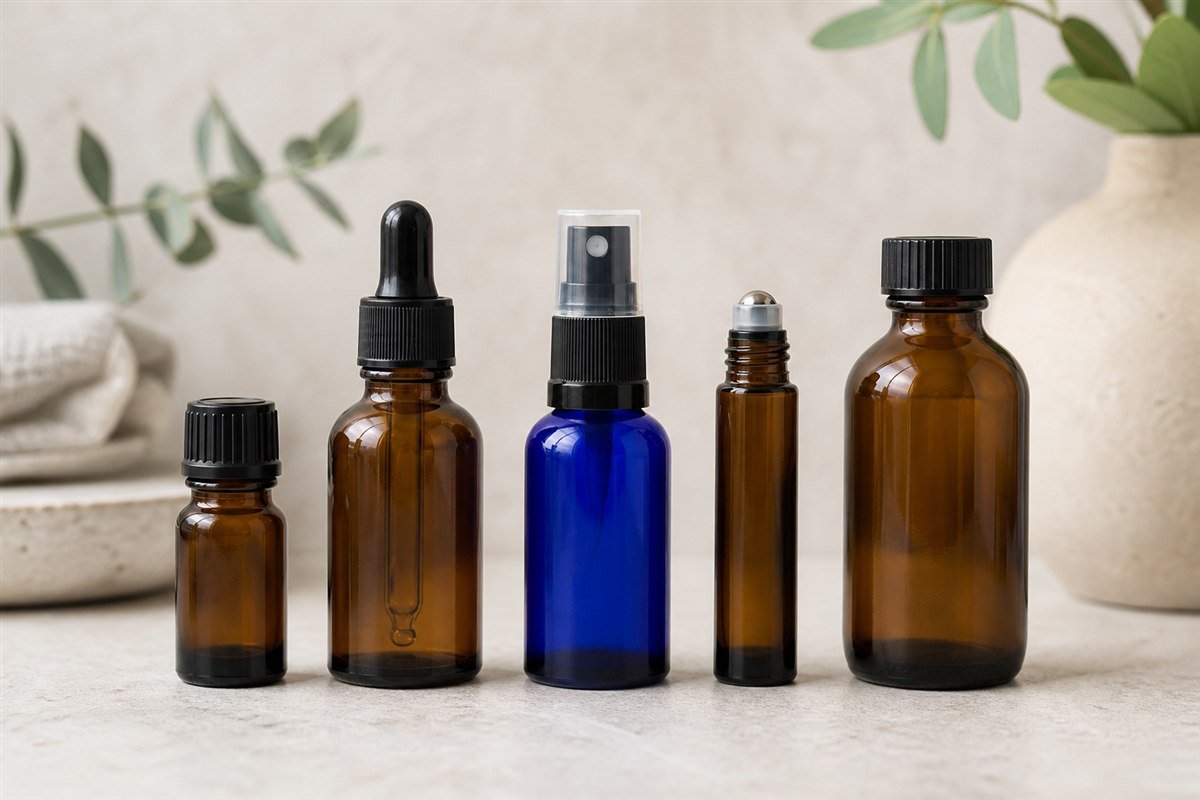
Small retail oils commonly use narrow-neck glass bottles in sizes such as 5, 10, 15 or 30 ml. The closure and dispenser should match how the product is used:
- Orifice reducer: provides controlled drops while limiting the time the bottle stays open.
- Glass pipette dropper: useful where measured visual dosing matters, provided the bulb, collar and wiper are formula-compatible.
- Rollerball: intended for properly formulated topical blends, not as an automatic invitation to apply undiluted oil.
- Fine-mist spray: suited to compatible diluted room, linen or cosmetic products after spray-pattern and gasket testing.
- Lined screw cap: appropriate for concentrates, refills or larger containers when the liner is compatible and seals reliably.
Boyu’s essential oil bottle range shows several commercial formats. Brands comparing dosing systems can also review glass dropper bottles and rollerball packaging.
Should Essential Oils Be in Glass Bottles?
Glass is normally preferred for undiluted essential oils because it provides a stable, non-porous product-contact surface and an effective barrier to volatile aroma compounds. Dark glass combines that material advantage with reduced light exposure. It is also available with standardized neck finishes that support reducers, droppers and tamper-evident caps.
“Glass bottle” is still not a complete specification. The oil contacts the closure liner, reducer, pipette bulb, gasket or roller housing as well. Concentrated aromatic compounds may swell, soften or extract components from unsuitable plastics and elastomers. A glass body cannot compensate for an incompatible cap.
Can essential oils ever be stored in plastic?
Some diluted, short-use formulations are sold in selected plastics after compatibility testing, but no buyer should assume that every PET, HDPE or PP package is suitable for every oil. Concentration, contact time, temperature and the oil’s composition change the risk. For long-term storage of pure essential oil, dark glass remains the straightforward starting point. Boyu’s existing guide on essential oils in plastic bottles covers that material question in more depth.
What about aluminum?
Metal containers can be used in supply chains, particularly for larger quantities, but the internal material or lining and the specific oil require verification. “Aluminum” alone is not enough information. Importers should request the full product-contact construction and test it with the intended contents.
How to Choose a Bottle for an Essential-Oil Product
From a manufacturer’s perspective, start with the formula and use case rather than the decoration. From an importer’s perspective, turn those needs into an RFQ that can be sampled and inspected.
- Define the contents. State whether the product is a pure oil, carrier-oil blend, alcohol-containing fragrance, water-based spray or cosmetic serum.
- Choose the protection system. Select amber or qualified blue glass, then decide whether a carton or opaque storage case is required.
- Match the dispenser. Specify target dose, viscosity, application area and whether the product must be child-resistant or tamper-evident.
- Control headspace. Establish a target fill volume that allows closure insertion and transport expansion without leaving excessive air.
- Test the complete pack. Use the actual formula to assess leakage, evaporation, discoloration, odor change, component swelling, drop size and closure torque.
- Approve samples and standards. Record bottle color, neck finish, closure components, decoration, master samples and incoming-inspection limits.
Color should be verified under consistent lighting because cobalt, amber depth and spray coatings can vary between lots. For an OEM/ODM project, include market, annual quantity, fill process, target launch date and required documentation when contacting a supplier.
How to Store Essential Oils Properly
Light, heat and oxygen accelerate deterioration. Colored glass slows light exposure, but it does not make a sunny shelf safe. Use these habits for both personal storage and commercial inventory:
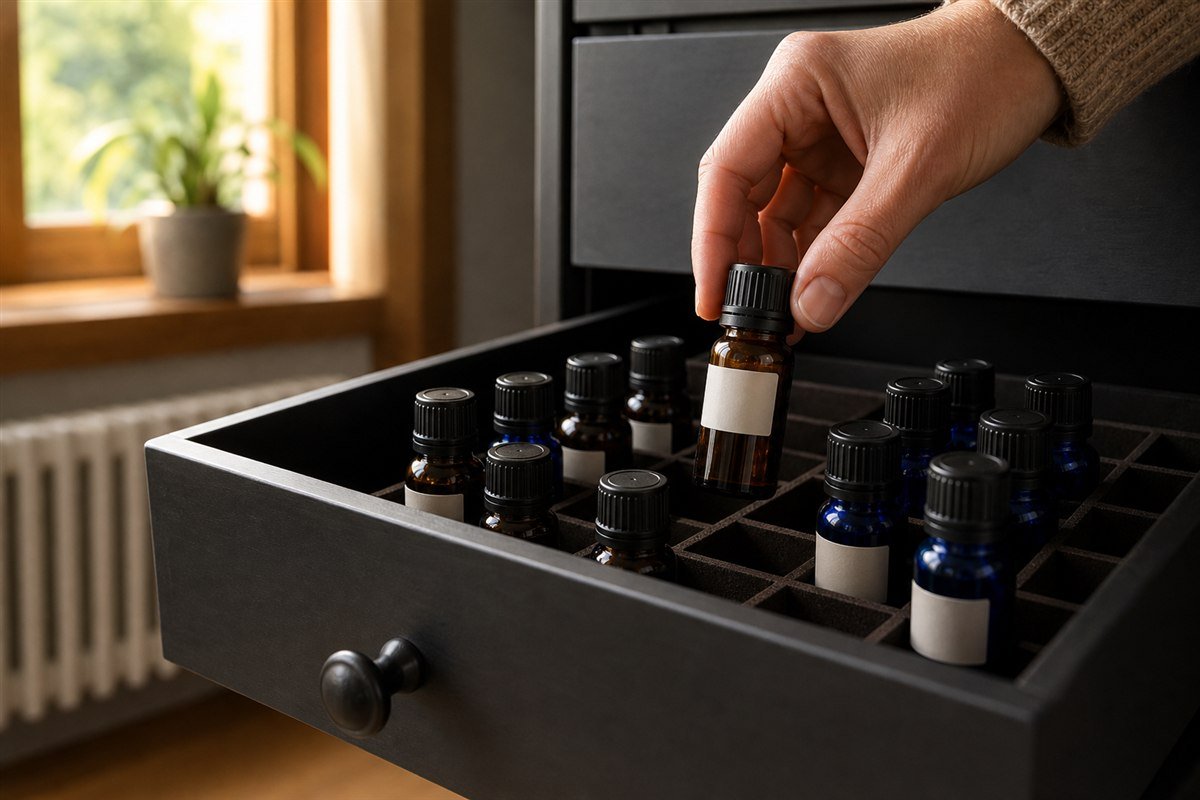
- Keep bottles upright in a cool, dry, dark cabinet or closed secondary package.
- Keep them away from windows, vehicles, radiators, filling-line heat and repeated temperature swings.
- Close caps promptly and tightly after dispensing; clean oil from threads before closing.
- Use a bottle size appropriate to consumption so a nearly empty bottle is not stored with a large air space for months.
- Record the supplier, batch number, purchase date and first-opened date.
- Keep oils away from children, pets, food and open flame, following the supplier’s safety information.
- Do not pour unused oil back into the original bottle, which can introduce moisture or contamination.
Should essential oils be refrigerated?
Cooler storage can slow oxidation, but refrigeration is not a universal instruction. Temperature, condensation, household access and the oil’s tendency to thicken or crystallize must be considered. Follow the oil supplier’s directions. If chilled, allow the closed bottle to approach room temperature before opening so moisture is less likely to condense inside.
Can You Use Expired Essential Oils?
An “expiration” date is not a switch that changes the oil overnight, but old or poorly stored essential oil should not automatically be considered safe. Essential oils oxidize as their constituents react with oxygen. Research on substances such as linalool and aged tea tree oil shows that oxidation products can increase skin-sensitization risk. The Tisserand Institute likewise identifies oxygen, light and heat as the main drivers and notes that shelf life varies widely among oils.
Do not use an oil on skin, in a cosmetic product or for a therapeutic purpose if its identity or storage history is uncertain, the supplier has advised disposal, or there are signs of deterioration. A date label helps you investigate; it does not replace sensory checks, specifications or analytical quality control.
Possible signs of oxidation or deterioration
- The aroma has lost its fresh top notes or smells sharp, stale or noticeably different from a retained fresh sample.
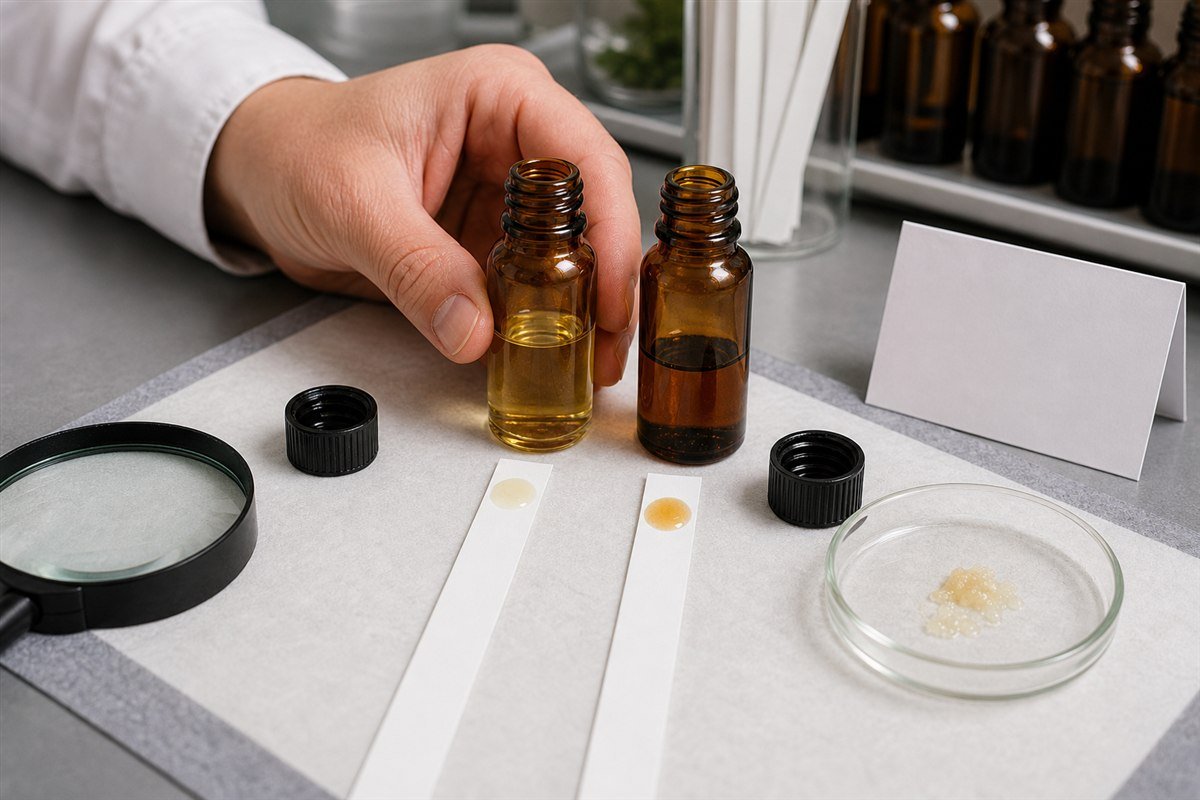
- The oil has become unusually dark, cloudy or thick for that specific material.
- Residue, crystals or sediment appear where they are not normal for the oil and storage temperature.
- The cap, reducer or liner has softened, swollen, cracked or started leaking.
- The batch is far beyond the supplier’s recommended period and no reliable storage record exists.
Some oils naturally vary in color, thicken in cool conditions or contain normal sediment, so one visual sign alone is not proof. Compare against the supplier’s specification and a known fresh sample. Commercial manufacturers should use their quality procedure and, where necessary, appropriate analytical testing rather than relying only on smell.
Can expired oil be used in a diffuser or for cleaning?
Changing the use does not reverse oxidation or uncertainty. Diffusion still creates inhalation exposure, and cleaning can create skin contact or damage surfaces. Do not use severely deteriorated oil to “use it up.” Follow the supplier’s disposal advice and local waste rules; do not pour concentrated oil into drains or leave it where children or animals can access it.
Essential Oil Bottle FAQs
Is amber glass always better than cobalt blue?
Amber is the safer general recommendation for light-sensitive oils, but tested performance matters more than a color name. A qualified blue bottle with a good closure, carton and controlled storage may outperform a poorly specified amber package.
Does frosting protect essential oil from light?
Frosting diffuses light and creates a premium appearance, but it should not be treated as equivalent to dark, light-filtering glass. Ask for transmission data and test the finished decorated bottle.
Are black or violet bottles the best?
Very dark glass may reduce light transmission, but performance varies with the actual glass and wavelength range. It can also make fill-level inspection harder and cost more. Choose on verified performance, filling controls and brand needs.
What cap is best for essential oils?
A tightly sealing, formula-compatible cap matched to the bottle neck is best. Depending on use, it may include an orifice reducer, compatible liner and tamper-evident band. Test leakage, torque and component interaction with the actual oil.
What information should importers request from a bottle supplier?
Request glass color and method, capacity and brimful volume, neck finish, component materials, dimensional drawings, decoration limits, sample policy, MOQ, lead time and supported quality checks. Ask how lot consistency and closure fit are controlled.
Can I request custom amber or blue essential-oil bottles?
Yes. Color, capacity, closure, printing, coating and secondary packaging can be developed around a product brief. Send the formula type, dispenser, quantity and target market through Boyu Packaging’s contact page to discuss samples and project-specific testing.
Final Recommendation
Choose amber glass when you need a dependable default for pure essential oils. Choose cobalt blue when verified protection and distinctive branding work together. Use clear glass only with a deliberate light-control plan. Then give equal attention to the closure, headspace, storage temperature, secondary pack and actual formula testing. The best color is the one that remains part of a complete, validated packaging system—not a substitute for one.


 English
  Español de Argentina
  Русский
  Italiano
  日本語
日本語  한국어
한국어  العربية
  Français
  Deutsch