
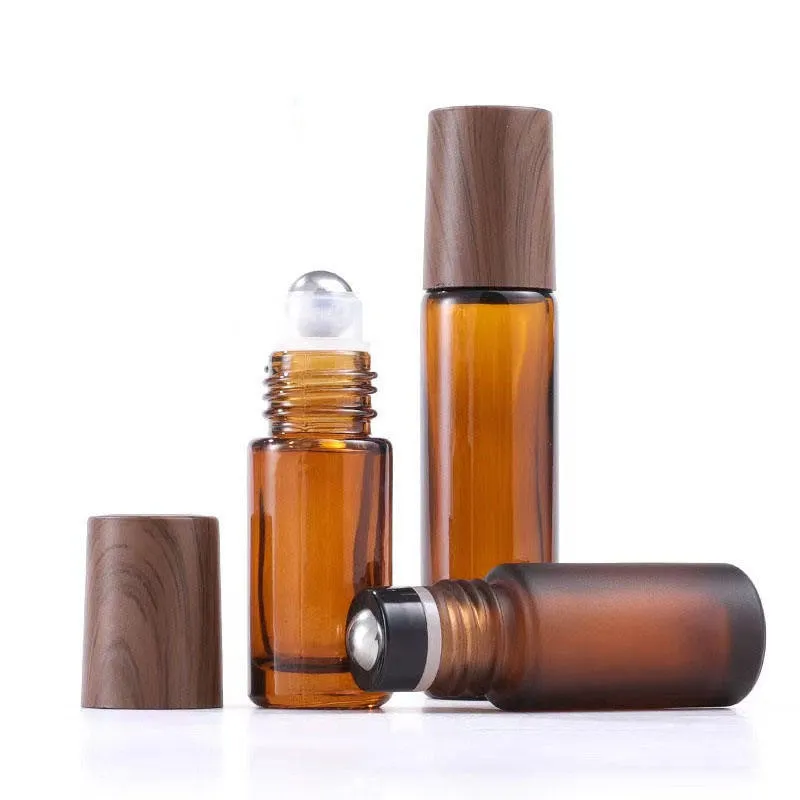
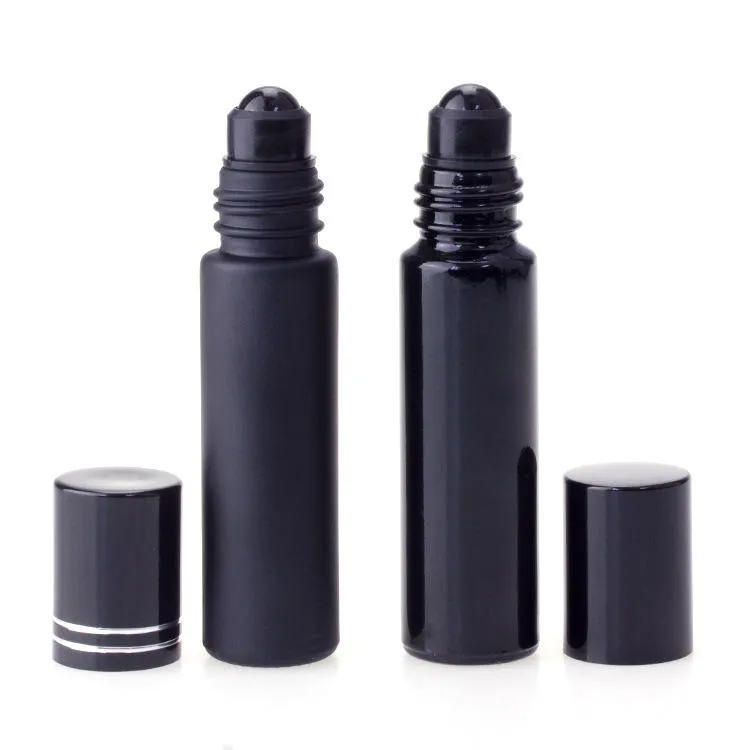
Direct answer: choose a wholesale airless bottle manufacturer by qualifying the complete filled dispensing system—not by comparing an empty sample, a factory video or the lowest unit price. Define the formula, dose, fill process, destination market and annual demand first. Then apply five non-negotiable gates: verified legal and production identity, a frozen bill of materials with change control, successful production-intent formula and filling trials, traceable lot-quality evidence, and a commercially realistic capacity and delivery plan. Only suppliers that pass every gate should enter a weighted commercial comparison.
This guide is for skincare and beauty brands, contract fillers, distributors, packaging engineers and importers buying roughly thousands to hundreds of thousands of empty airless bottles per SKU. “Wholesale” describes the purchasing model; it does not reduce the technical work required to prove that the package protects, fills, dispenses and ships correctly.
1. Decide whether factory-direct wholesale is actually the right model
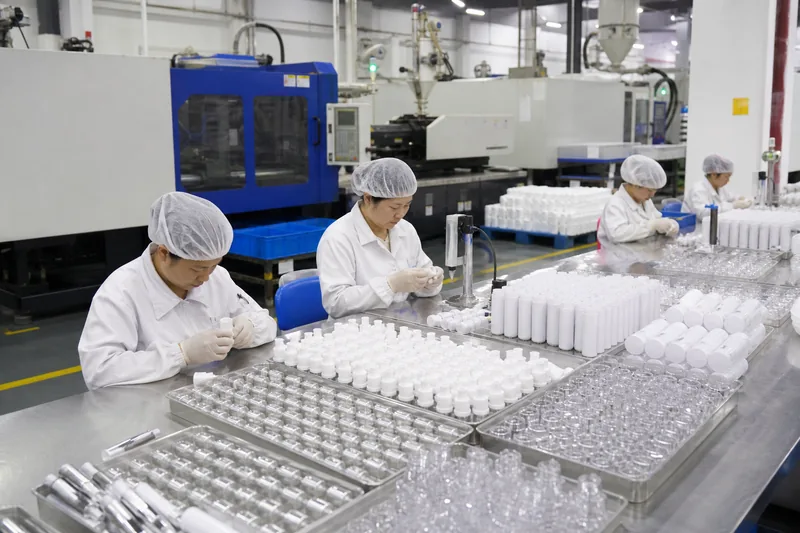
A direct manufacturer is not automatically the best source. A small brand that needs 1,500 units across three colors may obtain a lower total risk from a regional distributor holding finished stock, even if its per-unit price is higher. A direct factory becomes more attractive when the buyer can absorb production minimums, needs controlled decoration or tooling, and has technical staff or a contract filler able to validate the system.
| Supply route | Best fit | Main advantage | Main limitation |
|---|---|---|---|
| Regional stockist or distributor | Pilot launches, many SKUs, urgent replenishment | Low quantities, local delivery, easier returns | Higher unit cost; limited customization and component transparency |
| Chinese factory, existing mold | Growing brands and repeat wholesale orders | Competitive scale with color and decoration options | MOQ, international freight and longer corrective-action loop |
| Qualified packaging integrator | Brands needing bottles, pumps, jars and decoration from one source | Wider range and one commercial interface | Critical components may come from undisclosed subcontractors |
| Custom-tooling manufacturer | Established brands with protected design and forecast volume | Geometry, user experience and brand differentiation | Tooling cost, validation time, ownership and transfer risk |
2. Specify the airless system before requesting quotations
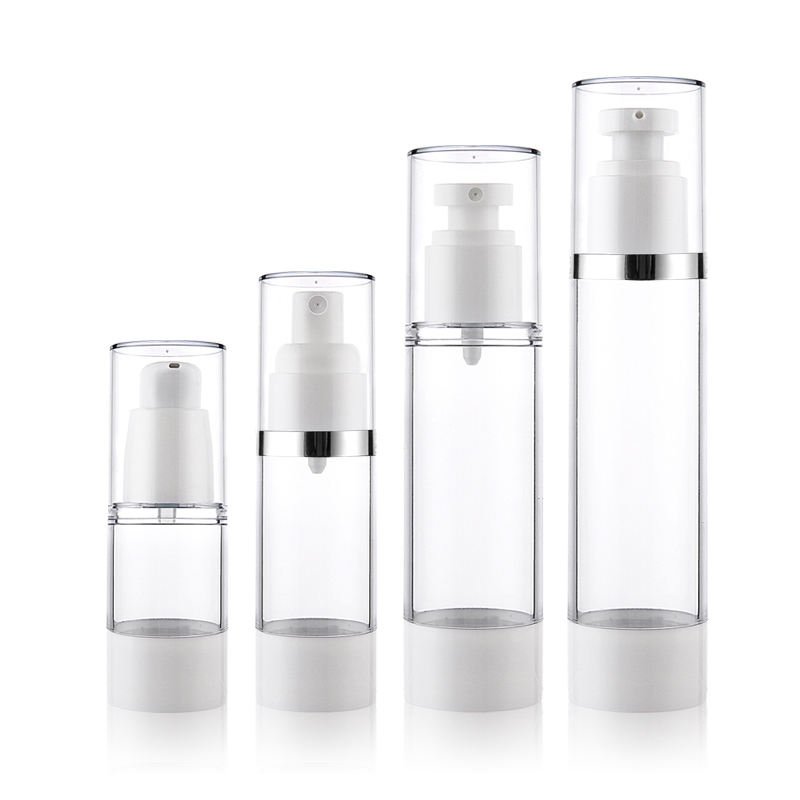
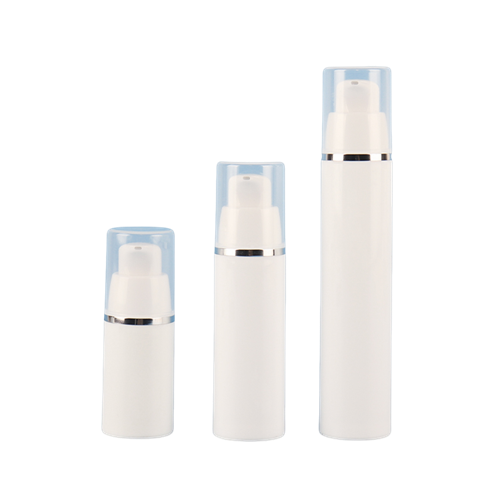
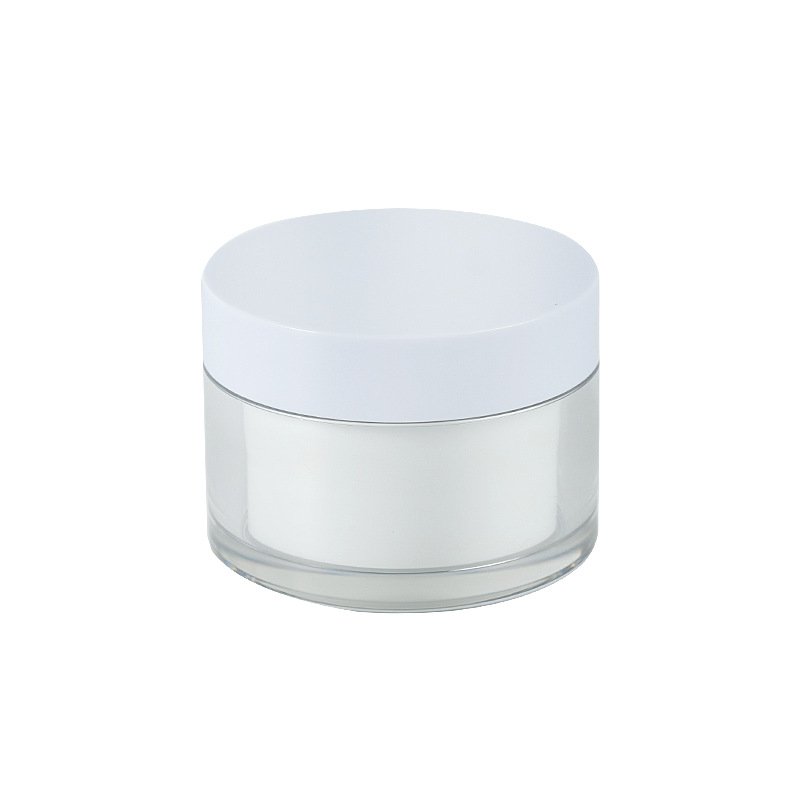
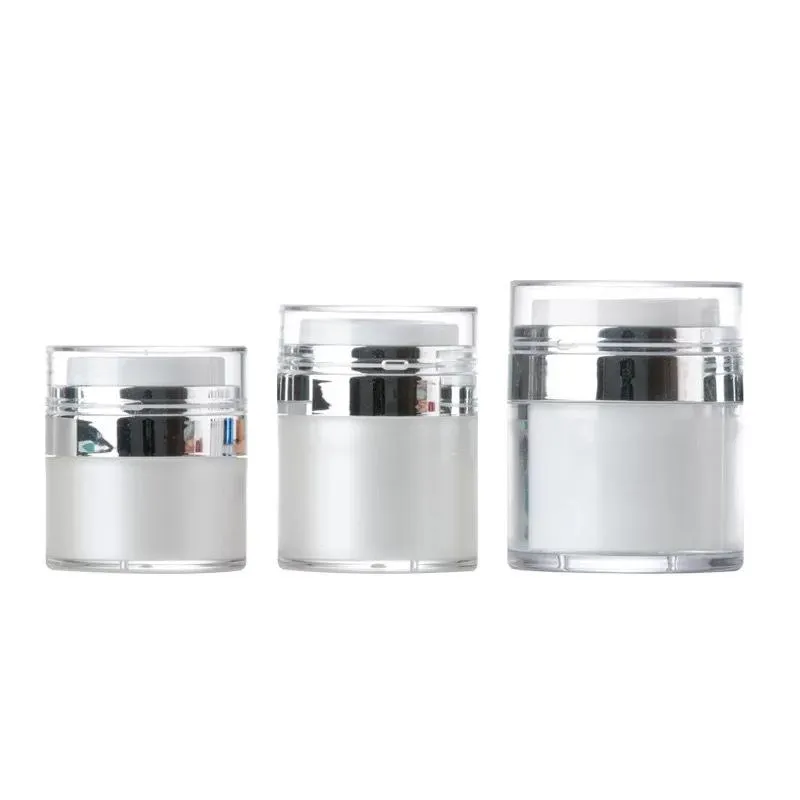
An airless bottle is an interacting system: actuator, pump chamber, inlet and outlet valves, product pathway, seal interfaces, piston or collapsible pouch, bottle geometry, overcap or lock, decoration and transit pack. The formula’s viscosity, yield stress, density, particles, oils, alcohol, pH and filling temperature can change priming, dose, recovery, leakage and evacuation. “30 ml PP airless bottle” is therefore not an adequate specification.
| RFQ field | What to state | Why it changes the decision |
|---|---|---|
| Formula risk profile | Product type; density; viscosity/rheology; oil, alcohol, pigment and particle notes; sensitive actives | Screens pathway materials, valve size, compatibility and light/barrier needs |
| Fill and use | Net fill, fill temperature, top/bottom/vacuum filling, headspace, expected orientation and shelf life | Affects piston start position, trapped air, seal performance and line setup |
| Dispensing target | Target grams or milliliters per full stroke, tolerance, maximum prime strokes, actuation force and recovery | Converts “smooth pump” into measurable consumer performance |
| Pack-life target | Expected usable strokes, early/middle/end-life checks and minimum evacuation | Exposes dose drift, piston sticking and late-life failure |
| Appearance | Capacity, shape, color standard, gloss, decoration, print area and limit samples | Determines mold, resin, decorator, cure time and process MOQ |
| Market and route | Countries, retail/e-commerce channel, climate, case pack and pallet/parcel route | Drives documentation, label area, lock protection and transport testing |
| Demand | Quantity per SKU, SKU count, annual forecast, reorder cadence and launch date | Tests whether MOQ and demonstrated capacity fit working capital and schedule |
Calculate a starting output from the intended consumer dose rather than choosing a convenient catalog pump. Boyu’s pump-output selection guide explains the gravimetric method and conversion between mass and volume. Commercial airless systems demonstrate that output and supported viscosity can vary widely; the exact supplier’s limits must be confirmed with the finished formula, not borrowed from another manufacturer’s data sheet.[13]
Use the same units throughout. For example, a 30 ml fill, 92% minimum evacuation and 0.20 ml target output imply about 138 usable full strokes. This is an engineering planning figure, not a claim of actual performance; verify stroke-by-stroke results on conditioned production-intent packs.
3. Score manufacturers—but keep mandatory gates outside the score
A score prevents the lowest quote or best presentation from dominating the decision. It must not allow a supplier to compensate for a safety-critical failure with attractive decoration or price. First apply the five gates in the introduction. Then score only suppliers that passed.
| Category | Weight | Decision-grade evidence |
|---|---|---|
| Formula and dispensing fit | 25 | Filled-pack trial; priming, output distribution, evacuation, leak, actuation and compatibility results |
| Quality and test system | 20 | Methods, raw data, calibrated equipment, defect catalogue, lot sampling and nonconformance records |
| Manufacturing and change control | 15 | Process map, approved sub-suppliers, cavity/tool records, BOM revision and buyer-notification procedure |
| Market-document support | 10 | Material declarations, packaging data, traceability and documentation suited to each destination |
| Customization and tooling | 10 | Feasible decoration trials, color limits, tooling plan, ownership and maintenance terms |
| MOQ, capacity and continuity | 10 | Per-process minimums, recent comparable output, bottleneck plan, safety stock and recovery capacity |
| Commercial and landed cost | 5 | Itemized quote, named Incoterm place, packing data, payment and warranty terms |
| Communication and CAPA | 5 | Technically accurate responses and a documented corrective/preventive action example |
Set scoring anchors before reviewing suppliers: 0 means no evidence, 1 means a verbal claim, 3 means controlled documentation, and 5 means current SKU-relevant records confirmed by demonstration, sample or independent review. Multiply the rating by the category weight. A suggested nomination threshold is 75/100, but the buyer should change it to reflect risk; the mandatory gates remain pass/fail regardless of total.
4. Audit the process that makes the exact SKU
Ask the supplier to map who molds each component, owns the pump design, assembles the mechanism, decorates the surfaces, tests the finished set and releases the lot. Outsourcing is not automatically a defect. Undisclosed outsourcing is risky because a resin, spring, seal, decorator or cavity may change without being reflected in the quotation or certificate.
Records to inspect
- Business and site identity: the contracting entity, factory address, bank beneficiary and certificate holder should reconcile.
- Bill of materials: resin grades, colorant, product-contact parts, seals, springs, pump and decoration must have revision status and approved sources.
- Tool and cavity control: mold ID, cavity number, preventive maintenance and cavity-linked defects should be traceable.
- Process controls: show the molding, assembly, torque/engagement, cleanliness and decoration parameters that influence the pack.
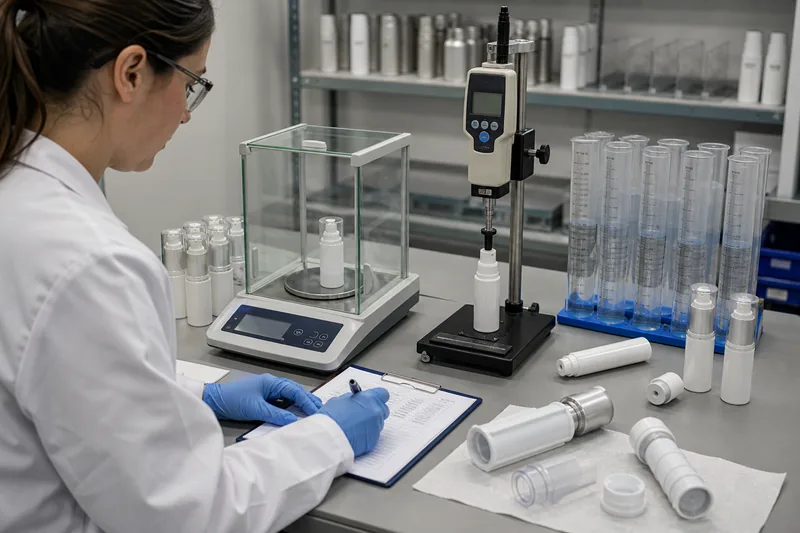
- Test methods: a result is useful only when the sample, medium/formula, conditioning, equipment, method, acceptance limit and raw values are recorded.
- Lot genealogy: a finished carton code should lead back to component lots, assembly date/line, inspection and released quantity.
- Change and complaint control: ask for a redacted example showing containment, root cause, corrective action and effectiveness verification.
ISO 9001 certification can support confidence in the quality-management system, but ISO does not certify products or issue factory certificates itself. Confirm the legal entity, site, activities, dates, certification body and accreditation chain. A management-system certificate does not prove that a particular airless bottle is compatible with a retinol serum or compliant in every market.
5. Qualify stock samples, production-intent samples and the first lot separately
A catalog sample can screen shape and basic feel; it cannot approve a custom resin, color, pump, decorator or filling process. Use a staged approval plan so commercial urgency does not silently turn an early sample into a mass-production reference.

- Architecture screen: confirm material path, fill route, capacity, label/decorating area, nozzle behavior, cap or lock and consumer ergonomics.
- Formula trial: fill the real formula using intended temperature, fill mass, headspace and assembly settings. Record priming, output distribution, recovery, leak, piston travel and evacuation.
- Compatibility and stability: inspect formula and package at justified temperatures, orientations and timepoints. Boyu’s compatibility-test timeline explains why a short screen does not replace accelerated and real-time work.
- Decoration approval: evaluate color against a controlled standard and test adhesion, rub, product resistance and barcode/required-text legibility after conditioning.
- Filling-line trial: establish feed, orientation, fill accuracy, piston initialization, component seating, line speed, rejects and pack-out using production-intent parts.
- Distribution validation: test the filled retail and transport configuration against the actual parcel, case or pallet route. ISTA procedures challenge packaged products but do not automatically satisfy every carrier rule.[10]
- First-lot inspection: sample across time, cartons and relevant cavities. Use the current ISO 2859-1:2026 framework where appropriate, with separately defined critical, major and minor defects.[7]
For a broader risk-based matrix covering dimensions, seal integrity, mechanical performance and decoration, use Boyu’s guide to tests required for cosmetic bottles.
6. Calculate the effective MOQ and cost per accepted unit
“MOQ 5,000” may apply only to an undecorated stock bottle. Resin color, pump, hot stamp, carton print or custom insert may each have a different minimum. The binding minimum for one finished SKU is normally the largest process minimum after yield and spare requirements are considered.
Ask whether excess components are billed, stored, scrapped or carried into the next order. Also separate “production MOQ” from “commercial order quantity”: a factory may produce 10,000 colored bodies to deliver 8,000 finished units and retain the balance only under a written agreement.
Accepted usable units equal ordered units minus shortages, rejects and transit damage. Keep recoverable VAT/GST outside the cost numerator where accounting treatment allows. Compare quotes using the same Incoterm and precisely named place. Incoterms allocate delivery, risk, transport, insurance and customs responsibilities; they do not define product quality, title transfer, payment, warranty, IP or remedies, which belong in the sales contract.[12]
7. Choose differently for each customer type
| Buyer type | Best starting route | Supplier capability to prioritize | Risk to avoid |
|---|---|---|---|
| Startup or market test | Stockist or factory stock mold/color | Low SKU-level minimum, sample availability, simple label route | Custom color/tooling before product-market fit |
| Growing indie brand | Direct factory using proven platform | Formula review, controlled decoration, reorder consistency and realistic 5k–20k scale | Splitting volume across too many colors and sizes |
| Established multi-SKU brand | Integrated factory or qualified global platform | Program management, capacity reservation, change control, multi-site continuity and analytics | One unqualified bottleneck pump or decorator |
| Contract filler | Manufacturer with line-trial support | CAD/dimensions, fill instructions, bulk delivery, component cleanliness and rapid technical response | Approving parts that cannot orient, fill or assemble at rate |
| Distributor/importer | Factory with broad stable catalog | Repeatable molds, private labeling, carton traceability, territory terms and claims discipline | Catalog breadth created by unreported third-party sourcing |
| Luxury or prestige brand | Decoration-strong manufacturer/integrator | Visual limit samples, color measurement, surface-defect control and secondary pack engineering | Prioritizing weight and complex materials without recyclability or transit review |
| Dermocosmetic or sensitive-active brand | Technically mature airless specialist | Defined product pathway, metal/elastomer options, compatibility data and low-dose consistency | Treating “airless” as preservation or shelf-life evidence |
| DTC/e-commerce brand | Supplier with transport-engineering support | Actuator lock/overcap, leak control, scuff resistance and parcel testing | A showroom sample that fails repeated parcel handling |
8. Match manufacturer support to the destination market
The airless factory usually supplies a component, while the brand, importer or responsible person carries finished-product obligations. Do not ask whether a bottle is universally “FDA approved” or “EU certified.” Ask which SKU-specific material, traceability, labeling-space, environmental and test records the supplier can provide to the responsible party.
| Destination | What changes the supplier choice | Evidence to request |
|---|---|---|
| United States | MoCRA responsibility and product listing sit with the cosmetic business, not an empty-bottle approval scheme. Label-panel geometry and e-commerce route matter. | Material/BOM declarations, traceability, label dimensions, compatibility support and filled-pack distribution evidence. Confirm special tamper-resistant rules only where applicable, such as liquid oral hygiene and vaginal cosmetics.[4] |
| EU/EEA | The Cosmetic Product Safety Report includes relevant packaging-material characteristics, particularly purity and stability. PPWR has applied since 12 August 2026, with phased obligations that require project-specific review.[1][2] | Product-contact composition, supplier/change chain, purity/supporting declarations, PCR evidence where claimed, weight/material data, recyclability-supporting details and compatibility records. |
| Great Britain | A GB Responsible Person, PIF/CPSR and English labeling are required. Packaging used is part of the safety information.[5] | Same technical dossier discipline as EU projects, plus artwork space and documentation aligned to the GB responsible person’s requirements. |
| Canada | Manufacturer/importer notification responsibilities and bilingual retail labeling planning can affect artwork area and launch workflow. Notification is not approval.[6] | Accurate component/pack information, Canadian label-panel dimensions, importer/manufacturer data support and change notification. |
| GCC and wider Middle East | Registration, language, claims and local importer requirements differ by country; heat exposure can be severe. | Market-specific document list confirmed by the local responsible importer, Arabic/dual-language artwork area, high-temperature compatibility and transit conditioning. |
| Japan and South Korea | Local-language labeling, claim review, exact decoration and compact premium formats often drive the project. | High-resolution artwork control, color/appearance limits, small-dose performance and documents requested by the local regulatory/brand team. |
| Australia and New Zealand | Import responsibilities, high-UV/heat routes and long freight lanes influence validation. | Importer-confirmed documentation, light/temperature evidence where relevant, robust export cartons and route-appropriate distribution testing. |
ISO 22715 provides international cosmetic packaging and labeling requirements, but national law controls where requirements differ.[8] For multi-country launches, use one global technical dossier plus a market appendix instead of asking the supplier for a vague “worldwide compliance certificate.”
9. Is HCC Packaging a good wholesale airless bottle manufacturer?
Qualified recommendation: HCC Packaging is worth shortlisting for buyers seeking Chinese OEM airless bottles on existing molds, particularly when the project falls within published 5,000–20,000-unit customization routes. It should not be nominated from website claims alone. Treat HCC’s public specifications as a useful RFQ starting point and verify the contracting entity, site, certificate, raw test results and production-lot performance before paying for bulk production.
Products, MOQ and markets HCC reports
HCC identifies itself online as Ningbo HCC Commodity Co., Ltd., located in Yuyao, Ningbo. Its catalogue includes airless bottles, lotion and spray bottles, sunscreen packaging, cream jars, airless jars, lotion pumps, trigger sprayers and deodorant containers. The airless page advertises 10–250 ml options in PP, AS, acrylic and PCR-related directions, with piston, double-wall, dual-chamber and refill-oriented structures. These are supplier-published claims, not Boyu test findings.[15][16]
| HCC public claim | Potential buyer value | Verification required |
|---|---|---|
| MOQ from 5,000 for selected premium structures; 10,000 for many PP/PCR routes; 20,000 custom Pantone; 100,000 custom mold | Transparent planning bands before RFQ | Written MOQ for the exact SKU, color, pump, decoration and carton; treatment of excess components |
| Typical 20–25 day production lead time | Potentially suitable for repeat existing-mold orders | Dated critical-path schedule, material availability, decoration cure, inspection and peak-season capacity |
| 13 injection machines and about 30,000 sets/day assembly | Indicates a stated scale beyond a small workshop | Live process audit and evidence for the exact site/SKU; reconcile with older About-page figures describing larger pump and bottle operations |
| ISO 9001-certified quality system | Potential management-system foundation | Certificate number, legal entity, site, scope, validity, certification body and accreditation |
| In-house leak, vacuum, drop, piston and AQL checks; third-party inspection welcome | Relevant airless QC categories and inspection access | Methods, sample sizes, equipment calibration, raw data, defect definitions and first-lot witness testing |
| US, EU and Southeast Asia experience; older About page also lists Australia, Africa and Middle East | Potential export familiarity | Recent anonymized shipment mix or references for comparable SKU/market; documents actually supplied |
HCC Packaging strengths and limitations
| Strengths visible from public information | Limitations or open questions |
|---|---|
| Broad cosmetic dispensing range can simplify line-wide sourcing. | Breadth may include purchased or subcontracted components; map responsibility for each SKU. |
| Airless pages publish materials, capacities, dose examples, MOQ tiers and decoration paths more clearly than many generic supplier sites. | Published dimensions are described as indicative, and performance values remain unverified until raw test data and production samples are reviewed. |
| Public disclosure states that HCC does not currently hold several third-party documents sometimes requested in RFQs and says batch testing can be arranged. | Buyers needing ISO 14001, independent recycled-content chain of custody or a specific retailer dossier must close those gaps before nomination. |
| Stock-mold OEM route may suit growing brands that can support mid-volume MOQs. | MOQ is too high for many pilot launches or fragmented multi-color ranges; a stockist may be more economical. |
| HCC says third-party SGS, BV or Intertek inspection is welcome. | Permission to inspect is not proof of past performance; the buyer must define the protocol, timing and remedy for failure. |
Best fit: growing skincare/personal-care brands, private-label buyers and distributors using existing airless platforms at commercially meaningful volumes. Less suitable without a special arrangement: sub-5,000 pilot launches, projects requiring independently certified environmental claims before sampling, or highly sensitive formulas that need specialist barrier/pathway data beyond standard cosmetic packaging documentation.
10. How to source wholesale airless bottles from China

- Freeze a sourcing brief. Include formula risk, capacity, dose, quantity per SKU, destination, fill method, decoration, shipper and decision dates.
- Build a process-based shortlist. Ask what each candidate actually molds, purchases, assembles, decorates and tests. Use Boyu’s Alibaba supplier guide for marketplace screening, then add the airless-specific controls in this article.
- Verify the Chinese legal entity. Obtain the Chinese business license and unified social credit code. Search the official National Enterprise Credit Information Publicity System, then reconcile the entity with the contract, certificate, factory and bank account.[11]
- Issue the same RFQ to each supplier. Require itemized tooling, decoration, packing, inspection, Incoterm and validity so quotes are comparable.
- Audit finalists. Use onsite or live video evidence tied to the exact process; do not accept an edited factory montage as the audit.
- Run staged samples. Separate stock, custom appearance, production-intent formula and line-trial approvals. Record what changes between stages.
- Execute a quality agreement. Attach drawings, BOM, golden/limit samples, functional methods, defect classes, sampling, traceability, change notice, warranty and corrective-action terms.
- Control payment milestones. Link payments to defined outputs such as tooling approval, signed production sample and passed inspection; use a structure reviewed by qualified commercial/legal advisers.
- Inspect before shipment. Select cartons across the packed lot, confirm quantities and codes, inspect appearance/dimensions, test function with an agreed medium where practical, and verify export packing.
- Monitor the first fill and market lot. Retain samples and compare rejects, priming, leakage, output, consumer complaints and transit damage against the approved baseline.
Red flags that justify pausing the order
- The payee, business license, quotation and certificate show unrelated entities without a documented relationship.
- The supplier will not identify product-contact materials, pump source or subcontracted decorator.
- “Passed” reports omit sample IDs, method, raw values, limits or dates.
- A performance or sustainability claim is offered without an exact-SKU basis.
- Mass production may use a “similar” pump, resin or color to the approved sample.
- The seller quotes DDP without identifying importer-of-record responsibility, destination, exclusions and tax treatment.
- Production starts before formula, artwork, BOM and signed reference sample are frozen.
11. Put measurable requirements in the RFQ and contract
The purchase order should not rely on catalog language such as “premium,” “leakproof” or “near-zero residue.” Translate each decision into a method and limit. At minimum, attach:
- component drawing, nominal and overflow capacity, critical dimensions and tolerances;
- approved BOM, product-contact materials, resin/color references and disclosed sub-suppliers;
- target output and limits, test formula/medium, temperature, priming definition, life-stage checkpoints and sample plan;
- leak/vacuum, evacuation, actuation, recovery, cycle and decoration methods with pass/fail criteria;
- critical/major/minor defect catalogue and current ISO 2859-1-based lot plan where appropriate;
- signed color/appearance limit samples plus production-intent functional samples;
- carton count, separators/bags, marks, palletization, moisture protection and packing-data tolerance;
- no-change clause covering resin, pump, seal, spring, mold/cavity, process, site, component source and decorator;
- inspection rights, nonconformance containment, replacement/credit/rework responsibility and CAPA deadlines;
- tool ownership, maintenance, storage, access and transfer terms;
- Incoterm 2020 rule with named place, payment milestones, schedule dependencies and delay notification.
12. Frequently asked questions
What is a good MOQ for wholesale airless bottles?
There is no universally good number. The right MOQ fits one-SKU sell-through, working capital and the factory’s real process minimums. Existing-mold undecorated or simply decorated projects may be viable in the low thousands, while custom color, decoration and tooling can raise the binding minimum substantially. Compare the effective finished-SKU MOQ, not a homepage headline.
Must I buy from a direct manufacturer rather than a trading company?
No. A capable integrator can add value through product breadth, lower consolidated order quantities and export coordination. Require a transparent process map, approved component sources, inspection rights, change control and one accountable party. The risk is hidden responsibility, not the business label.
How do I verify airless bottle quality before a bulk order?
Test production-intent units filled on the intended line with the final formula. Measure prime count, dose distribution, leak/vacuum integrity, actuation, recovery, piston travel, evacuation, cycle life, compatibility, decoration and distribution performance. Then inspect the packed first lot against the same frozen specification.
Does ISO 9001 certify an airless bottle?
No. ISO 9001 specifies quality-management-system requirements. Certification can support supplier confidence when the correct entity, site and scope are covered, but it does not prove formula compatibility, market compliance or product performance. Validate the exact bottle separately.
Is HCC Packaging reliable?
HCC publishes a comparatively detailed airless catalogue, MOQ structure, factory claims and limitations, which makes it a reasonable candidate for a controlled shortlist. Reliability cannot be established from its website alone. Verify its legal entity, ISO certificate scope, site and current equipment; witness relevant tests; qualify formula-filled samples; and inspect the first production lot.
How long does a China airless bottle order take?
Separate technical review, stock samples, custom samples, compatibility/line trials, material procurement, molding, decoration, assembly, inspection and international freight. A supplier’s production lead time usually starts only after deposit and final approvals; it is not the total launch timeline. Request dated dependencies rather than one number.
Is PP, AS, acrylic or PET the best airless bottle material?
No material is universally best. PP can simplify some mono-material directions and suits many product-contact components; AS, acrylic or PET-related structures may deliver clarity or a premium shell. The product-contact layer, additives, pathway, decoration, impact behavior, market recycling system and formula compatibility matter more than the generic resin name.
Sources
- EUR-Lex — Regulation (EC) No 1223/2009 on cosmetic products (packaging-material characteristics in the Cosmetic Product Safety Report).
- European Commission — New EU packaging rules enter into application (PPWR application from 12 August 2026).
- Cosmetics Europe — Packaging Advisory Document (packaging-material information exchange and compatibility context).
- US FDA — Summary of Cosmetics Labeling Requirements (container/label and limited tamper-resistant requirements).
- GOV.UK — Making cosmetic products available to consumers in Great Britain (Responsible Person, PIF/CPSR, packaging and labeling).
- Health Canada — Notification of Cosmetics (manufacturer/importer responsibility and notification scope).
- ISO — ISO 2859-1:2026 (AQL-indexed sampling schemes for lot-by-lot inspection).
- ISO — ISO 22715:2006 Cosmetics—Packaging and labelling.
- ISO — ISO 9001 and quality management (scope and role of a quality-management system).
- International Safe Transit Association — Getting Started with Design & Testing (test selection, records and retesting after changes).
- European IP Helpdesk — How to Search for Basic Chinese Company Information (how to use China’s official enterprise registry to verify registration, legal representative, business scope and location).
- International Chamber of Commerce — Incoterms 2020 Q&A (delivery place and allocation of transport/customs responsibilities).
- Aptar Beauty — Stella airless technical leaflet (manufacturer example of formula-viscosity, dose and evacuation specifications; not a universal standard).
- Aptar Beauty — Micro airless packaging (manufacturer example of volume, dose, materials and pathway options).
- HCC Packaging — Airless Pump Bottles Wholesale (supplier-published product, MOQ, capacity, QC and market claims).
- HCC Packaging — About (supplier-published legal name, sites, equipment and export-market claims).
Evidence note: HCC Packaging facts in this guide are explicitly treated as supplier self-report unless independently identified otherwise. Supplier webpages are useful for shortlisting and RFQ preparation but do not replace certificate verification, audit evidence, filled-product validation or first-lot inspection.



 English
  Español de Argentina
  Русский
  Italiano
  日本語
日本語  한국어
한국어  العربية
  Français
  Deutsch