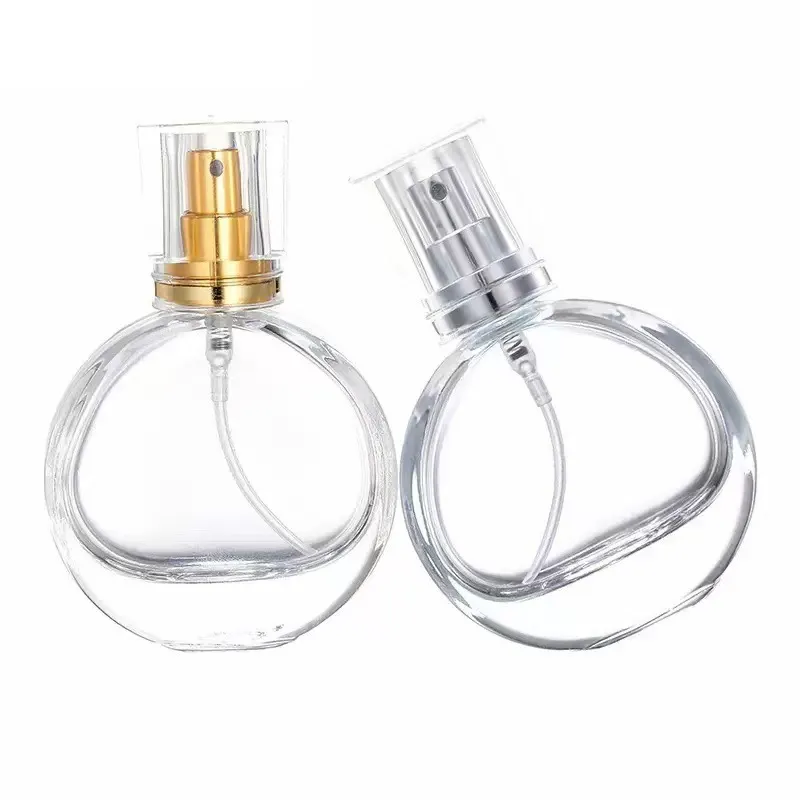
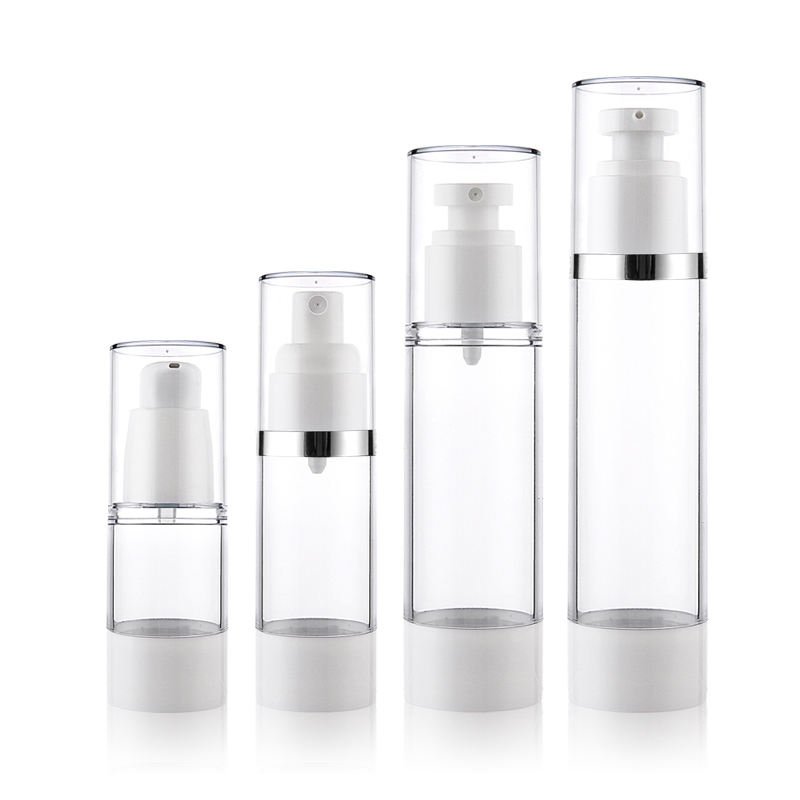
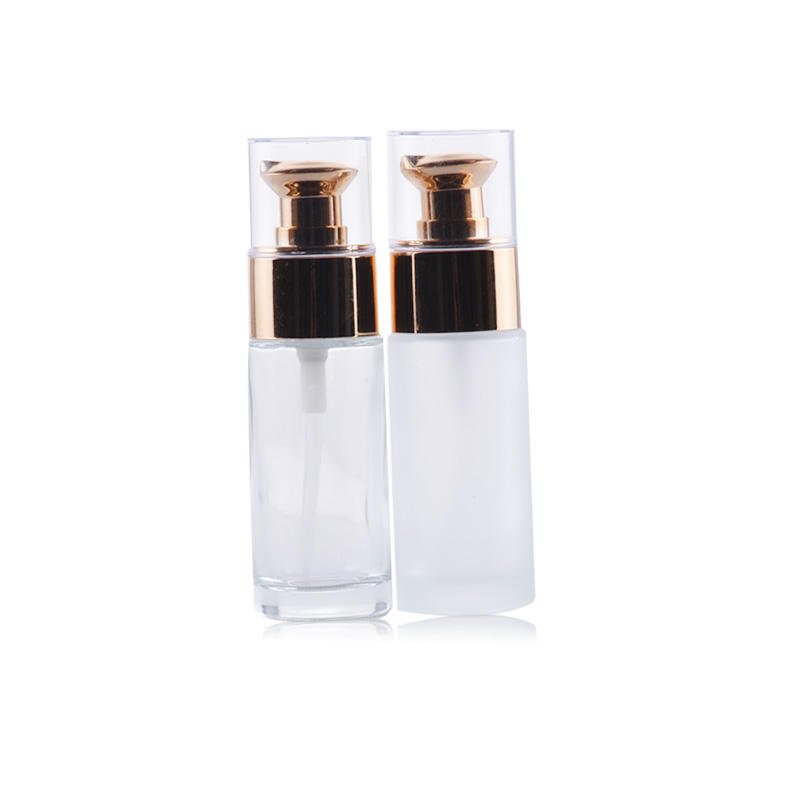
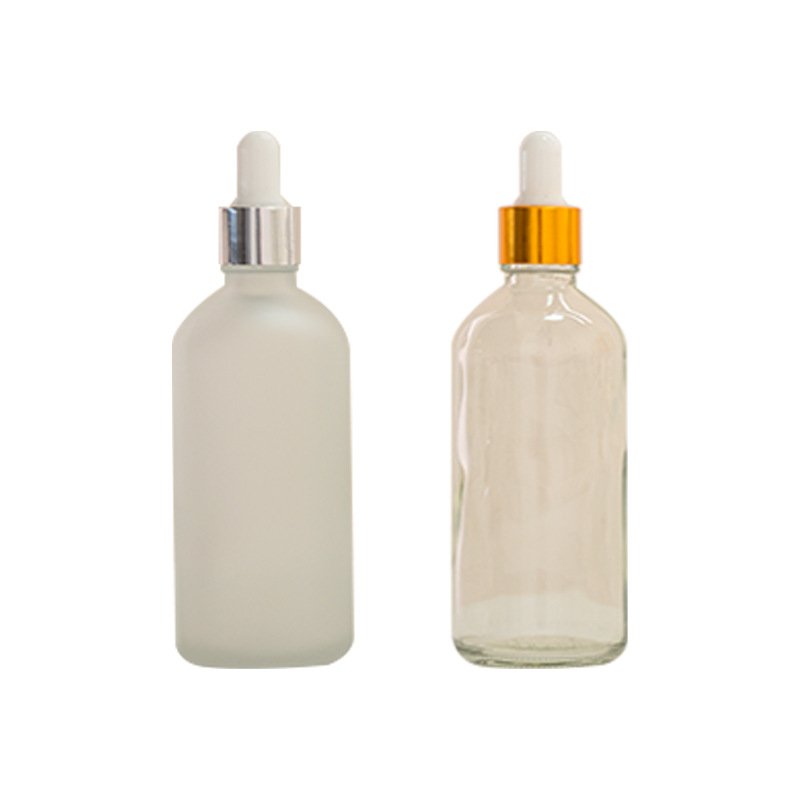
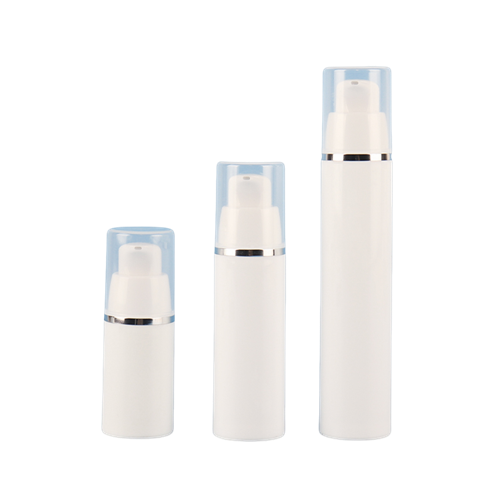
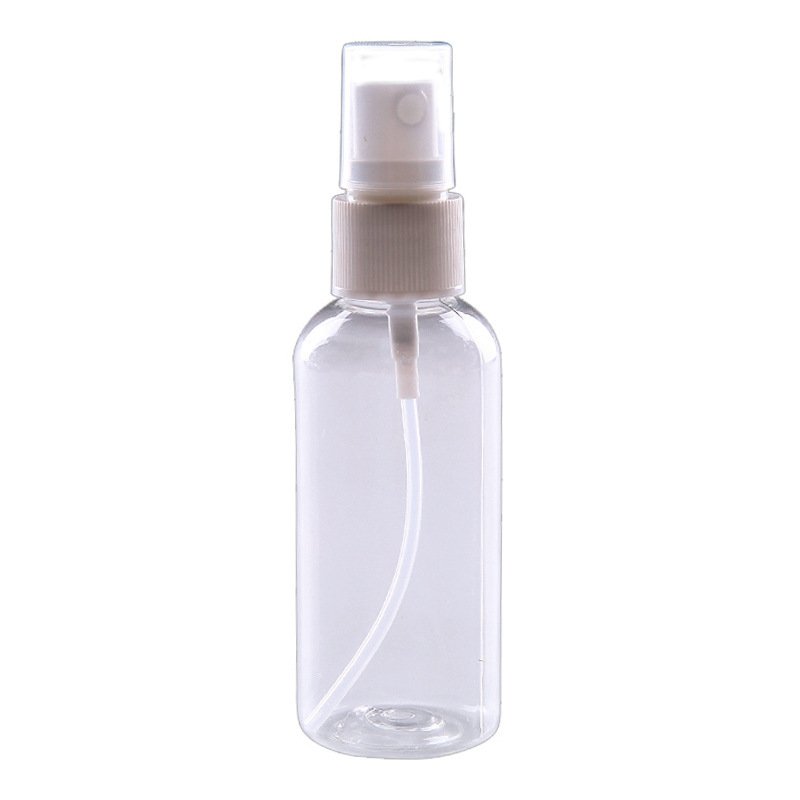
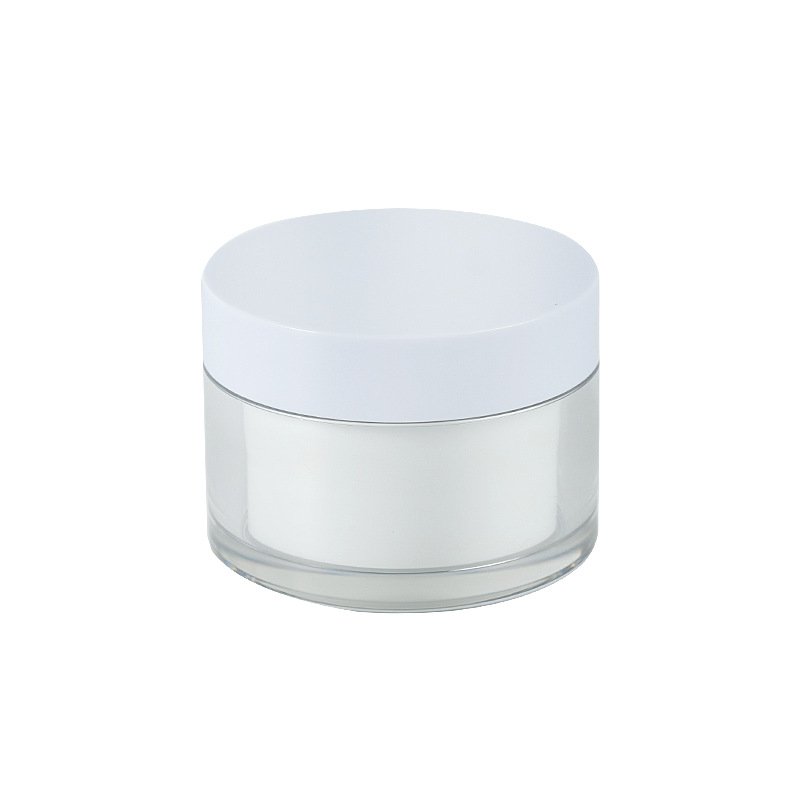
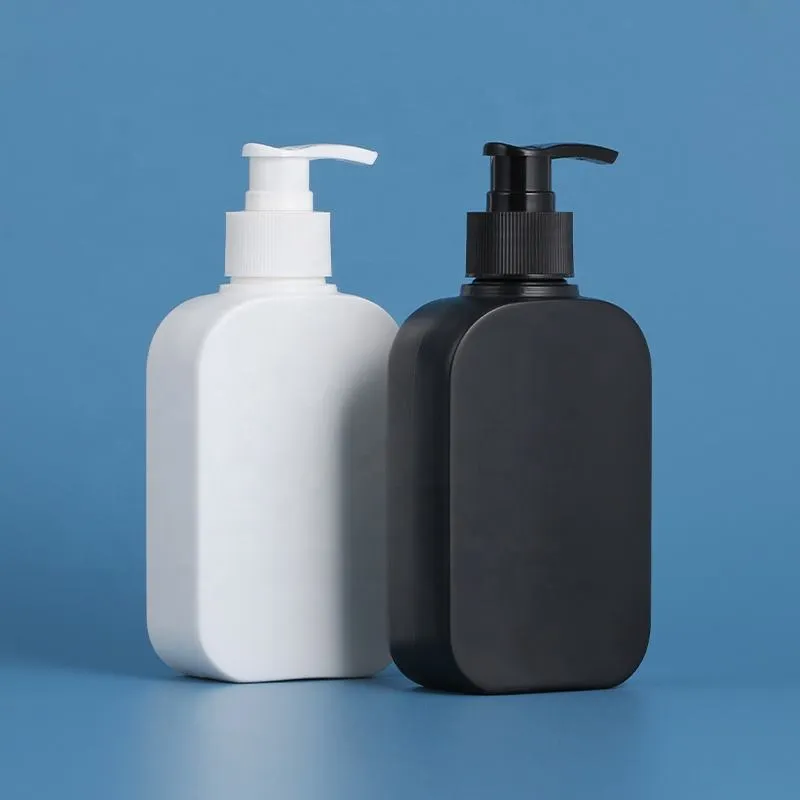
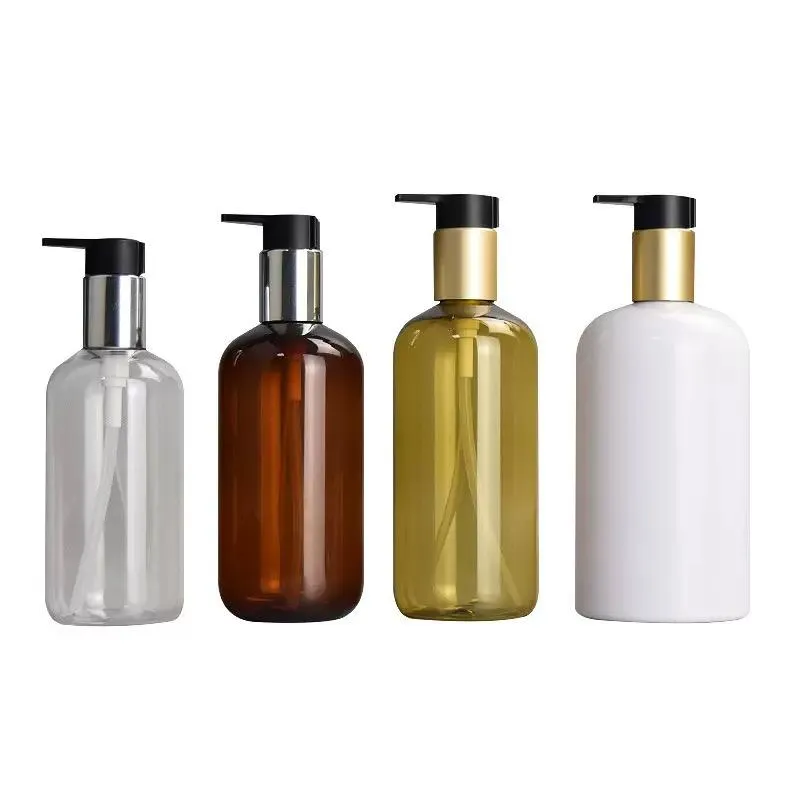
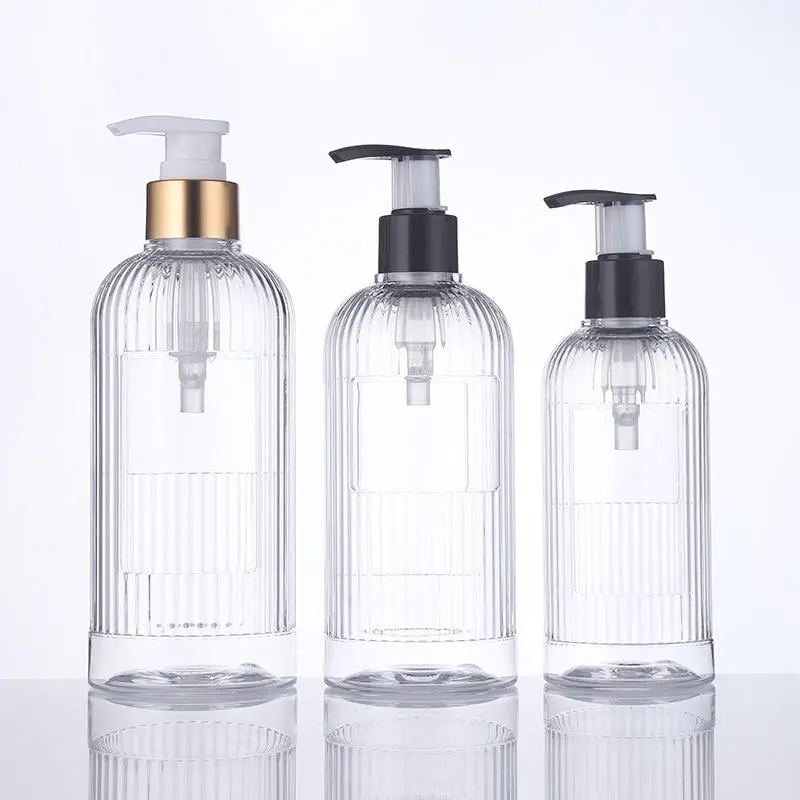
Direct answer: Most rigid shampoo bottles are made from HDPE (high-density polyethylene) or PET (polyethylene terephthalate). HDPE is usually the first material to evaluate for an opaque or translucent bottle that must survive wet handling and squeeze repeatedly. PET is usually the first choice when clarity, gloss and a rigid premium appearance matter. PP is used most often for flip-top caps, pumps and selected bottle formats; LDPE or PE blends suit very soft squeeze packs.
There is no universally best plastic. The correct specification is the lightest practical bottle-and-closure system that passes compatibility, leakage, dispensing, filling-line and distribution tests with the actual shampoo. PCR describes recycled feedstock—such as rHDPE or rPET—not a different polymer, and it must be qualified at the intended percentage.
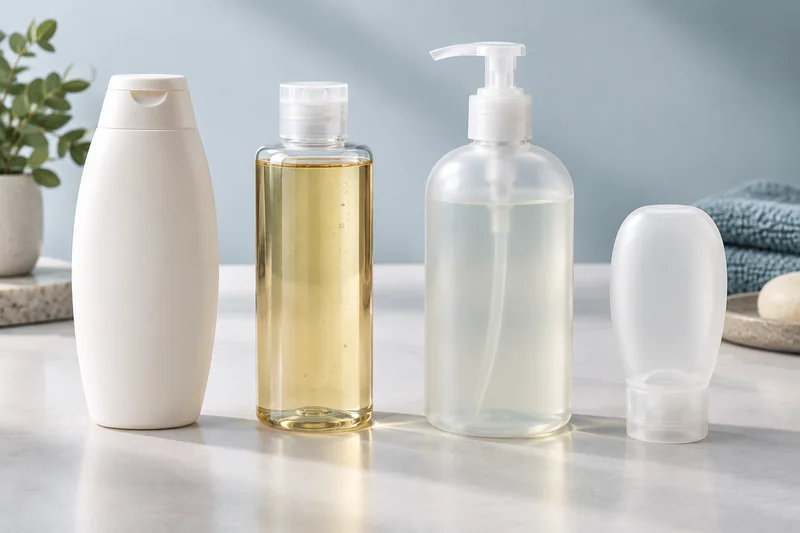
Shampoo bottle plastics at a glance
Start by specifying the bottle body separately from the cap or pump. A package described casually as an “HDPE shampoo bottle” may actually be an HDPE body, a PP flip-top, a PE or TPE valve, an elastomer seal and a label made from another polymer. Each contact material and interface can affect formula compatibility and recycling.
| Material | Typical role | Best reasons to shortlist it | Main limitations to qualify | Common starting use |
|---|---|---|---|---|
| HDPE (#2) | Bottle body; some closures | Tough, useful squeeze range, broad general chemical resistance, low-temperature impact performance | Not crystal clear; wall distribution, paneling and environmental stress cracking depend on grade and design | Mass-market shampoo, family sizes, salon bottles, conditioner |
| PET (#1) | Clear rigid bottle body | High clarity and gloss, good stiffness-to-weight ratio, precise preform-moulded neck | Less squeezable at many designs; heat/fill limits are grade- and design-specific; formula and stress-crack compatibility must be tested | Clear shampoo, coloured gel, premium shelf presentation |
| PP (#5) | Flip-tops, disc-tops, pumps; selected bottles | Excellent living-hinge utility, good general chemical resistance, useful thermal performance | Most natural PP is translucent rather than glass-clear; bottle supply/process options can be narrower | Closures, pump parts, airless components, niche monomaterial concepts |
| LDPE (#4) or PE blend | Soft bottle, tube or flexible dispensing part | Very soft squeeze and good recovery when properly designed | Lower stiffness and line stability; appearance, permeation and scuffing require review | Travel sizes, inverted packs, controlled squeeze formats |
| PCR PET/HDPE/PP | Recycled-content version of a base polymer | Reduces virgin-resin demand and can support a verified recycled-content strategy | Colour, odour, contamination, mechanical variation, availability and claim evidence | Brands with a defined recycled-content target and qualified supply chain |
HDPE: the practical workhorse for squeeze bottles
HDPE is a polyolefin normally extrusion blow moulded for shampoo bottles. The process extrudes a hot tube of plastic, closes a mould around it and blows the tube against the mould wall. It supports oval bodies, offset necks, grip features and, at larger sizes, integral handles. The bottle naturally looks waxy or translucent and is easily made white or coloured.
Its biggest practical advantage is not a generic claim that it is “stronger.” A well-engineered HDPE bottle can combine drop toughness with controlled panel flex, so consumers can dispense shampoo with wet hands without permanently collapsing the body. HDPE also has broad general resistance to aqueous products, dilute acids, alkalis and alcohols, which makes it a sensible first screening material for many rinse-off formulas.
Advantages
- Squeeze can be tuned: bottle mass, grade stiffness, shoulder geometry, ribs and panel shape all affect force and recovery.
- Good shower handling: tough, lightweight packs are less hazardous than breakable formats in wet environments.
- Useful custom geometry: extrusion blow moulding can produce asymmetric forms and larger handles that would be difficult in standard PET stretch blowing.
- Established recycling route: HDPE has a recognised #2 stream, although colour, labels, adhesives and closures still determine real-world recyclability.
Limitations and failure modes
HDPE will not deliver PET-like transparency. Fragrance components or oils can also expose permeation, swelling or environmental stress-crack risks in a particular grade or colour system. At production level, the pinch-off seam, flash trimming and uneven wall distribution around shoulders and corners need control. A heavier bottle is not automatically safer: poor material distribution can leave one weak corner while adding unnecessary mass elsewhere.
PET: clarity, gloss and a precise neck
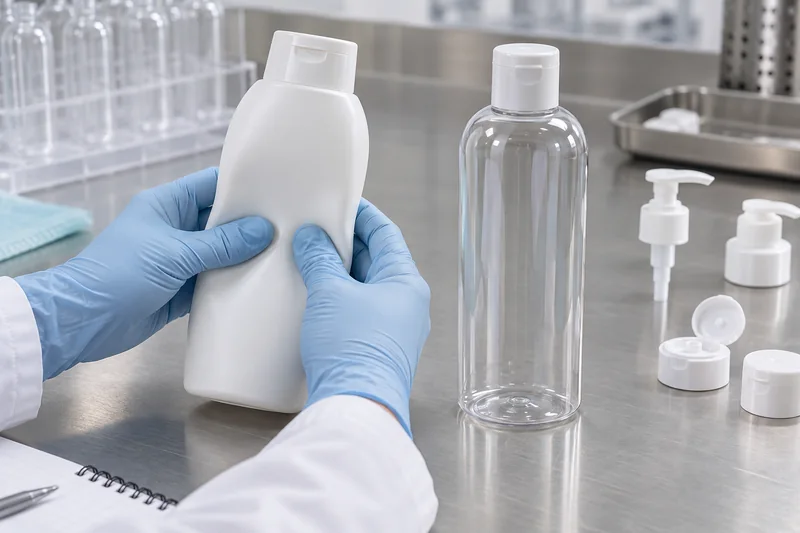
PET shampoo bottles are usually made by injection stretch blow moulding. A preform is injection moulded first—creating the final neck and sealing surface—then reheated, stretched and blown into the bottle. That process gives clear, glossy walls and a strong stiffness-to-weight ratio. If the shampoo’s colour, suspended visual effect or clean transparency is part of the brand proposition, PET is the logical first candidate.
PET is not merely “premium HDPE.” Its rigid hand feel, stretch distribution and thermal response are different. Very flat panels can become vulnerable to distortion or vacuum paneling; an under- or over-stretched region can weaken the bottle. Fill temperature and line conditions must stay inside the window qualified for the exact resin, preform and bottle—not a generic temperature copied from the internet.
Where PET works especially well
- Clear or tinted shampoos whose appearance should remain visible.
- Shelf-led retail packs where gloss and crisp geometry support the brand.
- Bottles that need a rigid grip rather than a soft, deep squeeze.
- Programs that can use an existing preform, neck finish and qualified rPET route.
Read Boyu’s guide to how shampoo bottles are manufactured for the detailed difference between PET preform/stretch blowing and HDPE parison/extrusion blowing.
PP and LDPE: important, but for different jobs
Polypropylene (PP)
PP is the material buyers most often touch at the top of the bottle. Its fatigue resistance makes it a strong candidate for a flip-top living hinge that must open and close repeatedly. It is also common in disc-tops, pump housings, actuators and other injection-moulded components. PP bottles exist, including extrusion-blown or injection-blow formats, but they are less universal than HDPE and PET shampoo bodies.
Choose a PP bottle when its particular stiffness, thermal behaviour, chemical resistance or monomaterial design strategy is useful and a qualified supplier platform exists. Do not choose it merely because the cap is PP. Bottle-grade processability, low-temperature impact, label/decoration adhesion and filled-pack performance still need proof.
Low-density polyethylene (LDPE) and PE blends
LDPE is softer and more flexible than HDPE. It can be useful for small squeeze bottles, tubes, valves and packs designed to empty through an inverted closure. The trade-off is lower panel stiffness: a soft bottle may feel convenient in the shower but buckle on a high-speed filling line or look under-filled on shelf. Many commercial packages therefore use a defined PE blend rather than treating “PE” as one undifferentiated material.
What is the best plastic for a shampoo bottle?
Use the product and user requirement to make the first shortlist, then let qualification data decide. The following is a starting decision aid, not a substitute for testing.
| Priority | Best first material to evaluate | Why | What can overturn the choice |
|---|---|---|---|
| Everyday opaque squeeze shampoo | HDPE | Useful toughness/squeeze balance and broad supply | Formula compatibility, panel recovery, decoration or recycling brief |
| Crystal-clear premium bottle | PET | Clarity, gloss and rigid presentation | Fill temperature, squeeze target, formula interaction, light sensitivity |
| Large family or salon pump pack | HDPE or PET | HDPE for impact/handle options; PET for rigid clarity | Top load, base stability, pump fit, e-commerce route |
| Very soft inverted travel pack | LDPE or qualified PE blend | Low squeeze force and recovery | Line handling, leakage, permeation, cap-down stability |
| Durable hinged closure | PP closure | Living-hinge fatigue performance | Seal design, orifice, user force, recycling-system compatibility |
| Recycled-content target | Qualified rHDPE or rPET | Established base polymers and recycling streams | Target market rules, colour/odour, supply consistency and testing |
The complete pack matters more than the bottle body
A shampoo pack fails at interfaces. A compatible HDPE wall cannot compensate for a warped sealing land, an incorrectly applied PP cap, a liner that swells, a pump that cannot refill with viscous formula or a label adhesive that softens in a wet bathroom.
Control the neck finish and mating closure drawing as a pair. Specify the seal mechanism, liner or valve material, application torque, orifice diameter, pump output, dip-tube geometry and actuator lock. If recyclability is a target, evaluate the whole bottle-label-adhesive-closure system against the relevant local design guide; a resin identification code alone does not prove that the complete package will be collected, sorted or recycled.
How material choice affects shampoo bottle cost
There is no reliable global “HDPE bottle price” or “PET bottle price.” Resin markets, bottle mass, country, mould, run length and commercial terms change. Comparing only the quoted unit price can reward a supplier who omitted the pump, print, inspection, cartons or tooling allocation.
Normalize every quote with the same equation:
Landed usable pack cost = bottle + closure/pump + decoration + assembly + inspection/testing + cartons + tooling amortization + freight/insurance + duty/tax/brokerage + expected loss
The cost drivers that matter
- Gram weight: resin cost per bottle begins with mass, but mass must be distributed correctly.
- Conversion route: PET preform injection and stretch blowing have different economics from HDPE extrusion blowing. Installed machine and mould capacity matter.
- Closure complexity: a lotion pump can cost more than a lightweight stock bottle; a simple flip-top usually has fewer parts.
- MOQ and SKU count: colour changes, print setup, line clearance and fixed inspections are spread over fewer pieces at a small release quantity.
- PCR specification: approved source, percentage, colour control, deodorisation, testing and supply availability can matter more than a daily virgin-resin comparison.
- Freight efficiency: empty bottles ship air. Pallet/carton density and local blowing can change landed cost even when ex-works price is lower.
For a transparent calculation framework and the difference between factory, complete-package and landed prices, use Boyu’s PET bottle production cost model. Apply the same discipline to HDPE: compare the identical capacity, mass, neck, closure, decoration, quality scope, quantity and Incoterm.
PCR, recyclability and material reduction
PCR means post-consumer recycled content. An rPET bottle is still PET; an rHDPE bottle is still HDPE. The PCR percentage and source should be stated on the purchase specification, supported by the evidence required for the intended claim and controlled through supplier change notification.
Higher PCR is not automatically a better functioning pack. Natural HDPE may become grey or beige, clear PET can acquire colour or haze, and odour or mechanical variation may become more visible. This does not make PCR unsuitable; it means the commercial appearance standard and functional test plan must reflect the real feedstock. Use production-intent PCR samples, not a hand-selected virgin-resin sample with a sustainability promise added later.
Recyclability is also market-specific. RecyClass, the European PET Bottle Platform and the APR Design Guide assess details such as body colour, label coverage, adhesive wash-off, ink bleeding, closure density and non-plastic components. A heavy full-body sleeve, carbon-black pigment, metal spring or incompatible label can reduce sorting or recycling compatibility even when the bottle body is a widely recycled polymer.
Lightweight with evidence, not by guesswork
The best material-efficiency metric is not the lowest empty-bottle weight in isolation. It is the minimum mass that still passes top-load, squeeze recovery, drop, leakage, line handling and distribution in the final geometry. Removing one gram from every bottle can be commercially meaningful at scale; removing it from the wrong shoulder or corner can create far more waste through leakage and rejects.
How to qualify the plastic with the actual shampoo
Most shampoos are water-rich surfactant systems, but “water-based” does not prove package compatibility. Fragrance oils, essential oils, botanical extracts, solvents, acids, salts, colourants and preservatives can change interaction with the bottle, gasket, valve, dip tube, ink or label adhesive. Viscosity and yield behaviour also change dispensing and leakage.
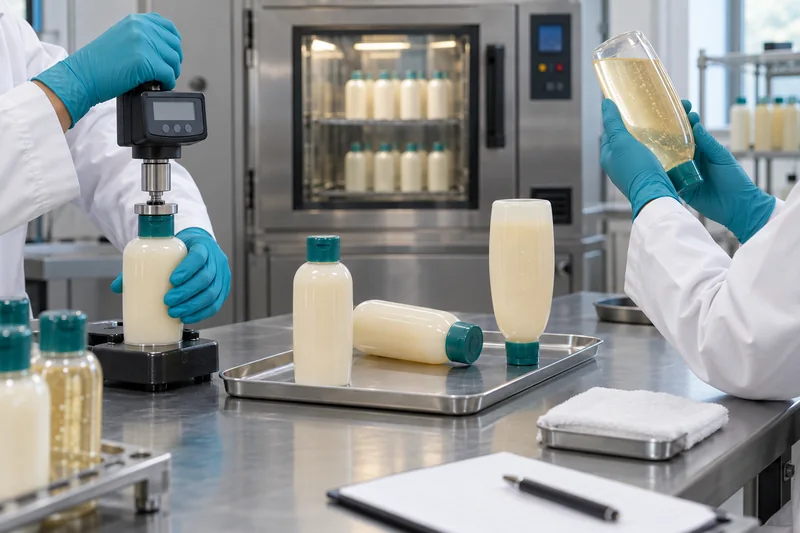
A decision-grade qualification sequence
- Freeze the test article. Record resin grade, PCR percentage/source, colour masterbatch, bottle mass, cavity, neck, closure, liner, decoration and label.
- Fill with the final shampoo. Use production-intent fill level, headspace and application torque. Water may screen gross leaks but cannot approve compatibility.
- Challenge all contact paths. Store units upright, on the side and inverted where relevant, using justified ambient, elevated, low-temperature and cycling conditions.
- Measure package and formula. Check mass change, leakage, deformation, stress cracking, haze, colour/odour shift, closure torque, gasket swelling, label lift and decoration rub. Track formula attributes defined by the formulator.
- Verify dispensing. Measure opening force or pump priming, output consistency, dribble, lock function, evacuation and consumer squeeze force after conditioning.
- Run filling-line and distribution trials. Confirm bottle stability, capping, coding, case pack, drop/vibration/compression exposure and e-commerce risks using final pack-out.
There is no universal accelerated schedule that proves every shelf life. The protocol and acceptance criteria should be risk-based and approved before testing. Boyu’s guide to cosmetic bottle qualification tests provides a broader matrix for bottle, closure, formula and shipping pack.
What shampoo bottle material is suitable for export?
No polymer carries a universal “export approved” status. First separate two transactions:
- Empty bottles and closures: the importer needs a controlled component specification, composition/restricted-substance information appropriate to the destination, traceability and evidence that the packaging meets the buyer’s performance and environmental requirements.
- Filled shampoo: the finished cosmetic is subject to the destination’s cosmetic safety, notification/registration, labelling and responsible-party rules in addition to packaging and waste law. A bottle supplier’s certificate cannot make the filled product compliant.
| Destination | What the buyer must plan for | Packaging implication |
|---|---|---|
| European Union | Finished cosmetics require an EU Responsible Person, safety assessment/CPSR, PIF, notification and compliant labelling under Regulation (EC) No 1223/2009. The PIF safety information includes packaging-material characteristics and purity. Regulation (EU) 2025/40 (PPWR) has applied since 12 August 2026, with requirements phased by article and date. | Document composition, minimize material without losing function, review recyclability, recycled-content and labelling timelines for the exact packaging category; do not assume every PPWR obligation started on the general application date. |
| United States | FDA does not preapprove ordinary cosmetic packaging. Under MoCRA, the Responsible Person must maintain adequate safety-substantiation records for the cosmetic; products must not become adulterated through packaging or storage. | Retain compatibility and safety evidence. Meet federal/state labelling and environmental-claim rules; avoid asking for a fictional “FDA-approved shampoo bottle.” |
| Great Britain | Finished cosmetics need a UK-established Responsible Person, a Product Information File and safety report, notification to OPSS and required English labelling, including country of origin for imports. | The safety information identifies what packages the product. Coordinate bottle evidence, labels and artwork with the UK Responsible Person before production. |
| Other markets | Local cosmetic, chemicals, packaging-waste, EPR, labelling and importer obligations vary. | Have the destination importer or regulatory adviser issue a market-specific checklist before artwork and resin are locked. |
Documents to request before shipment
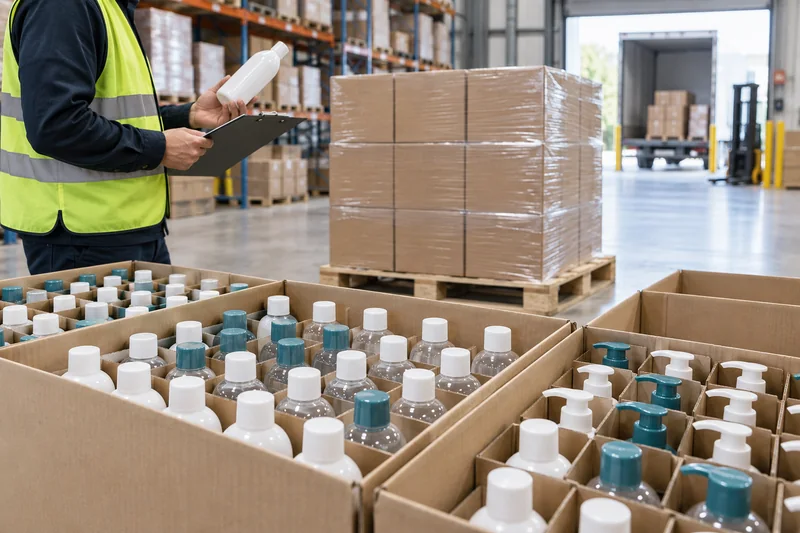
- Approved bottle and closure drawings with material, nominal mass, critical dimensions, neck finish, capacity and tolerances.
- Resin/grade declaration, PCR percentage and source specification where applicable, colour/additive information and agreed restricted-substance declarations.
- Batch or lot identification, cavity traceability where relevant, inspection report and change-notification agreement.
- Compatibility, leak, functional and distribution reports that identify the samples, methods, conditioning, results and acceptance criteria.
- Packing list, commercial invoice, country of origin and HS-classification review by the importer or customs broker; the HS code depends on the actual goods and shipment.
- Evidence supporting any “recycled,” “recyclable” or environmental claim in the destination market.
Shampoo bottle RFQ checklist
A supplier can only recommend a material against a real brief. Send the same specification to every bidder:
- Shampoo type, full formula under NDA or at least compatibility-relevant ingredients, viscosity/rheology and particulates.
- Nominal fill, brimful requirement, fill temperature, shelf-life target and storage orientation.
- Target material, virgin/PCR percentage, colour, opacity/clarity and restricted-substance requirements.
- Bottle capacity, dimensions, mass target, neck drawing, closure/pump, liner, orifice/output and tamper feature.
- Decoration, label or sleeve, required artwork durability and wet-bathroom conditions.
- Filling equipment, capper/torque range, conveyor constraints, coder and line speed.
- Destination countries, distribution route, e-commerce exposure, carton/pallet limits and test protocol.
- Annual forecast, release quantities, number of SKUs, tooling ownership, Incoterm and required delivery date.
Use the same form to compare custom shampoo bottle options. Require production-intent samples and a written deviation/change process before approving mass production.
Frequently asked questions
What is the most common plastic for shampoo bottles?
HDPE and PET are the two main rigid bottle-body choices. HDPE is especially common for opaque or translucent squeeze bottles; PET is common when the product must be visible through a clear, glossy, rigid bottle. Local brand mix and recycling systems differ, so “most common” is not the same as “best for this formula.”
Is HDPE or PET better for shampoo?
HDPE is the better first candidate when squeeze, impact toughness and an opaque/translucent appearance lead the brief. PET is the better first candidate when high clarity, gloss and rigidity lead. Either can fail if the grade, geometry, closure or actual formula is not compatible, so final selection requires filled-pack tests.
Do HDPE and PET shampoo bottles contain BPA?
BPA is not used as the building block of HDPE or PET. That fact alone does not prove a finished pack is suitable: colourants, additives, recycled feedstock, coatings, inks and other components still need a controlled specification and risk-based assessment.
Can shampoo bottles be made from 100% PCR plastic?
Some rPET and rHDPE bottle programs can reach high or even 100% PCR content, but feasibility is application-, grade-, supplier- and market-specific. Appearance, odour, impact, stress cracking, processing consistency, traceability and claims must be qualified. A lower, stable PCR percentage in a lightweight bottle may be a better launch decision than an unqualified headline percentage.
What wall thickness should a shampoo bottle have?
There is no universal millimetre value. The drawing should control bottle mass and critical local sections, while section-weight or thickness studies verify material distribution. Capacity, panel geometry, resin grade, top load, squeeze force, drop height, fill conditions and distribution all change the answer.
Does a shampoo bottle need to be food grade?
Shampoo is a cosmetic, not food, so food-contact compliance is not a universal legal approval route for shampoo packaging. A buyer needs material and safety evidence appropriate to cosmetic use and the destination, plus compatibility data for the actual formula. A food-contact declaration may be useful in a particular specification but cannot replace those tasks.
Sources
Technical and regulatory information reviewed 23 September 2026. Local law, implementing acts and recycling guidance can change; verify the current requirement for each destination and product.
- British Plastics Federation — High-density polyethylene properties and applications
- PET Resin Association — PET properties, applications and recycling overview
- RecyClass — Design for Recycling Guidelines
- European PET Bottle Platform — PET bottle design guidelines
- U.S. FDA — Modernization of Cosmetics Regulation Act and safety substantiation
- U.S. FDA — Microbiological safety and the protective role of packaging
- EUR-Lex — Regulation (EC) No 1223/2009 on cosmetic products
- EUR-Lex — Regulation (EU) 2025/40 on packaging and packaging waste
- GOV.UK — Making cosmetic products available to consumers in Great Britain

 English
  Español de Argentina
  Русский
  Italiano
  日本語
日本語  한국어
한국어  العربية
  Français
  Deutsch