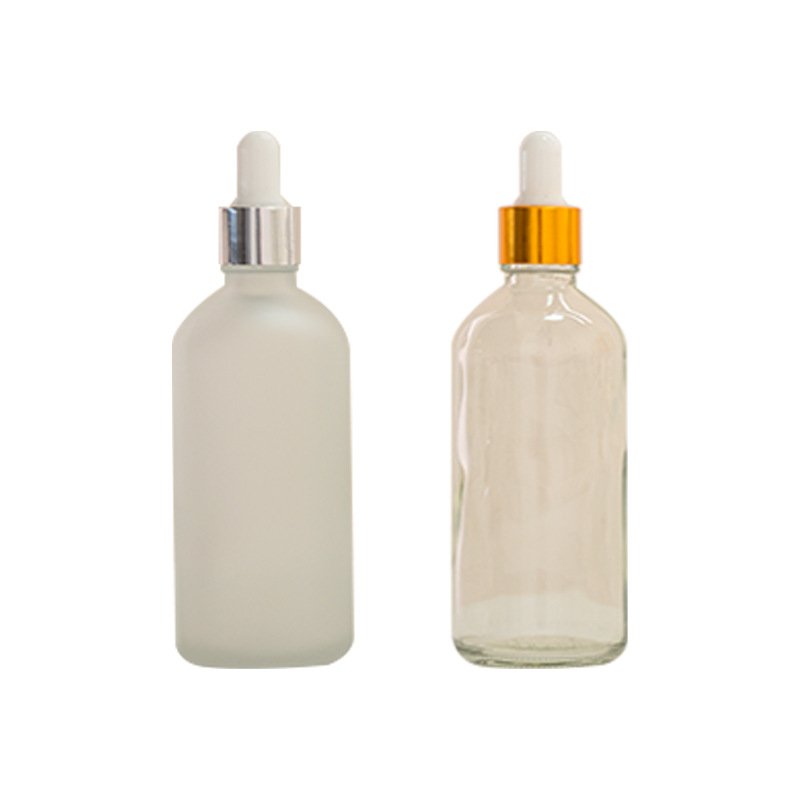
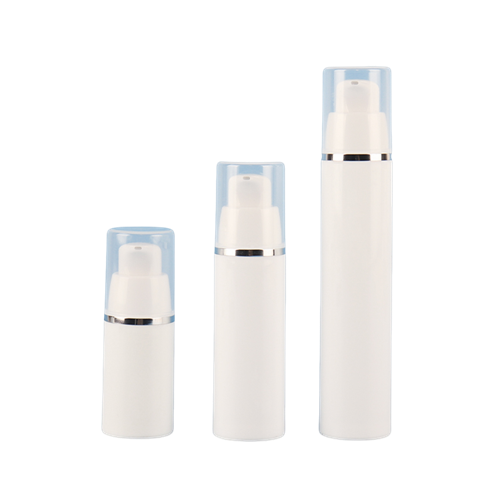
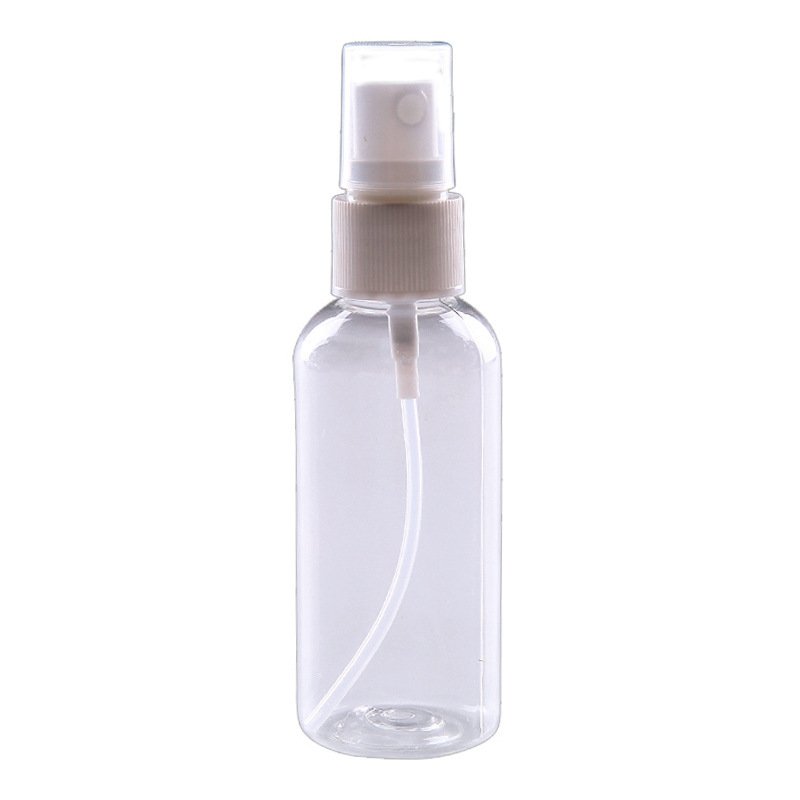
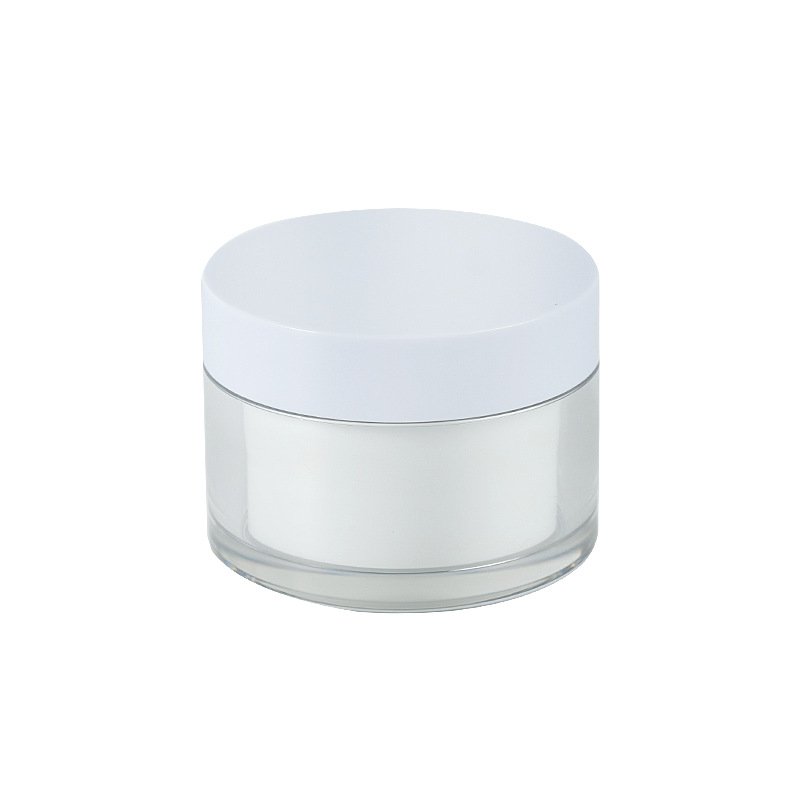
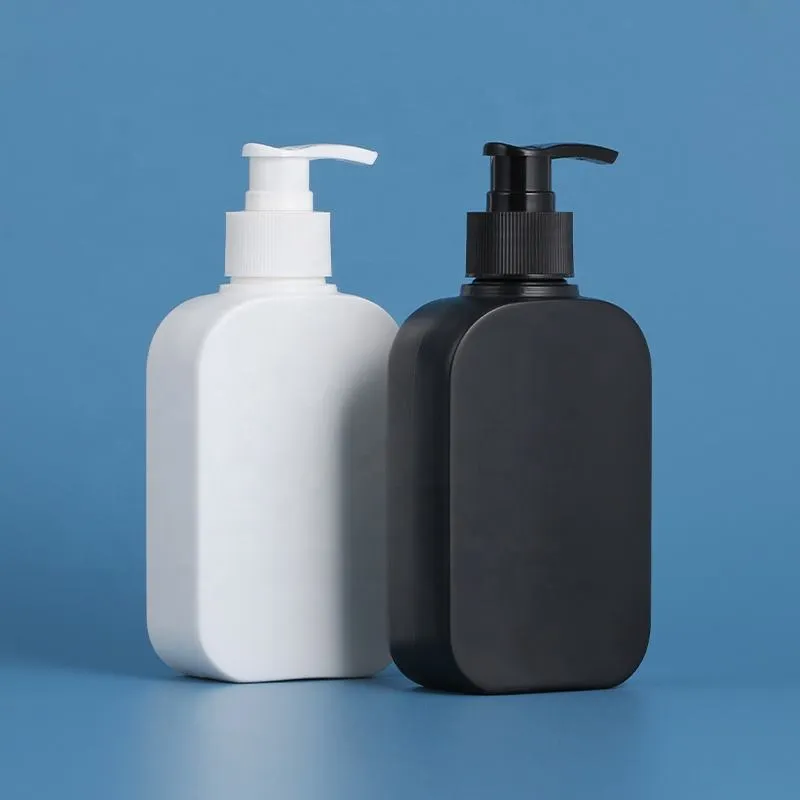
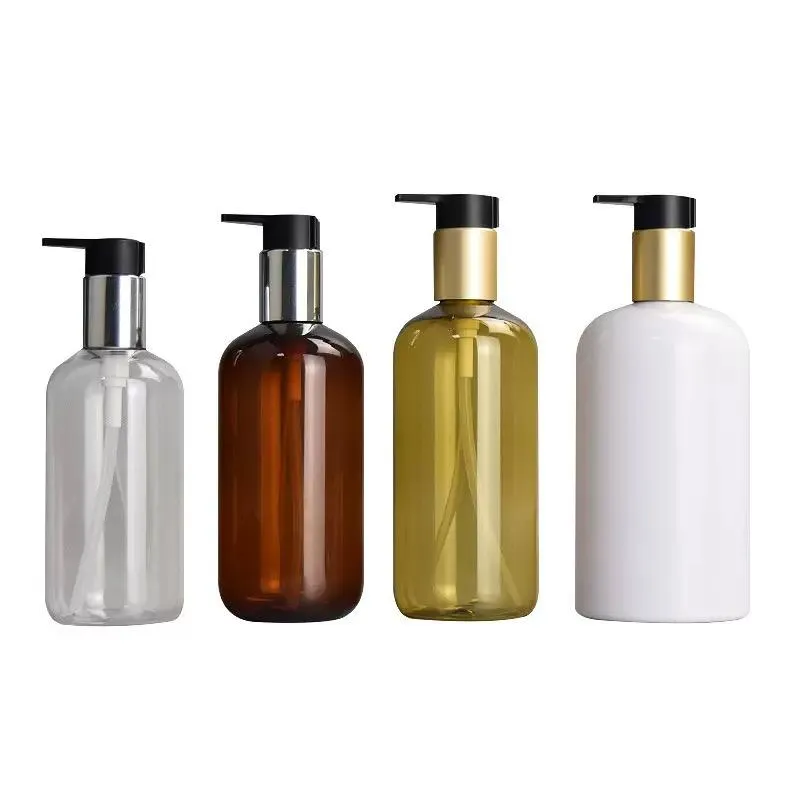
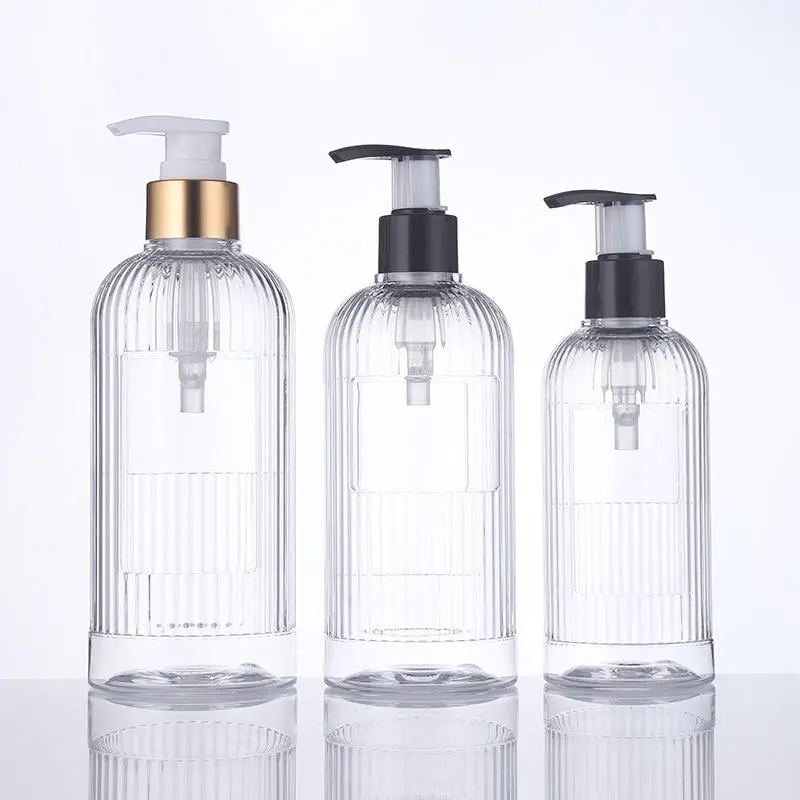
Direct answer: after a cosmetic packaging order is approved, a supplier should not change a product-contact resin, pump engine or gasket, manufacturing or assembly site, critical subcontractor, mould or cavity set, ink/coating system, or an approved specification without the review defined in the quality agreement. Most of those changes need prior written approval before implementation, not merely an email after production. The buyer should approve a change only after its effect on safety documentation, compatibility, sealing, dose, appearance, filling-line performance, distribution and traceability has been assessed with proportionate evidence.

What is a cosmetic packaging quality agreement?
A cosmetic packaging quality agreement is a controlled document that defines how a brand or filler and its packaging supplier will make quality decisions. It sits alongside—not in place of—the commercial supply agreement, purchase order, drawings, component specifications, approved samples and test protocols. Its practical purpose is to remove ambiguity when a material becomes unavailable, a sub-supplier changes, a defect is found, a process moves to another site, or the supplier proposes an “equivalent” part.
The document should answer four questions without a new negotiation every time:
- What is approved? Identify the exact component, revision, bill of materials, site, tool or cavity group, decoration route, specifications and representative approval samples.
- What counts as a change? Include changes hidden below the supplier’s sales item number: resin grade, additives, pump gasket, spring, assembler, outside decorator, tool repair, process window and test method.
- Who must do what before implementation? Separate notification from approval, name decision owners, and specify the evidence package and release gate.
- What happens if the rules are not followed? Define quarantine, traceability, deviation, investigation, disposition, corrective action and cost/remedy routes.
A purchase order that says “100 ml PET bottle with white pump” is not an adequate controlled baseline. PET identifies a polymer family, not the manufacturer, grade, additive package, recycled content, color masterbatch, moulding site or process. “White pump” says nothing about the pump engine, product-contact seals, spring position, dose, venting or dip tube. The quality agreement should make these hidden variables visible and connect them to revision-controlled technical documents.
A supplier can satisfy a notice requirement yet still lack permission to implement the change. The agreement should use different verbs: notify means provide information; submit for approval means wait for a documented decision; approve means the authorized buyer function releases a defined change for defined products, sites and effective lots.
Which supplier changes require reapproval?
There is no universal cosmetic regulation that places every packaging change into the same category. Build the categories around potential effect, not the supplier’s description of the change as “minor.” A practical three-tier system follows.
| Tier | Decision rule | Typical cosmetic-packaging examples | Supplier may implement? |
|---|---|---|---|
| 1 — prior written approval | Could affect product contact, identity, safety evidence, fit, sealing, dose, appearance, production capability, regulatory file, traceability or validated performance. | Resin manufacturer/grade/additives/PCR source; pump engine, gasket, liner, spring or valve; new manufacturing/assembly/decoration site; critical subcontractor; new mould/cavity or major repair; ink/coating/curing system; approved drawing or tolerance; primary pack-out that protects the component. | No. Wait for approval, agreed effective lot and controlled document update. |
| 2 — notify and assess before use | The supplier believes the approved product is unchanged, but evidence is needed to confirm that risk, traceability or supply conditions remain controlled. | Major preventive maintenance on a critical tool; equipment replacement using the same validated principle; legal-entity change with same site/process; revised test equipment or equivalent method; non-product-contact pack material change that may affect transport; warehouse move. | Only after the defined assessor closes the review or reclassifies it to Tier 1. |
| 3 — record / administrative notice | No plausible effect on the approved component, process, site, evidence, supply identity or service; agreement explicitly permits the route. | Quality contact or telephone update; formatting correction with no technical-content change; company display-name update with unchanged legal entity; internal document number change with an auditable cross-reference. | Yes, subject to the agreement’s record and notification rules. |
Use a conservative default: if the supplier cannot show that the change is outside product quality, safety, function and traceability, route it for assessment. This does not mean repeating every test for every change. It means an authorized person—not the supplier’s sales team alone—decides what evidence is sufficient.
A quick decision test
Ask whether the change could alter any of the following: composition of a product-contact component; dimensions or surface condition at a seal or thread; package barrier; pump output or spray; opening/closing force; decoration adhesion; fill-line settings or yield; traceability; safety or compliance documentation; distribution protection; or an approved visual standard. One credible “yes” is enough to open a formal change assessment.
If the supplier changes resin, what must be reapproved?
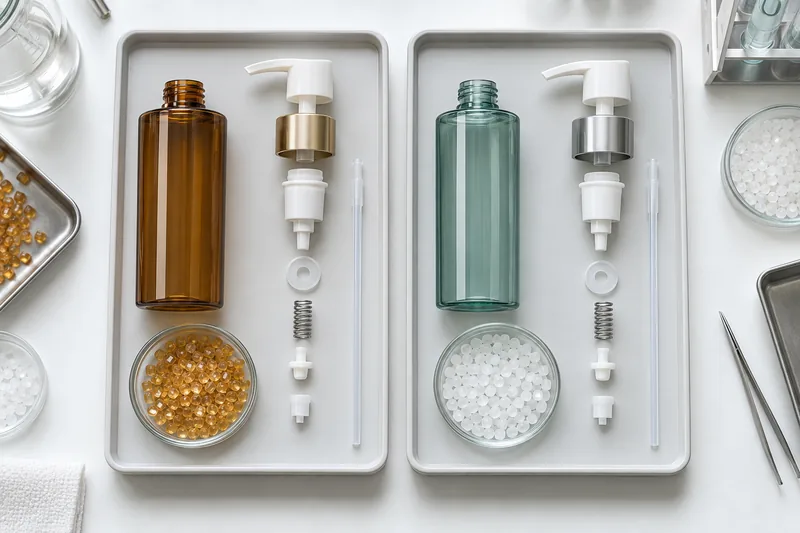
A change to a product-contact plastic should normally require prior written approval. “Still PET,” “same HDPE,” or “same specification” is not enough. Polymer family is only one layer. The resin producer, commercial grade, melt-flow or intrinsic-viscosity range where relevant, density, copolymer structure, additive package, processing aid, slip/antistatic agent, UV stabilizer, color masterbatch, regrind practice and post-consumer recycled content can affect performance.
Risks created by an apparently equivalent resin
- Compatibility and safety: additive or recycled-content profiles can alter extractables, odor, color, sorption or migration risk. Solvents, fragrance oils, surfactants and actives may interact differently with the new formulation of the plastic.
- Mechanical performance: environmental stress cracking, top-load strength, impact resistance, paneling, hinge life and thread damage can change even when nominal dimensions remain similar.
- Barrier and shelf life: moisture, oxygen or fragrance loss can shift with grade, crystallinity, wall distribution or process conditions.
- Appearance and decoration: haze, gloss, color, shrinkage, surface energy and ink/label adhesion can change. A masterbatch substitution can affect both shade and compatibility.
- Processing and dimensions: a grade that moulds differently can change neck dimensions, wall distribution, gate appearance, part weight and cavity-to-cavity variation.
The change request should identify old and new resin manufacturers and grades; formulation or declaration differences that the supplier is permitted to disclose; regulatory/contact statements relevant to the destination market; recycled content and source; material specification; technical data sheets; color/masterbatch; affected sites and tools; proposed processing changes; and comparative part data. Confidential composition can remain under controlled disclosure, but “proprietary” should not become “no evidence.”
Revalidation should follow the failure mechanism. It may include dimensions and weight, visual/color review, stress-crack or chemical-resistance screening, mechanical performance, sealing, decoration adhesion, barrier or weight-loss work, and a filled-product compatibility protocol with the final formula. PCR source or percentage changes deserve particular attention because feedstock, odor, color and variability can change even when the headline recycled-content claim is unchanged.
If the supplier changes the pump, cap or liner, what must be reapproved?
A pump change is usually a system change, not a cosmetic substitution. A pump consists of a collar, actuator, engine, piston, valve, ball, spring, seals, vent path and dip tube. The component contacting the formula may be hidden inside the assembly. A supplier can retain the same outer appearance and item number while changing an internal assembler or gasket source.
Prior approval should be triggered by a change in pump engine, output specification, product-contact polymer or elastomer, gasket/liner, spring material or location, valve/ball, venting, locking design, collar thread or crimp geometry, dip-tube material/diameter/length/cut, assembly site or critical sub-supplier. The same principle applies to cap liners, induction seals, wipers, droppers and airless pistons.
Evidence for a pump or closure change
- Old-versus-new controlled drawing, bill of materials and declared product-contact materials.
- Fit on the actual production bottle, using the approved neck-finish and closure interface specification, not only a nominal 24/410 or 28/410 callout.
- Applied/removal torque or crimp measurements and seal-compression evidence as applicable.
- Priming, dose per stroke, repeatability, actuation force, lock/unlock, dribble, clogging, venting, life-cycle and evacuation results with the actual formula.
- Inverted, side-storage and transport-oriented leakage evidence using a validated bottle leak-testing method.
- Filling-line trial data: feeding, insertion, capping/crimping, rejects, torque distribution, damage and camera-inspection performance.
An actuator color change using the same approved masterbatch route may need a narrower evaluation than an engine change, but it is not automatically record-only. Colorant can affect dimensions, shrinkage, surface appearance and chemical suitability. The agreement should distinguish purely decorative outer parts from product-contact and function-critical parts.
If the supplier changes the factory, processor, tooling or subcontractor
Moving production or a critical process to a different site should normally require prior approval. Ownership within the same corporate group does not prove equivalent control. Equipment, utilities, tooling maintenance, resin handling, drying, environmental conditions, operator training, inspection equipment, process windows, assembly fixtures, sampling and traceability may differ.
Site-transfer evidence
Request the receiving site’s legal name and address, scope of work, QMS and relevant audit evidence, process flow, critical equipment, tool-transfer plan, material-source confirmation, inspection methods, calibration status, operator training, traceability structure, trial report and capacity/continuity plan. The assessment may use a document review, remote audit or on-site audit according to risk; a certificate alone does not confirm that the exact component, line and subcontractor are controlled.
When the same mould moves, inspect it before and after transfer and compare parts by cavity. When a new mould, replacement insert, cavity addition or major repair is introduced, dimensional and functional evidence should be linked to the affected cavity identity. A golden sample does not reveal all cavity variation.
Outside decoration and processing
A new spray-coating, metallizing, anodizing, printing, label or assembly subcontractor can affect adhesion, cure, color, contamination, dimensions and lead time. Lock the processor, pretreatment, ink/coating family, cure method, approved color/appearance standard and test method where those attributes are critical. For a screen-printing change, compare pretreatment, ink system, mesh/artwork, registration, cure and adhesion using the product substrate; Boyu’s guide to screen-printing process and adhesion controls explains why nominally identical artwork can behave differently on glass, PET, PP and HDPE.
Pack-out changes also require risk classification. A new divider, bag, tray or carton may be non-product-contact, yet it can create abrasion, deformation, contamination or transit breakage. If the shipping configuration changes, connect the approval to the actual distribution route and a justified distribution and drop-test plan.

What should a cosmetic packaging quality agreement include?
Keep the agreement usable. The master quality agreement can define the operating rules, while controlled appendices hold product-specific specifications, approved sites, contacts, test plans and change classifications. That avoids rewriting legal-quality language every time a new SKU is added.
| Agreement section | What to define | Failure it prevents |
|---|---|---|
| Scope and parties | Legal entities, products, component families, services, sites and approved subcontractors. | The supplier applies controls to only one plant or one part of the order. |
| Document hierarchy | Which document wins if the agreement, PO, drawing, specification, approved sample or supplier procedure conflicts. | Two “final” requirements and approval by informal chat. |
| Approved baseline | Part/revision, BOM/materials, drawing, CTQs, color/decoration, golden sample, sites, tool/cavity set and pack-out. | A catalog name is treated as a complete specification. |
| Responsibilities | Who specifies, samples, tests, reviews, approves, releases, investigates, disposes and communicates urgently. | Procurement’s commercial acceptance is mistaken for quality approval. |
| Change control | Trigger list, categories, notice route, minimum content, prior-approval gate, emergency route, expiry and effective-lot control. | Silent substitutions or open-ended approvals. |
| Testing and release | Methods, sampling, CTQs, certificates/reports, deviations, retains, initial-lot controls and release authority. | Shipment before evidence is reviewed. |
| Nonconformance and CAPA | Containment, notification, investigation, concession/deviation, rework, disposition, corrective action and effectiveness check. | Sorting or rework without authorization or traceability. |
| Traceability and records | Supplier/material lots, site/line/tool/cavity, dates, inspection results, record access, retention and retained samples. | Inability to isolate affected stock after a complaint or change. |
| Audit and sub-tier control | Qualification, monitoring, audit access, critical-supplier approval and flow-down of change duties. | The direct supplier signs a rule its pump assembler or decorator never sees. |
| Continuity and exit | End-of-life notice, last-time buy, tooling ownership, record/sample transfer and continuity contacts. | Emergency substitution after an avoidable discontinuation. |
Model change-control language
Operational example—not legal advice:
“Supplier shall not implement any change identified in Appendix [X] as requiring prior approval—including changes to specified materials or sources, product-contact components, drawings, critical tolerances, manufacturing or assembly sites, critical subcontractors, tooling or cavities, decoration systems, test methods or protective pack-out—until Buyer’s authorized Quality representative gives written approval. A notification, sample receipt, quotation, purchase order, meeting note or absence of response is not approval. Each request shall identify the reason, affected parts/SKUs/lots, old and proposed conditions, risk assessment, supporting evidence, proposed effective date, inventory transition and implementation controls. Approval applies only to the stated scope and does not release Supplier from conformity obligations.”
Commercial matters—price changes, chargebacks, testing cost, replacement, delay remedies, liability and governing law—usually belong in the supply agreement or master contract. Cross-reference them so the quality team can contain and decide product without trying to interpret commercial penalties during an incident. Obtain legal review for enforceability in the relevant jurisdictions.
What must be in a supplier change request?
A one-line message—“material updated, no impact”—is not a change package. Require enough information to reproduce the supplier’s reasoning and trace the decision later.
- Identity: supplier change number, requester, date, legal manufacturer and actual sites.
- Scope: affected Boyu/customer part numbers, revisions, SKUs, markets, open POs, stock and planned first production lot.
- Reason: discontinuation, capacity, improvement, compliance, quality issue, cost, continuity or emergency.
- Before/after comparison: drawing, BOM, material, source, site, tool, equipment, process, method or pack-out differences.
- Risk assessment: effects on product contact, safety documentation, compatibility, function, appearance, process capability, filling line, transport, labeling and traceability.
- Evidence: declarations, certificates, dimensions, capability data, test reports, samples and deviations, with methods and acceptance criteria.
- Implementation plan: approval required by date, validation lead time, inventory disposition, separate item/revision, first-lot identification and clean cutover point.
- Supplier approvals: quality/engineering authorization and confirmation that sub-tier changes are included.
Do not approve vague scope. “All future orders” is unsafe when the evidence covers one bottle size, one formula and one decoration. The decision record should name what is approved, any restrictions, tests still continuing, the effective lot/date, enhanced inspection and the reviewer’s authority.
How to decide what needs revalidation
Use an invalidate-and-bridge assessment. First identify which previous conclusions depend on the changed variable. Then decide whether the old evidence remains fully relevant, can be bridged with focused comparison, or is invalid and must be repeated. This avoids two opposite errors: restarting the entire development program for an administrative change, or accepting a product-contact substitution because the finished pack looks unchanged.
| Proposed change | Evidence commonly affected | Focused revalidation examples |
|---|---|---|
| Resin grade/source/additive/PCR | Compatibility, migration assessment, barrier, stress cracking, color, dimensions, decoration and mechanical results. | Material/document gap, production-tool samples, dimensions/weight/color, compatibility, formula-specific chemical or barrier work where risk indicates, mechanical and decoration checks. |
| Pump engine/gasket/valve/spring | Product contact, dose, priming, force, leak, life-cycle, corrosion and formula compatibility. | BOM/material gap, dose distribution, prime/reprime, actuation, life-cycle, inverted leak, compatibility, line trial and evacuation. |
| Cap/liner or neck interface | Seal, torque, opening, induction seal, stress and transit leakage. | Critical dimensions, application/removal torque, seal/liner compression, leak, thermal/transport conditioning and line setup. |
| Manufacturing site or major equipment | Process capability, traceability, dimensions, defects, cleanliness and lot consistency. | Site/process assessment, tool-transfer data, representative trial lots, cavity data, CTQ capability, line trial and enhanced initial-lot inspection. |
| Ink, coating or decorator | Appearance, adhesion, rub/chemical resistance, cure, contamination and compatibility. | Color/visual standard, adhesion, rub, formula/contact exposure, cure confirmation, dimensional/function check if coating affects fit. |
| Divider/carton/pallet configuration | Abrasion, deformation, breakage, contamination and distribution performance. | Pack-out inspection, compression/vibration/drop sequence matched to route, post-test leak/function/appearance review. |
Build the exact program from risk, formula, package, markets and distribution—not from a generic table alone. Boyu’s broader cosmetic bottle test plan can help identify affected test families. Define methods and acceptance criteria before samples are measured. Supplier data can support the decision, but the brand, responsible person or other designated owner retains its own safety and release responsibilities.

How many lots and samples?
There is no universal rule that every packaging change needs three lots, 32 samples or a fixed AQL. Choose enough lots, cavities, dates and samples to address variability and the seriousness of failure. A new cavity set may require cavity-level dimensional evidence; a high-output pump change may require a distribution of dose results; a destructive test requires additional units. If lot acceptance uses ISO 2859-1, specify the edition, inspection level, AQL values, defect classes and switching rules. An AQL plan estimates lot quality from a sample; it does not validate design, compatibility or process capability.
What to do if the supplier changed something without approval
Do not retroactively approve the change merely because the goods are late, visually acceptable or already at the warehouse. Treat the event as both a product decision and a supplier-system failure.
- Stop and contain. Quarantine affected components, finished goods and work in process. Prevent shipment or further use until disposition is authorized.
- Trace the boundary. Identify the first changed supplier lot, dates, sites, tools/cavities, sub-supplier lots, purchase orders, customers/SKUs and stock locations. Do not assume the declaration date equals the true start date.
- Preserve evidence. Retain changed and pre-change samples, labels, certificates, messages, production records and inspection data.
- Open a deviation/nonconformance. Record what happened, why prior notification failed and whether the approved baseline or contract was breached.
- Assess risk. Involve packaging engineering, quality, formulation/safety, regulatory, operations and procurement. Decide which prior evidence is invalidated.
- Test before disposition. Use focused comparative and filled-product work. Passing incoming inspection does not prove compatibility or life-cycle performance.
- Decide stock disposition. Release, conditional release, rework, sort, return or reject under named authority. If product has shipped, assess market action and complaint/recall implications with qualified personnel.
- Correct the system. Require root cause and CAPA covering the supplier’s change process and sub-tier flow-down, not only a promise to communicate better.
- Review supplier status. Consider enhanced inspection, audit, probation, alternate-source development or disqualification according to severity and recurrence.
The commercial agreement should say who bears reasonable testing, sorting, replacement, delay and recall-support costs when the supplier bypasses an agreed approval gate. The quality team should still make disposition based on evidence, not on who is paying.
Cosmetic packaging change-approval checklist
Before review
- Change ID, reason, owner, affected parts/SKUs/markets/open orders and proposed date are complete.
- Old and new legal manufacturers, sites, sub-suppliers, materials, revisions, tools/cavities and processes are identified.
- Approved inventory, work in process and cutover strategy are known.
- No production or shipment will proceed where prior approval is required.
Technical assessment
- Documented risk assessment covers safety, compatibility, sealing, dose/function, appearance, line performance, transport, regulatory documentation and traceability.
- Previous evidence is marked valid, bridgeable or invalid for each affected conclusion.
- Test methods, sample matrix and acceptance criteria were approved before results were reviewed.
- Samples are production-representative and traceable to material, site, tool/cavity and date.
- All failed results and deviations are resolved or explicitly dispositioned.
Approval and implementation
- Authorized quality, engineering, operations, product-safety/regulatory and procurement functions approve as required by the RACI.
- Decision states exact scope, restrictions, effective lot/date and whether old/new conditions may be mixed.
- Drawings, BOM, specifications, approved samples, inspection plans, line settings and regulatory/safety records are updated.
- First changed shipments are visibly and electronically identified; receiving knows the clean-point lot.
- Enhanced initial-lot checks, complaint monitoring and effectiveness review are defined.
Regulatory and standards context: what is mandatory and what is a model?
For ordinary cosmetics, do not copy pharmaceutical language and call it law. Use each source for what it actually supports.
- ISO 22716:2007 remains current and provides guidance for cosmetic production, control, storage and shipment. It supports disciplined GMP operations, but it does not provide a universal resin/pump change-approval table.
- ISO 9001:2026 is the current general quality-management-system standard. Its framework is useful for controlled operations, documented information, performance evaluation and improvement. Certification does not approve a specific bottle, pump or change.
- US cosmetics: FDA’s MoCRA page states that the responsible person must ensure and maintain records supporting adequate safety substantiation and that supporting data should use scientifically robust methods. FDA’s cosmetic GMP inspection checklist addresses control records for raw materials and primary packaging. Neither source prescribes one universal packaging revalidation schedule.
- EU cosmetics: Regulation (EC) No 1223/2009 requires a Cosmetic Product Safety Report. Annex I includes relevant characteristics of packaging material, particularly purity and stability; the Commission’s Annex I guidance discusses packaging/formula interaction, barrier properties and migration. A material change may therefore require the responsible person and safety assessor to consider whether the safety documentation remains adequate.
- Pharmaceutical models: FDA’s drug quality-agreement guidance and ICH Q9/Q10 offer mature concepts for clear responsibilities, risk management, outsourced activity and change management. They can inspire a cosmetic quality system, but they are not presented here as mandatory rules for ordinary cosmetics.
Destination-market rules and product classification matter. A sunscreen, anti-dandruff product, acne treatment or other cosmetic-drug/OTC category can trigger additional requirements. Obtain qualified regulatory and legal advice for the actual product and market.
Frequently asked questions
How much advance notice should the supplier give?
There is no universal cosmetic-industry number. Negotiate a minimum notice period that matches procurement and validation lead time, then add a stronger rule: no Tier 1 change may be implemented until written approval, even if the calendar period has expired. Discontinuations or emergencies need an escalation route, affected-stock disclosure and a documented temporary-deviation decision—not silent substitution.
Does a change from virgin resin to PCR require approval?
Yes, normally. PCR percentage, source, decontamination route, additive profile, odor, color, variability and relevant declarations may affect safety assessment, compatibility, appearance and process capability. Approve a defined PCR specification and source route; do not approve the broad phrase “recycled plastic.”
Can the supplier use a different pump assembler if the pump code stays the same?
Only after the route defined in the agreement. Confirm whether the engine, seals, valves, spring, assembly fixtures, inspection and traceability remain equivalent. A sales code can hide a changed sub-tier source. Treat the assembler change as prior approval when it can affect function or product contact.
Does buyer incoming inspection transfer quality responsibility?
No. Incoming inspection is a buyer control, not permission for the supplier to ship nonconforming or unapproved product. Sampling also cannot detect every hidden material or process change. The agreement should state that acceptance, inspection or payment does not waive the supplier’s conformity and change-notification obligations.
Can a supplier’s ISO certificate replace an audit or change package?
No. A valid certificate can be one input to qualification. It does not prove that a particular material, tool, line, subcontractor or change is suitable for your formula and packaging. Set audit depth and evidence according to product and supplier risk.
Should the quality agreement be signed before or after the first order?
Before the supplier begins production is best. The approved baseline, release criteria, change duties and nonconformance route should be agreed while both parties still have time to clarify them. If an order is already open, issue an interim written quality plan for that PO while the complete agreement is finalized.
Final takeaway
The safest rule is not “nothing may ever change.” It is “nothing that can affect the approved product or its evidence changes invisibly.” Lock the true baseline, classify changes by potential effect, require the right evidence before implementation, control the old-to-new transition and retain a decision record that another qualified person can understand later.
When you source packaging, ask the supplier to identify the real resin, pump engine, product-contact parts, manufacturing and assembly sites, critical processors, tools/cavities and change-notification process before the PO. If you need a packaging specification or risk review, send Boyu the approved packaging baseline, target formula category, markets, line conditions and change scenario. The final approval should remain with your authorized quality and product-safety team.
Need a supplier-change evidence package?
Boyu Packaging can help organize component drawings, production-intent samples, material declarations and packaging test inputs for a buyer-led approval program. Compatibility, safety and release decisions must be made against your actual formula, market and quality system.
Sources
Primary and authoritative references consulted. Accessed 2 October 2026.
- ISO — ISO 22716:2007, Cosmetics — Good Manufacturing Practices
- ISO — ISO 9001:2026, Quality management systems — Requirements
- ISO 9001 Auditing Practices Group — Auditing External Providers
- ISO — ISO 2859-1:2026, Sampling procedures for inspection by attributes
- US FDA — Modernization of Cosmetics Regulation Act of 2022 (MoCRA)
- US FDA — Cosmetic GMP Guidelines / Inspection Checklist
- EUR-Lex — Regulation (EC) No 1223/2009 on cosmetic products
- European Commission — Guidelines on Annex I to Regulation (EC) No 1223/2009
- US FDA — Contract Manufacturing Arrangements for Drugs: Quality Agreements (quality-system model; drug scope)
- ICH — Q9(R1) Quality Risk Management (pharmaceutical model)
- ICH — Q10 Pharmaceutical Quality System (pharmaceutical model)
- ASTM International — ASTM D5276, Drop Test of Loaded Containers by Free Fall


 English
  Español de Argentina
  Русский
  Italiano
  日本語
日本語  한국어
한국어  العربية
  Français
  Deutsch