Create a distinctive moisturizer, night-cream or treatment range with matched jars, inner cups, lids and accessories. Compare glass and plastic, compact travel formats and premium retail sizes, then qualify fill, closure and decoration for your actual cream.
Start with Boyu’s cream jar designs and approve the complete package to strengthen your brand image and everyday user experience.
Planning reference: 10,000 pieces per custom design · custom colors and logo · stock-model selection or tooling review · capacity, contact materials, dimensions and grams confirmed by model.
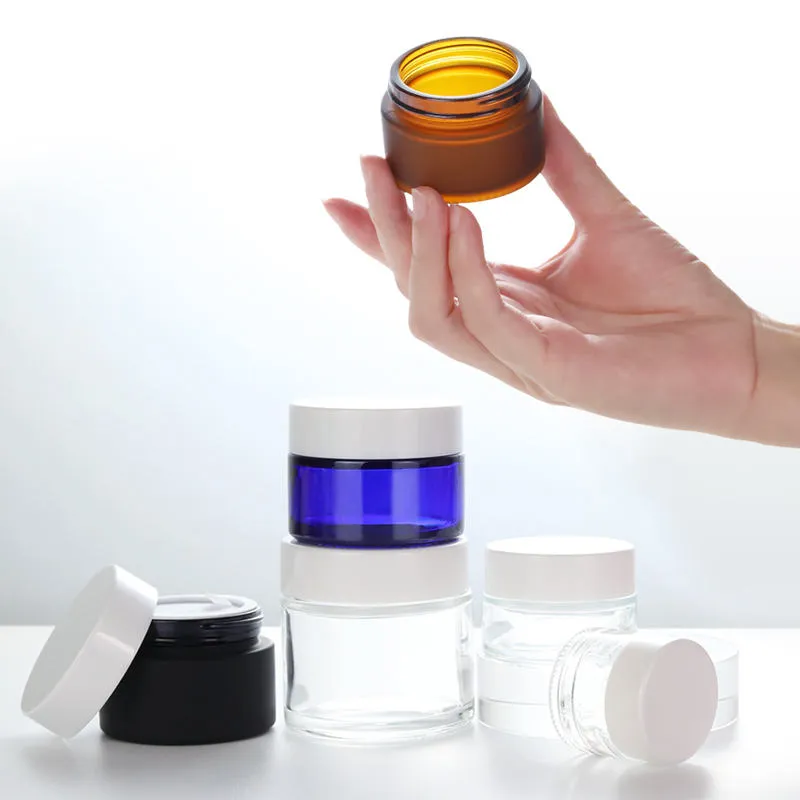
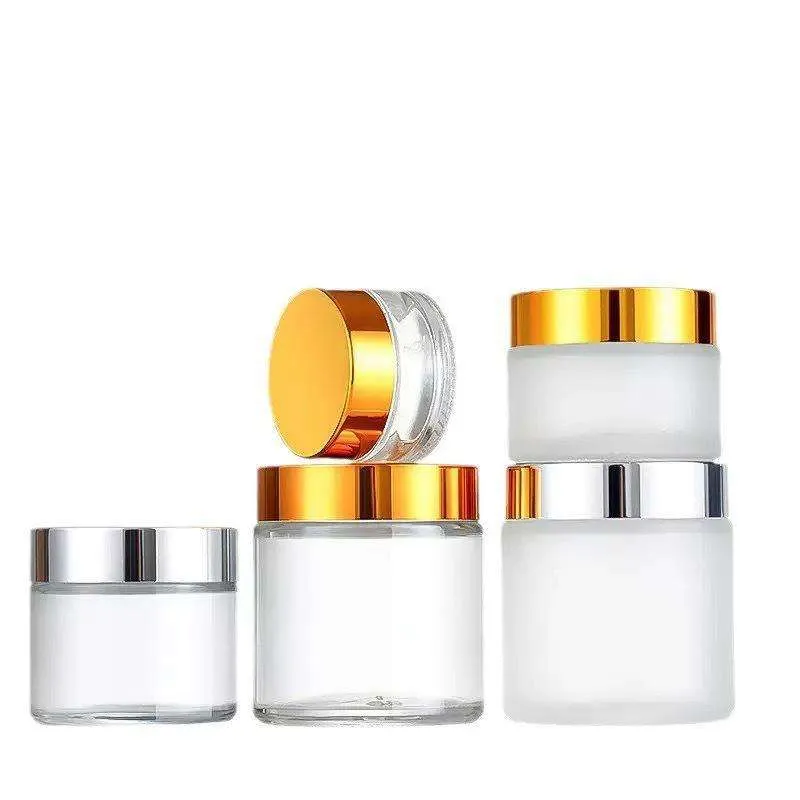
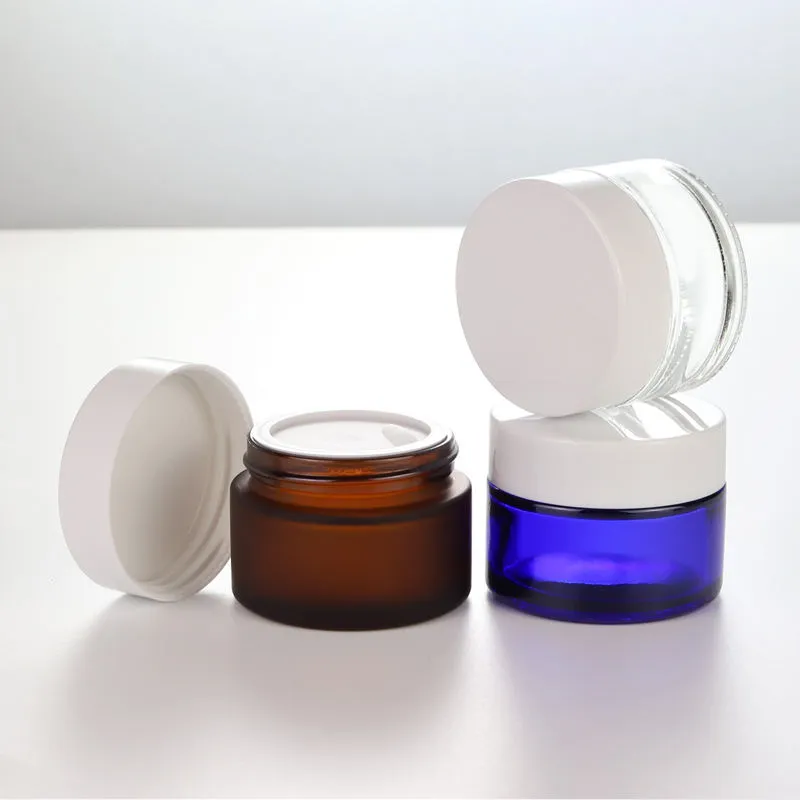
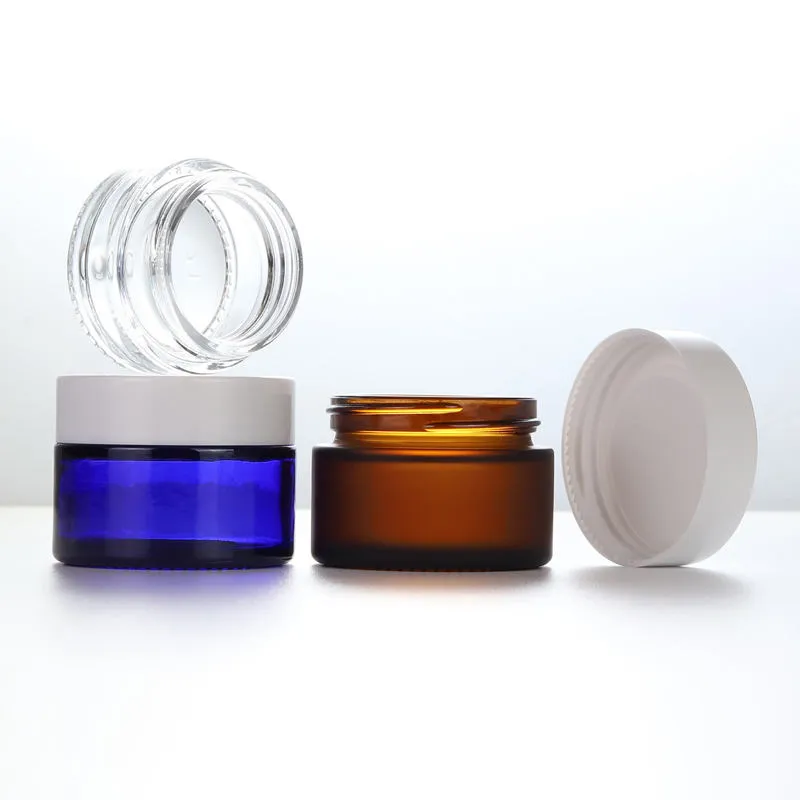
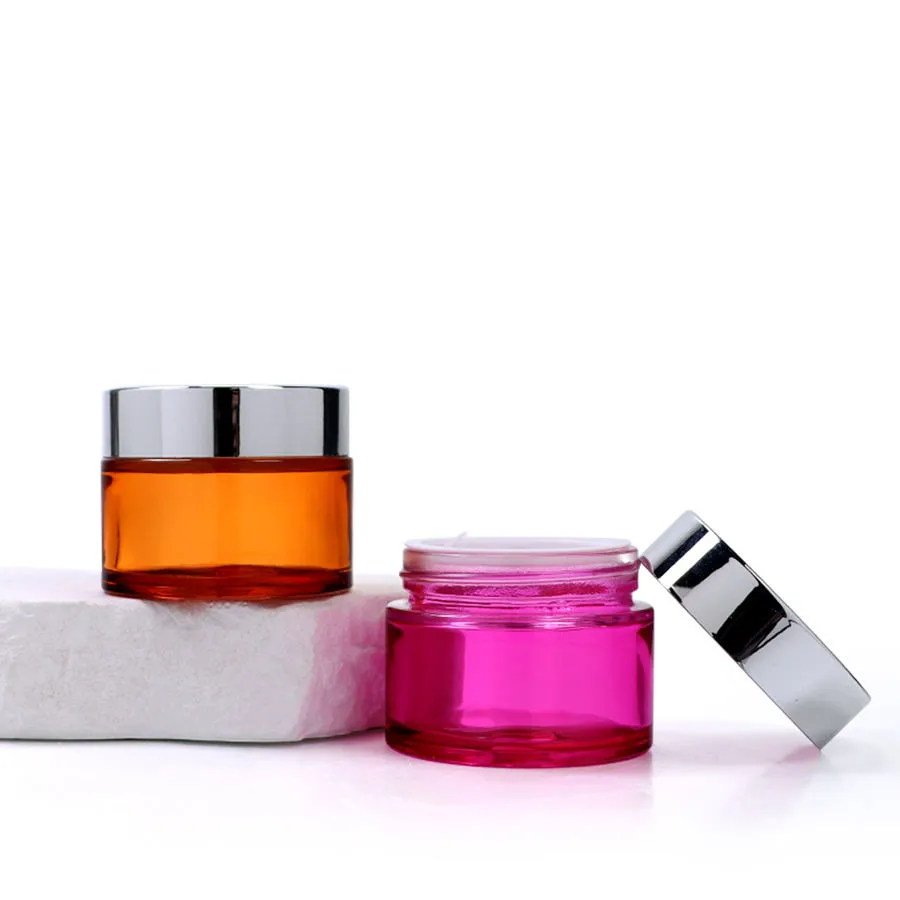
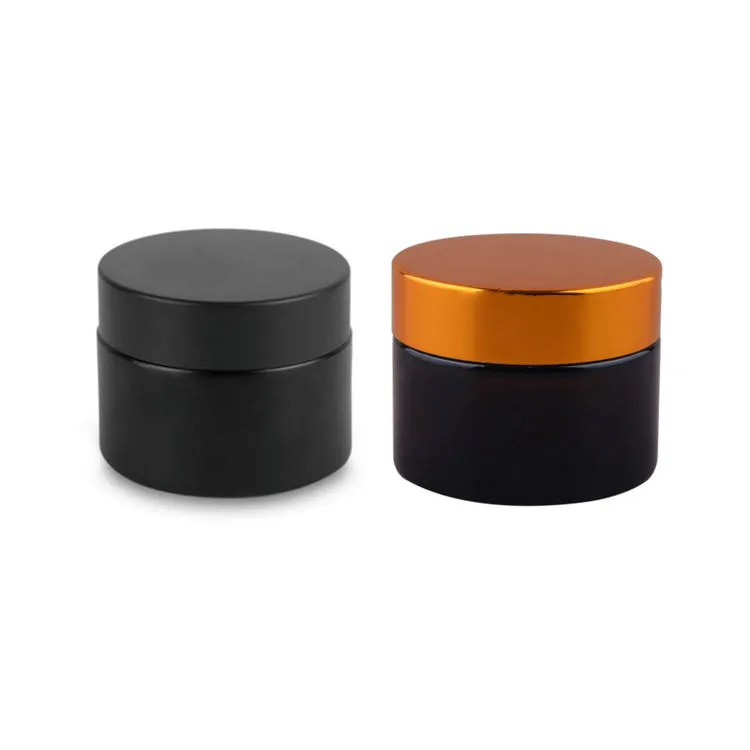
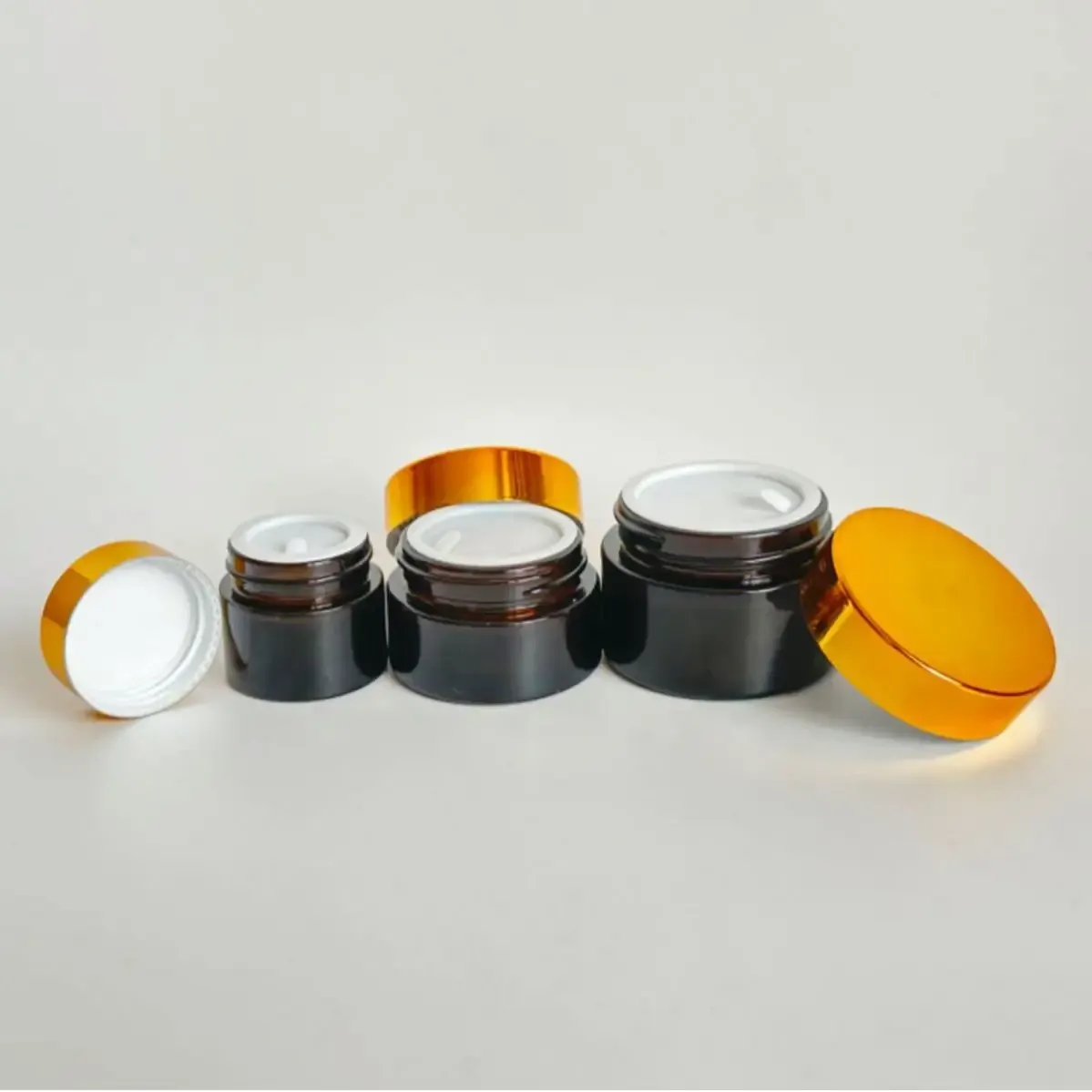
Glass skincare jar family reference. Select a capacity and approve the exact lid, liner/disc and filled cream configuration.
Choose a Face Cream Jar Around the Formula, Fill and Daily Routine
A face cream jar combines presentation with direct access to the product. The contact chamber, opening, inner shape, lid and sealing system determine whether that experience works in daily use and distribution. Start with the cream and filling process, then coordinate the material, components and finish to elevate your brand image.
Core retail moisturizer
Compare 30ml and 50ml designs with a practical opening, accessible inner bowl and secure lid. Confirm the actual fill mass and headspace rather than matching a catalog size by name alone.
Premium cream or richer balm
Glass or a double-wall pack can create a substantial presentation. Qualify the actual product-contact chamber, lid seal, decoration and recovery of cream near the base.
Travel and discovery collection
Compare 5–15ml samples and 15–30ml travel formats. Review assembled height, diameter, empty grams and protective packing; also compare a qualified cream tube for compact carry.
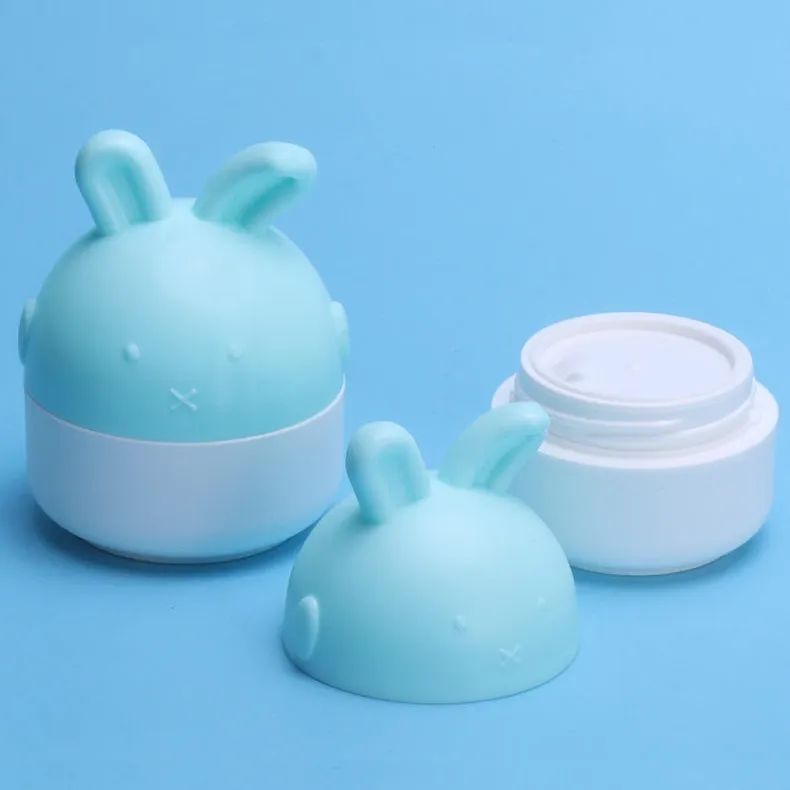
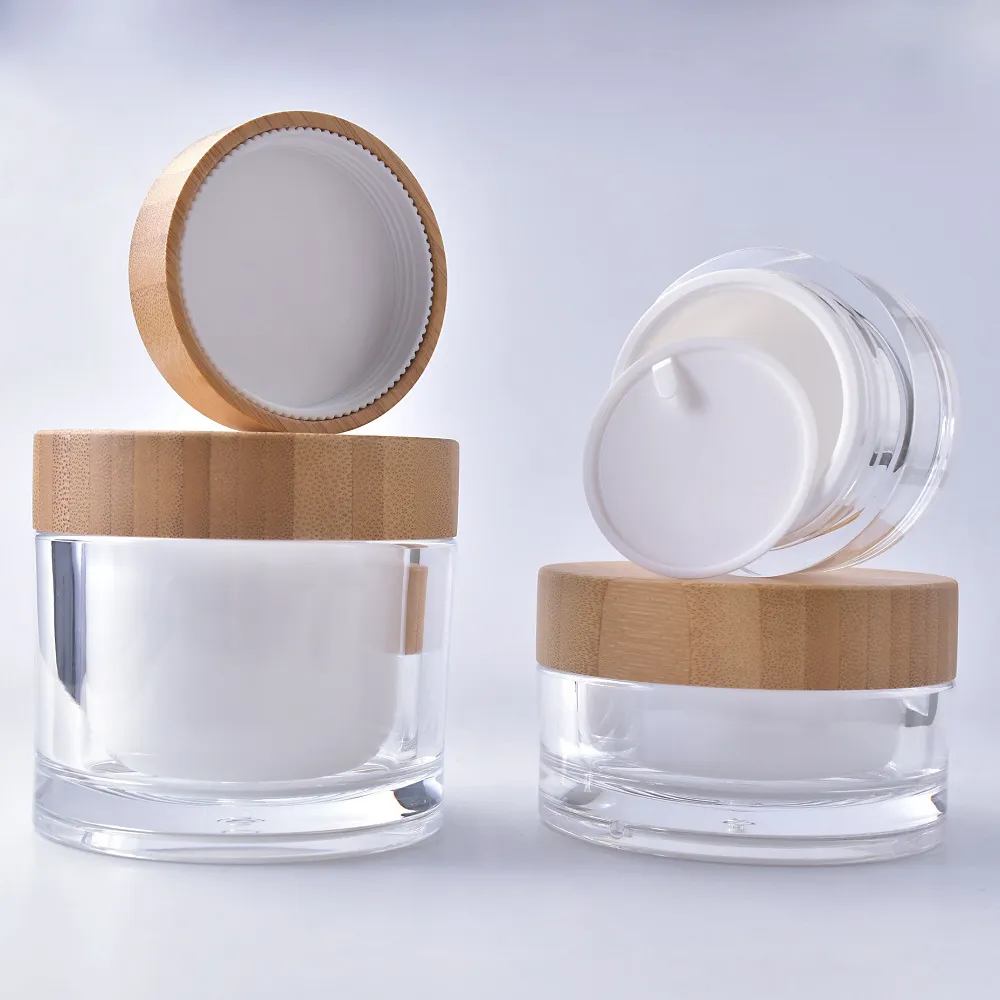
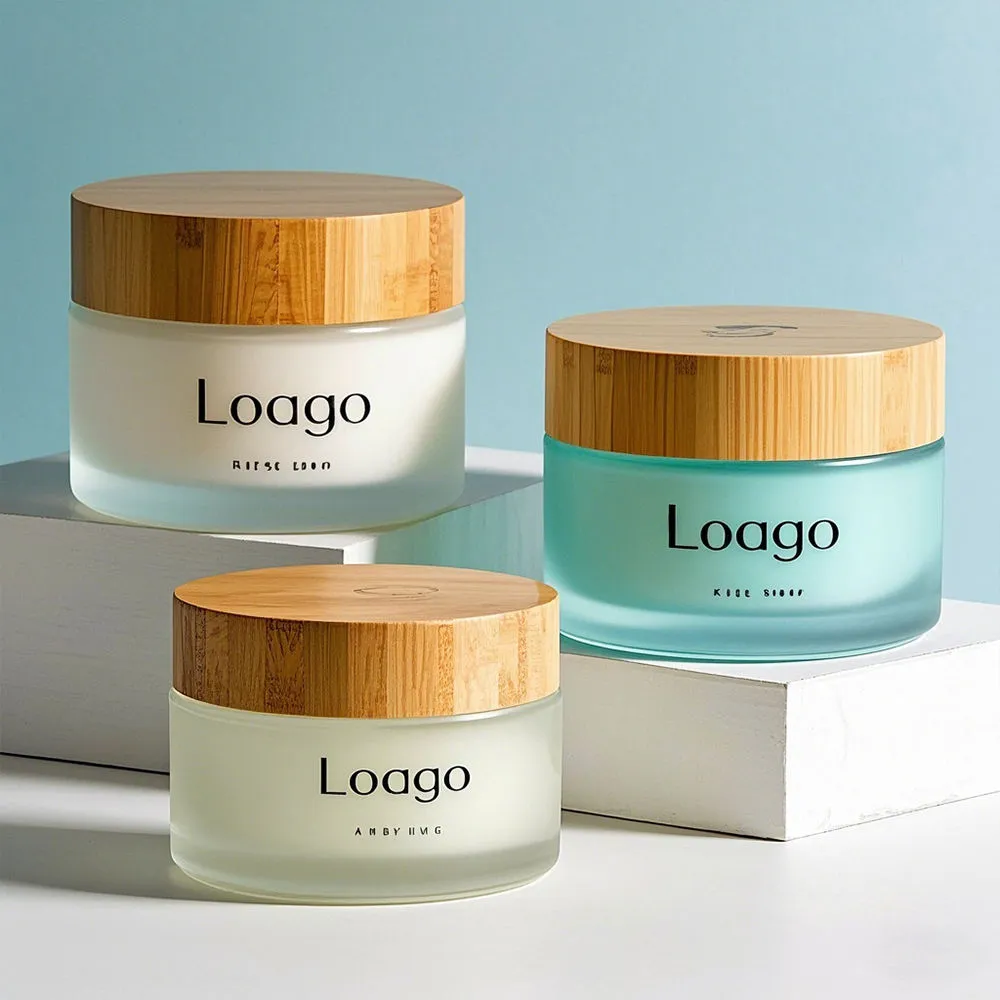
The gallery focuses on cream and airless jar designs. Two additional photographs show other views of selected models, as labeled. Catalog titles identify existing products; formula suitability, exact contact materials and final fill are approved for the selected model.
Main Face Cream Jar Structures: Benefits and Limitations
Structure
Benefits and suitable brief
Tradeoffs / approval
Single-wall glass jar
Substantial hand feel, broad decoration options and direct contact with the approved glass chamber.
Breakable and comparatively heavy; inspect mouth quality, stress, closure matching and export protection.
Single-wall plastic jar
A comparatively simple, light pack for everyday, sample or travel ranges.
Actual barrier, heat behavior and compatibility depend on resin, geometry and formula. Approve the complete lid/liner fit.
Double-wall jar with fixed inner cup
Separates the visual shell from the product chamber; supports a deeper, premium appearance.
More components, assembly fit and mass. Outer size does not equal usable volume; fixed inner cups are not automatically replaceable.
Refillable jar with removable cup
Can retain a durable outer pack while replacing a purpose-designed inner cup.
Needs engineered cup retention, sealing, replacement instructions and cycle testing. A removable-looking insert is not proof of a consumer refill system.
Airless dispensing jar
A purpose-designed pump/plate and enclosed chamber can reduce direct finger access to the remaining cream.
Qualify mechanism, dose, priming, evacuation and viscosity limits. It is not inherently sterile or oxidation-proof.
Hinged or flip-top jar with spatula storage
Convenient access and integrated accessory storage on selected designs.
Hinge, latch, holder and sealing interface need separate verification. A spoon or magnet must not compromise closure seating.
Common Capacities and Their Purchasing Implications
Nominal volume
Typical use brief
Advantages and limitations
3–5ml
Discovery, promotional or short-use trial.
Small fill and kit footprint; limited labeling space and a high component-to-fill ratio. Confirm an available jar and practical pickup.
10–15ml
Sample, travel mini or targeted cream.
Compact and suitable for coordinated trial ranges; less formula per pack, small opening and accessory fit need checking.
20–30ml
Travel retail, treatment cream or premium smaller moisturizer.
Balances portability and branding space. Compare opening access and recovery instead of choosing only the smallest outer dimensions.
50ml
A useful first comparison for daily face moisturizer or night cream.
Familiar retail format and useful artwork area; complete weight and shelf footprint vary substantially between single- and double-wall designs.
60–75ml
Larger face-care or intensive-use program where suitable models exist.
Adds formula without moving straight to a large jar; confirm model availability, in-use period and filling-line fit.
100ml
High-use face cream, sleeping mask or coordinated face/body collection.
More product and branding space; larger opening/pack can be less convenient for travel and needs a justified in-use assessment.
150–200ml and larger
Body cream, mask or professional range extension.
Useful where frequent or broad-area application justifies the fill; do not assume it is the best size for a face moisturizer.
ml and g are different: fill volume in ml = target cream mass in g ÷ measured density in g/ml. As an illustrative calculation, 50g of a cream with density 0.90g/ml occupies about 55.6ml before allowing for headspace and closure intrusion. This is a calculation example, not a capacity promise for a 50ml jar.
What Dimensions and Empty Weight Should You Specify?
For a new face-care line, compare 30ml and 50ml at full retail size and 10–15ml for a compact companion. A low-profile, wider bowl can improve access, while a taller design may offer a different shelf footprint or artwork area. Judge these tradeoffs with the actual hand sample and cream.
Specification
What the drawing/sample should define
Why it matters
Maximum external diameter / width
Body, lid, decorative ring and any protruding hinge/holder.
Determines grip, shelf footprint, travel pouch and retail carton fit. Lid width can exceed body width.
Closed overall height
Measure the complete seated lid with all specified cup, disc and liner components.
A body-only height cannot approve carton height or filler handling.
Mouth opening and inner depth
Clear opening diameter, bowl depth, base radius and pickup access.
Deep corners can trap product; a spatula must reach without scraping sharp edges or forcing the cup.
Jar-only empty grams
Define the body mass and whether a fixed inner cup is included.
A heavy base or shell changes hand feel and freight, but does not establish adequate wall distribution or strength.
Complete empty-pack grams
Add inner cup, lid/insert, seal/disc and included spatula as specified.
Use this value for filled carry weight. Keep component net mass separate from carton gross weight.
Wall/base/cup thickness
Set measurement locations and appropriate minimums for the selected material and geometry.
A nominal average thickness cannot control a thin heel, warped seal rim or a locally thick molding feature.
Neck and lid interface
Complete thread or snap drawing, seating heights, sealing land and relevant tolerances.
Nominal neck diameter alone does not prove matching, sealing or interchangeability.
Filled package and secondary packing
Approved fill height, closed pack, insert/carton and packed dimensions.
Compare home/travel options using the finished assembly rather than capacity alone.
Exact millimeters, grams, wall thickness and assembly tolerances are confirmed from the selected mold drawing and approved physical sample. Shipping-package figures cannot be used as the net weight or dimensions of one jar.
Glass, PP, PET/PETG and Acrylic: Material Comparison
Material / location
Advantages
Limitations and approval
Glass contact jar
Low body permeability, substantial feel and broad decoration possibilities for premium creams.
Breakable and comparatively heavy. Confirm glass composition, finish defects, stress, closure seal and cream compatibility. Color/coating does not automatically prove light protection.
PP contact jar or inner cup
A practical light-weight option with moldable cup/lid features and coordinated colors.
Grade, geometry and formula influence compatibility, barrier and heat behavior. It is not automatically suitable for every active, oil or hot-fill process.
PET / PETG jar, where specified
Clarity and lighter handling can suit selected retail or travel concepts.
Confirm the actual resin and manufacturing route. Stress cracking, filling temperature and formula exposure require qualification; PET and PETG are not interchangeable grades.
PMMA/acrylic outer shell
Clear visual depth, rigid styling and decorative premium presentation in selected double-wall designs.
Often paired with a separate contact cup. Identify the cup material; avoid assuming the outer acrylic is qualified for bulk cream contact or that it tolerates all oils/alcohols.
ABS / AS / other decorative shell or lid
Can provide molded styling, metallic-looking finishes or specific mechanical features.
Specify the exact resin and contact role. Similar appearance cannot identify material; coating, stress and cream drips still need testing.
PCR-containing option, when eligible
May support a project-specific recycled-content brief for qualified components.
Confirm component-specific percentage, sourcing documents, appearance variation and contact/performance qualification. An outer shell claim does not establish recycled content for every part.
Approve the product-contact map separately from exterior appearance. A glass-look or acrylic-look jar may have a different contact chamber inside. Mixed materials, labels, coatings and accessories also affect collection and recycling; do not make a universal recyclability claim from one resin name.
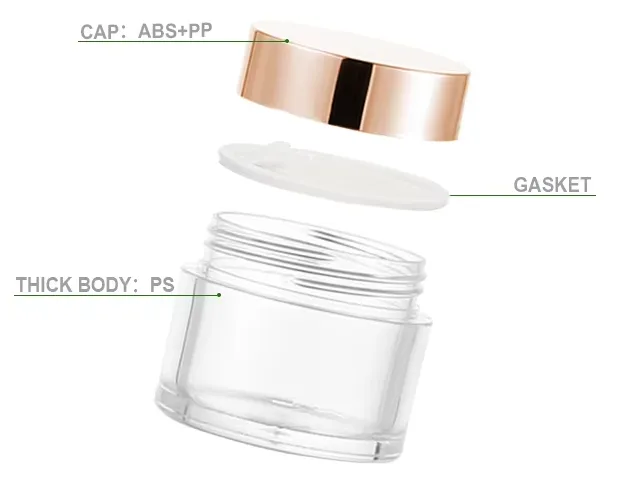
Inner Cup, Inner Disc, Gasket and Seal: Four Different Parts
Part
Main job
Questions to approve
Inner cup / product chamber
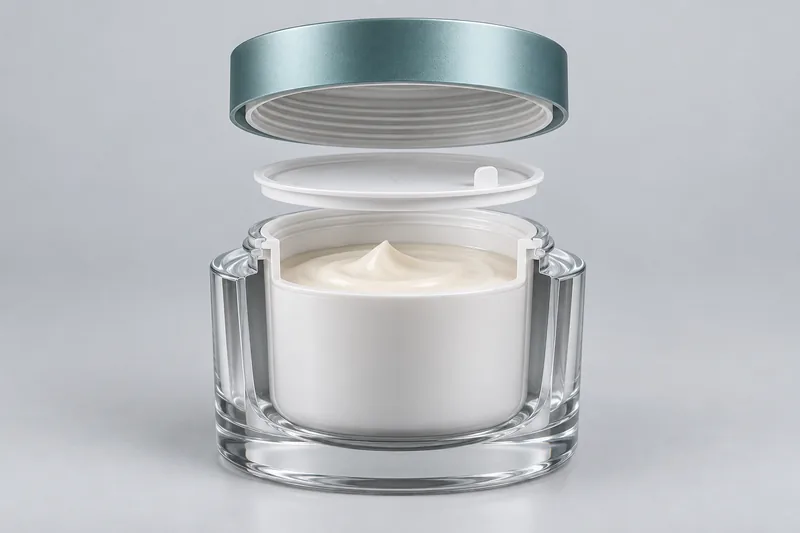
Holds the bulk cream; may be fixed in the outer jar or purpose-designed as a refill.
What resin or glass contacts the formula? What are usable volume, wall distribution, rim flatness and cup retention?
Removable inner disc / shive
Covers the opening, limits direct mess on the outer lid and can form part of some closure systems.
Is it only a cover or an engineered seal? Can it be lifted easily and reseated without folding or disturbing the cream?
Cap liner / gasket
Seals at a designed contact interface under controlled compression.
What material and thickness are used, how is it retained, and will formula exposure or aging change compression/fit?
Bonded membrane / foil seal, if specified
Can provide an initial closure barrier and tamper evidence when engineered for the jar and filler.
Which heat/induction/bonding process, compatible rim and liner structure are required? What happens to sealing after opening?
Outer lid and thread insert
Protects and closes the package; provides grip and transfers tightening force.
What components carry thread load and compress the seal? Are decorative shells retained without slipping?
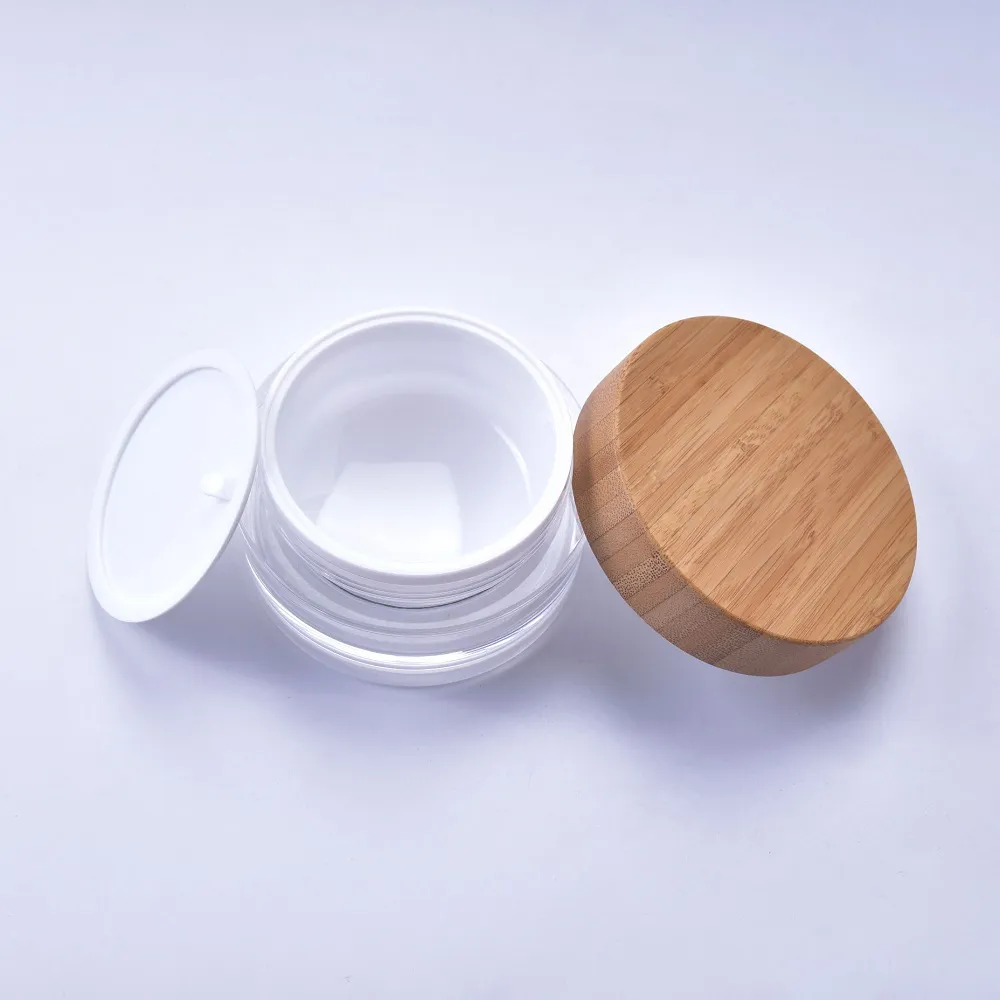
Component illustration: outer size, usable cup volume and sealing function must be specified separately.
Do not stack extra liners or discs to repair a poor fit without engineering review. Added thickness can prevent correct thread engagement or deform the cup rim.
Lid Options: Appearance, Handling and Sealing
Lid design / material
Useful advantages
Limitations / checks
PP screw lid
Light, moldable grip and color options; comparatively simple matching with a qualified jar.
Check engagement, warpage, liner seating, retained/removal torque and repeated use.
Metal or aluminum shell over a functional insert
Metallic feel and finish for premium presentation.
Confirm the actual thread/sealing insert, shell retention and resistance to dents, corrosion and cream drips. A shell alone is not the liquid seal.
Acrylic / ABS decorative lid
Can coordinate with a double-wall outer jar or shaped cap silhouette.
Separate appearance from functional insert specification; inspect cracking, shell slip, finish wear and assembly gaps.
Wood / bamboo outer lid
Natural texture and a distinct tactile appearance in compatible designs.
Specify inner thread insert, seal and finish. Review moisture movement, grain/color variation and adhesive/attachment; natural material does not guarantee an environmentally preferable complete pack.
Hinged / flip-top lid
Convenient opening with selected latch and accessory-storage designs.
Qualify hinge/latch cycles, opening force, seal compression and packed loads. Availability is model dependent.
Magnetic decorative closure, feasibility review
May support a specific premium opening brief when an engineered assembly exists.
Magnets do not independently provide the cream seal. Retention, small components, alignment, sealing and cost require separate engineering.
Approve cap opening effort for the intended users as well as sealing performance. The safest route to a secure lid is controlled matching and a tested application window, not simply a heavier lid or higher tightening force.
Spatulas and Scoops: Material, Shape and Storage
Option
Benefits
Limitations / approval
PP or another qualified molded plastic spatula
Low mass, smooth shapes and color/logo options; practical for an included accessory.
Specify resin, edge finish, stiffness, odor and contact compatibility. Inspect gates, flash and tip smoothness.
Stainless steel accessory, if available
Substantial, durable feel and a metal aesthetic.
Confirm grade, edge finish, relevant corrosion/contact checks and storage retention. Adds mass and potential abrasion against the pack.
Ceramic or other premium accessory
Distinctive feel for a specialty brief where a suitable item can be sourced.
Keeps the accessory outside the cream chamber and allows a simple jar structure.
Requires a clear storage/cleaning routine; user may lose the separate item.
Under-lid clip or integrated holder
Convenient storage and coordinated presentation on purpose-designed models.
Check retention, wet/cream residue, lid clearance and cleanability. The holder must not interrupt the seal or damage the disc.
Magnetic holder, where engineered
Can give a guided accessory-storage position.
Retention and attachment require approval. Magnets or metallic coatings add components and do not establish hygiene or recycling benefits.
Choose scoop length and tip curvature to reach the inner bowl, then verify hand clearance, product pickup and how the utensil is cleaned/stored. A spatula can reduce direct finger contact, but a reused or poorly cleaned utensil can still contaminate the product. It does not make a jar sterile or replace the formulation team’s preservation and in-use assessment.
Refillable and Airless Jars: Evaluate the Actual Mechanism
Refill cup retention and replacement
Confirm how users release, insert and lock a refill; which surface seals; whether the cup comes prefilled/sealed; and how the outer jar is cleaned. Qualify cycling, handling and incorrect insertion scenarios.
Airless cream dispensing
Confirm the piston/pouch or other actual chamber, pump/valve structure and filling/priming method. Test dose, cold/aged viscosity, restart after storage and residual cream. Not every thick cream will dispense satisfactorily.
Conventional open jar
Offers direct cream access and straightforward pickup for rich textures. Evaluate mouth/headspace, closure seal and the intended hygiene routine. A loose inner disc or double wall is not a vacuum mechanism.
Cream may move or soften during hot storage, while lighter gel creams may reach the seal during transport. Qualify the complete jar, lid, cup, liner/disc and fill under relevant conditions rather than judging a room-temperature upright sample.
Prevention step
What to control
How to verify
Match jar, cup and lid interfaces
Rim flatness, roundness, thread engagement, seating heights and gasket compression.
Measure components and assemble tolerance-limit samples; verify that the lid reaches the designed seal without bottoming elsewhere.
Identify the actual sealing element
Approve liner, gasket, plug or other intended seal; distinguish it from a cosmetic inner disc.
Use a tested cap application process and keep cream off threads/seal lands.
Measure removal/retained torque after conditioning and repeated closure. Cap torque and leakage troubleshooting explains why tighter is not always better.
Approve fill level and headspace
Use actual cream density, filling tolerance, disc/lid intrusion and any post-fill settling.
Run a filling trial and inspect displaced cream, seal contamination and headspace after closing.
Control filling and cooling conditions
Confirm hot-fill exposure, cooling sequence and whether pressure or dimensional changes affect the seal.
Qualify the actual filler settings; do not assume a resin name defines the pack’s allowable filling temperature.
Test foreseeable orientations
Assess horizontal/inverted contact as appropriate, plus temperature/pressure changes and repeated use.
Agree duration, conditions, sample size and leakage/mass-change criteria using the real cream.
Protect the pack in distribution
Avoid lid/hinge loads, glass contact and scuffing; use the final retail/export configuration.
Conduct suitable packed handling/drop/vibration trials and reinspect lid engagement, cup retention and cream migration.
A carton, shrink band or seal label does not correct an incompatible sealing interface. Also distinguish separated formula oil at the rim from the original leak path: both can occur, and they may require different corrective actions.
Factory Manufacturing: Separate Glass, Plastic and Component Routes
The empty-pack process follows the selected material and construction. Boyu’s integrated manufacturing and sourcing model may involve qualified component suppliers; production source and inspection responsibility are confirmed for the jar, lid, cup, liner and spatula. Cream preparation and filling belong to the buyer’s qualified filling operation unless separately agreed.
1. Specifications and material release
Approve mold/drawings, nominal and usable fill, component materials, appearance masters, grams, wall targets and seal geometry. Trace material and component lots.
2. Glass jar forming and annealing
Prepare, melt and condition the glass batch; form the wide-mouth jar using the qualified process and mold. Anneal under controlled cooling, then inspect mouth, body/base distribution, defects and residual stress as specified.
3. Plastic jar and cup forming
PP cups, lids and many rigid decorative parts are injection molded. Dry materials where the resin specification requires it; control fill, pack/hold, cooling, ejection and shrinkage. PET/PETG jar routes are confirmed model by model rather than assumed to match PP.
4. Lid and accessory manufacture
Produce molded inserts, decorative shells, discs, liners and qualified spatulas. Check part identity, rim/edge finish, liner thickness, assembly interfaces and moisture/finish controls for wood components where used.
5. Surface decoration and assembly
Apply approved print, foil, coating or labels; keep seal lands and contact zones controlled. Fit cup, lid insert, liner and accessory to the approved assembly plan without unapproved substitutions.
6. Final inspection and packing
Inspect appearance, dimension, grams and function; perform agreed seal/performance sampling and protect against dust, scratching, deformation and breakage. Identify the batch and retain approved references.
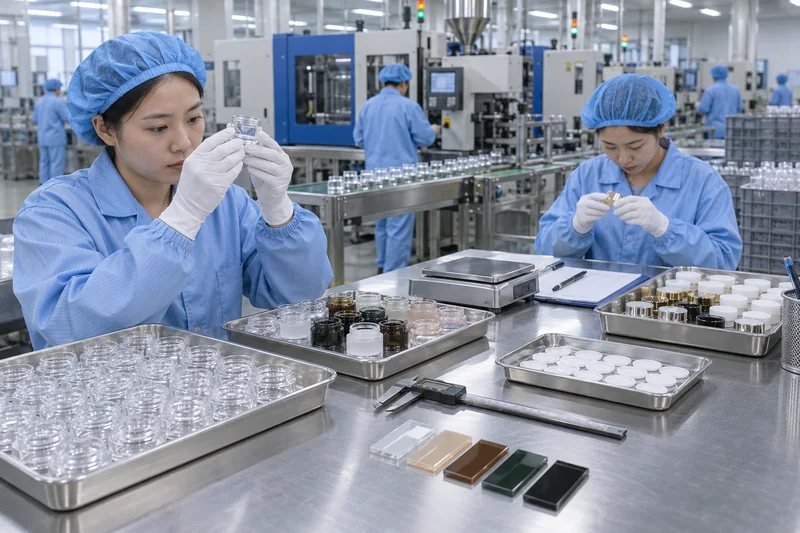
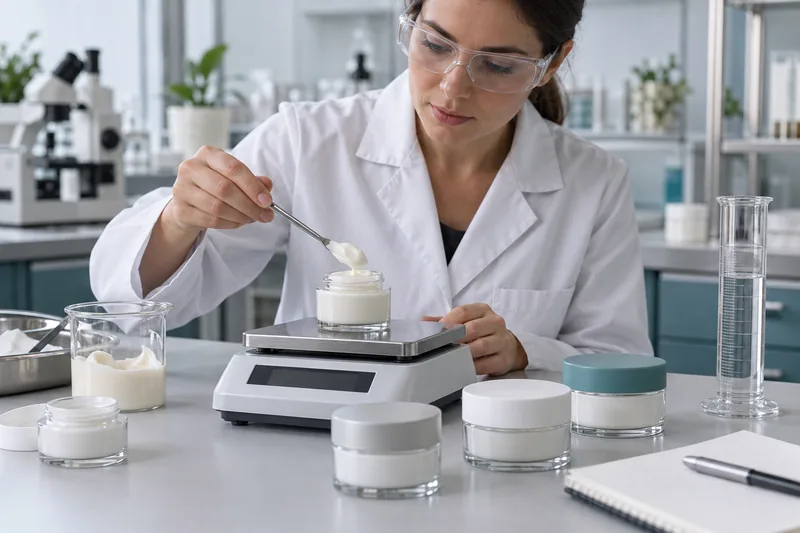
Cream jar production and quality-control illustration: inspecting jar bodies, lids and inner components before final packing.
Forming controls differ between glass and plastics; do not specify injection-molding settings for a glass jar. Filling trials must use the final contact cup, lid/liner and intended cream, even when the outer decoration has already been approved.
What Can Be Customized on a Face Cream Jar?
Feature
Options to discuss
Approval and limits
Capacity, silhouette and bowl
Existing mold families; custom outer shape or inner volume where feasible.
Approve usable/brimful volume, pickup access, footprint and sealing interface. New molds may be needed for body, cup or lid changes.
Body / cup materials, grams and walls
Qualified glass/plastic, single/double wall, eligible PCR components and weight targets.
Separate contact and decorative parts. Weight reduction requires process/geometry and performance review.
Refill / airless mechanism
Existing engineered systems or feasibility review for a development brief.
Not created by simply adding a cup or pump. Confirm tooling, filling, retention/cycling and functional tests.
Body, lid and cup colors
Supported bulk colors, coatings, matte/gloss and metallic-looking finishes.
Approve physical masters, shade variation and resistance to cream/oil contact. Different materials may not match identically.
Logo and artwork
Screen printing, qualified hot stamping/foil, labels or other supported decoration.
Approve print area, line/registration limits, curve distortion, adhesion and abrasion; keep critical seal/contact zones controlled.
Lid, liner and inner disc
Compatible shapes, material/finish options and suitable seal designs.
A new disc/liner thickness or lid can alter engagement and sealing. Fit must be rechecked rather than assumed.
Spatula and holder
Available accessory materials, shape/color/logo and engineered storage options.
Confirm quantity included, smoothness, chamber access, holder retention and cleanability. Quote custom tooling separately where needed.
Retail / export packing
Carton, insert, partition/tray, labels and pallet configuration.
Approve actual assembled pack dimensions, scuff/breakage protection, carton count and packed-test configuration.
Visual mockups, color samples, functional samples and tooling trials approve different aspects. A picture or 3D prototype alone cannot approve production seal performance or chemical compatibility.
Custom Production Workflow and Approval Milestones
1. Buyer brief and formula review
Send cream type/texture, target fill mass and density if available, desired capacity, use scenario, target market, reference design, quantity by SKU and launch timing.
2. Existing model or tooling
Compare jar, cup, lid and spatula options against size/cost targets. Agree tooling scope, ownership, maintenance and allowed use before custom development.
3. Drawing, BOM and artwork
Approve each contact material, fit dimension, grams, seal, color/print and packing revision. Resolve filler handling, fill temperature, headspace and closure method before sampling release.
4. Samples and qualification
Review physical appearance and functional fit separately; fill production-intent samples for stability, seal, use and distribution tests. A prototype or empty-pack leak test does not replace filled qualification.
5. Production release and controls
Release the approved technical file and master samples after acceptance and deposit. Check incoming, forming, decoration and assembly stages against the agreed inspection plan.
6. Final inspection and repeat order
Confirm count, lot IDs, packing and test evidence before dispatch. Retain samples, investigate deviations and review any mold/material/component/supplier changes before repeat production.
Quality Control for Face Cream Jars
QC stage
Checks relevant to this package
Buyer-visible evidence
Incoming material/components
Glass/resin identity, cup, lid insert, liner/disc, spatula and decorative materials.
Approved bill of materials, material/lot records and relevant report scope.
Body and inner cup
Capacity, grams, rim flatness/roundness, wall/base distribution, inner shape and visual quality.
Drawing measurements, weight checks and defect reference samples.
Glass / plastic route checks
Glass cracks/chips, inclusions and relevant stress; plastic short shot, flash, sink, warpage and stress damage.
Route-specific process and inspection records with agreed reject criteria.
Assembly fit
Cup retention, cap-to-body gap, thread engagement, shell/insert slip and accessory storage.
Agreed fit/retention/cycling methods and boundary samples.
Closure and initial seal
Liner/disc identity and seating, application/removal behavior, membrane bonding if specified.
Defined assembly settings, sealing tests and evidence of performance after conditioning.
Decoration
Color, print position, adhesion, abrasion, cream/oil-drip resistance and clean seal lands.
Approved physical masters and substrate-specific test results.
Filled performance
Leakage, mass change, formula interaction, pickup, disc handling and in-use closure.
Qualification protocol, test conditions/time points and defined acceptance criteria.
Packing and shipment
Correct count, component supply condition, clean protection, insert/separator and lot labeling.
Pre-shipment report, packing specification and final packed handling-test evidence.
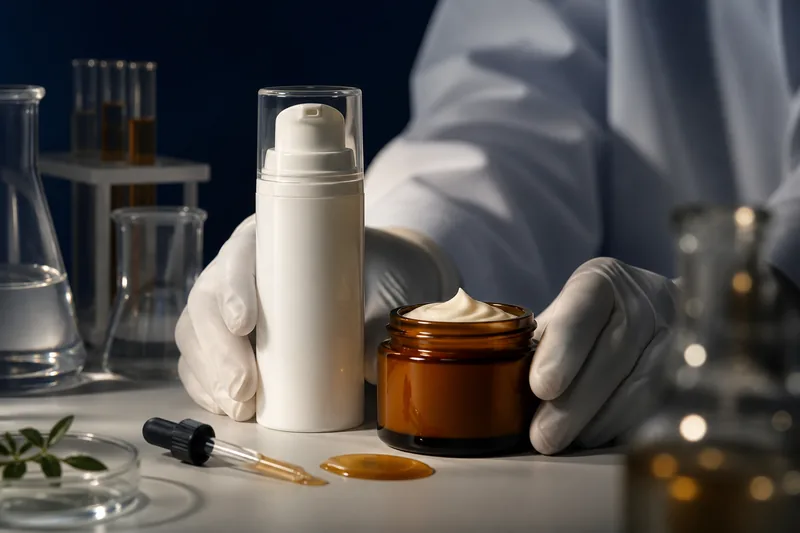
Jar-qualification illustration. Adapt dimensions, tests and acceptance criteria to the selected face cream jar.
Agree critical/major/minor defect definitions and the inspection sampling plan in writing. Clarify which operations are 100% screening and which are sampled or destructive qualification tests; a general quality-system certificate does not establish that every jar has passed every test.
Common Factory Problems: Diagnose, Correct and Verify
Observed symptom
Potential causes and distinguishing checks
Corrective action / verification
Sink marks or internal voids in molded parts
Check local thick sections, gates, resin condition, pack/hold and cooling behavior by cavity. Do not confuse an intended molded texture with shrinkage defects.
Review part/tool design and process window with the molding team; verify appearance, dimensions, section integrity and seal fit after conditioning.
Warped cup rim or lid
Compare cavity, cooling balance, ejection, post-mold shrinkage and storage loads. Check rim flatness and roundness separately.
Correct the identified process, tool or handling issue; repeat dimensional checks, assembly and filled leak testing.
Short shot, flash or weld-line defect
Inspect mold filling, venting, parting surfaces, tool wear and resin/process settings. Not every visible weld line is a structural failure.
Correct the confirmed cause; assess fit and strength/visual acceptance at the affected feature, not only appearance after trimming.
Cracks, chips or inclusions in glass
Locate defects at mouth, body or base; review forming, annealing, handling and contact points. Differentiate enclosed cosmetic bubbles from critical cracks or sharp defects.
Segregate affected stock and correct the source; verify glass-quality limits, stress where relevant and packed handling.
Inner cup loosens, lifts or rattles
Measure snap/interference geometry, cup/shell shrinkage, seating and retained fit after conditioning.
Correct retention or assembly process through drawing review; repeat use/refill cycles and distribution tests without compromising the cup seal.
Correct the matching/assembly issue; verify closed height, visible gap, opening effort and leakage across relevant tolerances.
Seal/liner buckles or falls out
Inspect material/thickness, retention, adhesive if used, cream exposure and compression.
Qualify the corrected liner/retention system; repeat aging, closure cycles and filled sealing tests.
Cream appears in threads or around lid
Check fill contamination, overfill, seal engagement and formula movement after heating. Locate the original path.
Correct fill/headspace or package fit as indicated; repeat filled orientation, thermal/pressure and packed tests.
Oil ring mistaken for a packaging leak
Compare bulk cream stability, syneresis/oil separation and actual migration through the seal. Both formula and package faults may coexist.
Investigate with the formulation/filling team; correct the confirmed cause and requalify the final filled pack.
Print/coating rubs, flakes or changes color
Check pretreatment, cure, substrate, formula contact, adhesion and abrasion in the pack.
Approve a compatible finish/process or label; repeat actual-cream exposure, adhesion and rubbing against the master standard.
Color differs across body, lid or batches
Check resin/coating/metal substrates, material lots, texture, lighting and master-sample age.
Use agreed physical standards and viewing conditions; approve realistic variation limits and repeat-order controls.
Spatula has flash, sharp edge or poor holder fit
Check parting/gate/ejection features, molding finish and dimensional variation; simulate insertion/removal.
Correct tooling/process or accessory geometry; reinspect edges and verify access, retention and cleaning/storage instructions.
Use defects as symptoms to investigate, not proof of one cause. Approve corrective actions through a controlled trial and repeat the affected functional tests. A visual repair that changes seal or cup dimensions needs engineering review.
Formula Compatibility, Hygiene and Filling-Line Requirements
Formula-to-contact-material assessment
Test the finished cream against the jar/cup, lid seal, disc, adhesives/coatings at foreseeable contact zones and included spatula. Monitor material change, odor/color transfer, formula stability and leakage under justified conditions.
Filling, membrane sealing and capping
Confirm handling dimensions, nozzle clearance, fill temperature, cooling/settling, clean rim, liner/membrane process and cap application. Identify which assembly steps belong to the pack supplier and which belong to the filler.
In-use handling and preservation
Evaluate repeated opening, fingers/spatula, product buildup, disc reseating and closure effort. An opaque jar, a spatula or an initial membrane seal does not remove the need for a suitable preservation and in-use assessment.
Use a cosmetic package compatibility protocol with the formulation team. Set time points and acceptance criteria for the actual cream and distribution conditions; accelerated testing alone does not automatically establish a shelf life.
Public Product Examples and Illustrative Face-Care Applications
Public catalog: glass size family
The 5–100ml round glass skincare cream jar provides a starting family for trial, face-care and larger cream formats. Confirm the capacity-specific drawing, lid/liner and fill requirements. The catalog listing is not evidence of a completed customer stability result.
Public catalog: white inner-body design
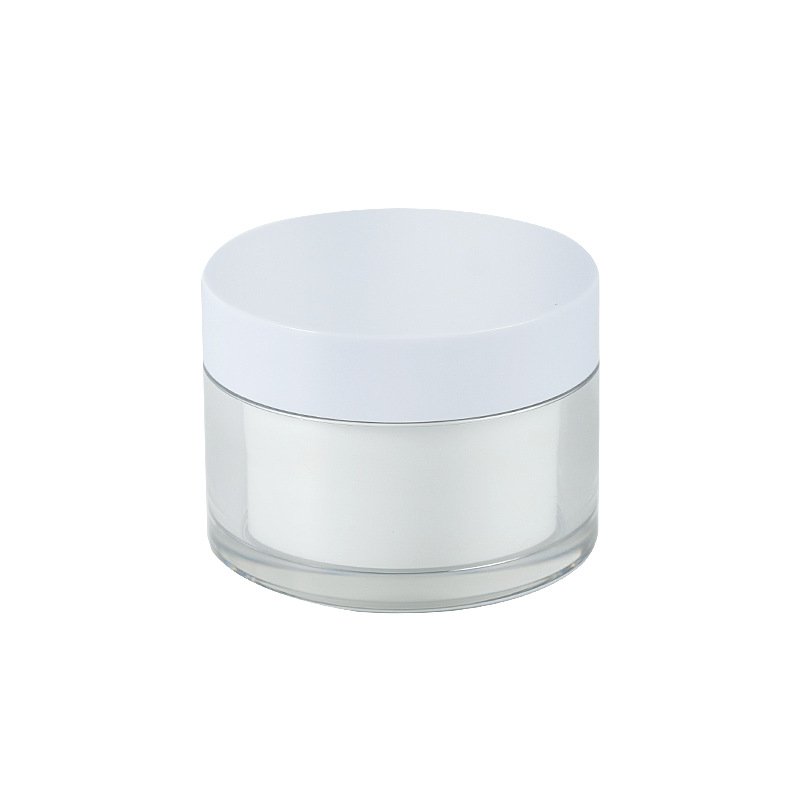
The 50ml facial cream jar with white inner body illustrates a layered presentation with separately specified components. Confirm the actual contact-cup resin and closure stack before approval; exterior descriptions do not replace a verified BOM.
Public catalog: dispensing jar
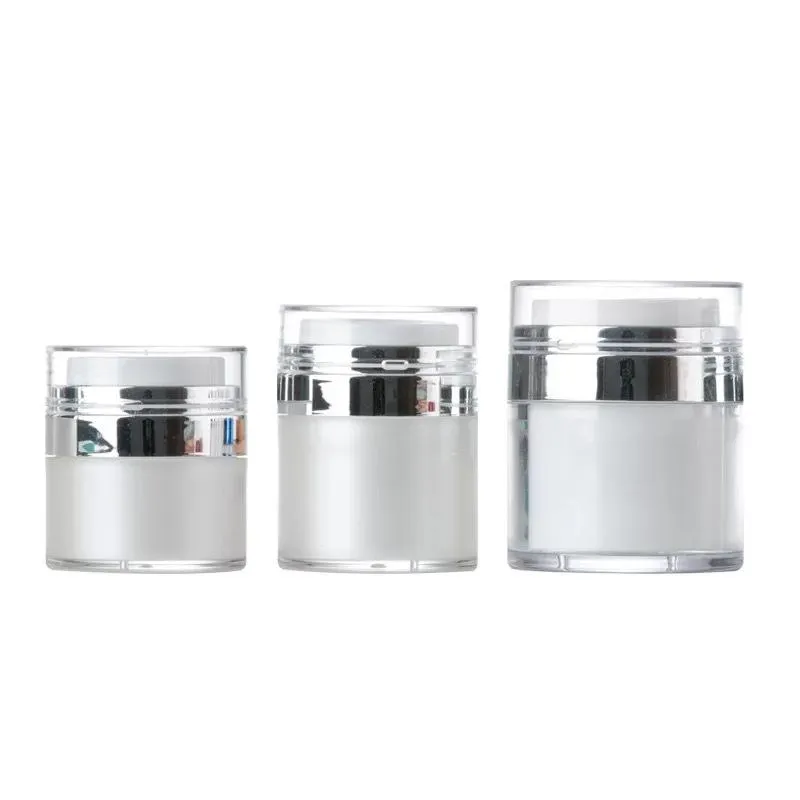
The 15/30/50g airless-style cream jar offers an enclosed dispensing comparison. Approve fill volume from actual density and verify mechanism, viscosity, priming and evacuation. No universal airless performance is inferred.
Illustrative application: home/travel duo
A proposed program could pair a 50ml home jar with a 15ml travel jar or qualified squeeze tube. Evaluate each fill and closure independently, then test packed carry and product access. This is a development scenario, not a delivered project.
Home, Outdoor and Travel Use Scenarios
Scenario
Useful starting format
Key tradeoff / validation
Daily home moisturizer
30–50ml open jar with accessible bowl and secure lid.
Convenient pickup and branding; test repeated opening, cream residue, spatula access and formula stability.
Premium night / rich cream
30–50ml glass or qualified double-wall jar.
Substantial presentation; confirm contact cup and usable fill, complete grams and resistance to cream/oil marks.
Discovery / hotel / gift kit
5–15ml mini where suitable tooling exists.
Small footprint; verify readable decoration, hygienic handling, opening grip and protective insert.
Outdoor, gym or handbag
10–30ml light plastic jar or qualified cream tube.
Prioritize closure security, low assembled mass and contamination/breakage protection. Heat and horizontal carry must be considered.
Larger home mask / cream
75–100ml or larger where the usage pattern justifies it.
More fill and a wider opening; assess shelf life after opening, pickup and bulk stability rather than assuming bigger is better.
Refill range
Purpose-designed outer jar and replacement cup.
Evaluate refill sealing, cup retention, removal/installation, consumer instructions and whether the proposed system delivers substantiated material benefits.
MOQ, Samples, Tooling, Lead Time and Export Packing
Purchasing question
Planning basis / what to confirm
Minimum order quantity
Standard custom-order planning MOQ: 10,000 pieces per design. Confirm minimums for each capacity, color, artwork, lid/liner and accessory; do not assume multiple SKUs share one MOQ. Stock availability is checked separately.
Unit-price scope
Specify body, contact cup, full lid, liner/disc, membrane if supplied, spatula, decoration, assembly, retail/export packing and shipping term. Separate tooling, samples and testing costs.
Tooling and ownership
Existing molds can avoid new structural tooling. New silhouette, cup, finish, lid or holder may require molds and trials. Agree cost, ownership, permitted use and maintenance before development.
Stock and custom samples
Existing stock samples depend on model/availability. Custom appearance samples commonly take 7–15 days after confirmed specifications/artwork; structural trials and testing are separate. Confirm charges and courier arrangements.
Mass-production lead time
Normal planning reference: 30–45 days after final approval and deposit. Quantity, components, molds, decoration, qualification and holidays can change the final schedule. Transit is additional.
Payment terms
Typical bulk terms are 30% deposit and 70% balance before shipment, subject to quotation. Sample and tooling payments are agreed separately.
Export packing and freight
Confirm assembled vs separate components, liners/discs/accessory supply condition, quantity/carton, protection, carton dimensions/gross weight and pallets. Calculate freight from actual packed data, not jar capacity alone.
Quality agreement and repeat orders
Retain approved drawings, BOM, masters and acceptance plan. Review changes to resin/glass, cup/lid/liner/spatula, molds, decoration or source before repeat production.
Inspection / after-sales handling
Agree sampling, relevant third-party inspection, defect criteria and records before shipment. Report issues with lot, quantity, photos, test conditions and retained samples for investigation under order terms.
Frequently Asked Questions
What size should we choose for a new face moisturizer?
Compare 30ml and 50ml for the core retail product, with 10–15ml as a compact sample or travel companion. Confirm actual cream density, in-use needs, bowl access, capped dimensions and assembled weight.
Can a 50ml jar hold 50g of cream?
Not necessarily. Convert the target mass using measured cream density and allow for headspace, fill tolerance and disc/lid intrusion. Validate the actual filled and closed pack.
Is glass better than PP for face cream?
Each has tradeoffs. Glass gives substantial feel and low body permeability but adds breakage risk and weight. PP can be light and practical; either complete pack needs formulation and sealing qualification.
Is an acrylic jar always in direct contact with the cream?
No. Many layered designs have a separate inner cup. Specify the actual contact resin or glass and the decorative shell separately instead of inferring material from appearance.
What is the difference between an inner cup and a liner?
The inner cup is the product chamber. A lid liner or gasket seals a designed interface; a removable disc may simply cover the product unless its sealing role is engineered.
Does a removable inner disc stop leakage?
Only if it forms part of a qualified sealing system. A loose disc alone does not guarantee sealing, sterility or airless protection.
Can we add a foil membrane to every jar?
No. Membrane material, rim and bonding process must match. Qualify the filler method, peel behavior and initial integrity, then assess how the package seals after opening.
How do we avoid cream leaking during shipping?
Match jar, cup, lid and seal; control rim cleanliness, fill/headspace and cap application; then test the actual filled pack under relevant orientation, temperature, pressure and packed handling conditions.
Should we tighten the lid as hard as possible?
No. Excess torque can distort plastic parts or the seal and make opening difficult. Establish an application window and check removal or retained torque after conditioning.
Why does the inner cup come loose?
Possible causes include tolerance, shrinkage, incomplete seating or retention design. Measure and condition the assembly, correct the identified cause and verify use cycles and distribution performance.
Are refillable and double-wall jars the same?
No. Double-wall describes construction; refillability needs an engineered replacement cup, seal, retention and user sequence. A fixed cup is not automatically a refill.
Does an airless jar suit every thick cream?
No. Qualify the actual dispensing mechanism with the cream across expected temperatures and aging, including priming, restart, dose and residual product.
Which spatula material should we choose?
Compare a qualified molded plastic accessory for low mass with available metal or specialty options for the intended feel. Approve contact suitability, smooth edges, bowl reach, storage and cleaning.
Can a spatula prevent contamination?
It can reduce direct finger contact, but handling and cleaning still matter. A reused utensil can introduce contamination and does not replace the formula preservation and in-use assessment.
Can the spatula be stored inside the lid?
On compatible engineered designs. Check holder retention, clearance, residue, cleanability and that the holder does not interrupt the disc, seal or lid engagement.
What are the dimensions and empty grams of a 50ml jar?
They depend on the selected mold and construction. Request overall closed height, maximum width, mouth/depth, body-only mass and complete empty-pack mass, with approved tolerances.
Is a heavier jar stronger?
Not automatically. Glass or plastic distribution, defects, stress, geometry and assembly determine performance. A heavy base does not prove adequate wall or seal quality.
Can cream jars be hot-filled?
Only within an approved filling process for the specific body, cup, liner, lid and decoration. Confirm temperature exposure, cooling, deformation and sealing with production-intent trials.
What causes sink marks or warpage in plastic jars?
Part geometry, mold, resin and processing can contribute. Investigate the actual part and cavity, then verify corrected appearance, dimensions and sealing instead of applying one universal setting.
Can we customize the jar, lid and inner cup colors?
Available options are reviewed by model and process. Approve physical color/finish references and realistic variation across materials, then test decoration and cream-drip resistance.
What is the minimum order quantity?
Use 10,000 pieces per custom design as the planning reference. Final minimums depend on capacity, color, artwork, structure and accessories; confirm each SKU in the quotation.
How long do samples and production take?
Customized appearance samples commonly take 7–15 days after confirmation. Normal production planning is 30–45 days after final approval and deposit; tooling, testing, components, quantity and holidays affect the confirmed schedule.
Can we test samples before ordering?
Yes, subject to stock and project review. Separate appearance, fit, functional and filled compatibility sample purposes; a rendering or empty-package test does not approve the final cream.
What should we send for a reliable quotation?
Send cream type, fill mass/volume and density if available, quantity by SKU, reference design, material/cup/lid/seal/spatula requirements, size/weight limits, artwork/colors, filling conditions, tests, packing and destination.
Discuss Your Custom Face Cream Jar Project
Send your cream type, target fill and quantity to Boyu Packaging with a reference image or drawing. Include desired jar/cup material, lid and seal, spatula/holder, maximum dimensions and weight targets, colors/artwork, filling conditions, required tests, destination market, packing, delivery term and launch date.
We can review available models, identify tooling and qualification needs, and prepare a quotation with clear component and schedule scope.


 English
 Español de Argentina
 Русский
 Italiano
 日本語
 한국어
 العربية
 Français
 Deutsch