Direct answer: For a cream jar, choose the seal by the job it must do. A removable inner disc keeps the product surface tidy during repeated use but is not, by itself, a hermetic or tamper-evident mouth seal. An induction foil is the stronger starting point when a validated first-opening barrier and shipping leak control are important. A pressure-sensitive liner is a lower-equipment option for suitable dry contents, but should not be presumed leakproof for oily or wet creams. The final choice must pass tests with the actual jar, cap, fill and distribution route.
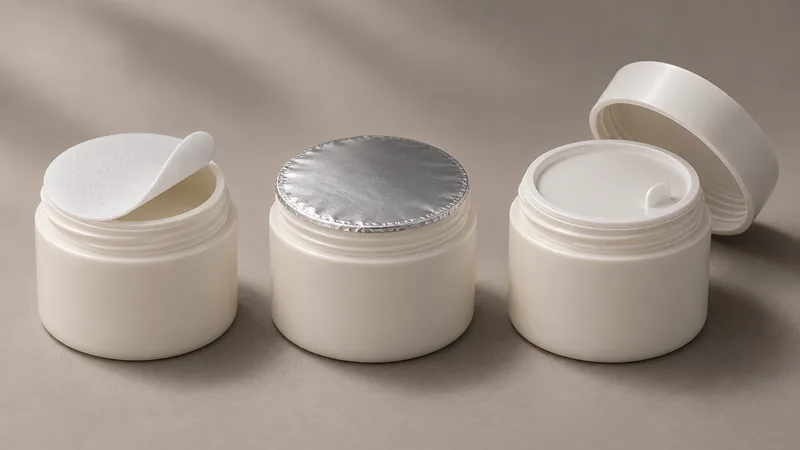
Pressure-sensitive liner, induction seal or inner disc: what is the difference?
Pressure-sensitive liner
A pressure-sensitive mouth liner is normally supplied inside the cap. Tightening the cap presses an adhesive-coated face against the clean jar rim; the liner remains on the mouth when the cap is removed. It needs no induction machine, but bonding depends on liner construction, rim condition, applied pressure and time. Suppliers of common foam pressure-sensitive liners recommend them mainly for dry goods and explicitly caution against oils or liquids. That does not prove every cream will fail; it means an oily or water-rich cream needs product-specific evidence before this option is approved. [1]
Induction foil mouth seal
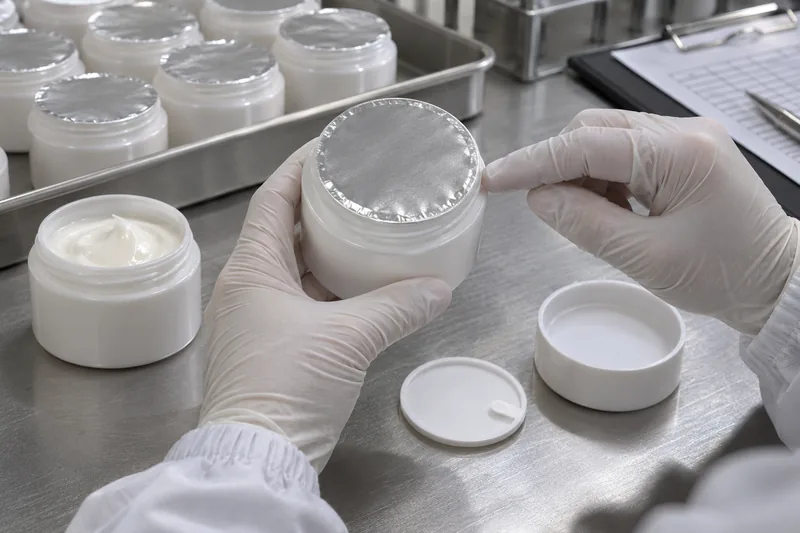
A foil-containing liner is placed in the cap. After filling and capping, an induction head heats the foil without touching the jar; a heat-seal layer bonds to the jar’s sealing land as it cools. Cap torque provides contact pressure, while liner chemistry, coil geometry, power, line speed and jar-mouth quality determine whether the bond is continuous. This can produce a strong first-opening leak and tamper-evidence barrier, but only when the complete system is qualified. One-piece and two-piece liners also differ in what remains inside the cap after opening. [2, 3]
Removable inner disc or protective lid
An inner disc is a separate reusable part beneath the outer cap. It can keep cream off the cap, reduce mess during ordinary handling and provide an extra physical cover after each use. Its sealing performance varies with fit, compression and the jar design; a loose disc is not a bonded mouth seal. If a brand requires tamper evidence or a specified shipment leak rate, it must be demonstrated separately. An inner disc can coexist with a first-opening foil if the closure stack and fill height allow it.
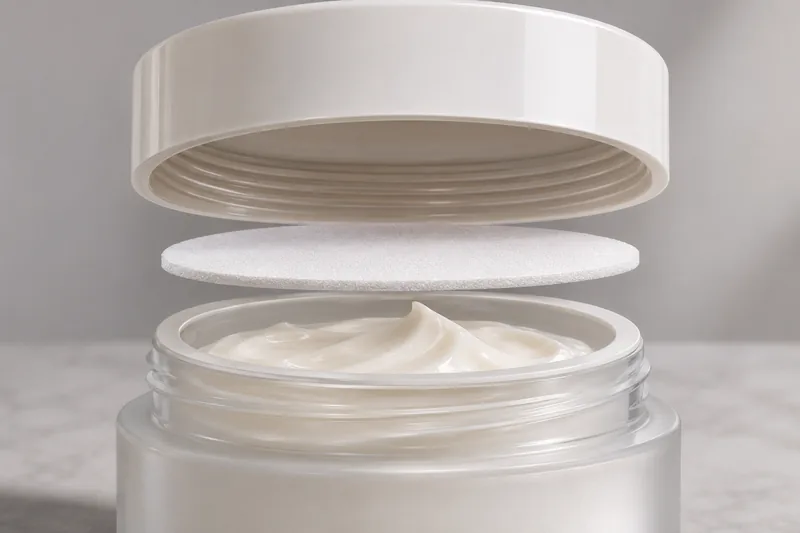
Which closure is appropriate for each cream-jar use case?
High-viscosity face cream sold through retail
Start with a well-fitting jar and cap plus an inner disc if clean repeat use is important. Add a qualified induction seal when first-opening assurance or shipment protection is part of the brief. Do not treat the disc as a substitute for a validated transport seal.
Oily balm or scrub shipped by parcel
Prioritise filled-pack leak and compatibility testing. Oils, surfactants and fragrance can reach the rim, challenge adhesives or soften some liner layers. A purpose-selected induction liner may be appropriate, but the foil and exposed contact layer must be checked with the final formula. A pressure-sensitive foam liner should not be the default.
Powder or dry mask in a wide-mouth jar
A pressure-sensitive liner may be worth qualifying when the opening is flat and dry, the powder does not contaminate the rim, and high-integrity tamper evidence is not claimed. Add a reusable cap liner or inner disc only if it improves the intended reclosure experience.
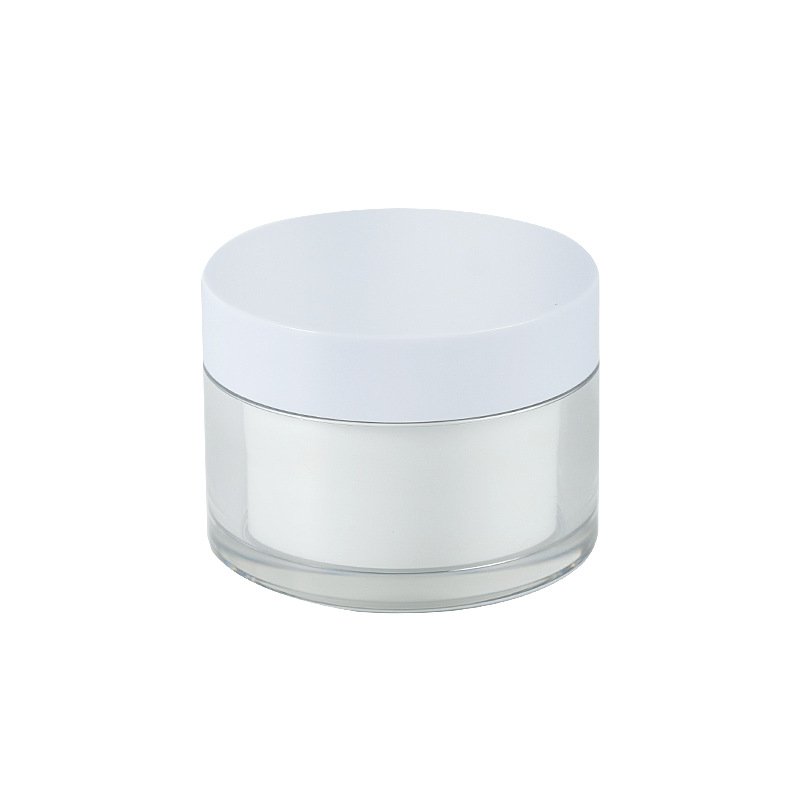
For package options, browse Boyu’s cream jar range. The right sealing choice follows the selected jar drawing and closure, not the category name alone.
How do jar material and the cosmetic formula change the choice?
PP, PET and other plastics: an induction seal needs a heat-seal layer selected for the actual jar resin and surface. Changing from PP to PET without changing or requalifying the liner is not a like-for-like substitution. A double-wall acrylic-look jar may have a different inner cup material; identify the actual mouth material, not the decorative outer shell. Glass: induction sealing is possible, but Enercon notes that glass surface treatments affect foil selection; approval must use the chosen glass finish and actual rim. [3]
Formula: test all components that can touch the fill or vapour space. Oils, fragrance, solvents, high/low pH, preservatives, heat and water content can change the behaviour of adhesives, foil layers, foam, seals and closures. Thick cream may appear not to leak under a quick inversion, yet can migrate through a discontinuous rim seal after vibration or heat. Conversely, a product that never contacts the foil in normal use still needs headspace and storage assessment. Follow a filled-package compatibility protocol rather than relying on a material label.
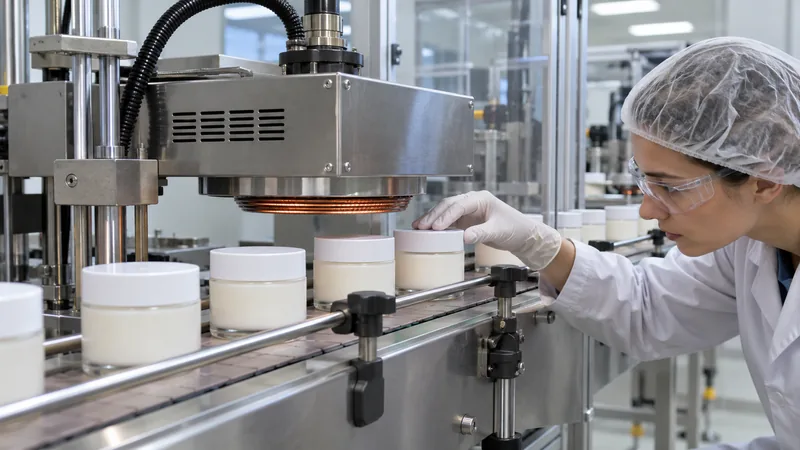
How can buyers and factories find the cause of a failed jar seal?
First locate the path. Do not immediately tighten or peel a returned pack: that can erase evidence. Photograph the wet area, note the jar’s orientation and mark the cap position. Separate liquid passing under the mouth seal from product leaking through a cracked wall, cross-threaded cap, liner fold or inner-disc spill. Quarantine the affected fill and component lots.
- Foil lifts cleanly or only bonds in patches: inspect rim flatness, flash, coating, cream residue, cap seating and application torque before increasing induction power. A hotter setting cannot compensate for a gap. Enercon identifies cap torque as a major contributor to liner-to-rim contact. [5]
- Foil burns, wrinkles or tears: check excessive energy, dwell/line speed, liner fit, cap/coil geometry and the specified peel-force target. Do not assume a stronger bond is always better if consumers cannot open the jar cleanly.
- Pressure-sensitive liner fails after storage: inspect whether the liner was intended for oily/wet fill, whether the rim was clean and whether cap pressure remained consistent. Change the liner system if the product falls outside its supplier’s approved scope.
- Inner disc pops up or cream accumulates under the cap: check fill height, disc fit and cap clearance. Reducing overfill or changing the disc design may be more effective than changing the mouth-seal adhesive.
A cap that feels tight is not proof of seal compression. Boyu’s cap-torque troubleshooting guide explains why the operating window should be set from leak performance and opening force, not a universal torque number.
A buyer’s qualification and corrective-action checklist
- Specify the system: jar model, actual mouth material, neck/land drawing, cap and liner construction, liner diameter, fill mass, headspace and consumer opening method.
- Request production samples: obtain filled units sealed on the intended line. Review full-circumference bond, peel appearance, cap seating and inner-disc fit after agreed conditioning.
- Test the real route: assess filled-product compatibility, inversion, vibration, compression, temperature cycling and parcel or pallet distribution as relevant. Agree in advance on sample size, method and acceptance criteria; there is no universal cosmetic-jar pass value.
- Trace failures: retain failed and good samples, jar/cap/liner lots, filler and sealer settings, line speed, torque readings, inspection time and carton position. Run controlled component swaps only after preserving the original evidence.
- Contain and correct: quarantine suspect lots; identify the actual cause; validate the revised liner, torque, rim cleanliness or sealing window; document disposition and reinspection before release.
Frequently asked questions
Can a cream jar use both an induction seal and an inner disc?
Yes, if the closure stack, cap clearance and filling process are designed for both. The foil handles first-opening protection; the disc can improve repeat-use tidiness after the foil is removed. Qualify the exact assembly rather than adding components at the last minute.
Can glass cream jars be induction sealed?
Yes, with a compatible glass-specific liner and verified treatment, rim geometry and process settings. A liner that seals PET cannot simply be assumed to seal treated glass. [3]
Is the most expensive seal always the safest?
No. A costly foil on a contaminated or uneven rim can fail, while a simpler system may be adequate for a qualified dry product. Choose by demonstrated filled-pack performance, opening experience and the actual claim or distribution requirement.
 English
 Español de Argentina
 Русский
 Italiano
 日本語
 한국어
 العربية
 Français
 Deutsch