
Quick answer: Hold the pump’s threaded collar firmly against the bottle, then turn only the dispensing head in the direction marked open or by the molded arrow—often counterclockwise—until it rises. If a plastic shipping clip sits under the head, remove it first. An outer overcap simply lifts off. Do not force a head that does not turn: some pumps use a different lock, and some bottles are not designed to be opened or refilled.
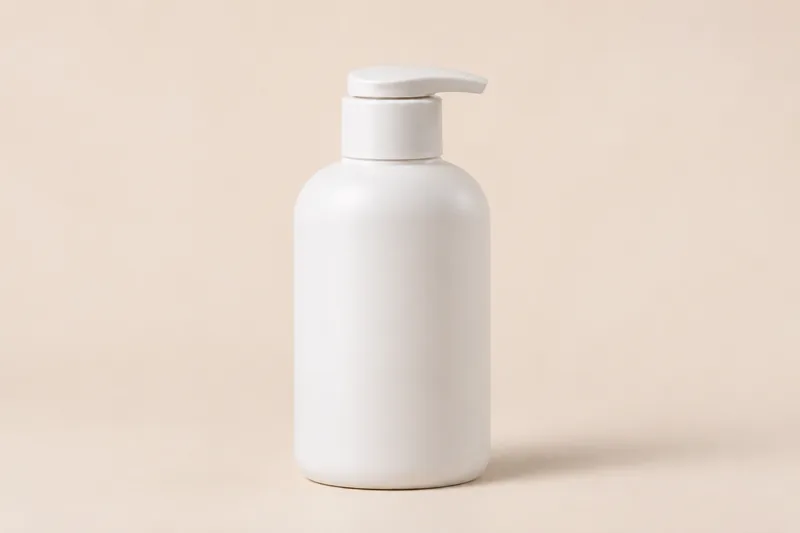
Which part of the lotion bottle is locked?
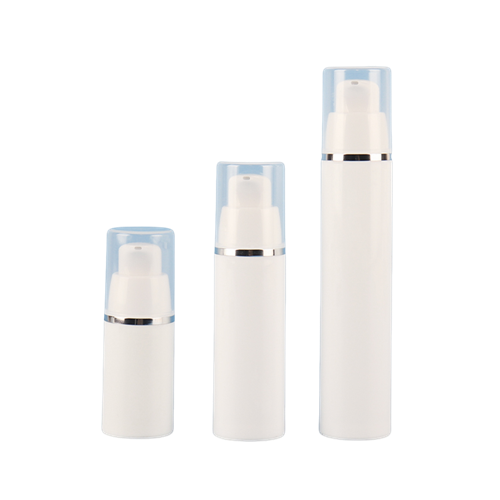
“Locked lotion bottle” can describe several different packages. Examine the dispenser before twisting anything. The actuator is the part you press; the collar is the ring screwed onto the bottle neck. A head that is held down is usually a transport or twist lock, whereas a head that presses normally but produces no lotion has a dispensing problem, not necessarily a locking problem.
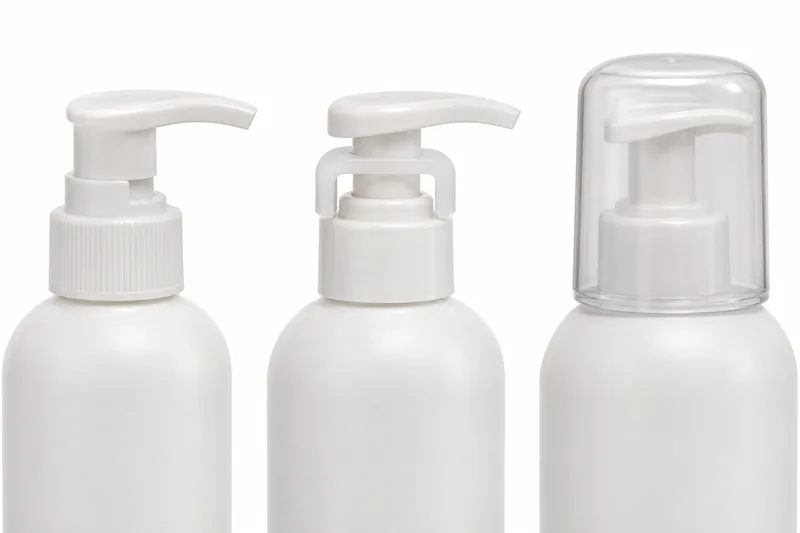
- Twist-to-unlock head: the actuator is lowered and will not travel. A short rotation releases it upward. The direction is model-specific; follow its arrow or label rather than assuming every pump turns the same way.
- Removable shipping clip: a U-shaped plastic piece occupies the gap between the actuator and collar. Pull the clip sideways by hand, then press the pump.
- Protective overcap: a cover surrounds the entire actuator. Lift or pull it off; do not twist the pump mechanism unless the head is also locked.
- Sealed bottle or fixed dispenser: a tamper band, snap-fit closure, crimped fitting or some airless systems may not be intended to open for refilling. Check the brand’s directions before disassembly.
How to open a locked lotion pump, step by step
For a twist-lock pump
- Set the bottle upright on a stable surface and wipe lotion from your hands and the pump so the parts are easy to grip.
- Check for a shipping clip or overcap and remove it if present. Look for open/close markings or a small arrow on the actuator.
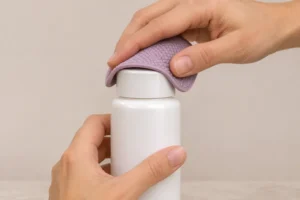
- Hold the collar stationary with one hand. With the other hand, gently rotate the head toward the open marking. On many, but not all, pumps this is counterclockwise.
- Stop when the actuator rises to its normal stroke height. Press slowly several full strokes over a sink or your hand until lotion appears. The number of priming strokes depends on pump size, dip-tube length, and formula viscosity.
Kenra Professional’s instructions for its locked liter pump specify securing the collar and turning the nozzle counterclockwise. That is a useful example, not a universal instruction for all brands. If the entire closure turns with the head, tighten the collar gently and try again while holding it still. Avoid overtightening, which can damage the neck or liner.
For a clip-lock pump or overcap
Pull an exposed transport clip straight out from under the head; keep it if you want to secure the pump for travel. For an overcap, lift the cover off without levering against the nozzle. If the head is still lowered after removing either part, it may also have a twist lock. Never cut a clip while it is attached to a full bottle; a sharp tool can slip or damage the actuator.
Why will the lotion pump still not open or dispense?
The head spins, but does not pop up
First see whether the collar is spinning with it. Hold the collar and turn the actuator only. If the actuator turns freely without reaching a stop or rising, the locking threads or stem may be damaged. Some designs require pressing the head down while turning to engage or release the lock; only do this if the package indicates that operation. For a new purchase, replacement or a refund is usually safer than improvised repair.
The whole pump unscrews instead
The collar has loosened before the actuator lock released. Reseat the pump, check that its gasket is not folded or missing, and screw the collar on evenly by hand. Then hold it fixed as you turn the head. If the bottle neck or closure threads are stripped, a replacement pump must match the neck finish and dip-tube length; a similar-looking diameter alone does not guarantee fit. See Boyu’s dip-tube sizing guide when specifying a replacement.
The head rises and presses, but no lotion comes out
That is usually a priming, pickup, blockage, or air-entry issue rather than a lock. Try several complete, unhurried strokes with the bottle upright. Check whether the dip tube is attached and reaches the product, whether the bottle is nearly empty, and whether dried lotion blocks the outlet. Very thick formulas can exceed the pump’s intended viscosity range. If flow starts and then repeatedly stops, work through the checks in Boyu’s lotion pump losing prime guide. Do not dilute a preserved cosmetic with water merely to make it pump; that can compromise the formula.
The pump leaks after opening
Check whether the leak is from the nozzle after use or from the neck while the bottle stands upright. A neck leak points toward a loose or cross-threaded collar, damaged gasket, incompatible neck finish, or a crack. Nozzle drips can reflect formula viscosity, pump design, residual product in the spout, or a failed internal valve. Locking the head does not repair a defective seal. For shipping, use the supplier-approved closure, clip, seal, and secondary pack rather than relying on a locked actuator alone.
How does a locked lotion bottle work?
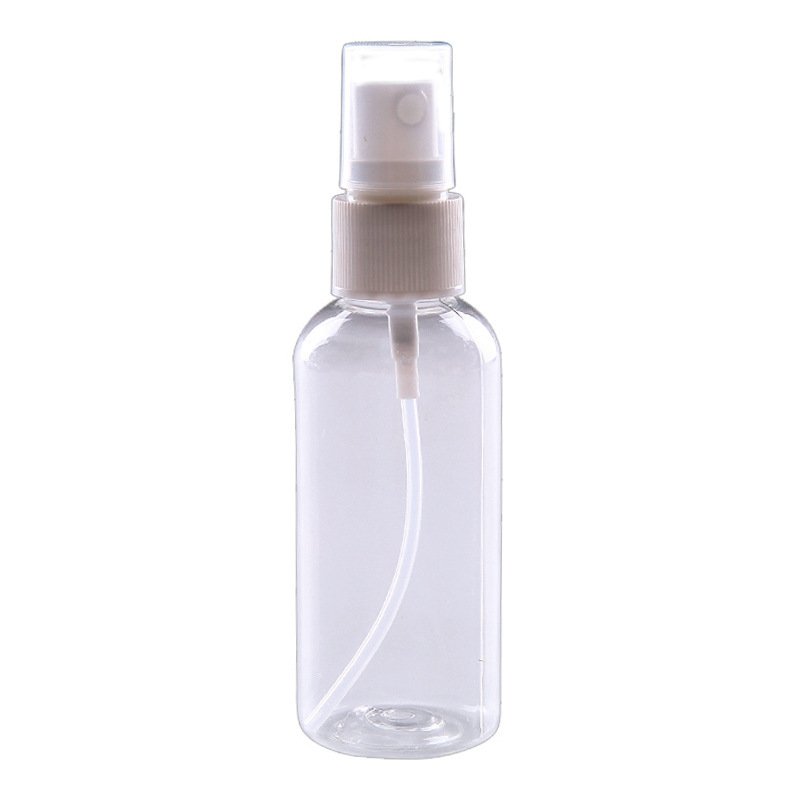
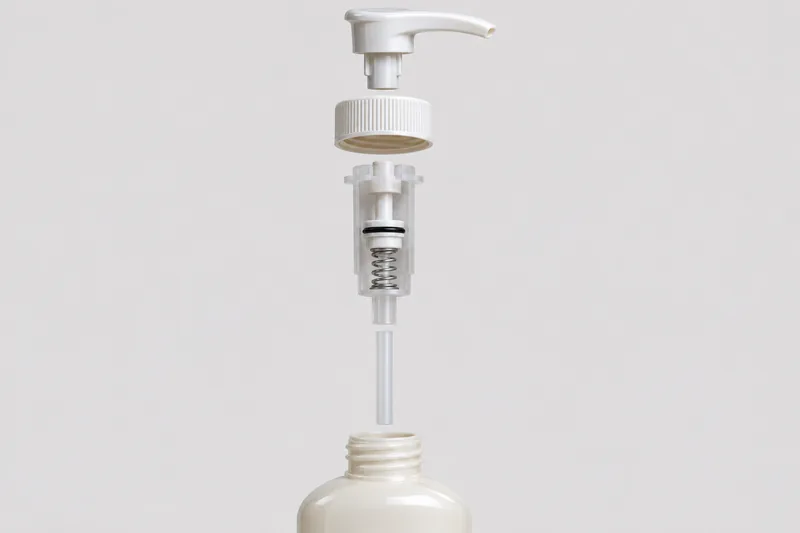
A conventional lotion pump has an actuator, stem, piston, return spring, chamber, inlet and outlet valves, dip tube, collar, and usually a neck sealing element. Pressing the unlocked actuator changes pressure in the chamber and delivers a measured portion of lotion through the spout. Releasing it lets the spring reset the piston and draws more product up the dip tube. The first strokes fill an initially air-filled flow path; this is why a new pump may need priming.
The lock’s job is to prevent accidental actuation in storage or transit. In a lock-down design, the head is retained in its lowered position; other designs lock the head in the raised position or use a removable ship clip. A locked head is not, by itself, proof of leak-tightness. The neck seal, pump valves, bottle integrity, formula compatibility, and shipping conditions still matter. Supplier literature distinguishes lock-down, lock-up, and ship-clip styles rather than treating “locked pump” as one standard mechanism.
Can you refill or reuse a lotion bottle?
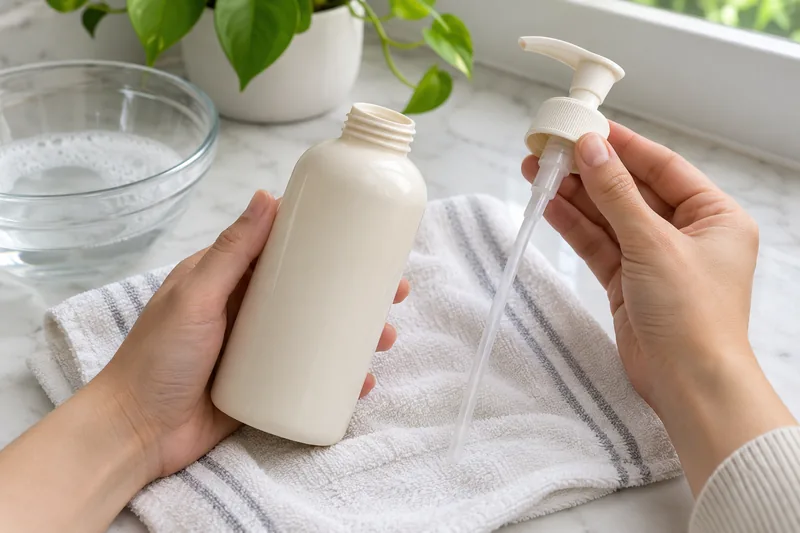
Sometimes. A sound screw-neck bottle and a removable pump may be reusable when the brand permits refilling and the new formula is compatible with every product-contact part. A sealed, crimped, snap-fit, or non-serviceable airless package should not be pried apart just because it appears empty. Reuse also differs from recycling: local acceptance of bottle, pump, and spring components varies.
- Finish or discard the old product. Do not top up old lotion with new lotion; residue and repeated handling introduce contamination risk.
- Inspect the bottle, neck, gasket, dip tube, and pump for cracks, persistent odor, residue, corrosion, or poor fit. Replace damaged parts.
- Follow the product brand’s cleaning and refill directions. A pump chamber can retain lotion even after the bottle looks clean; if you cannot clean and dry it adequately, use a new compatible pump.
- Use a compatible refill of the intended cosmetic, keep the fill date and product identity, and watch for changes in odor, color, texture, or dispensing. Follow the refill brand’s storage and use-by directions.
The FDA identifies contaminated water, packaging, storage, and consumer handling among routes for cosmetic microbial contamination and advises keeping containers clean. It does not provide a universal household procedure that makes every used pump safe for every new formula. For commercial refill programs, validate cleaning, product compatibility, and microbiological safety with the finished formula.
What should a brand check when choosing a lockable lotion bottle?
For a private-label lotion, hand cream, shampoo, or similar product, decide what “easy to open” means for the actual user and sales channel. A lock-up pump may prevent casual pressing, but consumers must still understand the opening direction. A clip can be intuitive and removable, but adds a loose part. A twist-lock head avoids a separate clip but may be confused with the collar if the grip is poor. Ask for a working sample filled with the real formula rather than approving a dry sample alone.
- User test: Can first-time users identify the lock, release it without tools, and re-lock it without cross-threading?
- Fit and function: Confirm neck finish, gasket, dip-tube length, dose per stroke, viscosity range, priming and evacuation behavior.
- Transport: Test the filled assembly in its actual orientation and distribution pack for leakage and accidental actuation; do not infer this from the lock mechanism.
- Repeat use: If refillability is a claim, specify serviceable components, cleaning instructions, compatible refill formula, and validation evidence.
Explore Boyu’s lotion bottle range for bottle formats, and the body lotion bottle manufacturing overview for component and customization questions. For a new project, send the formula type, target fill, neck finish, desired lock style, sales channel, and shipping route through the Boyu Packaging inquiry page; the supplier can then recommend a testable bottle–pump assembly rather than an actuator in isolation.
Frequently asked questions
Do all lotion pumps unlock counterclockwise?
No. Many do, including the specific Kenra liter pump cited below, but lock geometry differs. Follow the arrow or manufacturer instructions for the pump in your hand.
Should I press the pump before twisting it?
Only if the instructions for that pump say so. The common twist-to-open method is to hold the collar and turn the actuator; forcing a press-and-turn motion on the wrong design can damage it.
Can I use hot water or pliers to loosen a stuck head?
Avoid pliers, knives, and high heat. They can crack plastic, damage the seal, or contaminate the lotion. Clean the outside for better grip, check for a clip, and ask the seller for the model-specific opening method if it still will not release.
Can a locked pump still leak in a suitcase?
Yes. The lock limits unintended pumping, not every path for liquid escape. Check the cap/neck seal and use the original shipping clip or overcap and a protective secondary bag when permitted by the product instructions.
Sources and scope
This guide distinguishes supplier-described pump mechanics from model-specific consumer instructions. It does not claim that every Boyu or third-party pump uses the same lock. Sources: Kenra Professional, Locked Liter Pump; McKernan, Anatomy of a Lotion Pump; US FDA, Microbiological Safety and Cosmetics.
 English
 Español de Argentina
 Русский
 Italiano
 日本語
 한국어
 العربية
 Français
 Deutsch