
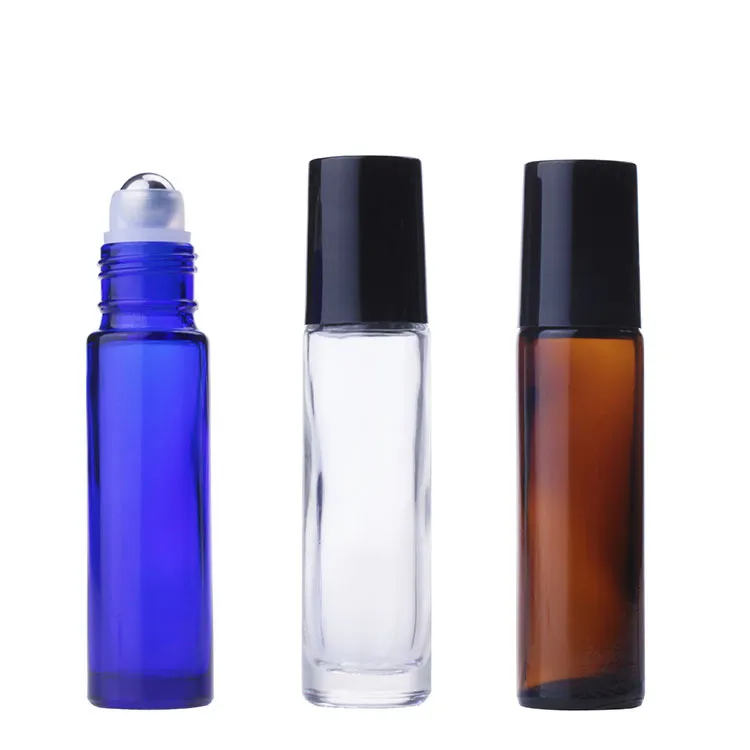
A roll-on bottle looks simple, but its dispensing performance depends on a precisely matched system: the bottle neck, ball, housing, formula, and cap must work together. When that system is correct, the package delivers a thin, controlled film of perfume oil, essential oil blend, deodorant, or serum without a pump or dip tube.
In this guide
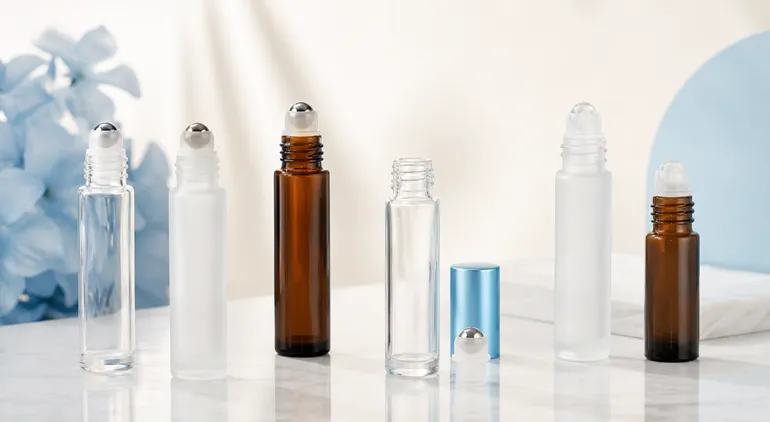
How Do Roll-On Bottles Work?
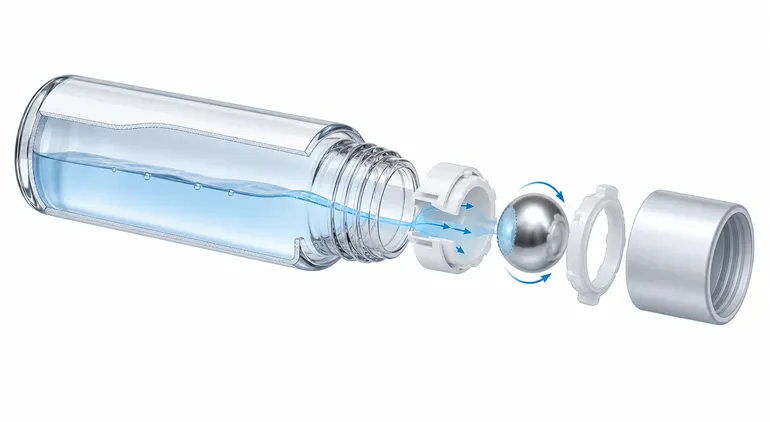
The rollerball acts as both an applicator and a simple flow-control component. It sits in a molded housing with a clearance small enough to limit free flow, yet large enough to let the ball rotate. When the bottle is inverted or tilted, the formula wets the underside of the ball. As the user rolls the ball across the skin, friction turns it and brings a controlled film of liquid to the outside.
There is no spring, piston, or air intake tube as there is in a lotion pump or spray pump. Dispensing depends mainly on gravity, surface contact, ball rotation, formula viscosity, and the dimensional fit between the ball and its socket.
Why does the liquid not simply pour out?
The ball is larger than the opening that retains it, and the housing closely follows the ball’s curvature. This creates a narrow, controlled flow path. A properly matched ball and housing restrict liquid movement when the ball is stationary. On many designs, tightening the cap also presses against the ball or housing to improve the transport seal.
“Leak-proof,” however, is not created by one component alone. Neck dimensions, housing material, insertion force, cap fit, fill level, temperature, and formula compatibility all influence real-world performance.
What determines the application rate?
- Formula viscosity: a thin perfume may wet the ball faster than a heavy carrier-oil blend.
- Ball diameter and material: these affect contact area, weight, surface energy, and the feel on skin.
- Ball-to-housing clearance: too tight can cause sticking; too loose can cause excess flow or leakage.
- Application angle and pressure: light rolling normally gives a more even film than hard pressing.
- Temperature: heat can reduce viscosity and increase internal pressure, changing flow and leakage risk.
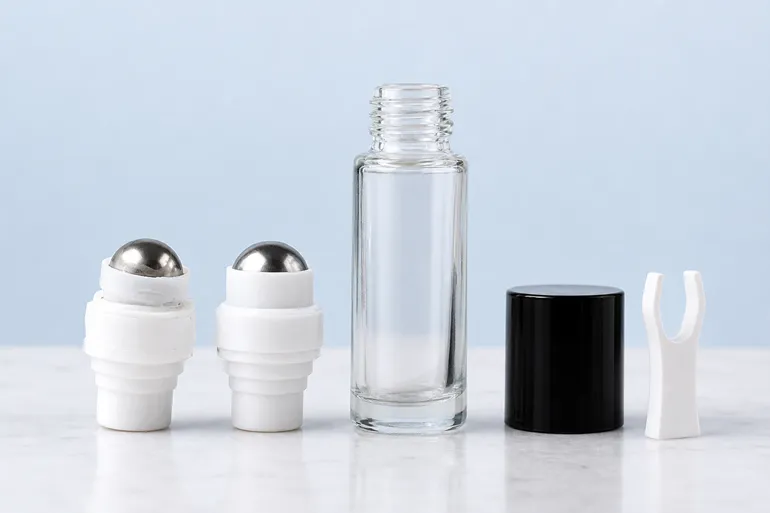
Roll-On Bottle Structure: What Each Part Does
| Component | Function | Common issue |
|---|---|---|
| Bottle body | Stores and protects the formula | Breakage, paneling, incompatible material |
| Roller ball | Rotates and transfers a thin liquid film | Sticking, corrosion, rough movement |
| Ball housing / insert | Retains the ball and controls clearance | Cracking, distortion, poor neck fit |
| Neck finish | Locates the insert and engages the cap | Dimensional mismatch or damaged threads |
| Cap | Protects the applicator and supports sealing | Insufficient torque, thread damage, lost cap |
Stainless steel, glass, or plastic rollerball?
Stainless-steel balls feel cool, roll smoothly, and are popular for perfume oils and targeted skincare. Their grade must be compatible with the formula. Glass balls offer a premium appearance and broad appeal for fragrance and essential-oil packaging, but the complete pack still requires drop and transport testing. Plastic balls are lightweight and economical, with many color options; resin selection and molding quality strongly affect glide and compatibility.
There is no universally “best” material. A buyer should evaluate the filled formula, desired dose, application feel, target price, transport conditions, and recycling goals. Boyu Packaging’s rollerball bottle range can be used as a starting point when comparing bottle and applicator configurations.
How Do You Open a Roll-On Bottle?
Usually, you can open a refillable roll-on bottle—but “open” can mean two different things. The screw cap is designed for normal opening. The rollerball insert is commonly press-fit into the neck for secure filling and transport, so it must be lifted as one assembled component. Some disposable designs are not intended for repeated removal.
How to remove the roller ball from an essential oil bottle
- Prepare the work area. Work over a stable, washable surface with good lighting. Wear suitable gloves if the formula can irritate skin.
- Reduce the fill level. Empty the bottle or leave it nearly empty so liquid does not spill when the insert releases.
- Remove the outer cap. Unscrew it normally and wipe excess oil from the neck and applicator.
- Identify the insert flange. This is the plastic rim seated against the top of the bottle neck. The ball is retained inside it.
- Position a rollerball opener. Slide the correct notch beneath the flange. Support the glass bottle close to its shoulder without squeezing or twisting it.
- Lift in small increments. Raise one side slightly, rotate the bottle, and repeat around the circumference. This reduces the risk of distorting the housing or chipping the neck.
- Remove the complete assembly. Once loose, lift the ball and housing together. Do not pry the ball out of its socket unless the insert is already being discarded.
- Inspect before reuse. Check the neck, threads, insert flange, ball seat, and ball surface for chips, cracks, corrosion, or permanent deformation.
How to Clean a Roll-On Bottle
Cleaning is suitable for personal reuse only when the bottle and insert are undamaged and the new product is compatible with the previous contents. Commercial refilling requires a validated cleaning, drying, and microbiological-control process—not a household rinse.
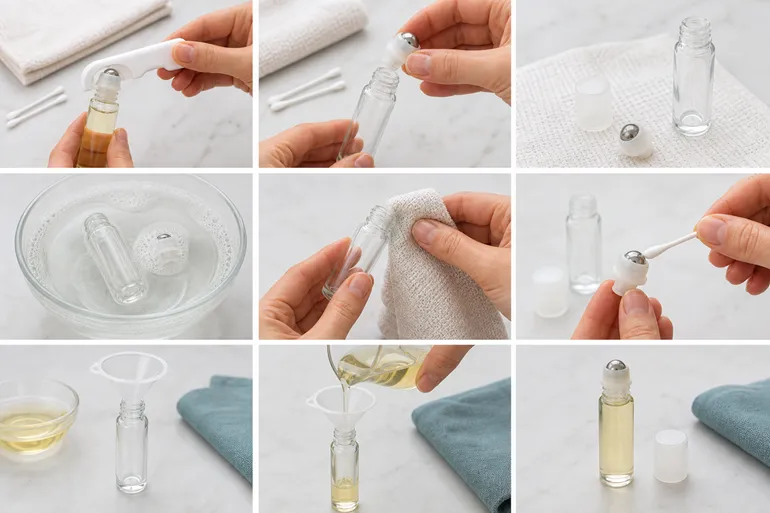
Cleaning an oil-based perfume or essential-oil bottle
- Remove the insert with the correct opener and drain the remaining formula.
- Wipe away oily residue before adding water.
- Wash the bottle, cap, and removable insert separately with warm water and a mild, unscented detergent.
- Rotate the ball by hand while rinsing so residue is released from the socket.
- Rinse thoroughly until no detergent or fragrance remains.
- Air-dry every component completely in a clean, dust-protected area before refilling.
Do not expose a package to boiling water, an oven, or a dishwasher unless the material supplier and bottle manufacturer have confirmed the relevant temperature resistance. Rapid temperature change can crack glass, while heat can distort plastic inserts.
Can the same bottle be reused for a water-based serum?
Extra caution is necessary. Water-based cosmetics are more vulnerable to microbial contamination than anhydrous perfume oils. Household washing does not validate sanitation or preservative performance. For a brand or commercial refill program, conduct packaging compatibility, cleaning validation, microbial risk assessment, and filled-product stability testing before making reuse claims.
If your formula is primarily an essential-oil blend, compare dedicated essential oil bottle options. For alcohol-based fragrance formats and matching secondary packaging, see Boyu’s perfume packaging category.
Rollerball Not Working? How to Fix or Replace It
Start with diagnosis. A ball that will not rotate does not automatically mean the entire bottle is defective. Dried formula, high viscosity, an over-tight insert, housing damage, or the wrong ball-and-socket combination can create similar symptoms.
| Symptom | Likely cause | Practical response |
|---|---|---|
| Ball will not roll | Dried residue or deformed housing | Clean and dry; replace insert if movement remains rough |
| Rolls but dispenses nothing | Formula too viscous, low fill, or poor wetting | Prime briefly upside down; test a different ball/housing specification |
| Too much liquid | Clearance too large or formula too thin | Replace with a matched insert and run compatibility testing |
| Leak around the neck | Insert not fully seated, damaged neck, or mismatch | Refit once if undamaged; otherwise replace the insert or bottle |
| Ball is rusty, chipped, or loose | Material incompatibility or physical damage | Stop using immediately and replace the complete applicator |
How to replace the rollerball insert
- Obtain a replacement made for the exact bottle neck—not merely the same nominal capacity.
- Remove the old insert evenly with a purpose-made tool.
- Inspect and clean the neck sealing surface.
- Align the replacement insert vertically and press it in evenly using an insertion tool or controlled press.
- Confirm that the flange is fully seated and level.
- Fill a test unit, close it, and check dispensing, inversion leakage, cap fit, and transport behavior before replacing multiple units.
A replacement ball alone is rarely the safest repair because the ball and housing are engineered as a pair. For brand owners, request assembled samples and test them with the actual formula rather than approving an empty package by appearance alone.
How Brands Should Specify a Reliable Roll-On Package
For OEM projects, give the packaging supplier more than a target capacity. Share the formula base, viscosity range, alcohol or essential-oil content, target fill volume, application area, desired dose, storage temperature, distribution route, and market positioning. This allows the supplier to recommend a more appropriate bottle, ball material, housing, and closure.
Before mass production, evaluate filled samples for ball glide, first-use priming, dosage consistency, leakage in multiple orientations, cap torque, evaporation, decoration adhesion, drop resistance, and compatibility over the intended shelf life. Exact test methods and acceptance criteria should be agreed for each project.
Looking for a custom roll-on bottle for perfume oil, aromatherapy, or skincare? Contact Boyu Packaging with your formula type, capacity, ball preference, decoration requirements, and forecast quantity. The team can review available packaging directions; project-specific MOQ, lead time, testing, and customization details require Boyu confirmation.
Frequently Asked Questions
Do roll-on bottles work with every liquid?
No. Very thick products may not wet and transfer through the roller assembly, while very thin liquids may dispense too quickly or leak. Particles, crystals, or incompatible solvents can also interfere with rotation or damage components. Test the filled package with the final formula.
Why is my new rollerball dry at first?
The ball and socket may need brief priming. With the cap secured, invert the bottle for a short time, then roll gently on clean skin or a lint-free test surface. Do not strike a glass bottle or press the ball aggressively.
Can I put perfume spray in a roll-on bottle?
Some alcohol-based perfumes can be applied with a rollerball, but the user experience, evaporation rate, dosage, and component compatibility differ from a spray package. Confirm that the insert, cap, and bottle are compatible with the fragrance formula.
How often should I clean a refillable roll-on bottle?
Clean it between different formulas and whenever residue affects rotation or hygiene. For repeated use with the same personal oil blend, wipe the exposed ball and cap area regularly. Replace any insert that remains sticky, loose, cracked, corroded, or difficult to clean.
Can a leaking rollerball be repaired?
If leakage comes from residue or an incompletely seated, undamaged insert, careful cleaning and correct refitting may help. A cracked housing, loose ball, chipped neck, incompatible material, or incorrect component match should be replaced rather than patched.
Need a Roll-On Package Matched to Your Formula?
Send Boyu Packaging your formula type, bottle size, roller material preference, and customization brief for project review.

 English
  Español de Argentina
  Русский
  Italiano
  日本語
日本語  한국어
한국어  العربية
  Français
  Deutsch