




What Is the Difference Between 24/410 and 24/415?

Searchers comparing 24/410 vs 24/415 are usually trying to solve a practical problem: choosing a pump, cap or sprayer that will seal on a bottle. The important point is that neck finish is a dimensional interface, not a general description. A component that appears to screw on can still have insufficient thread engagement, an incorrect sealing position or unstable application torque.
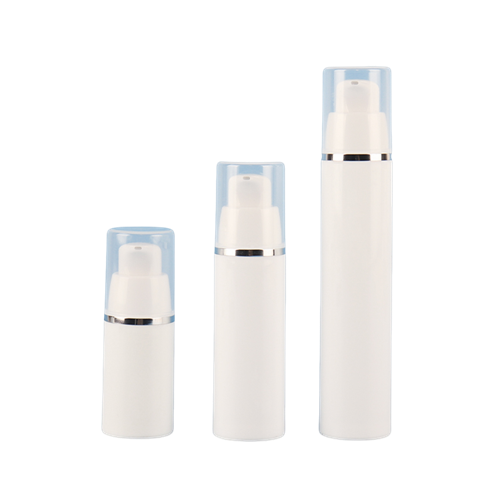
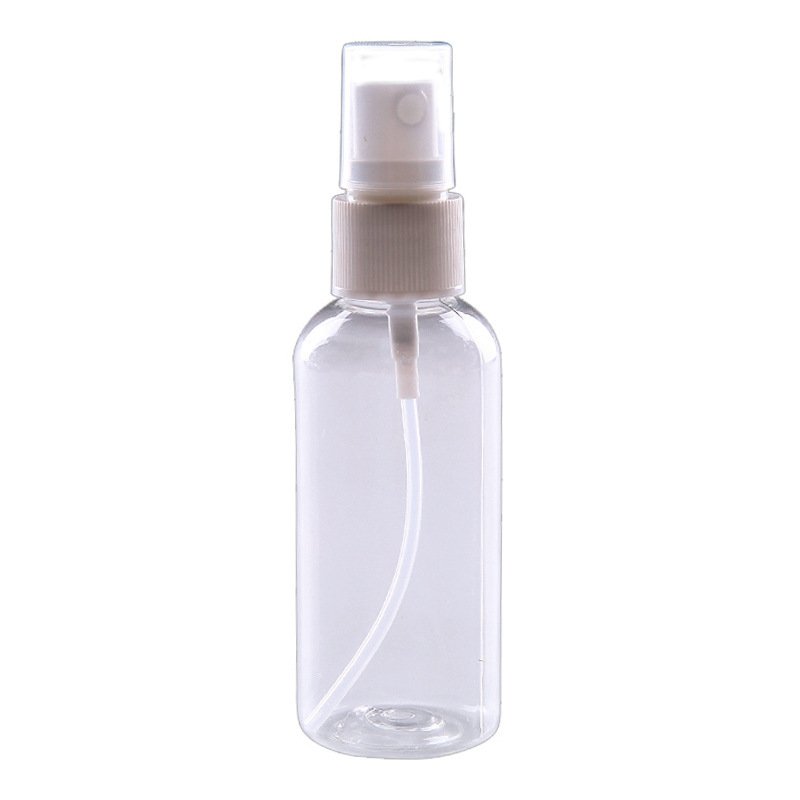
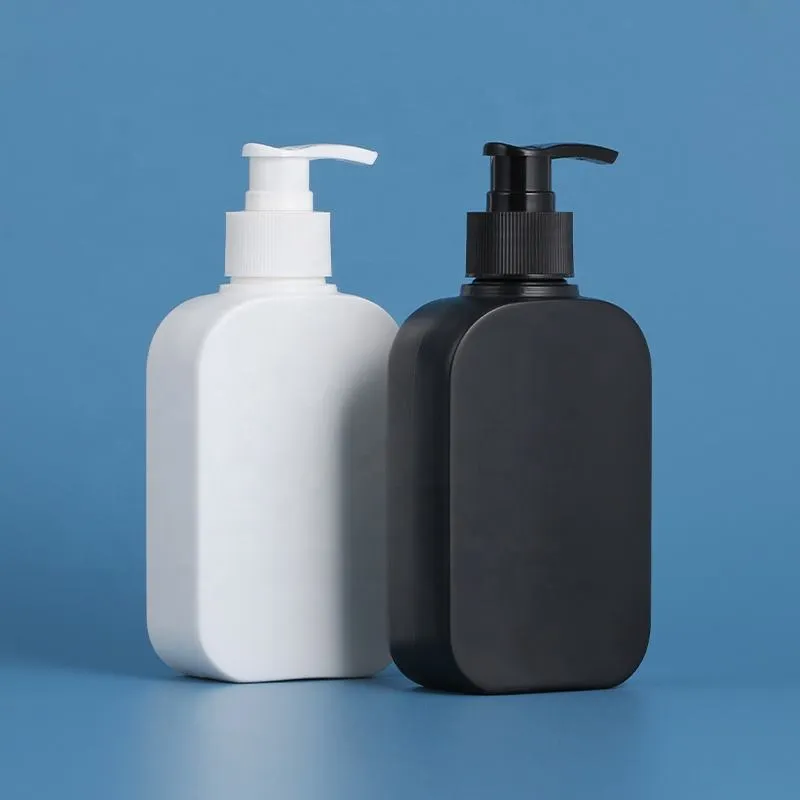
This guide focuses on cosmetic and personal-care bottles. For a broader explanation of the code and measurement points, first read What Does 24/410 Mean on a Bottle?. Buyers can also compare Boyu Packaging’s plastic cosmetic bottles, lotion bottles and spray bottles.
What Do 24/410 and 24/415 Mean?
The first number is not the bottle opening diameter. It is associated with the outside diameter across the thread crests. The actual bore—the I dimension—can vary within the applicable drawing and affects filling-tube clearance, plug seals and fitments. The second number is not a measurement in millimeters; it identifies the thread-finish series.
Example: 24 / 410 = 24 mm size family + 410 continuous-thread profile.
24/410 vs 24/415: Technical and Commercial Comparison
| Decision factor | 24/410 | 24/415 | Buyer action |
|---|---|---|---|
| Nominal thread diameter | 24 mm family | 24 mm family | Do not use diameter alone to approve compatibility. |
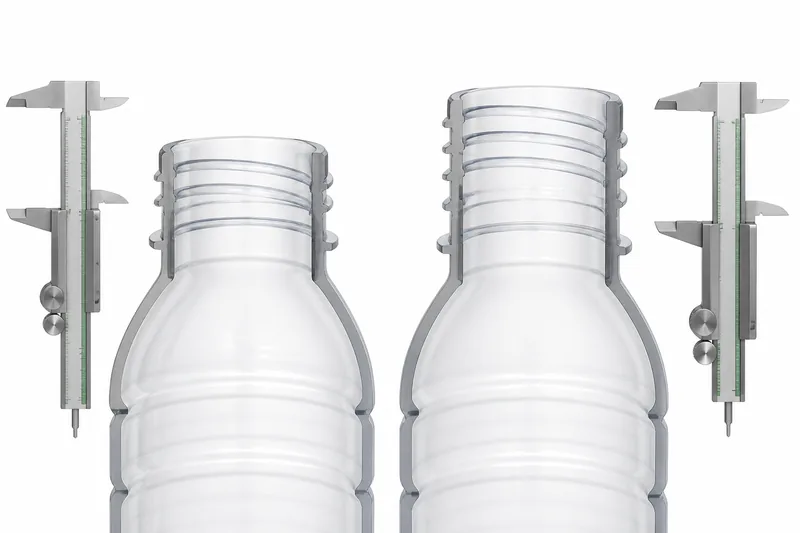
| Typical thread engagement | About 1.5 turns | About 2 turns | Confirm against the controlled bottle and closure drawings. |
| Finish height | Shorter than the corresponding 415 finish | Taller H dimension | Check total pack height, collar proportions and filling-line guides. |
| Closure availability | Common for many pumps, sprayers and dispensing caps | Available for specific pumps, caps and markets, but selection may be narrower by supplier | Ask for existing mold availability and physical samples before freezing the bottle. |
| Closure application | Fewer turns can support quicker manual application | Additional engagement requires the matched closure and capping setup | Validate application and removal torque on production-intent parts. |
| Material cost | Neck resin difference is usually not the main project cost | A taller finish may use slightly more container and closure material | Compare complete assembled costs, tooling, MOQ and inventory exposure. |
| Interchangeability | Use a 24/410 closure | Use a 24/415 closure | Never approve a cross-fit from visual inspection. |
Advantages and Limitations
24/410 advantages
- Widely used with lotion pumps, treatment pumps, fine-mist sprayers, disc-top caps and flip-top closures in cosmetic packaging.
- A shorter finish can reduce total package height and may fit established bottle and pump families.
- Common component availability can simplify sampling and second-source discussions.
Its limitation is not functional weakness; it is simply a different interface. A project already based on 24/415 components cannot switch to 24/410 without checking the bottle mold, closure, dip tube, line setup and finished-pack dimensions.
24/415 advantages
- The taller finish and additional thread engagement suit closures designed specifically for the 415 standard.
- It can support a particular visual proportion or collar design where the taller neck is intentional.
- It may be specified by an existing product platform, contract filler or regional component supply chain.
The trade-off is often commercial rather than inherent performance. If fewer qualified closures are available from the selected suppliers, the project can face higher minimum quantities, longer sampling or greater single-source risk. Confirm this before approving the bottle design.
Is 24/415 More Expensive Than 24/410?
There is no reliable universal price difference. A taller neck and closure can use slightly more material, but resin weight is only one cost input. Existing tooling, production volume, closure mechanism, pump output, resin, color, decoration, order quantity, assembly and supplier availability usually have a larger effect.
For an importer, the expensive mistake is not choosing one finish over the other; it is ordering unmatched inventory. A bottle order and a pump order that cannot seal together create rework, delayed filling, additional freight and possible write-off. Request the price as a complete bottle-and-closure system and include samples from the intended production tooling.
Typical Applications
When 24/410 is commonly considered
24/410 appears across lotions, facial cleansers, body wash, shampoo, conditioner, toner, sanitizing products and household or personal-care liquids. The same finish can accept different closure types only when each closure is manufactured to the matching 24/410 specification. Product viscosity still determines pump output, orifice, dip-tube diameter and actuator choice.
When 24/415 may be selected
24/415 is used when a taller 415 neck and its matching closure are part of an established pack system. It may appear on selected treatment, personal-care, pharmaceutical-style or specialty dispensing formats. The product category alone does not require 415; the decision normally follows available components, design intent and filling requirements.

How to Choose Between 24/410 and 24/415
- Start with the dispensing system. Define whether the pack needs a lotion pump, sprayer, treatment pump, flip top, disc top or plain screw cap.
- Check existing qualified components. Ask the bottle and closure suppliers which exact finish drawings, molds and production samples are available.
- Evaluate the formula. Provide viscosity, density, pH, oils, solvents, particles and target dose. Select the pump engine and dip tube for the formula rather than selecting by appearance.
- Confirm dimensional drawings. Compare T, E, H, I and S dimensions, thread profile, sealing land and bottle tolerances with the closure drawing.
- Assess line compatibility. Check bottle guides, chuck or capper interface, application torque, dip-tube insertion, total pack height and conveyor stability.
- Test filled samples. Run leakage, torque, pump priming, dose, evacuation, drop, vibration, thermal-cycle and formula-compatibility tests.
- Freeze the specification. State “24/410” or “24/415” on the bottle drawing, closure drawing, purchase order, approved sample and inspection plan.
How to Verify Bottle and Closure Compatibility
Do not use a successful hand-tightening test as final approval. A cap may start on the wrong thread and still fail at the sealing surface. The assembled system should be checked at the agreed application torque, then conditioned with the actual product. For pumps and sprayers, also verify dip-tube cut, gasket or liner, venting, priming strokes, output per stroke and resistance to accidental loosening.

A useful incoming inspection keeps a controlled master bottle and closure, verifies critical dimensions with calibrated equipment, checks closure application and removal torque, and tests a defined sample from each lot. For first orders from China, agree in writing who owns the assembled-pack test and what happens if separately sourced components do not match.
Other Common Bottle Neck Finish Codes
| Finish family | Simple description | Common procurement note |
|---|---|---|
| 18/400 | Smaller diameter with a short continuous-thread finish. | Used for selected small bottles, droppers and caps; match the complete finish. |
| 20/410 | 20 mm size family using the 410 finish. | Common for small treatment pumps and fine-mist packages. |
| 24/400 | Same nominal 24 mm family but a different, shorter finish than 24/410. | Not interchangeable with 24/410 or 24/415. |
| 28/410 | Larger 28 mm family using the 410 finish. | Often considered for larger bottles, higher-output pumps and some sprayers. |
| 28/415 | Larger 28 mm family with the taller 415 finish. | Requires a closure made to the same 28/415 standard. |
| 425 | A separate continuous-thread finish family commonly described with two narrow thread turns. | Do not infer compatibility from thread count alone. |
| 430 | A buttress-style finish with heavier thread geometry and top bead in common industry guides. | Used where the defined closure system requires this profile. |
| 2030/2035 | Non-continuous lug finishes; 2035 has a taller H dimension. | These are different from continuous-thread 400-series finishes. |
Frequently Asked Questions
Will a 24/410 pump fit a 24/415 bottle?
Do not assume it will. The finish height and thread engagement differ, so the pump may not seat or seal correctly. Use a pump and bottle specified to the same finish and test the assembled pack.
Are 24/410 and 24/415 the same diameter?
They belong to the same nominal 24 mm thread-diameter family, but they are not the same finish. The second number defines a different thread configuration.
Is 24/415 stronger or less likely to leak?
Extra thread engagement alone does not guarantee a better seal. Leakage depends on dimensional control, sealing surface, liner or gasket, application torque, formula and closure design.
Can I identify the finish with a ruler?
A ruler may indicate the approximate diameter, but reliable identification requires the controlled finish drawing or calibrated measurements. Compare the thread series, finish height and key dimensions—not only the outside diameter.
Does glass, PET, HDPE or PP change the code?
The designation still describes the neck interface, but tolerances, manufacturing method and detailed drawings can differ by material and standard. A closure should be qualified on the actual production bottle, not transferred from another material without testing.
Confirm the Neck Finish Before Ordering
Send Boyu Packaging your bottle capacity, material, formula viscosity, dispensing type, required pump output and target market. The bottle, closure, dip tube and decoration can then be reviewed as one packaging system before samples and mass production.



 English
  Español de Argentina
  Русский
  Italiano
  日本語
日本語  한국어
한국어  العربية
  Français
  Deutsch