
Direct answer: The principal free-fall methods for cosmetic transport packages are ASTM D5276 and ISO 2248. For a complete parcel-delivery simulation, ISTA 3A is commonly considered for packaged products up to 70 kg (150 lb); ASTM D4169 provides distribution-cycle test sequences, while ASTM D7386 addresses single-parcel shipments. None creates one universal cosmetic-package drop height. The applicable height, orientations, sequence, conditioning and acceptance criteria come from the selected programme, package mass, distribution route and brand or retailer requirements.
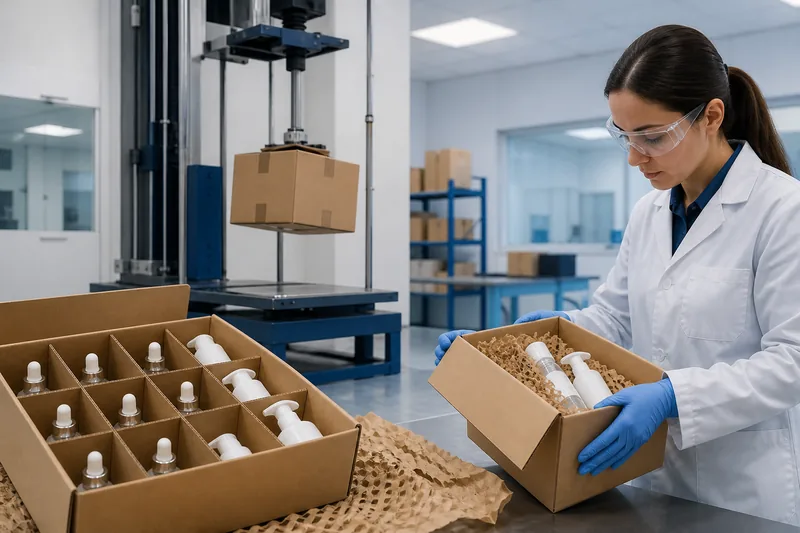
Cosmetic packaging drop test standards compared
Cosmetics regulations generally require safe products and suitable packaging, but do not prescribe one drop test for every bottle. Standards fall into two groups: a test method explains how to create and control an impact; a performance programme combines impacts with hazards such as vibration, compression and atmospheric conditioning.
| Standard or procedure | Scope | Best use | What it does not decide alone |
|---|---|---|---|
| ASTM D5276 | Free-fall drop testing of loaded boxes, cylindrical containers, bags and sacks; particularly manually handled containers | Controlled drop method and comparison of shipping-package designs | Your distribution cycle, acceptance criteria or universal height |
| ISO 2248 | Vertical impact by dropping a complete, filled transport package onto a rigid impact surface | International free-fall method with predetermined height and attitude | Which conditions represent a specific cosmetic supply chain |
| ISTA 3A | General simulation for parcel-delivery packaged products of 70 kg (150 lb) or less | Parcel shipments exposed to a sequence of transport hazards | Carrier compliance in every case; ISTA notes its tests do not necessarily satisfy carrier regulations |
| ASTM D4169 | Sequenced performance testing for shipping units across distribution cycles | Broader distribution-system qualification | A cosmetic-specific specification; ASTM points single-parcel users toward D7386 |
| ASTM D7386 | Performance testing of packages for single-parcel delivery systems | Parcel-network qualification using a complete sequence | Product-specific cosmetic failure limits |
| ISO 2233 | Conditioning of complete filled transport packages and unit loads before testing | Controlling atmosphere before the mechanical test | Drop severity or pass/fail requirements |
ASTM D5276 versus ISO 2248
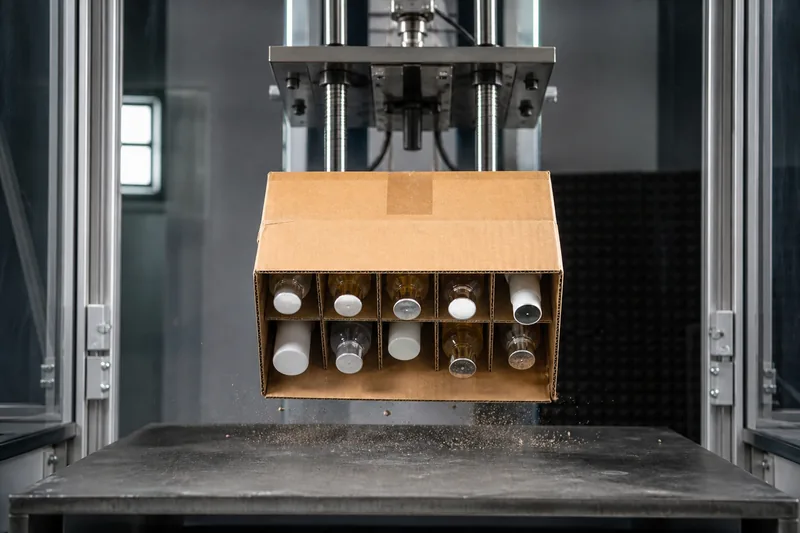
Both create a controlled free-fall impact on a rigid surface. ASTM states that D5276 fulfils ISO 2248 requirements for containers not exceeding 50 kg (110 lb), while noting procedural differences may exist. If a contract names one standard, follow that current document rather than treating the designations as automatically interchangeable.
ISTA 3A versus ASTM D4169
ISTA 3A targets individual parcel-delivery packages and incorporates multiple hazards rather than an isolated drop. ASTM D4169 selects a distribution cycle and applies scheduled hazards sequentially; ASTM requires the shipping unit to remain unopened through a performance-test sequence. Choose according to the actual channel, retailer or carrier requirement—not because one name is more familiar.
Do not confuse three levels of cosmetic packaging drop tests
1. Individual bottle or component drop
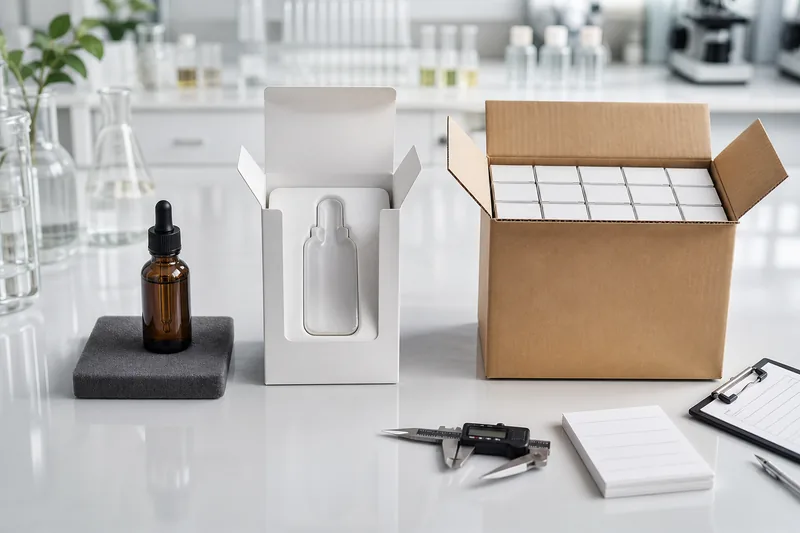
This development test compares bottle geometry, material, base thickness, shoulder design, actuator retention and breakage behaviour. It may simulate consumer handling, but ASTM D5276 and ISO 2248 specifically concern loaded or complete filled transport packages. Do not claim compliance with those transport standards when only a bare bottle was dropped.
2. Filled retail pack drop
Test the final formula, closure, decoration, insert and folding carton together. Evaluate leakage, dangerous breakage, cap or pump release, label scuffing and whether the retail unit remains saleable. This level is especially useful when an e-commerce unit may ship over-boxed with limited cushioning.
3. Complete transport package
Pack the master case exactly as shipped: production bottles, fill mass, closures, retail cartons, partitions, void fill, case board and sealing tape. This is the appropriate specimen for ASTM D5276, ISO 2248 and distribution programmes. A perfect bottle-only result cannot validate carton protection.
How is cosmetic packaging drop height selected?
There is no defensible universal height. In a prescriptive programme, use the table associated with package mass, package category and test sequence in the current licensed standard. In a custom protocol, derive severity from measured or justified handling exposure and document the rationale.
Potential energy immediately before impact is E = mgh, where mass is m, gravitational acceleration is g, and height is h. This explains why height alone is incomplete: a heavier case dropped from the same height carries more potential energy. Actual damage also depends on orientation, impact surface, carton stiffness, cushioning, product fragility and repeated impacts.
What a complete drop test protocol should contain
- Objective and scope: development comparison, design qualification or batch verification.
- Referenced edition: identify the exact current standard/procedure and any deviations.
- Specimen: SKU, formula or surrogate, fill level, component lots, closure torque, retail pack, shipper and pack-out.
- Conditioning: atmosphere, duration and whether ISO 2233 or programme-specific conditioning applies.
- Sequence: height, number of drops, faces, edges and corners using an unambiguous package-orientation system.
- Equipment: release mechanism and rigid, level impact surface; prevent rotational or obstructed falls.
- Inspection: pre/post photographs, leakage, closure movement, breakage, deformation, decoration and dispensing function.
- Acceptance: distinguish safety-critical failure, containment failure, functional failure and cosmetic damage.
- Sample rationale: include relevant cavities and lots; state how failures and retests are handled.
Record impact orientation and actual drop height for every event. If the carton hits outside the allowed attitude, document and repeat according to the protocol. Do not quietly substitute a damaged sample or open the shipper mid-sequence when the selected performance programme prohibits it.
Glass and plastic cosmetic packs fail differently
Glass bottles
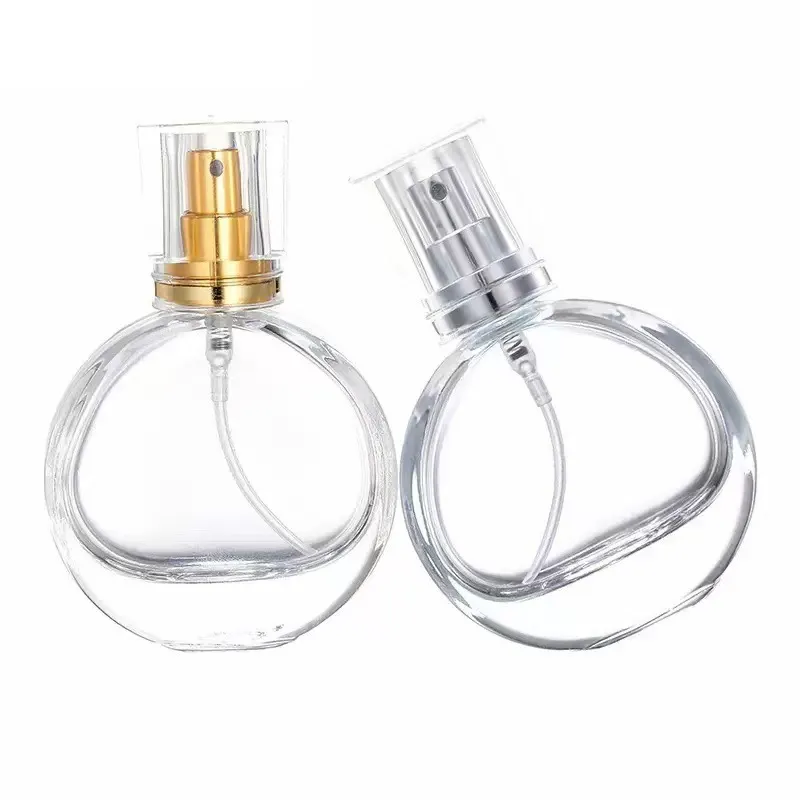
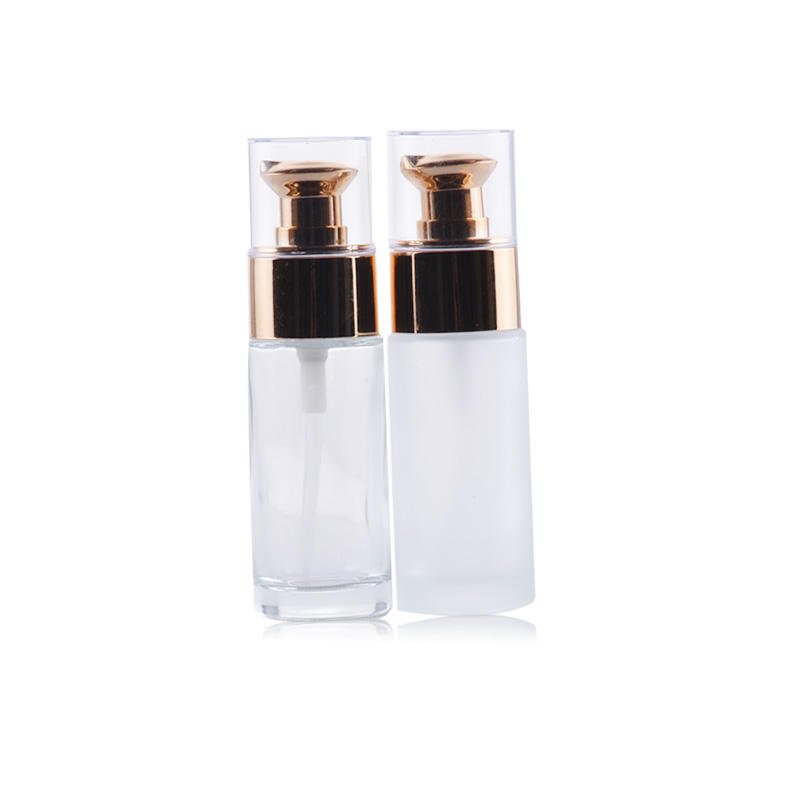
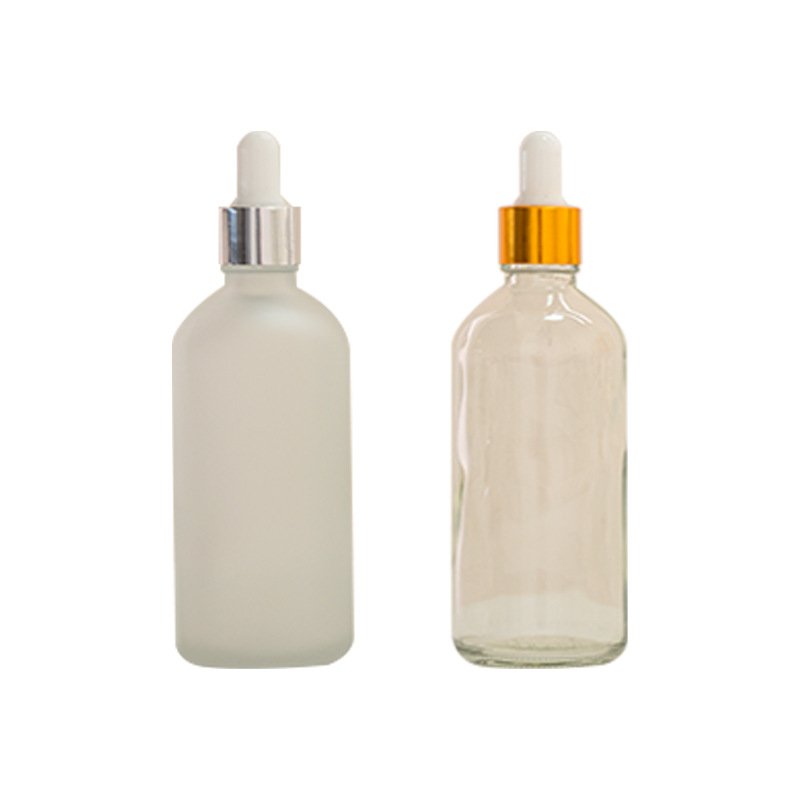
For cosmetic glass packaging, prioritise dangerous breakage, chips, cracks, dropper or pump separation, leakage and glass-to-glass contact. Dividers and moulded inserts should prevent bottle collision, not merely stop movement at the case walls. Inspect closures and neck finishes after impact because an intact bottle can still leak.
Plastic and airless bottles
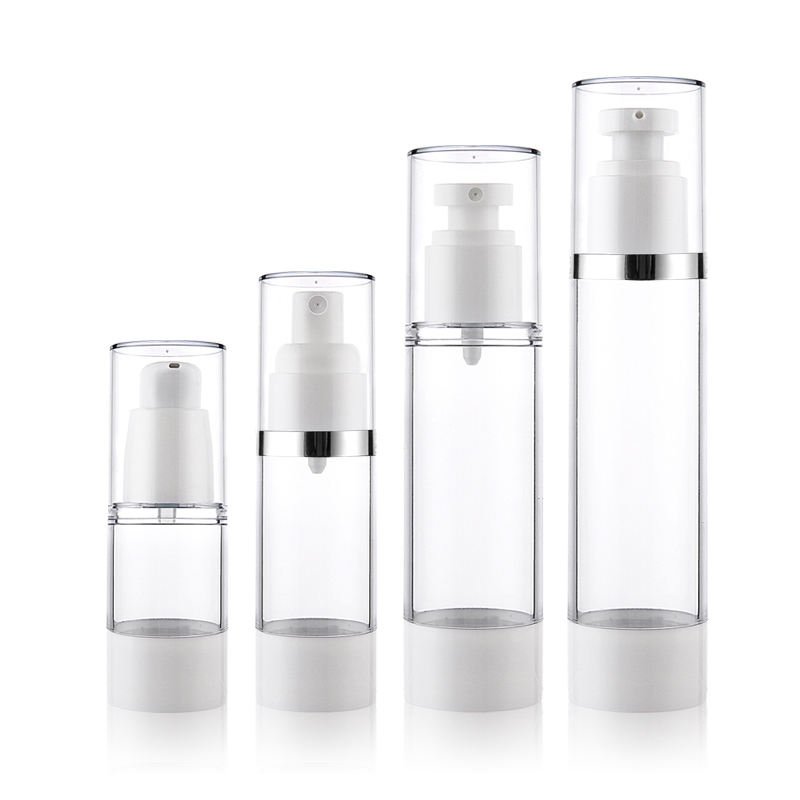
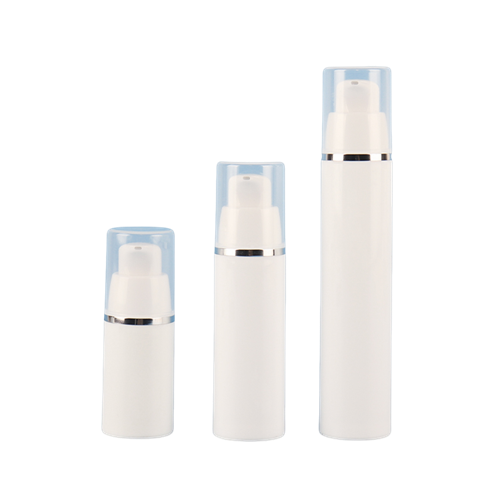
Plastic packs may dent, buckle, stress-whiten, crack at a gate or shoulder, eject a closure, lose prime or deform without obvious external leakage. For airless pump packaging, check actuator/overcap retention, piston movement, priming and output after the full test sequence.
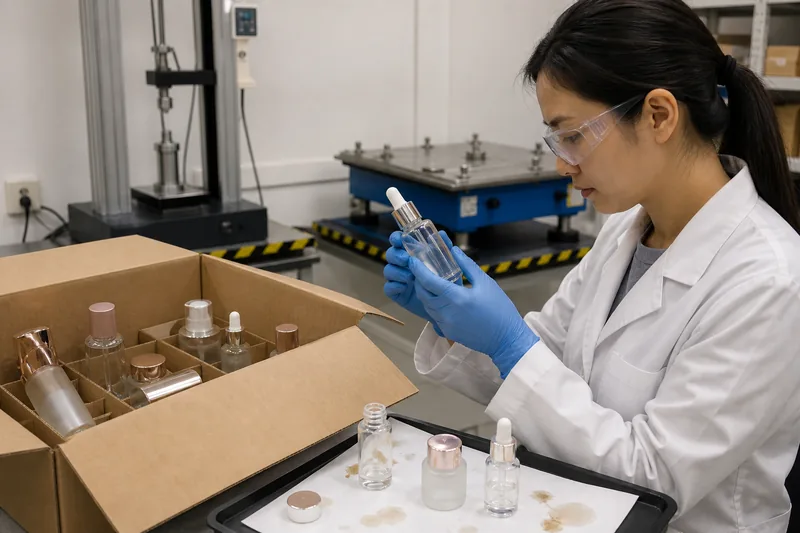
Use absorbent cards and controlled leak inspection after drops. Boyu’s guide to cosmetic bottle leakage outlines closure, seal and formula interactions that can become visible after impact.
Define pass/fail before testing
A standard describes execution, but the product owner usually defines acceptable damage. A practical hierarchy is:
- Critical: sharp fragments, exposed product, hazardous breakage or compromised safety.
- Major: leakage, closure release, loss of dispensing function, product contamination or unreadable required information.
- Commercial: unacceptable dents, scuffs, carton crushing or decoration damage that makes the unit unsaleable.
- Minor: agreed damage that does not affect safety, containment, function or saleability.
“No damage” is rarely a sufficient criterion. State whether outer-carton crushing is acceptable, how leakage is detected, how much decoration change is allowed, and whether every tested unit or a stated proportion must pass.
Frequently asked questions
What is the standard drop height for cosmetic packaging?
There is no universal height. Use the selected standard or programme’s current mass/category table, or justify a custom level from the real distribution environment.
Which standard should an e-commerce cosmetic brand use?
For individual parcel delivery, consider a parcel-specific programme such as ISTA 3A or ASTM D7386, subject to retailer and carrier rules. Verify the actual fulfilment route before selecting the test.
Should bottles be filled for drop testing?
Transport qualification should use filled, production-intent packages because mass, headspace, formula, closure and internal protection affect impact performance. A justified surrogate may be used only when it reproduces the relevant physical risks.
How many samples are required?
Follow the selected programme and supplement it with a risk-based sampling rationale. Include relevant mould cavities, component lots and pack-out variation; one ideal sample cannot demonstrate process consistency.
Is a drop test enough for shipping validation?
Usually not. Parcel and distribution systems can also impose vibration, compression, climatic and low-pressure hazards. Use the complete sequence appropriate to the route, then inspect leakage and function.
Sources
- ASTM D5276 — Drop Test of Loaded Containers by Free Fall
- ISO 2248:1985 — Vertical Impact Test by Dropping
- ISTA 3A — Packaged Products for Parcel Delivery System Shipment
- ASTM D4169 — Performance Testing of Shipping Containers and Systems
- ASTM Packaging Standards Catalogue — D7386 and related active standards
- ISO 2233:2000 — Conditioning for Testing

 English
  Español de Argentina
  Русский
  Italiano
  日本語
日本語  한국어
한국어  العربية
  Français
  Deutsch