

Direct answer: Measure the assembled path from the bottom of the pump gasket (the sealing datum) to the bottle’s internal base at the tube location, then choose a finished dip-tube length that places the open end close to—but not sealed against—the lowest usable point. For a straight tube, the engineering start point is FBOG bottle depth minus the intended bottom clearance. For a tube designed to curve toward a corner, use a physical path measurement. Always approve the cut in the actual pump, gasket, bottle and formula; bottle height alone is not enough.
Define dip-tube length from the correct datum
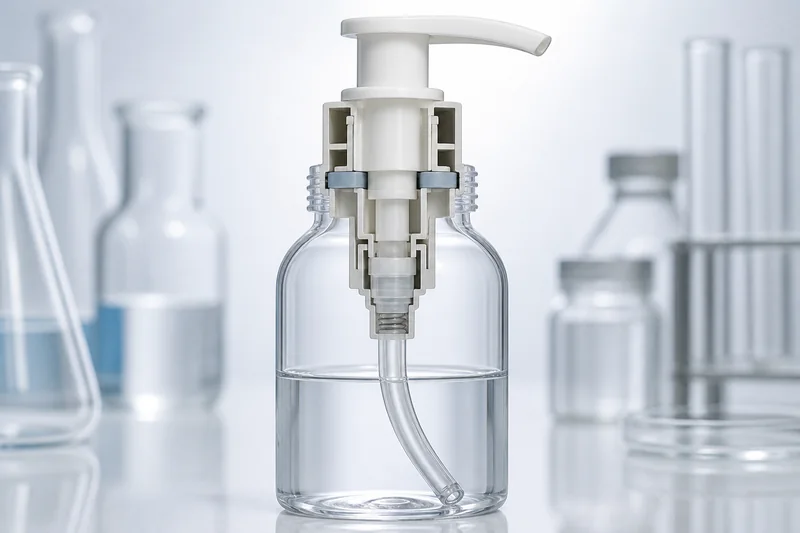
ASTM D6536/D6536M-18(2025) defines a measurement practice from the bottom of the dispenser’s sealing surface to the end of the tube. In packaging specifications this is commonly called FBOG, or “from bottom of gasket.” State the datum explicitly: suppliers may otherwise quote exposed plastic-tube length, which excludes the pump housing and cannot be compared directly with an FBOG dimension.
This is a starting calculation, not an automatic production release. The effective depth changes with gasket compression, closure seating, bottle-base geometry, tube angle and manufacturing variation.
How to calculate the correct dip-tube length
- Lock the component set. Identify the exact bottle drawing, neck finish, pump or sprayer, gasket and dip-tube material and diameter.
- Locate the sealing datum. Use the bottom surface of the gasket or specified sealing surface—the same reference used for the final pump measurement.
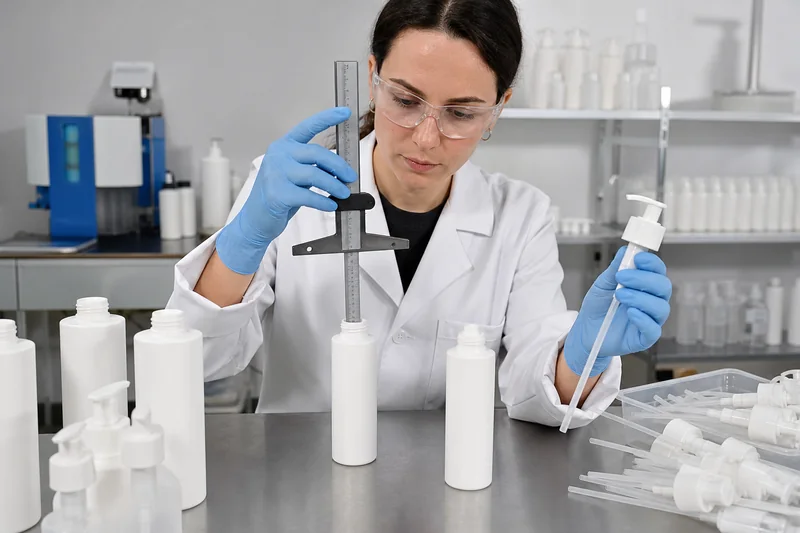
- Measure internal depth. With a depth gauge or narrow probe, measure from the top sealing plane of the bottle finish to the internal base at the tube’s actual horizontal position. Do not substitute external overall height.
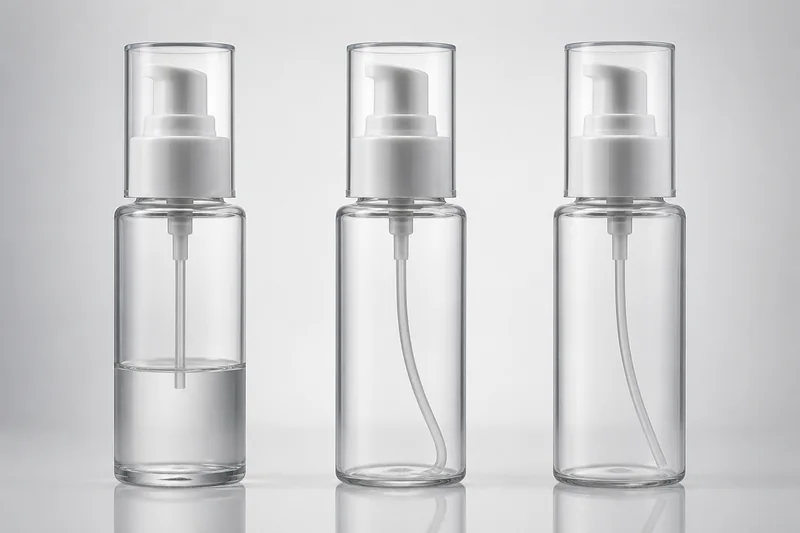
- Choose the end position. A straight tube needs a small flow path beneath or beside its inlet. A curved tube may intentionally reach a low corner without kinking.
- Calculate and make a trial cut. Cut long first, assemble completely, inspect the tube through a clear sample or equivalent section, and trim incrementally.
- Measure the approved assembly FBOG. Record the final dimension, cut style, tube material/diameters and tolerance on the drawing or purchase specification.
Illustrative calculation
If the measured assembled depth from the sealing datum to the target point is 148.0 mm and engineering chooses 1.5 mm nominal clearance, the initial straight-tube target is 146.5 mm FBOG. That 1.5 mm is an example assumption—not a universal rule. It must be checked against the tube’s end cut, formula flow, container tolerances and residual-product target.
Choose the tube-end style before setting length
| Configuration | Design intent | Main risk |
|---|---|---|
| Square cut | Simple manufacturing where a controlled gap is maintained | A flat end can seal against a flat base if too long |
| Angled cut | Keeps part of the inlet open if the long tip approaches the base | Specification ambiguity: measure to the longest tip and define angle |
| V-notch or castellated inlet | Provides alternate flow paths near the bottom | Tooling, particulate trapping and formula-specific flow must be assessed |
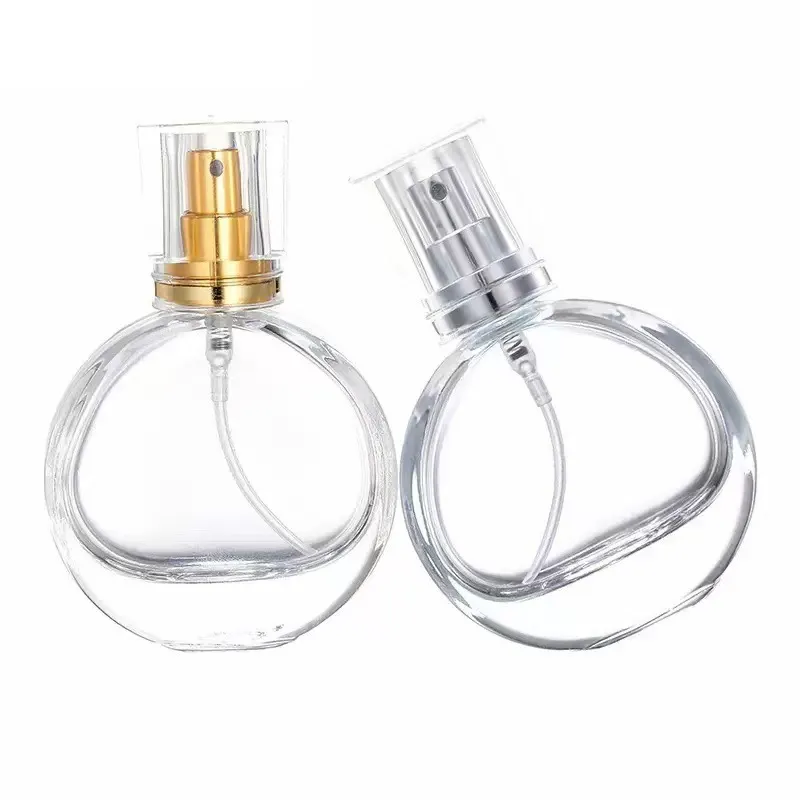
| Curved-to-corner tube | Places the inlet near a low perimeter point and may improve evacuation in use | Excess length can kink, preload the pump or vary orientation |
Berlin Packaging advises against cutting the end flush with the base because that can block dispensing; it describes an angled end with clearance or a deliberately longer curved tube as two options. Which is better depends on bottle geometry and the filled product.
Account for bottle geometry and component tolerance
Measure at the actual tube centreline. An off-centre pump over a domed push-up can have a different available depth from a centred pump over a flat base. Oval, rectangular and asymmetrical bottles may also direct a flexible tube toward different corners.
- Base push-up: use the local internal surface, not the outside standing ring.
- Gasket compression and closure seating: evaluate at specified application torque or snap engagement.
- Bottle variation: blow-moulded container height and base shape vary; use drawing tolerances and representative cavities.
- Tube behaviour: polymer, wall thickness, diameter and temperature affect stiffness, curvature and kinking.
- Formula: viscosity, particles and product stringing influence the clearance and inlet style needed.
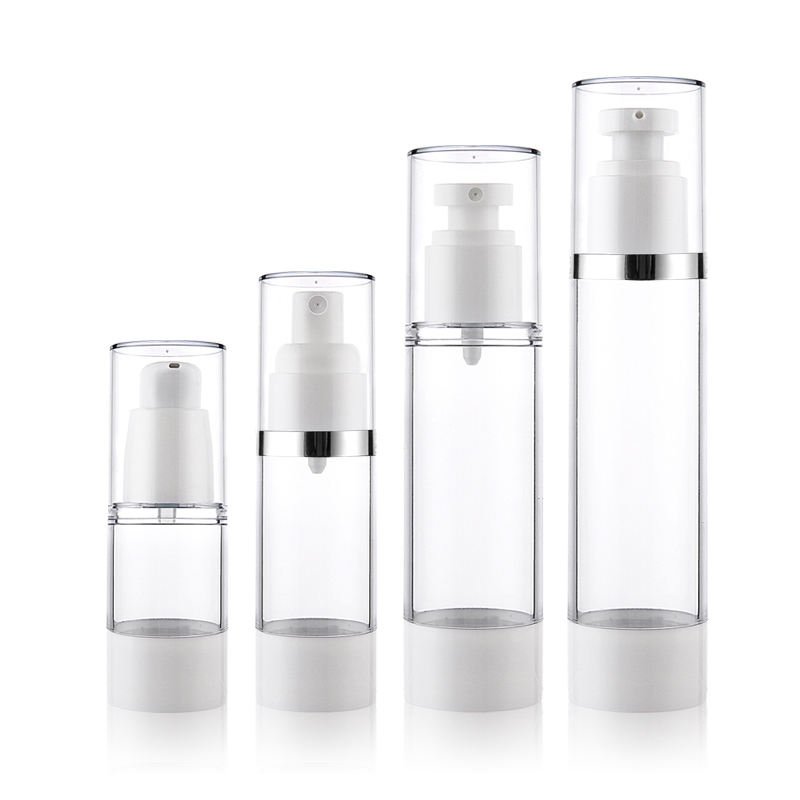
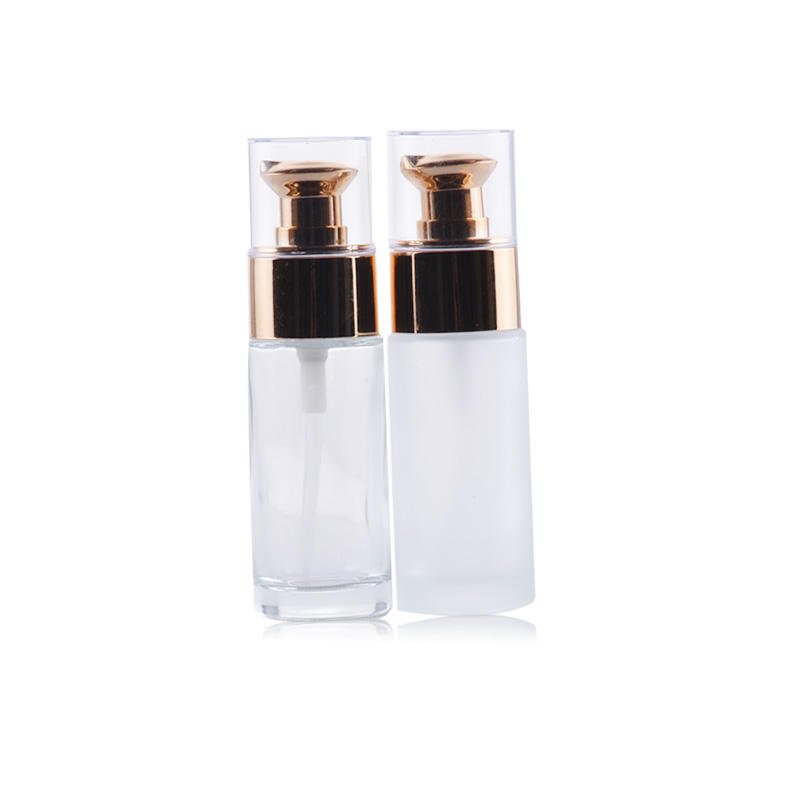
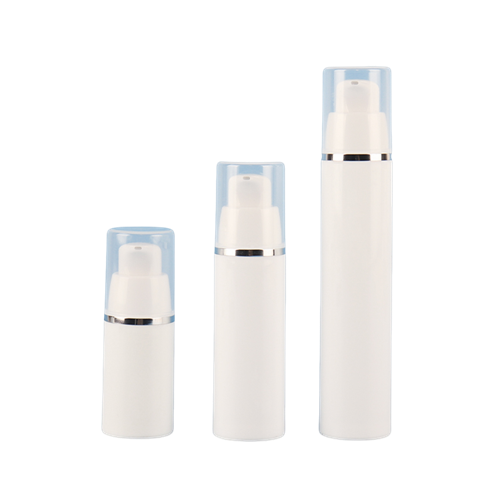
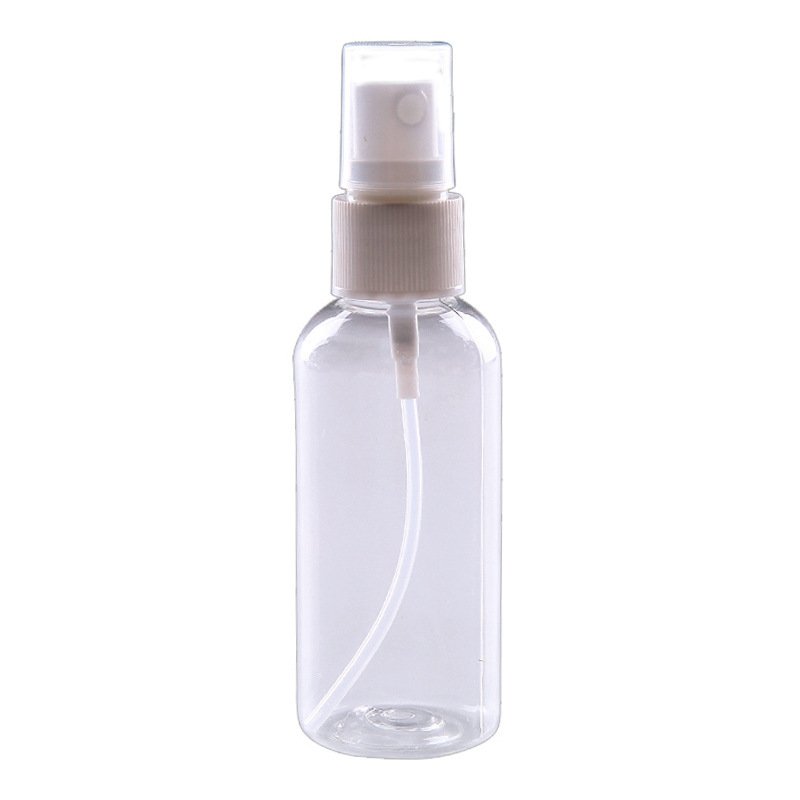
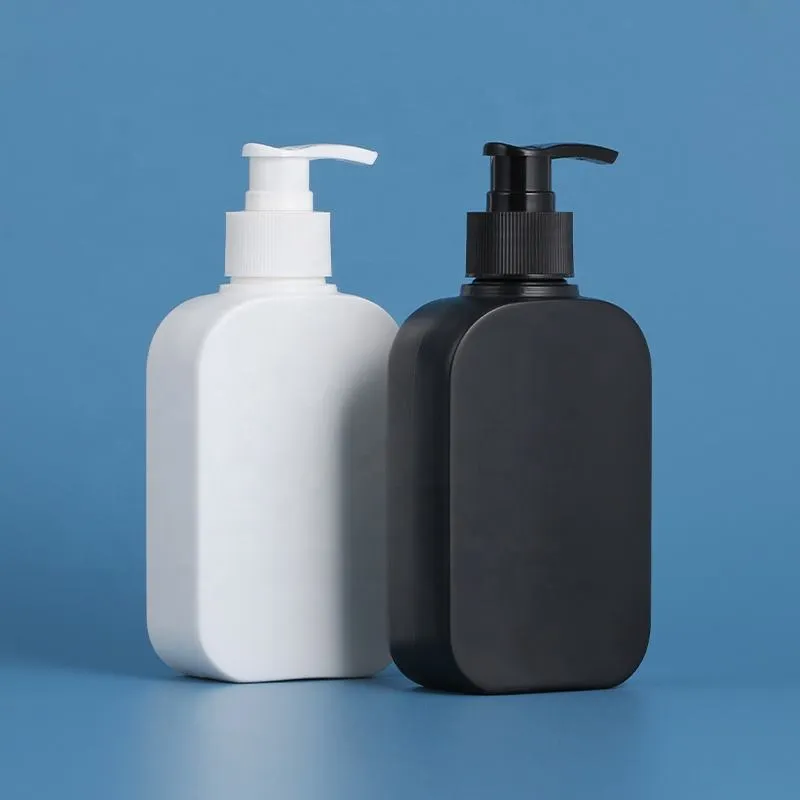
For lotion pump bottles, the tube must also support acceptable priming and evacuation with the actual emulsion. For spray bottles, verify spray continuity at intended angles. Airless piston packs generally do not use a conventional dip tube, so compare airless pump bottles separately rather than applying this calculation.
Validate the cut before mass production
- Assemble multiple bottles and dispensers from representative lots at the specified closure condition.
- Record prime strokes, output consistency, tube kinking and recovery in upright and intended-use orientations.
- Run to near empty and determine residual product by an agreed mass method.
- Repeat after relevant storage, temperature and compatibility conditioning.
- Inspect the tube for swelling, softening, cracking, pull-off or permanent deformation.
- Retain an approved assembly and controlled drawing; do not rely only on a loose cut-tube sample.
Frequently asked questions
What does FBOG mean?
FBOG means “from bottom of gasket.” It is the finished distance from the dispenser’s sealing datum to the longest end of the dip tube. Define it on the drawing because exposed tube length is a different measurement.
Should the dip tube touch the bottom?
A square-cut inlet should not be pressed flat against the base, where it can lose its flow path. A properly designed angled or notched inlet may approach or contact locally while remaining open, but this must be validated.
How much clearance should a dip tube have?
There is no universal clearance. It depends on cut geometry, tube diameter and stiffness, bottle tolerances, formula and evacuation requirement. Select a nominal value through prototype testing and ensure worst-case assemblies neither block nor sit too high.
Can I calculate length from the bottle drawing?
Yes, if the drawing includes the relevant internal depth and tolerances at the tube location. Confirm it with physical production-intent samples because external height does not reveal internal base geometry or assembled gasket position.
Why does a pump stop dispensing before the bottle is empty?
The tube may be short, displaced from the low point, curled above the liquid, blocked against the base or drawing air. Formula viscosity, loss of prime, venting and pump compatibility can cause the same symptom, so inspect the whole system.


 English
  Español de Argentina
  Русский
  Italiano
  日本語
日本語  한국어
한국어  العربية
  Français
  Deutsch