
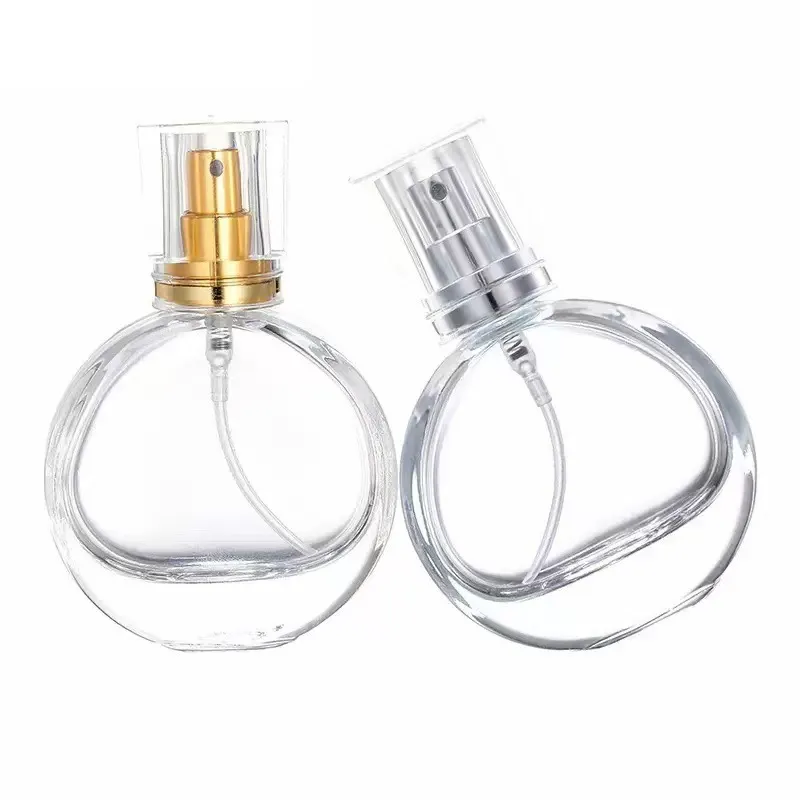
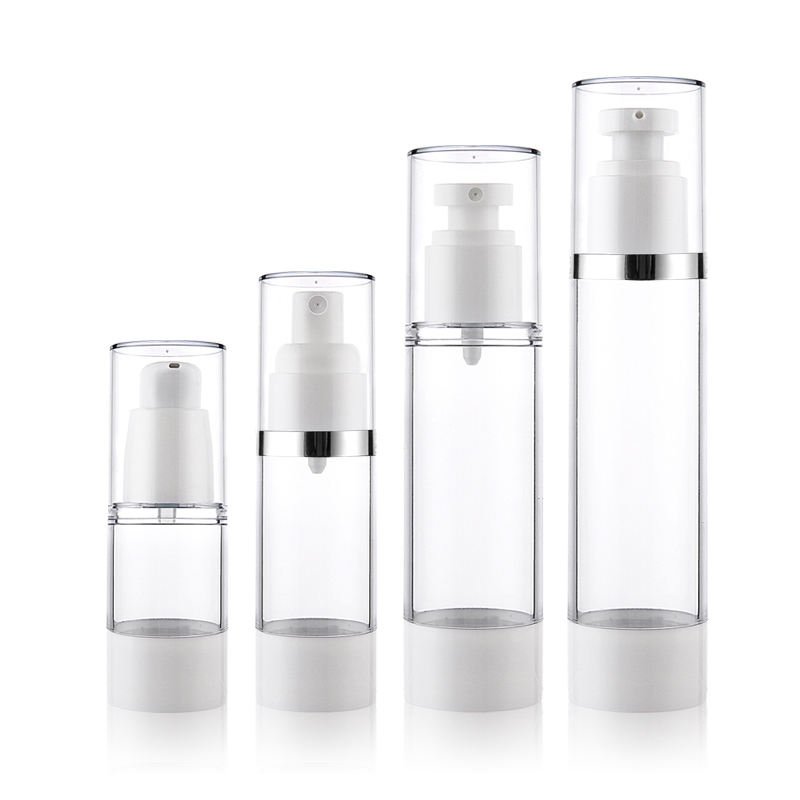
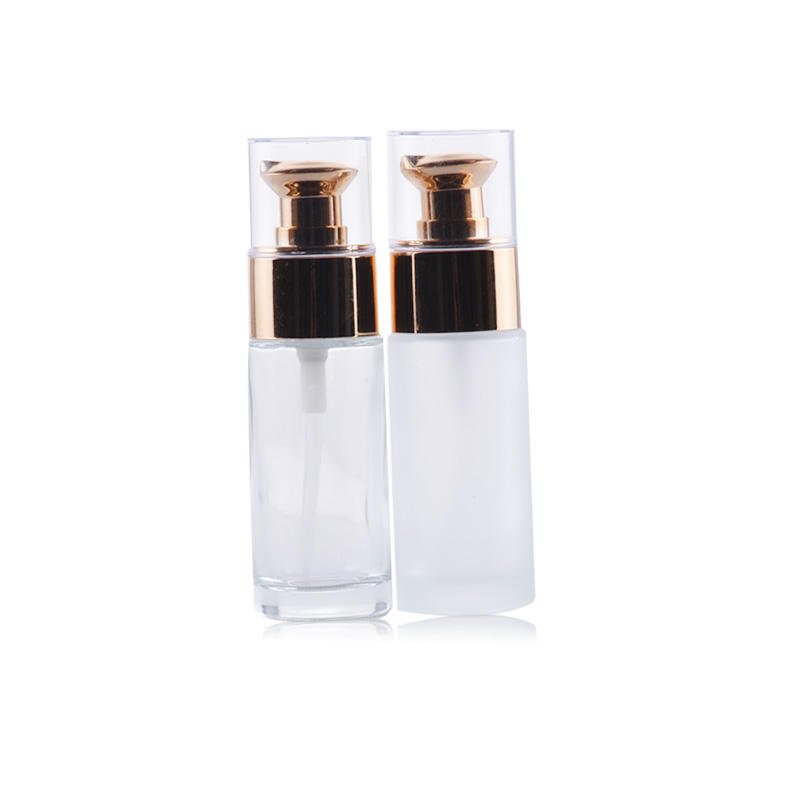
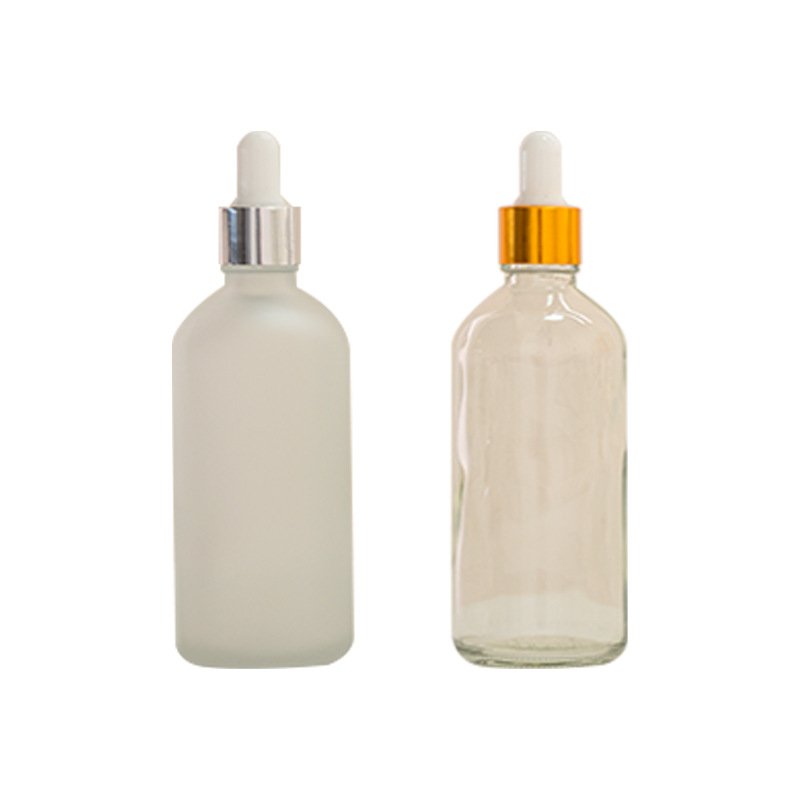


Direct answer: a nominal 50 mL bottle or jar cannot automatically be used for 50 g of cream because milliliters measure volume and grams measure mass. The cream volume is mass ÷ density. A 50 g whipped cream with a density of 0.85 g/mL occupies about 58.8 mL before allowing for an inner disc, closure intrusion, filling variation or functional headspace. A denser 1.15 g/mL mask occupies only about 43.5 mL.
Select the package from the measured density and process state of the final formula—not from water, a catalogue label or a “1 g = 1 mL” shortcut. Approve the minimum brimful capacity, target fill, fill height, closure clearance and finished-pack performance on production-intent samples.
This guide is written for cosmetic brands, contract manufacturers, fillers, procurement teams and packaging engineers specifying jars, conventional bottles, airless packs or tubes. Numerical examples are illustrations, not universal headspace or legal fill tolerances.

Brimful, nominal, target fill and headspace are four different values
“Capacity” is unsafe as a stand-alone specification because different teams may use it for different conditions. A supplier may mean the tool family, marketing may mean the label claim, and production may mean the amount delivered by the filler. Define the reference condition every time the word appears.
| Term | Controlled meaning | Who uses it | What it cannot prove |
|---|---|---|---|
| Nominal capacity | The stated or trade size used to identify the pack, such as 50 mL. In some specifications it aligns with the intended declared fill; in others it is only a model-family name. | Marketing, purchasing, artwork and catalogue management | It does not establish the actual cavity, recommended fill or capacity tolerance. |
| Brimful capacity | The container volume when filled to a defined brim or overflow point, normally without the closure installed. “Overflow capacity” is commonly used for the same concept, but the measurement condition must be confirmed. | Container designer, mold maker, supplier quality and incoming inspection | It is not the amount that should be sold or routinely filled. |
| Target fill | The filling-machine set point in mass or volume, selected so the production distribution meets the declared quantity and company control plan. | Filler, quality, regulatory and cost teams | One target value does not describe unit-to-unit fill variation. |
| Functional headspace | The volume left after filling and closing, including the space needed for closure insertion, product behavior, process variation and qualified storage/distribution conditions. | Packaging engineering, filling, compatibility and distribution teams | It is not a universal fixed percentage for all formulas and packs. |
Why a nominal 50 mL jar may not hold 50 g of face cream
Mass and volume are connected by density:
Product volume (mL) = product mass (g) ÷ density (g/mL)
Product mass (g) = product volume (mL) × density (g/mL)
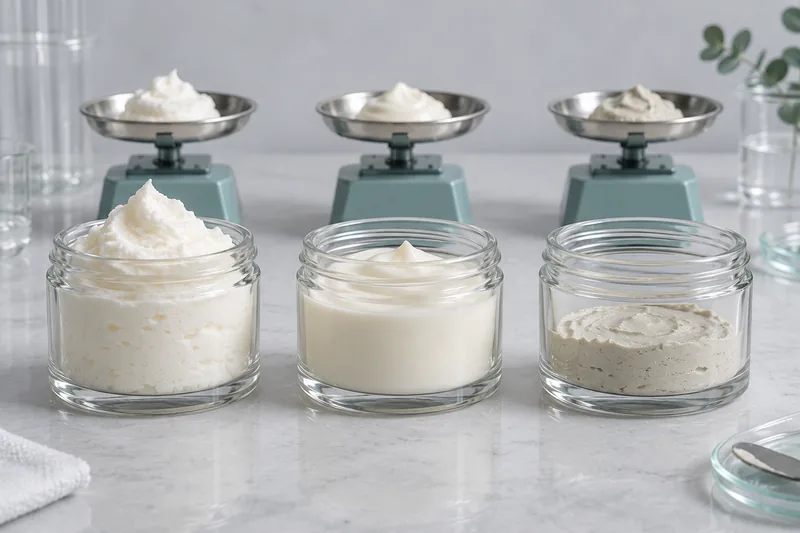
Only a material with a density of exactly 1.000 g/mL under the stated condition converts 50 g to exactly 50 mL. A cosmetic emulsion is not automatically water. Oils, waxes, mineral powders, pigments and entrained air can move the density in either direction. Temperature, mixing shear, deaeration, batch variation and the point in the process at which density is measured can also change the volume that reaches the package.
| Illustrative measured density | Volume occupied by 50 g | What a 50 mL cavity would do |
|---|---|---|
| 0.85 g/mL | 58.82 mL | Cannot contain the product even before closure clearance or headspace. |
| 1.00 g/mL | 50.00 mL | No remaining space if 50 mL is the true brimful capacity. |
| 1.15 g/mL | 43.48 mL | Physically fits, but the visible fill level and closure clearance still require approval. |
These densities are mathematical examples, not claimed ranges for every whipped cream, moisturizer or mineral mask. Obtain the actual formula result from the formulator or contract filler. Boyu’s mass-volume-density conversion guide covers the broader unit logic; this article applies it to container qualification.
Density is not viscosity
Density tells you how much mass occupies a given volume. Viscosity describes resistance to flow. A thick product can be relatively light if it contains substantial incorporated air, while a pourable suspension can be dense because of its solid content. Viscosity still matters to the nozzle, filling speed, leveling and pump, but it cannot replace a density measurement in the capacity calculation.
Use a worst-case sizing equation—not an average jar
A capacity decision should still work when the product occupies its largest credible volume and the container provides its smallest acceptable cavity. That means pairing low formula density with high fill mass, low brimful capacity with high closure intrusion, and then preserving the functional free space justified by testing.
Vproduct,max = mfill,max ÷ ρmin
Required Cbrimful,min ≥ Vproduct,max + Vclosure,max + Hrequired
Available closed-pack headspace = Cbrimful,actual − Vproduct,actual − Vclosure,actual
- mfill,max: the high-side mass that can be delivered under the approved filler set point, variation and control plan—not merely the declared 50 g.
- ρmin: the lowest justified production density at the relevant fill condition; lower density creates higher volume for the same mass.
- Vclosure,max: the maximum volume displaced below the brim by an inner disc, spatula holder, dropper bulb, pump body, piston-start geometry or other internal component.
- Hrequired: the free space still required after closing for clean assembly, product movement, expansion, foam/air behavior and validated distribution conditions.
- Cbrimful,min: the low end of the agreed container-capacity specification, not the average of three attractive samples.
How the cosmetic product type changes the capacity decision
Density is the first conversion input, but formula behavior determines how much extra functional space and what validation are needed. Do not assign a headspace percentage from a product name alone.
| Formula behavior | Capacity risk | What to measure or test | Packaging implication |
|---|---|---|---|
| Smooth cream or emulsion | Density and surface level may change with temperature or deaeration. | Density at fill temperature, fill repeatability, leveling after a defined time, closure cleanliness. | Jar or compatible pump; approve both mass and visible fill height. |
| Whipped butter or aerated cream | Low and variable bulk density can make 50 g occupy far more than 50 mL; settling can lower the surface later. | Production-state bulk density, aeration consistency, post-fill settling and thermal cycling. | Often needs a larger cavity and a controlled depositor; shelf appearance must be judged after settling. |
| Dense clay, mineral or pigmented mask | The product may occupy less volume than expected and look underfilled in a wide transparent jar. | Density, leveling, wall smearing, fill pattern and visual standard. | A smaller cavity or different internal geometry may give a better presentation without reducing declared mass. |
| Scrub or suspended-particle product | Non-uniform solids and trapped voids can change dose and level; particles may contaminate the sealing land. | Representative sampling, particle distribution, nozzle passage, fill mass and clean closure seating. | Wide-mouth jar or suitably sized tube; do not rely on a water capacity test for line behavior. |
| Foaming cleanser or surfactant lotion | Dynamic foam can rise above the settled liquid and interfere with capping or fill sensors. | Fill speed, nozzle position, foam collapse time and closure timing. | Headspace is partly a process requirement; slow or bottom-up filling may reduce the needed margin. |
| Warm- or hot-filled product | Density and volume at filling differ from the cooled retail condition; the package may distort or develop pressure/vacuum effects. | Density and fill level at process temperature, cooling behavior, container heat resistance and closure timing. | Size and material must be validated through the full thermal process, not at room temperature only. |
If formula protection or dosing makes a jar unsuitable, compare alternative structures in Boyu’s formula-to-package selection guide. A change from jar to airless bottle or tube changes the capacity calculation; it does not remove it.
A 50 mL jar, bottle, airless pack and tube do not have the same usable space
Catalogue capacity is tied to a structure. The parts that create a premium appearance or dispensing function may occupy internal space, and some “50 mL” families are dimensioned around a recommended fill rather than the same brimful datum.
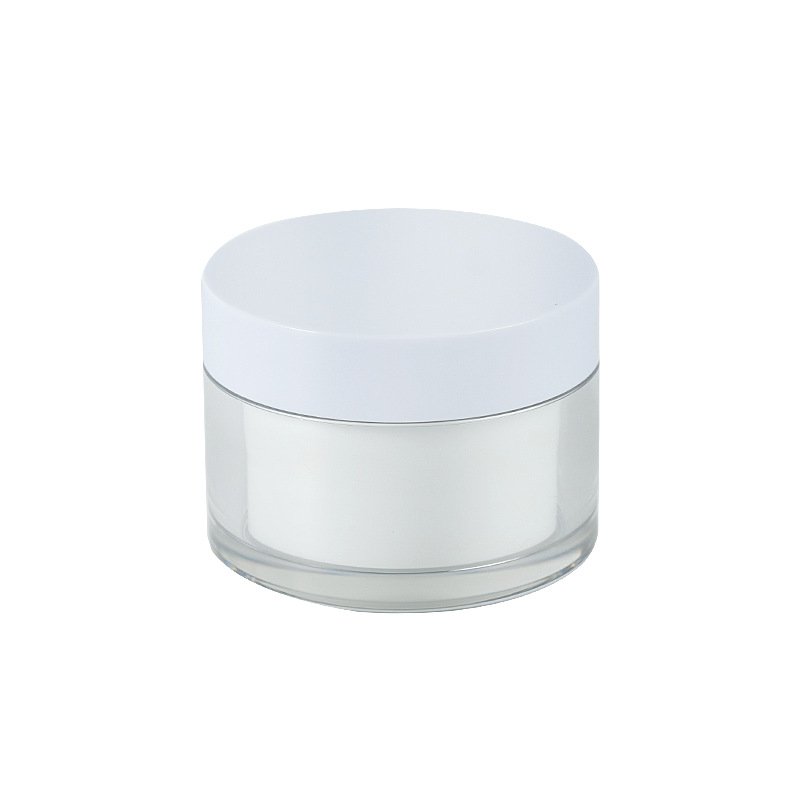
Single-wall jars
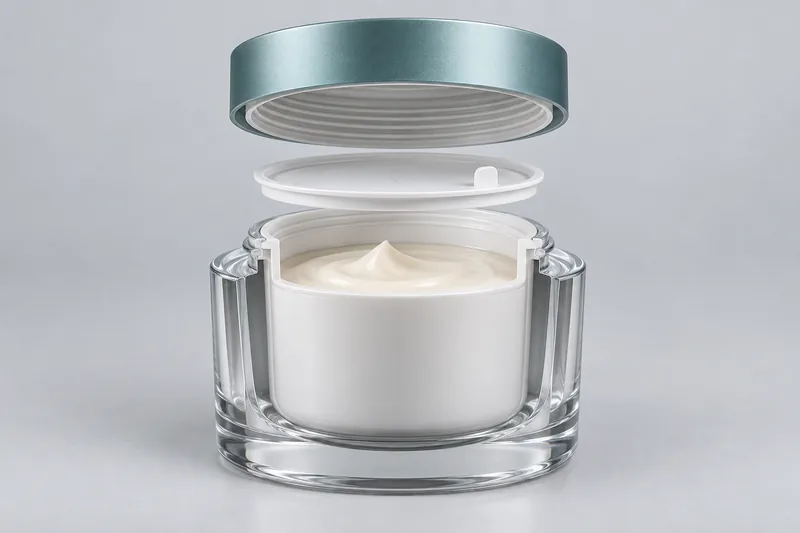
The visible wall normally forms the product cavity, but a thick glass base, heavy sidewall, shoulder radius and wide mouth still determine the internal volume and fill level. The inner disc must seat without touching or pushing product into the thread. When comparing cosmetic cream jar formats, request the brimful capacity and low-side tolerance for each exact mold—not a family-level statement.
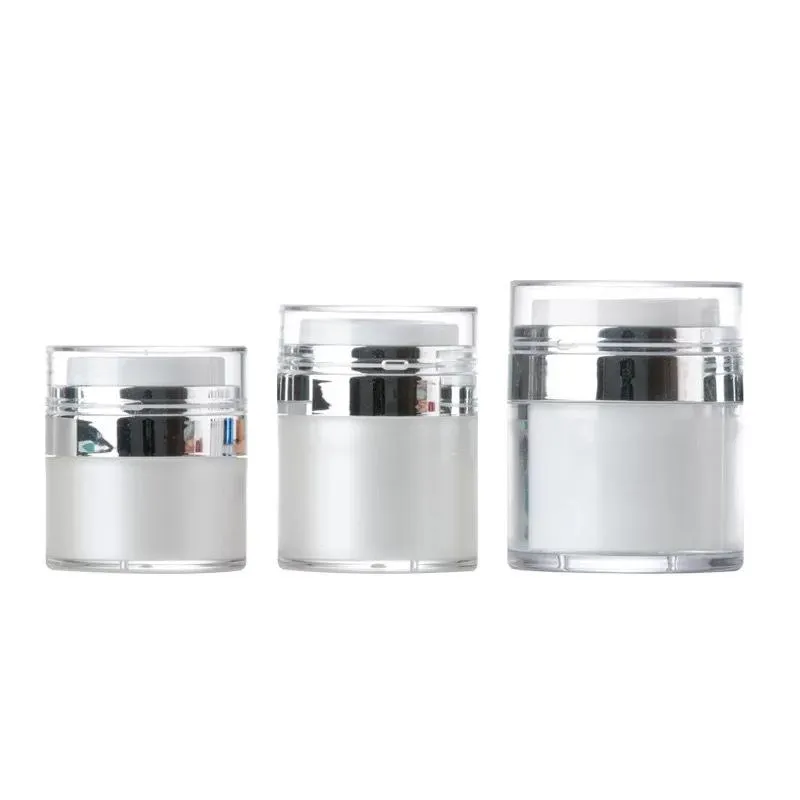
Double-wall and acrylic-style jars
The outer shell creates visual size and weight; a separate inner cup contains the formula. The outer dimensions therefore say little about fill volume. Confirm which component owns the capacity, whether the quoted number is the cup’s brimful or recommended fill, how far the inner disc enters the cup, and whether product can migrate between the cup and shell if overfilled.
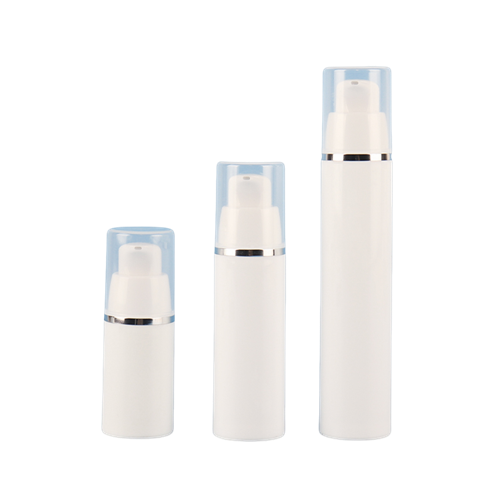
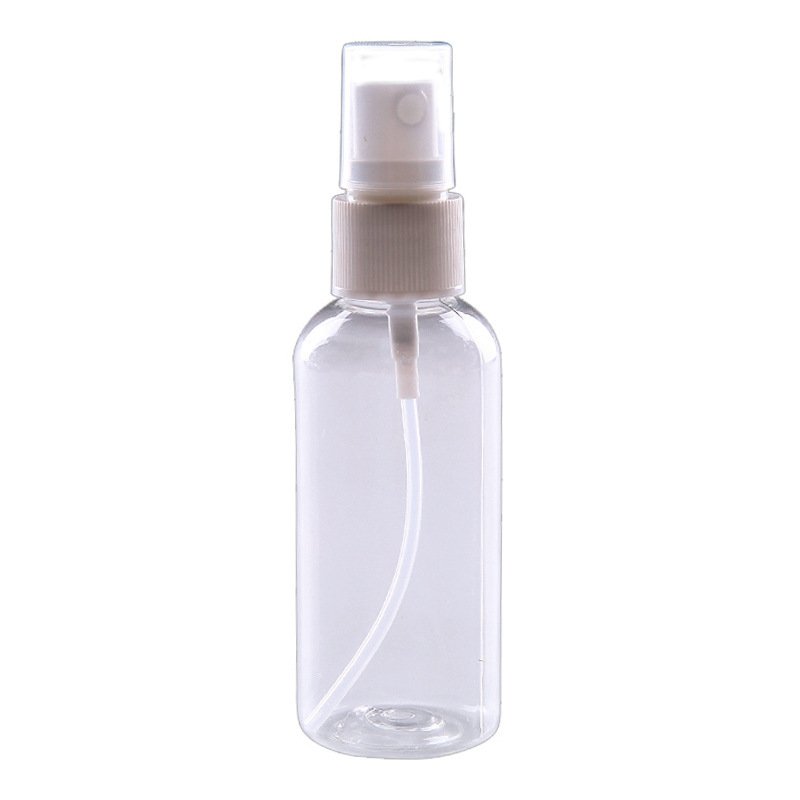
Conventional pump and dropper bottles
A pump body, gasket, dip tube and dropper pipette displace volume below the finish. The bottle may accept the intended liquid before closing and overflow when the assembly is inserted. Capacity approval should use the final closure, final fill orientation and final capping method. The fill height must also keep the pump from flooding in a way that causes leakage or poor priming.
Airless packs and squeeze tubes
An airless pack is constrained by piston start position, product chamber geometry, pump dead volume, priming and maximum process fill. A squeeze tube needs an unfilled tail zone so the filler can create a clean end seal; its usable volume depends on diameter, cut length, shoulder and seal allowance. Do not transfer a jar headspace rule to either system.
How to measure the inputs before selecting the pack
1. Measure the production-representative formula density
- Use the finished formula, including fragrance, color, particles and actives that affect density or aeration.
- Define the measurement method, calibrated device, sample handling and temperature. Record g/mL with justified precision.
- Sample the product in the state that reaches the filler. If mixing, recirculation or deaeration changes incorporated air, measure the relevant process points.
- Use multiple batches or a justified range. For sizing by mass, the low-density end is normally the high-volume risk.
- Check whether density or fill level changes during warm filling, cooling, settling or temperature conditioning.
2. Verify brimful capacity using a defined method
For glass containers, ISO 8106 specifies a gravimetric method for determining capacity and compliance with specification limits. In practical terms, a controlled water mass is converted to volume using the appropriate density and test temperature, with a defined brim or filling-level datum. Use the actual standard or an approved company method; do not improvise the datum differently at the supplier and filler.
For plastic, double-wall and airless components, use a documented method appropriate to the structure and drawing. The glass standard should not be cited as if it automatically qualifies every plastic pack. Sample across cavities, molding time and lots, because a capacity result without a sampling basis cannot establish production tolerance.
3. Measure closure or insert displacement
Use the final inner disc, liner, spatula holder, pump, dropper or wiper. A straightforward development test fills the container to a controlled level, installs the component under the intended assembly condition, and measures the change or displaced overflow. For components that trap air or cannot be wetted reliably, obtain the supplier’s CAD/displacement data and confirm it on assembled samples. Record the high side for the worst-case calculation.
4. Characterize the filling distribution
A filler set to 50.0 g does not produce 50.0 g in every unit. Establish the warm-up behavior, mean, variation, drift, nozzle cut-off and checkweigher or sampling method. The high-side mass affects physical fit; the low-side mass affects net-content compliance. Both must be controlled, but they solve different risks.
5. Approve the visible fill height after settling
For clear or translucent packs, specify how and when appearance is judged: immediately after filling, after deaeration or settling, and after conditioning. A compliant 50 g fill can still look short in a broad jar or touch the inner disc in a narrow one. Use an approved filled sample or dimensioned fill-height range; do not leave the shelf appearance to the first production batch.
Worked example: selecting a jar for a 50 g cream
Assume a face cream is sold by net weight. The following values are disclosed planning assumptions, not Boyu production data or a universal specification:
- Declared net quantity: 50 g
- Approved maximum process fill for physical-fit analysis: 50.8 g
- Lowest justified density at the filling condition: 0.84 g/mL
- Maximum inner-disc intrusion: 1.8 mL
- Project-specific residual functional headspace after closing: 3.0 mL
Step 1 — maximum product volume: 50.8 g ÷ 0.84 g/mL = 60.48 mL.
Step 2 — minimum required brimful capacity: 60.48 + 1.8 + 3.0 = 65.28 mL.
Step 3 — compare the low end of each jar specification:
| Candidate | Brimful specification | Minimum capacity | Screening result |
|---|---|---|---|
| A | 66 ± 2 mL | 64 mL | Fails the 65.28 mL minimum even though its average appears adequate. |
| B | 70 ± 2 mL | 68 mL | Passes this arithmetic screen with 2.72 mL margin; still requires fill and pack testing. |
Candidate B is not automatically approved. The trial must still confirm clean disc placement, no thread contamination, acceptable visible level, closure sealing, compatibility and distribution performance. A nominally described 50 g glass cream jar format is a commercial starting point; the drawing and filled sample must prove it for the actual 50 g formula.
Nominal package capacity does not decide the legal net-content declaration
The sales-market rule and product consistency determine how net contents are declared; the packaging supplier’s catalogue does not. In the United States, FDA guidance states that a solid, semisolid or viscous cosmetic is generally declared by avoirdupois weight, while a liquid is declared by fluid measure unless an established consumer or trade custom applies. For fluid-measure declarations, FDA guidance uses 68°F (20°C).
In the European Union, Article 19 of Regulation (EC) No 1223/2009 requires the nominal content at the time of packaging to be given by weight or volume, subject to stated exceptions such as very small packs, free samples and single-application packs. Separate national or regional metrology rules may govern quantity control. Regulatory teams should confirm the exact destination-market requirements and artwork before commercialization.
A “50 mL jar” can therefore contain a product sold as 50 g, but the relationship must be demonstrated. Conversely, changing the jar to a larger brimful capacity does not authorize changing the label claim. Container capacity, fill control and declared net quantity belong in one specification but remain separate values.
Common capacity problems and the corrective action
| Symptom | Likely capacity-related causes | Check first | Corrective direction |
|---|---|---|---|
| Cream rises into the thread when the lid is fitted | Density too low for the assumed conversion; disc intrusion omitted; fill high-side too large; cavity low-side too small | Reweigh fill, measure density and intrusion, map brimful capacity by cavity | Larger cavity, revised process target/variation, different disc geometry or justified formula/process correction |
| Water trial passes but cream filling overflows | Water does not reproduce density, aeration, viscosity, nozzle stringing or foam | Production formula and actual filler/nozzle conditions | Run a production-intent fill trial; use water only for the narrow capacity measurement it can support |
| Correct 50 g fill looks underfilled | Dense formula; broad or tall cavity; oversized headspace; product settled after filling | Density, cavity profile and timed post-fill height | Select a smaller/differently proportioned cavity or approve an opaque/decorated presentation; do not conceal underweight with appearance changes |
| Fill height varies while checkweight is stable | Density/aeration variation, jar capacity variation, uneven leveling or different cavity geometry | Correlate filled mass, density, jar cavity/mold cavity and settling time | Control aeration and container capacity; establish a timed visual standard rather than adjusting mass by eye |
| Package leaks only after warm transport | Insufficient qualified headspace, closure contact, formula expansion or a separate seal/compatibility problem | Conditioned filled packs, closure interface and mass loss/leak location | Do not assume capacity alone; investigate seal, material compatibility, torque and distribution conditions |
| Airless pump will not prime or stops early | Wrong process fill, piston position, trapped air, pump dead volume or formula/pump mismatch | Assembly drawing, fill method, priming strokes, evacuation and residual product | Qualify the complete airless platform and filling instruction, not only its stated mL size |
Six sizing mistakes that cause avoidable launch problems
1. Treating grams and millilitres as interchangeable. The shortcut is only exact when density is 1.000 g/mL at the relevant condition. Convert the maximum intended fill mass using the formula’s justified minimum density, then add closure displacement and functional headspace.
2. Comparing averages instead of worst cases. An average container filled with average-density cream at the average filler output can look perfect while the smallest cavity, lowest-density batch and highest fill collide in production. Put ranges and tolerances on the drawing and process specification, and evaluate the adverse combination.
3. Using external dimensions to infer capacity. Heavy glass bases, thick walls and double-wall inner cups can make two similarly sized jars hold very different volumes. Use the product-contact cavity’s measured capacity; never calculate usable volume from the outside diameter and height.
4. Measuring an open container and forgetting the closure. An inner disc, liner, pump body, wiper, dropper or piston occupies space after filling. Fit the production-intent closure at the specified fill level and confirm that product does not enter the thread, vent path or sealing land.
5. Correcting appearance by changing net mass. Operators should not add or remove product simply because a jar looks low or high. Checkweight protects the declared quantity; an approved timed fill-height range controls appearance. If both cannot be met, change the cavity geometry or package presentation rather than improvising the fill.
6. Approving hand fills and skipping the line trial. Hand filling does not reproduce nozzle diving, cut-off tails, entrained air, line speed or capping pressure. Use a production-intent trial and the broader cosmetic bottle qualification checklist before ordering commercial quantities.
How to qualify the chosen bottle or jar
Arithmetic eliminates clearly undersized candidates; it does not qualify a commercial package. Use production-intent components and the final formula to connect capacity with filling, closing, shelf appearance and distribution.
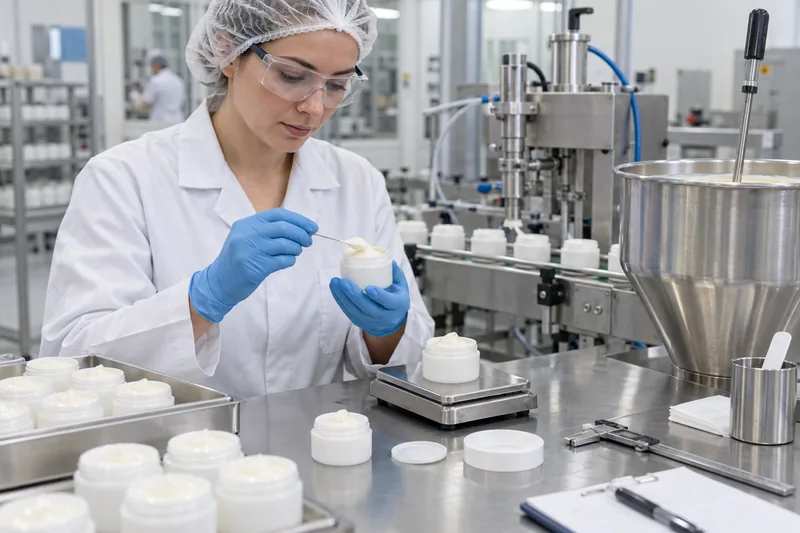
- Freeze the sample identity. Record container tool/cavity, material, inner cup, liner or disc, cap, decoration, formula batch and filling settings.
- Measure baseline distributions. Check empty tare, brimful capacity, density, filled net mass, gross mass, fill height, closure engagement and any pump or orifice function.
- Run enough consecutive units to expose the process. A few hand-filled samples can prove geometry but not line speed, nozzle cut-off, foam, conveyor handling or capping contamination.
- Condition the complete pack. Use justified upright, inverted or side orientations and temperatures that address the formula, closure and distribution route.
- Test the final pack-out. Include the retail carton, insert and shipper where drop, vibration, compression or reduced pressure could move product toward the seal.
- Recheck after recovery. Examine leakage, cap cleanliness, deformation, fill appearance, mass change and dispensing after samples return to the defined observation condition.
Use Boyu’s cosmetic packaging compatibility protocol to build the broader formula-package aging matrix, and select applicable cosmetic bottle leak-testing methods for the final closure and distribution route. Capacity is one input; compatibility, seal integrity and dispensing remain separate approval questions.
Capacity information to put in the RFQ and quality agreement
A useful request asks the packaging supplier for measurable values and tells the filler what the package must accommodate. Include:
- Declared quantity and unit: 50 g, 50 mL or another market-specific claim; never write “50” alone.
- Formula information: product class, measured density range and temperature, viscosity/flow behavior, aeration, particles, volatility and filling temperature.
- Fill-process data: filler type, nozzle, target, high/low process limits, speed, product temperature, settling time and capping sequence.
- Container capacity: nominal designation, brimful definition, target and tolerance, measurement method, sampling plan and mold-cavity traceability.
- Internal components: inner disc, liner, wiper, spatula holder, pump, dropper, piston or other intrusion, including maximum displacement where applicable.
- Finished appearance: approved fill-height range, observation timing, product surface standard and acceptable wall smearing.
- Performance: closure torque or engagement, leak criteria, compatibility program, distribution route, temperature range, pump/dispensing requirements and residual product.
- Change control: approval required before changing mold, cavity repair, resin, inner cup, closure, filler, process temperature or capacity method.
Require the specification to state whether the supplier’s capacity is a design target, minimum, average or range. When comparing quotations, reject a bare “50 mL” line item as incomplete. A larger jar may increase unit mass, carton volume and freight; a smaller jar may save material but create line losses or leaks. Compare total usable-pack cost after qualification, not capacity labels alone.
Frequently asked questions
Are brimful capacity and overflow capacity the same?
They commonly mean the maximum volume at which product reaches the defined top or begins to overflow, but terminology is not perfectly consistent across suppliers. Confirm the datum, whether the closure is absent, test temperature, liquid, method and tolerance. Treat two numbers as equivalent only after their measurement conditions match.
Can I test a 50 g cream jar with 50 g of water?
Water can support a defined cavity-capacity measurement, but 50 g of water does not reproduce a cream’s density, aeration, viscosity, leveling, formula expansion or closure contamination. Use water to measure what water can measure, then use the actual formula for fill and package qualification.
What percentage of headspace should a cosmetic jar have?
There is no defensible universal percentage. Required headspace depends on density variation, maximum fill, closure intrusion, foam or entrained air, filling temperature, thermal behavior, pack geometry, sealing and distribution. Calculate a first requirement, then approve it through actual filling, closing, conditioning and transport testing.
Which density should be used: laboratory density or filling-line density?
Use a method and condition that represent the product delivered to the package, while retaining the laboratory result for formula control. If processing introduces or removes air, or the product is warm-filled, laboratory and line-state density may differ. Define the production range and size the pack against the justified low-density case.
Is the larger-brimful jar always safer?
No. Too small creates overflow and closure risk; unnecessarily large capacity can create an underfilled appearance, use more material, increase pack dimensions and reduce shipping density. The best cavity clears the worst-case physical requirement while meeting the approved visual, functional and commercial brief.
What should be approved before placing the bulk jar order?
Approve the final drawing, capacity definition and tolerance, production-intent samples, closure/inner-disc assembly, actual-formula fill trial, filled appearance, compatibility plan, leak and distribution criteria, and change-control requirements. Retain signed empty and filled reference samples where the quality system permits.
Sources and technical references
- US FDA — Cosmetics Labeling Guide
- US FDA — Summary of Cosmetics Labeling Requirements
- European Union — Regulation (EC) No 1223/2009, Article 19
- OIML R 87:2016 — Quantity of Product in Prepackages
- NIST Handbook 133 — Checking the Net Contents of Packaged Goods
- ISO 8106:2004 — Glass Containers: Determination of Capacity by Gravimetric Method
- Bormioli Pharma — FI8068 Beauty Bottle Technical Data
- The Jar Factory — Standard Series Cosmetic Jar Technical Data
- Amcor — 300 mL Cosmetic Jar Product Data
- Thrace Group — Product Specifications Showing Nominal and Brimful Capacity

 English
  Español de Argentina
  Русский
  Italiano
  日本語
日本語  한국어
한국어  العربية
  Français
  Deutsch