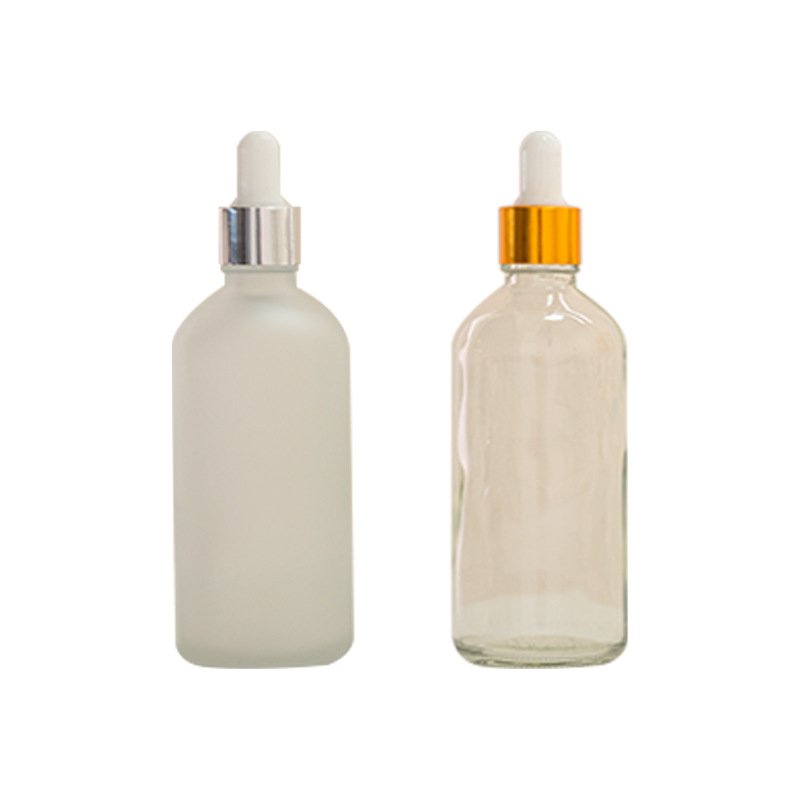
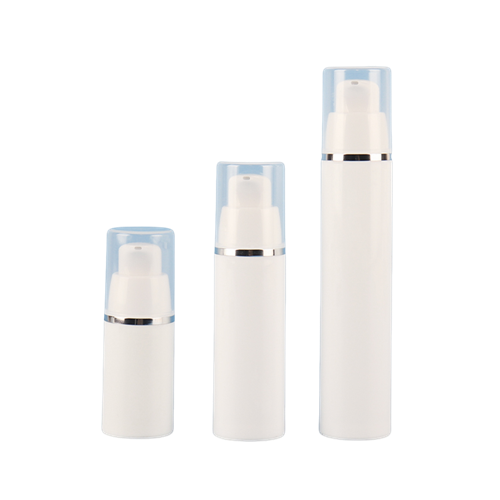
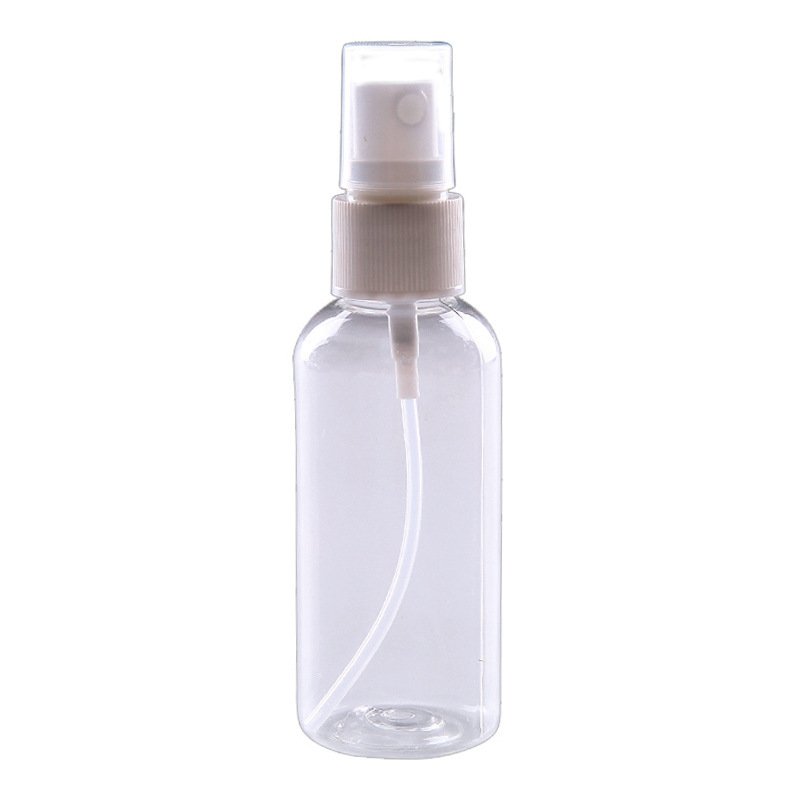
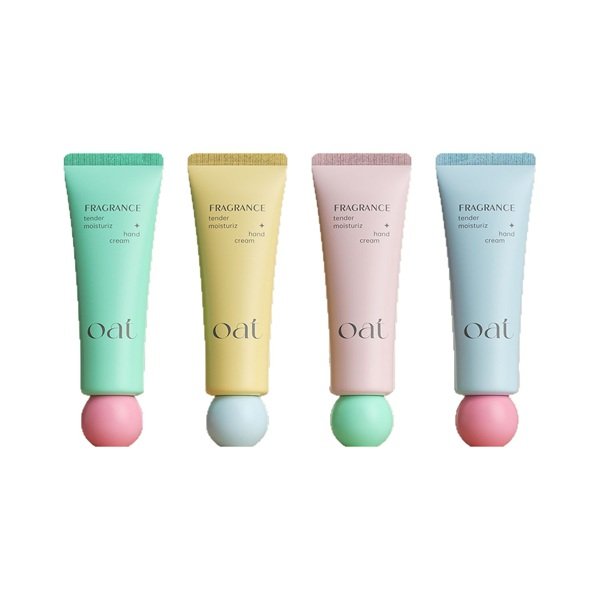
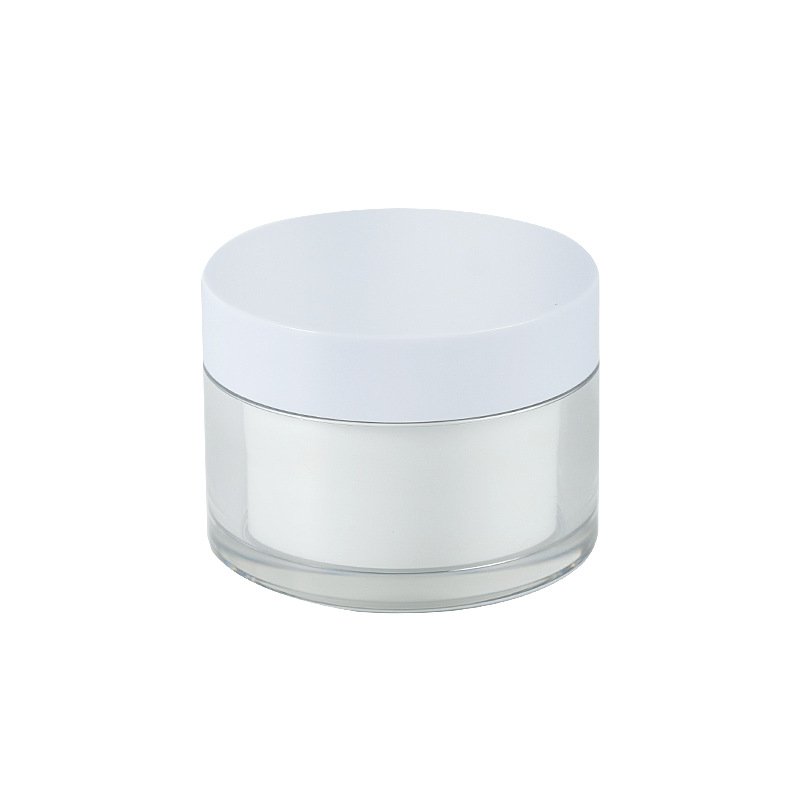
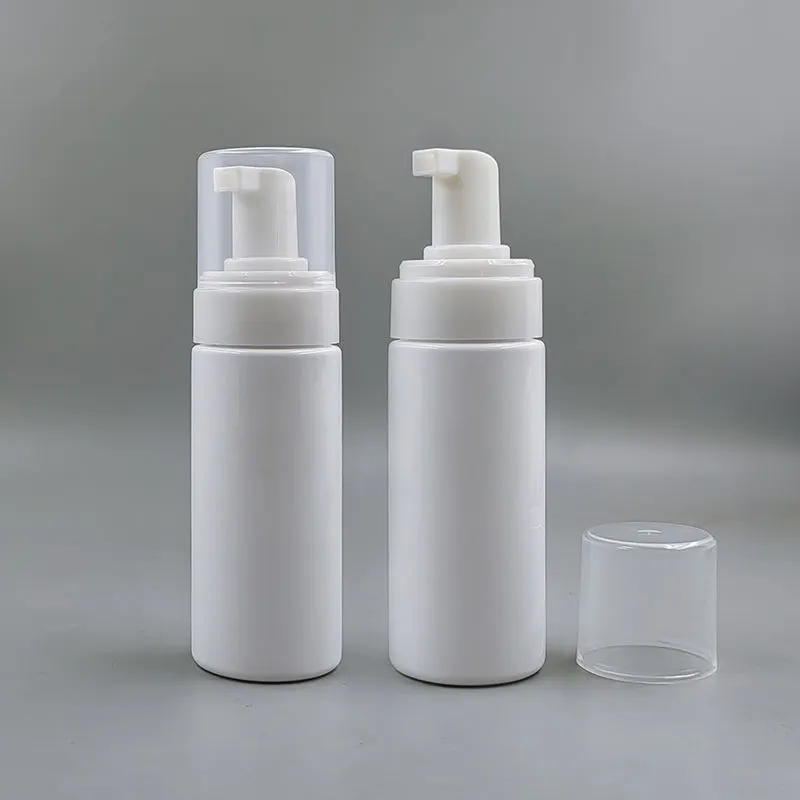
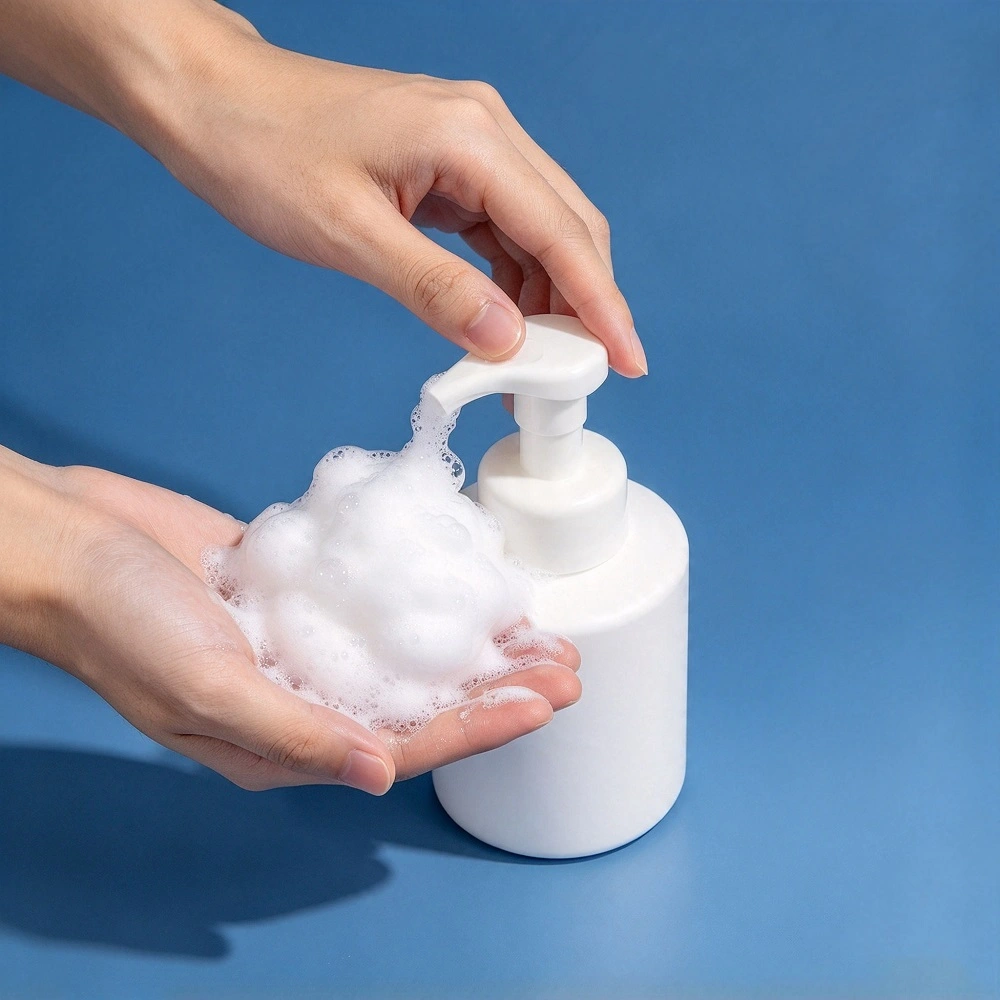
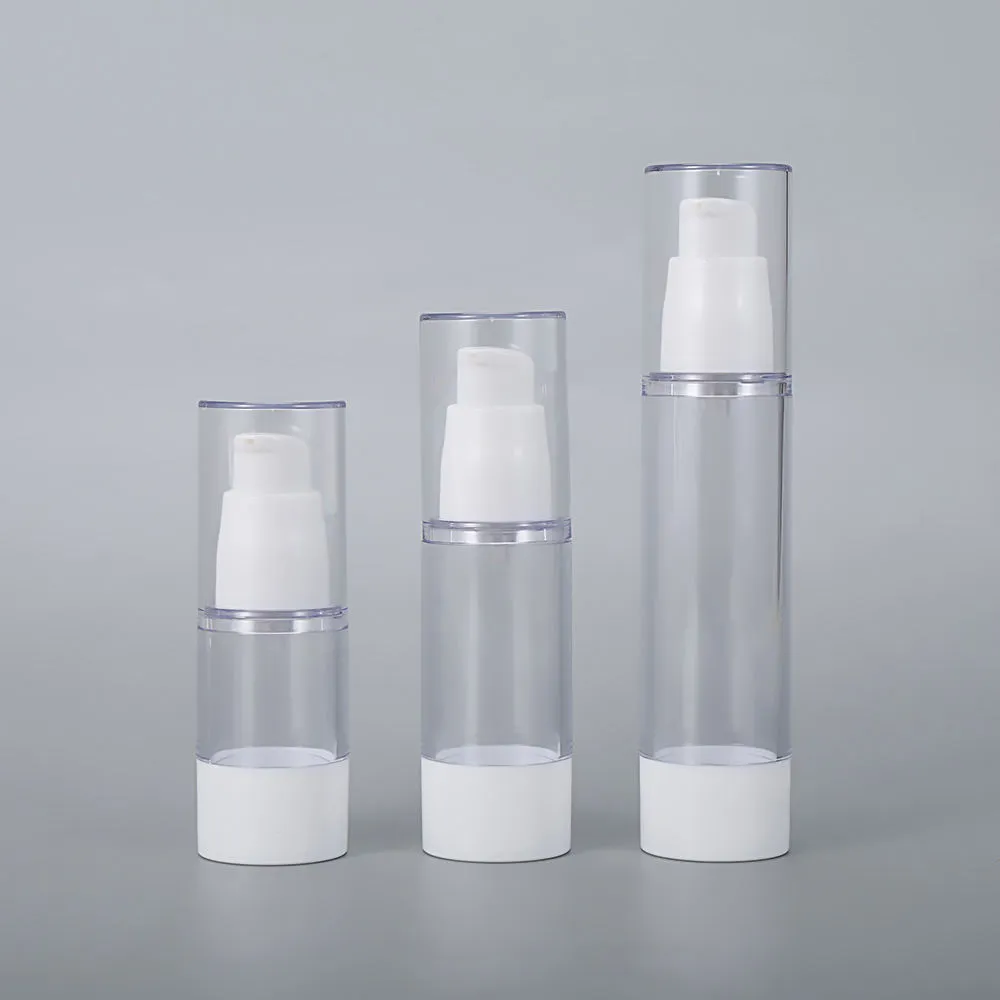
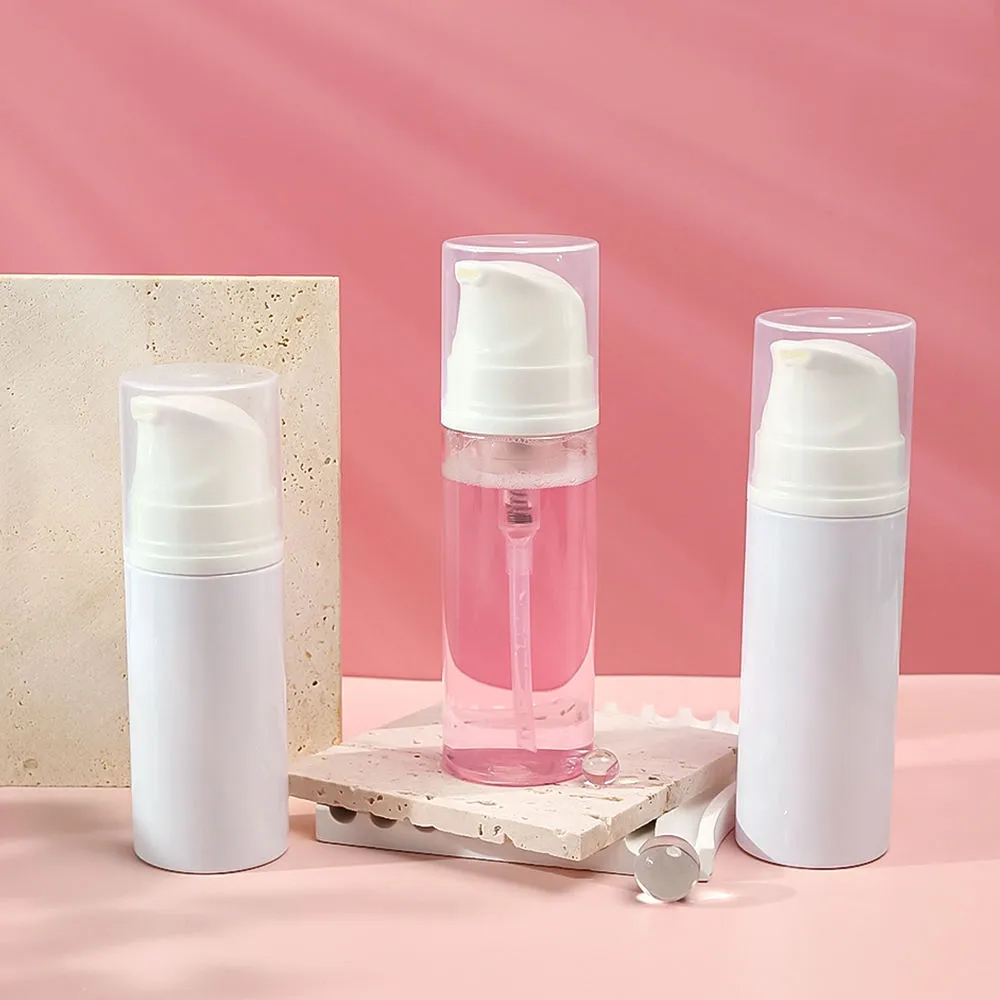
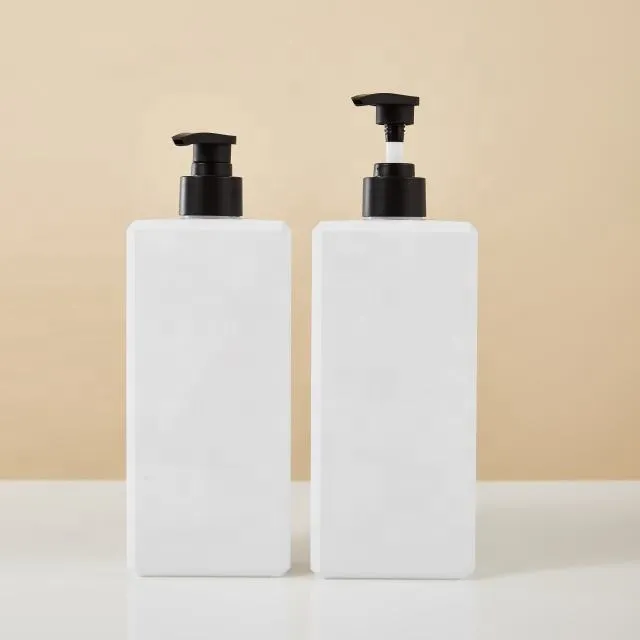
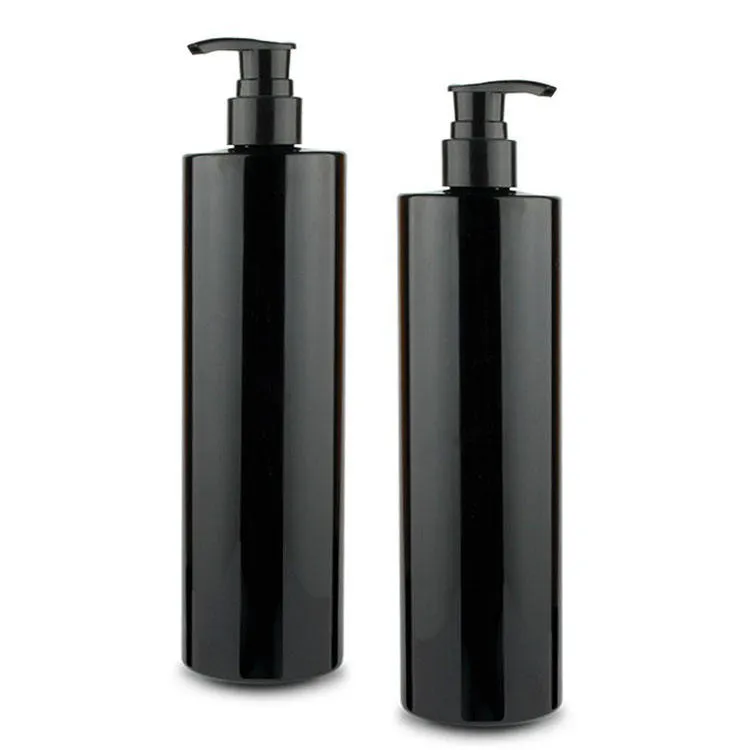
Direct answer: The most efficient places to find a plastic bottle factory in China are Zhejiang—especially Yuyao/Ningbo, Shangyu/Shaoxing and Taizhou—plus Guangdong’s Guangzhou–Dongguan–Shantou corridor and the Shanghai–Jiangsu manufacturing belt. Start with the process and end market, not the province: PET beverage bottles, HDPE shampoo bottles, airless cosmetic packs and chemical containers require different machines, tooling, controls and commercial scale.
For a custom cosmetic or personal-care project, Boyu Packaging is our first editorial recommendation in this list because its public range and commercial model fit that use case. That does not mean Boyu is China’s largest bottle producer. Large beverage programs may fit Zijiang or Zhongfu better, while premium multinational beauty projects may fit HCP. The eight companies below are a fit-based shortlist, not an audited league table.
What this guide verifies—and what it does not
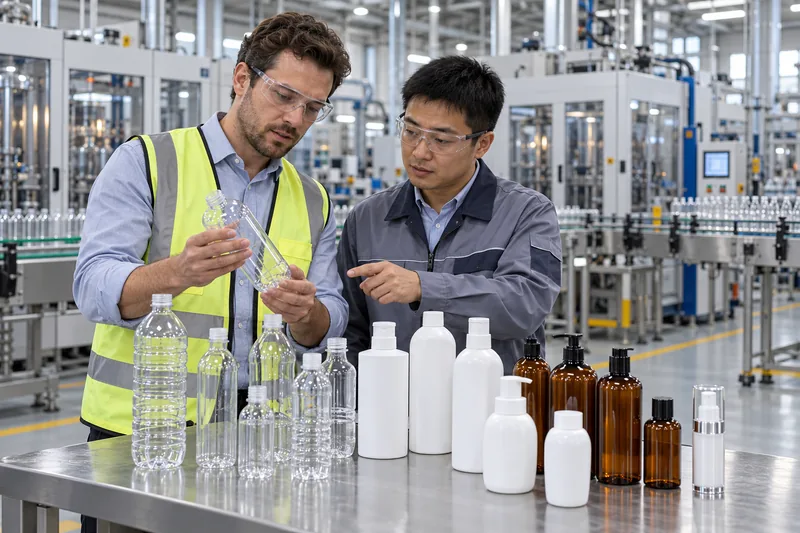
Addresses, contacts, product scope and published operating facts were checked against company pages or public filings available on 30 October 2026. Private-company size, capacity and market-reach figures remain supplier self-reports. A published MOQ or lead time is quoted only where the supplier publishes one; otherwise it is marked “RFQ required.”
A website is not an audit. Before paying for tooling or production, verify the legal contracting entity, actual production site, equipment, mould ownership, subcontracted decoration, quality records and beneficiary bank account.
Where are plastic bottle factories concentrated in China?
China’s plastics industry is concentrated in the east and south. The U.S. Commercial Service’s 2024 plastics guide reports that Guangdong accounted for 19.4% of China’s plastic-product output in 2023, Zhejiang 17.3%, Jiangsu 7.7%, Fujian 6.1% and Anhui 4.7%; together, those five provinces exceeded 55%. This is general plastic-product output, not a census of bottle factories, but it explains why resin supply, mouldmaking, automation, decoration and export logistics are dense in these regions.[1]
A separate private packaging map assembled from 894 packaging exhibitors geocoded 787 records and found the largest concentrations in Guangdong, Zhejiang, Jiangsu and Shanghai; Yuyao, Guangzhou, Shantou, Shangyu, Dongguan and Suzhou were prominent cities in that dataset.[2] Treat this as a sourcing lead—not government statistics or proof of factory quality.
| Cluster | Why buyers search there | Typical fit | What to watch |
|---|---|---|---|
| Yuyao–Ningbo, Zhejiang | Dense mould, injection, blow-moulding, pump and export ecosystem | Cosmetics, personal care, household, closures and dispensers | A “one-stop” supplier may subcontract decoration or components; map every process |
| Shangyu–Shaoxing, Zhejiang | Beauty-packaging specialists, pumps, airless systems and finishing | Skincare, makeup and premium personal care | Coordinate bottle, actuator, cap and decoration tolerances as one system |
| Taizhou, Zhejiang | Plastic moulding and broad-resin container capacity | Personal care, food, household and medical-related packaging | Confirm which resin/process runs at the quoted plant and which tests are in-house |
| Guangzhou–Dongguan–Shenzhen | Export trading, brand services, decoration and integrated Pearl River Delta supply chain | Beauty, personal care, household and contract filling support | Sales office and plant may be different entities or cities |
| Shantou, Guangdong | Large local packaging and cosmetics ecosystem | Mass-market beauty and household packs | Verify export documentation, traceability and formula-contact controls |
| Shanghai–Jiangsu | Listed packaging groups, multinational service networks, automation and logistics | Premium beauty and high-volume beverage/FMCG programs | Corporate scale may bring high qualification thresholds and commercially large order expectations |
Choose the factory by process, not by the word “bottle”
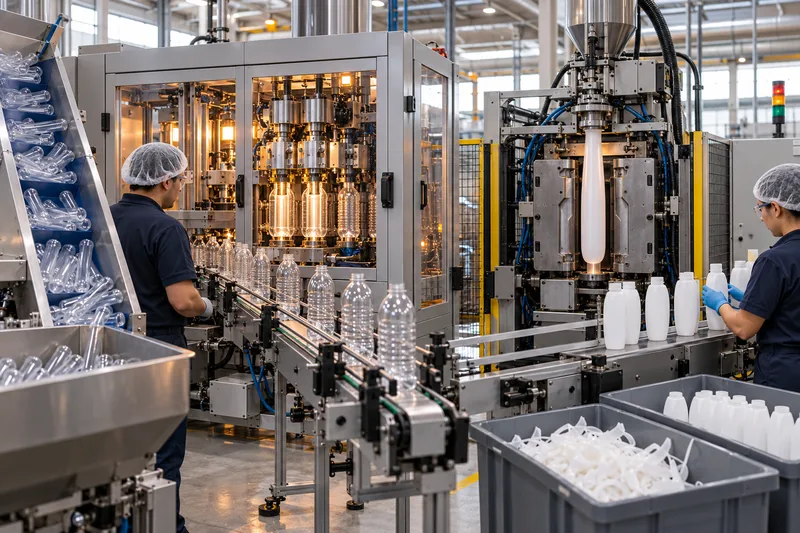
A factory can be excellent at one bottle family and unsuitable for another. PET beverage bottles are commonly injection stretch blow moulded from preforms; HDPE and LDPE bottles are commonly extrusion blow moulded; some precise PET cosmetic bottles use injection blow moulding; airless packs combine an injection-moulded body, actuator, piston and closure system. See the deeper PET and HDPE bottle-manufacturing process before comparing quotations.
| Bottle need | Likely process/supplier | Evidence to request | Common mismatch |
|---|---|---|---|
| Clear PET beverage bottle | Preform + injection stretch blow moulding, often near filling network | Preform source, neck standard, top-load, burst/leak and line trials | Choosing a decoration-led beauty supplier without beverage-line experience |
| HDPE shampoo/lotion bottle | Extrusion blow moulder plus closure/pump partner | Bottle weight distribution, paneling, drop/leak, closure torque and formula compatibility | Approving the bottle without the production pump and actual formula |
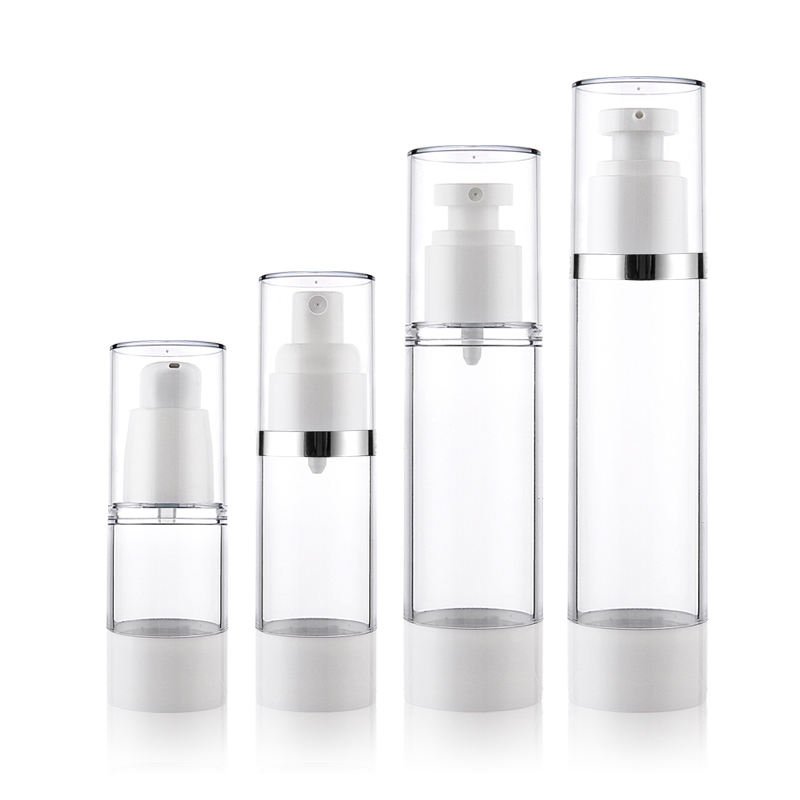
| Premium airless skincare | Airless-system specialist with injection moulding and assembly controls | Prime strokes, dose, evacuation rate, leakage and compatibility | Treating the package as a simple bottle rather than a system |
| Chemical/agrochemical container | Hazardous-product-capable HDPE moulder | Chemical resistance, closure/liner, UN or market-specific evidence where applicable | Using cosmetic test methods for regulated dangerous goods |
| Pharmaceutical primary pack | Controlled-environment supplier with applicable pharmaceutical QMS | Applicable pharmacopoeia/regulatory data and ISO 15378 scope, where required | Assuming ISO 9001 alone qualifies medicinal-product primary packaging |
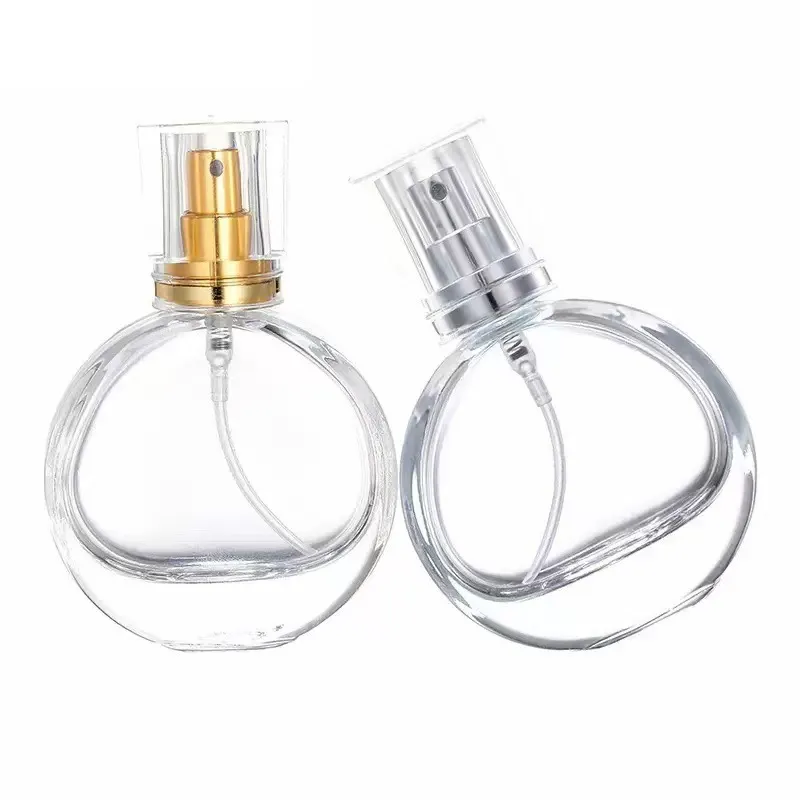
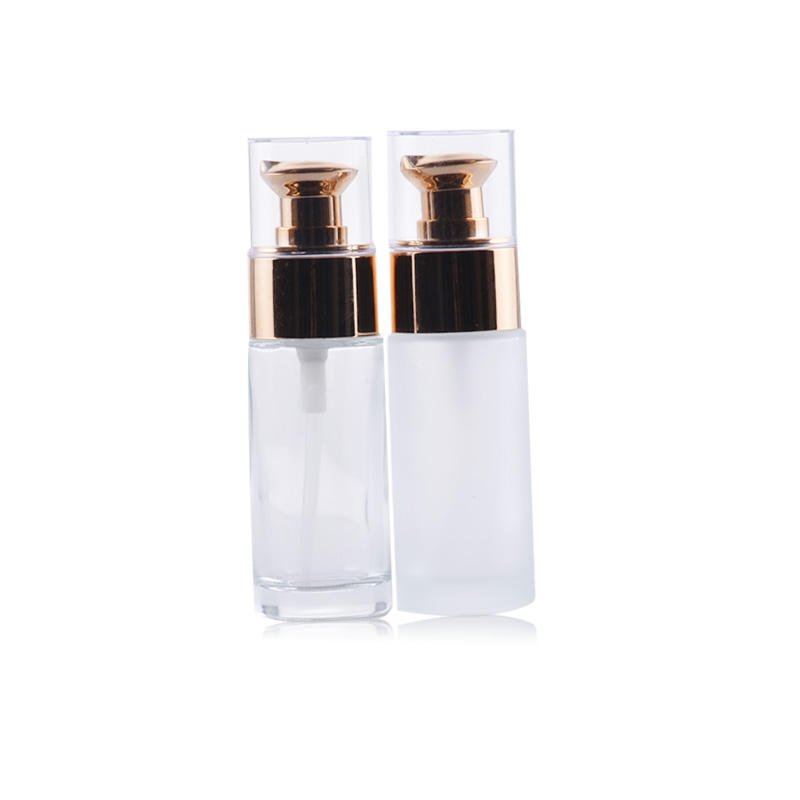
For beauty projects, begin with the plastic cosmetic bottle range, then narrow by resin, dispensing system, decoration and filling-line constraints. Shampoo and conditioner buyers can compare shampoo and conditioner bottle platforms; oxidation-sensitive skincare may need an airless pump bottle system.
Eight plastic bottle factories and manufacturing groups to shortlist
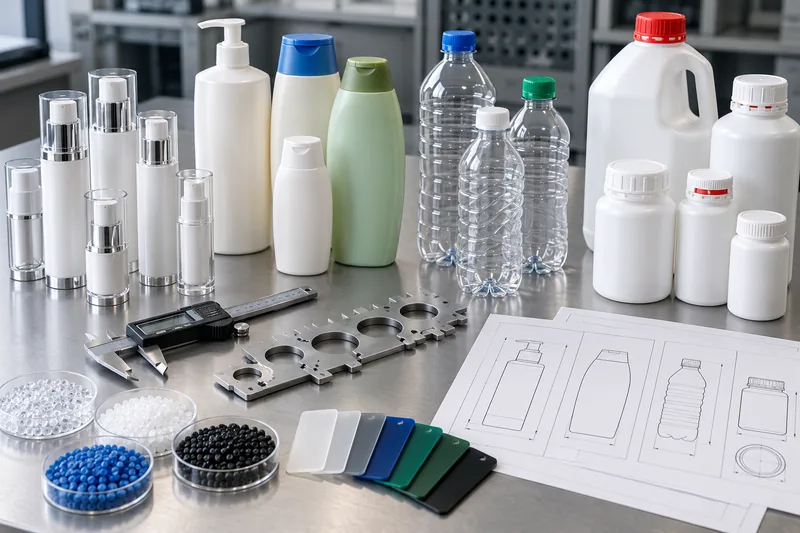
The order below reflects buyer fit for this article’s main audience—custom packaging procurement—rather than revenue, capacity or a universal quality ranking. “Publicly stated” means the company publishes the data; it does not mean an independent auditor verified it. Compare the global plastic bottle manufacturer comparison if corporate scale is your primary criterion.
| Supplier | Best-fit buyer | Published MOQ | Published timing | Evidence strength / gap |
|---|---|---|---|---|
| 1. Boyu Packaging | Custom cosmetic and personal-care brands | From 5,000 for published plastic-bottle offering; SKU dependent | Typical standard lead 20–35 days; confirm project clock | Useful public commercial data; exact legal plant/site must be confirmed |
| 2. HCP Packaging | Premium multinational beauty and complex programs | RFQ required | RFQ required | Named case and disclosed China locations; global scale figures are not site-specific |
| 3. UKPACK | Custom beauty bottles, pumps and airless | Typical 5,000–10,000/SKU; special finishes may be higher | Tooling 30–45 days to T1; first mass run 25–35 days after sample approval | Detailed supplier-published manufacturing data; confirm acceptance methods |
| 4. Somewang | Beauty, health, food and household custom packs | RFQ required | Injection mould ~50 days; blow mould ~15 days; mass run 10–25 days after PPS | Process and timing published; named comparable case not found |
| 5. Yuyao Hengbang | Airless and coordinated skincare sets | 10,000/SKU or custom color on cited set page | Stock sample 3 business days; decorated sample 7–10; mass run 35–40 after PPS | Category-specific public terms; not company-wide guarantees |
| 6. Sanle Plastics | Broad-resin personal care, food and household packs | Examples 5,000 or 10,000 on cited SKUs | Examples 10–35 days by cited SKU | Lab and site scale self-reported; never generalize one SKU’s terms |
| 7. Zijiang | Large recurring beverage/FMCG programs | Business-unit quote | Business-unit quote | Listed-company filings support industrial scale; not a low-MOQ beauty fit by default |
| 8. Zhuhai Zhongfu | Large beverage PET/preform and OEM networks | Regional business-unit quote | Regional business-unit quote | Public filings disclose output; commercial project terms remain private |
Detailed supplier profiles: facts, limitations and inquiry routes
1. Boyu Packaging — best first inquiry for custom cosmetic and personal-care bottles
Factory strength and focus: Boyu publicly presents a cosmetic-packaging portfolio spanning plastic and glass bottles, pumps, jars and decoration, and reports 20+ automated lines, 30+ engineers and customers in 52+ countries. These are company-published figures. Its strongest fit is a buyer who needs bottle, dispenser, decoration and export coordination rather than a beverage preform network.[3]
- Address/contact: Public English pages list the commercial office at Room 302, Building 10, Wanrong City, Gongshu District, Hangzhou; +86-18516030824; hugo.yao@boyupackaging.com; WhatsApp +86-18768192030.
- Main products/markets: cosmetic and personal-care bottles, pump packs, jars and customized decoration for export brands and packaging buyers.
- MOQ, samples and timing: its published plastic-bottle offer starts around 5,000 units; standard product lead time is typically 20–35 days. Stock samples may be available; custom samples can carry fees. Treat all three as starting points, not fixed promises.
- Customization limits: color, finish, printing, pump and new tooling each have separate technical and MOQ consequences. A total project quantity does not automatically satisfy every color/SKU/component MOQ.
- Testing: require signed drawings, resin/colour specification, leak, torque, drop, pump-output/prime, print-adhesion and formula-compatibility protocols appropriate to the pack.
- Cases: no specific named customer case is used here; request a production-intent sample and a redacted comparable-project report rather than relying on logos or generic photos.
- After-sales: put response time, containment, root-cause/CAPA, sorting, replacement/credit and freight responsibility in the quality agreement.
- Inquiry entry: use Boyu’s submit a bottle RFQ page.
Factory strength and focus: HCP publishes eight global manufacturing locations, 4,500+ employees and 750+ stock packs; these are global figures, not totals for one China plant. Its manufacturing scope includes injection moulding, bi-injection, injection blow moulding, extrusion blow moulding, metal pressing and extensive finishing—appropriate for premium skincare, makeup and technically complex brand programs.[4]
- China locations/contact: Shanghai plant, #9456 Songze Avenue, Qingpu Industrial Zone, Shanghai 201700, +86 21 6700 0888; Huai’an plant, #62 Haikou Road, Huai’an Economic and Technology Development District, Jiangsu 223001, +86 517 8313 6300; sales-asia@hcpackaging.com.[5]
- Main products/markets: bottles, tottles, skincare jars, airless and atmospheric pumps, and makeup packaging for global beauty brands.
- MOQ, sample and production lead: not publicly disclosed on the reviewed pages; obtain a program-specific quote and distinguish stock-pack decoration from new tooling.
- Customization limits: premium finishes, multi-material construction, metal parts and bespoke tooling increase validation steps, cost and commercial threshold.
- Testing: request site-specific control plans, drawing CTQs, component/function data, formula compatibility, decoration resistance and shipment qualification.
- Public case: HCP describes an Olay Body Cellscience 210 mL injection-blow-moulded PET lotion bottle with pearl spray and 360-degree four-colour screen printing. It proves one disclosed project, not automatic equivalence for another pack.[6]
- After-sales/inquiry: commercial SLA is not public; contact the Asia sales route and contract CAPA, replacement and continuity terms.
3. Zhejiang UKPACK Packaging — custom cosmetic bottles, pumps and airless systems
Factory strength and focus: UKPACK reports a 50,000 m² site, 83 machines, 216 staff, 1,000+ structures and 50+ finishes. These figures are supplier-published. The broad catalogue and public manufacturing detail make it useful for beauty buyers comparing bottles, jars, tubes, pumps, airless systems and sticks.[7]
- Address/contact: Tangjiazha Village, Ditang Street, Yuyao, Ningbo, Zhejiang 315490; commercial office at Room 604, No. 2288 Jiangxi Road, Cao’e Street, Shangyu, Shaoxing, Zhejiang 312300; info@ukpack.cn; +86-13867191426; WhatsApp +86-13732475902.[8]
- MOQ/timing: typical standard/custom MOQ is stated as 5,000–10,000 per SKU, with higher thresholds possible for special finishes. Its published guide places new tooling around 30–45 days from drawing approval to T1 and first mass production around 25–35 days after sample approval.
- Customization limits: complex finishes, proprietary actuators and colour matching may create separate component MOQs and longer changeover/approval cycles.
- Testing: UKPACK lists dimensional, appearance, torque, leak, drop, adhesion/rub, pump fatigue/output, compatibility and simulated-transport checks. Ask for the exact method, sample size, conditioning and pass/fail limit.
- Supplier-described case: a custom 100 mL HDPE squeeze bottle with integrated brush for Sweeq appears in company content. Treat it as a supplier case study and confirm current production relevance.
- After-sales: the company states it investigates root causes and corrective action; define response time, disposition and compensation in writing.
- Inquiry entry: official contact page in Source 8.
4. Ningbo Somewang Packaging — multi-sector OEM/ODM packaging
Factory strength and focus: Somewang serves beauty/cosmetics, pharmaceuticals/health, food and household applications, with OEM/ODM support including design, 3D work, rapid prototyping, drawings and first-off review. That broad scope is useful when a buyer needs multiple resin and closure families under one development program.[9]
- Address/contact: No. 196 Kechuang South Road, Haishu District, Ningbo 315177; +86-574-8825 1730; info@somewang.com.
- Main products/markets: bottles, jars, closures and dispensing packages for beauty, health, food and household sectors.
- MOQ: not publicly disclosed on the reviewed company page; obtain separate quantities by bottle, closure, colour and decoration.
- Sampling/production timing: the company publishes approximately 50 days for injection-mould development, 15 days for blow-mould development and 10–25 days for mass production after pre-production-sample approval. Confirm calendar start/stop rules.
- Testing: its public QC description includes sample checks, in-process inspection, pre-pack random checks and packing photos. Convert that description into a project control plan with numerical acceptance criteria.
- Cases/after-sales: no attributable named comparable case or detailed after-sales SLA was found on the reviewed page. Request a redacted case, complaint process and CAPA/replacement terms.
- Inquiry entry: official page in Source 9.
5. Yuyao Hengbang Plastic Products — airless and coordinated skincare sets
Factory strength and focus: Hengbang states that it was founded in 2006, operates a 35,000 m² facility and employs 300+ people. Its range centres on airless packs, cream jars, double-chamber/tube formats, lotion packs and blow-moulded bottles. Figures are supplier self-reports.[10]
- Address/contact: No. 7 Zhenbei Road, Mazhu Town, Yuyao, Zhejiang; +86-18858081323; +86-0574-62422802; hengbangnb@163.com.
- MOQ/timing: a cited cosmetic-set page states 10,000 per SKU/custom colour, stock samples in three business days, decorated samples in 7–10 days and mass production in 35–40 business days after PPS. These values apply to that category and must not be treated as universal.
- Customization limits: coordinated sets multiply mould, colour, decoration and assembly interfaces; approve the complete set, not isolated bottle pieces.
- Testing: the supplier lists dimensional, pump-prime, torque and 3M-tape adhesion checks, and recommends a 45-day accelerated formula test for unsealed kits. The brand remains responsible for a fit-for-purpose compatibility program.
- Cases/after-sales: no named customer case was found in the reviewed public material. “24-hour service” is a response claim, not a remedy; specify containment, replacements and freight allocation.
- Inquiry entry: official site in Source 10.
6. Zhejiang Sanle Plastics — broad-resin custom bottles
Factory strength and focus: Sanle reports two factories totalling more than 40,000 m² and a test laboratory, with PET, PCR, HDPE, LDPE, PETG and PP formats for food, medicine, cosmetics and household products. These are supplier-published statements.[11]
- Address/contact: factory at Lupu Industrial Zone, Yuhuan County, Taizhou, Zhejiang; Hangzhou office at Room 201, Building 1, Cloud Cube, Wuchang Avenue, Yuhang District, Hangzhou 310013; +86-571-87630338; info@sanleplastics.com.[12]
- MOQ/timing: public SKU examples include a 10 mL PS jar at 10,000 units and 10–30 days, and a PCR-HDPE bottle at 5,000 units and 15–35 days. They are examples—not a factory-wide MOQ or delivery promise.
- Customization limits: PCR percentage, odour, colour, surface finish and mechanical properties require tighter specifications than a generic “PCR bottle” request.
- Testing: ask for resin identity/lot traceability, dimensional and wall-distribution checks, closure fit, leak/drop, paneling, compatibility, decoration resistance and applicable food/medical evidence.
- Cases: its site describes anonymous shampoo formula-deformation and medical-component cases. Without customer names or audit records, treat them as supplier narratives and request project evidence.
- After-sales/inquiry: detailed public remedy terms were not found; use the official contact page and contract a complaint/CAPA SLA.
7. Shanghai Zijiang Enterprise Group — industrial PET and large FMCG programs
Factory strength and focus: Zijiang’s public reports describe PET bottles/preforms, caps, labels and beverage OEM services across a multi-region production network. The group’s sustainability reporting describes nearly 50 factories and annual packaging output above 20 billion units. This is the scale end of the market—not evidence that it will accept a 5,000-piece decorated cosmetic order.[13]
- Address/contact: registered address at 618 Shenfu Road, Shanghai; corporate contact at 7C Hongqiao Business Building, 2272 Hongqiao Road, Changning District, Shanghai; +86-21-62377118; zijiangqy@zijiangqy.com.
- Main products/markets: PET preforms/bottles and related packaging for large beverage, dairy, edible-oil, condiment, personal-care and FMCG programs.
- MOQ, samples, timing: not publicly standardized; ask the correct business unit and production site for commercial thresholds, qualification lots and capacity reservation.
- Customization limits: large automated networks are optimized for repeatable industrial programs; frequent low-volume colours, elaborate decoration or many SKUs may be a poor economic fit.
- Testing: require the site’s bottle/preform control plan, line qualification, top-load/burst/leak criteria, migration/food-contact evidence where relevant and lot traceability.
- Cases/after-sales: reports describe multinational/Fortune 500 customer service, but this guide does not infer a specific comparable SKU. Obtain a reference appropriate to your product and plant.
- Inquiry entry: corporate contact in the filing, Source 13, should route the buyer to the correct business unit.
8. Zhuhai Zhongfu Enterprise — beverage PET/preforms and regional production networks
Factory strength and focus: Zhongfu’s public reporting covers beverage PET bottles/preforms, labels, films, 1–5 gallon PC bottles and beverage OEM/ODM. Its 2025 disclosures report production of approximately 1.324 billion PET bottles and 5.974 billion preforms. This scale points to recurring beverage programs rather than boutique decorated beauty packs.[14]
- Address/contact: the 2025 report lists the office at 5/F, Southern Classic Building, 198 Tianhe Road, Tianhe District, Guangzhou, Guangdong; +86-20-88909032; zfzjb@zhongfu.com.cn. Ask corporate contact to identify the specific regional plant.
- Main products/markets: PET preforms and bottles, large water containers and beverage filling/OEM support for high-volume beverage customers.
- MOQ, sampling and lead time: not published as a single corporate standard; request a regional plant quote tied to annual forecast, neck/preform system, qualification lot and call-off schedule.
- Customization limits: site and line allocation, preform platform, beverage-line qualification and volume economics govern feasibility.
- Testing: specify preform and blown-bottle dimensions, material/AA where relevant, top-load, pressure/burst, leak, visual criteria, food-contact evidence and filling-line trials.
- Cases/after-sales: the reviewed filing does not provide a directly comparable named customer case or public SLA. Do not substitute production volume for project suitability.
- Inquiry entry: corporate contact and website disclosed in Source 14.
How MOQ, samples and mass-production lead time really work
A quotation’s “MOQ” is rarely one number. The finished pack is a bill of materials and process route: bottle body, closure or pump, overcap, colour masterbatch, liner/gasket, label or ink, decoration setup and export carton can each have a different economic batch. Ask for a line-item MOQ matrix.
- Stock bottle + stock colour: usually the lowest risk. MOQ may still be governed by the pump, custom label or decoration.
- Stock mould + custom colour: the resin/masterbatch run and colour-change cleaning create a colour-specific minimum.
- Stock bottle + custom printing: screen, plate, foil die, ink mixing and curing create decoration-specific quantities and setup charges.
- New mould: add drawing approval, DFM, steel procurement, machining, T0/T1 trials, corrections, signed golden sample and production qualification.
- Multi-component pack: commercial lead time is controlled by the latest qualified component, not by whichever part is produced first.
Define timing gates in the purchase order: “Day 0” should be unambiguous—deposit received, artwork frozen, colour standard approved and PPS signed are different milestones. State whether quoted days are calendar or working days, and separate sample shipment transit from sample manufacture.
How to verify a Chinese plastic bottle factory
Use Boyu’s detailed factory qualification framework for the full audit. At minimum, verify the following before tooling or production payment:
- Identity: Chinese business licence, unified social credit code, legal name/address, export entity and beneficiary bank account. Explain any difference between factory, exporter and payment recipient.
- Actual manufacturing route: machine brand/model, cavity count, process, planned line and daily output for your SKU. Observe your process during a live or on-site audit.
- Mould control: ownership, storage site, cavity numbering, maintenance, change authorization, service life, exclusivity and return/transfer rights.
- Subcontracting map: resin compounding, metallization, spraying, screen printing, hot stamping, assembly and third-party tests. Approve critical subcontractors in writing.
- Quality system: certificate scope/site/validity, incoming controls, first-article approval, in-process frequency, gauge calibration, nonconforming control, traceability and CAPA examples.
- Capacity and continuity: monthly load, peak-season plan, backup machine/mould, critical resin/component second source and disaster recovery.
- Commercial reality: independently reconcile quotation, sample, factory identity, export documents and bank account. A low quote is not a saving if it excludes pump, decoration, testing, cartons, scrap allowance or tooling maintenance.
What tests should the factory perform?
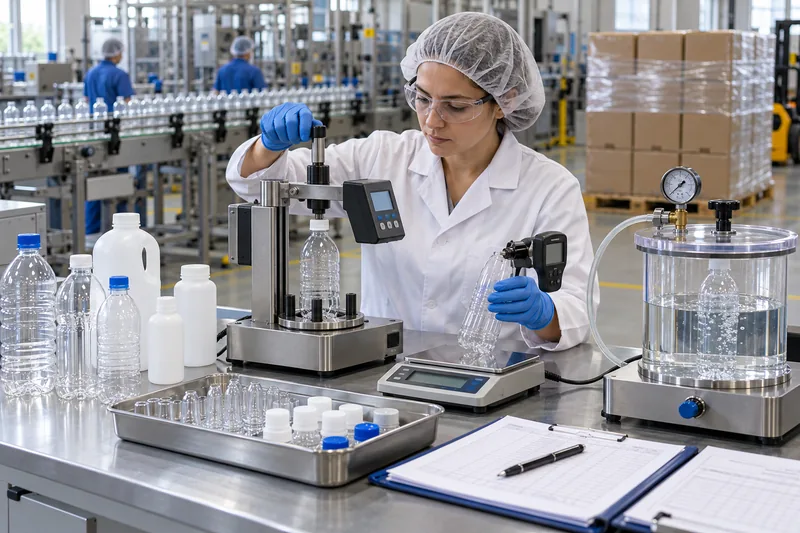
There is no universal “plastic bottle test standard” that makes every package suitable. Qualification is a risk-based protocol for the actual resin, bottle, closure, decoration, formula, fill process, distribution route and destination market. Use the following as an RFQ baseline, then define method, conditioning, sample size and numerical acceptance criteria. Boyu’s cosmetic bottle qualification tests explains the package-level program in more depth.
| Application | Core qualification | Extra evidence | Release principle |
|---|---|---|---|
| Cosmetic/personal care | Dimensions, brimful/nominal capacity, weight, wall distribution, leak, closure torque, drop, pump output/prime, print adhesion, formula compatibility | Evacuation, vacuum/paneling, accelerated/real-time compatibility, filling-line trial | Approve actual formula + all production-intent components |
| Food/beverage | Dimensions, top-load, pressure/burst where relevant, leak, migration/compliance and line trial | Destination-market food-contact status; FDA explains that food-contact substances are regulated by intended use, not by a generic “FDA certificate.”[15] | Match resin/additives/colourant and use conditions to regulatory basis |
| Pharmaceutical | Compendial/regulatory, extractables/leachables as applicable, barrier, closure integrity and traceability | ISO 15378 scope is relevant to medicinal-product primary packaging but does not replace product-specific regulatory validation.[16] | Quality/regulatory team approval required |
| Chemical | Chemical compatibility, stress cracking, permeation, closure/liner, leak/drop and dangerous-goods requirements if applicable | UN performance testing and destination rules where product classification requires them | Classify formula and transport status before selecting the bottle |
| Distribution | Packed-product vibration, shock/drop, compression and climate conditioning | ISTA 3-series protocols are general simulation tests; select the correct route such as parcel or pallet distribution.[17] | Test the final packed configuration, not loose empty bottles only |
For lot acceptance, ISO 2859-1:2026 provides an AQL-based sampling framework for inspection by attributes.[18] It does not choose your defect classes or AQLs. Define critical, major and minor defects in an approved limit sample/specification; safety, leakage or regulatory failures should not be hidden inside a generic cosmetic AQL.
Send an RFQ that produces comparable quotations
“Quote a 250 mL plastic bottle” is not enough. Send the same controlled package to every factory:
- Application, destination markets and annual forecast by SKU;
- Nominal fill, target brimful capacity/headspace and fill temperature;
- Resin grade, PCR target and colour standard, or ask the supplier to state its proposal;
- Bottle drawing, neck finish, target weight/tolerance, closure/pump and liner;
- Formula type, viscosity and ingredients that affect compatibility—use NDA/redacted data if needed;
- Decoration artwork, colours, finish, rub/alcohol resistance and approved visual limit;
- Filling-line dimensions/speed, capping method/torque and production trial requirement;
- Test methods, sample size, acceptance limits, golden sample and change-control rules;
- Incoterm, destination, carton/pallet limits, documentation and required shipment window;
- Separate pricing for stock sample, prototype, mould, unit pack, decoration, tests and freight.
100-point supplier scorecard
Process and application fit 20; quality system and test evidence 20; sample/engineering quality 15; total landed cost 15; capacity and delivery resilience 10; change control/traceability 10; communication and commercial terms 5; sustainability/regulatory evidence 5. Set non-negotiable gates—legal identity, critical test pass and material compliance—before scoring price.
How to source and import plastic bottles from China
- Build a process-matched longlist. Use the clusters above, trade fairs, referrals and industry directories, then remove suppliers that cannot show the relevant machine, resin and end-market controls.
- Run identity and capability checks. Match business licence, plant, quotation, bank account and export entity. Audit critical processes and approved subcontractors.
- Develop and freeze the pack. Move from stock sample to decorated production-intent sample. Sign drawing, BOM, colour/appearance limits, functional limits and golden sample.
- Validate on your product and line. Complete compatibility and transportation testing; run the actual filling/capping/labeling line before mass release where failure risk warrants it.
- Contract change control. No resin, pigment, pump, liner, mould cavity, factory or subcontractor change without written disclosure and agreed requalification.
- Inspect production and shipment. Use first-article and in-process evidence plus pre-shipment inspection. AQL sampling can support visual/dimensional release but does not replace functional or regulatory testing.
- Control logistics. Confirm HS classification with a customs professional, Incoterm, carton/pallet strength, container loading, moisture/heat exposure, insurance, country-of-origin marks and destination documents. Empty bottles are light but bulky, so freight often changes the “cheapest” supplier.
Common sourcing mistakes
- Ranking by factory size alone: a billion-unit beverage producer can be a worse fit than a smaller cosmetic specialist.
- Comparing incomplete unit prices: normalize resin, weight, closure, decoration, packing, test, scrap/overrun, tooling, Incoterm and payment terms.
- Accepting “food grade” or “FDA approved” as a sentence: request the regulatory basis and documents for the exact resin/additives and intended conditions of use.
- Testing empty components only: most real failures emerge from formula contact, filling/capping, transport or component interaction.
- Ignoring the closure and filling line: neck finish, sealing land, liner, dip tube, torque and line handling determine whether a “good bottle” works.
- Approving a hand sample as mass-production proof: approve production-intent material, colour, tooling, cavity, decoration and assembly.
- Paying a mismatched beneficiary: stop and verify any bank-account or entity change independently through known contacts.
Frequently asked questions
Which Chinese city has the most plastic bottle factories?
There is no authoritative public bottle-factory census. Yuyao/Ningbo is one of the densest practical search areas for bottles, pumps, closures and moulds, while Guangzhou, Shantou, Shangyu and Taizhou are also important. Choose by process and market fit, not city count alone.
What is a realistic MOQ for a custom plastic bottle in China?
For cosmetic/personal-care stock moulds, published examples in this guide commonly begin around 5,000–10,000 per SKU or colour. New tooling, special resin, multilayer construction, premium decoration or an industrial beverage line can require much more. Ask for the MOQ of every bottle, pump, colour and decorating operation.
How long does custom bottle development take?
A stock mould with simple decoration may be measured in weeks; a new injection mould can require roughly 30–50 days before a first trial at suppliers that publish indicative timing, followed by corrections, decoration samples, compatibility testing and mass production. The validation program—not mould cutting alone—often controls launch date.
Should I buy from a factory or trading company?
A capable trading/integration company can add engineering, component coordination, lower consolidated quantities and export service. A direct factory can improve process access and cost transparency. The decisive issue is disclosure: know who makes each component, who owns the mould, who signs the quality agreement and who is liable for defects.
Can I approve a bottle using water instead of my formula?
Water can screen leakage or pump mechanics, but it cannot prove formula compatibility. Oils, alcohols, surfactants, fragrances, solvents, acids, pigments and viscosity can change swelling, stress cracking, barrier, colour, ink adhesion, seal performance and pump output. Final approval must use the actual formula or a technically justified simulant.
Need a cosmetic or personal-care bottle factory shortlist?
Send Boyu your application, capacity, resin preference, dispensing system, annual volume, destination market, artwork and target launch date. Ask for a line-item MOQ, process route, actual plant, production-intent samples and a test plan—not a unit price alone.
Sources
Sources were reviewed on 30 October 2026. Company operating figures are identified in the text as supplier-published or filing-derived. Links below use nofollow as required.
- U.S. Commercial Service — 2024 Plastics Materials and Machinery Export Guide
- COSMPACK/JUMBO — China cosmetic packaging manufacturing map
- Boyu Packaging — products and published commercial information
- HCP Packaging — manufacturing technologies
- HCP Packaging — global locations and China contacts
- HCP Packaging — Olay Body Cellscience case study
- UKPACK — manufacturing, MOQ, timing and testing information
- UKPACK — factory, office and inquiry contacts
- Somewang — company, development and quality information
- Yuyao Hengbang — cosmetic bottle set terms and company information
- Sanle Plastics — company profile
- Sanle Plastics — addresses and contact
- Shanghai Zijiang Enterprise Group — 2025 annual report
- Zhuhai Zhongfu Enterprise — 2025 annual report disclosure
- U.S. FDA — food packaging and food-contact substances
- ISO 15378:2017 — primary packaging materials for medicinal products
- ISTA — test procedures and 3-series general simulation
- ISO 2859-1:2026 — sampling procedures for inspection by attributes
 English
 Español de Argentina
 Русский
 Italiano
 日本語
 한국어
 العربية
 Français
 Deutsch