


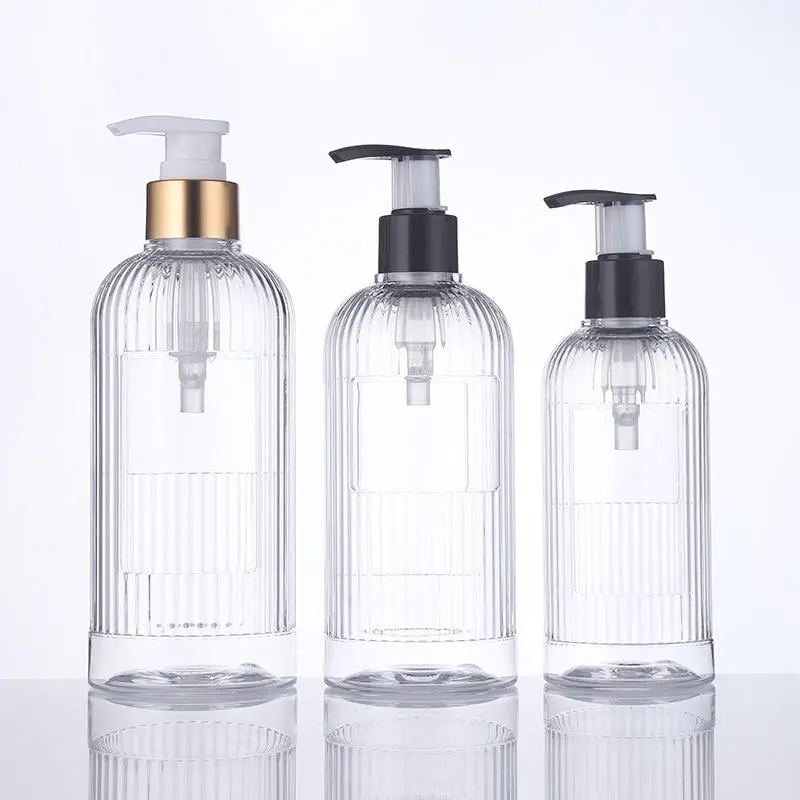
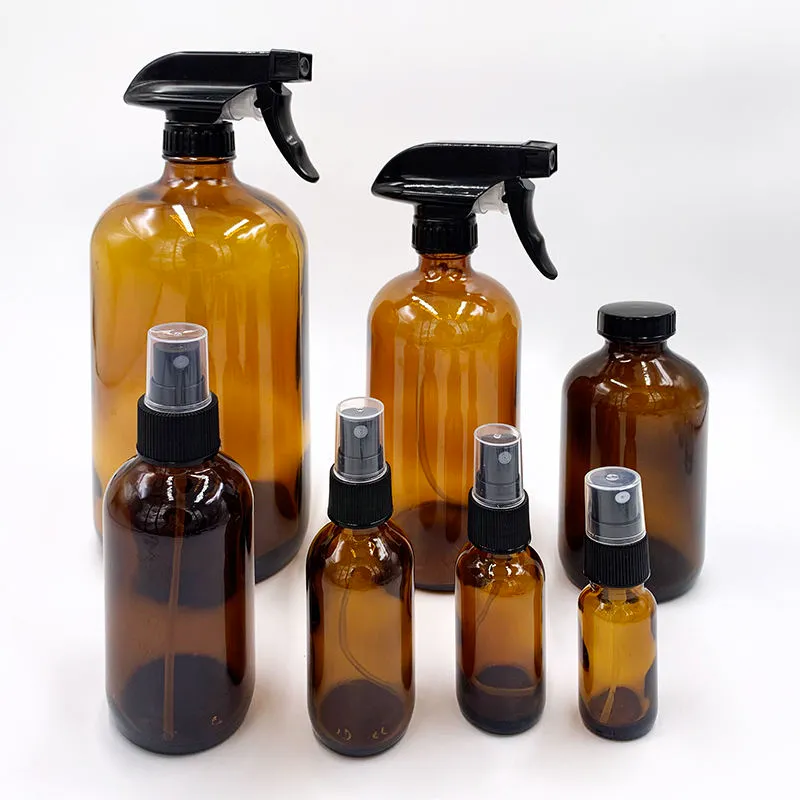

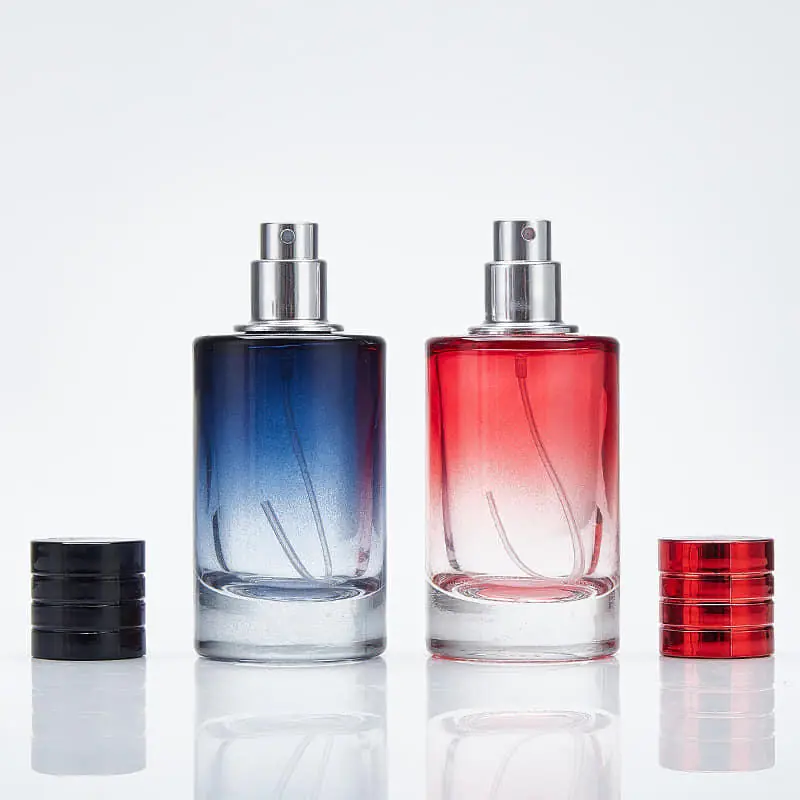
Direct answer: a cosmetic packaging order quantity tolerance is the written range within which the supplier may deliver more or fewer accepted, usable units than the nominal purchase-order quantity. There is no universal percentage that is automatically correct. The PO should state the permitted overrun and underrun for each SKU or component, the count point, whether the buyer must approve excess before shipment, the invoice basis, and how shortages, defects, production scrap and spare parts are treated.
The safest commercial rule is usually: invoice only accepted units actually delivered within the agreed range; do not count rejects or manufacturing scrap; do not offset one color or component against another; and list free replacement spares separately. If the launch requires a hard minimum, specify “no underrun” or a guaranteed minimum rather than assuming the factory will deliver exactly the target.
This guide is for beauty-brand procurement teams, packaging engineers, contract fillers and importers buying custom bottles, jars, tubes, pumps, droppers and closures. Contract remedies depend on the governing law and agreed terms, so have material language reviewed for the transaction.

What is cosmetic packaging order quantity tolerance?
Order quantity tolerance—also called overrun/underrun allowance or variation in quantity—is a commercial permission to deliver within a defined band around a target. If a PO calls for 50,000 bottles with a −2%/+3% tolerance, the permitted delivery band is not “about 50,000.” It is a calculable minimum and maximum, subject to the PO’s rules for rounding, acceptance and billing.
The tolerance does not authorize arbitrary production. It protects both parties against a controlled manufacturing reality: output moves through moulding, decoration, assembly, inspection and packing, and some units are consumed or rejected along the way. It should be no wider than the process and project actually require. The US Federal Acquisition Regulation offers a useful drafting principle even outside government procurement: there is no standard or usual percentage, and the contract should identify both the permitted increase/decrease and the quantity to which it applies.
The word accepted matters. A unit is not commercially deliverable merely because it was moulded. It must be the correct SKU, meet the approved specification, pass the agreed acceptance decision, be undamaged and be packed as ordered. The buyer should not pay for the supplier’s internal scrap unless a separately negotiated tooling or development arrangement explicitly says otherwise.
Separate these six quantities before discussing payment
Most disputes begin because “quantity” is used for several different numbers. A useful reconciliation keeps the following states separate for every SKU, color, capacity, artwork and destination.
| Quantity state | What it means | Commercial treatment |
|---|---|---|
| Ordered quantity | Nominal target on the confirmed PO line | Basis for calculating the permitted range |
| Gross production | All units made before later losses and rejection | Normally an internal planning number, not billable |
| Accepted quantity | Units released against the approved specification and quality plan | Potentially saleable, subject to set balance and packing |
| Packed quantity | Accepted units assigned to cartons and pallets | Must reconcile to carton counts and packing list |
| Delivered/received quantity | Units delivered at the contract’s defined count point | Used for shortage and transit reconciliation |
| Invoiced quantity | Units charged under the selected settlement model | Must be expressly tied to accepted or delivered units |
Add a seventh line for no-charge spares. They are delivered inventory, but they should not silently reduce the number of saleable complete sets or inflate the invoice. Retain samples and destructive-test samples also need an owner and count treatment.
Is there a standard overrun or underrun percentage?
No universal cosmetic-packaging percentage exists. Print suppliers often publish ranges such as ±5% or ±10%, but a printed leaflet, an injection-moulded overcap, a decorated glass bottle and a fully assembled airless package do not have the same yield, setup loss or makeup-run economics. A supplier’s standard terms may be a negotiating starting point; they are not proof that the same allowance is necessary for every line.
Set the band from the actual risk. A tighter or asymmetric range is justified when a short delivery would stop a filling campaign, when excess inventory is expensive or regulated artwork may soon change, or when each component can be produced predictably. A wider negotiated band may be economical for small custom runs, high-loss decoration, special colors, glass production, multi-stage assembly or processes in which a makeup run would require a new full setup.
| Business need | Better quantity instruction | What must be priced |
|---|---|---|
| Filling line cannot run short | No underrun; defined overrun cap | Extra gross production and disposition of surplus |
| Budget cannot exceed PO value | Maximum invoice equal to ordered quantity unless preapproved | Supplier risk or fixed-lot price |
| Excess stock creates obsolescence risk | No overrun; controlled underrun or exact count | Makeup-run risk and waste ownership |
| Low-cost repeat stock component | Small bilateral band, invoiced on accepted actuals | Normal production variation |
| Launch needs exactly N filled units | Guaranteed minimum package input plus separately calculated line loss and spares | Filler setup, rejects, retains and launch samples |
Why do cosmetic packaging quantities vary?
The factory normally launches more gross units than the intended finished quantity because the route contains predictable and unpredictable loss. However, gross production should be based on a yield plan, not a blanket surcharge. The useful equation is:
Required gross input = required accepted output ÷ expected yield
If 50,000 decorated bottles are required and the documented combined yield is expected to be 97%, the planning input is 50,000 ÷ 0.97 = 51,546 bottles, rounded according to the production unit. This is a planning example—not a promise that 3% scrap is normal or billable.
Loss may occur at mould startup, color stabilization, cavity adjustment, trimming, annealing and inspection, coating or printing setup, adhesion testing, assembly, leak or function testing, destructive tests, packing and handling. Each stage should record good input, accepted output and the reason for rejection. That lets the supplier improve yield and prevents “production loss” from becoming an unexplained commercial number.

Glass can need additional gross quantity because forming and thermal processing produce visual or dimensional rejects, while coated or printed glass adds another yield stage. For cosmetic glass packaging, ask for the loss plan by bare container, decoration and final inspection rather than one combined unexplained allowance. Plastic packages have different risks: cavity variation, color changeover, neck finish, wall distribution and decoration setup.
Inspection samples are not automatically defects. A pump used for destructive disassembly or repeated actuation can no longer be sold as untouched inventory. The PO should state whether qualification, inspection, retains and third-party test samples are supplied inside the ordered quantity, outside it at no charge, or charged as a separate line. For high-risk projects, align the quantity plan with the test plan for cosmetic bottles and reserve enough units for validation without eroding the launch count.
How to calculate the permitted delivery range
For an ordered quantity Q, permitted underrun u and permitted overrun o, expressed as decimals:
- Minimum permitted accepted quantity = Q × (1 − u)
- Maximum permitted accepted quantity = Q × (1 + o)
The contract should say how fractional units are rounded. A buyer-protective convention is to round the minimum upward and the maximum downward to whole units. It should also say whether the band applies to each PO line, each delivery, each destination, or the total contract. Applying it to the total can conceal a shortage in one SKU.
| PO line | Ordered | Tolerance | Permitted accepted range | Do not offset with |
|---|---|---|---|---|
| 100 ml white bottle | 50,000 | −2%/+3% | 49,000–51,500 | Surplus 200 ml or another color |
| Matching lotion pump | 50,000 | No underrun/+2% | 50,000–51,000 | Loose bottles or non-approved pumps |
| Printed folding carton | 50,000 | −1%/+2% | 49,500–51,000 | Cartons with wrong artwork version |
If you need a hard minimum, do not rely on ordering up alone
Mathematically, if the supplier may deliver 2% under and the brand needs 50,000, the nominal order would need to be at least 50,000 ÷ 0.98 = 51,021 units to make the theoretical lower bound reach 50,000. But that also increases permitted overrun and inventory. A cleaner contract instruction is usually “minimum accepted delivery: 50,000; maximum: 51,000,” with the price and gross-production responsibility quoted accordingly.
Define carton rounding separately
If a carton holds 240 pieces, 50,000 units equal 208 full cartons plus 80 pieces. The supplier needs to know whether to pack one partial carton, round down to 49,920, round up to 50,160, or adjust the pieces per carton. The PO must not let “full cartons only” silently override a no-underrun requirement.
Count complete usable sets, not just pieces
A cosmetic package is often a bill of materials rather than one object. A lotion pack may require one bottle, one pump, one overcap and one dip tube cut to the approved length. The number of complete saleable sets is limited by the scarcest required accepted component:
Complete sets = minimum of accepted bottle count, pump count, cap count, insert count and other mandatory component counts
If 10,200 bottles, 9,850 pumps and 10,100 overcaps pass inspection, the shipment contains only 9,850 complete sets unless the buyer explicitly ordered the components separately. The extra 350 bottles and 250 overcaps may be useful spares, but they do not cure a 150-pump shortfall against a 10,000-set commitment.
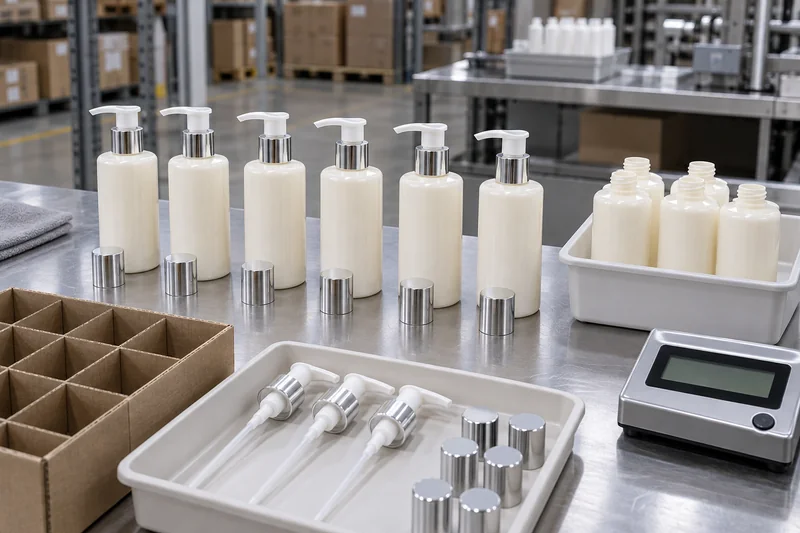
State whether the supplier ships assembled sets, unassembled matched components, or independent line items. For unassembled packaging, require carton and pallet labels that identify the SKU, component revision, batch and exact piece count. If components come from different factories, the final coordinator should issue one reconciliation showing accepted quantities and the resulting complete-set count.
The same rule applies to colors and artwork. A surplus of Version A cannot compensate for a shortage of Version B. Aggregate tolerance is especially dangerous for multi-language labels, limited-edition decoration and capacity families. Calculate the band per sellable combination unless the PO expressly allows a transfer.
How should overruns, underruns and scrap be invoiced?
Choose one settlement model before production. The default should never be inferred from a percentage alone.
| Model | Invoice rule | Best fit | Main risk to control |
|---|---|---|---|
| Actual accepted quantity | Accepted delivered units × PO unit price, within the band | Repeat custom production | Preapproval for excess and clear count point |
| Fixed lot price | One agreed price for any conforming count inside the band | Budget certainty | Supplier may target lower bound unless minimum is explicit |
| Capped actual quantity | Actual accepted units, but invoice cannot exceed ordered value without written approval | Strict PO authorization | Ownership/disposition of unapproved excess |
Four worked settlement examples
- Accepted overrun inside the band: 50,000 ordered; +3% maximum; 50,800 accepted and delivered. Under actual-quantity billing, invoice 50,800 at the PO unit price—only if the PO authorizes this treatment.
- Underrun inside the band: 50,000 ordered; −2% minimum; 49,400 accepted and delivered. Invoice 49,400 under actual-quantity billing. The buyer cannot assume a credit for 600 on top of paying only 49,400 unless the contract provides an additional remedy.
- Excess above the band: maximum 51,500; supplier proposes 52,200. Buyer may accept and pay for the approved portion, negotiate the balance, or refuse the excess under the contract and applicable law. Do not ship first and negotiate later.
- Quality rejects discovered on receipt: 50,500 physically received, but 700 are validly rejected under the agreed process. Commercially accepted quantity is 49,800, not 50,500, subject to the contract’s sampling, remedy and replacement clauses.
Under the CISG, which may apply to some international sales, quantity is part of conformity. Article 52 provides that a buyer may take or refuse excess quantity and, if it takes all or part of the excess, pays for that accepted excess at the contract rate. The parties can draft different operational detail, and the CISG may be excluded or inapplicable, so this is a reason to write the rule—not a substitute for legal review.
Manufacturing scrap should be costed into the quoted unit economics or disclosed as a separate agreed development charge; it is not a delivered product. Likewise, units rejected before shipment should not reappear as “free spares.” Rework may be accepted only after the rework method, appearance, function and traceability meet the approved requirements.
How to specify spare pumps, caps and other replacement parts
There is no honest universal spare-parts percentage. A plain screw cap, a multi-part pump, a glass dropper and a decorated outer shell have different failure modes and field-replacement value. Calculate spares by component risk, assembly exposure, destructive testing, distribution damage, line setup and after-sales policy.
| Spare category | Why it may be needed | How to specify it |
|---|---|---|
| Filling-line setup spares | Feeding, capping, torque and changeover trials | Fixed count by component, delivered before or with bulk |
| QC/destructive-test spares | Leak, actuation, sectioning or transport tests consume units | Count tied to the approved protocol |
| Field replacement spares | Damaged or non-functioning pumps/caps can be replaced without scrapping filled product | Risk-based percentage or fixed count, separate no-charge line |
| Retain samples | Complaint comparison and traceability | Quantity, storage owner and retention period |
List each spare as a separate PO or packing-list line: component name, revision, color, decoration, quantity, price “no charge” or agreed unit price, lot relationship and carton location. Spare pumps must have the approved engine, gasket, actuator, finish and dip-tube length; a generic pump with the same neck size is not necessarily an interchangeable replacement.
If a buyer requests 1% pump spares for 50,000 filled units, the arithmetic is 500 additional accepted pumps. That number is only an illustration. The final factor should come from line trials, supplier history and failure consequence. Specify whether these 500 are in addition to 50,000 complete sets, because “50,500 pumps total” can otherwise be misread as a permitted overrun.
AQL, Incoterms and compatibility do not replace the quantity clause
AQL controls a sampling decision, not the invoice count
ISO 2859-1:2026 defines AQL-indexed sampling schemes for lot-by-lot inspection by attributes. AQL helps determine whether to accept or reject a submitted lot from a sample. It does not authorize the supplier to ship the AQL percentage fewer units, and it does not mean the buyer must pay for known defects. Use a separate AQL inspection for cosmetic packaging to make the quality decision, then count the accepted units under the commercial quantity rule.
Incoterms do not set the tolerance or payment formula
ICC guidance states that Incoterms 2020 rules are not a substitute for the sales contract and do not decide the price, payment method or remedies for breach. An FOB, FCA, CIF or DDP term therefore does not answer whether 3% excess is billable. It does matter to the separate question of delivery and risk, so the PO should define the count point: factory release, carrier handover, named destination or receiving warehouse.
Qualification samples need their own count
Units used for formula–packaging compatibility testing may be filled, stored, inverted, actuated or destructively examined. Do not deduct them silently from the commercial delivery. Put qualification quantities in the development schedule and state whether they are prototype units, production-representative units or samples from the saleable lot.
A practical PO clause for order quantity and delivery
The following is drafting material for commercial and legal review. Replace every bracketed variable; do not paste it unchanged.
Quantity and settlement. The ordered quantity for each SKU and component is stated in the Quantity Schedule. Unless the Schedule expressly states otherwise, the permitted variation applies separately to each SKU, color, capacity, artwork, component and delivery destination and may not be offset between lines.
Only units that conform to the approved specification, pass the agreed acceptance process, are undamaged and are packed and delivered at the agreed count point are “Accepted Units.” Production scrap, setup units, rejects, reworked units not approved by Buyer, inspection consumption and unmatched components are not Accepted Units.
Permitted variation: [__% decrease / __% increase], calculated from the ordered quantity of each Schedule line and rounded [up for the minimum and down for the maximum] to whole units. Seller shall not ship or invoice quantity above the upper limit without Buyer’s prior written approval. [No underrun is permitted / the lower limit is __ units.]
Invoice basis: [Accepted Units actually delivered × PO unit price / fixed lot price / actual Accepted Units subject to an invoice cap of the ordered PO value]. No-charge spares are separate Schedule lines and do not reduce the complete-set quantity. Quantity outside the agreed range, shortage, rejection, replacement, credit, return, freight and disposal will be handled under [identified remedy clause].
Seller shall provide a final reconciliation by line showing ordered, gross produced, accepted, rejected, packed, spare and shipped quantities; pieces per carton; carton count; production/decoration lots; and partial-carton quantity. Buyer shall report a reasonably discoverable count discrepancy within [__] days after [defined receipt/inspection event], without waiving latent-defect rights stated elsewhere.
Add a schedule with columns for SKU, description, revision, ordered quantity, minimum, maximum, pieces per carton, complete-set relationship, spare quantity, unit price, invoice cap, delivery destination and count point. The clause controls the method; the schedule controls the numbers.
How to verify quantity at shipment and receipt
- Reconcile before loading. Compare final inspection report, accepted quantity, packing list, pieces per carton, carton count, partial cartons and no-charge spares by SKU.
- Protect traceability. Carton labels should identify item code, version, lot/batch and piece count. Mixed lots or partial cartons need prominent identification.
- Check pallet integrity on arrival. Record seal condition, pallet/carton count and visible damage before unpacking. Separate carrier loss from a factory packing shortage.
- Verify high-risk lines first. Recount partial cartons, mixed-SKU pallets, expensive pumps and lines close to the lower limit. Weight-based counts need a validated unit-weight method because package weight itself varies.
- Quarantine discrepancies. Preserve carton labels, tally sheets, photographs, video if appropriate and the affected goods. Do not mix them into production before the count is resolved.
- Issue one reconciliation. Show expected, packing-list, received, damaged, accepted and disputed quantities, then request the contractual remedy: replacement, expedited makeup, credit, accepted substitute or return.
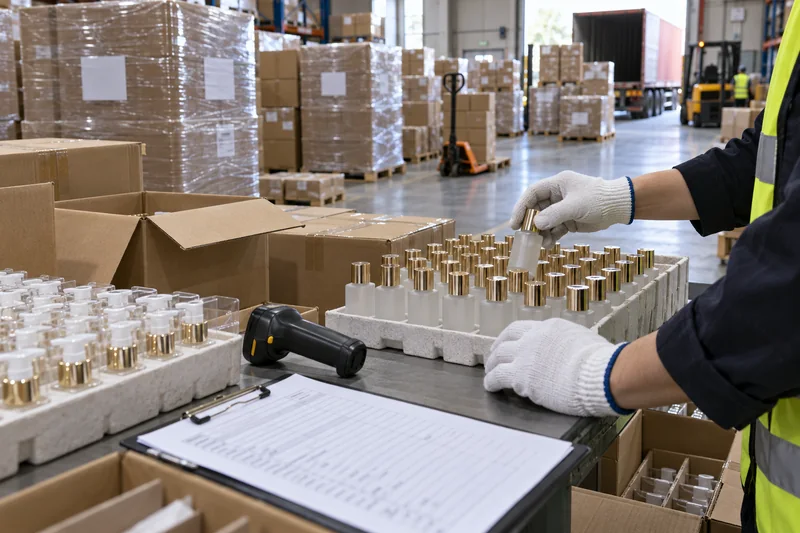
A count certificate at the factory and a count at destination can legitimately differ because of damage, lost cartons or counting error. The remedy depends on the agreed delivery/risk point, carrier evidence and contract. Do not label every destination shortage a production underrun.
Common quantity disputes and practical solutions
| Problem | Likely cause | Immediate action | Prevention |
|---|---|---|---|
| Invoice is 8% above PO | Supplier assumed published terms permit billable overrun | Hold disputed excess; compare signed quotation and PO precedence | Preapproval and invoice cap clause |
| Total count is correct but one color is short | Tolerance applied to aggregate order | Reconcile each SKU; arrange makeup or credit | State no cross-SKU offset |
| Bottles exceed target but pumps are short | Components planned independently | Calculate complete sets; expedite bottleneck component | Set-level reconciliation and common release gate |
| Supplier calls rejects “within AQL” | Sampling rule confused with known defect entitlement | Apply the agreed lot decision and remedy | Separate AQL, defect remedy and quantity clauses |
| Packing list and physical count differ | Partial carton, mixed pallet, label or transit issue | Quarantine and recount with label/pallet evidence | Controlled packing verification and partial-carton label |
| Exact quantity raises unit price | Supplier must absorb yield risk or run extra setup | Compare fixed lot, no-underrun and capped-actual options | Quote commercial alternatives before approval |
Buyer checklist before approving the order
- One PO line for every capacity, color, artwork, component revision and destination that cannot offset another.
- Nominal quantity, permitted minimum and maximum stated as both percentages and units.
- Definition of accepted units and complete sets; unmatched parts excluded from set count.
- Actual-count, fixed-lot or capped-invoice settlement model selected.
- Excess shipment requires—or does not require—prior written approval.
- Gross production, process scrap, rejects, rework, inspection consumption and retains assigned correctly.
- No-charge and billable spares separated by component and revision.
- Pieces per carton, partial-carton policy, pallet allocation and split destinations confirmed.
- Count point, Incoterm with named place, risk transfer and carrier-claim evidence aligned.
- Inspection, notice, replacement, credit, return and dispute timeframes agreed.
When requesting plastic cosmetic bottle options, send the supplier this schedule with the drawing, decoration specification and pump/closure bill of materials. A price comparison is reliable only when every bidder prices the same quantity risk and settlement model.
Frequently asked questions
Must a buyer pay for overrun quantity?
Only according to the contract and applicable law. If the PO permits actual-count invoicing within a stated upper limit, accepted excess inside that limit is normally billed at the agreed unit price. Excess above the limit should not be shipped or invoiced without approval. Under CISG Article 52, where applicable, a buyer may refuse excess; accepted excess is paid at the contract rate.
Is ±10% a normal cosmetic packaging tolerance?
It appears in some print and supplier trade terms, but it is not a universal cosmetic-packaging standard. The appropriate limit depends on process, run size, component complexity, decoration yield, complete-set risk and inventory consequence. Negotiate and record a project-specific range.
Is a defective unit an underrun?
Not initially. Physical short delivery and quality nonconformity are separate facts. If a unit is validly rejected and not replaced, it may reduce the final accepted quantity used for settlement. The inspection, rejection and remedy clauses should define that path.
Is MOQ the same as order quantity tolerance?
No. MOQ is the minimum quantity a supplier will accept for a production setup or commercial line. Tolerance is the permitted difference between the confirmed target and the accepted delivery. A 10,000-piece MOQ can still have a separately negotiated no-underrun, bilateral or asymmetric tolerance.
Does this tolerance apply to the net contents inside a filled cosmetic?
No. Empty-component order tolerance is a business-to-business delivery-count term. The declared net quantity of a filled consumer product is governed by separate measurement and labelling rules in the destination market. Do not use an empty-packaging overrun/underrun clause to justify underfilled products.
Can bottles or caps be counted by weight?
Weight counting can be efficient for uniform components, but it requires a validated average unit weight, a controlled tare, suitable scale resolution and periodic piece-count checks. Moulded bottle and pump weights vary, so a method that works for caps may create a material error for multi-part dispensers. State the accepted counting method and audit frequency.
Sources
Primary and authoritative sources were preferred. Supplier and print-industry terms were used only to understand commercial practice, not to establish a universal cosmetic-packaging percentage.
- US Federal Acquisition Regulation 11.701 — Supply contracts and variation in quantity
- US Federal Acquisition Regulation 52.211-16 and 52.211-17 — Variation and excess quantities
- UNCITRAL Digest of Case Law on the CISG — Article 35, quantity as part of conformity
- UNCITRAL Digest of Case Law on the CISG — Article 52, excess quantity
- UNCITRAL — International Sale of Goods (CISG) and related transactions
- International Chamber of Commerce — Incoterms 2020 and commercial contracts
- ISO 2859-1:2026 — Sampling procedures for inspection by attributes
- Cornell Legal Information Institute — UCC §2-601, buyer’s rights on improper delivery
- NIST — Net contents of packaged goods FAQ
- Council of the European Union — General conditions for supply contracts
- EUR-Lex — Supply terms requiring quantity tolerances to be stated in the contract



 English
  Español de Argentina
  Русский
  Italiano
  日本語
日本語  한국어
한국어  العربية
  Français
  Deutsch