


Short answer: For most pumpable high-viscosity lotions, creams, gels, hair masks and conditioners, the best starting point is a high-viscosity lotion or treatment pump with a generous inlet, wide product passages, adequate suction and a clean-cut outlet. Choose an airless piston system when oxidation protection, hygienic dosing, any-angle use or low residual product matters more than a large dose. For a paste that barely flows back into a dip-tube pickup zone, a squeeze tube, follower-piston dispenser or other positive-displacement package is often more reliable than either pump.
There is no defensible universal viscosity limit that separates these choices. The correct pump must be proven with the production formula at its coldest realistic use temperature, because yield stress, shear thinning, thixotropic recovery, particles, entrained air and passage geometry can matter as much as a single centipoise value.
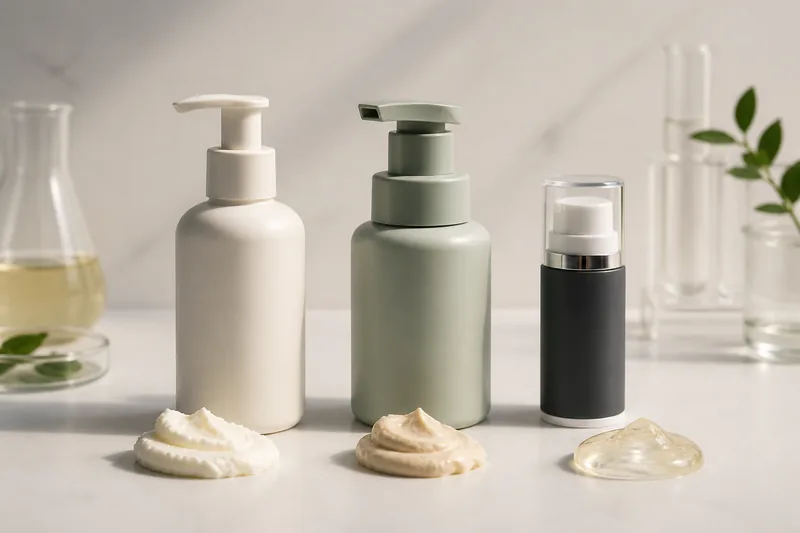
Which Pump Is Best for Each High-Viscosity Product?
If the formula still levels and feeds a dip tube after standing, begin with a purpose-designed high-viscosity atmospheric lotion pump. Its key advantage is not simply a bigger advertised output; it is the ability to refill the chamber through the complete suction path before the next stroke. A robust engine, relatively open inlet and outlet, suitable valve geometry and an actuator that gives the consumer enough leverage are more meaningful than the pump’s appearance.
| Observed formula and use condition | Best starting architecture | Why | Watch closely |
|---|---|---|---|
| Thick lotion, conditioner or body cream that slowly self-levels | High-viscosity atmospheric lotion pump | Practical for medium or large bottles and generous doses; familiar one-hand operation | Cold refill time, dip-tube restriction, venting, stringing and heel |
| Dense facial cream or gel-cream needing a small, controlled dose | Wide-passage treatment pump | Smaller metering options and a cleaner outlet can suit high-value skincare | Whether the small engine can refill fully; nozzle drying; actuation force |
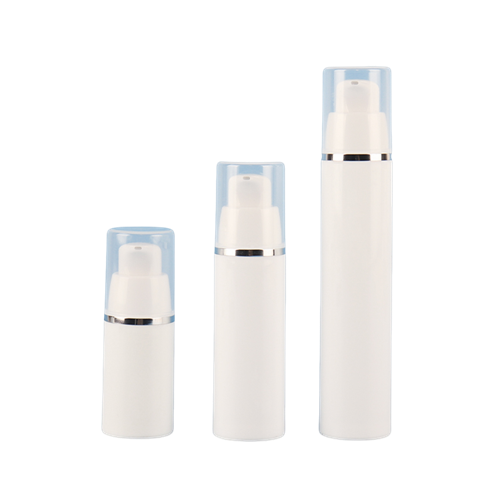
| Oxygen-sensitive cream, premium skincare or pack used at different angles | Airless piston or pouch-type system qualified for the formula | Collapsing volume can improve product protection and positional dispensing | Piston friction, trapped air, filling method, output near empty and bottom seal integrity |
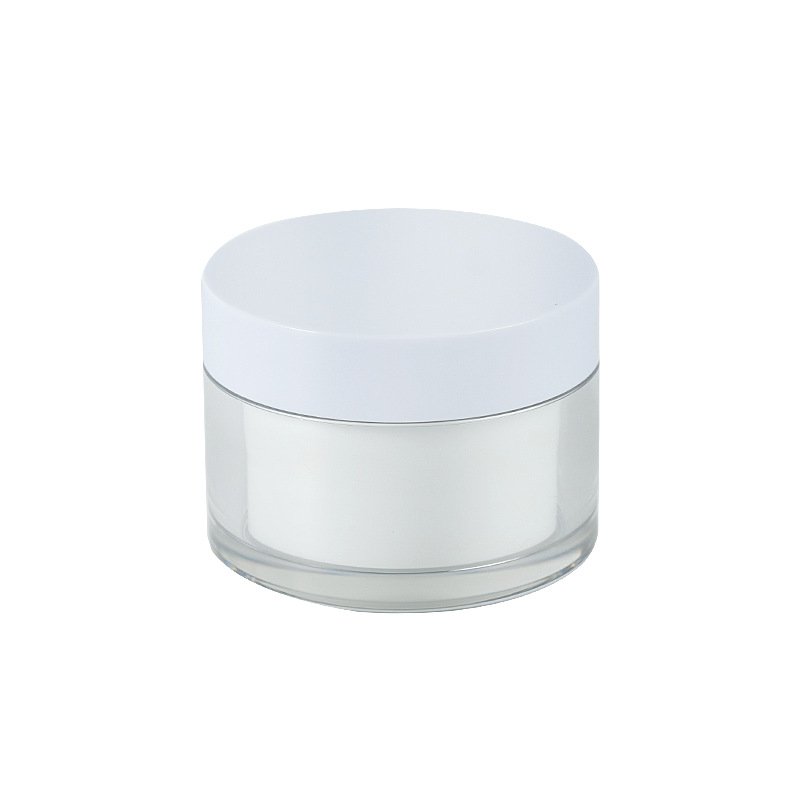
| Very high-yield-stress paste, clay mask, balm-like product or formula that does not migrate toward a pickup point | Squeeze tube, follower piston or wide-orifice jar | A dip-tube pump may create an inaccessible cavity while product remains elsewhere in the bottle | User force, seal area, product cut-off, contamination control and residual product |
| Formula with beads, mineral particles, wax agglomerates or botanical fragments | Large-passage dispenser specifically cleared for particle size, or tube/jar | Particles can obstruct seats, check valves and outlet restrictions | Largest particle and agglomerate, not just average particle size |
| Foaming cleanser concept | Reformulated low-viscosity liquid plus foam pump | A foam engine must mix liquid and air through mesh screens | Thick formula can starve or clog the mesh; do not treat a foam pump as a thick-product pump |
Commercial evidence supports these categories without creating a universal cutoff. Aptar describes a metal-free-path lotion pump for water-based through high-viscosity formulas, while its high-dose HDA specifies a 5 cc dose for high-viscosity applications. Silgan’s current beauty portfolio likewise separates atmospheric pumps, airless pumps and full-flow options for very high viscosities. These examples show that several architectures can work; they do not prove that any named pump will work with an untested formula.
Do not select by cP alone. A supplier statement such as “works up to 50,000 cP” is incomplete unless it identifies the test fluid, viscometer, spindle or geometry, shear rate, temperature and measurement history. Two formulas reported at the same apparent viscosity can prime very differently.
Why Viscosity Alone Does Not Predict Pumpability
Many cosmetic creams, gels and conditioners are non-Newtonian. Their resistance to flow changes with the stress applied and with time. A single Brookfield reading can be useful for manufacturing control when the method is fixed, but it cannot represent every event inside a dispenser: slow movement toward a dip tube, rapid flow through a valve, high shear through a nozzle, and structural recovery after discharge.
Yield stress: will the product start moving?
A product with yield stress behaves solid-like until the applied stress exceeds a threshold. This is helpful when a cream must hold a peak on the hand, but it can also leave stationary zones around a dip tube. Research on complex fluids in consumer dispensing bottles found that yield stress and low-shear viscosity contribute to residual heel because material away from the pickup point may not move. A pump can therefore deliver an excellent first half of a bottle and still fail the pack-life test.
Shear thinning: does the product become easier to move inside the pump?
Many lotions and gels become less resistant as shear rate rises. That can help flow through a pump, but the relevant behavior is the formula’s flow curve across the stresses created by the actual engine. A high apparent viscosity measured at low shear does not automatically mean poor pumping. Conversely, a formula that seems manageable under a fast laboratory test can refill slowly during the low-stress suction phase.
Thixotropic recovery: can the chamber refill before the next press?
Some structures break down under shear and rebuild during rest. Fast recovery may improve product body after dispensing but impede refilling; slow recovery may improve flow yet change product cut-off or appearance. Measure pump performance at a realistic cadence, including rapid repeated presses and a restart after hours or days of rest.
Temperature, air and particles change the result
Cold storage often increases flow resistance. Entrained air can compress rather than transfer product, producing spongy actuation or short doses. Suspended particles may bridge a narrow opening even when the continuous phase flows. The pump brief should therefore include a controlled rheology method, lowest expected use temperature, density, air sensitivity and the maximum credible particle or agglomerate size.
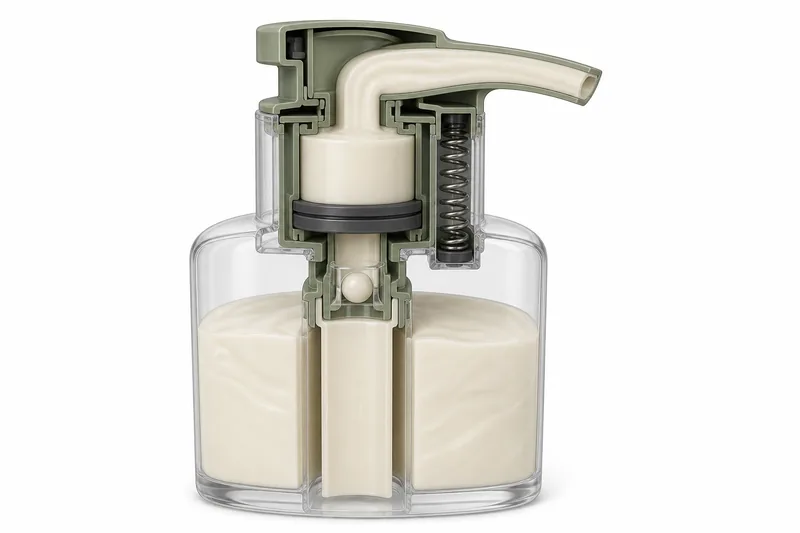
High-Viscosity Pump Types Compared
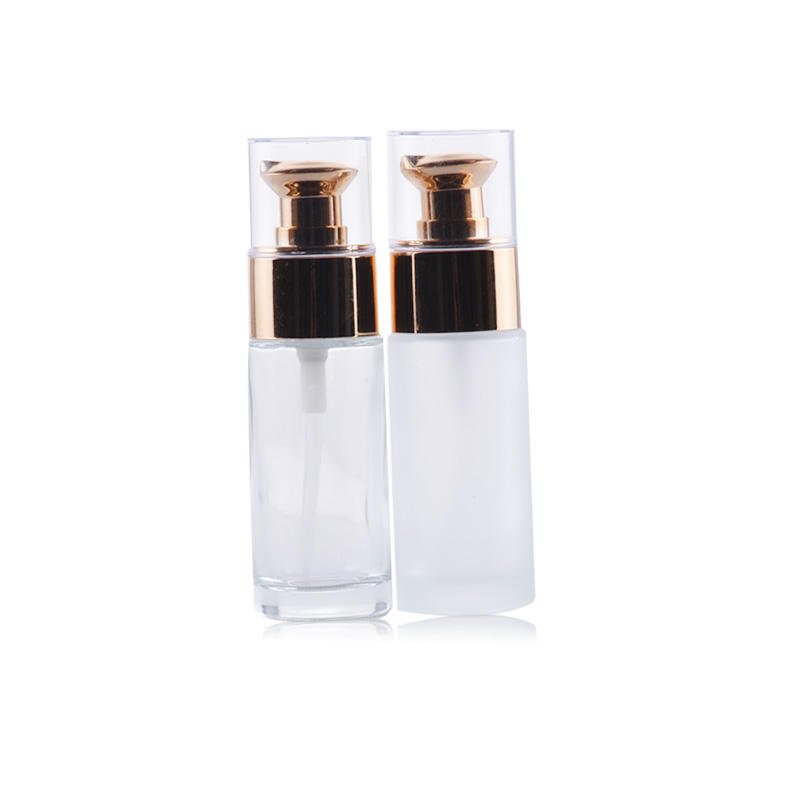
1. High-viscosity atmospheric lotion pump
This is normally the most economical and familiar solution for thick body lotion, shampoo, conditioner, cleanser and salon products in larger bottles. The pump draws product through a dip tube while the bottle admits replacement air. Look for a pump family expressly offered for viscous formulas, then compare passage restrictions, suction capability, actuation force, return speed, dose and closure options.
Best when: the product feeds the dip tube, a larger pack and dose are desired, air contact is acceptable, and upright use is normal. Weakness: the bottle can retain a heel, lose prime through an air leak or restricted pickup, and dispense poorly at low temperature. Explore compatible lotion bottle and pump formats, but approve the complete formula-pack combination rather than the bottle alone.
2. Wide-passage treatment pump
A treatment pump is suited to smaller facial or targeted products, but only a version designed for the formula’s rheology should be considered. The useful features are a low-restriction product path, reliable check valves, enough piston area and leverage for comfortable actuation, and a nozzle that separates the dose without a long string. An external spring or metal-free product path may reduce particular formula-contact risks, although material compatibility must still be tested.
Best when: the dose is small, the product is valuable and presentation matters. Weakness: compact dimensions can create restrictive passages; a nominal 0.15 mL engine is not automatically easier to fill with cream than a larger pump.
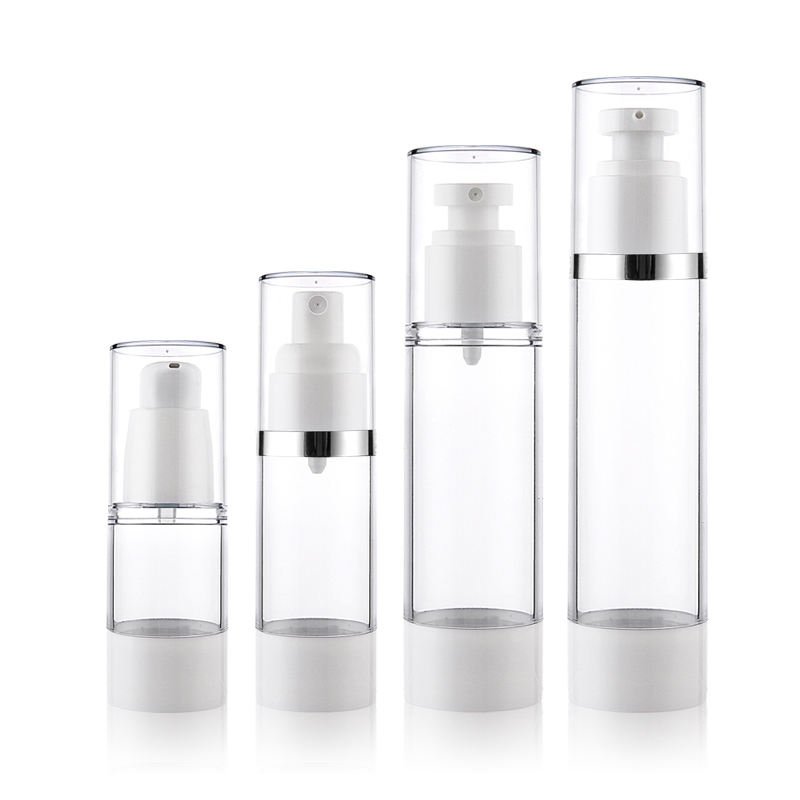
3. Airless piston pump
An airless piston package uses a moving platform to reduce the product chamber as formula is dispensed; other airless designs use a flexible inner pouch. It can reduce repeated air intake, support dispensing in more orientations and limit product exposure at the opening. Those are package-function benefits, not proof that the system can handle every thick cream.
Best when: formula protection, hygienic use, controlled skincare dosing and evacuation are priorities. Weakness: a high-yield-stress formula may not transfer cleanly into the pump inlet, trapped air can interrupt output, and excessive piston friction or a bottom-seal fault can undermine performance. Compare airless pump bottle options and include filling trials early.
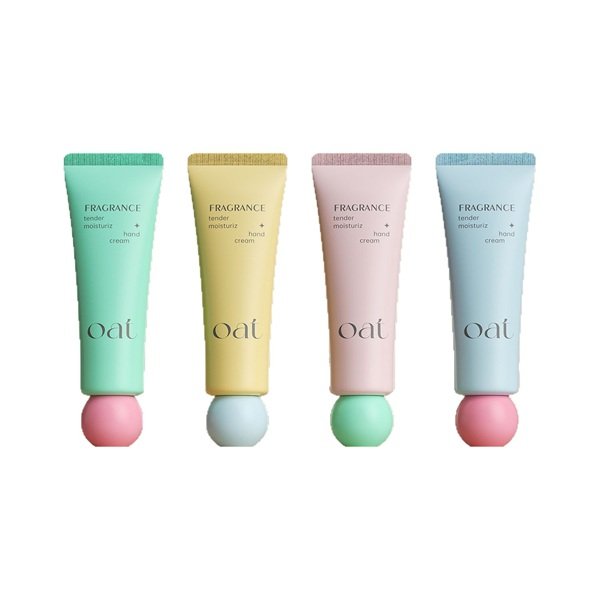
4. Squeeze tube or follower-piston dispenser
When a paste holds its shape and will not reliably flow toward a dip tube, changing the package can be more rational than increasing pump force. A flexible tube allows the user to apply pressure to the product mass, while a follower-piston dispenser pushes the product toward the outlet. A tube can also offer a large orifice and a short flow path.
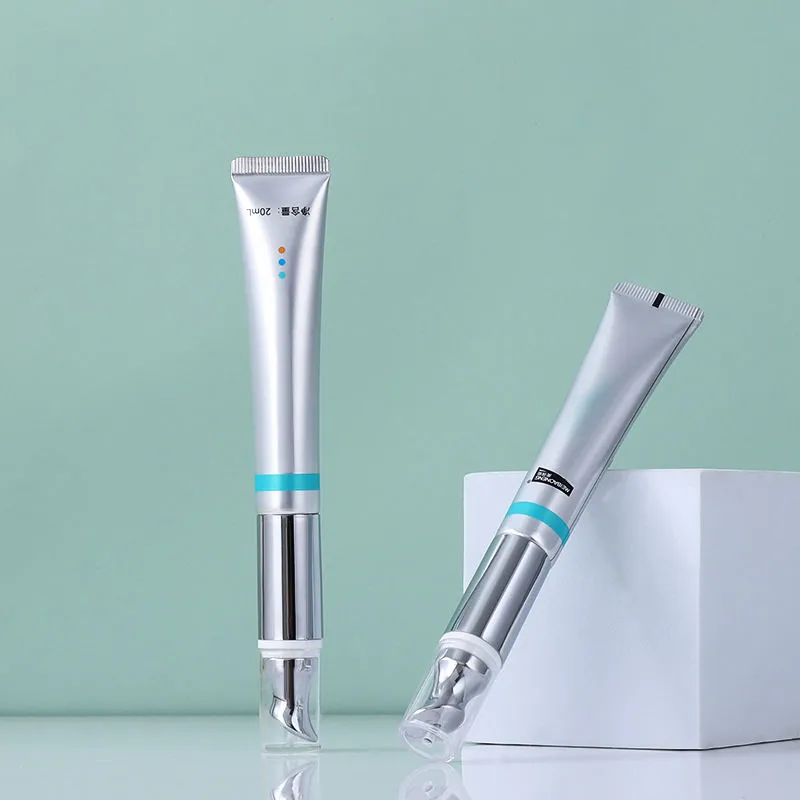
Best when: the formula resembles a paste, dense mask, heavy balm or concentrated treatment. Weakness: dose precision and one-hand convenience may be lower, and repeated contact with an open jar is a separate hygiene decision. Boyu’s cosmetic cream tube range provides an alternative platform for sampling.
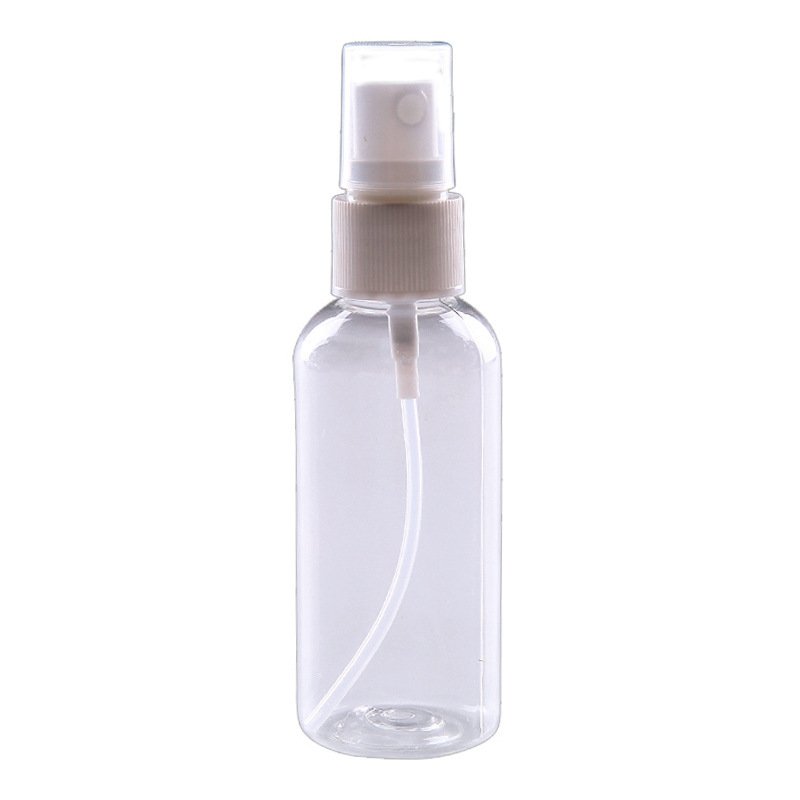
5. Why a foam pump or fine-mist sprayer is usually wrong
A foam pump divides a formulated liquid through air-mixing and mesh elements; a fine-mist sprayer forces product through a very small swirl and nozzle system. Thick creams are inconsistent with those goals. If the marketing concept requires foam, the formulator normally develops a liquid with suitable surfactants and flow behavior. Boyu’s guide to how a foam pump works explains why its mesh and air path create different constraints.
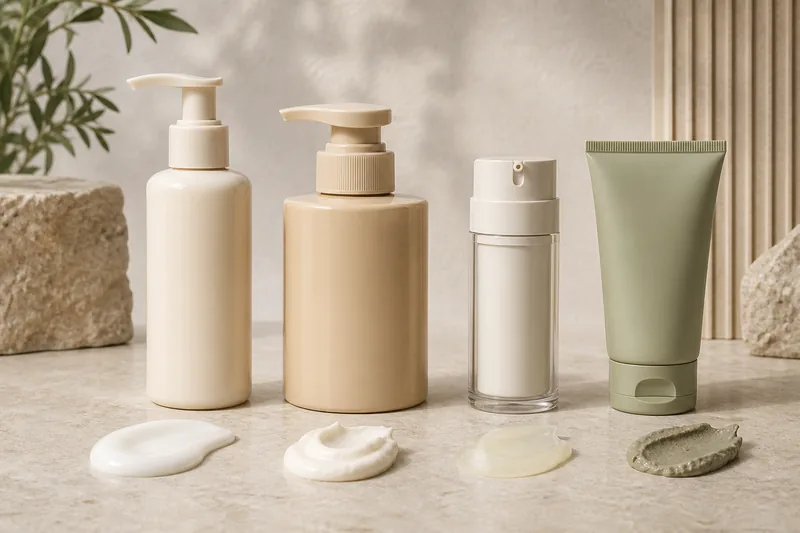
A Seven-Step Method for Choosing the Pump
Step 1: Define the consumer dose in grams
Start with the amount needed per use and how many full strokes should deliver it. Consumers are unlikely to reproduce a partial stroke consistently. If the target is 1.5 g and product density is 0.95 g/mL, the corresponding volume is about 1.58 mL. That is a design target, not permission to assume a nominal 1.6 mL pump will deliver 1.6 mL of the real cream.
For a deeper method, see Boyu’s verified guide to lotion pump output per stroke. It separates nominal output from measured package performance.
Step 2: Characterize flow under named conditions
Provide more than “thick” or a viscosity value without method. Record formula version, batch, age, measurement temperature, instrument, geometry or spindle, speed or shear rate, and test history. Ideally include a flow curve, yield stress and recovery behavior. Also disclose density, pH, volatile content, oil and solvent system, suspended solids, and the maximum particle size that may actually reach the pump.
Step 3: Map the narrowest parts of the complete path
Review the dip-tube internal diameter and inlet, valve seats, chamber ports, piston passages, actuator channel and final orifice. The smallest effective restriction can dominate performance. Published consumer-bottle research found that dip-tube diameter, suction pressure and volumetric flow influence complex-fluid discharge. Separate research found that dip-tube cut and bottom clearance changed flow rate and residual heel under the tested conditions. Those findings support testing geometry rather than treating the dip tube as a commodity.
Step 4: Check suction, refill and human actuation together
A powerful pump that requires uncomfortable thumb force is not a successful consumer pack. Measure peak actuation force, force profile, full return time and output at realistic cadence. Watch whether the actuator returns completely before the next press. A larger actuator can improve leverage, but engine design and formula resistance still control the underlying load.
Step 5: Design the pickup and container around evacuation
A dip tube should reach the low collection area without sealing flat against the base. Bottle geometry should guide product toward that point. For non-leveling creams, shoulders, base wells and wide bottle areas can trap product outside the moving zone. Evaluate the package upright, tilted during use and after storage on its side if consumers may do that.
Step 6: Decide whether formula protection changes the architecture
If the formula is oxygen-sensitive or must minimize repeated environmental exposure, airless may be worth the extra system and filling complexity. If the primary need is a generous body-care dose from a 500 mL bottle, a robust atmospheric high-viscosity pump may be more practical. If metal contact is a concern, request a documented metal-free product path; do not confuse that feature with universal chemical compatibility.
Step 7: Shortlist at least two engines and test the filled pack
Supplier screening can eliminate unsuitable formats, but it cannot replace package testing. Use production-representative pumps, dip tubes, bottles, gaskets, closures and filling conditions. Include more than one pump lot or mold cavity where possible, and retain an approved system sample and drawing after selection.
Decision rule: Choose the simplest architecture that passes the complete specification with the real formula. Do not pay for airless solely because the product is thick, and do not choose a standard lotion pump solely because it releases cream during a ten-stroke bench demonstration.
How to Validate a Pump for a High-Viscosity Formula
A useful test plan separates start-up, steady-state and end-of-pack performance. It also repeats critical checks after storage, because formulas and polymer or elastomer components can change with time. ASTM D4333/D4333M-18, with an active 2025 reapproval listed by ASTM, covers compatibility testing of mechanical pump components with consumer products. ASTM D4336-18(2025) covers mean output by weight per actuation and states that the practice can support pump and final-package specifications.

Minimum functional test sequence
- Condition samples: Test at a defined room condition and at the lowest realistic consumer-use temperature. Add elevated-temperature aged samples for compatibility assessment, but do not claim accelerated storage predicts shelf life without a justified correlation.
- Record priming: Count complete strokes to the first product and to a continuous air-free dose. Set separate acceptance criteria for each.
- Measure steady-state output gravimetrically: Prime, collect a defined series of full strokes, divide net mass by stroke count, and convert to volume only with measured density at the test temperature.
- Measure variation: Report pump-to-pump and stroke-to-stroke results, not only one average. Define sample size and acceptance limits in the quality plan.
- Measure force and return: Capture peak force, incomplete return and the time needed to refill at both normal and rapid cadence.
- Assess dose quality: Score stringing, tailing, dripping, splatter, trapped air, sputter and whether dried product obstructs the outlet after a pause.
- Run through the pack: Test start, middle and near-empty stages. Weigh inaccessible residual product and report it as a percentage of net fill.
- Check leakage and paneling: Evaluate closure torque, gasket seal, bottle venting, airless piston seal, storage orientation and transport conditions appropriate to the distribution channel.
- Age and repeat: Inspect swelling, softening, cracking, discoloration, corrosion, odor, output drift and loss of prime after the defined compatibility schedule.
Example acceptance framework
The numeric limits must come from the product requirement, risk analysis and capability data; the following table shows what to specify, not universal pass values.
| Attribute | What the specification should state | Why it matters |
|---|---|---|
| Priming | Maximum strokes to first dose and stable dose at each test temperature | Controls first-use frustration and reveals suction leaks or restrictions |
| Output | Target mean in g/stroke or mL/stroke, tolerance, method and density basis | Connects pump performance to consumer dose |
| Force/return | Maximum peak force and maximum return time at defined cadence | Confirms accessibility and full chamber refill |
| Cut-off | Visual scoring or measured string/drip limit after full actuation | Protects cleanliness and perceived quality |
| Evacuation | Maximum residual mass or minimum percentage dispensed | Prevents a pump that works but strands saleable product |
| Aged function | Permitted changes after each storage condition and interval | Detects formula-component interaction and performance drift |
What Pump Failures Reveal
| Symptom | Likely mechanism | Most useful next check |
|---|---|---|
| Many priming strokes | Long or narrow suction path, air leak, poor valve seal, trapped air or formula too resistant at start-up | Leak integrity, inlet restriction, formula temperature and prime curve |
| Actuator rises slowly | Chamber cannot refill quickly enough or return system is overloaded | Return time versus temperature, cadence and dip-tube ID |
| First dose is full; rapid doses shrink | Refill lag rather than metering-chamber size | Output at controlled intervals and rapid repeated actuation |
| Long string at nozzle | Viscoelastic formula, unsuitable outlet geometry, low suck-back or incomplete cut-off | High-speed observation and comparison of actuator/nozzle options |
| Air shots midway through pack | Vortexing, air ingress, channeling, airless piston issue or product no longer feeding pickup | Transparent developmental pack, seal test and fill process review |
| Large amount left in bottle | Yield-stress heel, poor base collection, high dip-tube clearance or pack orientation | Residual mass plus product-flow observation near empty |
| Valve blocks over time | Particles/agglomerates, dried residue, crystallization or formula-component interaction | Microscopy/particle review, pause-and-restart test and aged teardown |
| Bottle panels inward | Atmospheric replacement air is restricted while product is removed | Vent path, closure torque and bottle wall response |
What to Send a Pump or Packaging Supplier
A supplier can make a better first recommendation when the request describes performance rather than saying only “pump for thick cream.” Under an appropriate confidentiality arrangement, provide:
- Product category, intended use, final formula version and manufacturing process;
- Rheology data with instrument, geometry, temperature, shear conditions and sample history;
- Density, pH, solvents, oils, surfactants, active ingredients and metal-contact restrictions relevant to compatibility;
- Particles, beads or crystals, including credible maximum agglomerate size;
- Target dose in grams per use, acceptable number of strokes and pack size;
- Cold-use temperature, storage orientations, use cadence and expected pause between uses;
- Bottle material, capacity, neck-finish drawing, fill level, headspace and base geometry;
- Requirements for airless protection, lock, tamper evidence, shower use, e-commerce or travel;
- Acceptance limits for prime, output, force, return, cut-off, leakage, residual product and aged function.
Need a pump shortlist for a thick cosmetic formula?
Send Boyu Packaging the formula category, controlled rheology data, target dose, bottle size and use conditions. We can review atmospheric lotion packages, airless systems and tube alternatives for sampling. Contact Boyu Packaging to begin a production-formula trial before mass production.
Frequently Asked Questions
Is an airless pump always best for thick creams?
No. Airless is valuable when product protection, positional use and evacuation are important, but piston movement, inlet transfer, trapped air and filling still have to be validated. A robust atmospheric high-viscosity pump may be better for a large body-care pack; a tube may be better for a non-leveling paste.
What viscosity is too high for a lotion pump?
There is no universal cP threshold. The answer changes with shear rate, temperature, yield stress, recovery, particles, suction pressure and flow-path geometry. Ask for the supplier’s test method and test the actual formula at relevant temperatures.
Does a higher-output pump handle thicker product better?
Not necessarily. A larger chamber may deliver more product after it fills, but it also needs to refill completely. High-viscosity performance depends on suction and restrictions throughout the path, not output alone. Match nominal dose to consumer need, then verify measured output and return.
Should the dip tube be wider for high-viscosity lotion?
A larger internal diameter can reduce flow resistance, but the best geometry is system-specific. Valve ports or the actuator may remain the controlling restriction, and excessive bottom clearance can increase residual product. Test dip-tube ID, cut and clearance with the intended bottle.
Can a pump dispense products containing particles?
Only when the entire path and valve system are qualified for the credible maximum particle or agglomerate size. Average particle size is not enough. A large particle can obstruct a seat, and soft beads can deform or break under shear. Consider a tube or jar if reliable pump passage cannot be demonstrated.
How do I test pump output for a thick cream?
Condition the filled pack, prime it, collect multiple complete steady-state strokes on a balance and divide net mass by stroke count. Convert grams to milliliters only using the measured density. Repeat across pumps, temperatures and pack-life stages, and record force, return, stringing, leakage and residual product.
Can pump dispensing change the cream itself?
It can. A 2024 open-access study of an acyclovir cream found that passage through the pump exposed the product to shear and changed measured microstructural attributes versus tube dispensing. That result is formula- and package-specific, but it shows why sensitive semisolids may need product-quality assessment as well as dispensing tests.
Conclusion
The best pump for a high-viscosity cosmetic is usually a purpose-designed high-viscosity lotion or treatment engine when the formula can feed a dip tube; an airless system when protection and controlled evacuation justify it; or a tube/follower package when the product will not reliably migrate to a pickup point. The most important purchasing question is not “What is the maximum cP?” It is “Does this complete pack meet our prime, dose, force, cut-off, leak and evacuation limits with the production formula throughout storage and use?”
Sources
- ASTM International, D4333/D4333M – Standard Practice for Compatibility of Mechanical Pump Dispenser Components.
- ASTM International, D4336-18(2025) – Standard Practice for Determination of the Output Per Stroke of a Mechanical Pump Dispenser.
- Teoman, Potanin and Armenante, Analysis of complex fluid discharge from consumer dispensing bottles using rheology and flow visualization, Applied Rheology (2023).
- Teoman, Potanin and Armenante, Effect of Orifice Shape and Dip Tube Clearance on the Discharge Hydrodynamics and Residual Heel Volume in a Dispensing Bottle, Fluids (2023).
- Impact of Different Packaging Configurations on A Topical Cream Product, Pharmaceutical Research (2024).
- Aptar Beauty, GSA dispensing pump technical product page.
- Aptar Beauty, HDA high-dose dispensing pump technical product page.
- Silgan Dispensing, Global Beauty Product Portfolio (2025 edition).
 English
  Español de Argentina
  Русский
  Italiano
  日本語
日本語  한국어
한국어  العربية
  Français
  Deutsch