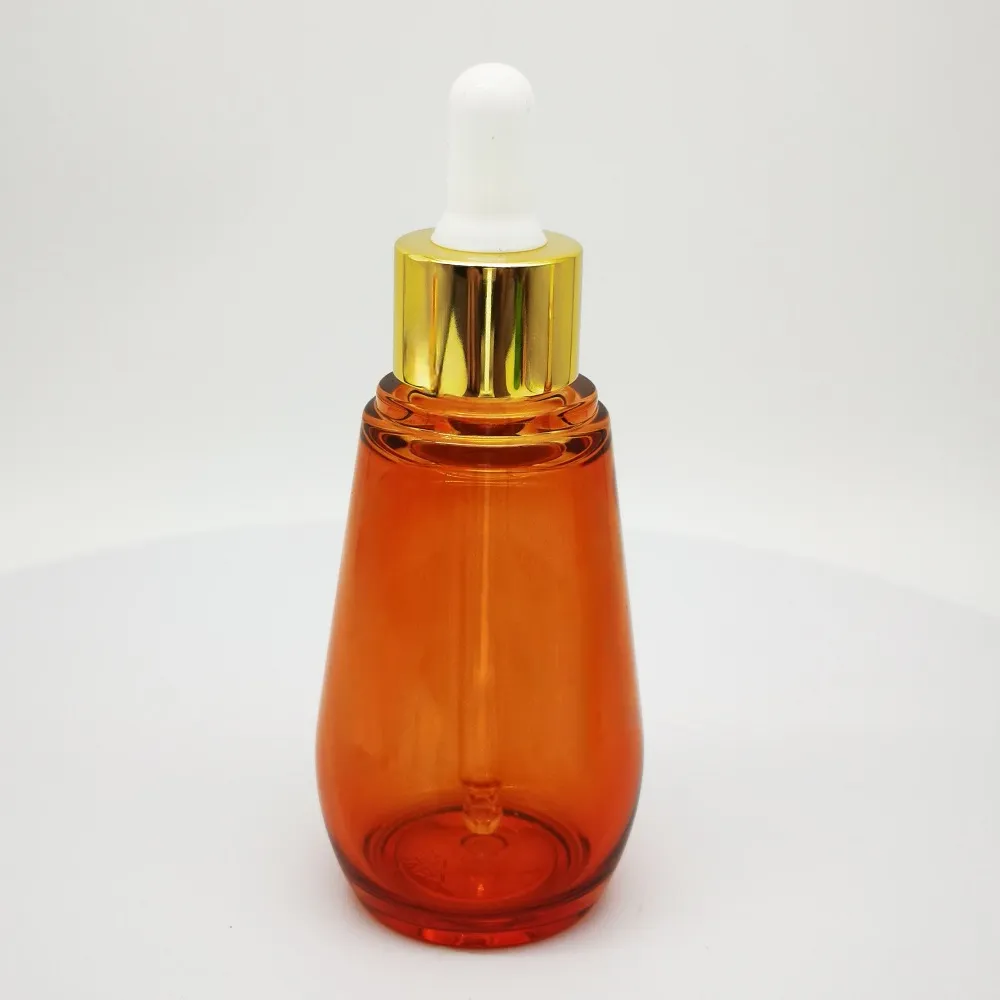
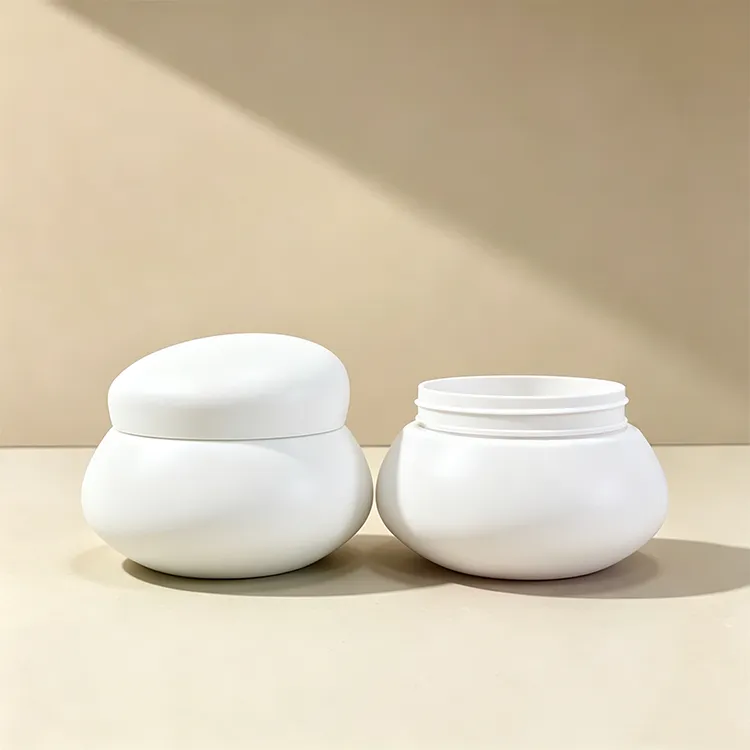
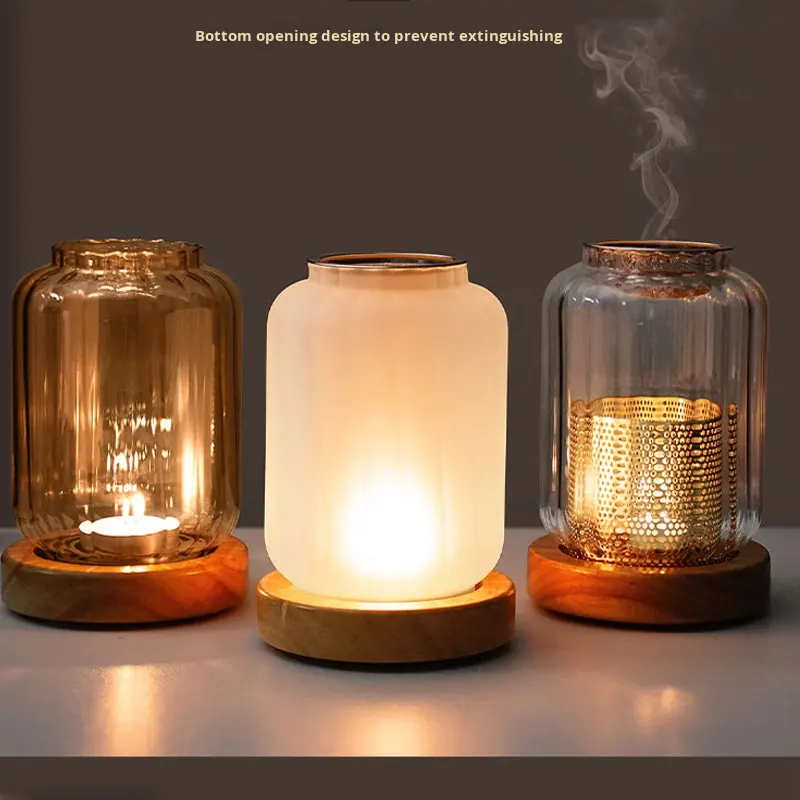
Direct answer: Before plastic bottles became standard, liquid shampoo was most often sold in glass bottles. But “glass” is not the whole answer. Powder shampoo was sold in paper sachets and cardboard cartons; barbers used refillable glass, porcelain and sometimes silver bottles; and some concentrated or cream shampoos came in collapsible metal tubes. These formats overlapped. There was no single year when every shampoo brand or country changed from glass to plastic.
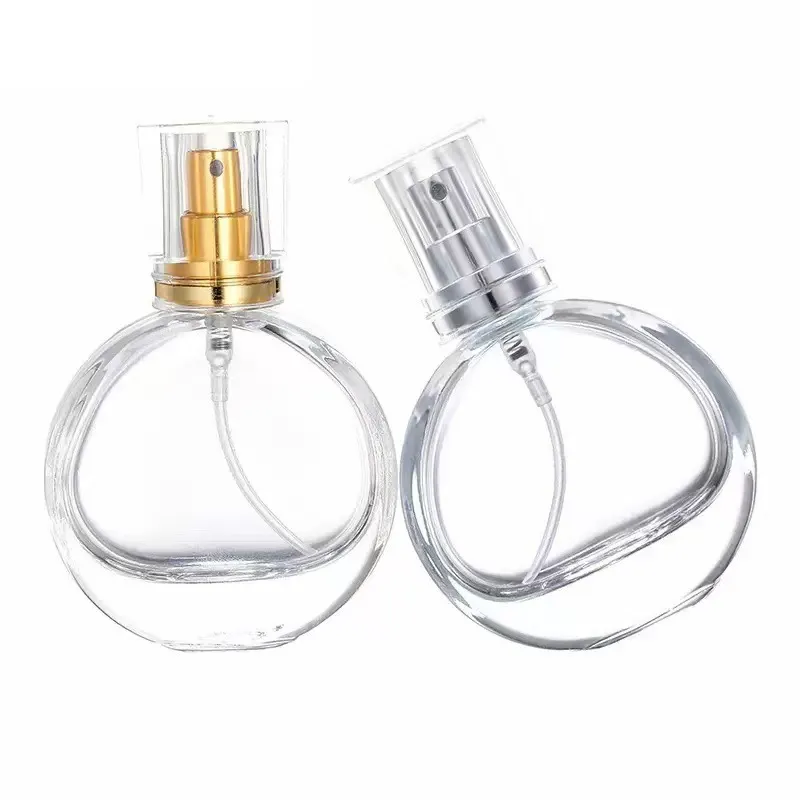
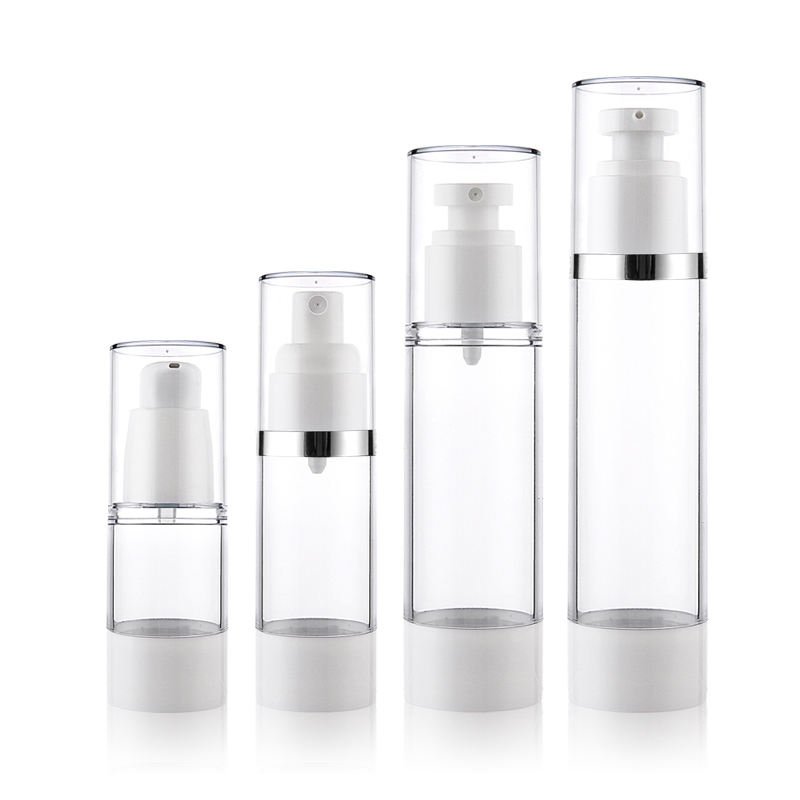
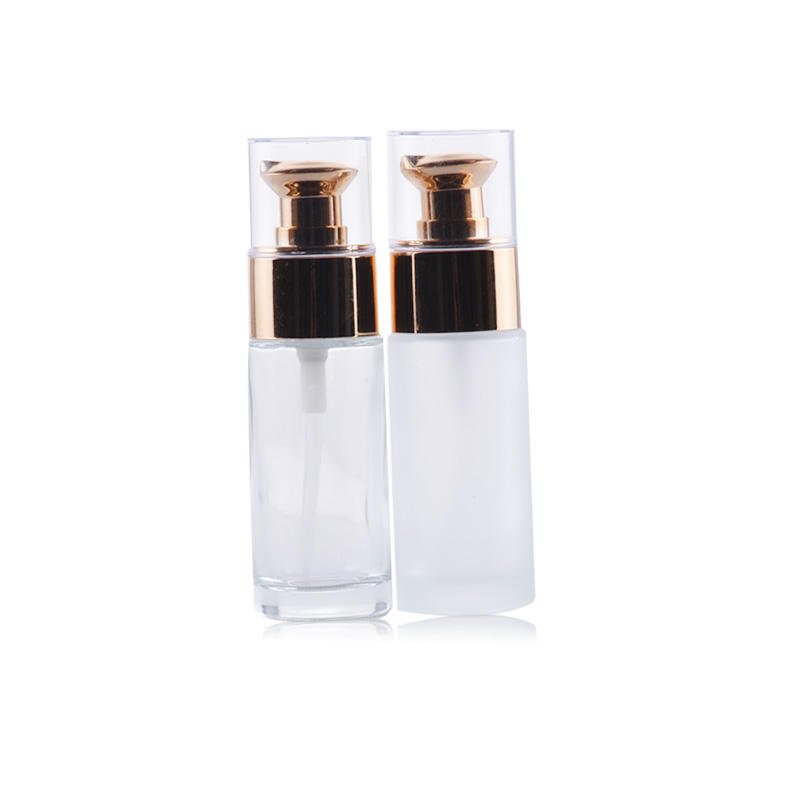
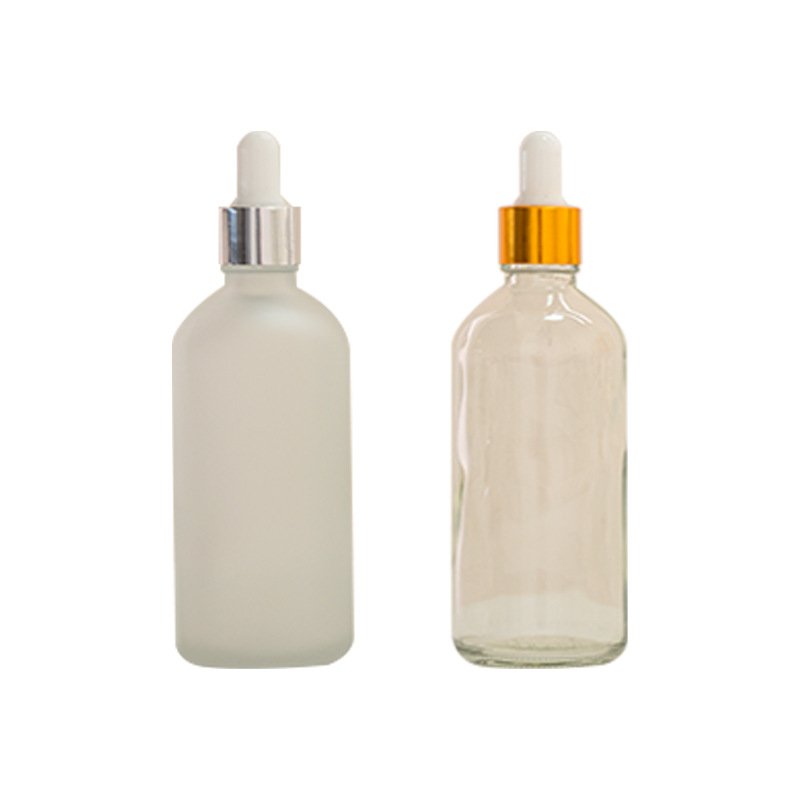
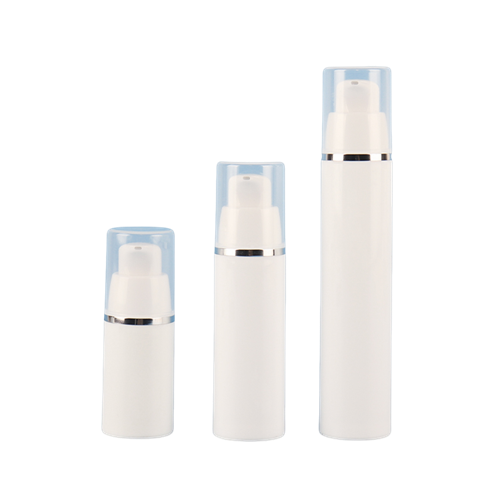
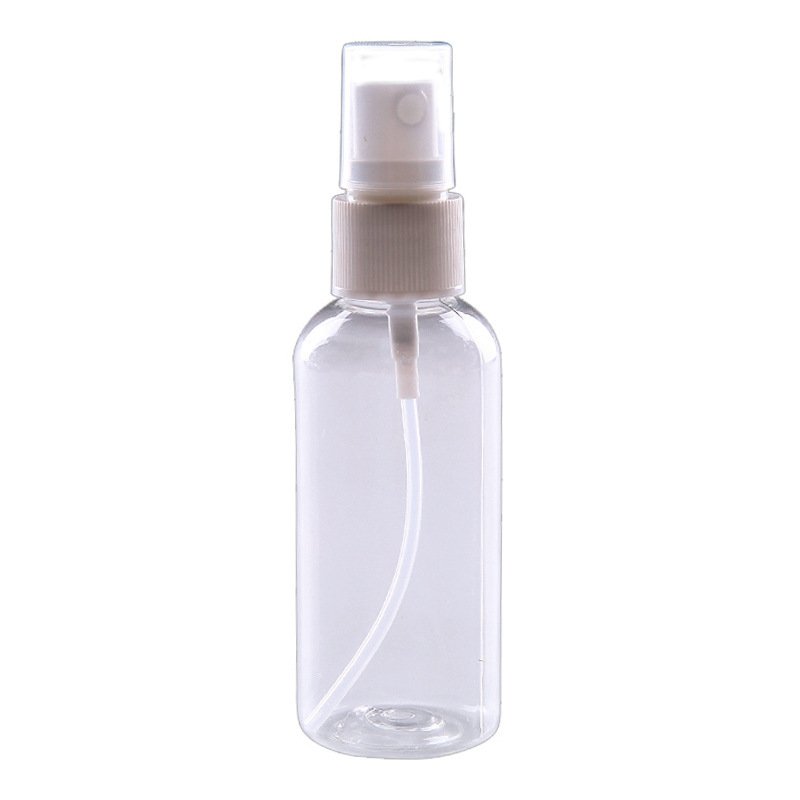
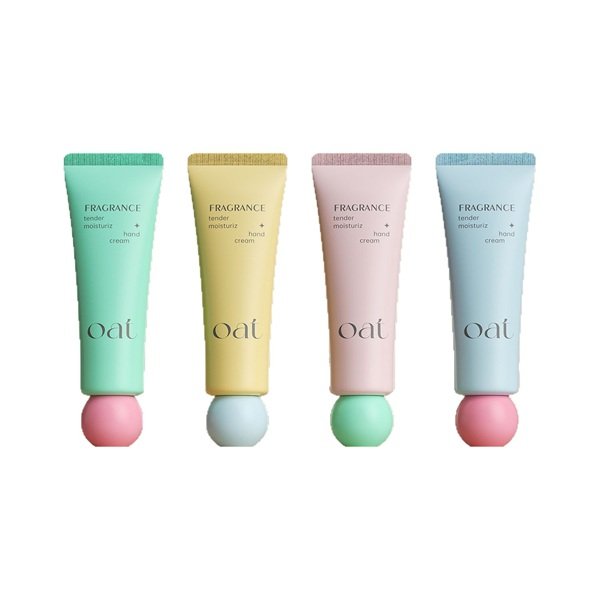
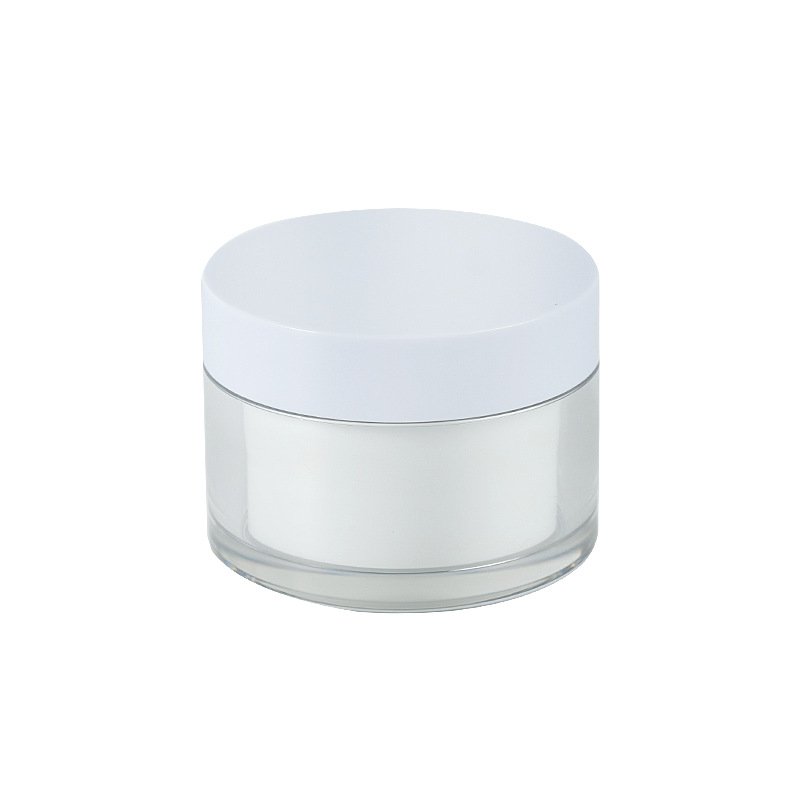
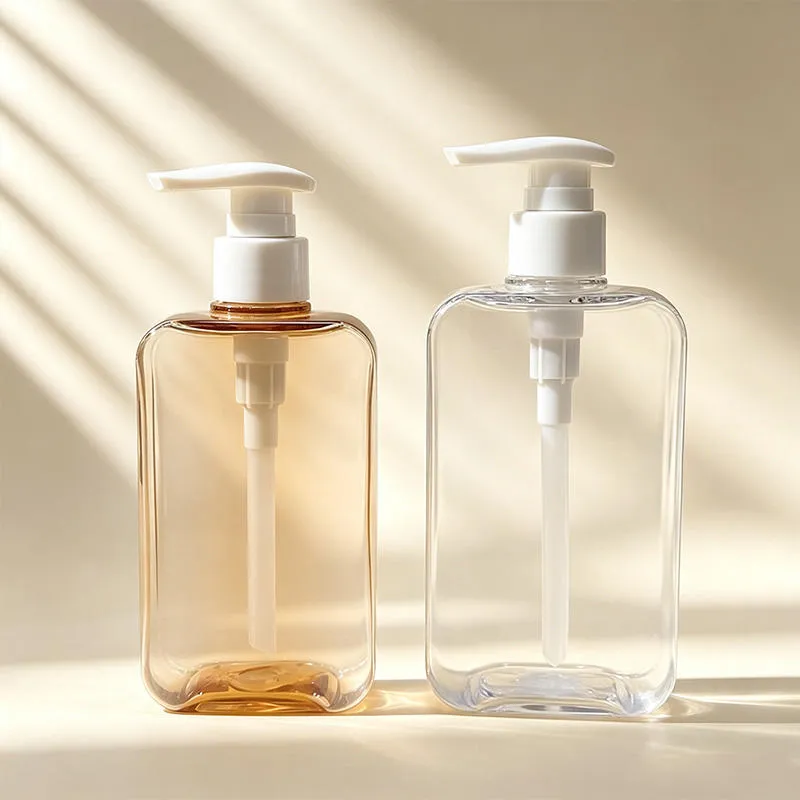
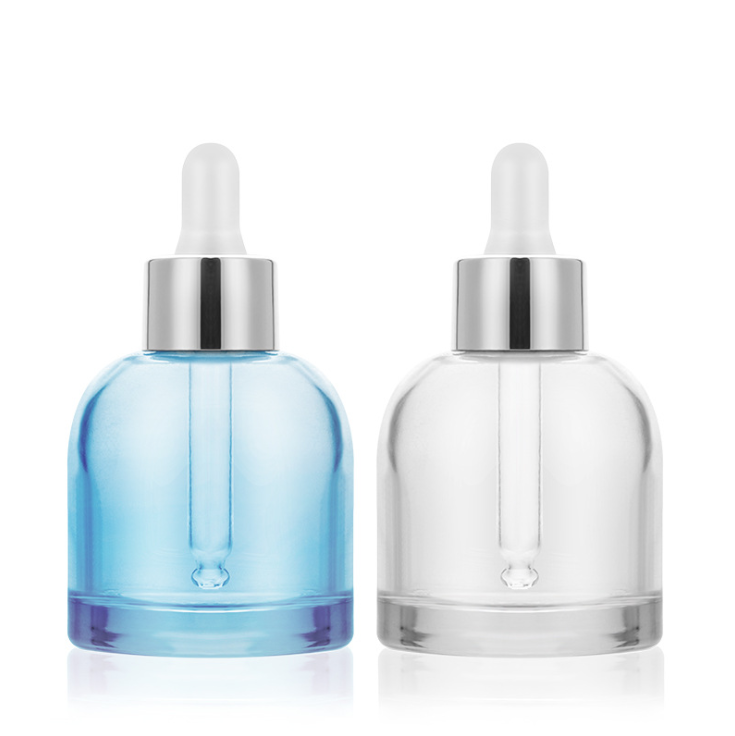
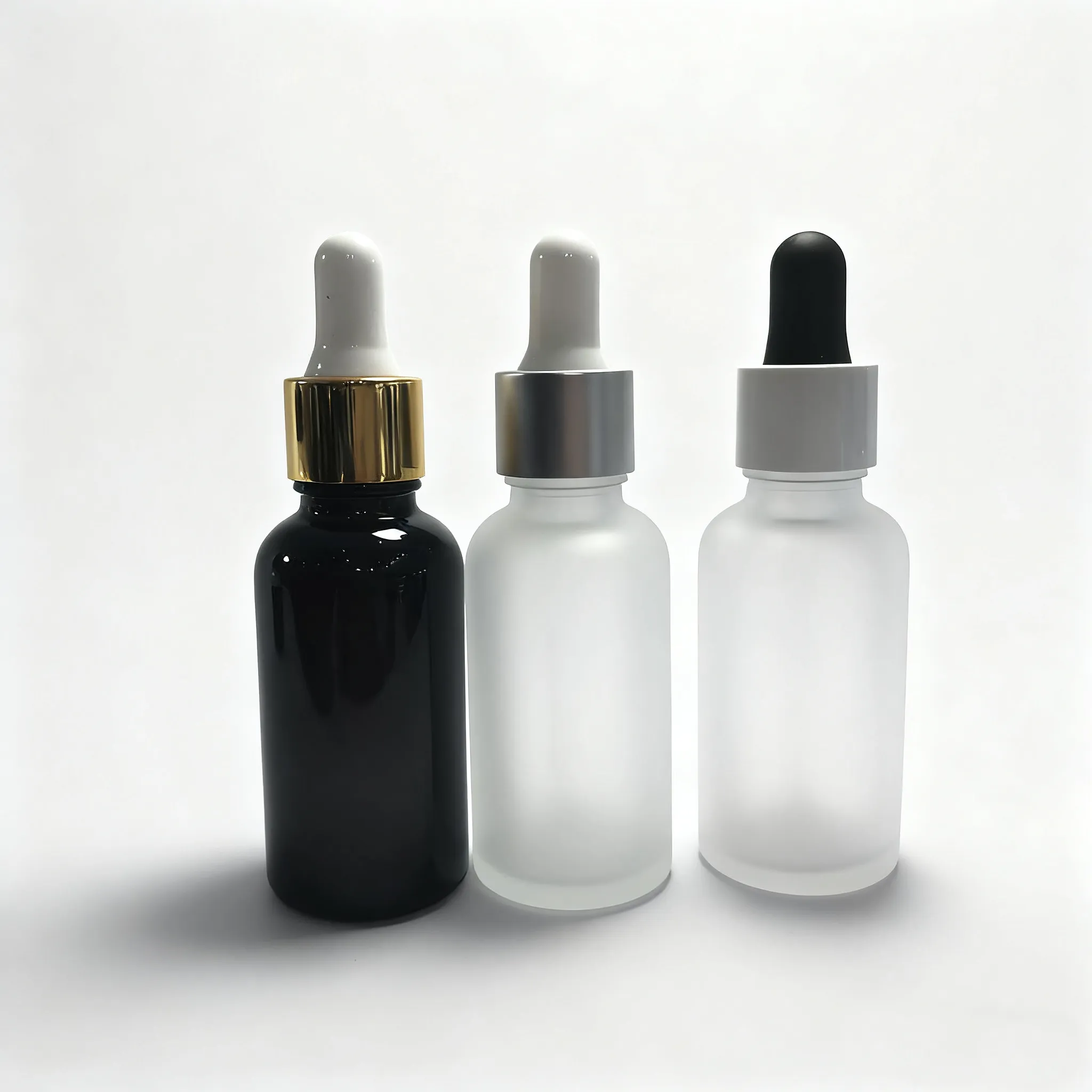
This article separates documented museum objects from reasonable packaging interpretation. The four illustrations are editorial reconstructions, not photographs of named historic products.
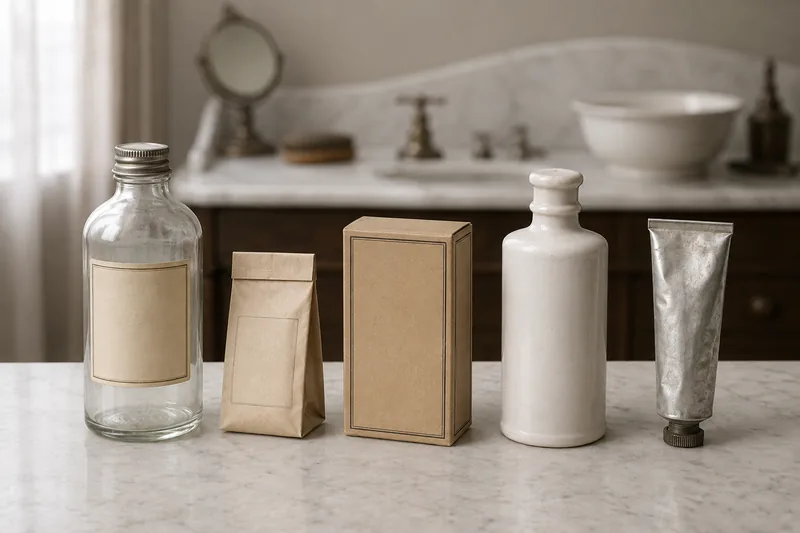
What shampoo packaging was made of before plastic
If the question means retail bottles for liquid shampoo, glass is the best concise answer. Museum collections document glass shampoo or hair-wash bottles from the late nineteenth century through at least the 1960s. A Smithsonian Drene bottle dated about 1952–1954, for example, identifies glass as the container material and cardboard as the outer package. A Royal Drene example dated about 1962–1968 still combines a glass container with plastic and paper components.[2][5]
If the question means all packaging used for products called shampoo, the answer becomes broader:
| Historic product or use | Common documented package | Why it made sense | Important qualification |
|---|---|---|---|
| Liquid hair wash or liquid shampoo | Glass bottle; paper label; sometimes a cardboard carton | Glass held liquids reliably, displayed the contents and could be made in standard shapes | Closures varied; an old glass body may have a cork, metal cap, glass stopper or early plastic cap |
| Water-soluble powder shampoo | Paper sachet, packet or carton | The consumer added water at use, so the package did not need to hold a water-based liquid | A powder package is shampoo packaging, but it is not a shampoo bottle |
| Barbershop hair wash and tonic | Refillable glass, porcelain or silver bottle | A durable working bottle could be refilled from bulk supply and kept on a barber’s shelf | These were professional decanters, not necessarily factory-filled retail packs |
| Concentrated or cream shampoo | Collapsible metal tube, sometimes combined with plastic closure parts and a carton | The tube dispensed a viscous concentrate and collapsed as the product was used | Tubes supplemented bottles; they were not a universal stage between glass and plastic |
| Solid soap used to wash hair | Paper wrap, carton or no individual bottle | A dry solid did not require a rigid liquid container | Calling every hair-washing soap “shampoo” can project modern terminology backward |
Before the modern shampoo bottle, there often was no bottle
People cleaned and conditioned hair long before a factory filled a branded liquid into a dedicated consumer bottle. Depending on place and period, the preparation could be a hard soap, an oil, a powder, an herbal mixture or a liquid prepared by a barber or household. Those forms might be wrapped, boxed, stored in a general-purpose vessel or mixed only when needed.
That distinction matters because the English word shampoo first described an action and service before it became a standardized retail product category. For packaging history, the useful dividing line is therefore not “ancient versus modern,” but prepared at use versus factory-prepared and packaged. A dry powder needs moisture protection and portioning. A ready-to-use liquid needs a leak-resistant container and closure. A cream concentrate can work in a collapsible tube.
Henkel’s records illustrate this product–package relationship particularly well. Schwarzkopf introduced a water-soluble powder shampoo in Germany in 1903, and the company’s historical timeline says Berlin druggists were supplied with the powder in sachets in 1904. Henkel dates the brand’s first liquid shampoo in Germany to 1927 and says a cream shampoo in a tube replaced the powder format in 1949.[11][12][13] This is one company’s documented sequence, not a universal global chronology, but it shows why “what was the bottle made of?” can be the wrong first question.
Glass was the main pre-plastic bottle material
For ready-to-use liquid shampoo in Europe and North America, glass became the principal rigid container before plastic. The evidence is physical, not merely anecdotal. The Science Museum Group lists glass bottles for Truefitt and Erasmus Wilson hair washes dated 1851–1905. The Smithsonian records a clear glass No-Wata waterless shampoo bottle used in a Chicago salon context, a glass Drene bottle from the early 1950s, and glass Halo bottles spanning the late 1930s into the 1950s.[1][2][3][9]
A “glass bottle” was usually a mixed-material package
The body might be glass, but the finished pack was not necessarily all glass. Historic examples combine glass with a printed paper label, cardboard carton and closure parts made from metal, cork, glass or early plastic. The Smithsonian’s 1937–1953 Halo object lists cardboard, glass, plastic and paper; the Science Museum Group’s 1950s Shampoo 88 lists glass and plastic.[3][8]
This is important when dating or describing an object. A plastic cap does not automatically make the bottle a plastic bottle, and it does not prove that the entire package belongs to a late plastic era. Closures often changed before the container body did.
Clear, colored and opaque glass served different presentation needs
Clear glass let shoppers see a liquid’s color and fill level. Amber, green or opaque glass could create visual identity and, where properly specified, reduce light transmission. Yet color alone does not identify the product or date: bottle makers offered many glass colors across medicine, toiletries and food, and brands sometimes reused familiar bottle forms.
Modern packaging teams should also avoid projecting today’s precise compatibility claims onto a historic artifact. Glass generally offers a strong barrier and good chemical resistance, but a complete old pack still depended on its closure, liner, label adhesive and storage. A museum record can verify what an object is made from; it does not prove that every formula in the same era had identical shelf life.
Paper sachets and cardboard cartons packaged powder shampoo
Dry shampoo powder did not need the heavy, leak-resistant package required by a water-based liquid. A folded paper sachet could portion the powder, carry directions and travel efficiently. A carton could protect multiple sachets or a primary container, provide printable area and make a small product easier to merchandise.
Schwarzkopf’s documented 1904 sachets are a clear example. They also show why “before plastic, everything was glass” is wrong: at least some commercially distributed shampoo reached the consumer in flexible paper packaging more than a century ago.[11]
Paper’s limitation was equally clear. An untreated paper packet was poorly suited to holding a ready-to-use water-based shampoo for long periods. Moisture, grease and handling could weaken it. Packaging therefore followed the product state: dry concentrate in paper; liquid in glass; later, liquid in light, tough molded plastics.
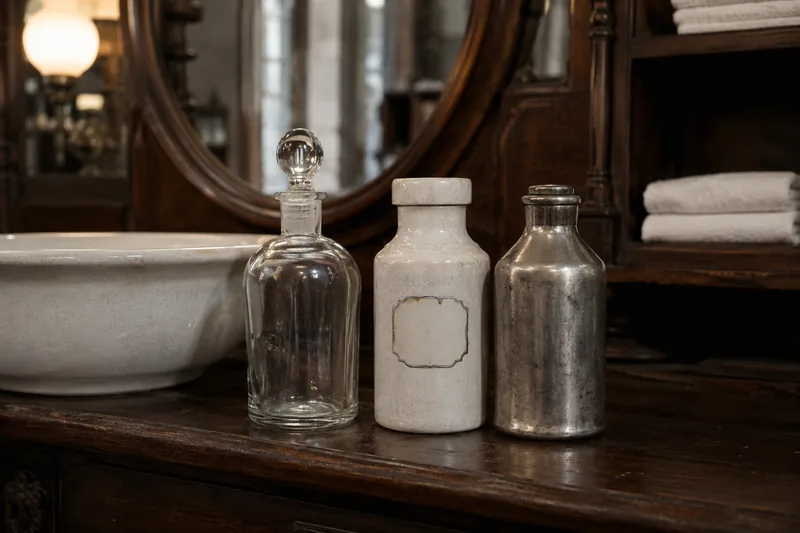
Barbers used refillable glass, porcelain and silver bottles
Commercial retail packaging is only part of the story. In nineteenth- and early twentieth-century barbershops, the working container on the shelf could be filled by the barber rather than sold as a sealed, branded consumer unit. The National Bottle Museum describes barber bottles used for shampoos, hair tonics, anti-dandruff remedies, colognes and other preparations. Its collection includes glass, porcelain and silver examples from the 1860s through the 1940s, with the principal manufacturing period running from the 1870s to around 1920.[10]
Why porcelain appeared in the professional setting
Glazed porcelain provided a rigid, washable, opaque surface and could be decorated for identification. Its disadvantages were weight and breakability, much like glass. That made it plausible as a stationary working bottle on a barber’s shelf but less attractive for high-volume shipping and routine handling in a wet domestic environment.
Why silver does not mean metal bottles were the mass-market norm
Silver barber bottles demonstrate the range and decorative value of professional vessels. They do not establish silver as a common factory-filled retail shampoo package. Precious-metal containers were costlier and belonged to a service setting where presentation and reuse mattered. For most consumer liquid products, glass was the scalable rigid package.
Metal tubes were used for concentrated and cream shampoo
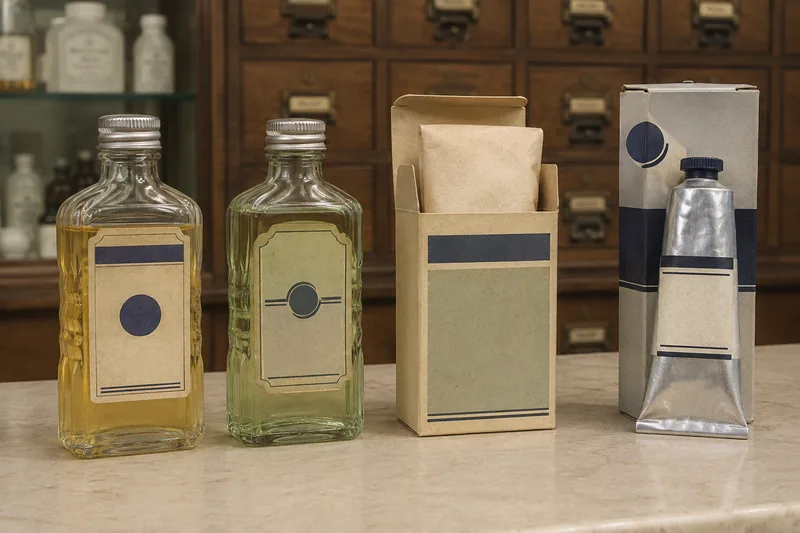
Collapsible metal tubes offered a different solution: they protected a viscous concentrate, dispensed through a small opening and reduced the air space as the user squeezed the package. Henkel reports that a cream shampoo in tube form replaced its powder shampoo in Germany in 1949. The Smithsonian’s circa-1957 Prell Radiant Shampoo object lists metal and plastic container materials inside a cardboard package.[6][13]
The most accurate description is therefore not “metal bottles.” The documented format was a collapsible tube, often used for a concentrated or cream product. Its package architecture could combine a metal tube body, plastic closure parts and a printed carton. It coexisted with glass bottles rather than replacing them everywhere.
An evidence-led shampoo packaging timeline
This timeline uses dated artifacts and company records. “Documented example” does not mean first-ever use, and a company milestone in one country should not be treated as a worldwide start date.
| Date or period | Documented package or event | What it proves | What it does not prove |
|---|---|---|---|
| 1851–1905 | Science Museum Group records glass bottles for English hair washes associated with Erasmus Wilson and Truefitt | Specialized liquid hair preparations used glass well before modern mass-market shampoo | That every household routinely bought bottled shampoo |
| 1860s–1940s | Barber bottles in glass, porcelain and silver | Professional refillable containers used several rigid materials | That porcelain or silver dominated retail distribution |
| 1903–1904 | Schwarzkopf water-soluble powder shampoo; company record of sachet distribution | Commercial shampoo packaging included paper packets, not only bottles | The first shampoo in every market |
| 1903–1920s | Owens automatic bottle machine patented in 1903; commercial production around 1904–1905; rapid mechanization followed | Automatic forming helped make standardized glass containers widely available | That all shampoo bottles immediately became machine-made |
| 1927 | Henkel dates Schwarzkopf’s first liquid shampoo in Germany to this year | Ready-to-use liquid became an explicit branded format | The world’s first liquid hair wash |
| 1937–1954 | Smithsonian Halo and Drene artifacts use glass container bodies with paper/cardboard and some plastic components | Glass supported early mass-market synthetic shampoos | That these exact components were universal |
| 1949 | Henkel records cream shampoo in a tube replacing its powder format in Germany | Formula format could drive a move away from both sachet and bottle | A universal switch to tubes |
| 1950s | Shampoo 88 is catalogued as glass and plastic; a 1957 Prell package includes metal and plastic | Glass, early plastics and metal tubes overlapped | A clean material boundary at 1950 or 1960 |
| 1950s–1960s | Postwar HDPE production expanded rapidly while museum collections still show glass shampoo bottles | The transition was gradual and driven by growing material capability | That every “plastic shampoo bottle” was HDPE |
| 1970s | The Smithsonian’s Agree package is an explicitly designed translucent plastic shampoo bottle | Molded plastic had become a brandable consumer package, not only a closure or tube part | That glass vanished or that the bottle was necessarily PET |
| 1973 onward | PET beverage-bottle patent milestone | PET bottle technology belongs to the later plastics timeline | That early postwar plastic shampoo bottles were all PET |
Why glass dominated liquid packaging before plastic
It was a proven liquid container
Glass provides a continuous, rigid wall with a strong barrier to liquid and vapor. It does not absorb water-based shampoo and can be transparent, colored or opaque. For early formulators and druggists already familiar with medicine, tonic and toiletry bottles, glass was an established packaging system.
Automatic bottle making changed the economics
Before full mechanization, bottles depended more heavily on skilled mouth-blowing and semi-automatic production. Michael Owens patented a fully automatic bottle machine in 1903; National Park Service history records that the technology entered general industry use and supported rapid expansion after commercial production began. The Society for Historical Archaeology notes that automatic methods accounted for most US glass-container production by the 1920s.[14][15]
This mattered to shampoo because a branded liquid requires bottles that are consistent enough to fill, close, label, case-pack and sell in quantity. Mechanization improved standardization and reduced dependence on individually made bottles. For the modern industrial sequence—batching, melting, forming and annealing—Boyu’s guide to how glass bottles are made covers the process without duplicating it here.
It turned formula color into shelf communication
A clear bottle allowed a green, golden or pearlescent liquid to become part of the product identity. Paper labels and cartons carried claims and instructions; molded panels, ribs and shoulders made the silhouette recognizable. In other words, the glass bottle was both a container and a display window.
Why plastic replaced most glass shampoo bottles
Plastic did not win because glass suddenly stopped working. It won because molded polymers fit the emerging mass-market shampoo system better across several linked requirements.
| Decision factor | Glass bottle | Molded plastic bottle | Why shampoo brands cared |
|---|---|---|---|
| Drop and wet-use risk | Rigid but brittle; can break into sharp fragments | Tougher and generally shatter-resistant in normal use | Bathrooms combine wet hands, hard surfaces and bare feet |
| Package mass | Relatively heavy for a given usable volume | Much lighter in common shampoo formats | Lower handling burden and more efficient transport |
| Dispensing | Rigid walls require pouring or a separate dispenser | Squeezable grades permit controlled pressure dispensing and inverted formats | Consumers can dose with one hand and evacuate viscous product more easily |
| Shape freedom | Moldable, but weight and wall-distribution constraints remain | Blow molding supports integrated grip zones, offset necks and broad label panels | Structure could become a brand asset and a usability feature |
| Closures | Historically paired with stoppers and screw caps | Integrates readily with molded screw caps, disc tops and flip tops | Repeated opening around water became faster and cleaner |
| Shipping loss | Requires protection against impact and abrasion | Reduces breakage exposure, although leakage and panel damage still require control | Brands could distribute larger volumes through broader retail networks |
The material-enabling step was postwar polymer production. The Science History Institute describes the early-1950s development of processes for high-density polyethylene and reports that HDPE quickly replaced established materials in many consumer goods. By 1958, polyethylene had become the largest segment of the plastics industry in the United States.[16][17] That industrial context made lightweight, blow-molded containers economically available.
However, “plastic” should not be treated as one resin. Early molded toiletry bottles could use polyethylene or other polymers available to a particular converter, while PET bottles belong to a later development path. Plastics Europe dates the PET beverage-bottle patent milestone to 1973.[18] It would be historically careless to label every 1950s or 1960s plastic shampoo bottle as PET without material identification.
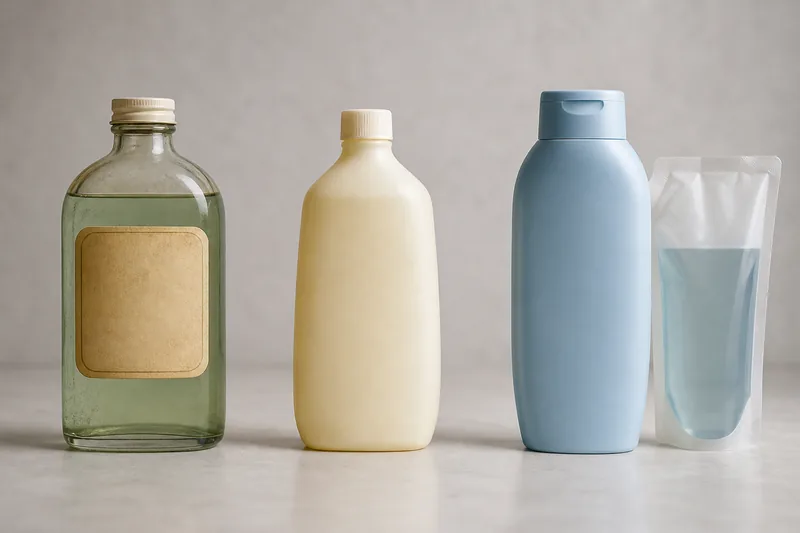
There was no single year when shampoo bottles became plastic
The strongest evidence is the coexistence of dated objects. A 1950s glass bottle may already have a plastic cap. A circa-1957 shampoo may be in a metal/plastic tube. A circa-1959 Halo and a circa-1962–1968 Royal Drene are still catalogued with glass container material, while the 1970s Agree bottle is explicitly plastic.[4][5][6][7]
Changeover timing depended on the resin and bottle-making capacity available in each country, the brand’s tooling and filling line, formula viscosity, desired appearance, pack size, price position and retailer expectations. A responsible history can say that adoption accelerated in the postwar decades; it should not invent a worldwide conversion date.
Did people really use glass shampoo bottles in bathrooms?
Yes. The dated museum objects establish that consumers and professionals used glass shampoo and hair-wash bottles. What the artifacts do not establish is that every bottle was handled inside a modern shower exactly as shampoo is today.
Use settings varied. A barber might pour from a working bottle at a basin. A household could wash hair at a sink, basin or bath and keep the bottle on a nearby shelf. Concentrated shampoo might be diluted or dispensed in a small quantity. Bathroom architecture, bathing routines and package sizes differed by country and household.
Glass nevertheless has an obvious engineering disadvantage in wet use: it can break on a hard surface and create sharp fragments. Plastic’s combination of lower mass, toughness and squeeze dispensing reduced that practical risk. We found no reliable historical dataset that quantifies injuries specifically from shampoo bottles, so claims about how often accidents occurred would be speculation.
How to identify and date an old shampoo bottle
No single visual clue proves that a bottle contained shampoo. Start with the label or embossing, then combine manufacturing marks, closure, seams, shape and provenance. The Society for Historical Archaeology’s bottle guides are especially useful for separating mouth-blown, semi-automatic and automatic production.[15]
- Read all surviving text. Record the product name, maker, city, instructions, volume, trademark and any drug or cosmetic claims exactly. Photograph the front, back, base and closure before cleaning.
- Inspect the mold seam. A seam that runs continuously through the finish usually indicates machine production. On many mouth-blown bottles, the body seam stops below a separately finished lip. Exceptions exist, so use this clue with others.
- Examine the base. Machine marks, suction scars, valve marks and maker’s symbols can narrow the factory and production period. The SHA guide dates the use of Owens marks from 1905 onward but warns through its broader chronology that marks must be interpreted in context.
- Separate body material from closure material. A plastic screw cap on a glass bottle may represent an intermediate package, not a fully plastic container.
- Look for a carton or paper label. Outer packaging can carry dates, addresses and typography that the glass lacks. It can also reveal that a generic bottle was sold as shampoo.
- Check the product form. A flat sachet, narrow collapsible tube or wide-mouth jar tells a different formula story from a pourable glass bottle.
- Compare with institutional collections. Use museum object numbers and measured dimensions, not marketplace titles alone. Seller descriptions often repeat unverified dates.
Do not taste, smell or apply residue from an old toiletry container. Historic labels may omit ingredients by modern standards, and a reused bottle may not contain its original product. If preservation matters, consult a conservator before washing off labels, corrosion or deposits.
What this history teaches today’s hair-care brands
The most useful lesson is not that an old material was better. It is that packaging succeeds when it matches the formula, distribution system and use environment.
- Start with product form. A waterless bar or powder can eliminate the need for a conventional liquid bottle, but it creates new moisture-barrier, dosing and instruction requirements.
- Design the complete pack. Historic glass bottles already combined multiple materials. Today, the bottle, closure, liner, label, ink and residual product still determine performance and recovery—not the bottle resin alone.
- Do not confuse nostalgia with validation. Glass can support a premium or refill-led concept, but weight, breakage, wet-hand use, secondary protection and shipping must be assessed. Plastic can be lightweight and tough, but compatibility, dispensing, recycled content and local recyclability still require evidence.
- Use reuse only where the system supports it. Barber bottles were refillable because they stayed in a controlled service environment. A modern reuse model also needs return logistics, cleaning, inspection, refill controls and a realistic number of cycles.
- Avoid vague material claims. “Plastic,” “glass” and “metal” are starting categories, not complete specifications. Name the resin or glass family, closure pathway, product-contact materials and validation conditions.
For a modern engineering view, see how shampoo bottles move from specification to production. Buyers comparing current formats can also review Boyu’s shampoo bottle range and plastic cosmetic bottle options. Those pages own the current manufacturing and sourcing details; this article remains the historical topic owner.
Frequently asked questions
What was the most common shampoo bottle material before plastic?
Glass was the principal rigid bottle material for ready-to-use liquid shampoo. Surviving museum examples document glass shampoo bottles from the late nineteenth century into the 1960s. Dry powders, cream concentrates and professional refill use also employed paper sachets, cardboard cartons, metal tubes, porcelain and silver containers.
What did shampoo come in before glass bottles?
The premise is not strictly chronological. Before bottled liquid shampoo became common, people used soap, oils, powders and locally prepared hair washes that might be wrapped in paper, stored in general-purpose vessels or mixed at use. Specialized glass hair-wash bottles already existed in the nineteenth century, while powder sachets became a documented commercial format in the early twentieth century.
When did shampoo bottles switch from glass to plastic?
There was no universal switch date. Postwar polyethylene production expanded rapidly in the 1950s, but museum records still document glass shampoo bottles from the late 1950s and 1960s. By the 1970s, explicitly designed plastic shampoo bottles are well documented. The timing varied by brand, market, formula, converter and filling line.
Did old glass shampoo bottles have metal caps?
Some did, but closures varied. Historic packs could use metal screw caps, corks, glass stoppers or early plastic caps. Museum records often list glass, paper, cardboard, metal and plastic in the same object, so describe the bottle body and closure separately.
Were shampoo bottles ever ceramic?
Yes, particularly in the professional barber-bottle tradition. The National Bottle Museum documents porcelain working bottles used for shampoos and related hair preparations. Porcelain was not the dominant mass-market liquid shampoo package; it was heavier, breakable and better suited to a refillable stationary setting.
Was shampoo sold in metal containers?
Documented cream and concentrated shampoos were sold in collapsible metal tubes. A Smithsonian Prell package dated around 1957 lists metal and plastic container materials. Silver barber bottles also existed, but neither format means that metal bottles were the standard predecessor to plastic retail bottles.
Were the first plastic shampoo bottles made from PET?
Do not assume so. Polyethylene packaging expanded in the 1950s, while the PET beverage-bottle patent milestone is dated to 1973. An early plastic shampoo bottle should be identified from maker data, resin markings or analysis; appearance alone cannot reliably distinguish every polymer.
Can shampoo still be packaged in glass today?
Yes, but suitability is project-specific. A brand must assess formula compatibility, closure sealing, wet-hand use, drop and impact risk, package weight, e-commerce protection, refill controls and the recovery system in the destination market. Glass history is not a substitute for modern filled-pack validation.
Sources
Accessed September 3, 2026. Museum catalogue dates describe the recorded objects and ranges; a surviving example proves use by that period, not necessarily the first or last use of a material.
- Smithsonian National Museum of American History — No-Wata Shampoo Bottle.
- Smithsonian National Museum of American History — Drene Shampoo, Medium.
- Smithsonian National Museum of American History — Halo Shampoo, 1937–1953.
- Smithsonian National Museum of American History — Halo Shampoo, circa 1959.
- Smithsonian National Museum of American History — Royal Drene Shampoo, circa 1962–1968.
- Smithsonian National Museum of American History — Prell Radiant Shampoo, circa 1957.
- Smithsonian National Museum of American History — Agree Shampoo Bottle.
- Science Museum Group — Bottle of Shampoo 88, 1950s.
- Science Museum Group — Shampoo collection search, including nineteenth-century glass hair-wash bottles.
- National Bottle Museum — The History and Artistry of Barber Bottles.
- Henkel — Timeline: 140 Years of Henkel.
- Henkel — Innovation history.
- Henkel — Sustainability Report 2015, Beauty Care history.
- US National Park Service — Edward Drummond Libbey House nomination, Owens bottle-machine history.
- Society for Historical Archaeology — Guide to dating twentieth-century bottles.
- Science History Institute — This Bag Is Not a Toy.
- Science History Institute — Karl Ziegler and Giulio Natta.
- Plastics Europe — History of plastics.
 English
  Español de Argentina
  Русский
  Italiano
  日本語
日本語  한국어
한국어  العربية
  Français
  Deutsch