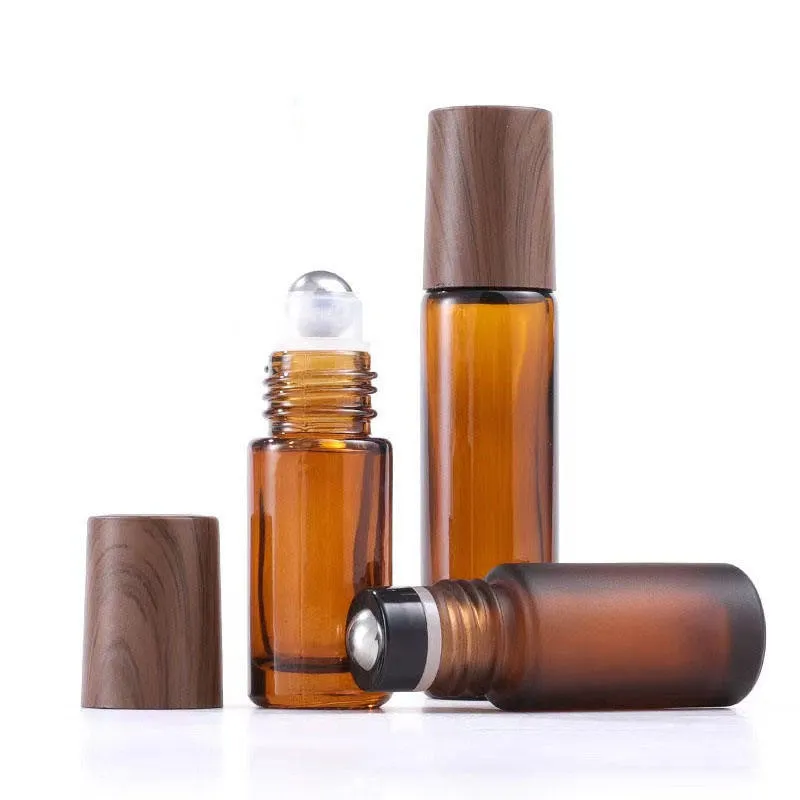
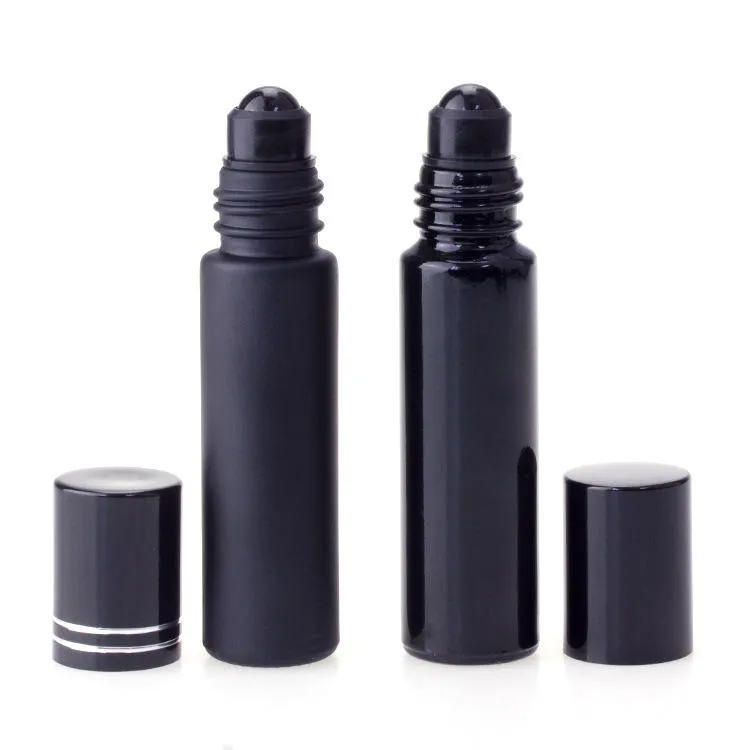
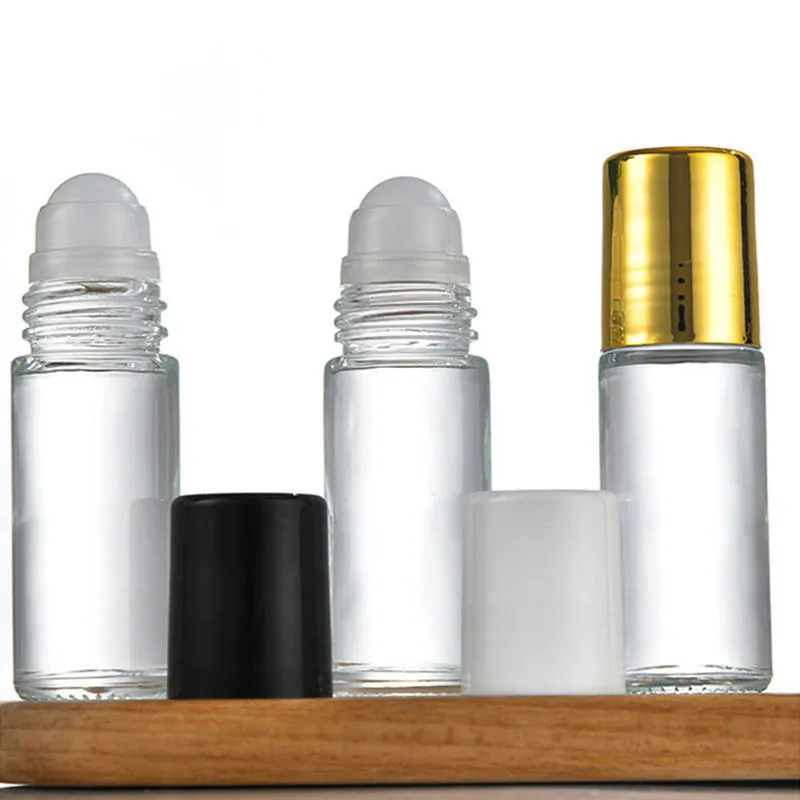
Short answer: a factory-made shampoo bottle starts with the formula, dose, shower use and distribution requirements—not with a bottle sketch. The pack is then engineered as one system: bottle resin and blow-moulding route, neck finish, pump or cap, decoration and shipping pack. PET bottles are usually made from injection-moulded preforms by stretch blow moulding; HDPE bottles are usually made from an extruded parison by extrusion blow moulding. The empty pack is qualified with the actual shampoo, produced under controlled settings, decorated, filled by the brand or contract filler, and released only after functional and distribution tests pass.
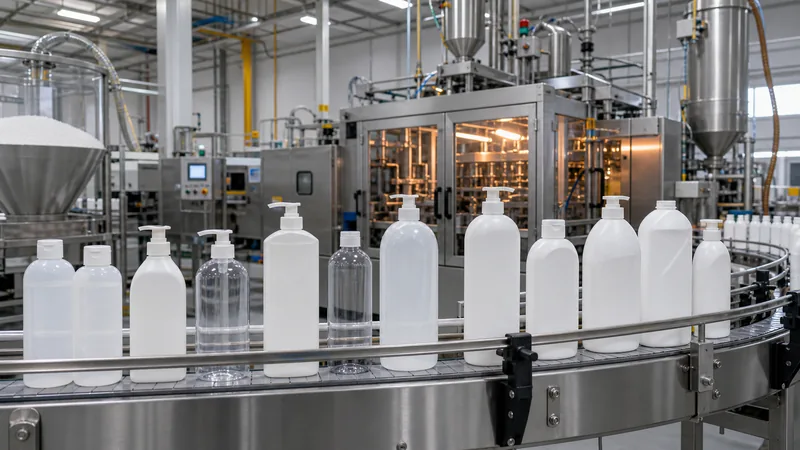 A shampoo bottle is a manufactured dispensing system, not an isolated plastic container.
This guide explains how to make a shampoo bottle at industrial scale. It separates three operations that are often confused online: packaging development, empty-bottle manufacturing, and shampoo filling. One supplier may perform more than one operation, but the technical responsibilities and process controls remain different.
Contents
1. Start with a shampoo packaging specification
The fastest way to create an unreliable bottle is to approve its appearance before defining what it must do. A useful development brief converts marketing wishes into measurable inputs.
| Input | What the packaging team needs | Why it changes the bottle |
|---|---|---|
| Formula | Actual shampoo, viscosity curve, particulates, surfactant system, fragrance and colour | Affects resin compatibility, pump refill, leakage and decoration stability |
| User and dose | One-handed or two-handed use, target dose, wet hands, adults or children | Sets grip, actuation force, output and closure type |
| Commercial format | Nominal fill, label claim, retail price, annual forecast and variants | Controls brimful capacity, tooling economics, colour changeovers and SKU complexity |
| Filling line | Fill temperature, nozzle, line speed, neck handling, capper and coder | Determines line clearance, bottle stability and closure application method |
| Distribution | Pallet, parcel/e-commerce, export route, orientation and temperature exposure | Sets lock, seal, top-load and secondary-pack requirements |
| Market and recovery | Countries sold, recyclability claim, PCR target and refill model | Changes material, colour, label, adhesive and dispenser decisions |
A bottle drawing should therefore identify more than height and capacity. At minimum it needs the controlled neck finish, sealing land, thread or snap geometry, critical body dimensions, nominal and overflow capacity, bottle mass, material/colour, decoration area, datum points and test requirements. Treat the pump, gasket and dip tube as controlled components of the same pack.
2. Choose the material and manufacturing route
No material is universally “best.” The correct choice is the one that meets product protection, dispensing, appearance, line performance, transport and recovery requirements with a stable manufacturing window.
| Material | Typical route | Useful characteristics | Engineering cautions |
|---|---|---|---|
| PET | Injection stretch blow moulding (ISBM), often two-stage reheat blow | High clarity, gloss, good stiffness-to-weight ratio and precise injection-moulded neck | Thin or over-stretched panels can deform; colour, heat and stress-cracking risk require actual-pack validation |
| HDPE | Extrusion blow moulding (EBM) | Tough, naturally opaque, squeezable across a useful design range, and suitable for asymmetric bodies or integral handles | Pinch-off, flash and wall distribution must be controlled; density, molecular design and wall thickness affect stiffness and environmental stress-crack resistance |
| PP | EBM for some bottles; injection moulding for most caps and pump parts | Good hinge performance for flip-tops and useful chemical/thermal properties | Bottle availability and process capability depend on the supplier; confirm low-temperature impact and filled-pack performance |
| LDPE or PE blend | EBM or tube production, depending on format | Soft squeeze and controlled evacuation for inverted or travel formats | Lower panel stiffness may reduce shelf presence and line stability |
| PCR PET/HDPE | Same base route, with qualified recycled-content resin | Can reduce use of virgin resin and support a circularity brief | Colour, odour, contamination, mechanical variation and regulatory suitability need incoming specifications and change control |
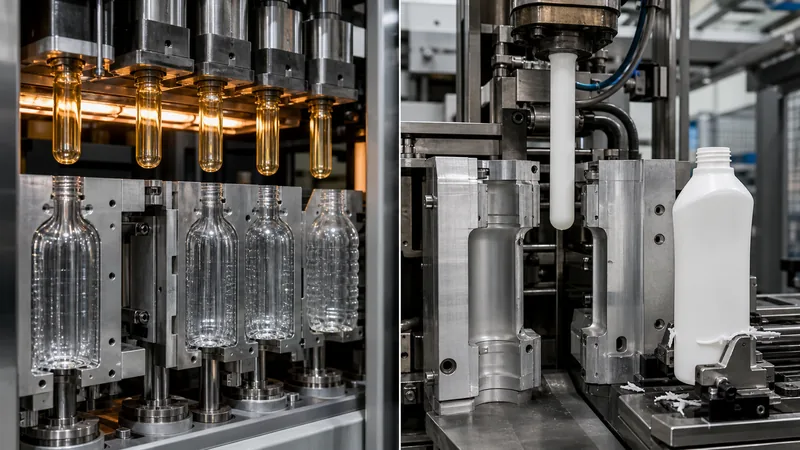 PET stretch blow moulding begins with a finished-neck preform; HDPE extrusion blow moulding begins with a molten tube called a parison.
3. How a PET shampoo bottle is made
Most commodity PET shampoo bottles use a two-stage route: one operation injection-moulds preforms and another reheats and stretch-blows them into bottles. A one-stage ISBM system can also perform the sequence in one integrated machine. The important distinction is that the neck is formed during preform injection; stretch blowing creates the body.
Step 1: qualify and prepare the PET resin
The factory specifies resin grade, intrinsic-viscosity range, colour/additives and any PCR content. PET is hygroscopic, so the resin is dried under the resin supplier’s conditions before melting. Moisture control matters because hydrolytic degradation during processing can reduce molecular weight and bottle performance.
Step 2: injection-mould the preform
Molten PET is injected into a multi-cavity preform mould. This creates the neck finish, thread, sealing surface and a thick test-tube-shaped body. The preform design allocates material for the eventual shoulder, sidewall and base, so choosing a preform only by total weight is a mistake. Neck dimensions, gate quality, haze, contamination, colour, mass and cavity identity are checked before release.
Step 3: reheat the preform selectively
Infrared ovens rotate and heat the preform body while the neck is protected from excessive heat. Heater zoning is adjusted so each bottle region receives enough material after stretching. Uniform-looking oven settings do not necessarily create uniform bottle walls; the preform temperature profile must match the geometry.
Step 4: stretch, pre-blow and final-blow
The warm preform enters a cooled bottle mould. A stretch rod draws it axially while controlled air expands it radially. Pre-blow timing and pressure establish the material bubble; final blowing seats the polymer against the mould. The combined stretching orients PET and distributes it through the shoulder, panels, corners and base. Process engineers tune heating, stretch timing and pressure together—not as isolated settings.
Step 5: cool, eject and inspect
The mould removes heat so the shape becomes stable, then the bottle is ejected. Unlike a conventional EBM bottle, a PET stretch-blown bottle normally has no body seam flash to trim. Automated and offline checks can detect short blow, pearlescence, haze, base deformation, gate problems, contamination and wall-distribution drift. Where the equipment allows it, data should be traceable to preform and blow-mould cavity.
4. How an HDPE shampoo bottle is made
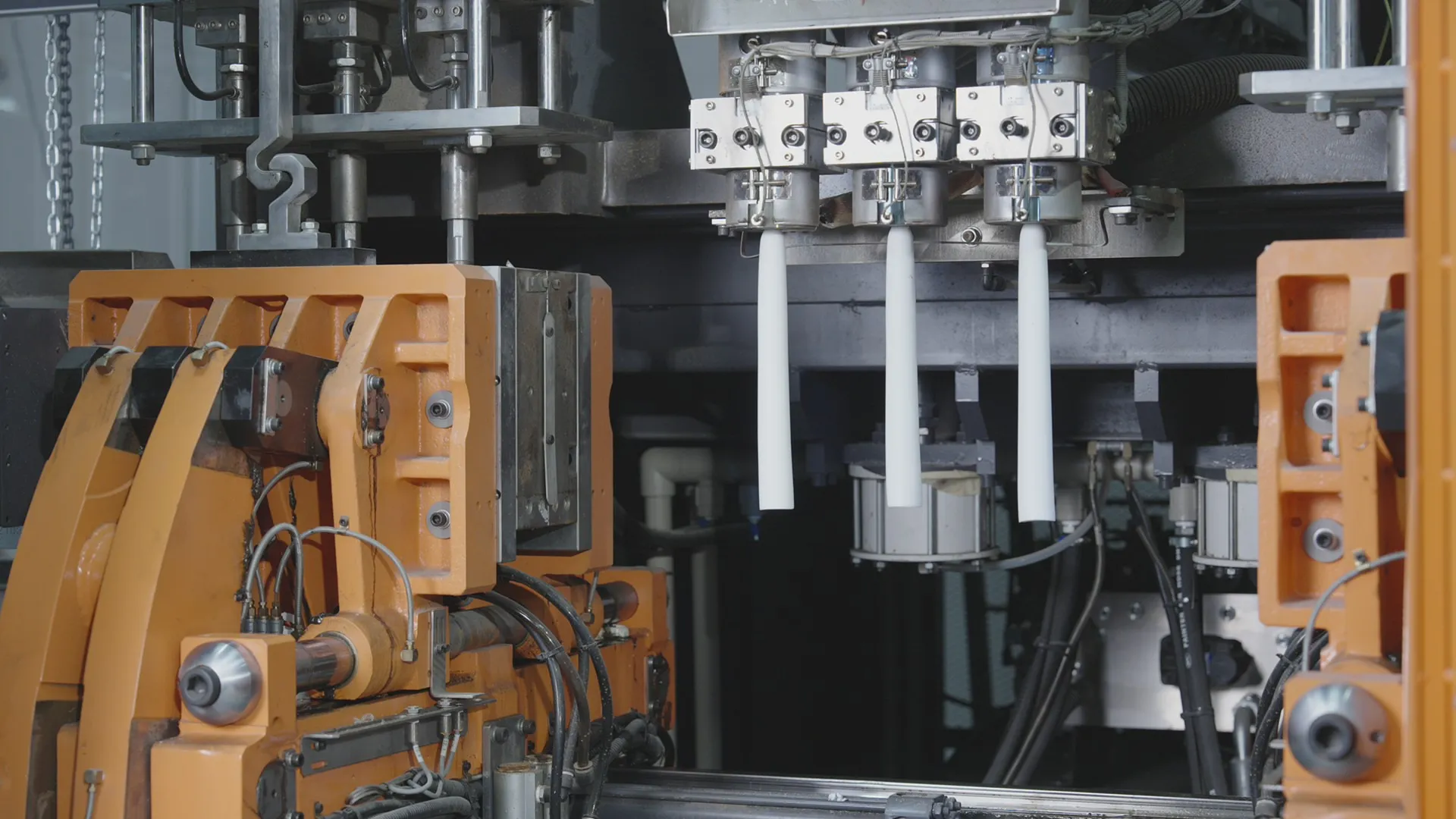
Extrusion blow moulding forms the bottle directly from a molten tube. It is well suited to opaque PE bottles, squeeze formats, offset necks, asymmetric shapes and some handled containers.
Step 1: meter the material system
Natural resin, approved colour masterbatch, additives and—where specified—qualified PCR are dosed using controlled recipes. Each constituent should be lot-traceable. Uncontrolled regrind can change colour, odour, wall strength and contamination risk, so any internal trim reuse needs a documented limit and clean closed-loop handling.
Step 2: extrude and program the parison
The extruder melts and homogenises the material, then the die head forms a hanging tube called a parison. Because gravity and inflation can thin different regions, modern EBM lines can vary die gap during extrusion. This “parison programming” puts more material where the shoulder, handle, corners, label panel or pinch-off needs it. Kautex identifies parison uniformity and control as central to finished wall thickness and quality.
Step 3: close the mould and pinch the ends
The split mould closes around the parison, pinching it at the base and around the neck region. Pinch-off design must weld the material without creating a weak, bulky or sharp seam. Venting lets displaced air escape as the polymer reaches the mould surface; blocked vents can reduce detail and create cosmetic defects.
Step 4: blow, cool and deflash
A blow pin or needle introduces air, expanding the parison against the cooled cavity. After adequate cooling, the bottle is ejected. Excess plastic at the neck and bottom is trimmed or deflashed, sometimes in-line. The process may include automated feeding, cutting, post-cooling and downstream inspection. Trimming must not damage the sealing surface or leave loose particles.
Step 5: control wall distribution and stress
Part mass alone cannot prove adequate walls. Sharp corners, deep recesses and aggressive shoulder transitions can stretch the parison unevenly and concentrate stress. The LyondellBasell polyolefin design guidance links corner geometry, mould condition, venting and temperature control to wall distribution and performance. Use section weights, wall mapping and filled-pack tests to validate the weak regions identified by the design review.
5. The custom shampoo bottle development process
A professional custom programme uses decision gates. It does not move directly from a rendering to steel tooling.
- Freeze the design brief. Record the formula, fill volume, overflow/headspace target, use case, line constraints, distribution environment, target markets, forecast, sustainability objectives and acceptance criteria.
- Decide stock versus custom. A qualified stock bottle reduces tooling exposure and can shorten development. A custom bottle can improve brand geometry, grip and pack efficiency but requires tool ownership, version control and a realistic validation programme.
- Select material and process. Avoid designing a PET concept and later “converting” it to HDPE without a new DFM review; the material distribution and moulding constraints differ.
- Lock the neck and dispenser architecture. Select the finish standard, sealing concept, pump/cap envelope and application method early. A closure that appears to screw on is not yet a qualified match.
- Create industrial design and CAD. Model grip, shelf appearance, label/decorating panel, fill line, headspace, base stability, pump orientation and shipping case. Check dimensional stack-up with the closure and line equipment.
- Perform DFM and simulation where justified. Review radii, undercuts, parting line, venting, pinch-off or preform choice, blow ratio, likely wall distribution, mould cooling and cavity layout.
- Prototype for the right question. 3D prints and appearance models answer ergonomic and visual questions. They do not reproduce the barrier, stress, squeeze recovery or seal performance of a production blow-moulded bottle.
- Release controlled tooling data. Approve a revision-controlled 2D specification and 3D model, cavity numbering, approved resin, surface finish and maintenance/ownership terms before cutting production tooling.
- Run tool trials and capability work. Evaluate more than golden samples. Establish a stable processing window and examine output across cavities and time, including dimensions, appearance, weight and functional results.
- Qualify the filled package and pilot line. Use production-representative bottles, decoration, closures, fill, application torque or snap settings and secondary packaging.
- Approve mass production with change control. Define the master sample, signed specification, control plan, defect catalogue, sampling plan, traceability, approved suppliers and conditions that trigger revalidation.
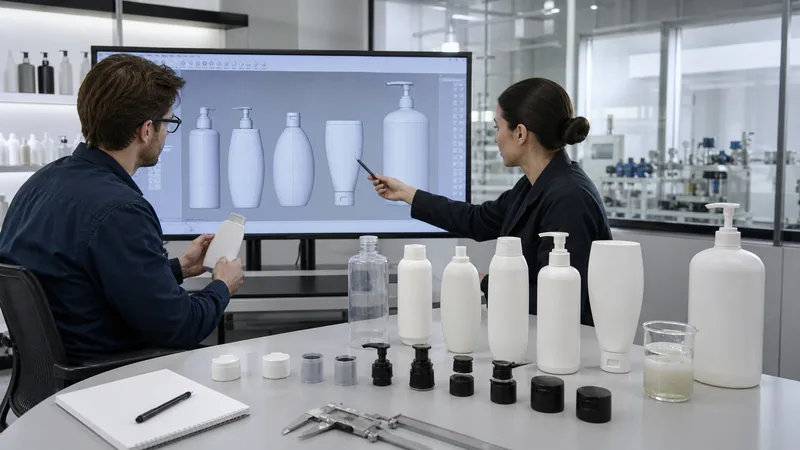 Use prototypes to answer specific questions; qualify final performance with production-representative materials and components.
6. What shampoo bottle shape works best?
There is no single best silhouette. The best shape lets the user grip and dispense the product, survives the filling and distribution system, and can be moulded with consistent walls.
| Format | Best fit | Advantages | Watch-outs |
|---|---|---|---|
| Round cylinder | High-speed mainstream retail | Efficient material distribution, no front orientation for labelling, stable line handling | Less brand differentiation; large diameters can be difficult for wet or small hands |
| Oval | Shower and retail packs needing a clear front panel | Comfortable grip and broad decoration face | Needs orientation on some lines; narrow edges can become thin |
| Rounded rectangular | Premium shelf blocking and efficient case packing | Strong visual panel and compact footprint | Avoid sharp corners; verify panel stability and wall distribution |
| Inverted squeeze bottle | High-viscosity or evacuation-led formats | Product remains at the outlet; convenient near end of life | Closure must carry the pack, resist leakage and control suck-back; base/closure stability is critical |
| Large pump or handled pack | Salon, family and back-bar use | Higher capacity and convenient repeated dosing | Top-load, bottle rocking, pump leverage and wet carry require extra attention |
Practical bottle-design rules
- Use generous transitions rather than sharp corners, especially where the shoulder meets the sidewall.
- Size the grip using wet-hand trials with representative users, not only a dry CAD mannequin.
- Design a base that remains stable after expected panel distortion and when the pump is pressed off-centre.
- Protect the label or print panel from squeeze zones and high-curvature edges.
- Reserve internal clearance for the dip tube and product flow; a narrow shoulder can trap product.
- Check the complete bottle-plus-pump height against shelf, case and filling-line limits.
- Assess the empty bottle, filled bottle and nearly empty bottle—the user experience changes as the centre of gravity and internal vacuum change.
7. How to select the pump or cap
A pump is useful for family, salon and larger shower bottles where controlled one-handed dispensing matters. A flip-top or disc-top is often simpler for squeezable retail and travel formats. Select the closure from a functional specification, not a catalogue photograph.
For a shampoo pump, specify these eight items
- Neck finish and seal: thread/snap geometry, sealing land, gasket or liner, application torque and removal torque.
- Target dose: derive output from the dose the user needs and the acceptable number of strokes.
- Formula behaviour: viscosity at relevant temperatures, yield stress, stringing, bubbles and any particles—not one room-temperature viscosity number.
- Prime and recovery: strokes to first full dose, head return, refill speed and dose consistency through pack life.
- Actuation: force, stroke, head area and one-handed wet-use stability.
- Dip tube: material, bore, cut, curvature and length for the actual bottle geometry.
- Transport control: lock-up or lock-down design, shower-water resistance, e-commerce leakage protection and tamper evidence if required.
- Material architecture: product-contact pathway, spring location, compatibility and design-for-recycling objective.
Commercial examples show why output should not be assumed: Berry and Silgan offer 2 mL-class pumps for shampoo and conditioner, Aptar’s Future has 1.4 and 2 cc versions, while Aptar HiFlow is a 4 cc high-dose pump. These are supplier product specifications, not a universal shampoo standard. A thicker or yield-stress shampoo can refill the chamber more slowly even if the nominal output looks suitable.
For a focused qualification method, see Boyu’s guide to using a lotion pump for shampoo. Then calculate pump output from the intended dose and define dip-tube length from the assembled pack.
8. Decoration, filling and sealing
Decoration must be treated as an engineered layer
Common options include resin colour, masterbatch effects, pressure-sensitive labels, shrink sleeves, direct screen printing, hot stamping and surface coatings. Evaluate artwork coverage, bottle surface energy, ink or adhesive system, cure, rub resistance, shower-water exposure, formula contact from spills, scuffing in cases and effect on recyclability. A decoration that passes on an empty dry bottle can still fail after warm storage or repeated wet handling.
The filler turns components into the finished product
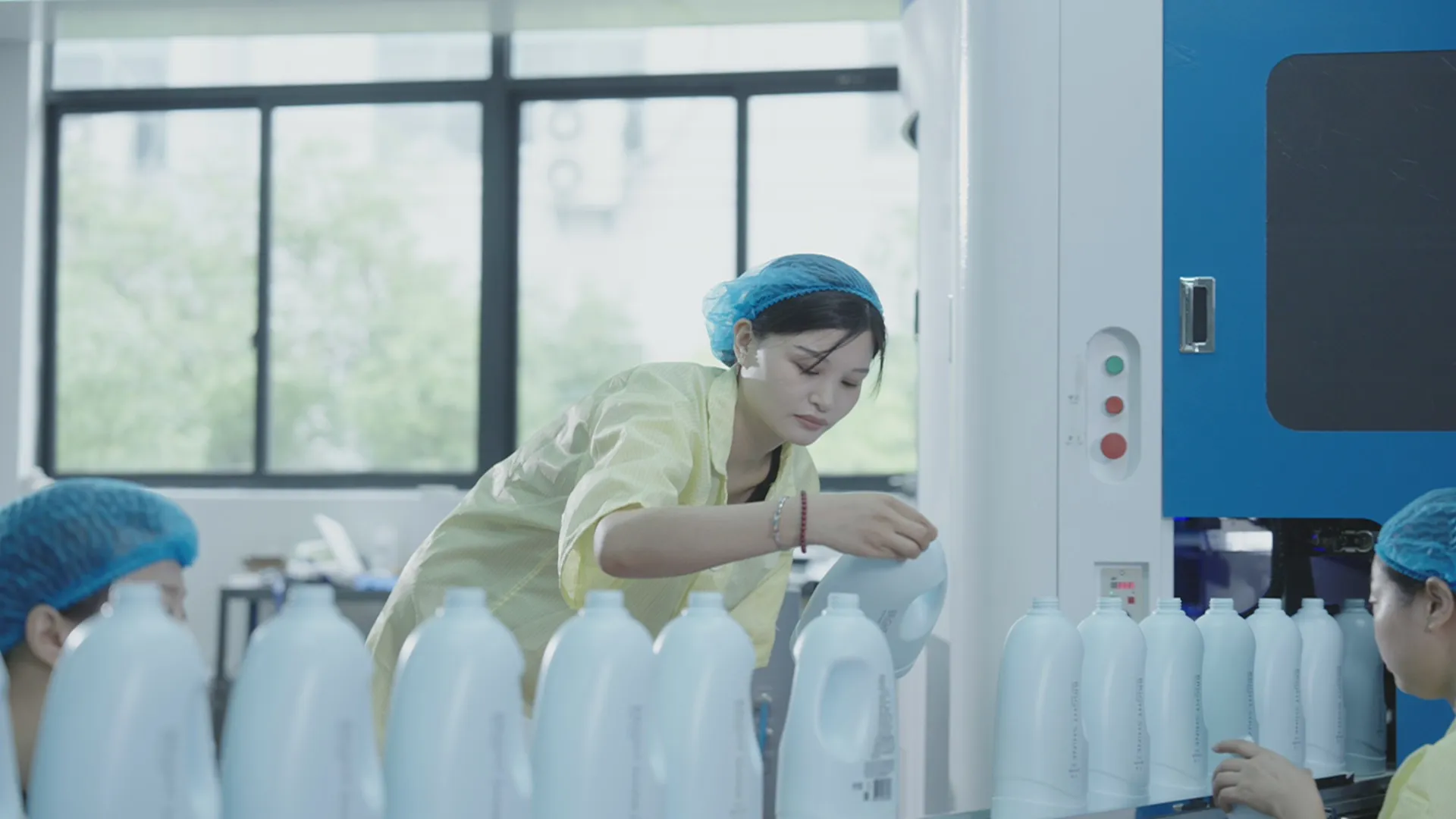
The bottle manufacturer normally supplies empty bottles; the brand’s factory or a contract manufacturer cleans or controls containers as required, fills shampoo, applies the closure, codes the lot and case-packs the product. Filling trials should confirm bottle feeding, anti-static/cleanliness controls, nozzle clearance, foaming, net-content control, headspace, torque or snap application, induction or pressure-sensitive seal performance where used, label orientation and case packing.
Do not release a bottle based only on empty-component certificates. The finished product is the actual shampoo, bottle, pump/cap, decoration and secondary packaging assembled under production settings.
9. Quality control from resin to finished shampoo
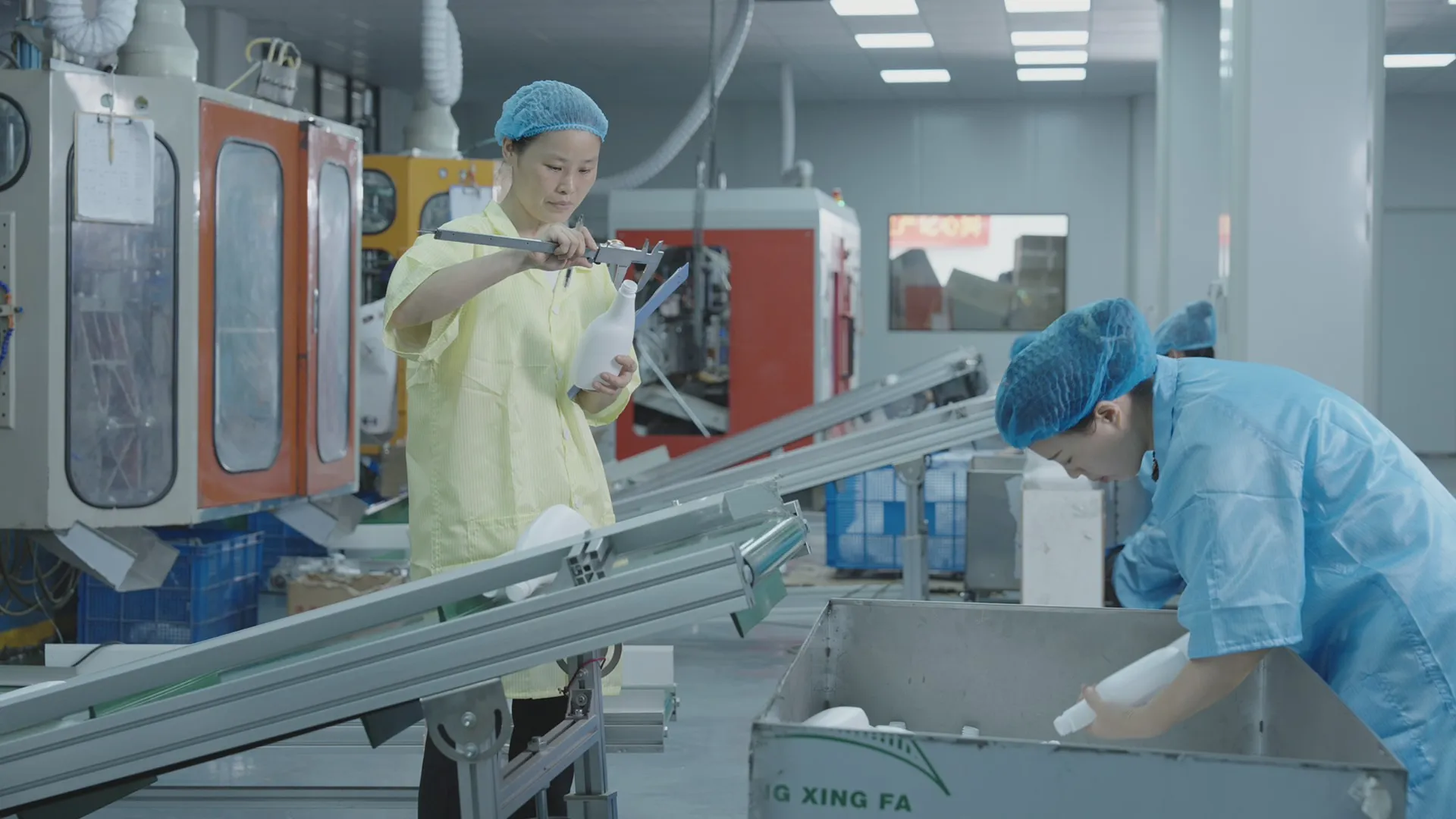
A strong control plan prevents defects at the process that creates them, detects drift quickly, and links a failure back to material lot, machine, mould cavity and time window. Final AQL inspection is useful for lot disposition, but it cannot replace process control or validation.
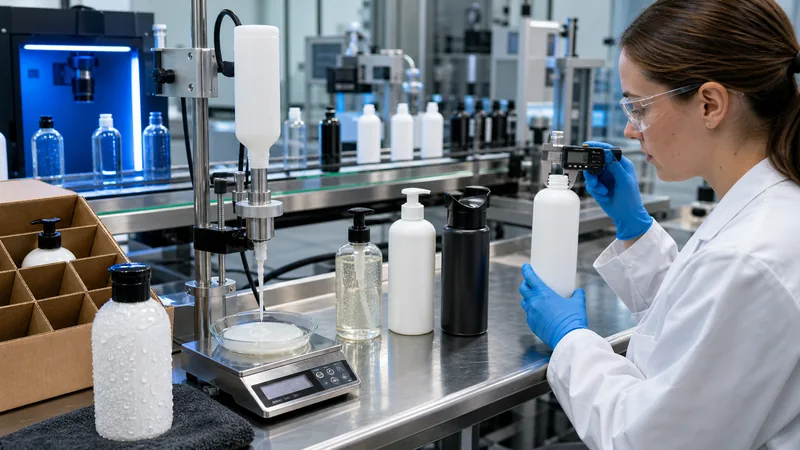 Dimensions, dispensing, wet-use performance and packed distribution answer different quality questions.
| Gate | Controls and tests | Decision |
|---|---|---|
| Incoming material | Identity/COA, lot, colour, contamination, moisture where relevant, masterbatch ratio, PCR requirements | Release, quarantine or investigate material |
| Start-up/process | Approved recipe, first-off sample, cavity check, weight, key dimensions, machine alarms and trends | Authorise run only inside validated window |
| In-line bottle | Leak/pressure-decay as appropriate, vision inspection, contamination, neck and base defects, flash/trim | Reject unit and contain affected time/cavity window |
| Offline dimensional | Neck gauges, sealing land, height, diameter/ovality, capacity, mass, wall or section-weight map, top-load where relevant | Confirm specification and process capability |
| Component fit | Closure application/removal, seal, dip-tube clearance, pump force, prime, output, recovery, evacuation | Approve the assembled empty/filled system |
| Decorated pack | Artwork/colour, registration, adhesion, cure, dry/wet rub, scuff and spill resistance | Release decoration process and sample |
| Filled-pack validation | Compatibility/stability at justified conditions, upright/inverted/on-side leakage, drop/top-load as relevant, pump life, consumer use | Confirm product-pack fitness over claimed life |
| Distribution system | Protocol selected for the actual pallet/parcel route, including secondary packaging and orientation | Release the shipping configuration, not just the primary bottle |
| Lot release | Records review, sampling plan, critical/major/minor defect criteria, retain samples, traceability | Release, sort, rework if validated, or reject |
Diagnose by the failure signature
- Leak only after shipping: investigate closure back-off, pump lock, case compression, orientation, temperature and parcel shock—not only static bottle leakage.
- Cracks near a sharp corner: examine local wall distribution, mould geometry, residual stress and formula/environment interaction.
- Some bottles fail, others pass: sort data by mould cavity, machine head, time and material lot before changing the nominal design.
- Pump dose falls during repeated use: check chamber refill, formula aeration, dip-tube restriction, head return and temperature-dependent rheology.
- Labels wrinkle after warm storage: investigate bottle panel movement, adhesive compatibility, label stiffness and application conditions.
For a broader protocol, use Boyu’s cosmetic bottle test matrix and packaging compatibility test guide. Neither regulators nor responsible engineers can replace a product-specific risk assessment with one universal checklist. In the US, FDA states that manufacturers are responsible for substantiating cosmetic safety; in the EU, the safety assessment considers relevant packaging characteristics and potential interactions.
10. Design for recyclability and PCR without weakening the pack
Recyclability is a property of the complete package in a defined collection and recycling system—not of the bottle resin alone. A PET body with a pump, label, adhesive, colour and residual shampoo can be assessed differently from an HDPE body carrying the same dispenser. RecyClass explicitly maintains separate guidelines by recycling stream and updated its HDPE, PP and PET guidance in March 2026.
- Select the intended recycling stream first, then screen the bottle, closure, spring/ball, label, sleeve, adhesive, ink and colour against current local guidance.
- Prefer a design that empties well; excessive residue reduces user value and can complicate recycling.
- Treat “all-plastic” or “all-polyolefin” pumps as promising design inputs, not automatic proof that the total pack is recyclable in every market.
- For PCR, agree incoming colour/odour, contamination, mechanical, regulatory and consistency specifications. Revalidate after a source or percentage change.
- Lightweight only after confirming grip, top-load, wall minima, line handling, distribution and shelf-life performance. A lighter pack that leaks or is overprotected by secondary material is not an engineering win.
11. What to send a shampoo bottle manufacturer
A complete RFQ lets suppliers quote comparable systems and identify technical risk early. Include:
Formula sample or confidential data sheet; rheology/viscosity conditions; fill temperature; nominal dose; target shelf life.
Capacity and overflow target; material/PCR; shape; colour; finish; decoration; unit mass or performance target.
Pump/cap type; output; neck finish; lock; dip tube; liner/seal; tamper evidence; actuation limits.
Filling and capping equipment; line speed; labeler; case dimensions; pallet or parcel route; orientation.
Critical dimensions; defect catalogue; tests and methods; sampling/AQL; traceability; documents; change notification.
Markets, annual forecast, order pattern, target launch, stock versus custom, tool ownership, Incoterms and requested samples.
Ask the supplier to identify assumptions, proposed manufacturing route, mould/cavity plan, approved resin and closure sources, validation responsibility, testing included in the quote, critical subcontractors, expected sample stages and the change-control process. MOQ and lead time are project outputs: they vary with stock availability, decoration, colour, tooling, cavity count, changeover economics and validation scope. Fixed generic numbers are less useful than a written project schedule with approval gates.
Frequently asked questions
Is PET or HDPE better for a shampoo bottle?
PET is often preferred for transparent, glossy and relatively rigid shelf packs. HDPE is often preferred for opaque, tough or squeezable packs and for EBM shapes such as offset necks or handles. Neither choice is automatically compatible with every shampoo, colourant, fragrance, closure or distribution route; test the complete filled pack.
What is the best pump output for shampoo?
There is no universal output. Define the desired use dose and acceptable strokes, then test actual delivered mass or volume with the real formula over repeated cycles and relevant temperatures. Commercial shampoo pumps commonly include 2 cc-class and higher-dose options, but nominal output alone does not prove prime, recovery or dose consistency.
Can the same custom mould make PET and HDPE bottles?
Normally no. PET stretch-blow and HDPE extrusion-blow processes use different tooling, material-feed geometry, neck-forming methods and process controls. A similar visual silhouette must be redesigned and validated for the selected route.
How long does custom shampoo bottle development take?
It depends on whether the bottle is stock or custom, the tooling route and cavities, prototype iterations, decoration, closure availability, testing duration and approval speed. Build the schedule backwards from required validation gates rather than accepting an unsupported universal lead time. Formula compatibility and stability work may run longer than tool fabrication.
Can a 3D-printed shampoo bottle be used for compatibility testing?
Use it for appearance, grip, dimensional envelope and some line-clearance questions. Do not treat it as equivalent to a production PET or HDPE bottle for barrier, stress cracking, squeeze recovery, seal, migration or shelf-life evaluation. Those tests need production-representative resin, process, walls and closure interfaces.
When should the package be retested?
Retest when a change could affect performance: formula or fragrance, resin grade/source or PCR level, preform, colour/additive, mould/cavity, bottle weight, neck, pump or gasket, dip tube, decoration, filling/capping settings, secondary packaging, distribution route or manufacturing site. ISTA also advises retesting packaged products after changes that may affect distribution performance.
Who is responsible for the final shampoo package?
The legal allocation depends on market and contract, but technical responsibility is shared across brand/responsible person, bottle and closure suppliers, decorator and filler. The brand must integrate evidence for the finished product. Supplier certificates support that evidence; they do not replace a complete safety, compatibility and performance assessment.
Develop the bottle as a complete shampoo dispensing system
Boyu Packaging can review stock and custom shampoo bottle options, material/process fit, pumps and decoration against your formula, use case and supply requirements.
Sources and technical references
Accessed 26 August 2026. Supplier pages below substantiate their own process or product specifications; they are examples, not universal standards.
- Kautex Maschinenbau — Extrusion blow moulding and parison control
- Kautex Maschinenbau — Consumer-packaging bottle production
- LyondellBasell — A Guide to Polyolefin Blow Molding
- Sidel — PET preform heating, stretching and blowing overview
- Pretium Packaging — PET ISBM and polyolefin EBM process overview
- Drug Plastics — Bottle moulding process selection
- Berry Global — Wave2cc pump specification
- Silgan Dispensing — ReVive 2cc shampoo/conditioner pump
- Aptar — Future pump specifications
- Aptar — HiFlow high-dose pump specifications
- RecyClass — Current Design for Recycling Guidelines
- RecyClass — Design for Recycling FAQ
- US FDA — Modernization of Cosmetics Regulation Act
- US FDA — Product testing of cosmetics
- EUR-Lex — Regulation (EC) No 1223/2009 on cosmetic products
- ISTA — Packaged-product test procedures
- ISTA — When a packaged product should be retested

 English
  Español de Argentina
  Русский
  Italiano
  日本語
日本語  한국어
한국어  العربية
  Français
  Deutsch