
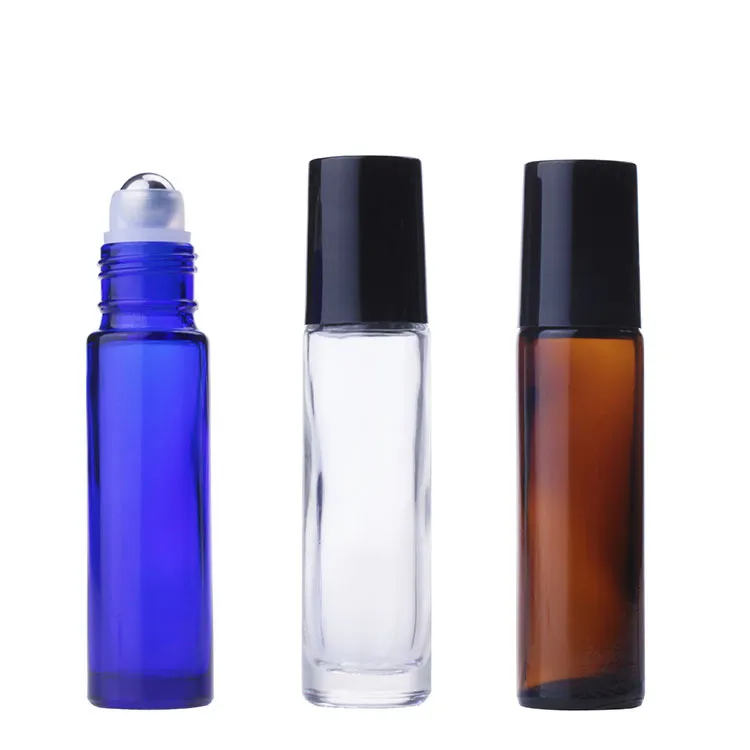
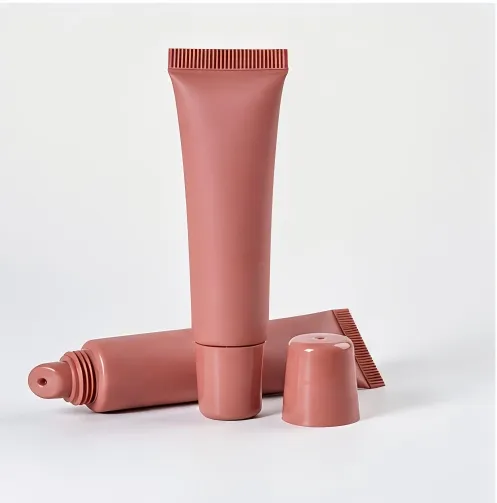
Direct answer: for plain water, curl refreshing and salon cutting, the best all-round hair spray bottle is usually a 200–300 mL, lightweight continuous-mist bottle with an ergonomic trigger, broad fine spray, stable base and secure lock. It wets a larger section more evenly than a narrow jet without becoming as tiring as a large high-output trigger.
For a commercial hair product, however, there is no universal “best” bottle. A heat protectant, leave-in conditioner, salt spray, scalp tonic and hair fragrance need different outputs, spray patterns and formula-contact materials. The correct package is the one that passes testing with the actual formula.

Which Spray Bottle Is Best for Each Hair Use?
Choose by the job the liquid must perform on the hair, not by a marketplace label such as “salon grade.” The decision begins with desired coverage, amount per actuation, formula viscosity, use angle and how often the user will spray.
| Use case | Best starting type | Why it fits | What can go wrong |
|---|---|---|---|
| Water for curls, coils or waves | Continuous/pre-compression fine mist, 200–300 mL | Broad, sustained coverage can re-dampen a section without one concentrated wet spot | Not every model works inverted; residue from added ingredients can clog the engine |
| Hair cutting and barbering | Continuous mister or ergonomic trigger, 250–350 mL | Continuous mist favours even dampening; a trigger gives a faster, wetter local application | Large bottles add hand weight; narrow spray can over-wet one section |
| Heat protectant or light leave-in spray | Fine-mist pump or mini trigger, commonly 100–250 mL | Controlled dose and repeatable coverage support consistent consumer application | Polymers, emulsions or higher viscosity may need a higher-output or larger-passage system |
| Salt or texture spray | Mini trigger or robust fine-mist pump | A slightly more generous dose can distribute product through lengths | Salt crystallisation and dried polymers can obstruct small spinner passages |
| Scalp tonic or root treatment | Targeted fine-mist actuator, narrow spray or extender | Places a small dose near the intended area with less overspray onto hair lengths | A broad mist wastes product and may reach the face or eyes |
| Hair fragrance or alcohol/water mist | Fine-mist fragrance/personal-care pump, often 30–150 mL | Low output and a homogeneous plume support a lighter sensory application | Fragrance, alcohol, gasket and spring compatibility must be proven; evaporation control matters |
| Hair oil or serum | Treatment pump or dropper unless the formula is demonstrably sprayable | Small non-atomised doses are easier to control for viscous or concentrated products | Assuming “oil-resistant” from bottle resin alone ignores valves, gaskets and the sprayer engine |
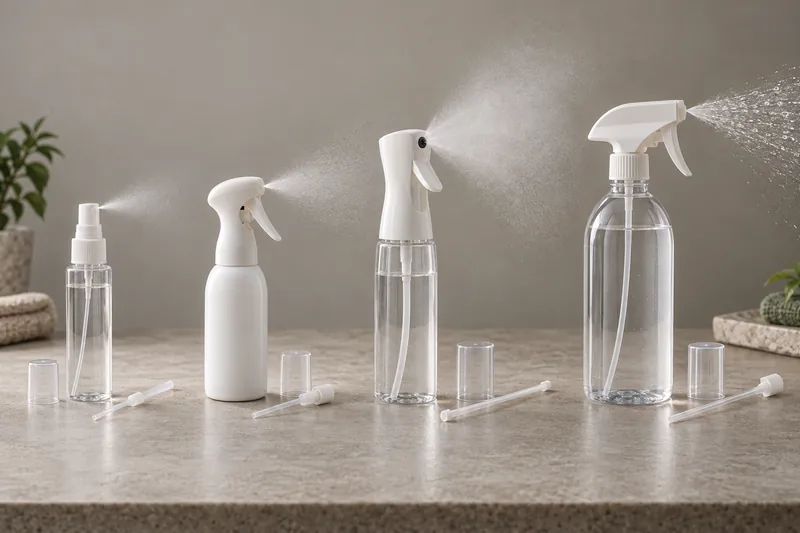
Four Common Types of Hair Spray Bottle
1. Continuous or pre-compression mist bottle
This format stores mechanical energy during trigger movement and releases a relatively sustained mist. It is a strong choice for plain water, curl refreshing and wide-area salon wetting. “Continuous” is not a universal performance specification: some designs extend one discharge, while others create an apparently continuous plume through repeated overlapping actuations. Spray duration, output and inverted operation are model-specific.
Its advantages are broad coverage, fewer start-stop wet spots and comfortable multi-finger actuation. Its disadvantages are a more complex engine, greater sensitivity to deposits, and more difficult cleaning than a basic trigger. Do not assume that a bottle sold for water will tolerate oils, alcohol, salt, botanical solids or leave-in conditioner.
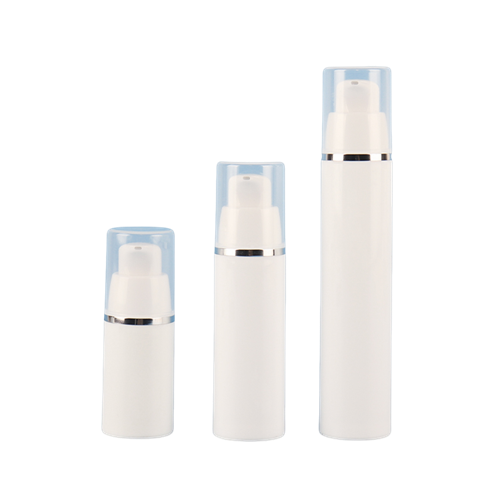
2. Finger-operated fine-mist pump
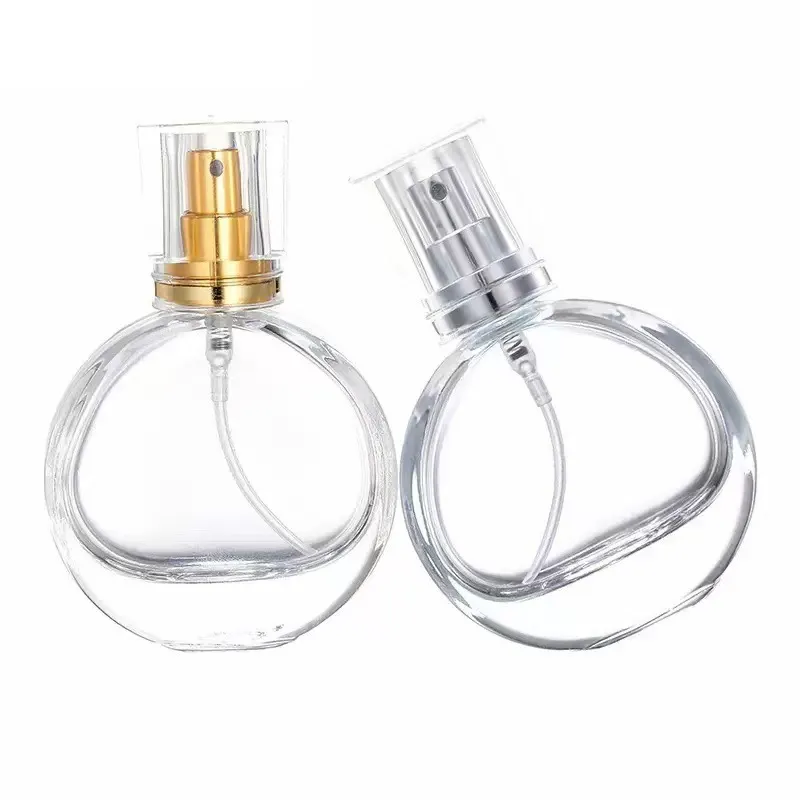
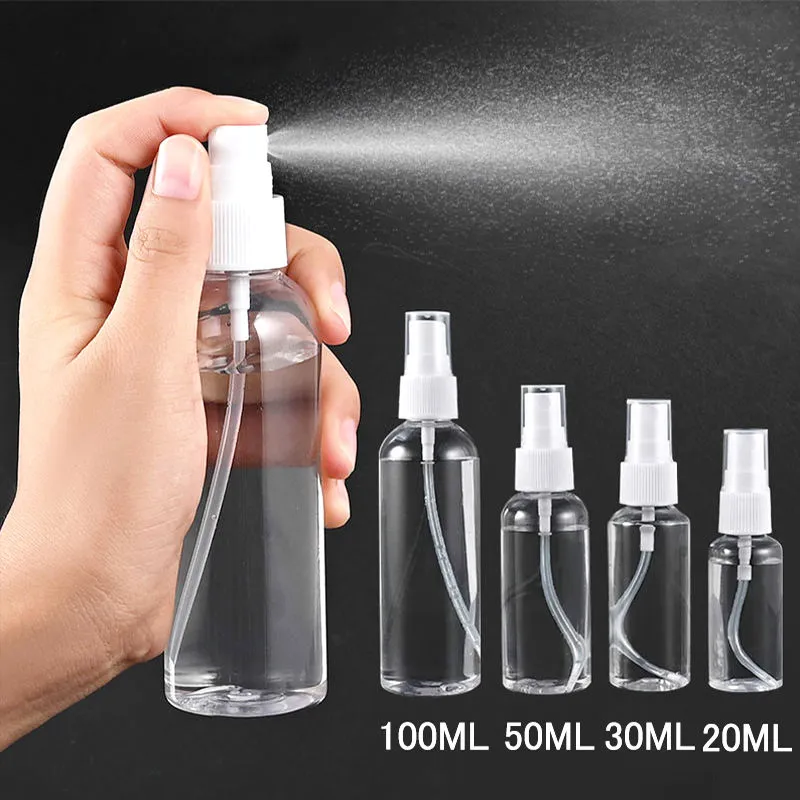
A fine-mist pump delivers a small measured burst on each full press. It suits lightweight heat protectants, hair fragrance, thin leave-in sprays and scalp products when a refined plume and compact pack matter. Manufacturer portfolios show that outputs around 0.10–0.30 mL per stroke are available, but this is an example range—not a rule for all pumps.
The smaller finger pad and shorter burst are less efficient for soaking a full head with water. In exchange, the bottle can be more portable, the dose easier to control and the styling more premium. Pump, actuator insert and formula must be selected together; changing only the button can alter the pattern.
3. Mini-trigger sprayer
A mini trigger sits between a finger pump and a household-style trigger. It gives better leverage than a small actuator while preserving a controlled cosmetic dose. An official Aptar example delivers 0.3 cc and offers an integrated open/close lock, but other models vary. This type works well for 100–250 mL styling sprays used repeatedly at home or in a salon.
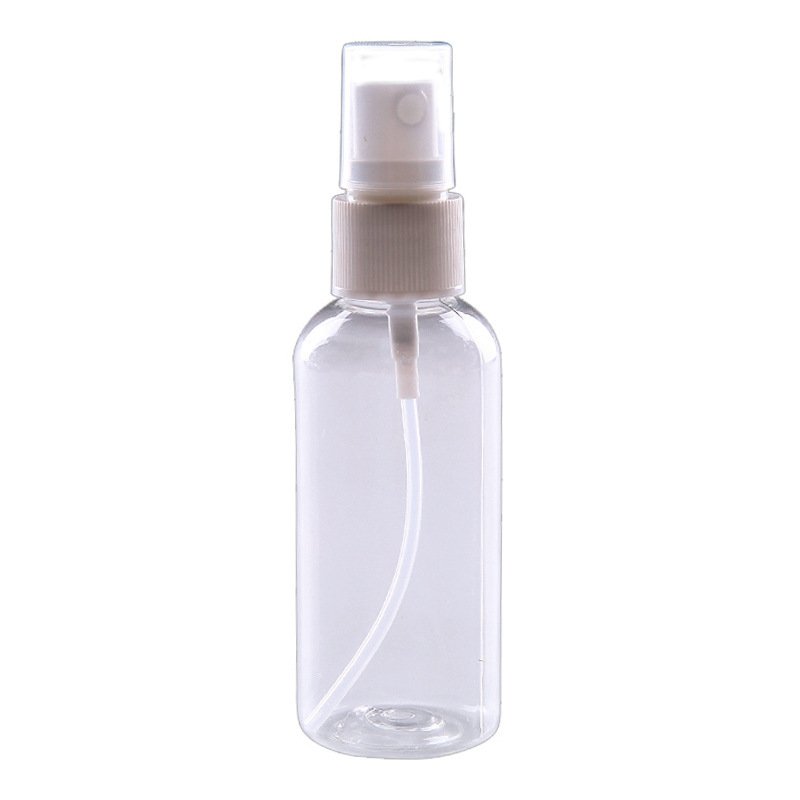
4. Standard trigger sprayer
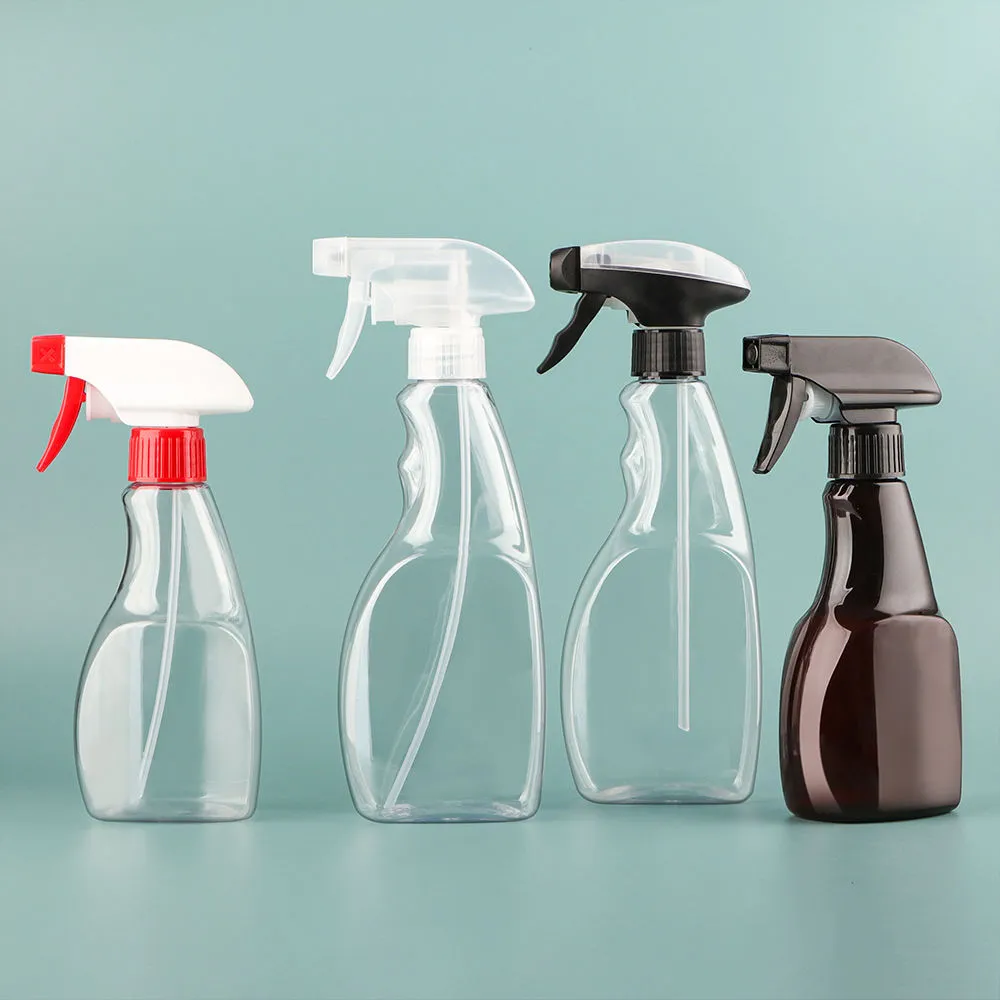
A standard trigger generally delivers more liquid per stroke and may offer adjustable spray and stream settings. It is practical for quickly wetting hair during cutting, but the larger droplets and higher local dose can be too wet for finishing mist or fine hair. Its larger head also affects shelf height, label proportion and pack aesthetics.
What Capacity Is Best for a Hair Spray Bottle?
Capacity should balance refill frequency against filled weight and grip. Water has a density close to 1 g/mL, so 300 mL of water adds roughly 300 g before the bottle and sprayer are counted; 500 mL adds roughly 500 g. Formulated products vary in density, but the comparison explains why a larger pack can tire the wrist during repetitive use.
| Nominal capacity | Best fit | Advantages | Qualification points |
|---|---|---|---|
| 30–50 mL | Samples, hair fragrance, concentrated scalp products | Compact, premium and easy to carry | Short dip path, low residual product and adequate label space |
| 50–100 mL | Travel, gym bag, trial-size heat protectant or leave-in | Portable and compatible with the general 100 mL carry-on limit in the US and EU | Use a lock or overcap; always confirm current airline and airport rules |
| 100–150 mL | Core retail hair mist, tonic or styling spray | Good label area without excessive hand weight | Confirm shelf height, dose and expected use period |
| 200–300 mL | Home curl refresh, cutting water and frequent leave-in use | Fewer refills while remaining manageable for many users | Test grip diameter, centre of gravity and repeated-actuation comfort when full |
| 300–500 mL | High-use salon water or back-bar applications | Reduced refill frequency | Weight, tipping, station space, drop strength and fatigue become more important |
Estimate how many strokes a bottle can deliver
For a conventional measured-dose pump, the theoretical stroke count is:
Theoretical full strokes = net fill volume ÷ nominal output per stroke. A 150 mL fill paired with a 0.20 mL pump gives 750 theoretical full strokes. Actual usable strokes will be lower because of priming, residual product, incomplete actuation and output variation.
Do not use that calculation unchanged for a sustained or continuous-spray system unless the supplier specifies output on the same per-actuation basis. Measure delivered mass over a defined number of actuations with the real product.
Which Bottle Material Is Best for Hair Spray?
PET: clear, light and retail-friendly
PET is a practical starting material for many water-based hair mists, leave-in sprays and visible-colour formulas. It provides clarity, good stiffness and broad decoration options while reducing breakage risk compared with glass. “PET” is not a compatibility certificate: resin grade, colorant, wall design, fill conditions and the complete formula all matter.
HDPE: tough, opaque and suitable for active handling
HDPE is useful when impact resistance, an opaque appearance or a slightly more forgiving bottle body is preferred. It is common in functional and salon packs. Lower clarity can hide fill level, and fragrance loss, paneling, stress cracking and decoration adhesion must be checked with the finished formulation.
PP: especially important in the spray head
PP is widely used for actuators, closures, housings and all-plastic spring concepts. Some bottle formats also use PP. The package should be reviewed as a material stack: bottle, gasket, valve, piston, dip tube and spring may not be the same polymer and do not have the same exposure.
Glass can suit 30–100 mL hair fragrance or premium scalp-treatment packs where appearance and barrier are valuable. It is usually a poor choice for a large water bottle used over sinks, hard salon floors or wet bathroom surfaces. A protective overcap does not remove the need for filled-drop and transport testing.
PCR and refillable packages need a system-level review
Post-consumer recycled content can reduce virgin-resin demand, but colour, odour, cosmetic appearance and mechanical performance may differ by grade. Refillability also changes the requirement: the bottle and sprayer must survive the intended number of cycles, and the brand needs safe cleaning and refill instructions. A refill claim should not be based only on the closure being removable.
Bottle shape matters more than decoration suggests
- Round cylinder: efficient to mould and label, but a wide smooth body can be slippery.
- Oval or waisted body: improves orientation and grip, especially with a mini trigger.
- Broad base: reduces tipping when a heavy trigger is fitted to a tall bottle.
- Shoulder and heel geometry: determine where the dip tube sits and how much product remains inaccessible.
- Colour or UV protection: should be based on formula stability data, not a generic belief that every botanical needs amber packaging.
What Spray-Head Specifications Should You Compare?
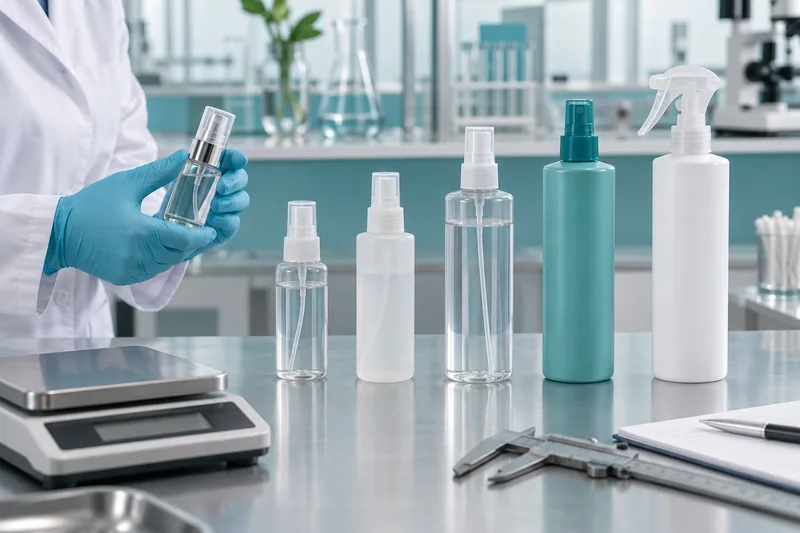
“Fine mist” is a visual description, not a complete technical specification. Ask the supplier for the exact sprayer code and evaluate these variables:
- Output: mL or µL per full actuation, including tolerance and test liquid.
- Pattern: cone shape, diameter at a fixed distance, symmetry, wet centre, streamers and coverage uniformity.
- Droplet distribution: only when product performance justifies instrumental measurement; do not infer it from orifice diameter alone.
- Spray duration: important for continuous/pre-compression systems and model-specific.
- Actuation force and finger contact: assess when the bottle is full and across repeated use.
- Prime and re-prime: record strokes after filling, storage and different orientations.
- Orientation: upright is standard; tilted, inverted or “360°” use requires a sprayer designed and verified for it.
- Closure and seal: exact neck finish, sealing land, gasket and torque—not neck diameter alone.
- Dip tube: length, outside diameter, retention and cut must match the selected bottle.
- Lock or overcap: confirm intuitive consumer use and resistance to accidental actuation in bags and e-commerce parcels.
ASTM D4041/D4041M provides a comparative practice for mechanical-pump spray patterns and explicitly notes that both actuator design and liquid properties change the pattern. This is why supplier water data are useful for screening but insufficient for approving a hair-care formula.
Match the Sprayer to the Actual Hair Formula
Plain water and very low-viscosity refresh sprays
These are the easiest liquids to pump and the strongest candidates for a continuous mister. Even here, minerals can deposit at the nozzle and microbiological hygiene matters once ingredients are added. A reusable salon water bottle and a packaged leave-in cosmetic are not the same risk case.
Leave-in conditioner and heat protectant
Emulsions, dissolved polymers and conditioning agents can increase viscosity or create stringy breakup. Begin with a fine-mist or mini-trigger family designed for the relevant viscosity, then compare real plumes at use temperature. If the product jets, dribbles or primes slowly, the answer may be a different engine or actuator—not a smaller hole.
Salt, botanical and particle-containing sprays
Crystals, insoluble extracts, mica and suspended powders raise clog risk. Confirm maximum particle size and whether particles remain uniformly suspended through shelf life. Screen a larger liquid path or a different dispensing format if the nozzle cannot remain reliable. For a mist that turns into a jet, use Boyu’s deeper spray-pattern troubleshooting guide.
Alcohol, fragrance and oil-containing formulas
Check every wetted component, not only the bottle. Alcohol and fragrance can affect seals, odour retention, evaporation and decoration. Oils may require a technical fine-mist engine or may be better dispensed as a non-atomised treatment dose. A high-viscosity serum should not be forced through a sprayer merely because a supplier calls the bottle “hair oil compatible.”
How to Use a Hair Spray Bottle Correctly
- Use only the intended fill. Do not dilute conditioner, add essential oil or combine products unless the product formulator and label specifically allow it.
- Check the lock and prime. Open the actuator, keep the dip-tube end submerged and use full strokes until the plume stabilises.
- Section the hair. Work in manageable areas so a broad mist coats hair rather than repeatedly soaking one outer layer.
- Let the plume open. Follow the product label’s application distance. A fine-mist actuator generally needs more separation than a targeted scalp nozzle.
- Avoid the face and eyes. Spray into the hair direction and stop if product drifts toward the user or another person.
- Close after use. Wipe the external nozzle, engage the lock or overcap and store the package as directed.
- Keep it clean. For a reusable water bottle, use a documented emptying and cleaning routine suited to the bottle and sprayer. Do not continuously top up an unknown old mixture.
- Watch for change. FDA advises keeping cosmetic containers clean and closed and discarding cosmetics that change colour or smell.
Common Hair Spray Bottle Mistakes and How to Avoid Them
- Buying by “ultra-fine” marketing alone: require a sample and compare the real pattern with your liquid.
- Assuming continuous means 360°: inverted pickup needs a model-specific tube or valve design.
- Choosing the largest bottle: assess filled weight and hand fatigue, not only refill frequency.
- Using glass in a high-drop environment: match premium appearance to the actual salon, shower or travel risk.
- Testing only with water: water cannot predict viscosity, particles, seal swelling, fragrance loss or long-term clogging.
- Poking the nozzle with a pin: this can enlarge or deform the precision orifice and permanently change the plume.
- Using a generic replacement head: a closure that screws on may still have the wrong gasket, finish, output, tube or vent.
- Overlooking travel security: use a protected actuator, and remember that ordinary carry-on liquids are generally limited to containers of 100 mL or less in US and EU screening systems.
If a bottle no longer primes, sprays only air, leaks or has a stuck trigger, see Boyu’s guide to why spray bottles stop working.
How Brands Should Test Hair Spray Packaging Before Production
A buyer should approve a filled-package system, not a bottle image. The bottle, neck, gasket, pump engine, actuator, dip tube, overcap, formula, filling process and distribution channel interact.
- Define the use requirement: targeted or broad coverage, expected distance, orientation, dose, refill model and consumer group.
- Screen candidate sprayers: record prime strokes, output, spray duration, pattern, actuation and return with the real formula at relevant temperatures.
- Run compatibility ageing: inspect mass loss, odour, colour, viscosity, leakage, cracking, swelling, corrosion, clogging and pattern change over time.
- Check evacuation: measure usable product at full, half-full and near-empty conditions and in realistic use angles.
- Challenge distribution: test closure security, side/inverted leakage, cap or lock retention, filled drops, vibration, compression and the selected e-commerce or retail route.
- Control production: approve drawings and part numbers, retain golden samples, define tolerances and require change notification for resin, gasket, spring, colorant or mould changes.
For deeper protocols, review Boyu’s guide to cosmetic packaging compatibility testing. Buyers sourcing a common closure platform can also compare Boyu’s 24/410 spray bottle specification guide.
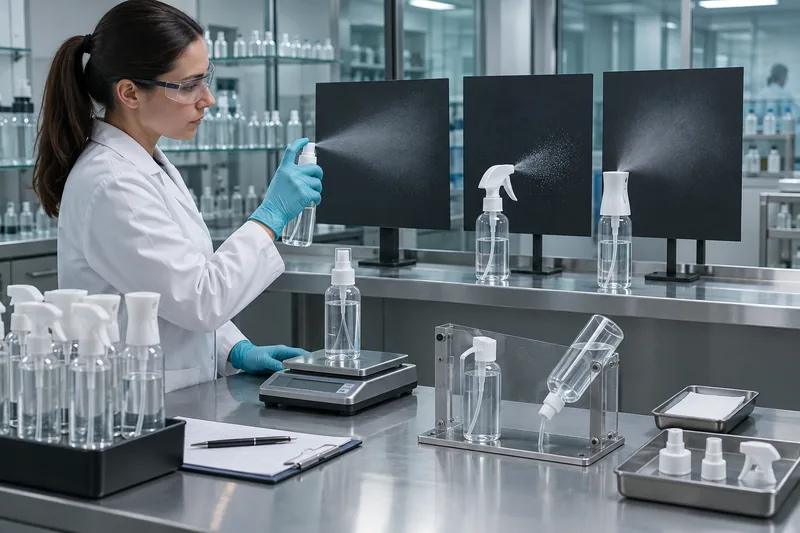
RFQ checklist for a hair spray bottle supplier
- Formula type, viscosity range, alcohol or oil content, particles and ingredients likely to crystallise
- Net fill, target output, coverage area, spray duration and expected application distance
- Bottle capacity, material, colour, shape, neck finish and decoration
- Upright, tilted or inverted use requirement
- Lock, overcap, tamper and travel/e-commerce requirements
- Target markets, forecast quantities, filling line and production schedule
- Required compatibility, function, leakage and distribution tests with acceptance criteria
Frequently Asked Questions
What spray bottle is best for curly or coily hair?
For plain water or a verified low-viscosity curl refresher, start with a 200–300 mL continuous/pre-compression bottle that produces a broad fine mist. It can cover a section more evenly than a narrow trigger burst. Confirm grip, filled weight, lock and whether the model truly works at the angles you use.
Is a continuous mist bottle better than a regular spray bottle?
It is often better for broad, gradual wetting. A regular trigger can be better when fast, targeted, higher-volume application is needed. For a formulated product, compatibility, clog resistance and measured output matter more than the category name.
Can I put water and conditioner in a spray bottle?
Do not dilute a finished conditioner unless its manufacturer or a qualified formulator provides a validated instruction. Adding water can change preservation, stability, viscosity and sprayability. Use a leave-in product designed for spraying instead of improvising a stored mixture.
Is glass or plastic better for a hair spray bottle?
Plastic is usually better for water, travel and salon use because it is lighter and more resistant to breakage. Glass can suit a small premium hair fragrance or treatment. Formula compatibility, barrier, filled drops and the complete closure system decide the final choice.
Can hair oil go in a fine-mist bottle?
Only if the complete formula is low enough in viscosity and the supplier has a pump designed for that chemistry. Test the bottle, gasket, valve, spring, tube and spray pattern together. Concentrated or viscous oils are often better in a treatment pump or dropper.
What hair spray bottle size is best for travel?
A 50–100 mL bottle with a secure lock or overcap is the practical starting range. US TSA and EU airport guidance generally limit ordinary carry-on liquids to containers no larger than 100 mL; check the current airport and airline requirements before travel.
Sources
- ASTM D4041/D4041M-05(2025), Standard Practice for Determining Spray Patterns of Mechanical Pump Dispensers.
- ASTM Subcommittee F02.30 on Mechanical Dispensers — current practices for priming, compatibility, dip-tube retention, output and actuation force.
- Aptar Beauty: EuroMist fine-mist spray pump — model-specific outputs, finishes and formula variants.
- Aptar Beauty: MTS mini-trigger spray — 0.3 cc example, lock and closure options.
- Aptar Beauty: PAV spray pump — hair/body mist positioning, dosage and spray-angle configuration examples.
- Silgan Dispensing: Personal Care Product Catalog — hair-care fine-mist, inverted and mini-trigger configurations.
- AFA Dispensing: Flairosol 3 technical sheet — manufacturer description and specifications for a non-pressurised continuous-mist system.
- US Food and Drug Administration: Using Cosmetics Safely.
- US Transportation Security Administration: Travel Tips and the 3-1-1 liquids rule.
- European Commission: Information for air travellers.


 English
  Español de Argentina
  Русский
  Italiano
  日本語
日本語  한국어
한국어  العربية
  Français
  Deutsch