BOYU PACKAGING · FINE MIST DISPENSING

Wholesale 24/410 Spray Bottle Manufacturer

Custom bottle-and-sprayer systems for brands, importers and contract fillers that need controlled leakage, repeatable output and an even fine mist—not only a matching thread description.

Discuss your spray bottle project →

Neck finish: 24/410 continuous thread, verified as a bottle-and-sprayer pair rather than by label alone.

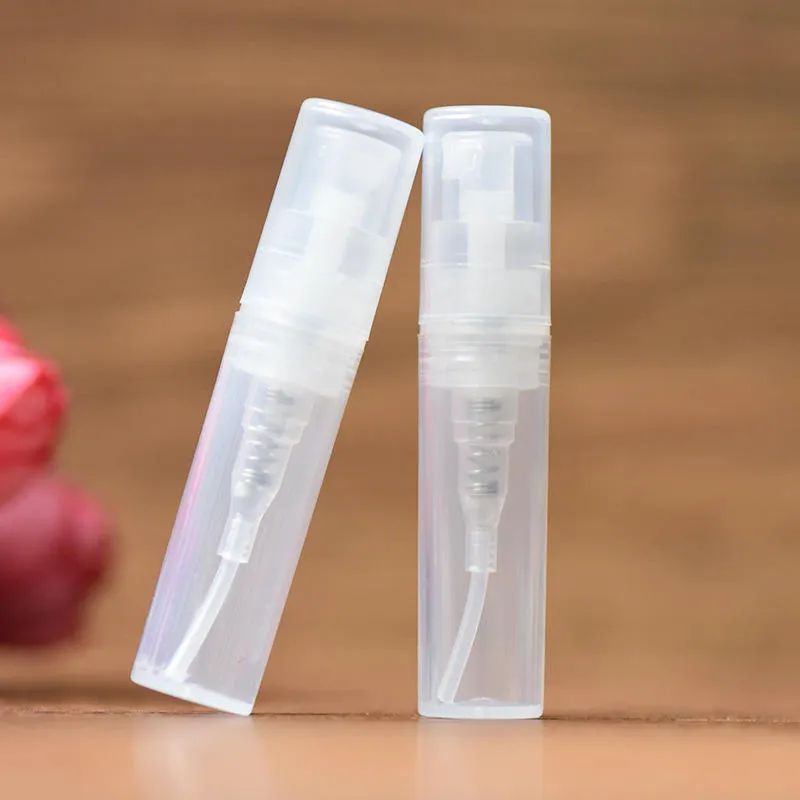
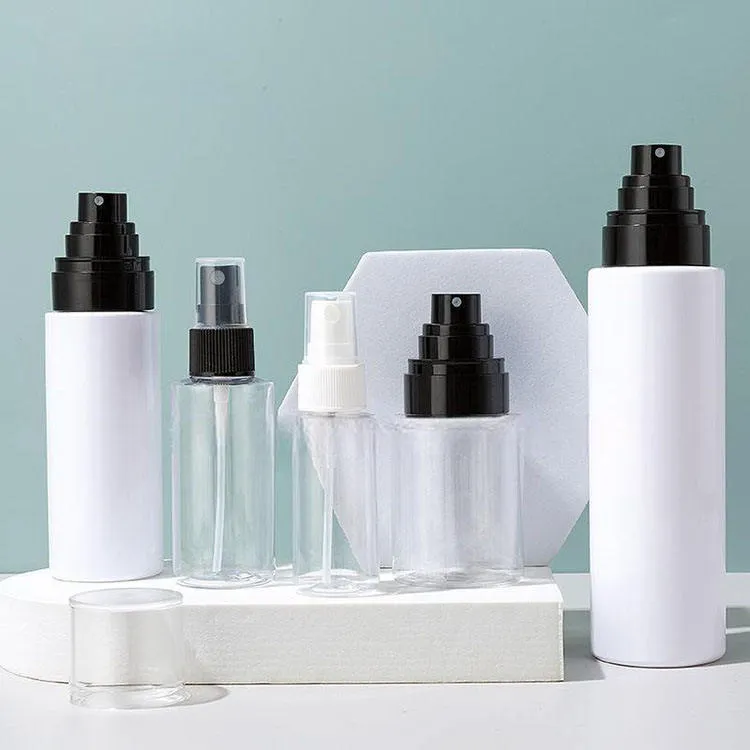
Main formats: PET, HDPE, PP, PETG and glass bottles; mini to 200ml+ formats subject to the selected model.

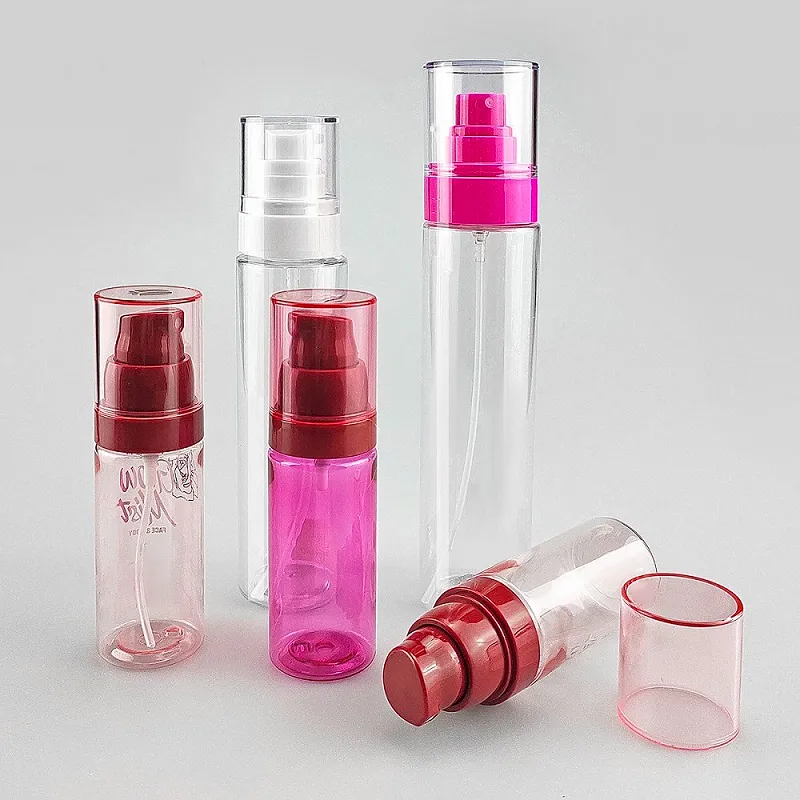
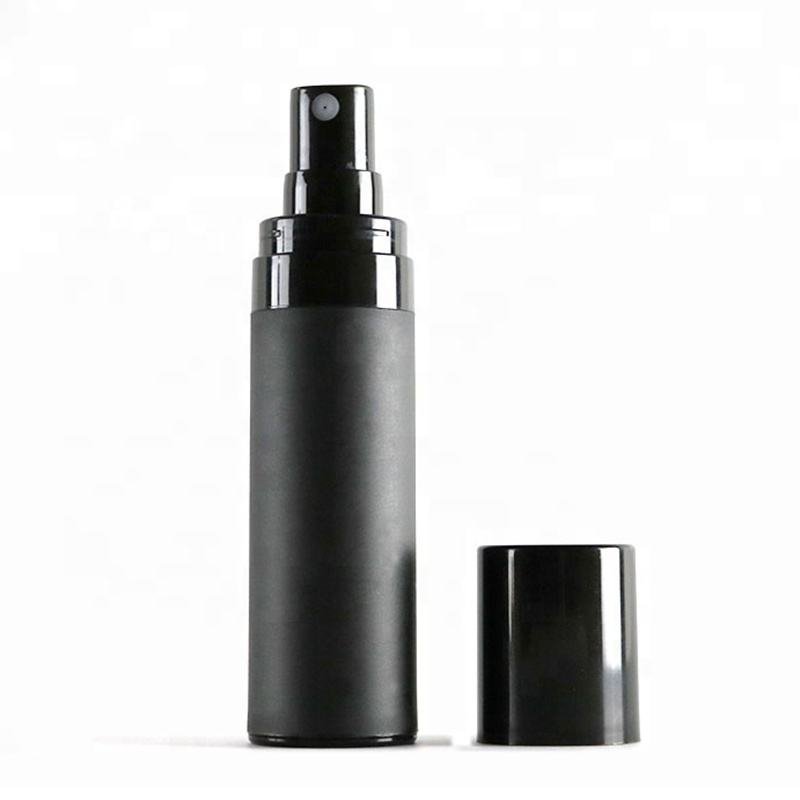
Customization: Bottle/sprayer color, screen print, hot stamp, labels, coating, aluminum shell, cap/lock, dip tube and private molds.
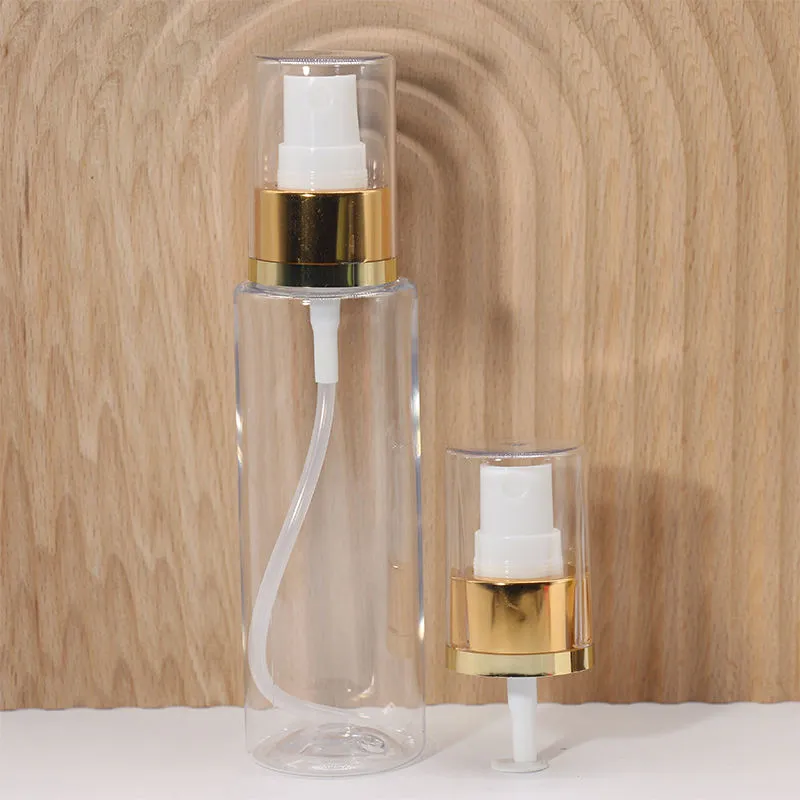
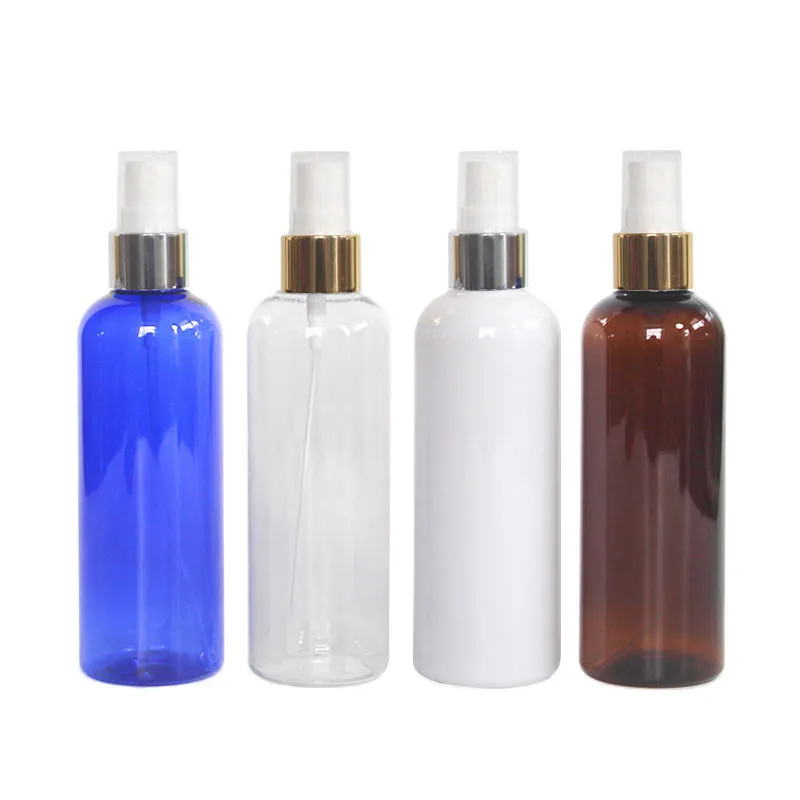
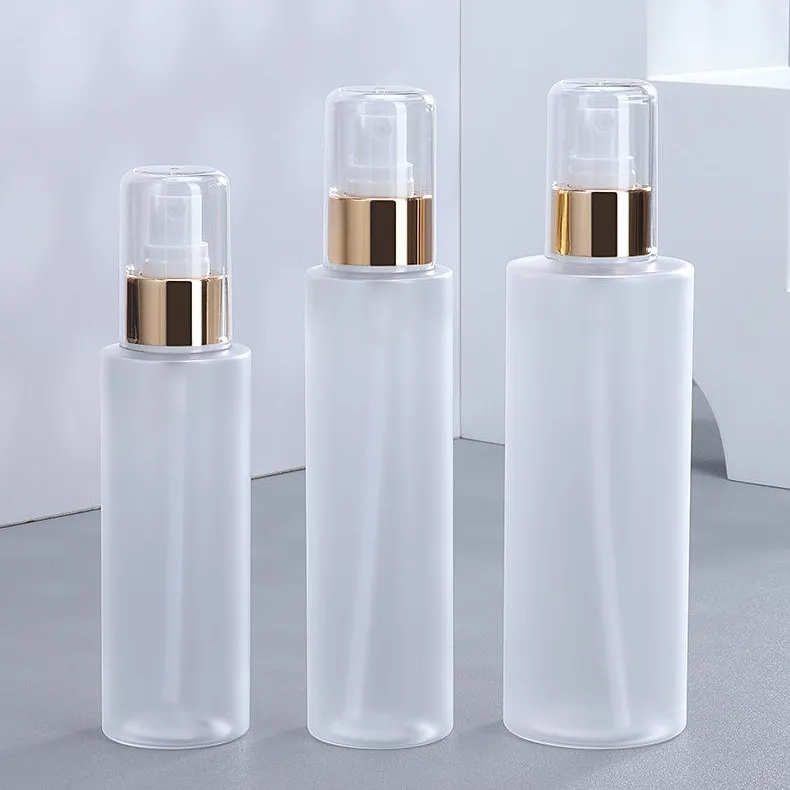
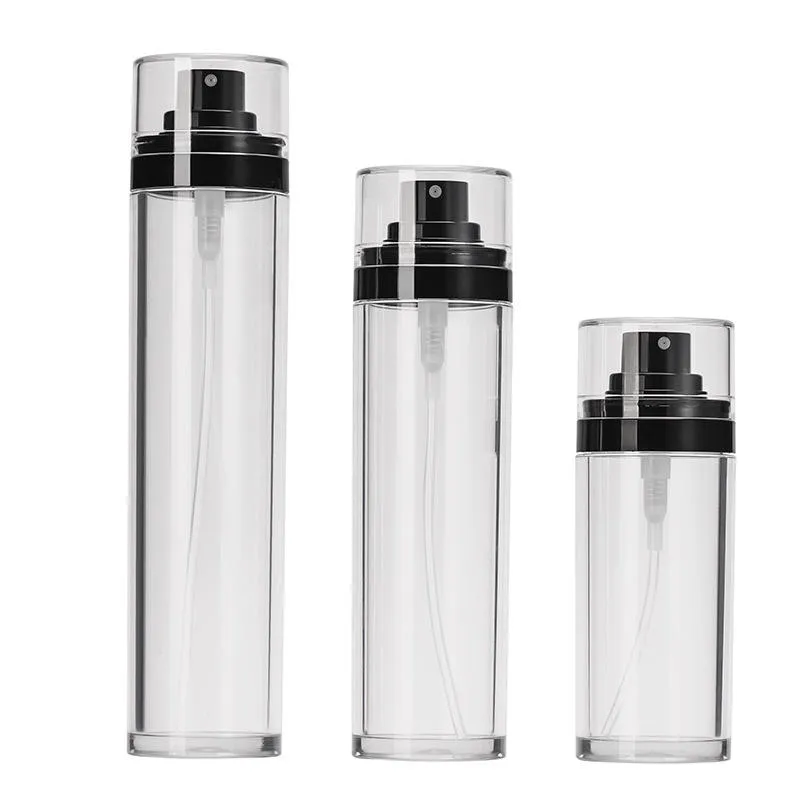
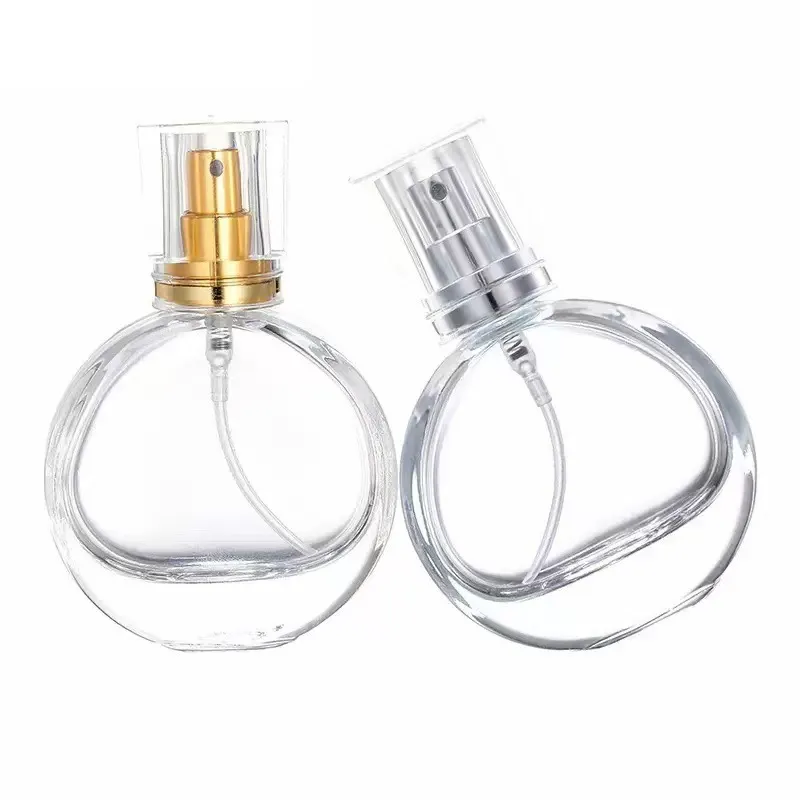
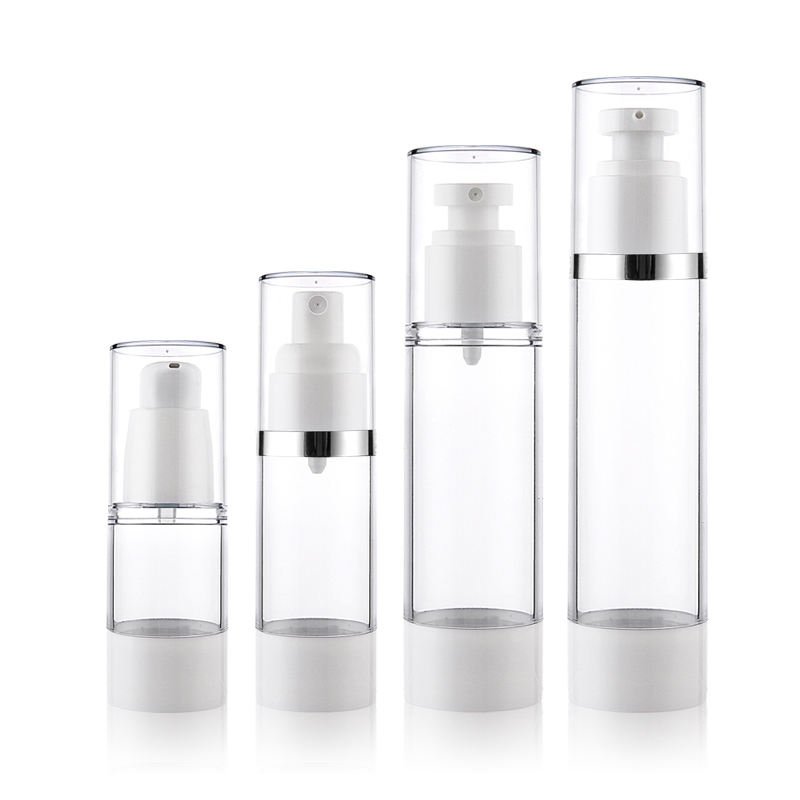
Wholesale 24/410 fine mist sprayer and spray bottle packaging

24/410 Spray Packaging Built as One Validated System

Boyu Packaging supplies wholesale spray bottles, 24/410 fine-mist sprayers, dip tubes, overcaps and decoration for personal care, home fragrance, cosmetics, hair care, household and selected technical products. A dependable pack is qualified as a complete system: bottle neck, sealing land, gasket, closure, pump engine, actuator, nozzle, dip tube, formula and filling conditions all influence performance.

24/410 is a neck designation

The first number refers to the nominal neck diameter and 410 identifies the thread-finish family. It does not prove that every pump sold as 24/410 will seal on every bottle.

Standard MOQ

The usual starting quantity is 10,000 pieces per design. Separate capacities, bottle colors, sprayer colors and artworks may each have their own production minimum.

Formula-led validation

Water can screen a sprayer, but the final formula controls prime, pattern, droplet behavior, output, drying, compatibility and leakage. Approve filled production-intent samples.

Latest Wholesale Spray Bottle Designs

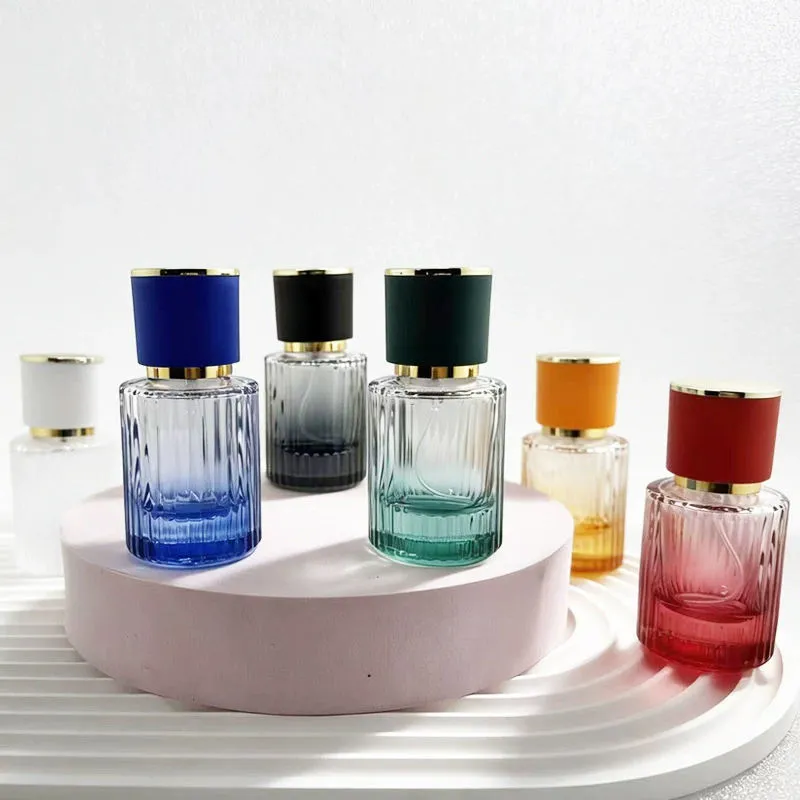
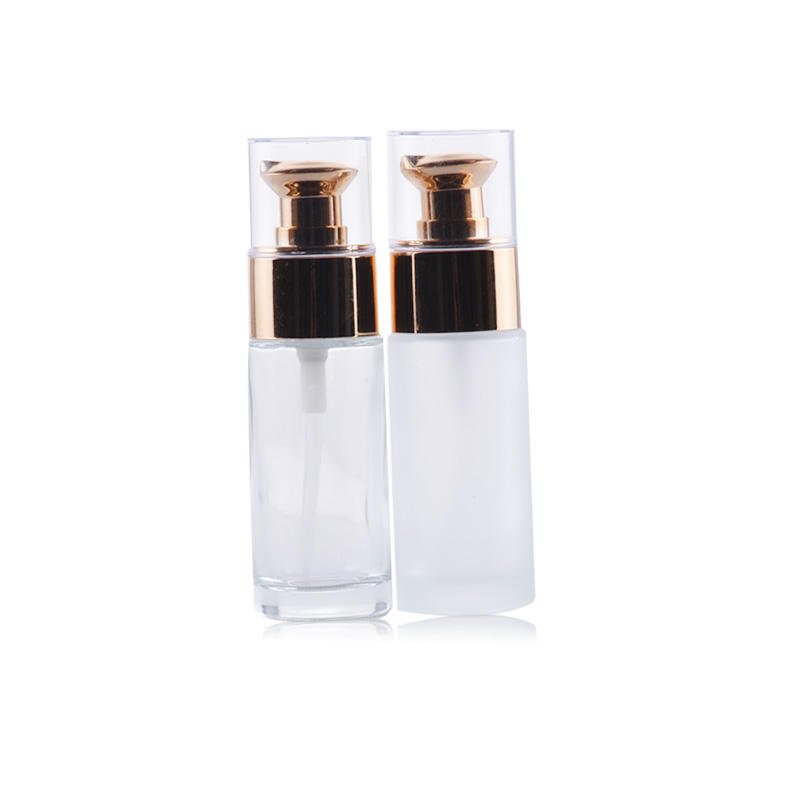
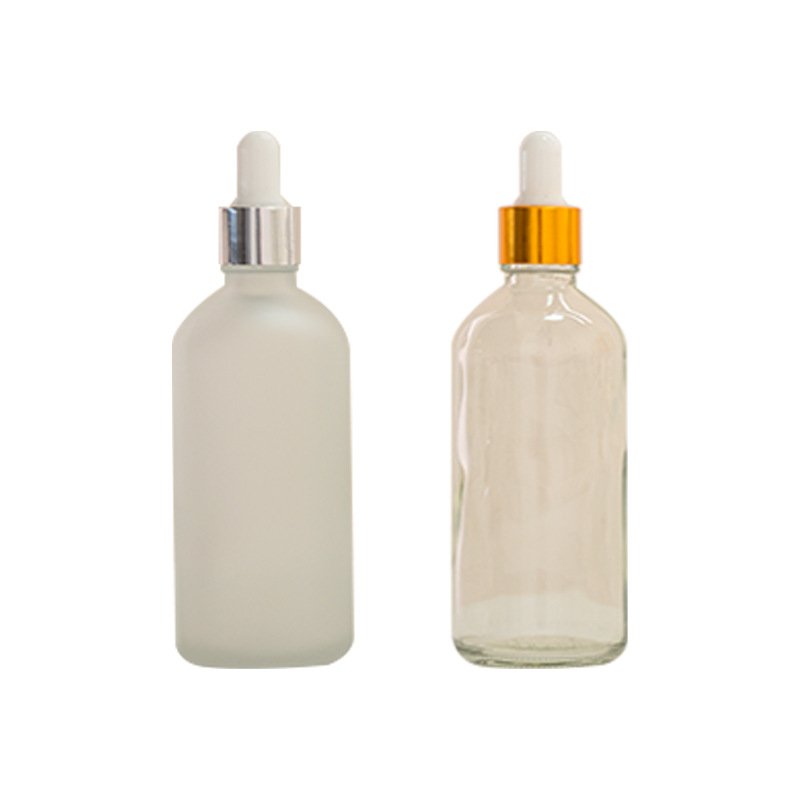
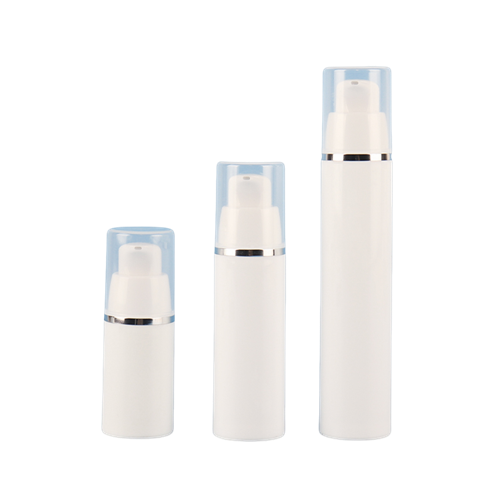
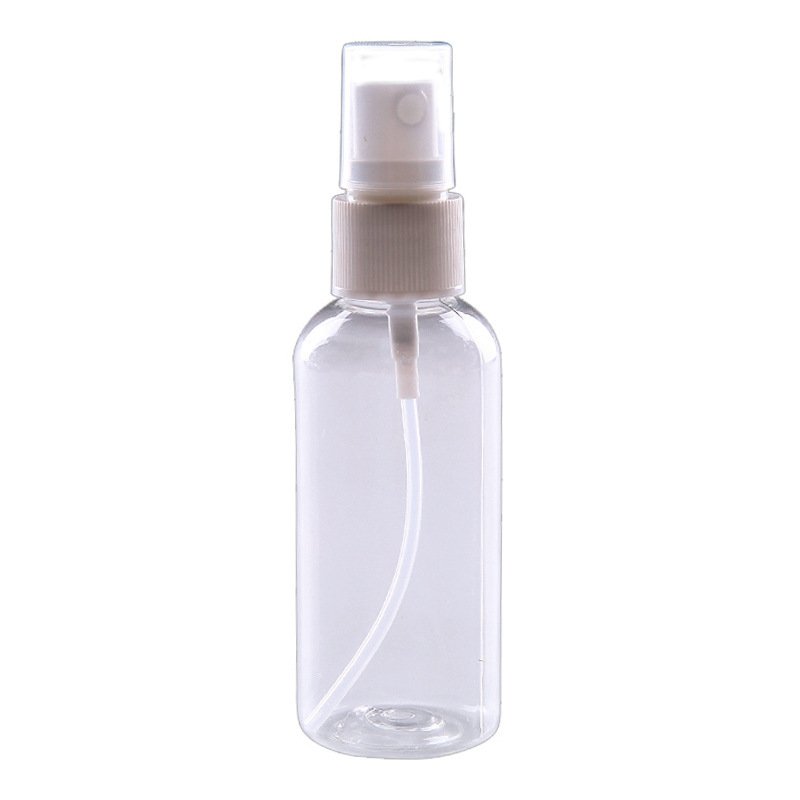
Boyu Packaging’s latest 12 spray bottle and fine-mist sprayer designs, Elevate Your Brand. View the Spray Bottle Collection →
What 24/410 Means—and What Buyers Still Need to Approve
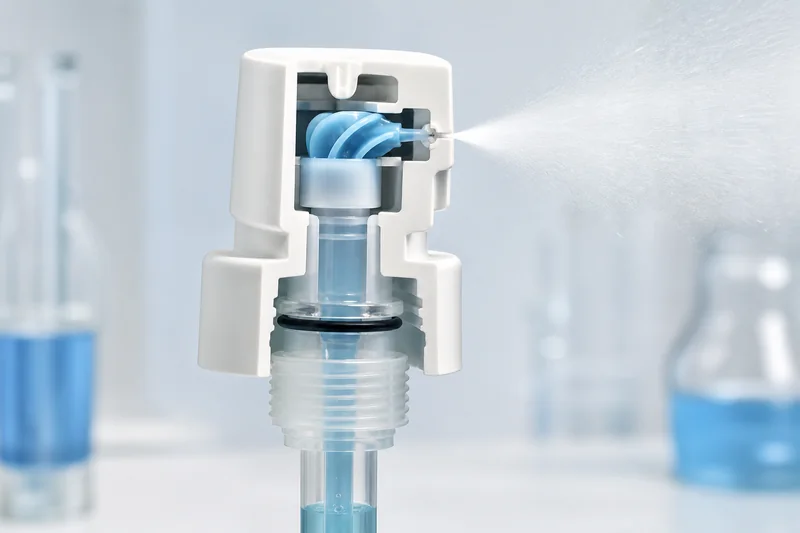
Fine mist sprayer component structure and spray path
The closure thread is only one part of the package. The engine, gasket, actuator, nozzle, valve and dip tube determine how the complete sprayer behaves.

Nominal size is not a compatibility certificate

Two components can both be labelled 24/410 and still differ in thread profile, sealing-land position, neck height, liner or gasket geometry, closure application torque and venting behavior. Approve the bottle-neck drawing and the exact sprayer code together, then run physical fit, torque and filled leakage tests.

The selected product page lists a 24/410 closure and a reference discharge rate of 0.20±0.02 mL per actuation for that sprayer model. Treat that value as model-specific and verify the assembled bottle with the intended formula, test method and actuation conditions.

Item to approve Required information Why it matters
Bottle neck Thread drawing, sealing land, neck height, ID/OD, finish and tolerance. Controls engagement, gasket compression, torque window and leakage.
Sprayer Exact engine/closure/actuator/nozzle code, output, lock or overcap. Controls spray quality, dose, user force and shipment protection.
Gasket / seal Material, dimensions, formula contact and compression. Can swell, soften, shrink or lose sealing force.
Dip tube Material, inside/outside diameter, length, cut and curvature. Affects prime, residual liquid, flow restriction and use angle.
Filled pack Formula, fill volume, headspace, torque, test temperature and orientation. Final proof must reflect real commercial conditions.

Wholesale 24/410 Spray Bottle Specification Checklist

Specification Common project options Buyer confirmation
Capacity 2–10ml mini atomizers; 30, 50, 80, 100, 120, 150 and 200ml are common portfolio references. Nominal capacity, brimful capacity, fill volume and headspace are different values.
Bottle material PET, HDPE, PP, PETG or glass, subject to formula and market needs. Resin grade, color, transparency, PCR requirement and formula compatibility.
Closure 24/410 continuous thread for the selected bottle/sprayer pair. Drawing match, gasket, torque, lock/overcap and filled leak test.
Output Fine mist outputs vary by sprayer engine; one current model lists 0.20±0.02 mL/T. Define measurement method, liquid density, sample size and acceptance range.
Spray requirement Mist, cone/angle, pattern diameter, large droplets, streaming, prime and restart. Set test distance, liquid, strokes, cadence, temperature and pass/fail criteria.
Weight / walls Model-specific bottle grams and drawing-defined wall locations. Request target, tolerance, local minimum and production sample report.
Decoration Custom resin color, coating, frosting, screen print, hot stamp, labels and metallic sprayer shell. Pantone/physical standard, artwork, boundaries, adhesion and rub resistance.
Packing Bulk carton, dividers, individual bag/box, tray, pallet and shipment orientation. Protect actuator/nozzle, finish and glass; confirm carton/drop/stack plan.

Main Capacities and Application Positioning

Capacity range Typical applications Engineering attention
2–10ml Perfume samples, travel atomizers and trial packs. Small chamber, short dip path, closure format and filling accuracy may differ from 24/410 systems.
30–50ml Facial mist, toner, fragrance, hair or travel products. Fine output, premium finish, cap retention and low residual liquid.
80–120ml Body mist, hair care, room fragrance and personal care. Grip, pattern coverage, dose, bottle stability and travel leakage.
150–200ml Hair spray, toner, household or professional care. Repeated-cycle comfort, tube reach, bottle panel strength and freight efficiency.
Above 200ml Selected household, salon or technical sprays. 24/410 suitability, output, user fatigue and pack stability need project review.

Bottle Weight, Wall Thickness and Dimensional Control

Capacity does not determine bottle weight or wall thickness. The same 100ml volume can be a lightweight PET cylinder, a thick-wall PETG luxury pack or a glass bottle, each with different grams, wall distribution, impact behavior and freight cost. Boyu confirms these values against the selected model, mold drawing and approved sample.

Net bottle weight

Request the body weight in grams with target and tolerance. Also request the empty complete-pack weight—bottle, sprayer, dip tube and cap—without confusing it with carton gross weight.

Wall-thickness map

Specify measurement points such as shoulder, body panels, corners and base. A single average hides thin local areas that cause distortion, top-load weakness or visual inconsistency.

Critical dimensions

Control neck finish, sealing land, bottle height/diameter, perpendicularity, capacity and dip-tube datum. Cavity identification helps trace variation.

Lightweighting decision

Reduce grams only after wall distribution, grip, top load, drop, filling-line handling, torque retention, leakage and shipping performance remain acceptable.

Material / structure Weight and wall approach Important limitation
PET / HDPE / PP Target resin charge or bottle grams plus drawing-defined local thickness and dimensional tolerances. Process and geometry change wall distribution; do not promise one wall figure for every point.
PETG / thick-wall plastic Report functional inner walls and decorative mass where relevant. Heavy appearance increases resin, cooling time and freight.
Glass Use bottle net weight, capacity, critical wall/base distribution and annealing/impact controls. Glass thickness varies by design and process; assess breakage and transport separately.
Complete pack Bottle + sprayer + tube + cap mass, each with a component code. The carton’s gross/net shipping weight is not the unit-product weight.

Main Bottle and Sprayer Materials

Material Strengths Buyer checks
PET Clarity, good decoration surface and broad shape choice for personal care and household sprays. Formula compatibility, heat exposure, stress cracking, color and PCR appearance.
HDPE Tough, squeezable and suitable for many opaque chemical/personal-care applications. Barrier, paneling, color consistency, permeability and formula resistance.
PP Chemical resistance and useful component-molding properties; also common within pumps. Clarity, stiffness, processing route and package compatibility.
PETG Thick-wall visual depth and premium clarity for selected cosmetic packs. Chemical resistance, weight, molding, decoration and end-market recyclability.
Glass Premium feel, rigidity and barrier for fragrance and selected formulas. Breakage, coating, neck fit, shipping protection and filled compatibility.
Sprayer components PP/PE and engineered polymers, gasket/elastomer, optional aluminum shell and model-dependent metal spring/ball. Request a component-level product-contact map; do not infer materials from appearance.

How a Fine Mist Sprayer Produces an Even Spray
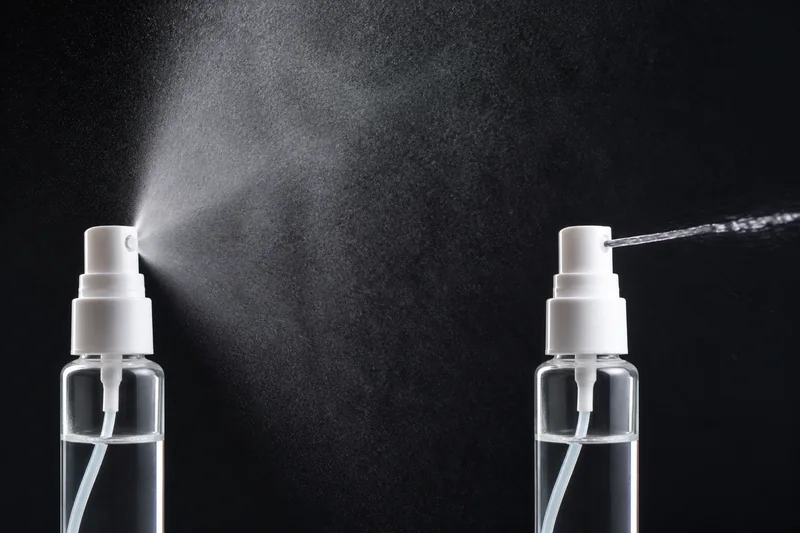
Fine mist spray compared with a concentrated stream
A qualified nozzle converts a compatible liquid into a controlled cone. Streaming or large droplets signal a mismatch, contamination, damage or test-condition issue.
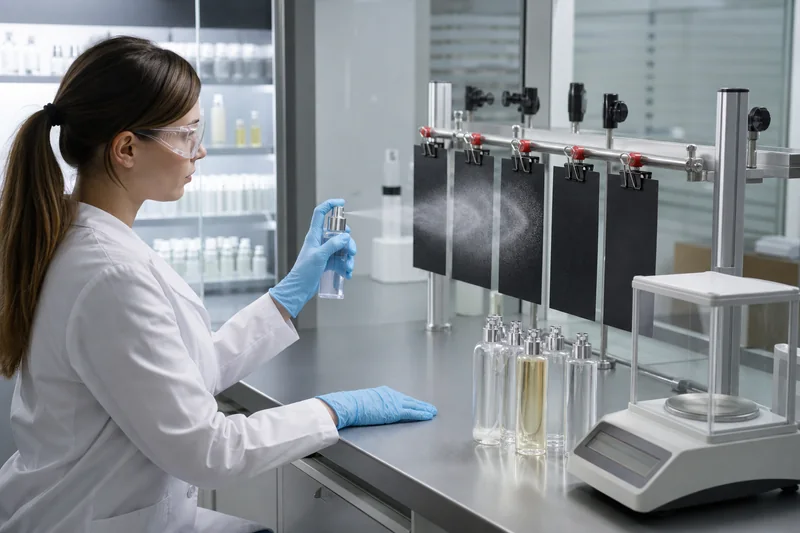
Fine mist sprayer pattern quality control
Spray uniformity should be measured at a defined distance and actuation method, using the intended liquid or a documented simulant.

Pump engine and valves

Chamber volume, piston sealing, inlet/outlet valve behavior and return speed influence output stability, prime and repeatability.

Swirl insert and orifice

The actuator insert, channels and nozzle geometry create rotation and breakup. Flash, debris, damage or the wrong insert can create a jet or asymmetric pattern.

Formula properties

Viscosity, surface tension, alcohol/oil content, particles, temperature and drying behavior affect atomization and nozzle restart.

Dip-tube system

Inside diameter, length, bend, cut and bottom clearance affect restriction, air intake, prime and use at different angles.

Factory Manufacturing Process

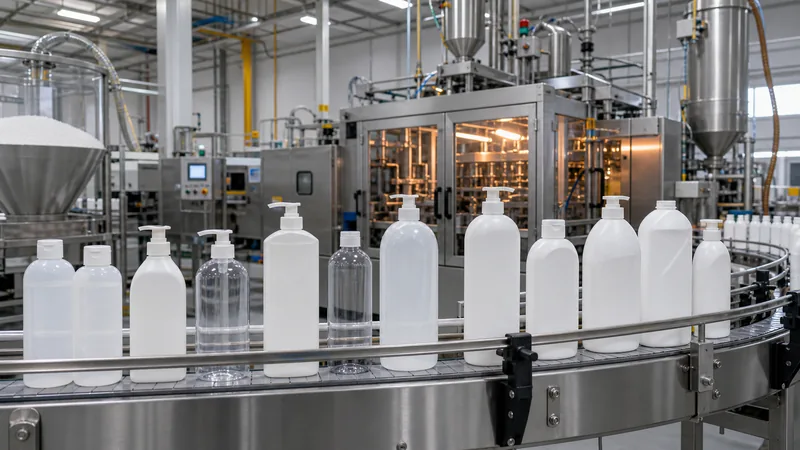
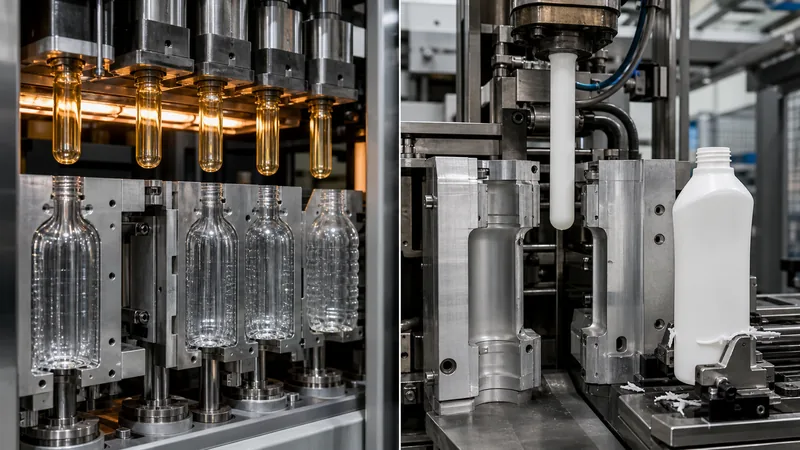
Plastic bottle manufacturing and assembly production line
Relevant Boyu production-line illustration. The approved process route depends on bottle resin, design and sprayer construction.
PET and HDPE bottle blow molding process
PET preform stretch blow molding and HDPE extrusion blow molding use different controls for neck accuracy, wall distribution and appearance.

1 · Technical review

Confirm application, formula, capacity, 24/410 neck, output, spray requirement, weight/walls, color, artwork, packing and test plan.

2 · Resin and component release

Approve resin/grade, color masterbatch, pump BOM, gasket, spring/ball pathway, dip tube and supplier lot requirements.

3 · Bottle molding

Control preform/parison, temperature, pressure, mold cooling, cavity, neck dimensions, weight and wall distribution.

4 · Sprayer molding and assembly

Mold engine, actuator, closure and nozzle parts; assemble valves, gasket, spring/ball, tube and overcap under controlled settings.

5 · Decoration

Clean and prepare bottles, then apply color, coating, print, hot stamp or labels after first-piece color/position approval.

6 · Inspection and packing

Complete dimensional, appearance, function, spray and leakage checks; protect nozzles and decorated surfaces during packing.

Color, Logo and Structural Customization

Customization Available directions Approval evidence
Bottle color Transparent tint, opaque Pantone color, gradient, frosting, matte or soft-touch coating. Physical standard, ΔE/visual method if specified, light-source condition and signed limit sample.
Sprayer / shell Standard plastic color, custom molded color, electroplated appearance or aluminum decorative shell. Component code, finish sample, adhesion/wear requirement and special-color MOQ.
Logo Screen printing, UV/digital printing where suitable, hot stamping, label or shrink sleeve. Editable vector artwork, print size/position, ink/foil, registration and rub/adhesion test.
Bottle shape Existing round/square/oval platforms or private mold development. 2D/3D, DFM, tool scope/ownership, cavity plan and production-intent samples.
Functional options Full cap, half cap, clip/lock, tamper-evidence and custom dip-tube length. Fit, cap retention, unlocking force, tube drawing and filled transport test.
Secondary packing Individual bag/box, insert, tray, color carton, master carton and pallet. Dieline, protection standard, pack count, marks, drop/stack plan and shipping sample.

OEM / ODM Approval Workflow

1 · Submit RFQ

Share formula, capacity, annual demand, MOQ per SKU, target market, spray behavior, decoration and destination.

2 · Select components

Choose bottle model/material, exact 24/410 sprayer, gasket, output, dip tube, lock/cap and product-contact pathway.

3 · Freeze drawings

Approve neck, sealing land, critical dimensions, grams, wall points, tube length and artwork boundaries.

4 · Review samples

Inspect appearance, color, print, fit, torque, cap retention, grip, prime and spray feel.

5 · Test final formula

Run output, pattern, restart, actuation force, leakage, compatibility and distribution tests with filled packs.

6 · Golden sample

Sign production-intent appearance and functional samples; record controlled part codes and acceptance criteria.

7 · Mass production

Release molding, assembly, decoration and packing with first-piece and in-process checks.

8 · Shipment / reorder

Complete outgoing inspection and traceability; reconfirm any resin, pump, artwork or process changes before repeats.

How Boyu Controls Spray Bottle Leakage

Cosmetic spray bottle filled-pack leak testing
Leak testing must reflect the filled formula, closure application, temperature, orientation and distribution route.

Leakage has more than one root cause

Neck wetness can come from damaged sealing surfaces, incompatible thread geometry, an incorrect or chemically affected gasket, contamination on the land, wrong closure application or torque loss. Leakage through the actuator can come from valve behavior, pressure changes, a missing transport lock, siphoning or formula expansion.

The test plan can include inverted/side storage, vacuum or pressure methods where suitable, temperature cycling, drop/vibration and post-shipment inspection. One empty-bottle test cannot replace filled-pack validation.

Risk Control before mass production Verification
Neck / gasket mismatch Approve bottle and sprayer drawings, seal material, compression and exact part codes. Fit, dimensional, torque and filled orientation tests.
Incorrect closure application Define capping equipment, torque target/range and line checks. Removal torque or retention checks plus leak sampling.
Formula attacks materials Screen resin, gasket, tube, valve and decoration with final formula. Aged compatibility at relevant temperatures with mass/appearance/function observations.
Actuator moves in shipment Use overcap, lock, clip, insert or carton restraint appropriate to the pack. Pack-out vibration/drop and activation inspection.
Pressure / headspace Confirm fill volume, headspace, temperature and route. Filled distribution simulation and post-test leakage/spray function.

Spray Uniformity and Function Test Plan
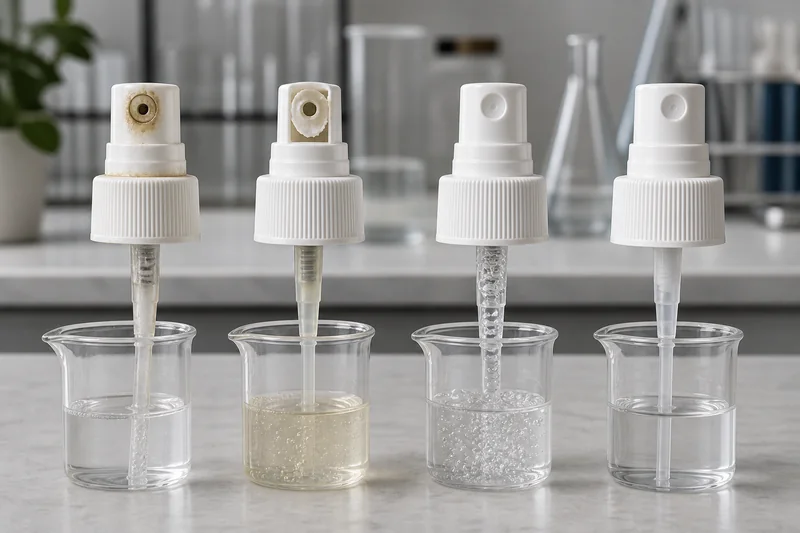
Common causes of a fine mist sprayer producing a stream
Formula mismatch, air ingress, blockage, component damage and assembly variation can change a mist into a concentrated stream.

Define the test before judging the pattern

Record the test liquid or formula, temperature, prime conditioning, bottle orientation, fixed spray distance, actuation speed/force, stroke count and time between strokes. Without these inputs, two factories can report different results from the same sprayer.

For demanding applications, use a pattern target or image-analysis method to compare cone symmetry, coverage diameter, center weighting and large droplets. Droplet-size distribution can be specified when the product and claim require it; it should not be replaced by a vague “fine mist” statement.

Also measure output per stroke gravimetrically, number of priming strokes, actuation force, return time, repeated-cycle stability, nozzle drying/restart and residual product. Test at relevant temperatures because viscosity and vapor pressure change.

QC characteristic Method definition What the buyer learns
Output per stroke Weigh multiple strokes, apply formula density/method and report mean/range. Dose stability and model conformity.
Prime / re-prime Count strokes from dry start and after defined idle periods. Consumer first-use and restart experience.
Spray pattern Fixed distance, background/target, actuation method and image criteria. Cone coverage, symmetry, streaming and large droplets.
Actuation / return Instrumented or controlled force and time measurement. Ergonomics, valve recovery and repeated-use consistency.
Nozzle restart Defined filled storage, orientation, temperature and idle interval. Risk of drying, blockage, sputter or first-stroke failure.
Cycle endurance Repeated actuations with intermediate output/pattern/leak checks. Wear, valve stability, spring/engine recovery and reliability.

Quality Control From Incoming Material to Shipment

Control gate Typical checks Release decision
Incoming materials Resin/grade documents, color, sprayer components, gasket, dip tube, shell/finish and packaging materials. Identity, approved source/lot and visual or dimensional conformity.
Bottle first piece Weight, capacity, neck, dimensions, wall distribution, appearance, gate/parting line and cavity. Machine/mold settings approved before continuous production.
Sprayer assembly Part presence/orientation, closure, gasket, actuator/nozzle, tube cut/length and cap/lock. Assembly setup approved; defects contained by lot/cavity/shift.
Decoration Color, print position, registration, adhesion, rub resistance, coating and foil appearance. First decorated piece and approved limit samples.
Functional sampling Prime, output, pattern, force, return, cap/lock, dip-tube fit and leakage. Lot accepted to written sample size and criteria.
Final / shipment AQL where agreed, count, packing, labels, cartons, pallet and retained samples. Inspection report and shipment release.

Sampling, Production and Delivery Timeline

1 · Specification / quotation

Fastest when the RFQ includes bottle, exact sprayer, output, formula, color, logo, quantity per SKU, packing, destination and test requirements.

2 · Stock component review

Existing samples can be checked first for shape, neck fit and function before custom decoration is committed.

3 · Custom samples

Customized appearance samples commonly require about 7–15 days after specifications, artwork, color standard and sample charges are confirmed.

4 · Formula validation

Compatibility and spray-performance timing follows the brand’s test protocol; it can run alongside design work but must finish before final release.

5 · Mass production

A typical custom reference is about 30–45 days after approved golden sample, final specification and deposit. Special sprayer colors, aluminum shells or tooling can add time.

6 · Inspection / freight

Reserve time for final inspection, packing, third-party checks, booking and export. Sea, air and express transit are quoted separately by route and Incoterm.

Questions Professional Buyers Should Ask

Buyer question A strong supplier answer should include
Will this 24/410 sprayer fit our bottle? Matched drawings, sealing concept, gasket, application method and physical filled-pack test—not only the thread label.
Will it produce an even fine mist? Output, pattern method, prime/restart, force and test data using your formula or an agreed simulant at stated conditions.
What are the exact grams and wall thickness? Selected model’s net grams/tolerance, local thickness points, critical dimensions and production sample report.
How is leakage prevented? Neck/gasket control, closure application, compatibility, orientation/vacuum/transport plan and traceable test results.
Which parts contact our formula? Component-level material map including tube, valve, gasket and any spring/ball location.
Can we customize several colors at one MOQ? Written MOQ per bottle color, sprayer color, capacity and artwork, plus allowed splits and setup charges.
How is delivery protected? Approval gates, material availability, production slot, inspection, packing and freight milestones.
What happens after a claim? Lot traceability, retained samples, evidence request, root-cause/corrective-action process and agreed remedy terms.

Wholesale 24/410 Spray Bottle Questions & Answers

What does 24/410 mean on a spray bottle?

It identifies a nominal 24 mm continuous-thread neck-finish family. It is a starting point for selection, not proof of sealing or interchangeability; approve drawings and filled samples.

Are all 24/410 fine mist sprayers interchangeable?

No. Thread profile, sealing land, gasket, closure height, torque, venting, output and dip tube can differ even when the nominal designation is the same.

What is the MOQ?

The standard starting MOQ is 10,000 pieces per design. Different capacities, bottle colors, sprayer colors or artworks may count as separate designs.

What capacities are available?

The portfolio includes mini atomizers and common 30, 50, 80, 100, 120, 150 and 200ml spray bottles. Confirm 24/410 availability for the selected mold.

Which bottle material is best?

PET, HDPE, PP, PETG and glass serve different clarity, barrier, chemical, weight, premium and recycling needs. Select after formula and distribution review.

What is the bottle weight in grams?

It is model-specific. Request net bottle grams and tolerance plus the complete empty-pack weight; do not use carton shipping weight as a unit value.

What is the wall thickness?

It must be taken from the selected drawing and measured at defined locations. Capacity alone cannot establish a reliable wall-thickness value.

How do you prevent leakage?

Match neck, gasket and sprayer; control closure application; validate formula compatibility, fill/headspace and transport protection; then test filled packs by written conditions.

Why does a fine mist sprayer produce a stream?

Possible causes include unsuitable formula properties, blocked or damaged swirl/nozzle parts, air ingress, valve or assembly faults and inconsistent actuation or test setup.

How do you test spray uniformity?

Define liquid, temperature, prime, distance and actuation method, then assess coverage, symmetry, streaming, large droplets and output. Add droplet analysis when required.

Can you customize bottle and sprayer colors?

Yes, subject to material, finish and MOQ. Approve a Pantone or physical standard, light source, limit sample and variation method.

Which logo processes are available?

Options include screen print, suitable UV/digital print, hot stamping, labels and sleeves. Final choice depends on bottle material, shape, formula exposure and durability.

Can the dip tube be customized?

Yes. Approve material, ID/OD, length, cut and curvature from the assembled bottle datum so it reaches the low point without sealing against the base.

How long are samples and mass production?

Customized appearance samples commonly take about 7–15 days. A typical mass-production reference is 30–45 days after approved sample/specification and deposit.

Can alcohol or essential-oil formulas use the same sprayer?

Do not assume so. Test the bottle, gasket, tube, valves, nozzle and decoration with the final formula for compatibility, spray behavior and leakage.

What should we send for a quotation?

Capacity, quantity per SKU, formula/SDS where appropriate, target output and spray, material, exact neck, color, artwork, packing, destination, Incoterm and launch date.

Request a Wholesale Spray Bottle Quotation

Send the intended formula/application, capacity, bottle material and shape, exact 24/410 sprayer preference, target output and spray behavior, quantity per design, color/logo, lock or overcap, packing, destination and required delivery date. Boyu can identify existing platforms first and define the samples and tests needed before production.

Commercial brief

Capacity • quantity per SKU • annual forecast • colors/artworks • packing • destination • Incoterm • required date

Technical brief

Formula • bottle/neck • sprayer code • output/pattern • product-contact materials • grams/walls • dip tube • leakage/compatibility plan

Request a quotation →View spray bottles