
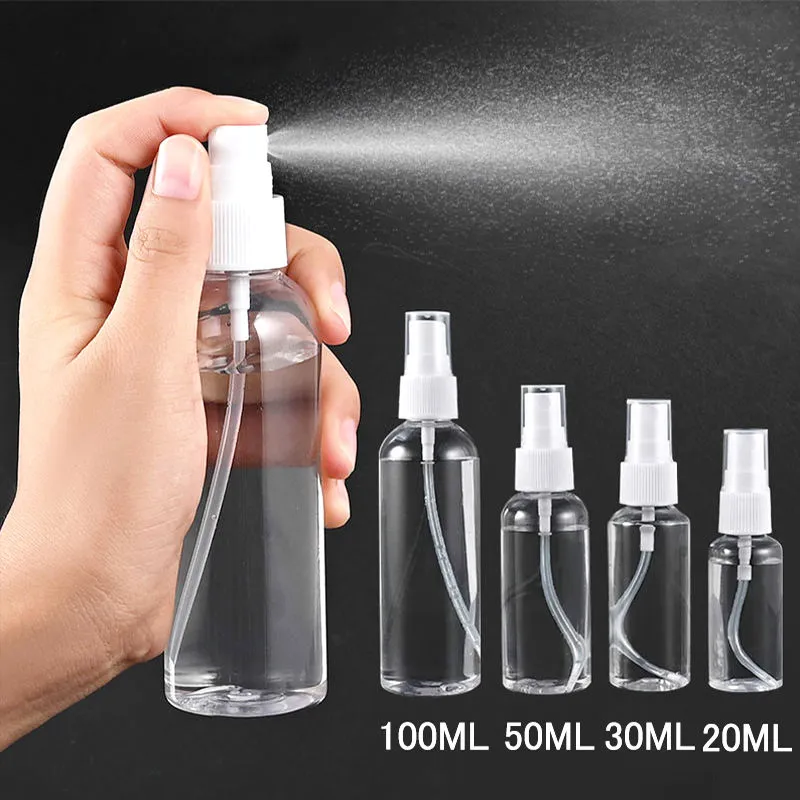

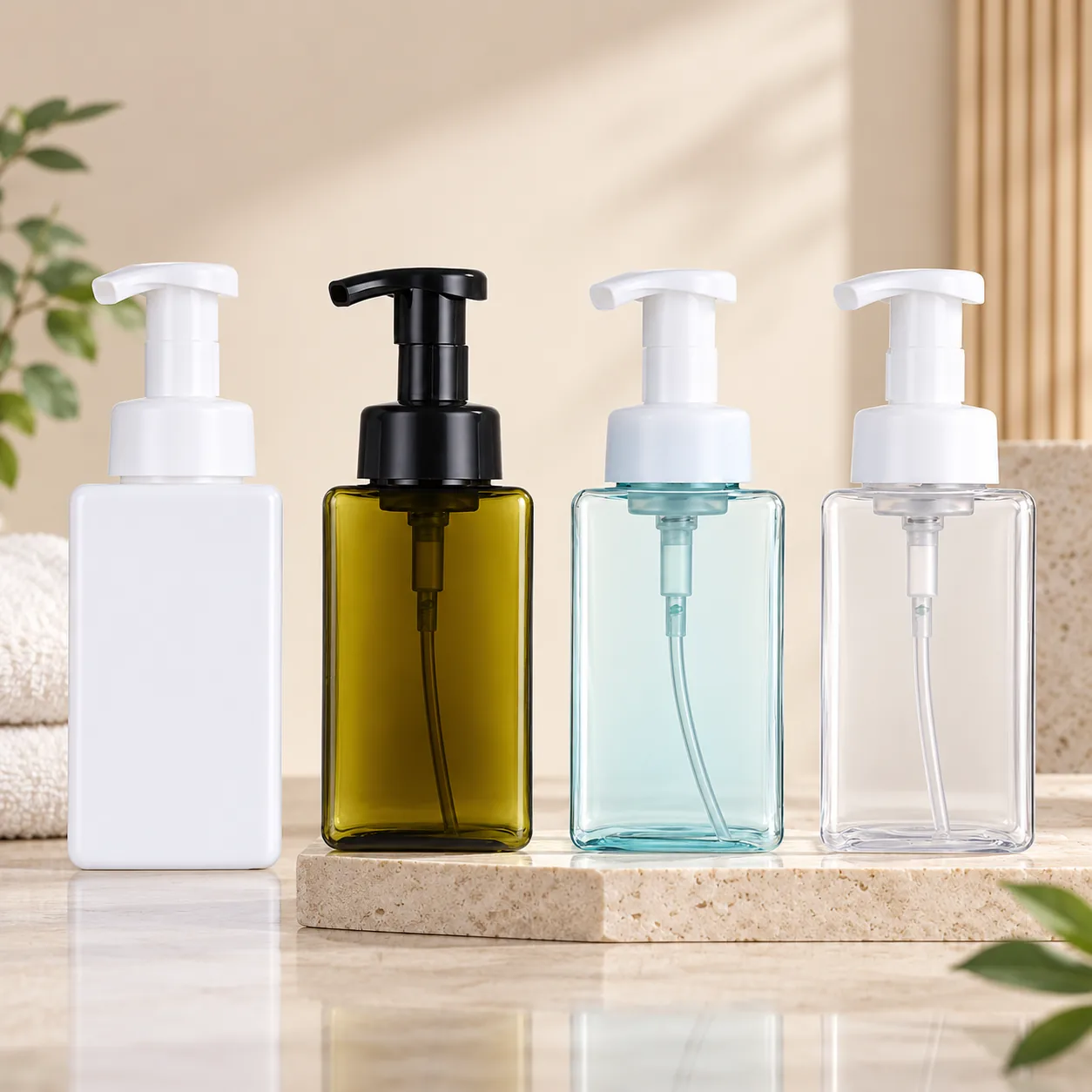
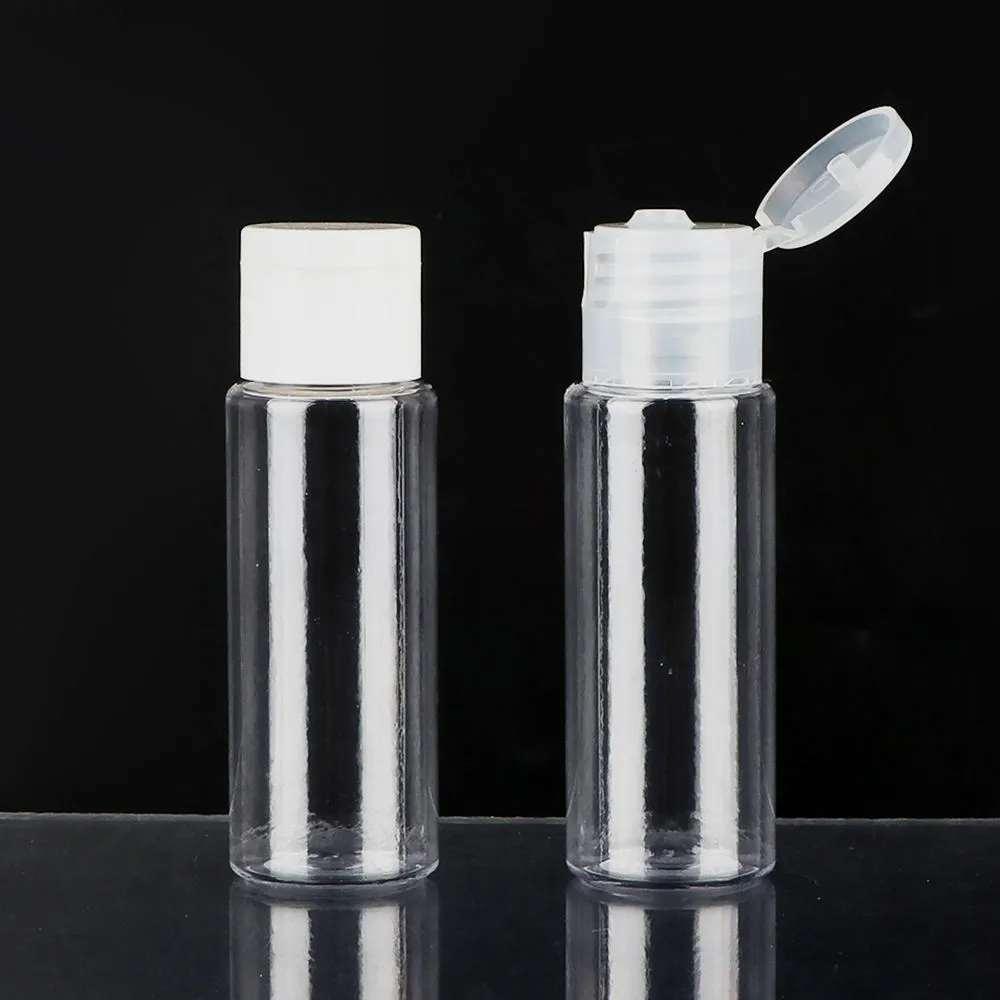
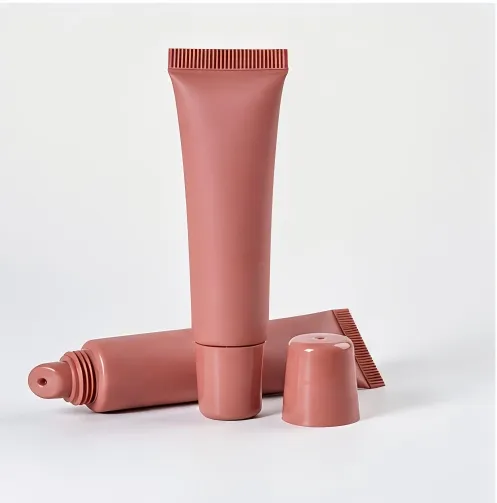
Direct answer: Shampoo and conditioner can often share the same bottle body, resin family, neck finish, visual design, and even the same mold. They should not be assumed to share the same complete package. Conditioner often needs easier squeeze, cap-down storage, a wider dispensing path, or a pump designed to refill with a higher-yield-stress formula. Shampoo may favor a cleaner cutoff, faster pour, or a different dose.
The practical rule is simple: standardize the platform where it reduces complexity, but qualify each bottle–closure–formula combination separately. If both formulas pass compatibility, leakage, dispensing, cold-condition, evacuation, drop, transit, and filling-line tests with the proposed components, one packaging system can serve both. Appearance alone is not evidence of interchangeability.
This guide is for hair-care brands, contract fillers, packaging buyers, and product developers specifying retail, salon, hospitality, or e-commerce packs. For formats outside the shampoo-versus-conditioner decision, use Boyu’s broader hair-care packaging guide.
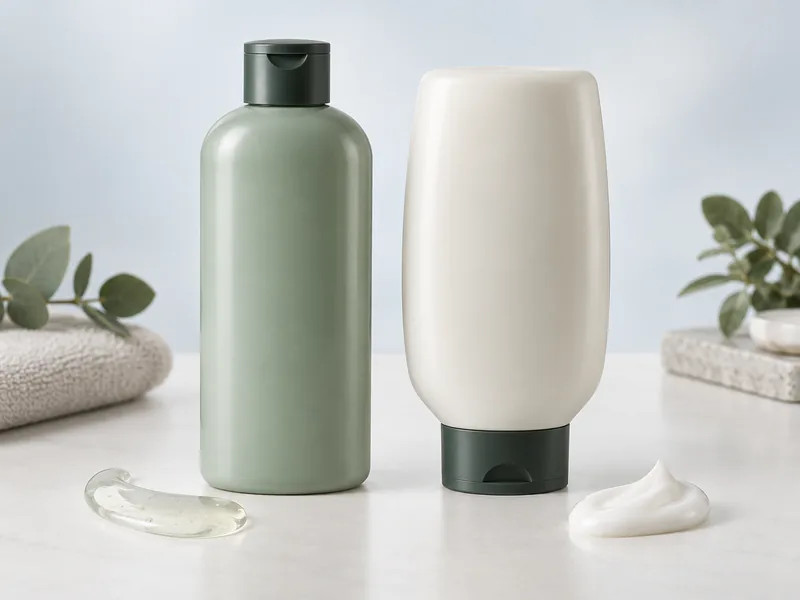
Shampoo Bottle vs. Conditioner Bottle: The Difference in One Table
| Decision | Shampoo: common starting point | Conditioner: common starting point | What actually decides |
|---|---|---|---|
| Pack architecture | Upright PET or HDPE bottle with disc top, flip top, or pump | Squeezable HDPE/LDPE bottle, cap-down tottle, tube, or high-viscosity pump | Flow behavior, intended dose, storage orientation, and evacuation target |
| Bottle stiffness | Rigid or moderately squeezable can work | Often benefits from more controlled squeeze when no pump is used | Force needed at low use temperature without permanent paneling or accidental discharge |
| Dispensing path | Moderate orifice or a pump qualified for the formula | Often a wider or less restrictive path; very thick products may need a tube or jar | Yield stress, shear thinning, stringing, particles, and how quickly product migrates to the outlet |
| Orientation | Upright is common; cap-down is possible if sealing is robust | Cap-down is useful when gravity improves near-empty evacuation | Leakage, valve performance, base/cap stability, and label orientation |
| Pump output | Set from intended dose and acceptable strokes | Set from intended dose, chamber refill, and actuation force | Measured mass per full stroke with the finished formula—not a category average |
| Product identification | Use prominent identity text plus color, orientation, shape, or tactile cues | Wet-hand use, low vision, steamed mirrors, and a coordinated but distinguishable product family | |
These are starting architectures, not rules. A clear, low-viscosity conditioner may work in the same PET bottle and pump as a shampoo. A concentrated or polymer-rich shampoo can be more difficult to pump than a particular conditioner. Approve measured behavior, not the product name on the label.
Can Shampoo and Conditioner Use the Same Bottle?
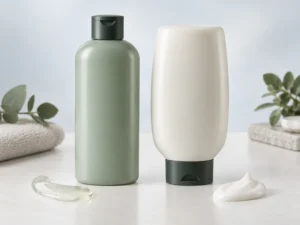
Yes, the bottle body can often be shared. A brand may use one body mold, capacity, resin, neck finish, label panel, shipper, and overall silhouette for both products. This reduces tooling, component count, artwork setup, spare inventory, and line-change complexity. Boyu’s range of custom shampoo and conditioner bottles shows how one platform can support multiple closures and capacities.
However, “same bottle” can mean four different things. A sourcing team should state which level it intends to standardize:
- Same design language: coordinated shape, finish, colors, and graphics, but different molds and hardware.
- Same bottle mold: identical body and neck, with different cap, pump, valve, dip tube, or fill specification.
- Same bottle and closure family: identical body plus a related cap or pump platform, with formula-specific orifice, engine, spring, valve, or tube configuration.
- Identical complete package: same body, closure, liner, gasket, dip tube, decoration, fill volume, torque, and pack-out.
The first three levels are common engineering strategies. The fourth is acceptable only after each formula passes its own validation. One successful shampoo test does not qualify the same pack for conditioner, because viscosity, yield stress, surfactants, oils, fragrance, pH, entrained air, and interaction with seals can differ.
Why Shampoo and Conditioner Create Different Packaging Demands
Shampoo is typically a cleansing surfactant system. Conditioner is commonly a cationic, emulsion-like or lamellar gel network designed to deposit lubricating and conditioning materials on hair. Peer-reviewed reviews describe both as complex fluids whose structure and processing influence rheology and functional performance.[1][2]
Packaging does not respond to the marketing category; it responds to how the actual bulk product moves and interacts with its contact materials. Evaluate at least:
- Flow curve: resistance at the shear conditions created in the dip tube, valve, or orifice.
- Yield stress: whether product moves toward a pickup point under gravity or leaves a cavity around the tube.
- Thixotropic recovery: whether a product thins during dispensing and rebuilds structure after the stroke.
- Extensional behavior: whether the discharge cuts off cleanly or forms a long string.
- Temperature response: whether cold bathroom, warehouse, or winter conditions slow pump refill or raise squeeze force.
- Air sensitivity and particles: whether entrained air, beads, botanical matter, or agglomerates obstruct valves or make output inconsistent.
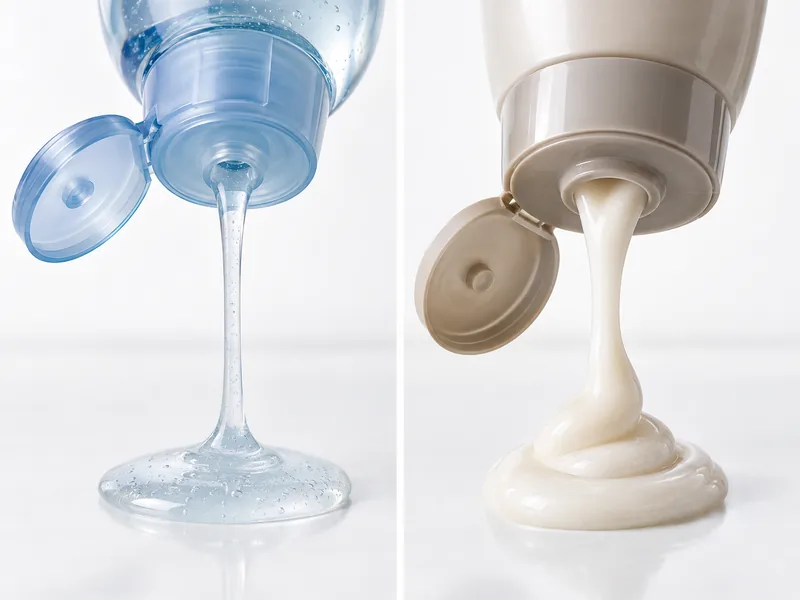
This is why “conditioner needs a larger hole” is directionally useful but incomplete. A larger orifice can lower dispensing resistance, yet it may also increase leakage, messy dosing, valve load, or contamination at the outlet. The right size is the smallest practical restriction that meets the dose, force, cutoff, leakage, and evacuation requirements with the actual product.
What Packaging Is Best for Shampoo and Conditioner?
| Product behavior and use | Best package to screen first | Why it is a sensible starting point | Main risk to test |
|---|---|---|---|
| Pourable everyday shampoo, retail shower use | PET or HDPE bottle with disc top or flip top | Compact, familiar, economical, one-hand capable | Wet grip, cap-cycle life, clean cutoff, leakage |
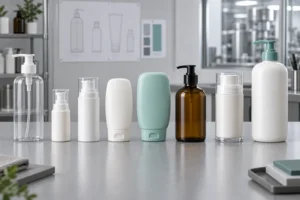
| Pumpable shampoo, 300–1000 mL | Stable PET/HDPE bottle with qualified atmospheric pump | Controlled one-hand dosing; useful for family and salon packs | Prime, refill speed, dose variation, water ingress, pump lock |
| Medium conditioner that self-levels | Squeezable HDPE bottle or high-viscosity pump system | Either direct squeeze or a pump can work if the product reaches the outlet | Cold actuation, stringing, panel recovery, residual product |
| Thick conditioner that moves slowly under gravity | Cap-down HDPE/LDPE tottle or PE tube with a wide qualified outlet | Gravity keeps product near the outlet and the flexible wall supplies pressure | Cap-down leakage, accidental discharge, squeeze force, base stability |
| Hair mask or butter that does not feed a dip tube | Wide-orifice tube, follower system, or PP/PET jar | Avoids starving a pump while product remains around the walls | Water contamination in shower, liner/seal, scoop access, residue |
| Travel or hotel amenity | 30–100 mL squeeze bottle or tube with secure closure | Compact, low component count, easy sampling | Altitude/reduced pressure, luggage leakage, label area |
| Professional backbar | 750–1000 mL or larger stable pump pack | One-hand use and higher daily cycle count | Top load, pump durability, output, bottle stability, refill policy |
A pump should not be selected solely because it is sold as a “lotion pump.” Boyu’s guide to qualifying a lotion pump for shampoo covers fit, prime, return, output, force, and evacuation. For dense conditioners, use the separate high-viscosity pump selection guide to decide whether an atmospheric pump, airless/follower system, tube, or jar is the stronger architecture.
Material Selection: PET, HDPE, LDPE, PP, PCR, or Glass?
PET: Clear, Glossy, and Relatively Rigid
PET is a strong candidate when the brand wants transparency, gloss, crisp shape definition, and good shelf presentation. It suits many shampoos and pumpable conditioners, but its relative rigidity makes a poor match for a pack that relies on substantial squeeze. Use a pump or choose a formula/orifice combination that dispenses comfortably without requiring the bottle wall to collapse.
PET is commonly stretch blow molded from a preform. Bottle weight, preform design, stretch ratios, base geometry, and material distribution work together; a single nominal wall-thickness statement does not describe performance. Confirm fill temperature and compatibility with the actual fragrance, colorants, oils, and other formula components.
HDPE and LDPE: Tough and Squeezable
HDPE is widely used for shampoo and conditioner because it is tough, lightweight, and can be engineered from fairly rigid to squeezable. LDPE is softer and often used where easy squeeze and recovery matter, including tubes or flexible bottles. An HDPE/LDPE family can be useful when a conditioner needs more compliance than the matching shampoo.
These bottles are commonly extrusion blow molded, so wall distribution can vary around the shoulder, heel, handle, corners, and pinch-off. Approve minimum thickness at critical locations, total bottle mass, squeeze force, recovery, drop behavior, top load, and leakage together. “Thinner” is not automatically better for conditioner: an overly flexible shoulder can panel, a thin corner can fail on impact, and an uncontrolled squeeze can discharge too much product.
PP, PCR, and Glass
PP is common in flip tops, disc tops, pumps, plugs, and jars because it can form durable living hinges and rigid molded components. It is also used for some bottle platforms. PCR PET or PCR HDPE can reduce virgin-resin demand, but recycled content may change color, odor, processing window, surface appearance, and mechanical consistency. Treat a PCR level or supplier change as a technical change that may require renewed testing.
Glass offers a premium feel and strong barrier properties, but it is heavy and breakable in a wet shower. It is rarely the most risk-balanced choice for a 250–500 mL everyday shampoo or conditioner. If glass is part of a hospitality or refill concept, assess breakage, wet handling, floor impact, protective coating, closure integrity, and the complete reuse system—not appearance alone.
For recyclability, evaluate the whole pack. RecyClass guidance addresses the main body, closure system, labels, adhesives, colors, and decoration because one incompatible component can downgrade the package’s recycling performance.[6] A “PET bottle” or “HDPE bottle” claim by itself does not establish that the complete decorated pump pack is recyclable in every market.
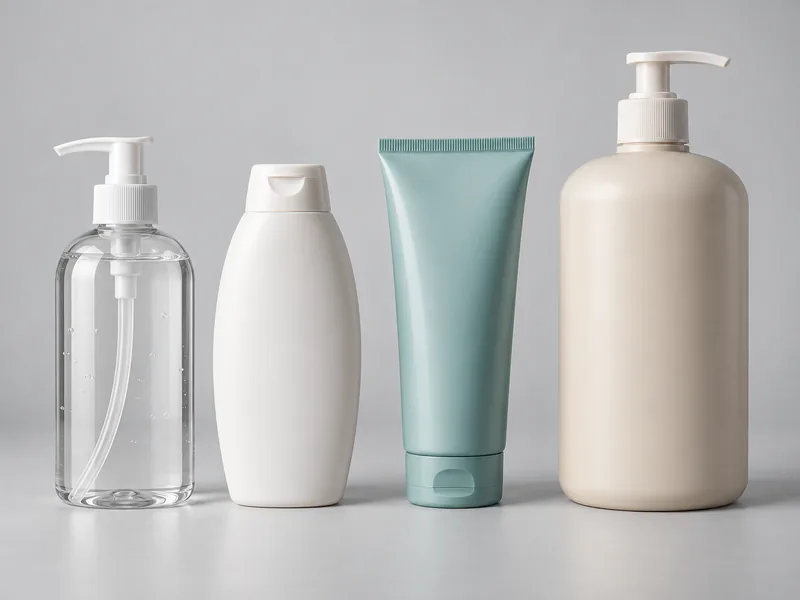
Capacity, Diameter, Neck Finish, Wall Thickness, and Bottle Weight
Capacity Should Follow the Use Rate and Channel
| Nominal capacity | Typical role | What to verify |
|---|---|---|
| 30–100 mL | Travel, trial, hotel amenity, discovery set | Transport leakage, small-label compliance, closure usability, fill accuracy |
| 200–300 mL | Compact core retail, specialty or premium line | Hand fit, target price, pump/tube residual, shelf height |
| 350–500 mL | Mainstream retail, family size, value set | Wet grip, filled weight, base stability, e-commerce protection |
| 750–1000 mL+ | Salon, family, hospitality, refill station | Pump output and durability, top load, handle/grip, refill hygiene, shipping case strength |
These are merchandising ranges observed in commercial portfolios, not legal or technical standards. Shampoo and conditioner do not have to use the same fill volume. Different consumption patterns, application instructions, density, price architecture, and set strategy may justify different quantities even when the bottles share a family appearance.
Body Diameter or Width Is an Ergonomic and Line-Control Dimension
There is no correct “shampoo bottle diameter.” For round bottles specify outside diameter; for oval, square, or rectangular bottles specify maximum width and depth. Choose the envelope from wet-hand grip, filled weight, shelf facing, decoration area, filling-line guides, carton layout, pallet efficiency, and base stability. A real supplier catalog illustrates the point: Berry lists one 100 mL HDPE bottle at 50 mm wide, 30 mm deep, 127 mm high, and 11.5 g, but those figures describe that SKU—not a universal 100 mL standard.[9]
For a shared shampoo/conditioner mold, conduct grip and dispensing trials with the heavier filled pack and with wet hands. If the conditioner requires strong squeeze, test users across the intended population; a bottle can look compact yet demand uncomfortable thumb force.
Neck Diameter Is Not the Whole Neck Finish
Nominal neck diameter—such as 24 mm or 28 mm—does not guarantee closure fit. The complete finish includes thread series, turns, height, sealing land, bore, and tolerances. Commercial hair-care dispensers demonstrate common options: Berry offers a 28/410 2 mL pump for shampoo and conditioner, while Aptar lists multiple 24/410, 24/415, and 28/410 pump configurations.[7][8] These are available hardware examples, not a rule that a certain capacity must use a certain finish.
Standardizing one neck finish across a line can simplify sourcing and capping equipment. Keep SKU-specific control over the closure/orifice, gasket, valve, pump engine, dip tube, torque, and seal. Require controlled drawings and assembled samples from the actual component suppliers.
Specify Performance, Not One Universal Wall Thickness
Plastic bottle walls are not perfectly uniform, and the thinnest critical area may govern failure. PET performance is strongly linked to preform weight and stretch distribution; extrusion-blown PE performance depends on parison programming and mold geometry. A useful specification combines:
- total bottle mass and permitted variation;
- minimum wall at agreed shoulder, sidewall, corner, heel, and pinch-off locations;
- overall dimensions, capacity, brimful volume, and headspace;
- squeeze force and recovery when consumer squeeze is intended;
- top-load, drop, leak, and dimensional performance after conditioning;
- acceptable paneling, ovality, rocking, flash, gate, and visual defects.
Do not copy a competitor’s millimeter value. Lightweight until the production-intent filled pack still passes handling, filling, capping, distribution, and use tests with a defensible safety margin.
Choose the Bottle Shape for the Real Use Environment
| Shape | Advantages | Trade-offs | Good fit |
|---|---|---|---|
| Round cylinder / Boston round | Efficient molding, capping, labeling, and line handling; no corner concentration | Can roll if dropped; broad cylinders may be slippery | Pump shampoo, salon packs, simple retail families |
| Oval | Natural grip, broad front panel, reduced apparent bulk | Orientation must be controlled during printing and labeling | Wet-hand squeeze shampoo or conditioner |
| Square or rectangular | Strong shelf block, efficient case cube, large decoration panels | Corners and flat panels require careful wall distribution; narrow base may rock | Premium coordinated lines after filled-drop validation |
| Cap-down tottle | Keeps high-yield-stress product near the outlet and improves late-life access | Closure carries continuous product contact; cap becomes the base | Conditioner and thick treatment |
| Soft tube | Strong evacuation, portable, good decoration area | Seal, shoulder, laminate choice, and cap stability must be qualified | Thick conditioner, mask, travel pack |
A paired line should look related without becoming confusing. Use two or more cues: clear identity text, contrasting colors or values, different orientation, distinct cap geometry, and tactile features. Kao documents notches introduced to distinguish shampoo by touch, and Herbal Essences describes raised lines for shampoo and dots for conditioner.[10][11] Tactile cues should be user-tested and placed where they do not weaken the bottle or interfere with labels and line handling.
Label area is also a technical input. FDA guidance requires a clear product identity and net quantity on the principal display panel for US cosmetics, with other required information placed appropriately.[4] Confirm every destination market before fixing the bottle’s decoration panel; a highly sculpted shape can leave too little legible space.
Disc Tops, Flip Tops, Pumps, Orifices, and Dip Tubes
Disc Top or Flip Top
A disc top gives a low profile and simple one-hand press-to-open action. A flip top can provide a larger actuator area and a more obvious open/closed state. Either can serve shampoo or conditioner if the orifice, valve/seal, hinge life, opening force, squeeze force, and cap-down leakage are approved. For an inverted conditioner, treat the closed valve and cap seal as continuously product-wetted components.
Atmospheric Pump
An atmospheric pump is attractive for one-hand use, but the formula must travel through the dip tube, inlet, valves, chamber, and outlet. Approve prime strokes, full return, refill time, actuation force, output distribution, stringing, drip, repeated-cycle reliability, and residual product at relevant temperatures.
Commercial examples show why one output cannot be called “standard.” Silgan offers a 2 mL pump for shampoo and conditioner, Aptar’s hair-care portfolio includes 3.5 cc and 4 cc high-dose examples, and other treatment pumps dispense much less.[7][8] Define the intended grams per use and acceptable full strokes, then calculate a target pump output and verify it gravimetrically with the finished formula.
Dip Tube and Bottle Geometry
A tube that is too short strands product; one that bottoms out can block the inlet or distort assembly. The cut, inside diameter, stiffness, curvature, bottle shoulder, base sump, tube position, venting, and product’s ability to migrate all affect evacuation. Even if shampoo and conditioner share a bottle height, a thicker conditioner may need a different tube or pump inlet geometry.
How to Engineer One Shampoo-and-Conditioner Packaging Family
- Freeze the formula inputs. Obtain production-intent bulk, density, pH, rheology method and curve, cold/ambient behavior, particulates, fragrance/oil system, fill temperature, and intended dose.
- Define the consumer task. Record where the pack is used, whether hands are wet, one- or two-hand operation, storage orientation, target strokes or squeeze action, and acceptable residual product.
- Choose the platform level. Decide whether to share appearance, body mold, neck finish, closure family, or the complete package. Do not let a cost target silently turn “same platform” into “identical components.”
- Screen stock systems first. Compare existing PET, HDPE, and LDPE bottles before funding a custom mold. Use actual samples with both formulas.
- Differentiate dispensing where needed. Keep one body and neck while using a shampoo disc top and a conditioner wide-orifice flip top, or two pump engines under coordinated actuators.
- Make the pair identifiable. Combine prominent wording with color/value contrast, orientation, cap shape, or tactile cues. Do not rely only on a subtle color shift.
- Validate each SKU and the family pack-out. Approve shampoo and conditioner separately, then test the retail set, e-commerce parcel, and master carton as sold.
- Control change. Reassess after changes to formula, fragrance, resin grade, PCR level, colorant, bottle weight, mold cavity, closure, liner, gasket, dip tube, decoration, fill settings, or distribution route.
When manufacturing route matters, Boyu’s guide to the shampoo bottle manufacturing process explains why PET stretch blow molding and HDPE extrusion blow molding use different tooling and control strategies.
Tests Required Before Mass Production
Run a risk-based program with production-intent components, decoration, formula, filling conditions, and final pack-out. EU cosmetic safety documentation includes relevant packaging-material characteristics, while no regulation supplies one universal pass/fail schedule for every shampoo or conditioner.[5] Build acceptance criteria before testing.
| Test gate | What to measure | Why shampoo and conditioner may differ |
|---|---|---|
| Formula–package compatibility | Swelling, cracking, paneling, color/odor change, weight loss, corrosion, seal and decoration stability | Surfactants, oils, fragrance, pH, emulsions, and contact with elastomers may differ |
| Leak and seal integrity | Upright, side, and inverted storage; pressure/vacuum method suited to the pack; closure torque and retention | Cap-down conditioner keeps the closure continuously wetted and can load the valve differently |
| Dispensing | Prime, output mass, variation, return time, force, cutoff, stringing, drip, clogging, cycle life | Rheology and air entrainment can change pump refill and squeeze behavior |
| Evacuation | Residual mass at defined end of use; performance early, mid, and late pack life | Conditioner may bridge, cling, or leave a cavity around a dip tube |
| Temperature conditioning | Repeat leakage and dispensing at realistic low, ambient, and elevated conditions | Cold product can increase force or slow chamber refill; heat may promote drip or leakage |
| Mechanical and transit | Filled-pack drop, vibration, compression/top load, e-commerce or retail sequence | Different density, headspace, orientation, and closure can change impact and leak response |
| Wet-use and accessibility | Grip, opening, one-hand use, identification, cap stability, pump base stability | The pair must remain distinguishable and operable in the same shower environment |
| Decoration | Adhesion and appearance after formula, water, abrasion, humidity, and aging exposure | Different formula contact or orientation can expose different zones |
| Filling-line trial | Fill accuracy, foaming, drip, capping, torque, label orientation, coding, case packing | Shampoo may foam during filling; conditioner may require different transfer or cutoff settings |
Use Boyu’s full protocol for formula–package compatibility testing to define samples, controls, orientations, conditions, observations, and approval logic. Accelerated work can reveal risk early, but it should not be converted into an unsupported one-to-one shelf-life claim.

What to Send a Packaging Manufacturer
A useful RFQ does not say only “300 mL shampoo and conditioner bottle.” Send:
- product type and whether shampoo and conditioner should share a mold, neck, or complete package;
- production-intent formula samples and the formulator’s rheology method, temperature range, density, pH, particles, fragrance/oil system, and fill temperature;
- nominal and brimful capacity, intended fill weight or volume, headspace, and target annual quantity;
- maximum body width/depth, height, shelf, line, carton, and pallet constraints;
- preferred resin, virgin/PCR level, color, opacity, and market-specific recycling goal;
- closure type, controlled neck finish, target dose, acceptable strokes or squeeze force, and shipping lock/seal;
- orientation, wet-hand usability, tactile/visual identification, and residual-product target;
- artwork method, label panel, required legal copy, barcode, coding area, and decoration durability;
- sales markets and channel: store, salon, hotel, travel, refill, or e-commerce;
- test methods, conditioning, sample size, acceptance limits, defect standard, and change-control requirements.
Ask the supplier to identify which statements are catalog specifications, which are test results from the proposed assembly, and which still require validation by the brand, filler, laboratory, or safety assessor.
Frequently Asked Questions
Can the exact same plastic bottle be used for shampoo and conditioner?
Often yes. Use the same body only after each formula passes compatibility, leakage, dispensing or squeeze, evacuation, drop, transit, and line tests. The body may be identical while the cap, pump engine, orifice, dip tube, fill volume, or torque differs.
Can shampoo and conditioner use the same pump?
They can if the pump fits and seals the bottle and both finished formulas meet the approved prime, output, force, return, stringing, cycle-life, and evacuation criteria at relevant temperatures. A shared actuator appearance can hide different internal engines when formula behavior demands it.
Why are some conditioner bottles stored upside down?
Cap-down storage keeps slow-moving product near the outlet, reducing the time and force required to dispense near the end of the pack. The benefit is real only when the cap forms a stable base and the valve, seal, hinge, and orifice remain leak-free under continuous product contact.
Is PET or HDPE better for shampoo and conditioner?
PET is a useful starting point for clear, glossy, relatively rigid bottles. HDPE is a useful starting point for opaque, impact-resistant, or squeezable packs. Neither is universally better or automatically compatible; decide from formula, filling, dispensing, decoration, distribution, and recycling requirements.
What wall thickness should a shampoo or conditioner bottle have?
There is no universal value. Specify bottle mass, minimum thickness at critical control points, dimensions, squeeze and recovery behavior, top load, drop performance, and leak resistance. Approve production-intent samples from the actual mold, resin, color, and process.
Should shampoo and conditioner bottles be the same size?
Only if the intended use rate, directions, price architecture, set strategy, shelf space, and logistics support it. Matching sizes simplify a family presentation, but different fill volumes can be more honest and useful when consumers use the products at different rates.
How do brands prevent shampoo and conditioner mix-ups in the shower?
Use redundant cues: large high-contrast identity text, distinct color or tonal value, different cap orientation or shape, and tested tactile markers. Do not rely on tiny wording or a slight hue difference, particularly for wet, low-light, no-glasses, or low-vision use.
Sources
- Davies, A., and Amin, S. “Rheology of Cosmetic Products: Surfactant Mesophases, Foams and Emulsions.” Journal of Cosmetic Science, 2020. PubMed record.
- Cunningham, G. E., O’Sullivan, J. J., and Simmons, M. J. H. “Exploring formulation, manufacture and characterisation techniques of lamellar gel networks in hair conditioners: A review.” Advances in Colloid and Interface Science, 2025. PubMed record.
- D’Souza, P., and Rathi, S. K. “Shampoo and Conditioners: What a Dermatologist Should Know?” Indian Journal of Dermatology, 2015. Full text at PubMed Central.
- US Food and Drug Administration. Cosmetics Labeling Guide.
- European Union. Regulation (EC) No 1223/2009, Annex I, Cosmetic Product Safety Report. Annex I text.
- RecyClass. Design for Recycling Guidelines for plastic packaging.
- Silgan Dispensing Systems. ReVive 2cc dispensing pump specifications.
- Aptar Beauty. HDP 3.5 cc high-dose pump and HiFlow 4 cc pump.
- Berry Global. 100 mL HDPE Care Bottle product dimensions.
- Kao Corporation. Tactile marks on shampoo packaging.
- Herbal Essences. Raised lines and dots for shampoo and conditioner identification.
- ATAGO. Viscometer guide and shampoo dispensing application notes.

 English
  Español de Argentina
  Русский
  Italiano
  日本語
日本語  한국어
한국어  العربية
  Français
  Deutsch