
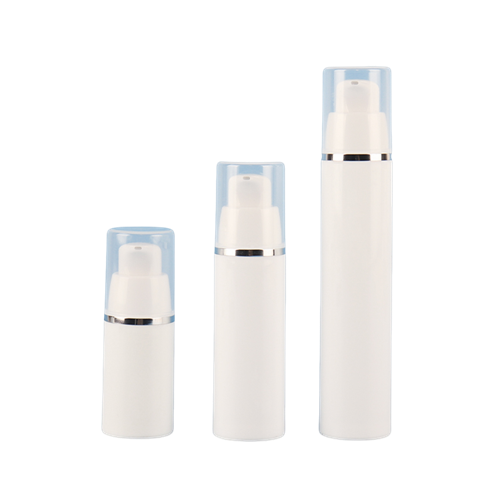
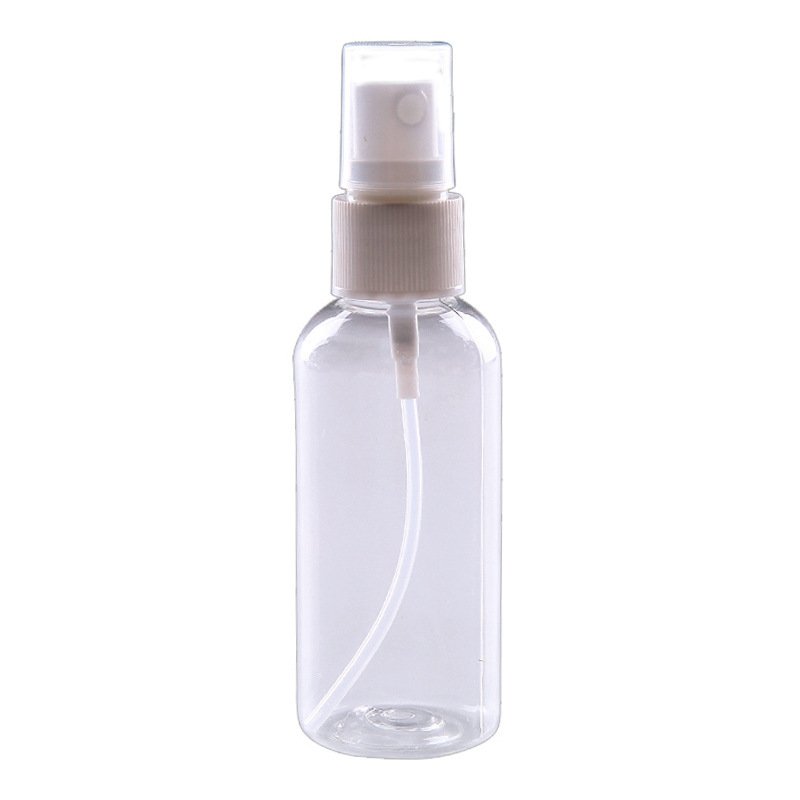

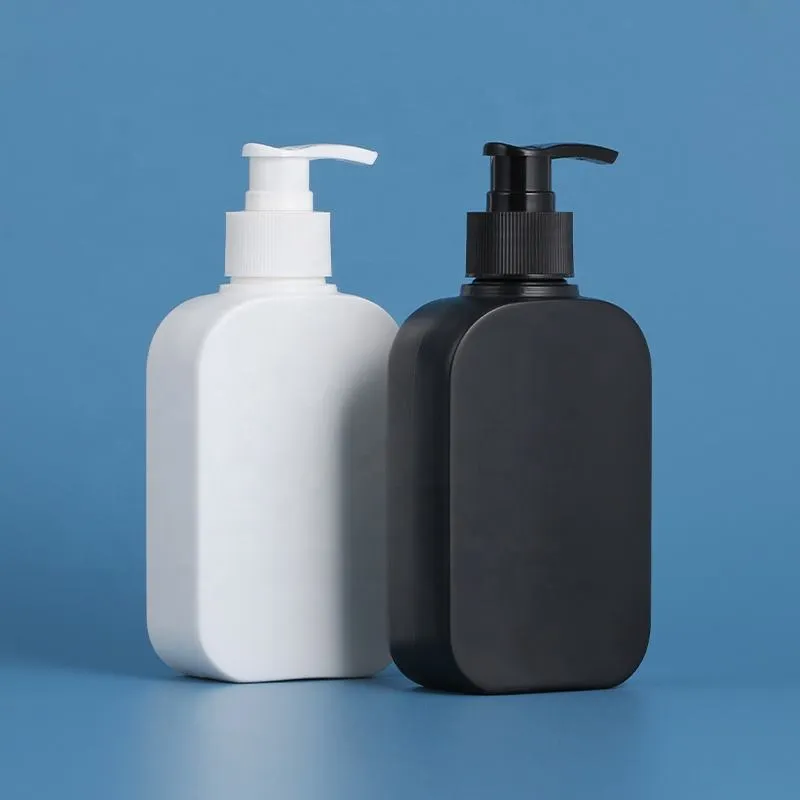


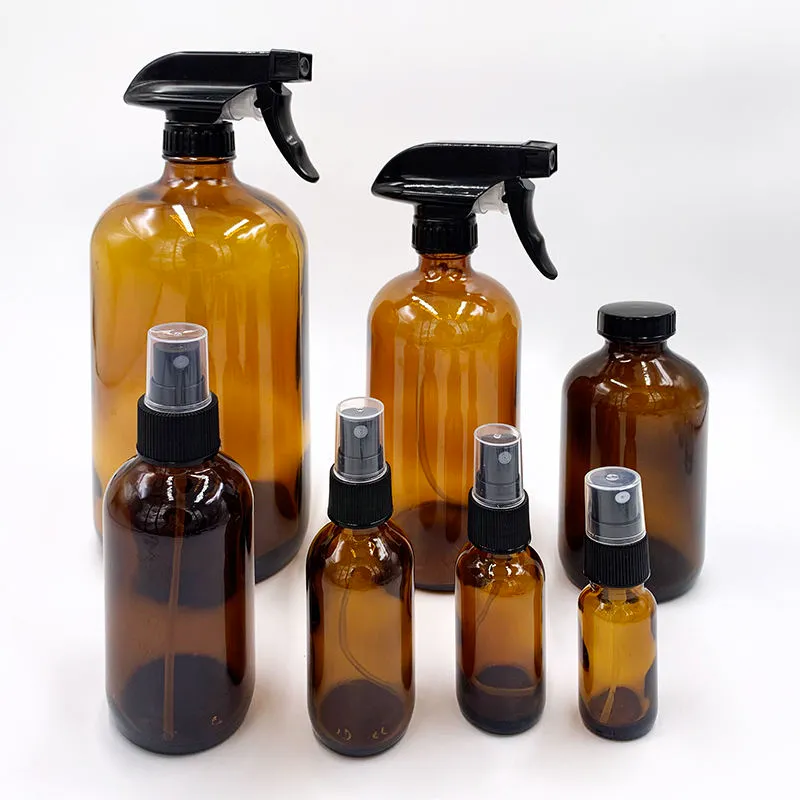
Direct answer: In the Chinese packaging trade, 牙口 (“tooth opening”) usually means the bottle’s neck finish: the complete interface that lets a cap, pump, sprayer or other closure attach and seal. It includes the nominal thread diameter, thread profile and pitch, finish height, bore, sealing land and tolerances—not merely the visible spiral thread.
A code such as 24/410 means a nominal 24 mm thread-diameter family and the 410 finish series. The “410” is not a 4.10 mm pitch. Match the entire finish designation and the controlled bottle and closure drawings, then prove the assembled pack by torque, leakage, dispensing and formula-compatibility tests.
This guide is for cosmetic-package designers, buyers, fillers and quality teams specifying plastic bottles. It explains the terminology and selection logic; the approved supplier drawing remains the controlling specification.

What does “plastic bottle neck finish” mean?
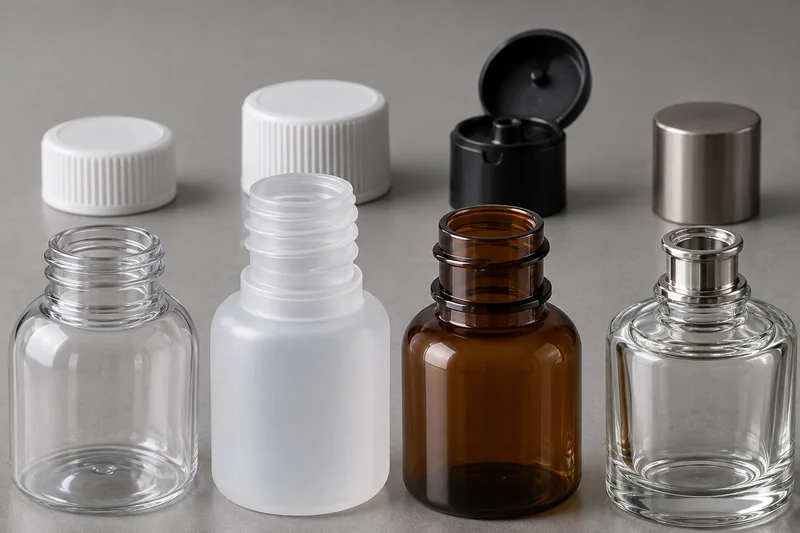
The neck is the transition above the bottle shoulder. The finish is the precisely formed upper portion that receives the closure. In everyday sourcing conversations, people may use “neck size,” “thread size,” “mouth,” “calibre” or 牙口 as if they were interchangeable. They are not always precise enough for a purchase order.
A complete neck finish can include the external thread, top sealing land, inside bore, finish height, thread start, support or transfer bead, anti-rotation features and relevant tolerances. On a threaded bottle, the closure’s internal thread must travel far enough to load the selected seal before its skirt bottoms on the bottle shoulder.
How to read a code such as 24/410
24 is the nominal diameter family measured across the outside of the bottle threads—the T dimension. Nominal does not mean that every actual reading is exactly 24.00 mm; the standard drawing supplies the actual nominal value and tolerance. It also does not mean the inside opening is 24 mm.
410 identifies a continuous-thread finish series. Common industry diagrams describe SP‑400 as roughly one full turn, SP‑410 as one and a half turns and SP‑415 as two full turns with a taller finish. That visual shorthand is useful for screening, but the series also controls other geometry. It is not a substitute for the drawing.
| Code element | What it tells you | What it does not prove |
|---|---|---|
| 24 | Nominal outside thread-diameter family | Bore diameter, bottle capacity, pump output or product suitability |
| 410 | Finish-series geometry and engagement | A fixed 4.10 mm pitch, closure material, liner or seal performance |
| Complete 24/410 code | A starting interface specification for the bottle and closure | Leak-free performance with every nominally matching pump or cap |
How is a bottle neck finish measured?
Use a calibrated digital caliper or micrometer, a height gauge where needed, and the applicable controlled drawing. Measure multiple samples after appropriate conditioning, and take diameter readings in two directions approximately 90 degrees apart so ovality is not hidden.
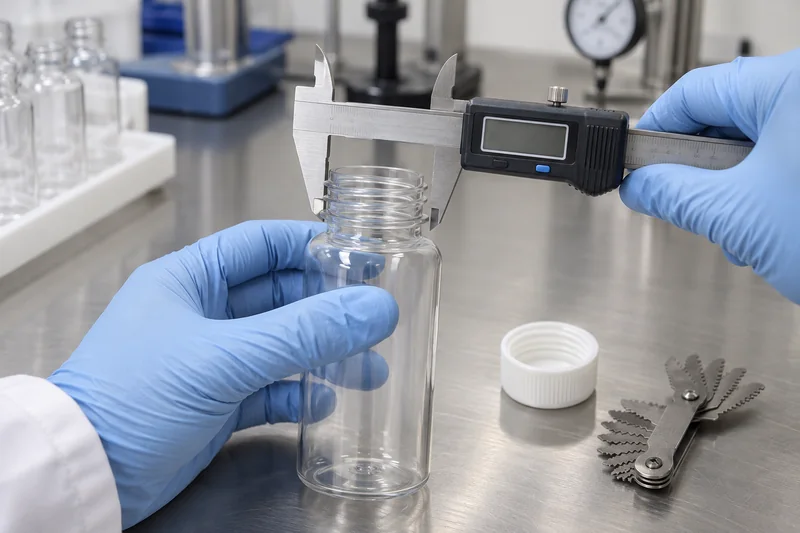
| Drawing dimension | Meaning | Why it matters |
|---|---|---|
| T | Outside diameter across thread crests | Screens the nominal finish size and mating clearance |
| E | Outside neck diameter excluding the projecting thread | Relates to thread depth; approximate radial thread depth is (T − E) ÷ 2 |
| I | Inside bore diameter | Affects filling tubes, plug seals, stems, fitments and flow access |
| H | Finish height from the top to the drawing’s reference plane | Controls skirt clearance, engagement and capping setup |
| S | Vertical distance from the top to the start of the first thread | Influences engagement and final closure orientation |
A practical identification sequence
- Find the moulded code, carton specification or supplier drawing before reverse-engineering a sample.
- Inspect the sealing land and thread for flash, distortion, damage and product residue.
- Measure T, E and I in two directions; measure H and S from the drawing’s exact datums.
- Count thread starts and follow one helix to estimate its turns. Do not count every visible ridge as a separate thread.
- Measure pitch over several crest intervals or use a suitable profile gauge; divide the total axial distance by the number of intervals.
- Compare every result with the applicable standard or supplier drawing, then assemble production-intent closure samples.
For a fuller procedure, tool selection and common measurement errors, use Boyu’s dedicated guide to measuring a cosmetic bottle neck finish.
What do thread pitch, lead and thread starts mean?
Pitch is the axial distance between corresponding points on adjacent thread ridges. Lead is the axial distance a closure advances in one complete 360-degree turn. A thread start is the beginning of one independent helix.
For a single-start thread, lead equals pitch. For a multi-start thread, lead = pitch × number of starts. Multiple starts can make a closure advance farther per turn, but they also change start alignment and mating geometry. A closure and bottle must agree on the complete thread system, not only outside diameter.
Which bottle-thread standards are commonly used?
There is no single global thread standard covering every cosmetic, beverage, pharmaceutical and fragrance bottle. The correct reference depends on the container material, market, application and finish family.
| Reference family | Where it is encountered | Buyer implication |
|---|---|---|
| ASTM D2911/D2911M | Dimensions, tolerances and screw-finish configurations for plastic bottles within its scope | Use the active edition named in the contract; ASTM states there is no known ISO equivalent |
| SP‑400, SP‑410, SP‑415 | Common voluntary finish drawings for plastic bottles, now available in the ISBT Threadspecs repository | Specify the finish, thread style where applicable and drawing number/revision—not “standard thread” |
| GPI/GCMI glass finish drawings | Glass containers and closures using familiar 400/410/415 naming | Do not assume a plastic drawing’s dimensions and tolerances are identical to the glass counterpart |
| DIN, GCMI and supplier pump families | Regional and dispensing-system specifications such as DIN GL18/GL20, GCMI 18/415 and Europa-type fixtures | Use the pump maker’s exact fixture name and bottle drawing; “18 mm” alone is incomplete |
| CETIE / EN fragrance finishes | Crimp, snap-on and newer screw systems for perfume and cosmetic glass | A perfume crimp finish such as FEA 15 is not a 15/410 screw neck |
| PCO beverage finishes | PET beverage closures, including 28 mm PCO families | A 28 mm PCO bottle is not automatically compatible with a 28/400 or 28/410 cosmetic closure |
Standards define geometry; they do not approve a product formula, pump output, application torque or shelf-life performance. Those must be specified and validated separately.
Thread profile matters as much as diameter and pitch
A packaging thread is not automatically a conventional metric machine-screw thread. Finish drawings define the load and clearance geometry of the crest, root and flanks, including radii, angles and optional thread styles. Some voluntary SP drawings distinguish a general-purpose profile from a modified buttress profile. Two parts can share a nominal diameter and pitch yet interfere if their flank geometry or clearances do not correspond.
In many cosmetic packs, the thread primarily draws the closure down and maintains axial load; the liquid seal is made by a liner, gasket, plug, crab-claw feature or contact with the top land. Do not assume that tighter thread contact creates a better seal. Excessive interference can raise application torque, shave plastic, distort a thin neck or stop the closure before the intended sealing feature is compressed.
How the plastic process changes the inspection risk
The same nominal finish can be made by different processes. On an injection-stretch-blow-moulded PET bottle, the finish is normally established in the injected preform and remains in the neck ring during blowing. On many extrusion-blow-moulded HDPE bottles, the neck area and sealing surface can be more sensitive to flash, trimming, cooling, ovality and capping deformation. Injection-blow and injection-moulded components introduce their own gate, shrinkage and mould-alignment considerations.
This is why incoming inspection should not copy one tolerance set across PET, HDPE, PP and glass. Agree the material-specific drawing, conditioning method and measurement force. Record cavity or mould identity where practical; a pooled average can hide one cavity that repeatedly produces a high thread, distorted land or out-of-round bore.
Why two components carrying the same code may still fail
A nominal code is a compatibility claim about an interface family, not a guarantee that every tolerance combination will perform. If the bottle is near its maximum T or H limit while the closure is near its minimum internal clearance, application torque can rise sharply. The opposite tolerance stack may reduce engagement or seal compression. Land width, plug diameter, liner hardness, gasket compression and skirt-to-shoulder clearance add further stack-ups that the short finish code cannot express.
Ageing can change the result after a good first-day fit. Plastic creep, gasket compression set, formula-induced swelling, thermal expansion and repeated actuator torque may lower retained torque or change the seal. Qualify samples across representative bottle and closure lots, not one carefully selected pair, and repeat critical checks after conditioning.
Common neck finishes in cosmetic packaging
The following table is a sourcing map, not a universal assignment standard. Closure portfolios differ by supplier and region, and an exact model may be offered in several fixtures. Start with the dispenser and formula requirements, then confirm which bottle finish supports the chosen component.
| Finish family | Often paired with | Typical cosmetic direction | Critical check |
|---|---|---|---|
| 13/415, 15/415 | Brush caps, small droppers or specialty fixtures | Nail treatments, lip or eye products, samples | Wiper/reducer fit and finish material |
| 18/400, 18/410, 18/415 | Droppers, treatment pumps, fine-mist or screw closures | Serum, facial oil, small treatment and travel packs | Do not substitute 400, 410 and 415 |
| 20/410 | Fine-mist sprayers and compact treatment pumps | Toner mist, serum, hair or body spray, compact skincare | Spray pattern/output and bore clearance |
| 22/410, 22/415 | Selected cosmetic pumps and sprayers | Treatment, foundation and specialty spray systems | Supplier availability and exact fixture drawing |
| 24/410 | Lotion pumps, sprayers, disc tops, flip tops and screw caps | Lotion, cleanser, shampoo, body oil, toner and spray products | Seal design, skirt clearance and actual I dimension |
| 24/415 | Selected taller-skirt pumps, sprayers and caps | Premium or specialty dispensing packs | H dimension and closure skirt depth |
| 28/400, 28/410, 28/415 | Larger lotion pumps, trigger/fine-mist sprayers, caps | Shampoo, conditioner, body wash, salon and family formats | Bottle proportion, capping head and series match |
| 33/400, 38/400 and wider | Large screw caps, dispensing caps and some pumps | High-volume body care, refills, powders, scrubs and wide-access products | Seal land, fill access, closure resin and pack-out space |
Not every cosmetic neck is threaded
Crimp perfume pumps retain an aluminium ferrule under a bead; snap-on pumps use an interference feature; bayonet and ratchet systems add locking or orientation features; many airless packs use proprietary interfaces. Specify those systems by their exact standard or supplier drawing rather than translating them into a 400/410 code.
How to choose the right finish for a cosmetic bottle
1. Define the product and dispenser first
Record viscosity and rheology, solvents, oils, surfactants, particles, pH, oxygen sensitivity, dose and intended user action. A fine mist, treatment pump, lotion pump, foamer, disc top and simple screw cap solve different dispensing tasks. If the product needs a pump, use the required dose and formula behaviour to choose pump output before locking the bottle neck.
2. Shortlist compatible component families
Ask closure suppliers which fixtures are available for the chosen engine and seal. Then shortlist bottles with matching finishes. Boyu’s plastic cosmetic bottle range, lotion bottle formats and spray bottle formats provide practical starting points, but the final bottle and closure should be quoted as one controlled system.
3. Compare drawings, not catalogue labels
Check T, E, I, H, S, pitch, thread profile, number of starts, sealing-land width, bead/undercut, closure skirt clearance and all relevant tolerances. Identify the seal type: liner, gasket, plug, crab-claw, land seal or another design. Confirm the drawing revision and which characteristics are critical-to-quality.
4. Check filling and capping-line fit
The bore must accept the fill nozzle and any fitment. The bottle must tolerate capping load without distorting, while the cap or pump must fit the chuck, sorting and torque system. For dip-tube dispensers, calculate length from the sealing datum and verify it in the actual bottle; Boyu’s dip-tube length guide explains that workflow.
5. Validate the assembled filled pack
Approve application and removal torque, seal contact, leakage, closure back-off, pump priming and output, spray quality, drop and distribution performance, temperature cycling, compatibility and end-of-pack evacuation. A matching code is necessary for a standard threaded system, but it is not a performance certificate.
Set numerical limits from the selected components, formula and distribution risk. A supplier’s recommended torque is a useful trial setting, but the production window should be established on the actual capping equipment. Measure both immediately after application and after defined relaxation or conditioning intervals. For pumps and sprayers, operate the actuator through representative use cycles because the consumer can transmit repeated torque into the threaded collar.
6. Balance function, appearance and supply continuity
A wider finish can improve access for filling or fit a larger dispenser, but it may add closure resin, change bottle proportions and reduce label or shoulder space. A narrower finish can look refined and use a smaller closure, but the actual I dimension may limit a fill nozzle, plug or high-flow path. Neither direction is inherently higher quality.
Check regional component availability before tooling a custom bottle. A standard finish with several qualified pump or cap sources can reduce supply risk, but only if the alternates pass the same drawing, assembly and filled-pack qualification. “Second source available” should mean validated, not merely listed under the same nominal code.

Common fit failures and how to prevent them
| Symptom | Likely mechanisms | Evidence to collect |
|---|---|---|
| Cap starts, then jams or tilts | Wrong finish series, cross-threading, flash, oval neck or start misalignment | T/E ovality, thread profile, starts, application trace and visual section |
| Closure tightens but leaks | Skirt bottoms before seal loading, damaged land, incompatible liner/gasket or insufficient torque | Seal contact pattern, H/S dimensions, removal torque, filled-pack leak results |
| Closure spins or strips | Insufficient thread depth, excessive torque, resin creep or mismatch | T/E, thread damage, torque curve, conditioning history and resin lot |
| Pump loosens during use or shipping | Low retained torque, gasket relaxation, actuator use torque or vibration | Initial/aged torque, lock operation, vibration and temperature-cycle data |
| Pump fits but performs poorly | Wrong dip tube, restricted bore, formula incompatibility, venting or engine mismatch | Prime count, output, actuation force, bore clearance, dip-tube path and formula ageing |
Use Boyu’s cosmetic bottle leak-testing methods to select a suitable protocol, and the broader cosmetic bottle qualification checklist to cover dimensional, dispensing, compatibility and distribution risks.
What to put in the RFQ and control plan
- Exact finish designation, thread style if applicable, standard/drawing number and revision.
- Bottle and closure material, resin grade, colourant, PCR level and manufacturing process.
- Critical dimensions and tolerances, including T, E, I, H, S, pitch, starts, sealing land and ovality.
- Closure or pump model, seal type, gasket/liner, actuator lock, output and dip-tube specification.
- Target application/removal torque or assembly settings and the agreed measurement method.
- Formula family, fill temperature, market, shelf-life target and distribution route.
- Sample plan, go/no-go gauges, retained samples, acceptable defect limits and test criteria.
- Change-control requirement covering mould, cavity, resin, supplier, seal, pump and drawing revisions.
Frequently asked questions
Is the neck finish just the thread?
No. The thread is one feature. The finish also includes the sealing land, bore, height, thread start, beads or retention features and tolerances that control attachment and sealing.
Is a 24/410 bottle opening 24 mm inside?
No. The 24 identifies the nominal outside thread-diameter family. The usable inside bore is the I dimension on the bottle drawing and is smaller.
Can a 24/400 cap fit a 24/410 bottle?
Do not specify that combination. The nominal diameter matches, but the finish series differs. Partial thread engagement is not proof of correct seal loading, torque retention or shipping performance.
Can I identify a bottle thread with a ruler?
A ruler can separate broad size families, but it cannot verify a finish or its tolerance. Use calibrated instruments, the applicable drawing and a production-intent mating closure.
If both parts say 24/410, are they automatically compatible?
They should share the basic nominal interface, but commercial compatibility still depends on tolerances, seal design, skirt clearance, torque, materials, dip tube, pump engine, formula and final-pack testing.
What is the best neck finish for cosmetics?
There is no universal best finish. The best option is the smallest practical interface that supports the required dispenser, fill rate, bottle proportion, sealing system, line equipment and validated performance while remaining available from qualified suppliers.
Sources and technical references
- ASTM D2911/D2911M-16(2023): Dimensions and Tolerances for Plastic Bottles
- ISBT Threadspecs: SP‑400, SP‑410, SP‑415 and other voluntary finish drawings
- SP‑410 Finish for Plastic Bottles, drawing 1165380‑1
- Drug Plastics: Selected S.P.I. Neck Finish Specifications
- ASME B1.7: Screw Threads—Nomenclature, Definitions, and Letter Symbols
- Aptar Beauty Classicline: examples of 24/410, 22/410, DIN and GCMI pump fixtures
- Aptar Closures: disc-top neck-finish and seal options
- CETIE flaconnage geometry and fragrance neck-finish references



 English
  Español de Argentina
  Русский
  Italiano
  日本語
日本語  한국어
한국어  العربية
  Français
  Deutsch