If you have any questions, please feel free to contact us by leaving a message.
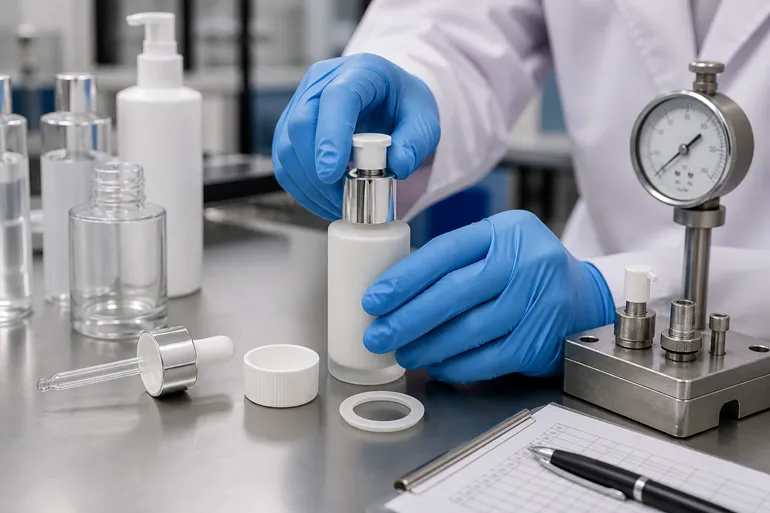
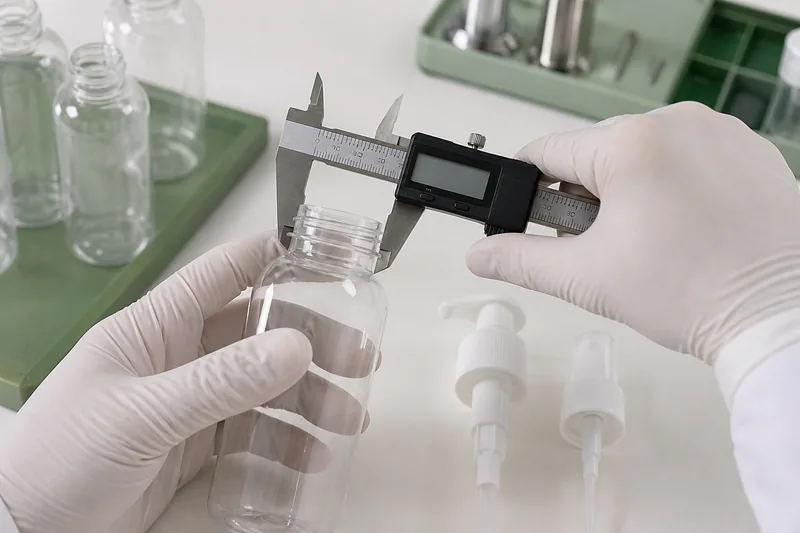
Direct answer: Measure the assembled path from the bottom of the pump gasket (the sealing datum) to the bottle’s internal base at the tube location, then choose a finished dip-tube length that places the open end close to—but not sealed against—the lowest usable point. For a straight tube, the engineering start point is FBOG bottle […]
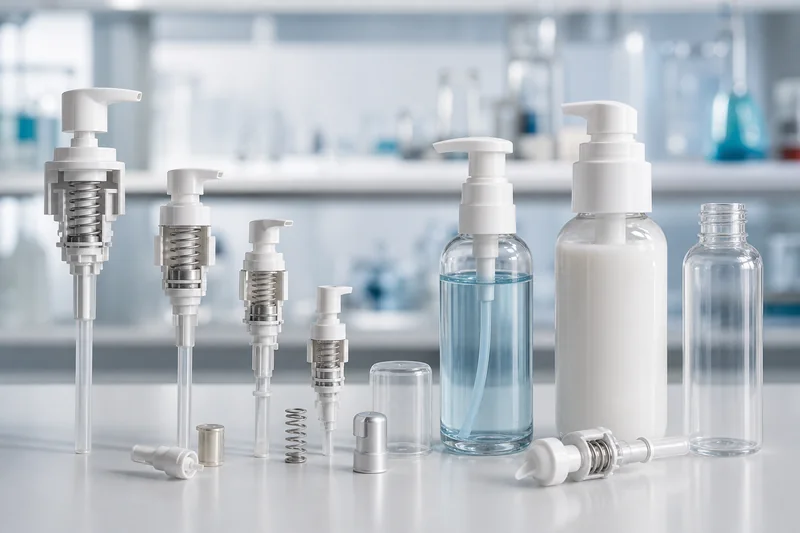
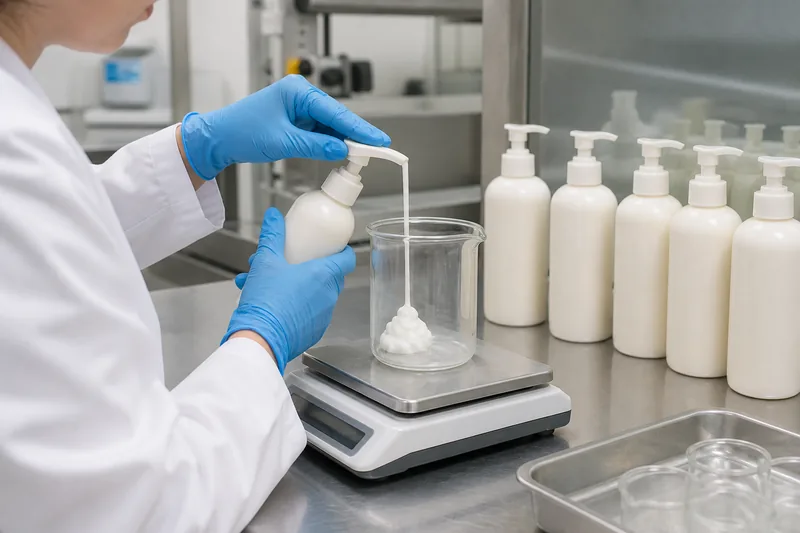
Dispensing specification guide Choose pump output by dividing the product’s intended amount per use by the number of full strokes consumers should make. Then verify that target gravimetrically with the finished formula in the production-intent bottle and pump. Serum usually needs a smaller, more controllable dose than body lotion, but there is no universal “correct” […]
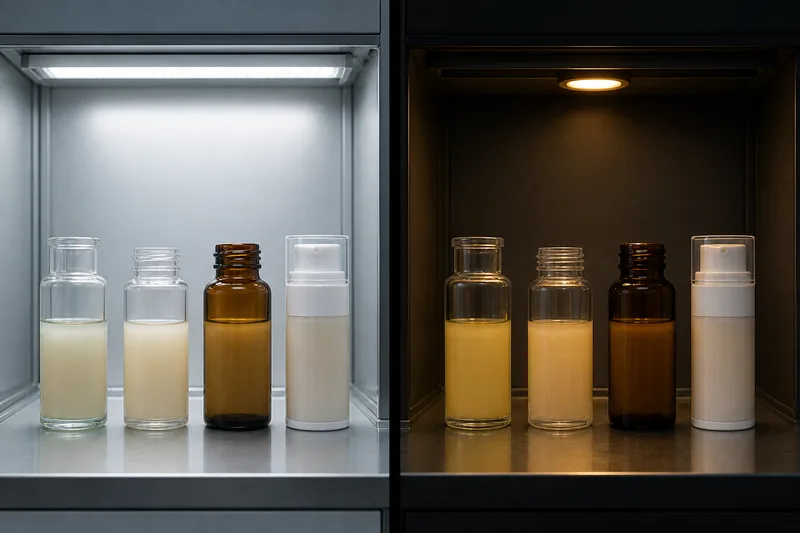
Direct answer: A cosmetic usually discolors because ingredients are oxidizing, reacting to light or heat, shifting with pH, interacting with trace metals, degrading together, or supporting microbial growth. Packaging can accelerate or reveal the change when it admits oxygen/light, loses volatile components, releases migrants, adsorbs ingredients or exposes the formula to reactive pump and seal […]
Direct answer: Plan about 8–12 weeks for the main accelerated cosmetic packaging compatibility study, with observations at baseline and several intermediate points. Use a shorter 1–4 week screen only to reject obvious failures. Continue real-time monitoring in the final package through the claimed shelf life—often 12, 24 or 36 months depending on the brand’s justified […]
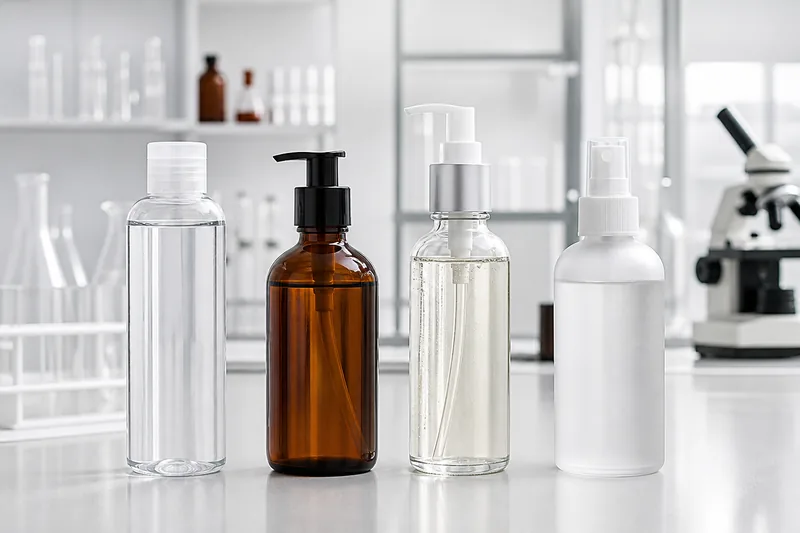
Direct answer: For most low-viscosity facial toners, the best practical package is a PET or glass bottle with a controlled-flow reducer, treatment pump or well-matched fine-mist sprayer. PET is the balanced choice for lightweight daily use; glass suits premium or light-sensitive positioning; HDPE suits opaque, impact-resistant packs. Choose the dispenser from how the toner is […]
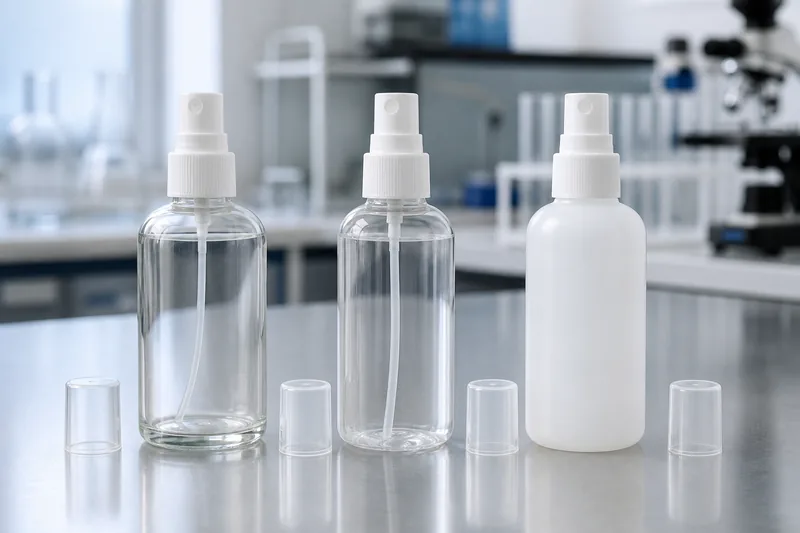
Direct answer: For most non-aerosol, alcohol-based body sprays, a compatible PET bottle with a high-quality fine-mist sprayer is the best practical starting point: it is lightweight, impact resistant, transparent and economical. Choose glass when premium feel and a strong fragrance barrier outweigh weight and breakage risk; choose HDPE when opacity and rugged handling matter more […]
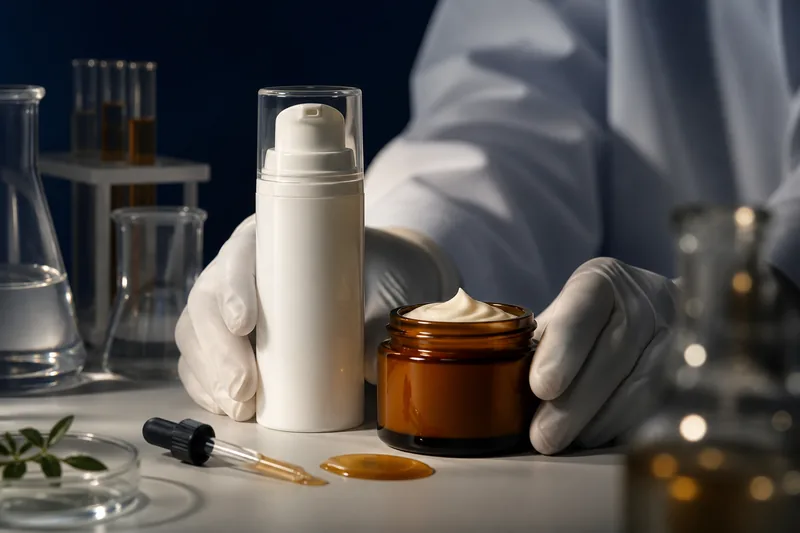
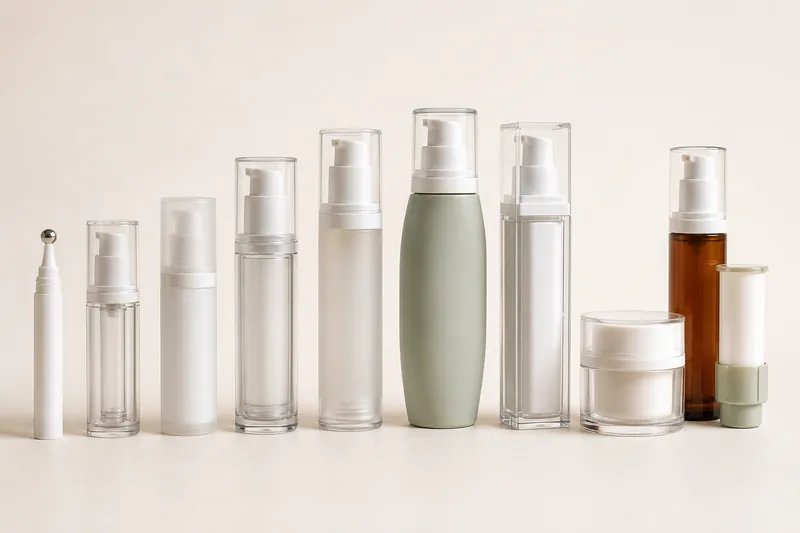
Direct answer: Retinol is usually better packaged in an opaque, well-validated airless pump than in a conventional wide-mouth jar. Retinol is vulnerable to light and oxidation, and an airless system limits repeated air exchange while dispensing without fingers entering the product. However, “airless” does not mean oxygen-free: initial headspace, package permeability, pump design, light transmission […]
Direct answer: The principal free-fall methods for cosmetic transport packages are ASTM D5276 and ISO 2248. For a complete parcel-delivery simulation, ISTA 3A is commonly considered for packaged products up to 70 kg (150 lb); ASTM D4169 provides distribution-cycle test sequences, while ASTM D7386 addresses single-parcel shipments. None creates one universal cosmetic-package drop height. The […]
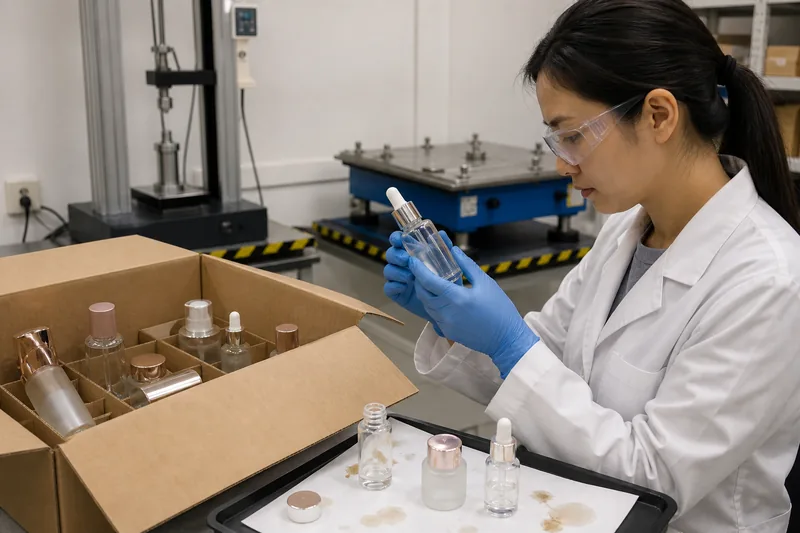
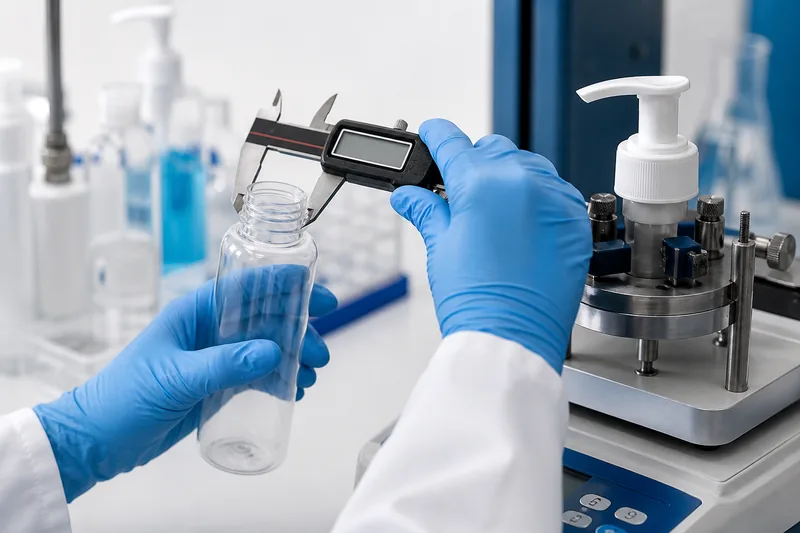
Short answer: there is no single, universal list of tests that every cosmetic bottle must pass. A defensible launch programme normally covers specification and appearance, bottle–closure fit and torque, leak integrity, formula–package compatibility and stability, dispensing performance, mechanical strength, distribution testing, and label or decoration durability. Material migration, barrier, light-protection, child-resistant, tamper-evident or pressure tests […]
Direct answer: The most useful cosmetic bottle leak testing methods are inverted or side storage, vacuum immersion/bubble observation, pressure or vacuum decay, gravimetric mass-loss testing, and filled-pack distribution simulation. They are not interchangeable. Use a visual method to locate gross leaks, a validated quantitative method to measure the smallest commercially important leak, and filled-formula ageing […]
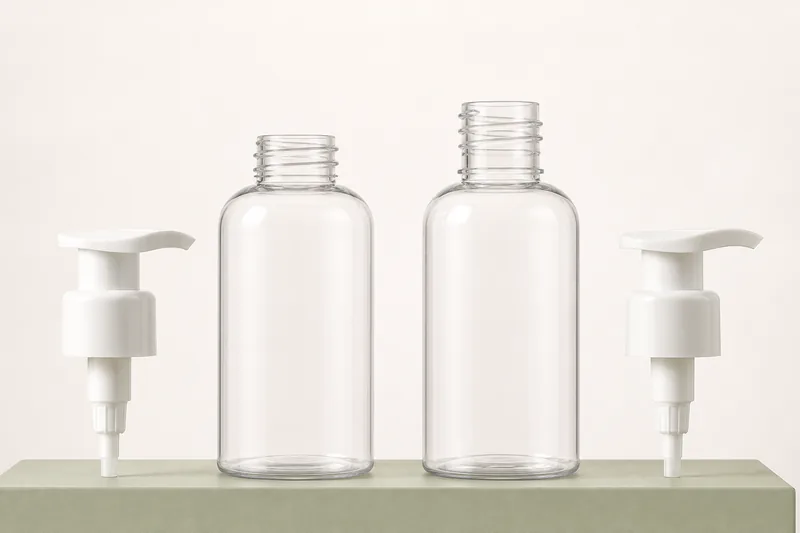
Direct answer: A standard lotion pump commonly dispenses about 0.5 to 2.0 mL per complete stroke. Compact treatment pumps and airless skincare pumps may deliver roughly 0.07–0.5 mL, while high-output personal-care pumps can deliver 2.0–3.5 mL or more. The only reliable figure for your product is the pump’s specified nominal output verified with the actual […]
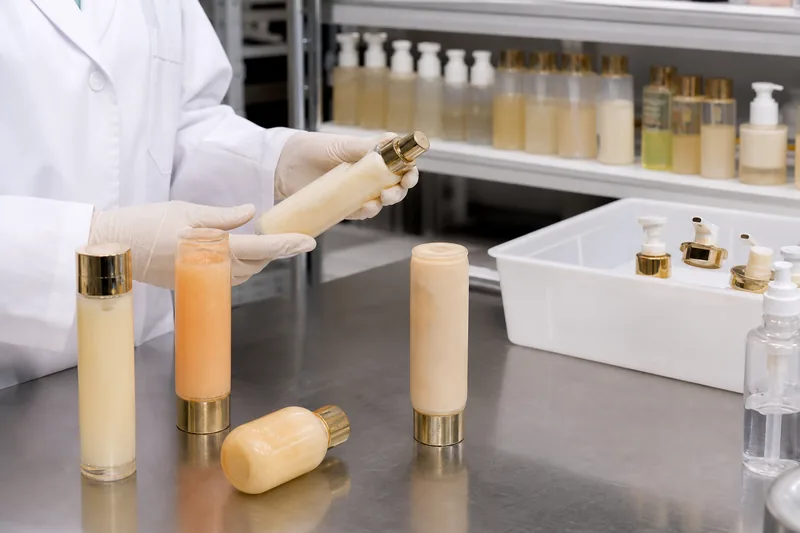
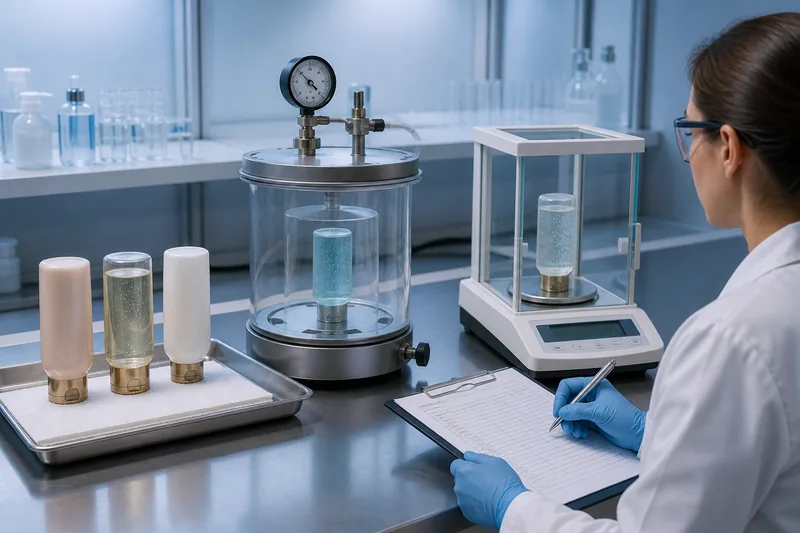
To test cosmetic packaging compatibility, fill production-representative packages with the final formula, store them under defined real-time and accelerated conditions, and compare them with suitable controls at scheduled intervals. Check both sides of the interaction: whether the formula changes the package and whether the package changes the formula. Approval should cover appearance, odor, weight loss, […]
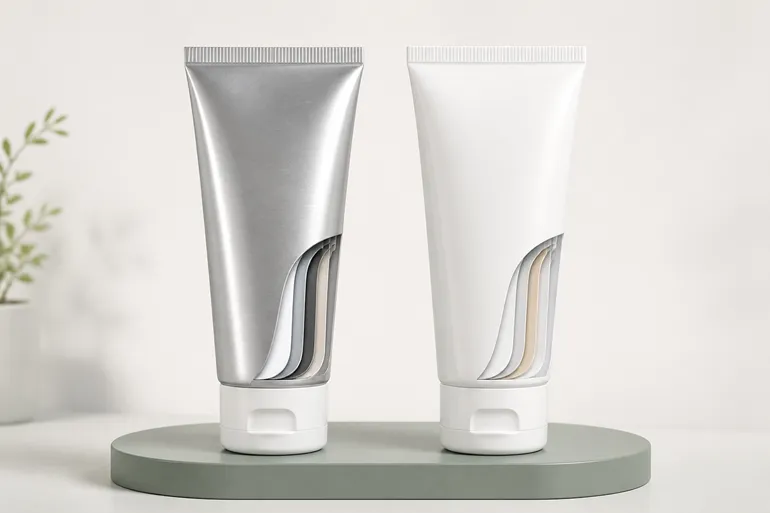
ABL vs PBL Cosmetic Tubes: How to Choose the Right Barrier Structure Short answer: Choose ABL when the formula needs a strong light, oxygen and moisture barrier and an opaque metallic layer is acceptable. Choose PBL when the pack needs good barrier performance, a smooth resilient body and a structure that can be designed closer […]
WhatsApp us